
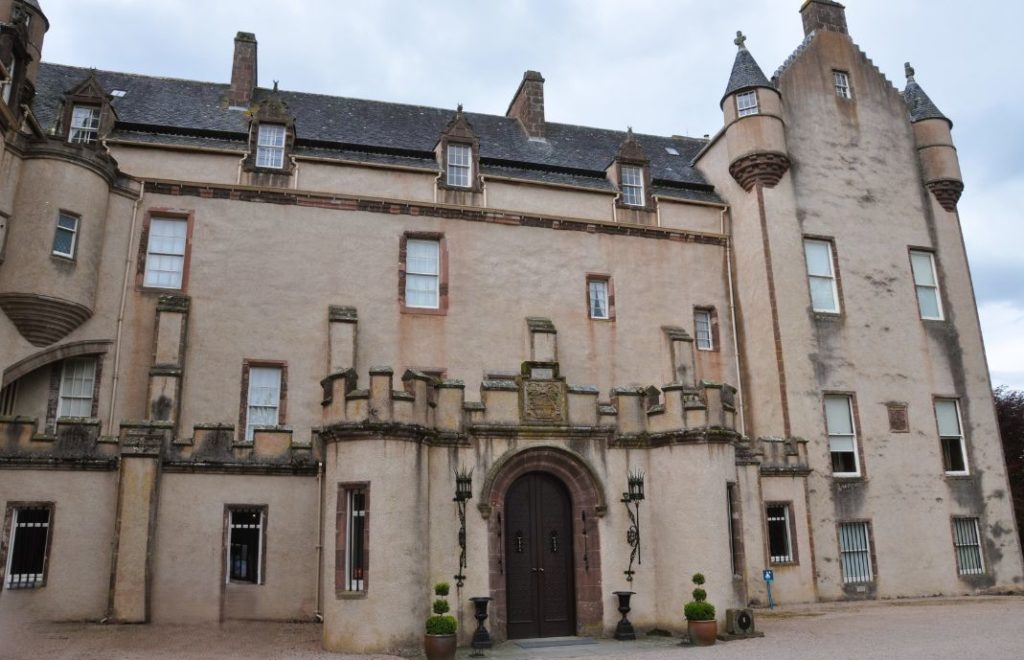
It’s hard not to be awestruck the moment you arrive at Fyvie Castle. Rising dramatically from the surrounding woodland, with towering stone walls, round turrets, and spiral-capped towers, the castle is nothing short of majestic.
As you step into view of this fairytale fortress, a sense of mystery wraps around you. Fyvie Castle isn’t just a grand building – it’s a place where history, legend, and folklore swirl together to ignite the imagination.
With a history stretching back over 800 years, Fyvie has been home to noble families, royal guests, and more than a few whispered ghost stories. Scottish icons such as William the Lion (William I) and Robert the Bruce (Robert I) are among the castle’s storied visitors, adding royal weight to its already impressive past.
Today, nestled in the heart of Aberdeenshire, Fyvie Castle is a must-see destination for visitors from around the globe. Whether you’re drawn by its opulent interiors, haunted legends, or lush estate grounds, Fyvie offers an experience that’s equal parts historic treasure and storybook enchantment.

The history of Fyvie Castle
The origins of Fyvie Castle reach back into the mists of the 13th century. Some sources claim its construction began in 1211, under the reign of William the Lion (William I of Scotland) – also nicknamed William the Rough. His legacy marks the very beginning of what would become one of Scotland’s most iconic strongholds.
Following the Battle of Otterburn in 1388, the castle passed into private ownership, moving through the hands of five noble families: the Prestons, Meldrums, Setons, Gordons, and finally the Leiths. Each family left its mark, constructing a new tower and expanding Fyvie’s stature as both a residence and a symbol of power.
In 1885, Scottish industrialist Alexander Leith purchased Fyvie Castle, cementing its reputation as a seat of wealth and influence. His descendants eventually sold the estate to the National Trust for Scotland in 1984, ensuring the castle’s preservation and opening its storied halls to the public.
With over 800 years of layered history, Fyvie Castle is not merely a building – it’s a living monument to Scottish nobility, architecture, and legend.
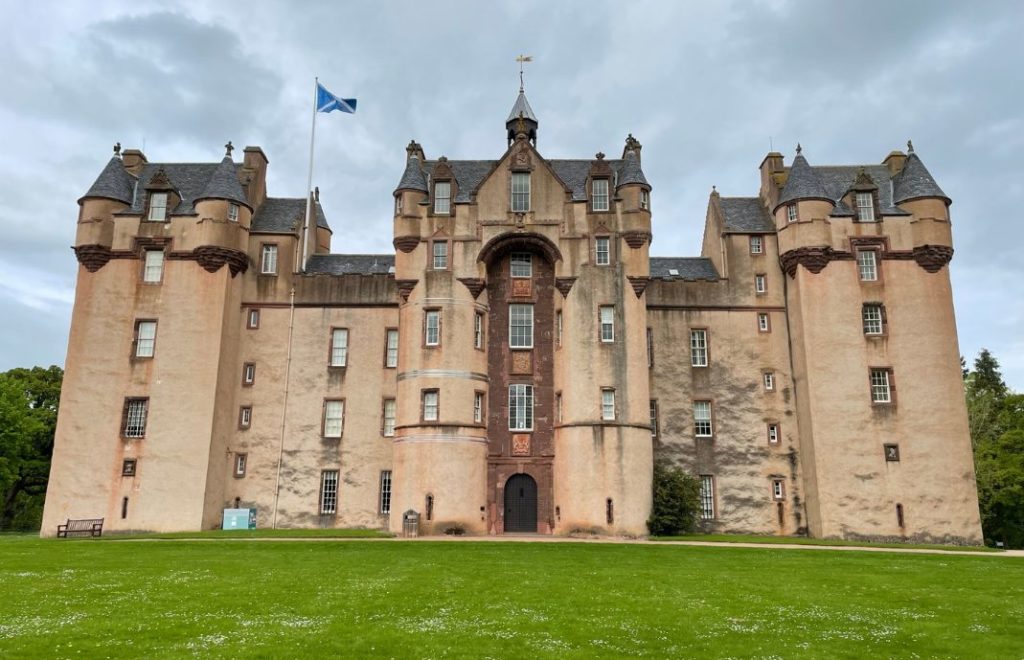
Visiting Fyvie Castle: Step into a world of grandeur and legend
Today, a visit to Fyvie Castle offers more than just a walk through history – it’s a chance to feel the castle’s grandeur, atmosphere, and centuries of storytelling come to life.
Your journey begins the moment you step into the magnificent entrance hall, adorned with imposing oil paintings, softly woven carpets, and suits of armor that seem to stand guard over the past. Above the fireplace hangs a dramatic plaster relief depicting the Battle of Otterburn, grounding the space in one of Scotland’s most legendary clashes.
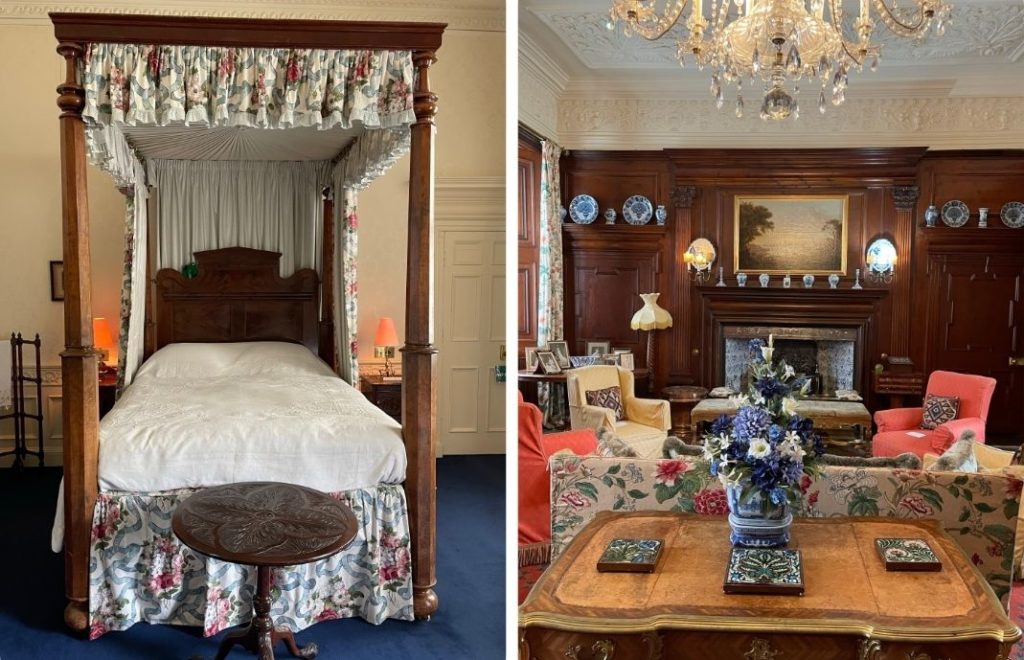
Wandering through Fyvie’s stately rooms, you’re transported into a bygone era. Elegant furniture, portraits, heirlooms, and well-worn books tell the tale of those who lived, ruled, and entertained within these stone walls.
In the grand drawing rooms, guests once sipped fine whisky by the fire and dined lavishly around the majestic dining table. The bedchambers, beautifully preserved, still display personal artifacts – giving a rare, intimate glimpse into the private lives of Scotland’s aristocracy.
The library is a bibliophile’s dream, boasting an extraordinary collection of rare and antique books. And as you make your way through the castle’s long, winding corridors, each passage leads deeper into its rich and layered history.
Perhaps most breathtaking of all is the Gallery – not only for its sheer size and elegance, but for the striking pipe organ mounted high on the western wall. A centerpiece of both design and sound, it adds a dramatic flourish to a space steeped in tradition.
From turret to tower, Fyvie Castle is a timeless experience – an unforgettable blend of beauty, legacy, and enchantment.

Ghosts and Legends: The haunting of Fyvie Castle
Like many ancient castles steeped in centuries of history, Fyvie Castle has its fair share of ghost stories -but few are as captivating or chilling as those whispered within these walls.
According to legend, a curse lingers over the estate, and the most famous spirit of all is none other than the Green Lady herself.
The Green Lady: Lady Lilias Drummond
The story begins in the early 17th century, with Lady Lilias Drummond, the devoted wife of Lord Alexander Seton, one of Fyvie Castle’s most influential owners. Together they had five children – but, to Alexander’s dismay, only daughters. Obsessed with producing a male heir, he turned his gaze to Grizel Leslie, Lilias’s own cousin.
Grizel welcomed his advances, and the two began a scandalous affair. Heartbroken and betrayed, Lady Lilias withdrew to her family’s estate in Fife, where she fell ill and died shortly after – on May 8, 1601.
But Lilias’s story did not end there.
Shortly after her death, Alexander married Grizel and brought her to Fyvie Castle. On their wedding night, the couple claimed they heard soft sobs and heavy sighs outside their chamber window. Alexander dismissed it as mere wind, trying to comfort his shaken bride.
The next morning, however, he found something impossible to ignore: “D. LILIAS DRUMMOND” had been carved into the stone window ledge. That engraving is still there today – etched not just in stone, but in legend.

Lilias’s restless spirit
Today, Lady Lilias is said to roam the corridors of Fyvie Castle, her presence unmistakable. Guides and guests alike have reported hearing her mournful cries, and many speak of a lingering scent of rose petals – her signature. Her ghost is most often spotted in the dressing room connected to the Gordon Bedroom, where staff say they sometimes feel an unseen presence watching them.
Several visitors have even stepped aside to let a woman in a green dress pass, only to watch her vanish before their eyes. Her reflection has been spotted in the bedroom mirror, even when no one else was in the room.
Despite the drama of her death and the betrayal that followed, those who have tried to communicate with Lady Lilias say she means no harm. When asked if she intends to hurt anyone, the answer has always been a calm, resolute “no.”
So, if you plan to visit Fyvie Castle, don’t be surprised if the past reaches out to greet you. The Green Lady may still wander its halls – but as long as you treat her home with respect, it’s said you’ll be perfectly safe. And who knows – you might just catch the faintest scent of roses as she passes by.
The Ghost in the Library: The dark legacy of John Pollock
While Fyvie Castle is rich in elegance and legend, not all its spirits are as sorrowful – or as gentle – as the famed Green Lady. Some tales veer into darker, more unsettling territory. Enter John Pollock, one of the castle’s most ominous presences.
If you’re brave enough, make your way to the castle library – a stunning room lined with ancient books, quiet shadows… and, according to many, a chilling energy. This was John Pollock’s favorite place, and many believe it’s where his restless spirit still lingers.
The story of John Pollock is far from romantic. He was convicted of murder and later hanged for his crime. His presence in the castle is remembered by one gruesome artifact: his death mask, a haunting plaster cast of his face made after his execution. The mask bears the visible marks of the noose that ended his life – an eerie and sobering relic of a violent past.
Visitors with a sensitivity to paranormal energy often report intense feelings of unease upon entering the library. Some claim to feel crushing pressure, sudden chills, or a malevolent atmosphere that drives them back out of the room. A few even refuse to step inside at all.
Unlike the mournful sorrow of the Green Lady, the presence of John Pollock is said to carry a heavy, threatening force. His spirit is not one of heartbreak – but one of rage, guilt, or perhaps eternal unrest.
So, if you find yourself in the library at Fyvie Castle, be cautious. Look to the shadows, listen closely, and don’t linger too long near that ghostly death mask. John Pollock may still be watching.

The Grey Lady & The Ghostly Piper: More hauntings at Fyvie Castle
Fyvie Castle is not only a masterpiece of Scottish architecture – it’s also one of the most haunted castles in the Highlands, with a cast of spirits as vivid as its history. Among the spectral residents, The Grey Lady and The Ghostly Trumpeter are two of the most enduring – and eerie – figures tied to the castle’s supernatural lore.
The Grey Lady: Lady Meldrum’s eternal watch
Believed to be the spirit of Lady Meldrum, who lived and died in the 14th century, this ghost has become so active and frequently sighted that she’s often referred to as the “head ghost” of Fyvie Castle.
Legend holds that Lady Meldrum requested to be buried within the walls of her beloved Meldrum Tower, in a secret chamber hidden from the world. Her wish was granted – until 1920, when builders uncovered her remains sealed within the tower walls. Her bones were respectfully reinterred in a nearby cemetery.
But something changed after her removal.
Since then, Fyvie Castle has experienced a surge in unexplained activity – cold spots, footsteps, flickering lights, and shadowy figures seen where none should be. Lady Meldrum herself has been spotted countless times, wandering the halls in a pale grey gown, her presence more curious than menacing, but unmistakably real.
The Ghostly Trumpeter: Andrew Lammie’s tragic tune
Then there’s Andrew Lammie, the castle’s legendary ghostly piper, whose story is steeped in heartbreak.
Andrew was deeply in love with Agnes, but when he was falsely told of her death, his heart shattered – and so did his will to live. Consumed by grief, he died of heartbreak, and his spirit is said to have never left Fyvie.
If you hear the haunting sound of a trumpet echoing through the stone halls or across the castle grounds, it may be Andrew, mourning eternally with his music. He’s often seen dressed in traditional Scottish tartan, lingering near the castle walls.
Many visitors have approached him, assuming he’s a costumed staff member – only to watch him vanish before their eyes.
The child on the stairs: Meet little Annie
Among the many ghostly residents of Fyvie Castle, one of the most endearing – and mysterious – is little Annie, a child spirit often seen playing on the castle’s staircase.
Annie is frequently described as a young girl full of energy and curiosity, appearing near the steps where she’s been spotted running, laughing, or simply sitting quietly. In one chilling account, Annie was caught on film, and even more eerily – a second figure was seen gently taking her hand and guiding her up the stairs.
What makes Annie’s story especially intriguing is the lack of any historical records. There’s no documentation of a girl named Annie ever living in or visiting Fyvie Castle, nor any clear clue as to where she came from or how her life ended. And yet – she is very much present.
Annie has even communicated with visitors and investigators. When asked why she comes to Fyvie Castle, her response was simple and heartbreaking: “Because I have someone to play with.”
So if you find yourself walking up or down the grand staircase, don’t be surprised if you sense a light presence nearby – or feel a sudden brush of movement beside you. And whatever you do, don’t forget to say hello to Annie. You never know… she might be waiting for someone just like you.

The curse of Fyvie Castle: A prophecy that still lingers
Ghosts may roam the halls of Fyvie Castle, but perhaps even more chilling is the ancient curse said to hang over the estate – a dark legacy that dates back more than 500 years, and is believed by many to cast its shadow even to this day.
At the heart of this legend stands Thomas the Rhymer, a medieval Scottish seer and poet known for his uncanny prophecies and volatile temper. One day, Thomas announced his intention to visit Fyvie Castle – a visit that would have consequences for centuries to come.
In anticipation of his arrival, the castle’s staff, anxious to honor the famous prophet, left the grand doors wide open. Days turned into weeks, then years – seven years passed, and still, Thomas never came. The castle doors remained open, a silent gesture of hospitality growing increasingly awkward.
Then, at last, Thomas appeared.
But as he approached the castle’s entrance, a violent storm suddenly erupted, and a fierce gust slammed the doors shut – right in his face.
Offended and enraged by what he saw as a grave insult, Thomas unleashed a curse upon Fyvie Castle and its surrounding lands.
Fyvie, Fyvie thou’se never thrive,
lang’s there’s in thee stanes three:
There’s ane intill the highest tower,
There’s ane intill the ladye’s bower,
There’s ane aneath the water-yett,
And thir three stanes ye’se never get
The curse spoke of three stones, each used to mark the boundary of the castle estate. Unless these three boundary stones are found and reunited, the curse would endure.
Its most ominous effect?
No firstborn son of any family living in the castle would ever inherit it.
To this day, the three stones have never been recovered – and the curse remains part of Fyvie’s enduring mystery. Whether taken as legend or something more, it adds yet another layer of drama, intrigue, and superstition to one of Scotland’s most spellbinding castles.
The Stone’s dark power: The curse that still clings to Fyvie Castle
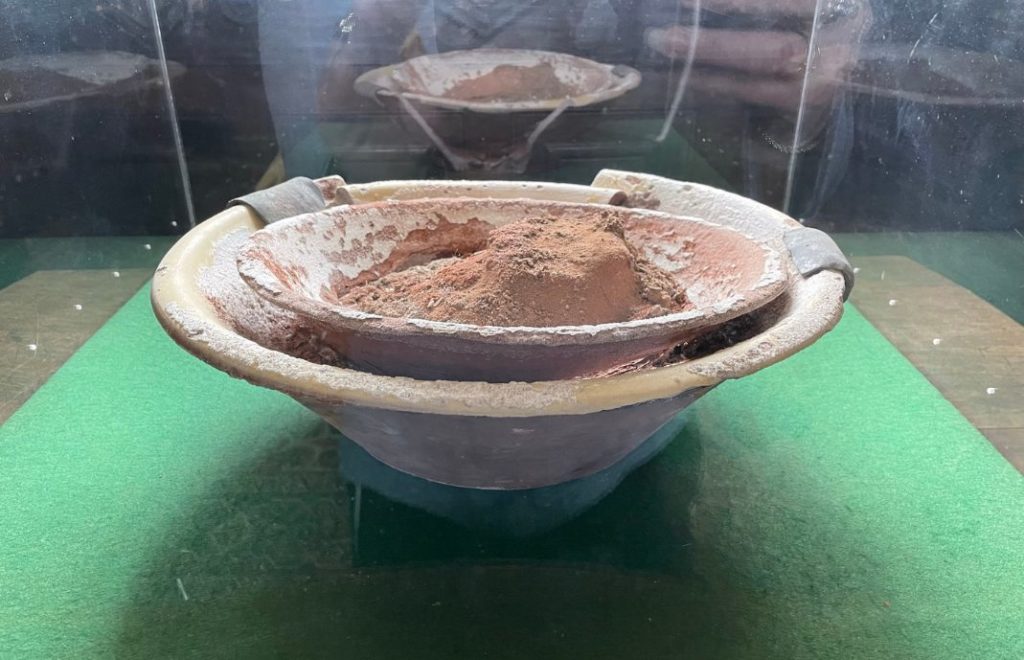
One of the most eerie and unsettling elements of Fyvie Castle’s lore lies not in its ghosts or legends – but in a single stone, steeped in myth and misfortune. Known as the “Weeping Stone,” this relic is the only one of the three cursed boundary stones to have been recovered… and its sinister influence remains palpably real.
Since Thomas the Rhymer’s ancient curse, the castle has never passed to a firstborn son. Again and again, heirs have died tragically— – on the battlefield, from illness, or in unexplained accidents. The estate would always fall to a second son or daughter. Over centuries, the pattern has been too consistent – and too grim – to dismiss as coincidence.
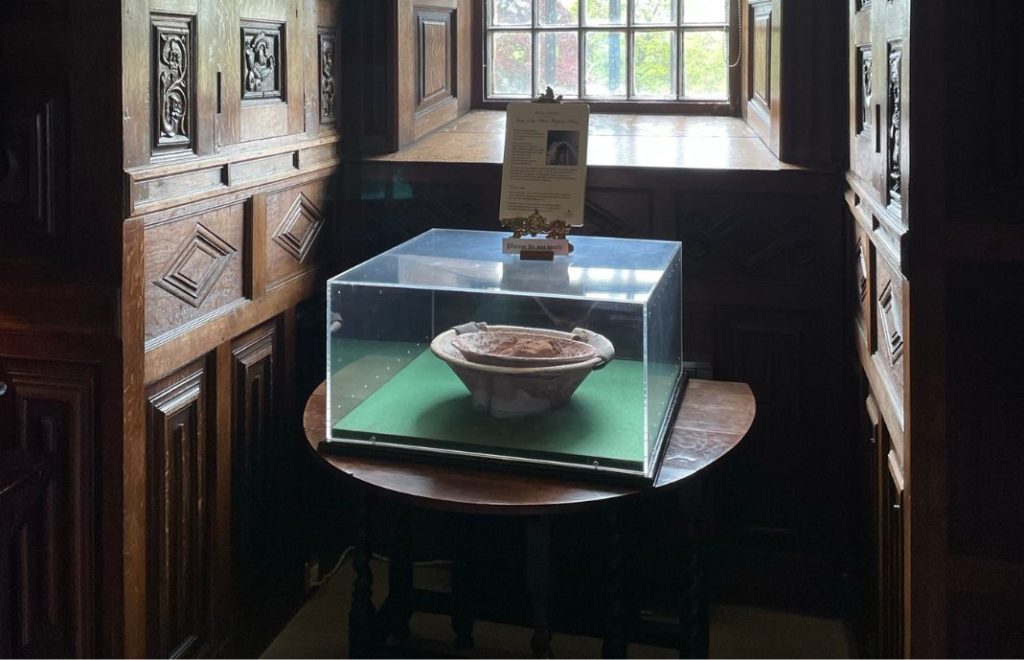
The recovered stone, now kept under close watch in the Charter Room, displays a bizarre and chilling trait: despite being housed in a dry wooden bowl in a carefully controlled environment, the bowl regularly fills with moisture. The stone appears to weep, as though mourning the curse it embodies. Hence, its haunting name: The Weeping Stone.
But its effect goes far beyond symbolism.
One museum curator, assigned to study and prepare the stone for exhibition, suffered a series of strange misfortunes:
- First, he sprained his ankle.
- Then, the property assessor, simply working near the stone, experienced the exact same injury.
- A second encounter saw the curator tear a ligament in his knee.
- And on his third and final attempt to handle the artifact, he was rushed to the hospital with an excruciating kidney stone.
He no longer goes near the object.
Despite countless efforts, the curse cannot be broken. Legend holds that all three boundary stones must be reunited – but:
- One is on display in the castle.
- The second is said to be sealed inside the oldest tower, unreachable.
- The third is believed to have vanished into the River Ythan, lost to time.
Without all three, the curse endures – silent, watchful, and undeniably powerful.
So if you visit Fyvie Castle and find yourself standing before the Weeping Stone, be sure to tread lightly. The past may be buried… but it still weeps.
What lies beneath the Charter Room?
Beneath the stately Charter Room at Fyvie Castle – where ancient documents are stored and visitors admire the cursed Weeping Stone – lurks one of the castle’s darkest secrets: a sealed chamber, wrapped in legend and protected by a deadly warning.
According to long-standing lore, a hidden room lies below, and should anyone attempt to open it, a terrible curse will be unleashed:
- The lord of the castle will die.
- His wife will go blind.
This chilling prophecy has been put to the test – not once, but twice.
Both times, curious lords defied the warnings and forced open the hidden chamber.
- In each case, the lord died shortly after.
- One of their wives lost her sight completely, while the other suffered from failing vision for the rest of her life.
Whether coincidence or curse, the pattern is enough to keep the chamber firmly sealed to this day.
Modern-day staff and historians have no intention of testing fate again. The hidden chamber remains off-limits, and its contents – if any – are unknown. What lies behind that forbidden door is left to the imagination… and the realm of legend.
But one thing is certain: at Fyvie Castle, some doors are better left closed.
There is so much to see and do in Aberdeenshire:
6 compelling reasons to visit Aberdeen
Farm Stop – An overdose of cuteness in the countryside
The Gordon Highlanders Museum
Check-In: Ardoe House Hotel & Spa
