
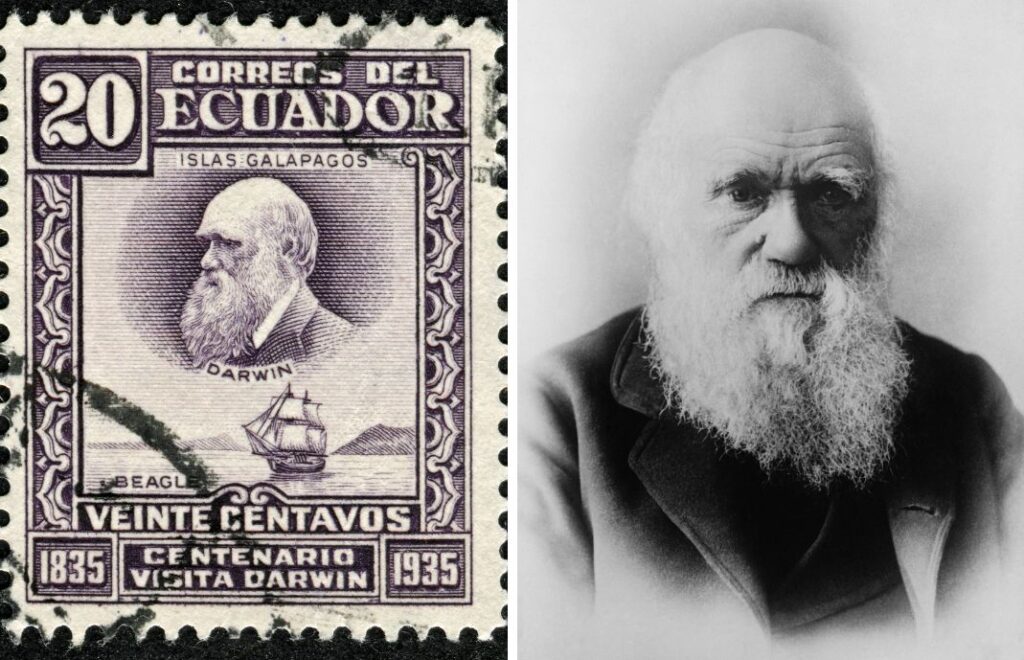
When someone mentions Charles Darwin, most people picture a rather serious-looking Victorian gentleman with an enormous white beard, sitting behind a desk surrounded by scientific books.
Hardly the image of an adventurous young explorer with a surprisingly entertaining life.
But don’t let that magnificent beard fool you.
Behind one of history’s most famous scientific faces was an endlessly curious man who traveled around the world, suffered terribly from seasickness, collected beetles with extraordinary enthusiasm, and spent years investigating everything from exotic wildlife to humble garden earthworms.
Somewhere along the way, he developed one of the most revolutionary scientific theories in history: evolution by natural selection.
But Darwin’s remarkable life was filled with far more than scientific discoveries. From making a pros-and-cons list before getting married to accidentally eating a bird he’d been searching for, his personal adventures reveal a wonderful human side to the legendary naturalist.
Believe it or not, he didn’t even invent the famous phrase “survival of the fittest”.
Let’s look beyond that impressive beard and discover 11 surprising facts about Charles Darwin, the extraordinary man whose curiosity helped change the way we understand life on Earth.
Because behind every great discovery is someone who simply couldn’t stop asking questions.
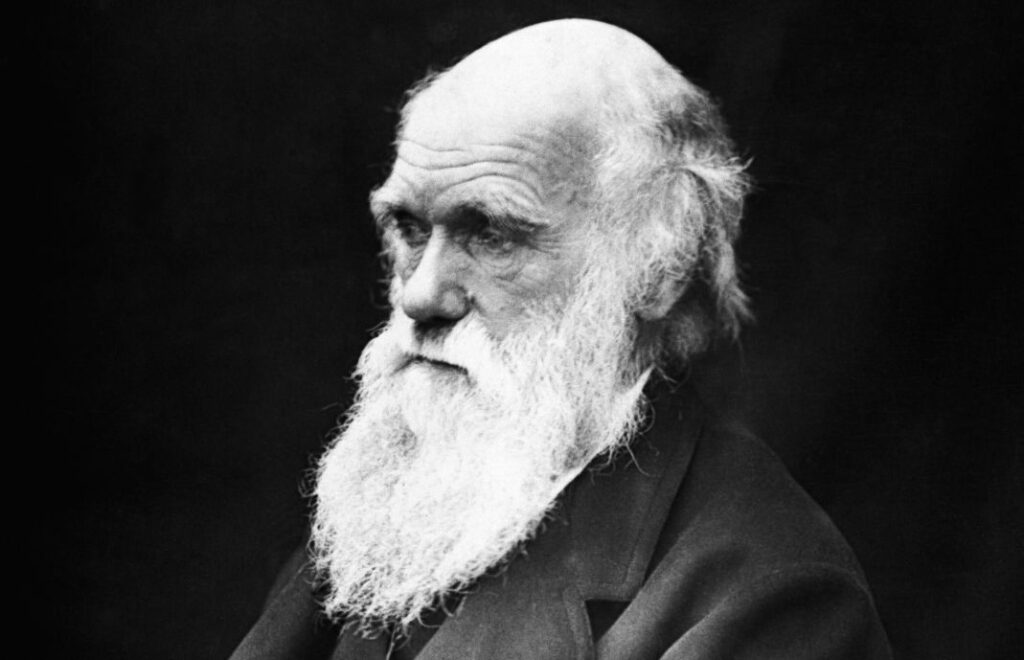
1. The man who changed biology almost became a doctor
Imagine if Charles Darwin had spent his life treating patients instead of exploring the mysteries of the natural world.
Believe it or not, that’s exactly what his father had planned for him.
In 1825, at just 16 years old, Darwin began studying medicine at the University of Edinburgh, following in the footsteps of his father and grandfather.
Unfortunately, young Charles quickly discovered that medicine wasn’t quite his calling.
He found many of the lectures terribly dull, and witnessing surgery in an age before modern anesthesia was particularly distressing.
Apparently, the future father of evolutionary biology wasn’t particularly enthusiastic about the sight of blood.
After abandoning medicine, Darwin enrolled at Cambridge University, where he was expected to prepare for a possible career as a clergyman.
But his growing fascination with natural history eventually led him in a completely different direction.
2. The famous explorer who was terribly seasick
Charles Darwin is remembered as one of history’s greatest scientific explorers, but here’s something rather surprising.
The famous naturalist was absolutely miserable at sea.
In December 1831, at just 22 years old, Darwin set sail aboard HMS Beagle on a voyage that would take him around the world and change his life forever.
Unfortunately, there was one rather uncomfortable problem.
He suffered terribly from seasickness.
And considering that his journey lasted almost five years, that was quite an unfortunate predicament.
While the Beagle sailed across vast oceans, Darwin frequently struggled with nausea and discomfort, hardly the glamorous adventure you might imagine.
Fortunately, he spent considerable time exploring on land, collecting specimens, studying extraordinary wildlife, and investigating fascinating landscapes.
His remarkable determination eventually brought him to the Galápagos Islands in 1835, where his observations would help shape his revolutionary scientific ideas.
Almost five years of adventure, extraordinary discoveries, and a stomach that never quite learned to love the ocean.
3. Beetles, beetles, and more beetles
Before Charles Darwin became famous for his revolutionary theory of evolution, he had a rather unusual hobby.
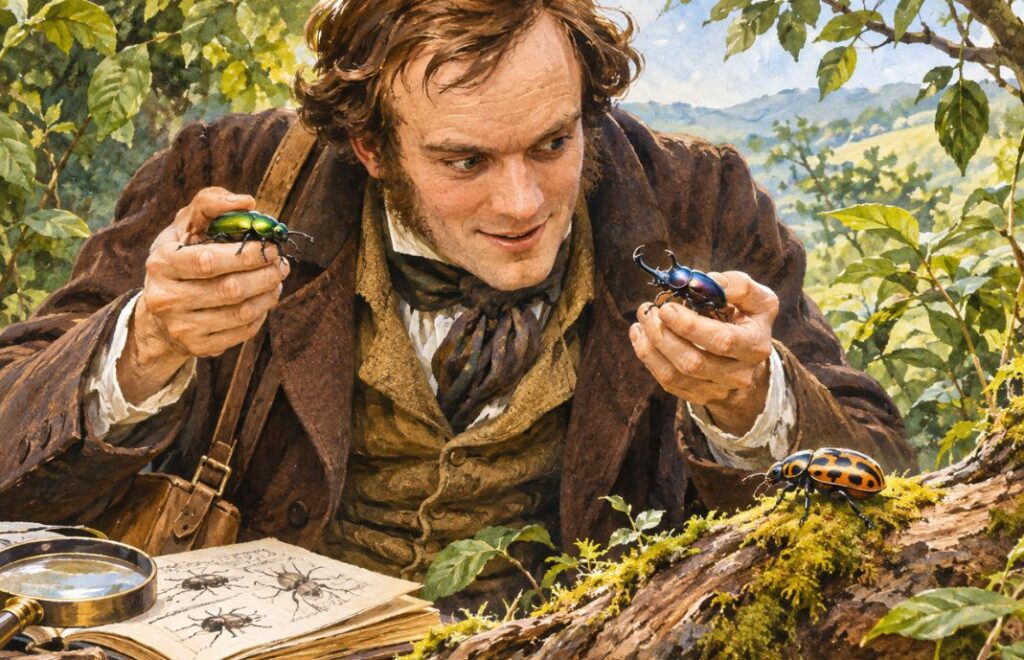
He was absolutely obsessed with collecting beetles.
During his years at Cambridge University, Darwin spent countless hours searching for unusual specimens, often finding the excitement of beetle hunting far more appealing than his academic studies.
Here’s where things get particularly entertaining.
Darwin once became so determined to collect three beetles that he actually put one in his mouth.
He was already holding a beetle in each hand when he spotted a third, particularly interesting specimen.
Not wanting to lose his precious discoveries, he popped one beetle into his mouth to free up a hand.
Unfortunately, the beetle released an unpleasant chemical substance, forcing Darwin to spit it out.
And with all the excitement, he ended up losing two of his three prizes.
Not exactly his finest moment as a beetle collector.
But his enthusiasm for these tiny creatures helped develop the observation skills and scientific curiosity that would later make him famous.
4. The naturalist who accidentally ate his discovery
Charles Darwin travelled halfway around the world collecting extraordinary specimens, but one of his most unusual discoveries almost ended up as nothing more than a delicious dinner.
While exploring Patagonia in South America, Darwin became fascinated by reports of a smaller species of rhea, a large, flightless bird resembling an ostrich.
There was just one problem: he couldn’t seem to find one.
Then, one evening in 1834, a member of the Beagle expedition shot a bird that was promptly prepared for dinner.
Darwin was already enjoying his meal when he suddenly realized something rather unfortunate.
He was eating the very bird he’d been searching for.
Fortunately, enough of the remains were saved and sent to England, where the bird was eventually recognized as a distinct species, now commonly known as Darwin’s rhea.
5. Darwin made a pros-and-cons list before getting married
When most people consider marriage, they follow their hearts.
Charles Darwin apparently preferred to make a list.
In 1838, the famous naturalist sat down to carefully consider the advantages and disadvantages of getting married, dividing his thoughts into two columns: Marry and Not Marry.
On the positive side, he listed companionship, children, and having someone to share his life with.
But marriage also came with some rather troubling disadvantages, including less freedom, additional expenses, and potentially less time for scientific research.
Apparently, Darwin was genuinely concerned that having a wife might interfere with his experiments.
Fortunately, love eventually won the debate.
In January 1839, he married his cousin Emma Wedgwood, and the couple went on to have ten children.
Their marriage lasted more than four decades, until Darwin’s death in 1882.
6. It took Darwin more than 20 years to publish his famous theory
Charles Darwin returned from his famous voyage aboard HMS Beagle in 1836, but the world would have to wait another 23 years before his groundbreaking book appeared.
Apparently, changing the course of scientific history wasn’t something Darwin wanted to rush.
By 1838, he had developed the foundations of his theory of evolution by natural selection, but he continued collecting evidence, studying specimens, conducting experiments, and carefully developing his ideas.
Then, in 1858, something unexpected happened: another naturalist, Alfred Russel Wallace, independently arrived at a remarkably similar theory.
Suddenly, Darwin had a very good reason to stop procrastinating.
Their ideas were presented jointly to the Linnean Society of London that year, and Darwin finally published On the Origin of Species on 24 November 1859.
The book became one of the most influential scientific works ever written, transforming how scientists understood the diversity of life on Earth.
Twenty-three years after returning home, Darwin’s extraordinary journey had finally led to a scientific revolution.
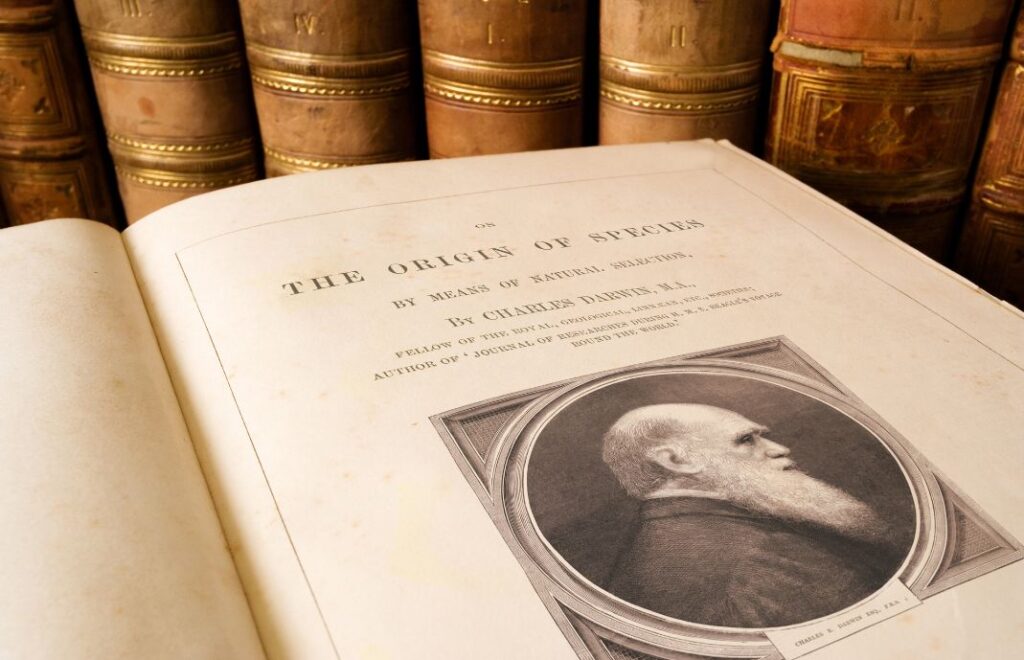
7. Darwin didn’t invent the phrase “Survival of the fittest”
If there’s one expression almost everyone associates with Charles Darwin, it’s “survival of the fittest.”
But here’s something that might surprise you: Darwin didn’t invent the phrase.
The credit actually belongs to English philosopher Herbert Spencer, who introduced the expression in 1864 after reading Darwin’s groundbreaking work on evolution.
Darwin later adopted the phrase himself, including it in the fifth edition of On the Origin of Species in 1869.
But there’s another fascinating twist to this story.
“Survival of the fittest” doesn’t necessarily mean that the strongest animals survive.
In evolutionary biology, being fit means being well suited to a particular environment and successfully passing on inherited characteristics to future generations.
Sometimes, a tiny bird with the right beak has a greater evolutionary advantage than a much larger, stronger competitor.
It turns out that being the biggest and toughest isn’t always the secret to success. Sometimes, being best adapted makes all the difference.
8. The great scientist who was fascinated by earthworms
After revolutionizing our understanding of evolution, Charles Darwin turned his attention to a rather unexpected scientific subject.
Earthworms!
Yes, those tiny, wriggling creatures most of us barely notice in our gardens fascinated one of history’s greatest naturalists.
Darwin spent decades investigating how earthworms move soil, break down organic matter, and gradually transform the landscape through their underground activities.
But here’s where things get particularly entertaining.
He even experimented with playing musical instruments near earthworms to discover whether they could respond to sound.
His research suggested that earthworms were more sensitive to vibrations than to sounds travelling through the air.
In 1881, just a year before his death, Darwin published an entire book about these remarkable little creatures: The Formation of Vegetable Mould Through the Action of Worms.
And his investigations revealed something extraordinary.
Even the smallest, most overlooked animals can have an enormous influence on the world around them.
Apparently, Darwin understood something the rest of us sometimes forget: you don’t need to be spectacular to be fascinating.
9. Darwin’s greatest laboratory was his own garden
You might expect one of history’s greatest naturalists to conduct his most important experiments in an impressive scientific laboratory.
Charles Darwin, however, preferred his own garden.
In 1842, Darwin moved with his family to Down House in Kent, England, where he transformed the surrounding grounds into a remarkable outdoor laboratory.
Here, he investigated everything from climbing plants and orchids to insect-eating plants and the humble earthworms we’ve already met.
His garden became a place of endless curiosity, experiments, and extraordinary discoveries.
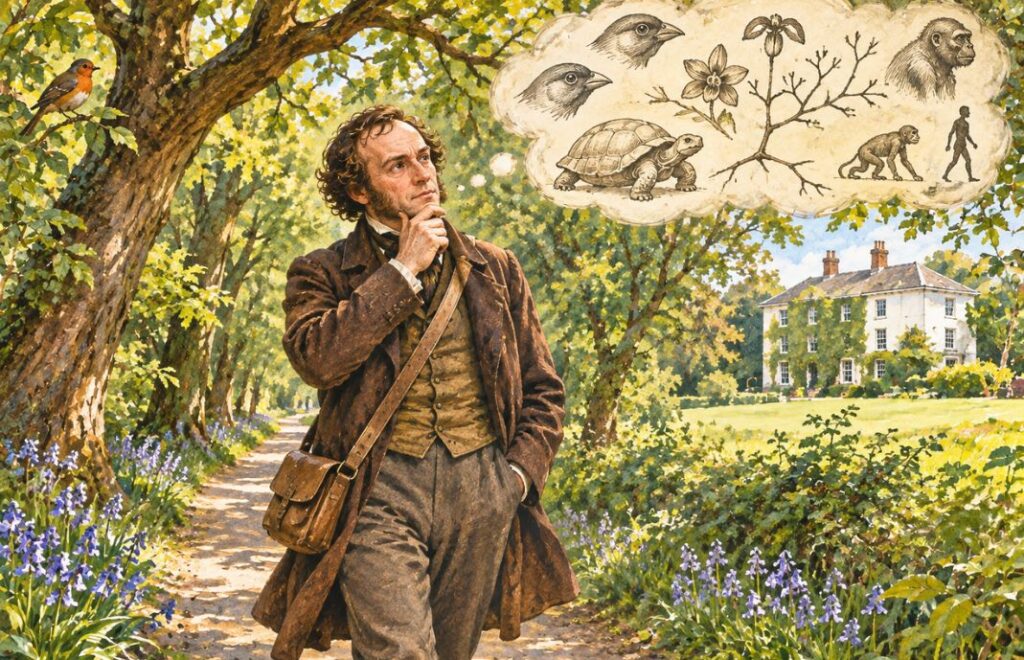
Darwin also had a favorite walking route known as the Sandwalk, where he regularly strolled while reflecting on his scientific ideas.
Here’s something particularly charming.
He sometimes placed small stones along the path to help keep track of how many laps he’d completed.
Imagine one of history’s greatest scientific minds wandering through his garden, counting stones while contemplating the mysteries of life on Earth.
10. Charles Darwin is buried in Westminster Abbey
Charles Darwin spent much of his life questioning established ideas and transforming our understanding of the natural world.
When he died, Britain honored him with a place among some of its greatest historical figures.
Darwin passed away on 19 April 1882, at the age of 73, at his beloved home in Kent.
Although his family had initially intended a quiet burial near their home, several prominent figures successfully campaigned for him to be laid to rest in London’s magnificent Westminster Abbey.
On 26 April 1882, Darwin was buried just a short distance from another legendary scientist, Sir Isaac Newton.
Quite an extraordinary honor for a man who had once struggled to decide what he wanted to do with his life.
Today, visitors to Westminster Abbey can see Darwin’s memorial stone and reflect on the remarkable contribution he made to science.
11. The man who changed science ended up on a £10 note
Charles Darwin travelled around the world, explored remote islands, and helped revolutionize our understanding of life on Earth.
But his adventures didn’t end with his death.
In November 2000, Darwin received a rather unusual honor when his portrait appeared on the British £10 banknote, alongside illustrations of HMS Beagle, a hummingbird, and flowers.
And suddenly, one of history’s greatest naturalists was travelling around Britain in people’s pockets and wallets.
No seasickness, no uncomfortable ship cabins, and absolutely no need to pack a suitcase.
For almost 18 years, Darwin’s familiar bearded face accompanied millions of everyday transactions, from buying groceries to paying for a cup of tea.
His banknote was eventually withdrawn from circulation on 1 March 2018, having been replaced by a newer £10 note featuring the celebrated novelist Jane Austen.
But Darwin’s extraordinary legacy continues to inspire scientists and curious minds around the world.
A curious mind that changed the world
Charles Darwin may be remembered as the serious-looking gentleman with the magnificent white beard, but behind that famous face was a man with an extraordinary passion for understanding the natural world.
From collecting beetles as a young student to exploring remote islands, studying humble earthworms, and developing one of history’s most revolutionary scientific theories, Darwin never lost his sense of wonder.
Perhaps that’s what makes his story so inspiring.
He wasn’t afraid to ask difficult questions, challenge established ideas or spend years searching for answers. His discoveries didn’t happen overnight, and his journey wasn’t always easy, but his determination and curiosity helped change the way humanity understands life on Earth.
What an extraordinary legacy he left behind.
But Darwin’s story also reminds us of something beautifully simple: discovery isn’t reserved for famous scientists or adventurous explorers.
It begins with curiosity.
A willingness to look a little closer, notice something unusual, and wonder why the world works the way it does.
Isn’t that one of the greatest joys of traveling?
Every new destination offers an opportunity to learn, question, and discover something extraordinary.
So, whether you’re exploring the remarkable Galápagos Islands or simply enjoying the wildlife in your own garden, remember the curious young man who once collected beetles and eventually changed science forever.
Keep exploring. Keep wondering. And never stop asking questions.
Because sometimes, the smallest observations can lead to the greatest discoveries.
“The love for all living creatures is the most noble attribute of man.”Charles Darwin
