
Ireland’s capital charms visitors from around the globe – and it’s no wonder. This friendly, energetic city is brimming with experiences that cater to every kind of traveler.
Dublin truly has it all: world-class museums, storied castles, historic universities, leafy parks, cozy cafés, celebrated restaurants, and boutiques full of local flair. There’s something for everyone in this cultural treasure trove.
Yet despite its modern pulse, Dublin has held tight to what makes it truly magical: it remains the legendary city of a hundred churches and a thousand pubs – where stories are told over pints and the past lingers in every cobbled street.
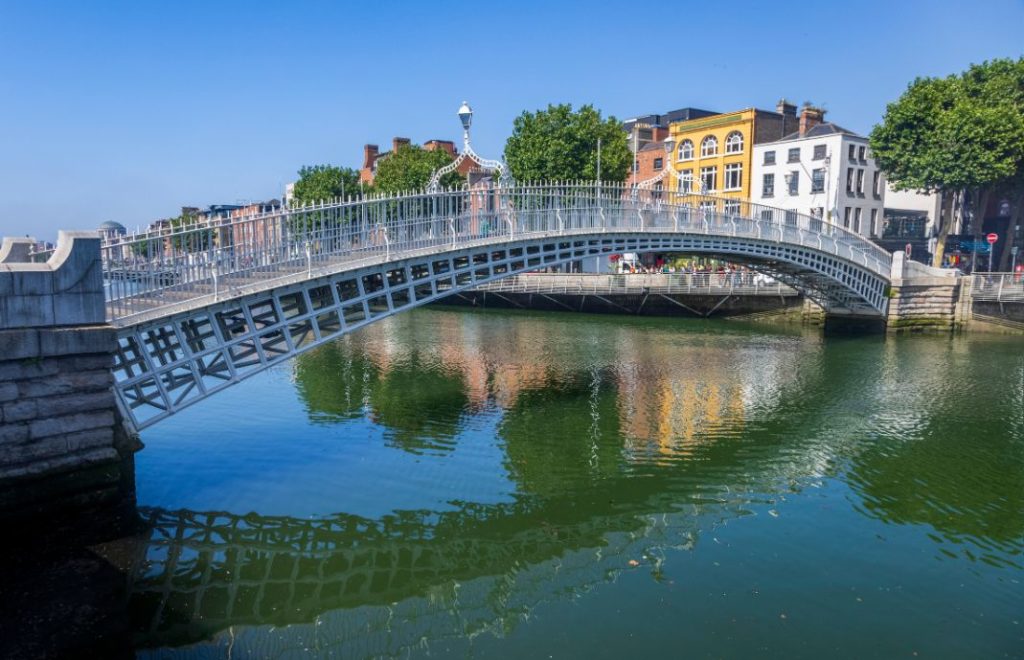
The River Liffey runs through the heart of the city, dividing it into north and south, with a mix of historic and contemporary bridges arching gracefully across its murky waters.
Best of all? Dublin’s compact center makes it wonderfully walkable, perfect for wandering from one discovery to the next.
Here’s your complete, neighborhood-by-neighborhood guide to uncovering the soul of Dublin:
SOUTH OF THE RIVER LIFFEY
Temple Bar – one of Dublin’s liveliest quarters
Once the city’s notorious red-light district teeming with swindlers and scandal, Temple Bar has undergone a remarkable transformation. Today, it’s one of Dublin’s liveliest quarters, a buzzing hub for travelers looking to soak in the city’s culture, creativity, and craic.
By day, the cobbled lanes are filled with the sounds of street musicians competing for attention on Temple Bar Square, while visitors dip in and out of galleries, indie shops, and inviting cafés. Come evening, the tempo rises. The air fills with music and laughter as traditional pubs and modern bars open their doors to thirsty crowds and hungry explorers.
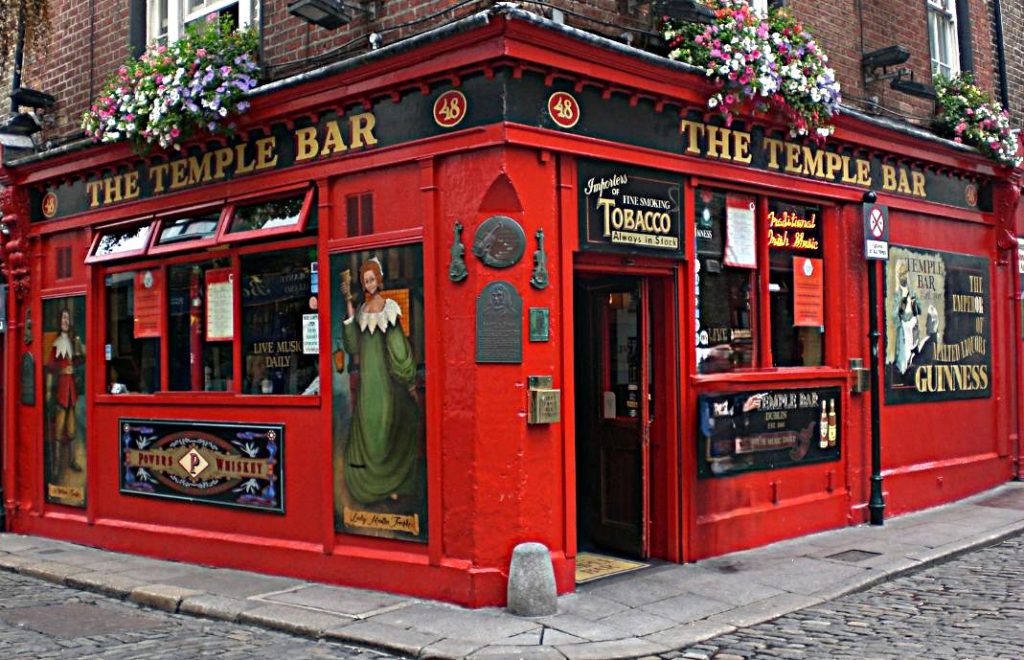
Ironically, this now-infamous nightlife zone began as sacred ground. The land originally belonged to the Augustinian order, but when King Henry VIII broke from the Pope and dissolved the monasteries in 1537, the area’s fate changed forever. In the 1600s, it was acquired by Sir William Temple, whose name the district still bears.
By the 18th century, Temple Bar had become infamous for its taverns and brothels, before skilled craftsmen moved in. Sadly, the industrial revolution in the 19th century saw many lose their trades, and the neighborhood sank into decay.
Today, however, Temple Bar has reclaimed its vibrancy – this time with live music, buzzing nightlife, culinary experiences, and contemporary art. It’s the pulsing heart of Dublin’s cultural revival, where the city’s past and present dance side by side on every cobblestone.
PUB TIP: The Oliver & St. John Gogarty and The Temple Bar Pub

CITY CENTER – SOUTH OF THE RIVER LIFFEY
Molly Malone – Dublin’s beloved songstress in bronze
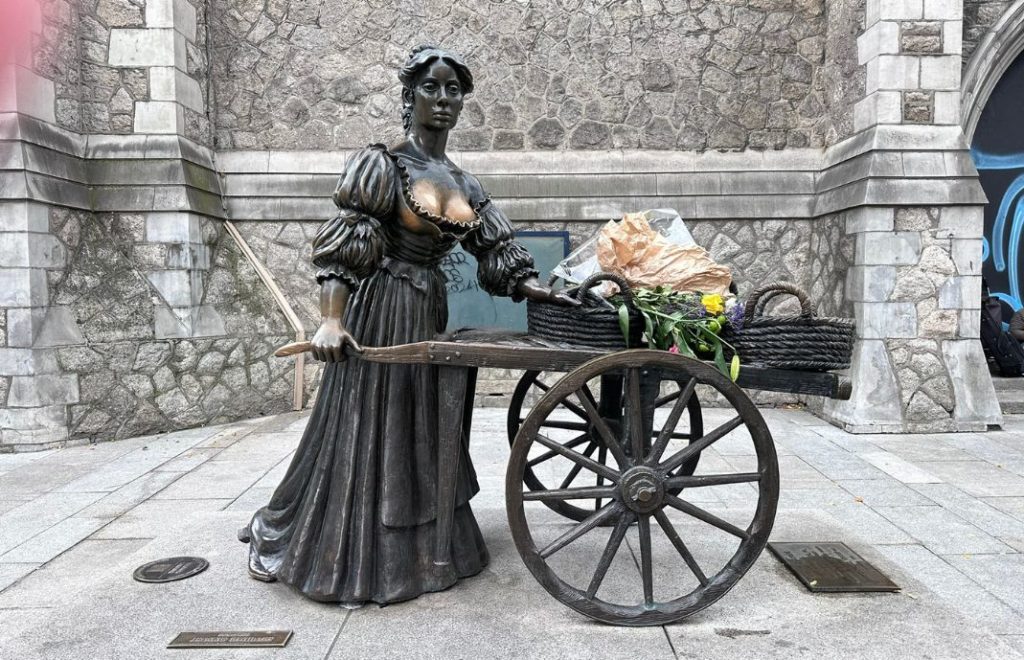
No woman in Dublin is more photographed – or more affectionately teased – than Molly Malone, the legendary fishmonger immortalized in song and sculpture.
Standing proudly at the corner of Grafton and Suffolk Streets since 1988, her bronze statue is a magnet for tourists and locals alike. To Dubliners, she’s affectionately nicknamed The Tart with the Cart – a cheeky nod to her curvaceous figure and the woven-basket cart she’s depicted pulling. While “tart” is slang for a promiscuous woman, the name is always used with warmth and wit – the Irish way.
According to legend, Molly sold cockles and mussels by day, and lived a more glamorous, perhaps risqué, life by night. Famed for her beauty and charm, her tale ends in tragedy, with a young death that only adds to her mythic allure.
Whether or not Molly ever truly existed remains a mystery – but what’s certain is that she has become a timeless symbol of Dublin. Snapping a photo of Molly and her cart is practically a rite of passage for anyone visiting the city.
The ballad Molly Malone, originally penned as a humorous ditty by Scottish songwriter James Yorkston, struck such a chord with the Irish that it’s now considered a national treasure. This enduring pub classic has been covered by icons like U2, The Dubliners, and Sinéad O’Connor, and echoes through the city’s pubs to this day.
Whether sung, seen, or simply passed on the street – Molly Malone is Dublin through and through.
Trinity College – a sanctuary of knowledge and Irish heritage
Founded in 1592 by order of Queen Elizabeth I, Trinity College Dublin stands as Ireland’s most prestigious university – a place where the weight of history meets the pursuit of knowledge. For centuries, it was a Protestant institution, and it wasn’t until the 1970s that Catholic students were formally admitted without restriction.
Though the original buildings no longer remain, the campus boasts some of Dublin’s most striking architecture. Visitors are greeted by the 30-meter-high Campanile (bell tower) from 1853, the elegant Chapel from 1798, and, perhaps most famously, the Old Library, built in the early 18th century.
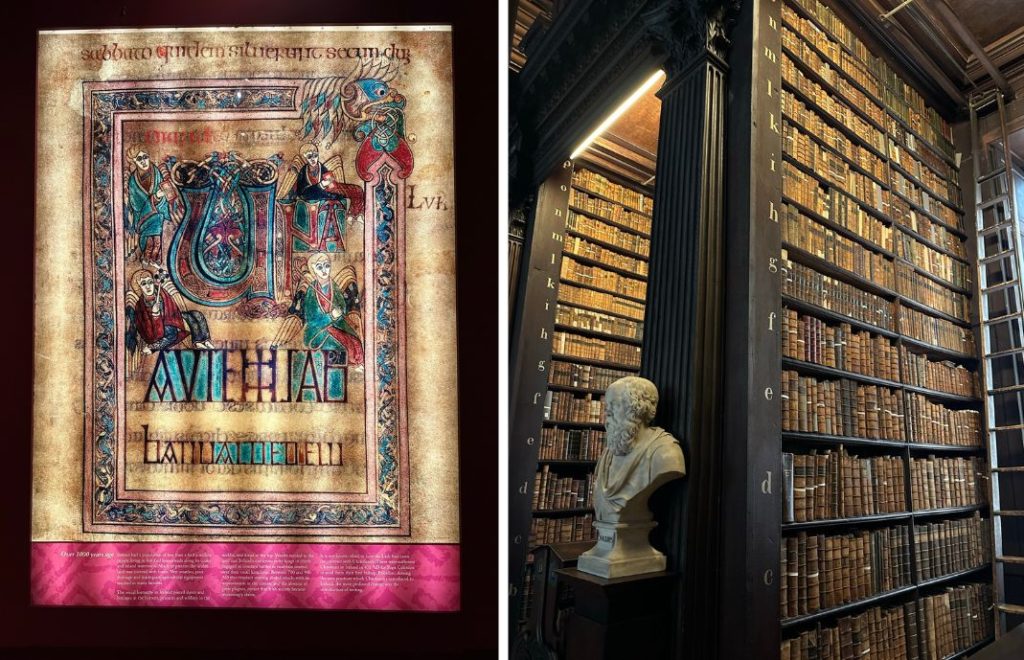
For lovers of literature and history, the Old Library is pure enchantment. Step into the Long Room, and you’ll find yourself in a soaring, wood-paneled hall stretching 65 meters in length, lined with over 250,000 ancient books. The scent of aged pages lingers in the air – but look, don’t touch. This is sacred ground for bibliophiles.
Within the library, you can also admire Ireland’s oldest harp, a beautifully preserved medieval instrument believed to have inspired the iconic Guinness logo – a subtle link between Irish legend and one of its most famous exports.
The crown jewel of Trinity College, however, is the Book of Kells – a breathtaking illuminated manuscript created by Celtic monks in the 9th century. One page alone shows a swirling “G” that transforms into a blue serpent with a golden feathered tail, while beneath it, a tiny mythical beast dangles whimsically.
Composed of 680 vellum pages, the Book of Kells contains the four Gospels of the New Testament, adorned with intricate, otherworldly artwork. Originally displayed on the remote Scottish island of Iona, the book was carried to Kells in 806 by monks fleeing Viking raids. In 1654, it found a permanent home at Trinity.
To walk through Trinity College is to walk through the soul of Irish scholarship – a place where history breathes, art dazzles, and the power of the written word lives on.
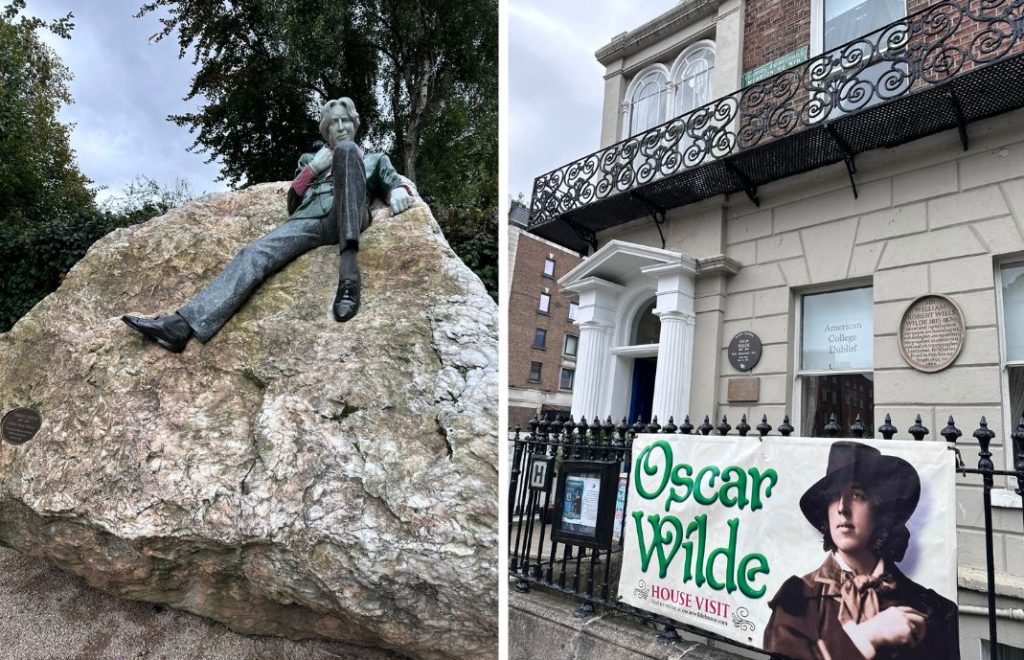
The Oscar Wilde Statue – wit in stone and emotion
In the serene greenery of Merrion Square Park, you’ll find one of Dublin’s most compelling tributes to its literary legacy: the life-sized statue of Oscar Wilde.
Perched casually on a rock, Wilde appears mid-repose, a sly smile tugging at one corner of his mouth. But look closer – his expression is split, artfully sculpted to reflect the dualities of the man himself.
On his right, a joyful, animated face hints at Wilde’s famed wit and flamboyance. On his left, a shadow of sorrow and introspection – perhaps a nod to the trials and personal struggles that shaped the final chapters of his life.
The statue faces what was once the Wilde family home, just across the street. The house is open to visitors and offers a fascinating glimpse into the early life of the man behind The Picture of Dorian Gray and The Importance of Being Earnest.
Surrounding the statue are stone pillars etched with Wilde’s most enduring quotes, inviting you to linger and reflect. It’s a space where intellect meets emotion, and where one of Ireland’s most iconic voices continues to speak – silently, yet powerfully.
Bank of Ireland – where power once sat
This grand, Italian Renaissance-style building, designed by James Gandon and Edward Lovett Pearce, is more than just a bank – it’s a cornerstone of Irish history. Inside, you’ll walk through long corridors lined with thick carpets, gilded ceilings, and massive desks resting on lions carved from Irish oak. Towering pillars rise to support the stately ceilings, giving the space a sense of solemn grandeur.
In the 18th century, this building was home to the Irish Parliament. But after the 1798 rebellion against British rule, the Parliament was dissolved and moved to London. In a pivotal turn, the Bank of Ireland purchased the building, and it has stood as a symbol of national resilience ever since.
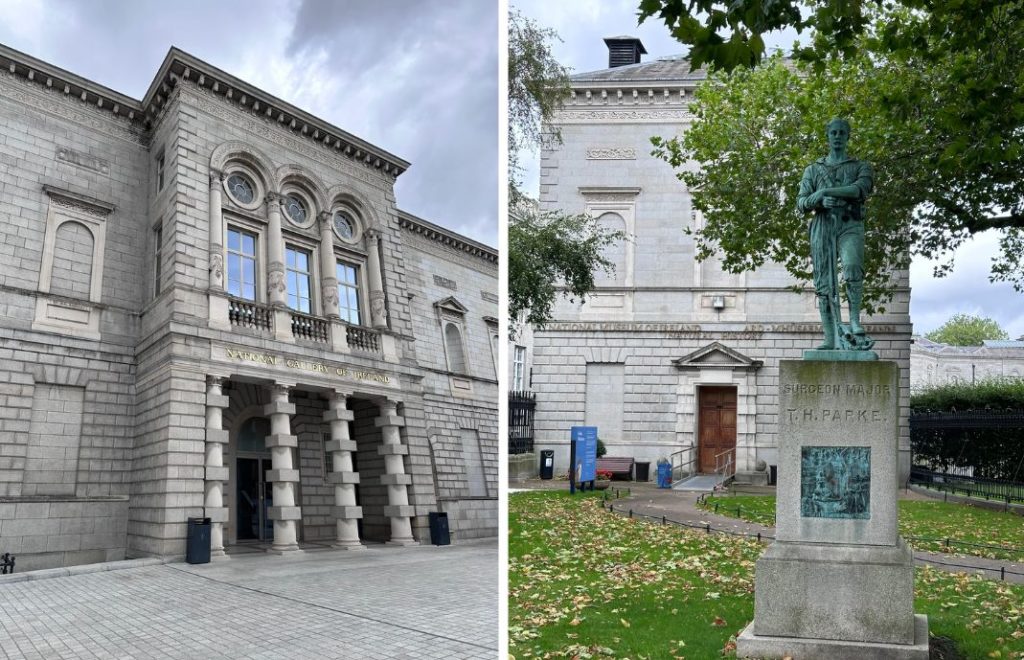
National Gallery of Ireland – a journey through art
Art lovers will find a haven in the National Gallery of Ireland, where one could easily spend hours wandering through rooms filled with beauty, brushstrokes, and stories.
The collection spans centuries, with a dedicated wing showcasing Ireland’s most celebrated painters. But it’s not just Irish masters who take center stage – visitors can also admire Picasso’s Still Life with Mandolin and Johannes Vermeer’s Lady Writing a Letter, with her Maid, two treasures that leave lasting impressions.
Guided tours bring the art to life with vivid tales, making each painting feel like a portal to another world.
National Museum of Ireland – archaeology & history
Prepare to be swept away by myth, metal, and memory in this museum devoted to Ireland’s ancient past. The Archaeology and History branch of the National Museum is a treasure trove filled with gold, bones, weapons, and wonders.
Start with the stunning Ór – Ireland’s Gold collection, home to one of Europe’s largest assortments of Bronze and Iron Age gold jewelry. The gleam of craftsmanship from thousands of years ago still dazzles today.
On the first floor, you’ll step into the Irish Middle Ages and Viking era – a world of silver brooches, bone skates, amber buttons, and battle-worn axes and swords that tell of warriors, traders, and settlers.
Don’t miss The Treasury, which holds some of Ireland’s most sacred artifacts, including the Ardagh Chalice and St. Patrick’s Bell – an object said to have belonged to the patron saint himself. It’s a deeply evocative space that bridges Ireland’s spiritual and artistic legacy.
Together, these cultural gems reveal the soul of Dublin – its power, its past, its creativity, and its courage to carry forward a storied heritage.
St. Stephen’s Green – Dublin’s timeless oasis
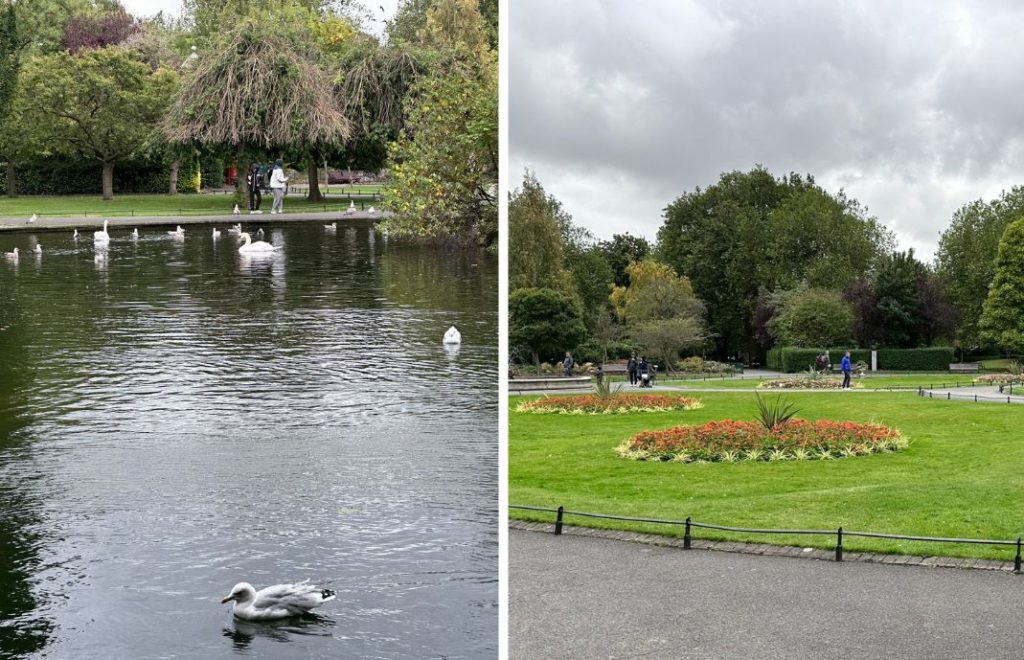
Since 1664, St. Stephen’s Green has offered a peaceful retreat in the very heart of Dublin – a beloved green lung where locals and visitors alike come to unwind, picnic, stroll, or simply sit and watch the world go by.
Its meticulously maintained lawns, vibrant flowerbeds, and tranquil ponds make it a perfect pause in the city’s rhythm. Meandering paths lead past shaded benches and beneath leafy trees, offering a refreshing contrast to the urban buzz just outside the gates.
Scattered throughout the park are busts and statues honoring Dublin’s most notable figures, including literary titan James Joyce, quietly keeping watch over passersby.
Entering from the north, visitors pass beneath the park’s triumphal arch – a solemn monument dedicated to the Royal Irish Fusiliers, who fought on the British side in the Second Boer War (1899-1902) in South Africa. Though its symbolism is complex, the arch now stands as a reminder of the many threads in Ireland’s layered history.
Whether you’re seeking quiet reflection, a shady escape, or a scenic picnic spot, St. Stephen’s Green is a timeless sanctuary in the middle of Dublin’s vibrant streets.
Dublin Castle – Ireland’s seat of power through the ages
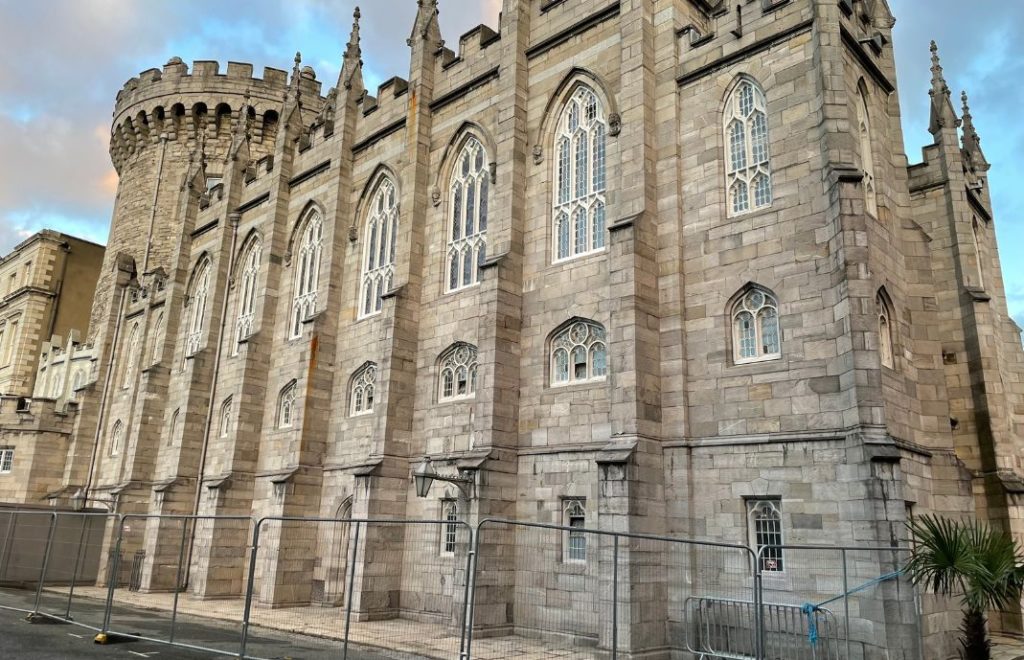
Steeped in legend, conquest, and royal intrigue, Dublin Castle stands at the historic heart of Ireland’s capital. Though its exact origins are uncertain, it’s believed to have started as a Gaelic ring fort, later seized and shaped by Vikings, and eventually taken over by the British, who ruled from within its walls for more than 700 years, until Irish independence in 1922.
Most of the current structure dates from the 18th century, but scattered throughout are fragments of the original medieval castle, including remnants built under King John of England – the first man to hold the title Lord of Ireland.
Over the centuries, the castle served many powerful roles: as the residence of the Lord Lieutenant of Ireland (the British monarch’s representative, or Viceroy), and at times as the meeting place for Parliament and royal courts. Its richly adorned rooms, sweeping staircases, and ceremonial halls offer a glimpse into the workings of imperial rule and Irish statecraft alike.
A guided tour reveals fascinating tales – none more mysterious than the story of the Irish Crown Jewels, which were kept in the castle until they vanished in 1907. The heist remains unsolved to this day, cloaked in secrecy and suspicion.
And don’t miss the curious throne missing its lion’s feet. Legend has it that when Queen Victoria visited Dublin Castle, she found herself too short to climb onto the throne unassisted – an indignity for a queen. In a flash of imperial irritation, she ordered the lion-footed step to be removed entirely. It’s a small but potent symbol of the peculiarities of power.
Dublin Castle is more than just a historical landmark – it is a living monument to centuries of political drama, royal presence, and the shifting tides of Irish sovereignty.
Christ Church Cathedral – a sacred echo of Dublin’s Viking and Norman past
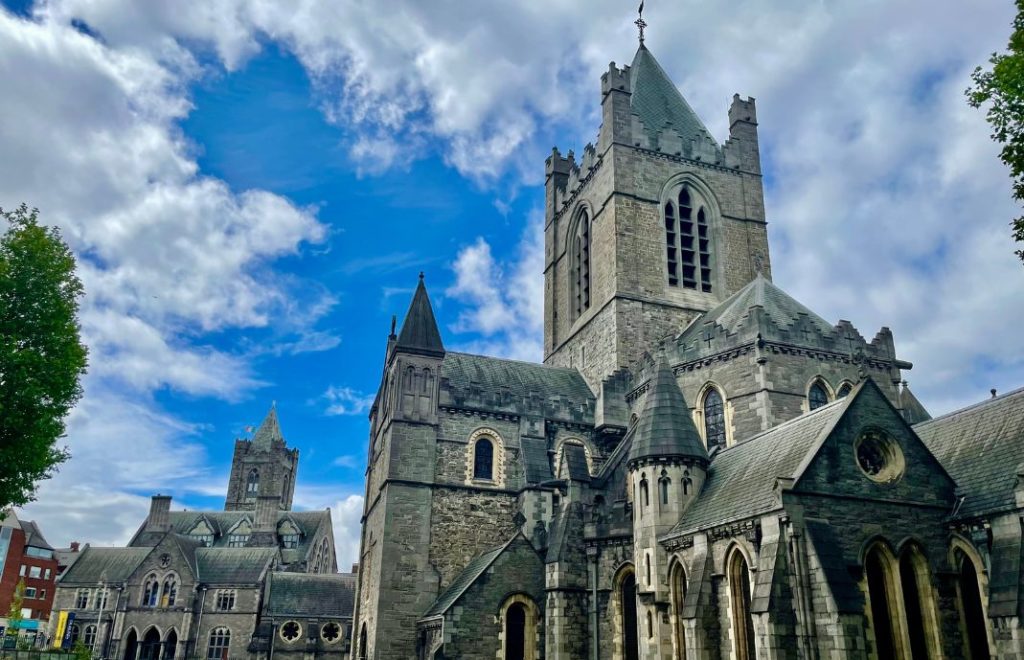
Towering in solemn majesty over the medieval heart of the city, Christ Church Cathedral is one of Dublin’s most historic and atmospheric landmarks. This ancient Anglican cathedral captivates visitors with its soaring Gothic arches, intricate mosaics, and ornate floor tiles – a place where history, worship, and music blend seamlessly. The cathedral regularly hosts concerts and choral performances, echoing centuries of spiritual tradition.
Christ Church is built on sacred ground. It was originally founded atop the remains of a 1038 church built by Dublin’s first Christian Viking king, Sigtrygg Silkbeard (Sitric mac-Aulaffe in Irish texts). His church was later destroyed by the Norman lord Richard de Clare, better known as Strongbow, who erected a new stone cathedral in the 12th century.
That cathedral, too, faced hardship. Built on unstable, marshy ground, part of the structure collapsed in 1562, including the southern wall. Much of what stands today dates to an extensive 19th-century restoration, though the spirit of its Viking and Norman roots remains palpable.
One of the cathedral’s most iconic features is Strongbow’s tomb, which continues to draw reverent gazes. Visitors can also descend into the crypt, one of the oldest surviving structures in Dublin, where treasures from centuries past are displayed: silver vessels, medieval statuary, a 12th-century tabernacle, and a curious relic of Victorian Dublin – a mummified cat and rat, famously discovered trapped inside an organ pipe in the 1860s.
Whether you’re there to reflect, admire the craftsmanship, or trace the threads of Viking, Norman, and English rule, Christ Church Cathedral offers a richly layered experience – a place where the foundations of Dublin’s faith and history quite literally lie beneath your feet.
Dublinia – step into Viking and Medieval Dublin
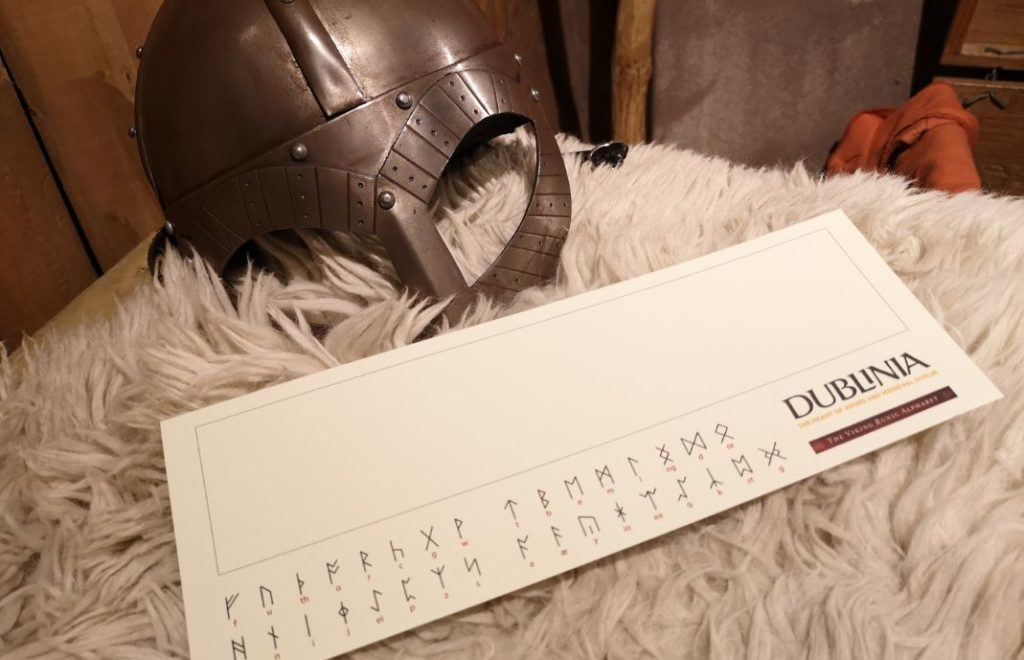
Ever wondered what it was like to live among Vikings and medieval Dubliners? At Dublinia, history leaps off the page and into immersive, interactive life – bringing you face to face with the fierce, fascinating world of Ireland’s ancient capital.
This engaging museum is split into three dynamic sections:
The Viking World
Explore Norse mythology, discover the Viking role in slave trading, and get hands-on with their skills in weaving, shipbuilding, and daily life. You’ll learn not just how they lived – but how they changed Dublin forever.
Medieval Dublin
Step into the shadowy streets of a medieval city where life was gritty and real. Gallows, herbal medicine, the plague, and the pillory – this exhibit doesn’t shy away from the hard truths of the past, offering a vivid glimpse of urban survival in the Middle Ages.
The History Hunters
A deep dive into archaeology, this section showcases the tools and techniques used by scholars to piece together Dublin’s complex past. You’ll gain a newfound respect for the detectives of history who uncover stories buried in the earth.
Don’t miss the chance to climb the 60-meter-tall St. Michael’s Tower, part of the original church structure. From the top, you’ll be treated to panoramic views of modern Dublin, offering a powerful contrast between the city’s ancient roots and its vibrant present.
Dublinia is more than a museum – it’s a time machine, perfect for families, history buffs, and anyone curious about the stories behind the stones of Dublin.
Guinness Storehouse – The heart of Dublin’s most famous brew
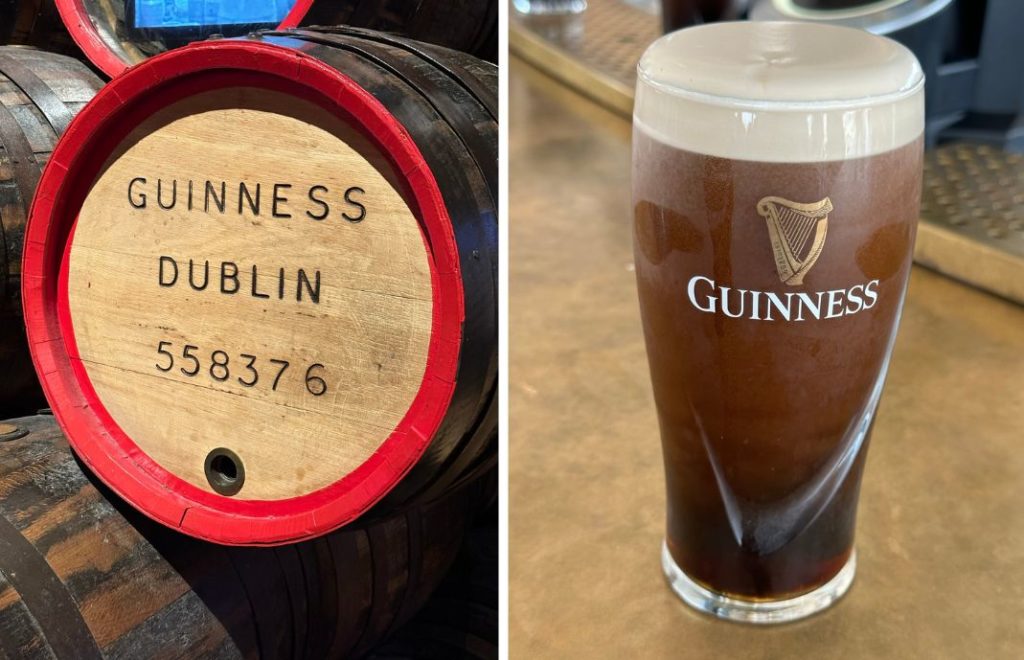
Few places in Dublin capture the city’s spirit quite like the Guinness Storehouse. Housed in a seven-story building shaped like a giant pint glass, this world-famous attraction is a feast for the senses – where the rich aroma of roasted barley meets the smooth taste of Ireland’s iconic stout.
Step inside and explore the magic behind the four simple ingredients – yeast, hops, water, and barley – that come together to create Guinness, lovingly nicknamed the black stuff.
Through immersive exhibits and interactive displays, you’ll uncover the story of the beer, its craftsmanship, and its global legacy.
A highlight is the cinematic tribute to Arthur Guinness, the visionary who, in 1759, signed a 9,000-year lease at St. James’s Gate and began brewing a drink that would go on to define Irish pub culture.
Though you won’t see the live brewing process (Guinness still guards its secrets), the visitor experience is packed with surprises – from historic advertisements and vintage barrels to sensory rooms and a chance to “pull a perfect pint” under expert guidance.
The journey culminates at the Gravity Bar on the 7th floor, where your freshly poured Guinness comes with a 360-degree view of Dublin. Raise your glass to the skyline, the stories, and the stout that shaped a nation.
Pro tip: Don’t rush the pour. Like Dublin itself, Guinness is best enjoyed slowly – with a good view, a great story, and a whole lot of heart.
Teeling Whiskey Distillery – the spirit of modern Dublin
After a 125-year drought, Dublin’s whiskey scene roared back to life with the opening of the Teeling Whiskey Distillery in 2015 – bringing the proud tradition of Irish whiskey-making back to its birthplace in The Liberties, one of Dublin’s oldest neighborhoods.
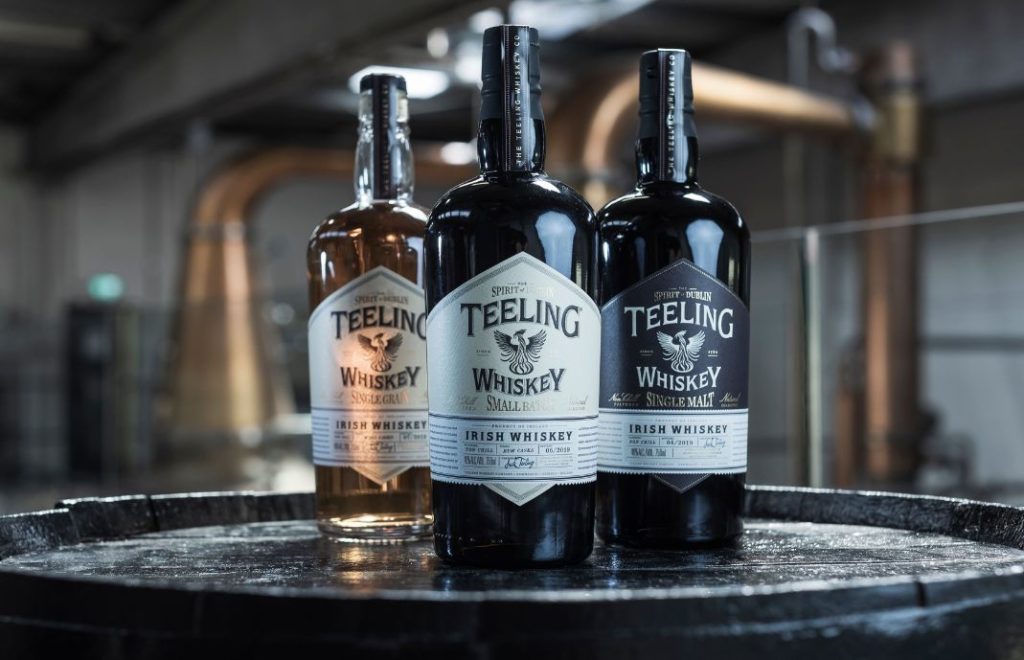
But Teeling isn’t just about reviving the past – it’s about pushing boundaries. Here, whiskey is matured not only in classic barrels but also in red wine, calvados, and rum casks, adding bold, unexpected flavors to a time-honored spirit.
A guided tour takes you straight into the heart of the operation. The moment you enter the production area, you’re greeted by the earthy aroma of damp grain, followed by a rush of heat from the stills and then the hum of quiet focus as the whiskey works its slow magic.
Inside, gleaming steel vats, oak barrels, and copper pot stills churn day and night, transforming 150,000 liters of corn, barley, and water into golden, flavorful spirit. It’s an up-close look at craft distilling in motion.
Whether you’re a seasoned connoisseur or new to Irish whiskey, Teeling offers a refreshing take on tradition – bold, modern, and deeply rooted in Dublin’s storied past. And of course, no visit ends without a tasting, where you can sip the spirit of the city – smooth, rich, and just a little rebellious.
St. Patrick’s Cathedral – a towering testament to Ireland’s faith and history
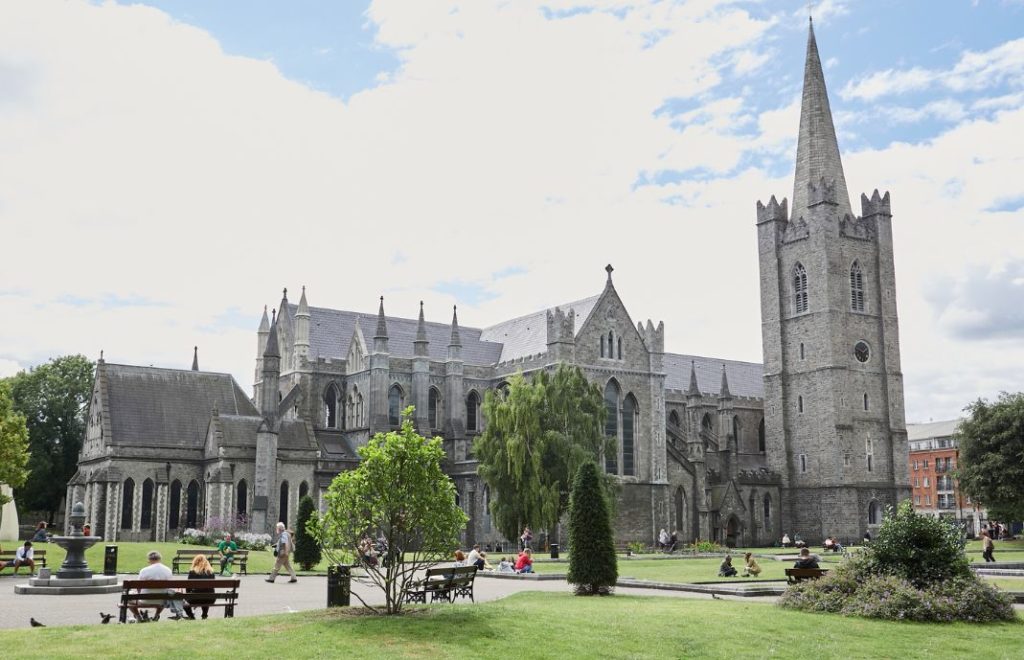
Majestic and storied, St. Patrick’s Cathedral is the largest church in Ireland and a pillar of national pride, literary legacy, and spiritual tradition. Dating back to the 12th century, this iconic cathedral brings Ireland’s rich and complex past to life beneath its breathtaking vaulted ceilings.
Built in 1632 by order of the Earl of Cork, the cathedral was dedicated to his second wife, Katherine, and still houses paintings and memorials to the family. But St. Patrick’s history stretches far beyond nobility – it’s a space that honors writers, visionaries, and spiritual leaders.
Among those remembered here are Jonathan Swift (author of Gulliver’s Travels and former dean of the cathedral), Esther Johnson (Swift’s close companion), and Archbishop Narcissus Marsh (founder of Ireland’s first public library).
The building has weathered centuries of turmoil. Its original spire was toppled by a storm in 1316, and a devastating fire soon followed. In a bold and brutal act of disrespect, Oliver Cromwell and his troops turned the sacred space into a stable in 1649 during their campaign in Ireland.
Despite it all, St. Patrick’s Cathedral endures – not only as the principal church of the Anglican Church of Ireland, but also as a vibrant cultural and historical site. Visitors can wander through its nave, admire stained glass and ornate tombs, and feel the presence of centuries pressing gently in the silence.
Whether you come to reflect, admire the architecture, or trace the footsteps of Ireland’s saints and scholars, St. Patrick’s Cathedral is a soul-stirring stop on any Dublin journey – one that leaves both heart and mind inspired.
CITY CENTER – NORTH OF THE RIVER LIFFEY
Jeanie Johnston – a ship of hope and survival
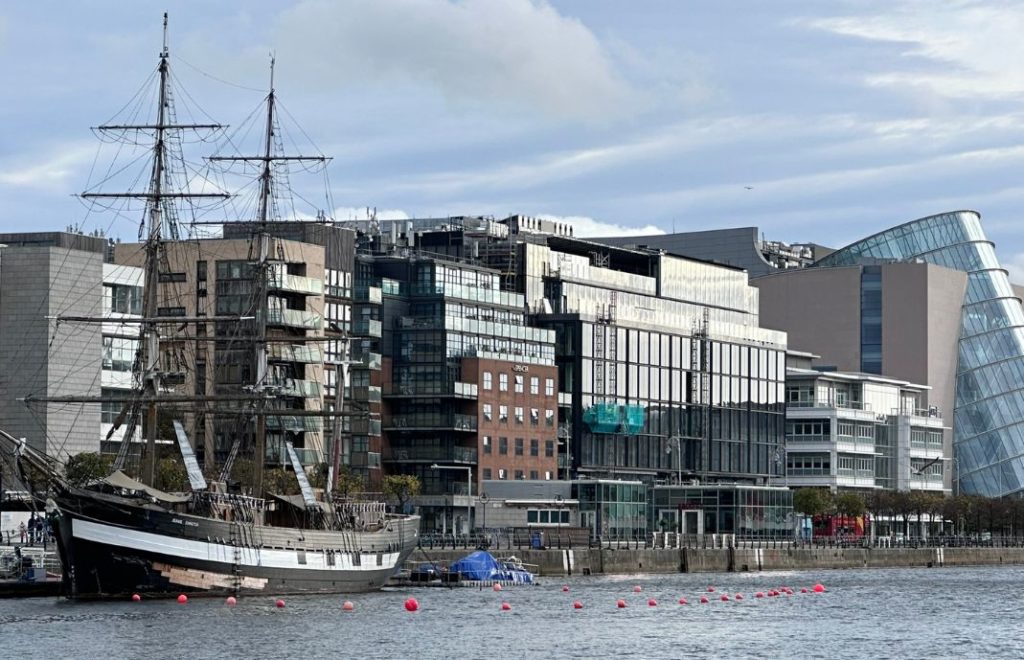
Step aboard the Jeanie Johnston and travel back to the 1850s, a time when waves of Irish men, women, and children fled famine, poverty, and despair in search of a new beginning across the Atlantic.
This full-scale replica, docked along Dublin’s Custom House Quay, is a moving tribute to the original ship built in 1847 in southwest Ireland. Between 1848 and 1855, the Jeanie Johnston crossed the ocean 16 times, carrying hundreds of emigrants from Ireland to North America.
Unlike many so-called “coffin ships” of the time, the Jeanie Johnston earned a remarkable reputation – not a single life was lost on board during any of its voyages. Her final journey ended when she sank in 1858, but all crew and passengers were rescued, adding to her legend as a ship of mercy in a desperate age.
Today, visitors can step below deck and experience life as it was for those brave emigrants. The guided tour shares vivid, often emotional stories of real passengers, the cramped conditions, and the tough decisions families had to make.
With its powerful storytelling and haunting atmosphere, the Jeanie Johnston is more than a museum – it’s a floating memorial to resilience, sacrifice, and the enduring Irish spirit.
The Irish Emigration Museum – The story of a people on the move
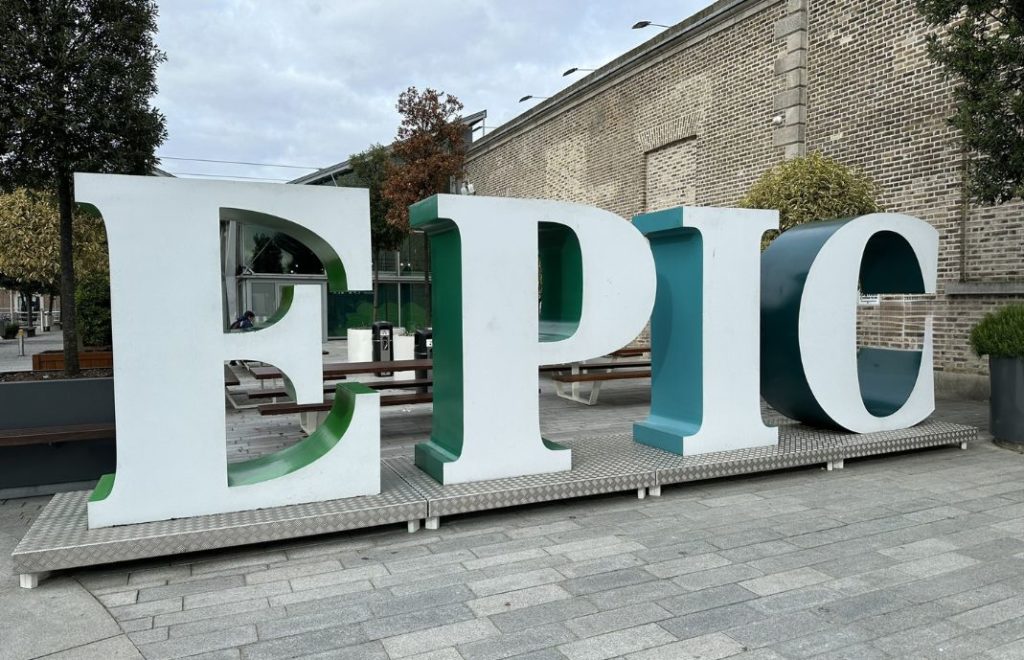
Housed in the beautifully restored CHQ Building along Dublin’s Docklands, EPIC – The Irish Emigration Museum offers a deeply moving and thoroughly modern look at one of Ireland’s most defining chapters: the mass exodus of its people to every corner of the world.
Over the centuries, millions of Irish men and women left their homeland, heading for the United States, Australia, Britain, and beyond. Some were driven by adventure, others exiled, but most fled in search of survival – escaping poverty, famine, and unemployment in hopes of building a better life abroad.
Through cutting-edge digital and interactive exhibits, the museum brings these stories to life in vivid detail. Visitors trace the journey of Irish emigrants through hardship and hope, across oceans and continents.
You’ll encounter tales of triumph – from world-renowned Irish artists, athletes, and scientists, to political leaders and cultural icons who shaped the world beyond Ireland’s shores. But EPIC also honors the forgotten voices: those who struggled, faltered, or simply disappeared into history.
Among the unexpected names is Billy the Kid, the infamous outlaw of the American Wild West, who was the son of Irish immigrants. His story – like so many others – is a reminder that Irish identity has always been woven into the fabric of faraway places.
Far more than a museum, EPIC is an emotional and illuminating tribute to the Irish diaspora, and a must-visit for anyone curious about how a small island shaped the world through its people.
The Famine Memorial – a silent walk of sorrow and strength
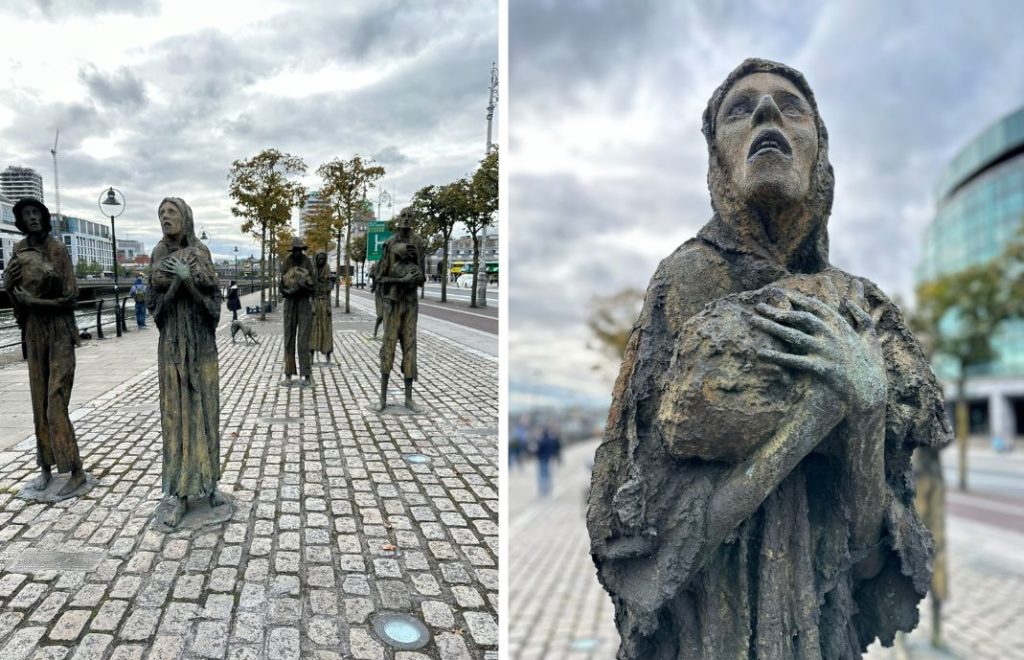
Standing solemnly along Dublin’s Custom House Quay, The Famine Memorial is one of the city’s most haunting and heartfelt tributes. It’s a powerful reminder of the Great Famine (1845-1852), the most catastrophic chapter in Irish history.
In 1845, potato blight ravaged Ireland’s staple crop, triggering a humanitarian crisis of staggering proportions. Appeals to the British government to repeal the “Corn Laws” – which placed heavy taxes on wheat – came too late and offered little relief. The result was devastation: over one million lives lost, and another 1.5 million forced to emigrate, many never to return.
The memorial, unveiled in 1997, was created by Irish sculptor Rowan Gillespie. It features a line of emaciated bronze figures, their faces hollowed by hunger, their bodies draped in rags, as they trudge silently toward the ships that would take them far from home. They walk along the banks of the River Liffey, symbolizing the journey into exile, driven not by choice, but by desperation.
More than just a sculpture, The Famine Memorial speaks to the resilience, grief, and enduring hope of the Irish people. It’s a place for quiet reflection – for remembering those who suffered and honoring the courage of those who crossed the Atlantic in search of survival.
The Spire of Dublin – a monument to the Modern City
Rising an astonishing 120 meters into the sky, the Spire of Dublin pierces the heart of O’Connell Street with sleek, futuristic elegance. Made of bronze and stainless steel, it tapers from a 3-meter-wide base to a mere 15 centimeters at the top, catching light and weather in mesmerizing ways.
Locals, with typical Dublin humor, have given it a variety of nicknames – among them The Stiletto in the Ghetto and The Nail in the Pale – but behind the wit lies symbolism. The spire was erected to mark Ireland’s journey from a turbulent past into a bright and upward-facing future, standing near the site where so much of that history unfolded.
The General Post Office (GPO) – a fortress of Irish rebellion
Just steps away stands one of Dublin’s most historically charged buildings: the General Post Office (GPO). More than just a post office, this is the symbolic heart of the 1916 Easter Rising, when a group of Irish rebels declared an independent republic and took up arms against British rule.
They barricaded themselves behind the GPO’s six grand Ionic columns, using the building as their stronghold. British forces responded with artillery fire, and within five days, much of the post office lay in ruins. Though the rebellion was suppressed, its leaders later executed, their sacrifice helped ignite a national movement for Irish independence.
Today, visitors can explore “GPO Witness History”, an immersive exhibition that brings the uprising to life through original photographs, uniforms, documents, weapons, and a dramatic film experience that puts you in the heart of the action.
Outside the GPO stands a striking bronze statue of the legendary Irish warrior Cú Chulainn, a symbol of strength, sacrifice, and heroism. In myth, Cú Chulainn’s body swelled with battle rage and brilliance, but he was remembered as a humble protector of his people. The statue captures the moment of his death, marked by a raven landing on his shoulder – a stirring image of courage, even in final moments.
Together, The Spire and the GPO form a powerful contrast: one pointing toward the future, the other grounding us in the struggle that shaped Ireland’s soul.
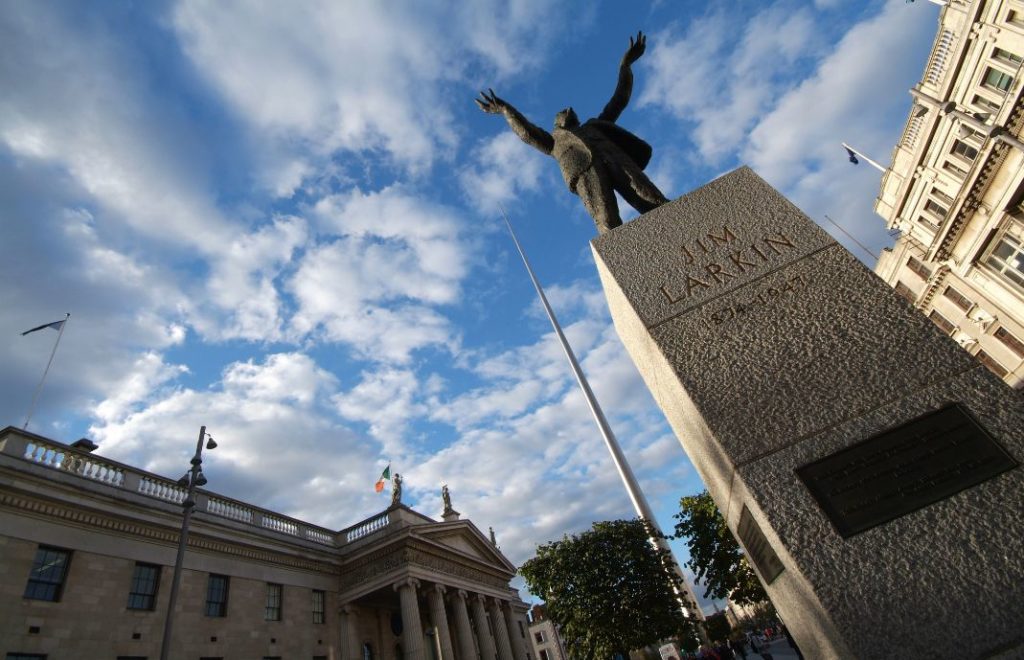
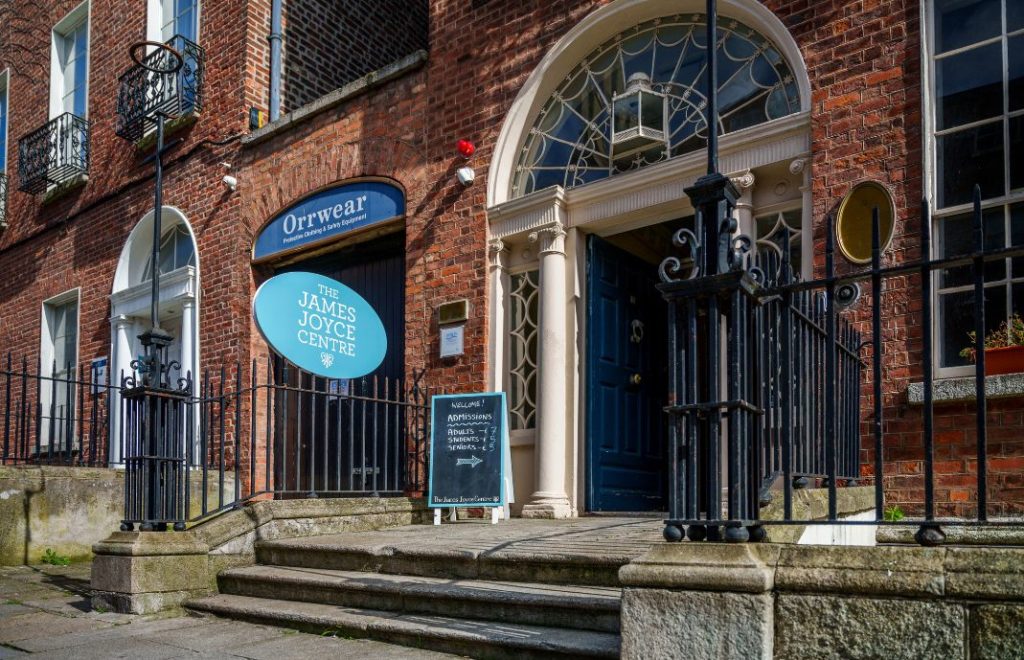
The James Joyce Centre – step into the mind of a literary giant
Welcome to the world of James Joyce, one of the most influential – and controversial – writers of the 20th century. The James Joyce Centre offers a fascinating look into the life, works, and complex relationship the author had with his homeland. Though Joyce left Ireland in 1904 at the age of 22, Dublin remained the beating heart of nearly all his writing.
Best known for his groundbreaking novel Ulysses (1922), Joyce divided critics like no other. Some dismissed the book as “unreadable nonsense,” while others hailed it as “magnificent art.” Today, it’s considered one of the great masterpieces of modern literature, revered for its daring style, structure, and stream-of-consciousness prose.
The Centre is housed in a beautifully preserved Georgian townhouse, once home to Professor Dennis Maginni’s dancing school – Maginni himself appears as a character in Ulysses, blurring the lines between fiction and reality, as Joyce so often did.
Inside, you’ll find exhibits on Joyce’s personal life, his literary influences, and the symbolism and architecture behind his works. Manuscripts, letters, rare editions, and interpretive displays help decode the layered genius of a writer whose connection to Dublin remains intimate, ironic, and eternal.
Whether you’re a devoted Joycean or simply curious about Dublin’s most enigmatic son, the James Joyce Centre offers an enlightening and immersive dive into the soul of a man who reshaped modern literature – using the streets of Dublin as his canvas.
Dublin Writers Museum – celebrating Ireland’s literary legends
Ireland is world-renowned for its storytellers, and nowhere is that more evident than at the Dublin Writers Museum. Nestled in a grand 18th-century mansion on Parnell Square, this literary treasure trove showcases the lives and legacies of Ireland’s greatest authors.
From Jonathan Swift and Oscar Wilde to James Joyce, Oliver Goldsmith, Flann O’Brien, and Seán O’Casey, the museum features personal artifacts, rare first editions, letters, portraits, and typewriters – each telling part of the grand narrative of Ireland’s literary soul.
For the full experience, bring an audioguide, which includes readings from the authors’ works and insights into their complex and colorful lives.
The museum also spotlights Irish children’s literature, and its collection continues to grow with contemporary writers, ensuring that Ireland’s literary tradition is seen not as a relic, but a living, evolving force.
Hugh Lane Gallery – the home of Bacon and beyond
For fans of Francis Bacon, the Hugh Lane Gallery is a must-visit. The museum painstakingly reconstructed Bacon’s chaotic Madrid studio, relocating over 7,000 items – including hundreds of paintbrushes, torn canvases, overpainted easels, and piles of newspaper clippings – to give visitors a visceral glimpse into the mind of one of modern art’s most turbulent geniuses. The exhibition even features seven of his unfinished works, frozen in their raw intensity.
But the gallery isn’t only about Bacon. You’ll also find a rich collection of European Impressionist masterpieces, with works by Monet, Degas, and Renoir, alongside celebrated Irish artists.
This world-class collection exists thanks to the passion of Sir Hugh Lane, an early 20th-century art collector with a dream to gift his treasures to the people of Dublin. When city officials failed to find a suitable exhibition space, Lane threatened to send the paintings to the National Gallery in London. Only then did the city act, selecting Charlemont House as the gallery’s home.
Tragically, Lane died aboard the RMS Lusitania when it was torpedoed by a German U-boat in 1915 -before he could update his will. What followed was a decades-long dispute over ownership of the paintings, which ended in a rare diplomatic compromise: the artworks would be shared between London and Dublin.
Today, the Hugh Lane Gallery stands as a tribute to art, legacy, and perseverance – and a reminder that great collections often come with even greater stories.

National Leprechaun Museum – enter the world of Irish folklore
Step off Dublin’s busy streets and into a world of mischief, myth, and magic at the National Leprechaun Museum – a one-of-a-kind experience dedicated to leprechauns and the otherworldly creatures of Irish folklore.
Leprechauns, those cunning little shoemakers dressed in green coats and tall hats, are said to stand just 75 cm tall and live deep in the woods, where they craft shoes for dancing fairies – paid in gold coins, of course. Many tales warn of humans trying to steal that gold, only to be tricked by the wily leprechaun in the end.
This immersive museum explores these stories and many more, from fairies and trolls to witches and giants. Visitors crawl through a tunnel that shrinks them into a fairy-sized world, complete with giant furniture, a wishing well, and a dose of childlike wonder.
Even the most skeptical visitor may find themselves questioning what’s real, as the storyteller-guides weave spellbinding tales that blend tradition with humor and just enough eeriness.
In Ireland, it’s still common to hear that fairies live in old trees, and cutting one down could bring terrible luck.
Whether you’re a believer or a curious skeptic, the National Leprechaun Museum is a playful and enchanting journey through Ireland’s unseen world – a perfect mix of folklore, fun, and fantasy.
Jameson Distillery – a taste of Irish whiskey history
The historic Jameson Distillery Bow St. invites you into the rich world of Ireland’s most iconic whiskey. Founded in 1780 by Scottish entrepreneur John Jameson, the original distillery quickly grew into a global giant. By the late 1800s, Jameson was the best-selling whiskey in the world.
Though production moved to Midleton, County Cork in 1971, the original Dublin site remains a beautifully restored monument to the brand’s legacy.
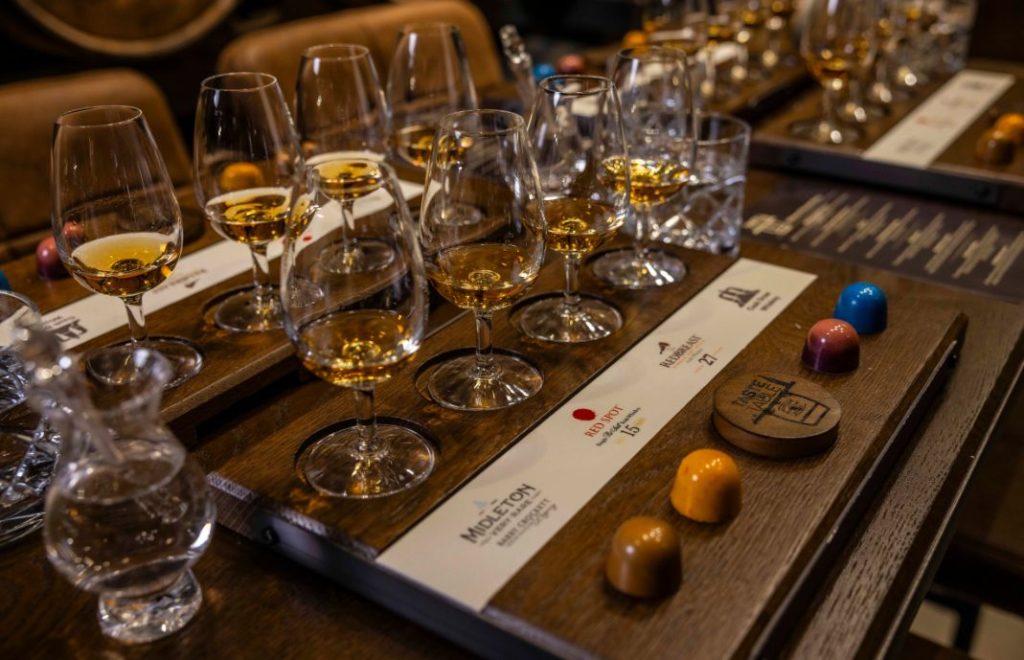
Visitors can explore the distillation process through engaging, interactive displays, and sniff samples of whiskey aged in bourbon and sherry casks, revealing how cask types influence aroma and flavor.
The highlight, of course, is the whiskey tasting at the end of the tour – where you can sip and savor the smooth, triple-distilled result of Jameson’s centuries-old craft.
Whether you’re a whiskey connoisseur or a curious newcomer, the Jameson Distillery experience offers an authentic, flavorful taste of Ireland’s liquid gold – served with a generous shot of history.
WEST OF THE CITY CENTER
National Museum of Ireland – decorative arts & history
Housed in the stately Collins Barracks, a former military complex dating back to 1706, this branch of the National Museum offers a fascinating deep dive into Ireland’s design legacy and complex military history.
The barracks – one of the oldest in Europe – once accommodated up to 4,000 soldiers and served as a key base for British forces for nearly 200 years. Today, its four expansive floors are filled with objects that tell the story of Ireland’s turbulent past and creative evolution.
The most striking exhibit covers Irish military history from 1550 to 2000, showcasing a powerful array of uniforms, spears, sabres, cannons, medals, aircraft, and tanks. These artifacts bring Ireland’s battles – both for and against empire – into sharp focus.
But it’s not all blood and warfare. You’ll also find displays of furniture, silver, ceramics, clothing, and decorative arts, reflecting everyday life and artistry through the ages. It’s a richly layered museum that rewards slow wandering and thoughtful discovery.
Kilmainham Gaol – the prison that forged a nation
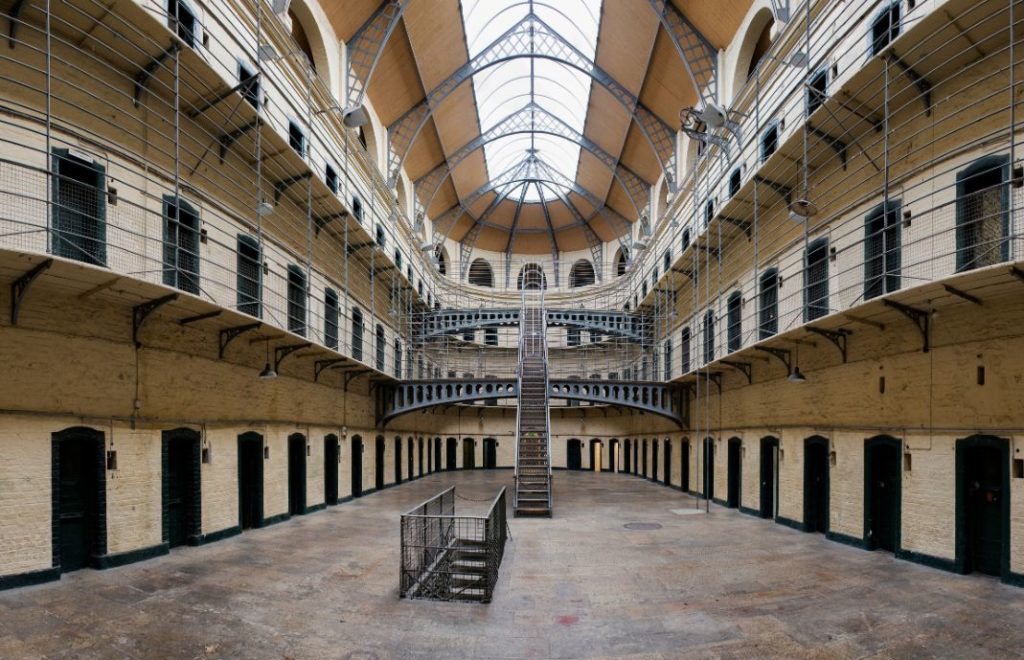
Few places in Dublin stir the soul like Kilmainham Gaol. Cold, grey, and silent, this former prison is a place of solemn reflection – and a chilling window into the struggles that shaped modern Ireland.
Built in the 1790s, Kilmainham was once one of the largest unoccupied prisons in Europe. Its final prisoner, Éamon de Valera, walked free in 1924, later becoming President of Ireland and a key figure in Irish independence.
As you walk through its stone corridors, past the heavy iron doors and into stark, narrow cells, it’s impossible not to feel the weight of the past. On the walls, you can still see names etched by inmates, some awaiting execution, others clinging to hope.
The guided tours are powerful and deeply moving, recounting tales of failed escape attempts, everyday suffering, and above all, the fate of the 14 leaders of the 1916 Easter Rising, who were executed by firing squad in the prison yard – a pivotal moment in Irish history.
Kilmainham Gaol has also been the setting for major films, including In the Name of the Father (1993), based on the true story of the Guildford Four, who were wrongly convicted of terrorism. The film and its real-life origins tie into the broader narrative of justice, loss, and national identity – themes that haunt every stone of this extraordinary place.
Phoenix Park – Dublin’s royal escape into nature
Just minutes from the bustling city centre lies Phoenix Park, Europe’s largest enclosed urban park – a sprawling green sanctuary where history, nature, and leisure come together in perfect harmony.
Originally established in the 17th century as a royal hunting ground, the park still echoes its past with herds of wild fallow deer freely roaming its open meadows – descendants of those once hunted by nobles.
Covering over 700 hectares, Phoenix Park is home to:
- The official residence of the President of Ireland
- The U.S. Ambassador’s residence
- The headquarters of An Garda Síochána (the Irish police)
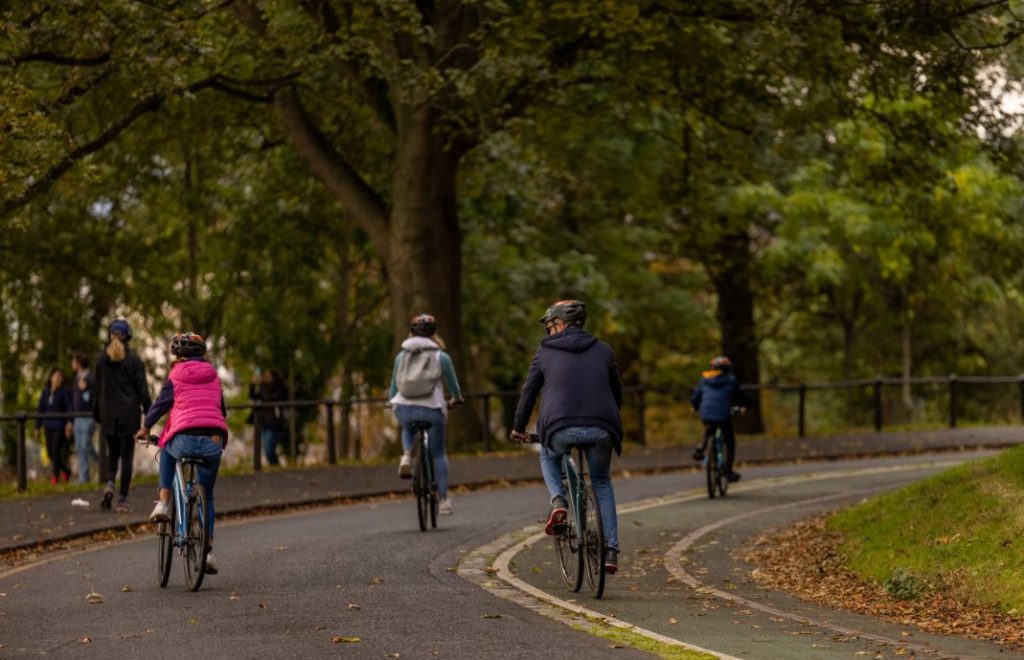
- Cycling and walking trails, playgrounds, and a Gaelic football pitch
At the park’s heart stands the Wellington Monument, a towering 62-meter obelisk that honors Arthur Wellesley, 1st Duke of Wellington (1769-1852), born in Dublin and famed for defeating Napoleon at the Battle of Waterloo. It’s the tallest obelisk in Europe, and its presence commands both admiration and curiosity.
For a deeper dive into the park’s story, visit the Phoenix Park Visitor Center, located in Ashtown Castle – a restored medieval tower house dating back to the 1600s. The centre offers historical exhibits, scenic walking routes, and a cozy café perfect for a post-stroll treat.
Whether you’re renting a bike, picnicking under ancient trees, or simply breathing in the wide open air, Phoenix Park offers a peaceful retreat. It is a noble reminder of Dublin’s deep-rooted connection to both land and legacy.
Dublin Zoo – a wild adventure for all ages
Nestled within the lush greenery of Phoenix Park, Dublin Zoo is one of the city’s most beloved attractions – especially for families with young explorers in tow. Established in 1831, it’s one of the oldest zoos in the world, and today it stands as a modern, conservation-focused haven for animals from across the globe.
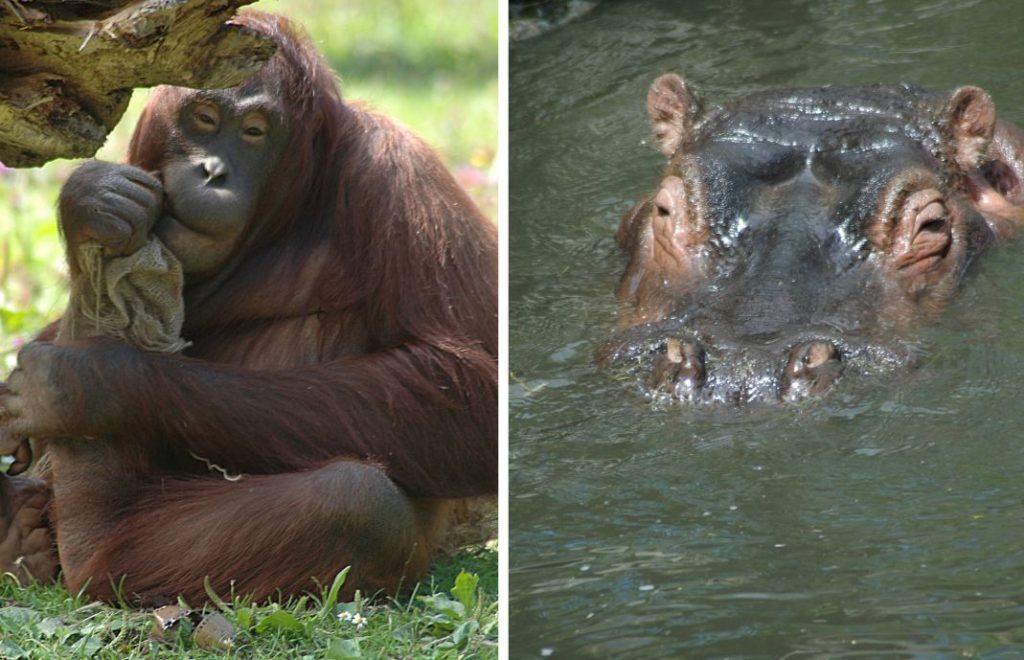
Home to over 400 animals, the zoo offers the chance to come face to face with majestic lions, graceful giraffes, curious orangutans, elephants, gorillas, and many more. Each habitat is carefully designed to reflect the animals’ natural environments, creating a respectful and enriching experience for both creatures and guests.
Zookeepers share fascinating facts throughout the day. Don’t miss the informative talks about tigers, rhinos, and sea lions, where kids (and grown-ups) can learn what it takes to care for some of earth’s most incredible species.
Whether you’re strolling through the African Savanna, watching the antics in the Orangutan Forest, or marveling at big cats in the Asian habitat, Dublin Zoo is a vibrant, educational, and unforgettable experience for all ages.
 Main image: Tourism Ireland
Looking for more inspiration to Dublin?
Experience Guinness in Dublin
The Merry Ploughboy Pub
Afternoon tea the Irish way
Craving more of Ireland?
20 unmissable experiences in Ireland
5 must-do experiences in Kilkenny
