
There’s something strangely captivating about places that were never meant to be beautiful. My visit to Eastern State Penitentiary in Philadelphia was exactly that. Unique, interesting, thought-provoking, and impossible to forget.
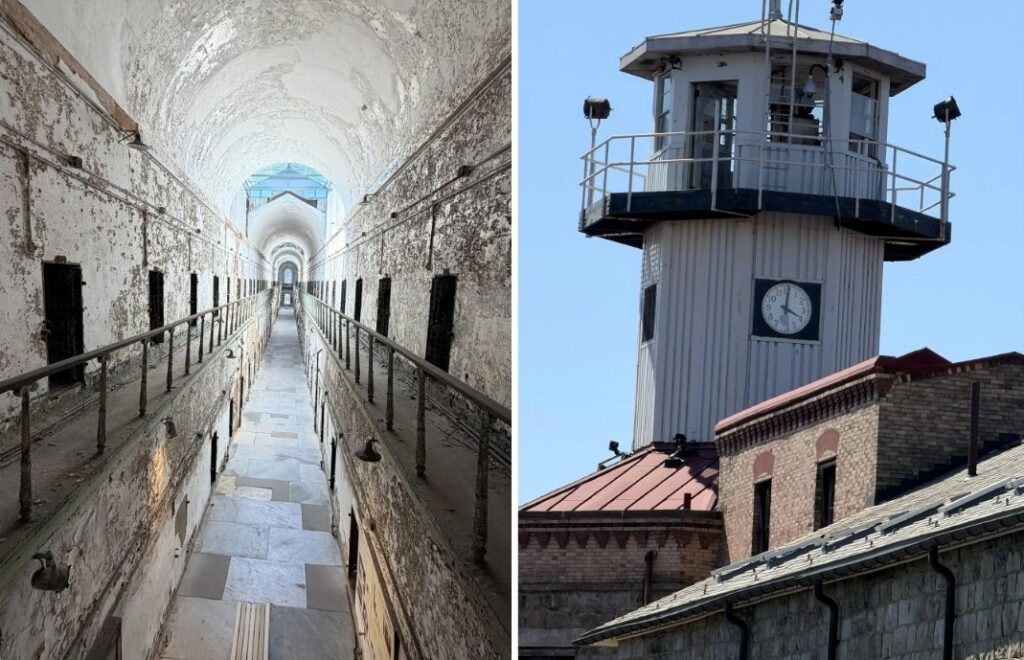
At first glance, its crumbling stone walls and empty cellblocks feel frozen in time. But as I walked through the long, silent corridors, it quickly became clear that this isn’t just another historic landmark. It’s a place where stories linger – of isolation, reform, and the people who once lived behind those heavy iron doors.
What makes Eastern State so fascinating isn’t just its reputation as one of the most famous prisons in the world. It’s how it invites you to step directly into its past. You don’t just learn about history here – you feel it. From the haunting architecture to the preserved cells, every corner seems to whisper something.
If you’re visiting Philadelphia and looking for an experience that goes beyond the usual tourist stops, this is one place that will stay with you long after you leave.
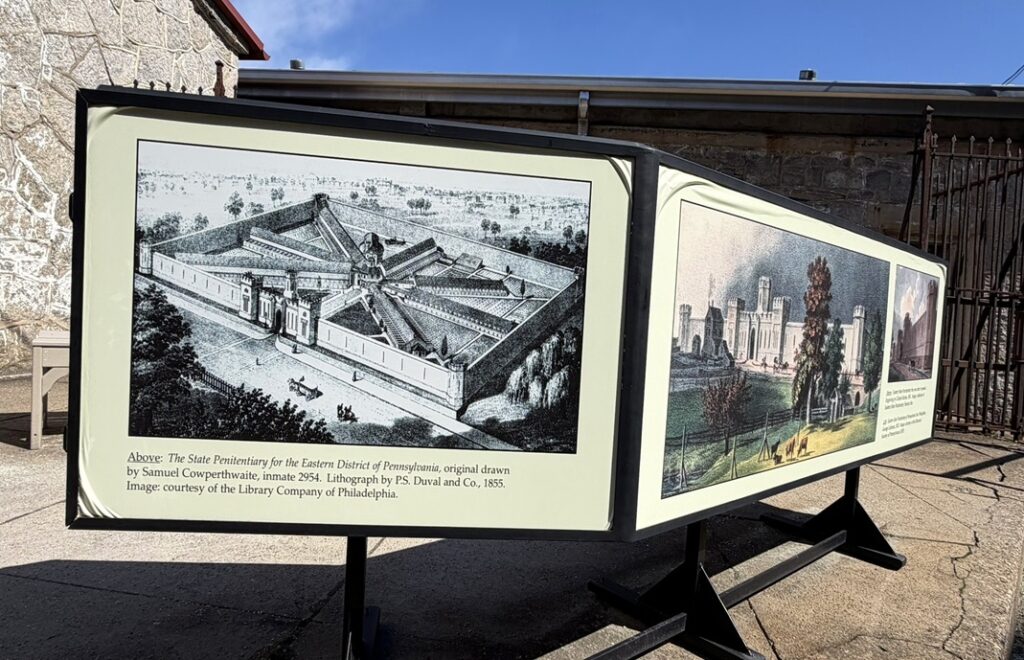
The history of Eastern State Penitentiary
When Eastern State Penitentiary opened its doors in 1829, it wasn’t just another prison – it was a bold social experiment. Built on the idea that solitude could inspire reflection and reform, it introduced a system unlike anything the world had seen before.
At the time, the concept was considered revolutionary. Prisoners were kept in near-total isolation, each confined to a single cell with a small private exercise yard. The goal wasn’t punishment in the traditional sense, but rehabilitation through quiet introspection. In theory, inmates would confront their actions, find remorse, and emerge as better people.
Architecturally, the prison was just as groundbreaking. Designed with a radial layout – often compared to a wagon wheel – cellblocks extended from a central hub, allowing guards to monitor multiple corridors at once. This design became a model for hundreds of prisons worldwide.
But the reality inside those walls was far more complex. While the system aimed to reform, the extreme isolation often led to severe mental strain. Over time, the original approach was abandoned, and the prison evolved into a more conventional facility.
Throughout the 19th and early 20th centuries, Eastern State housed thousands of inmates, including famous names like Al Capone. By the time it closed in 1971, the prison had long outgrown its original ideals, but its legacy as a pioneer in prison design and reform remains.
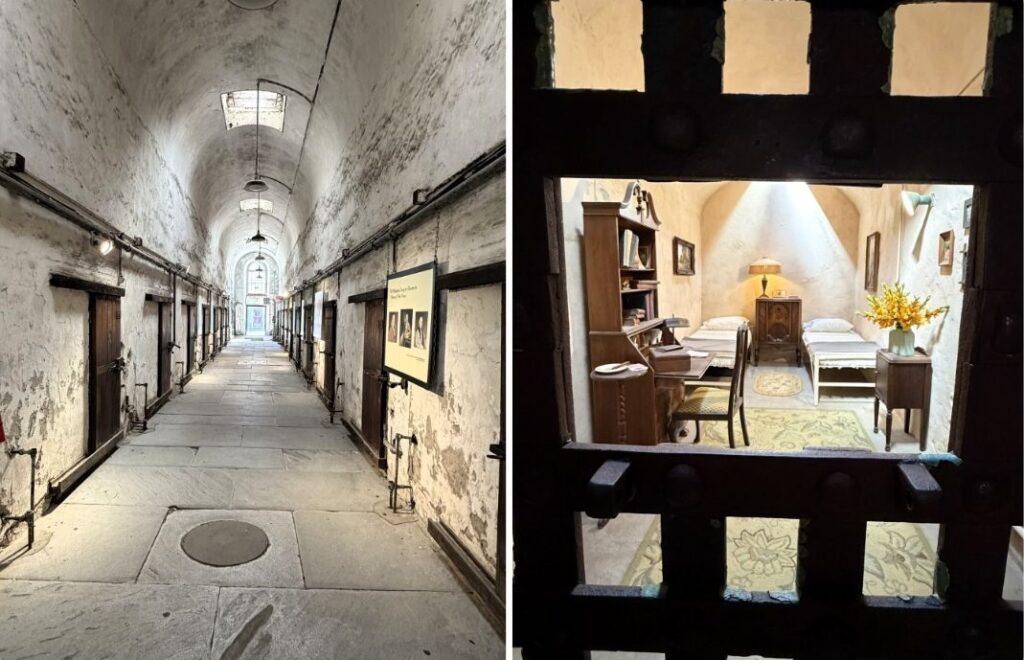
What you can experience today
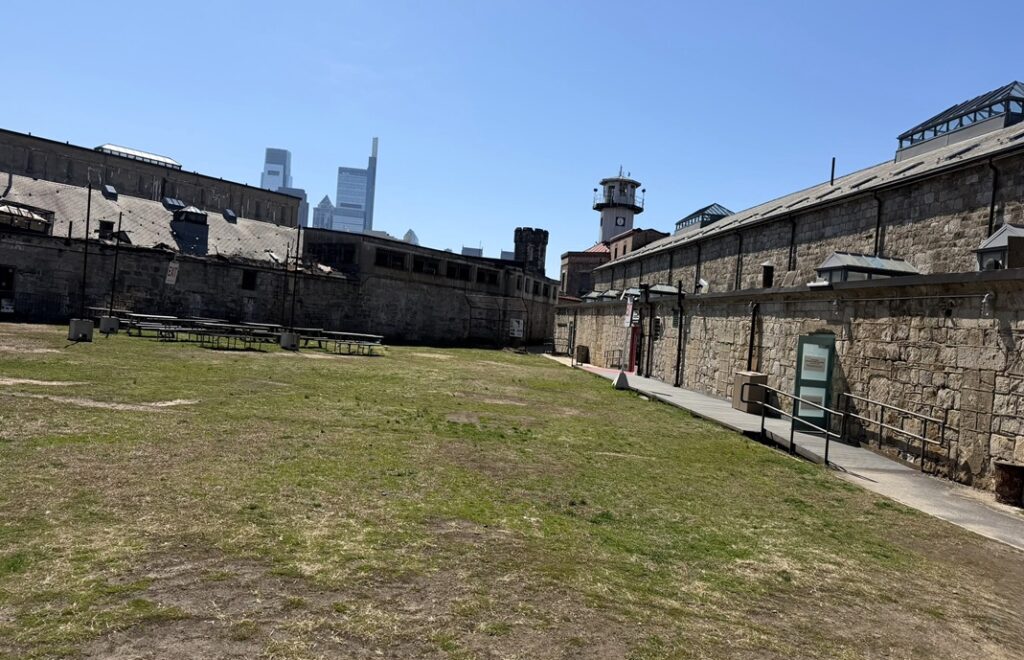
Visiting Eastern State Penitentiary feels less like stepping into a museum and more like walking through a living piece of history. The site has been carefully preserved in a state of “stabilized ruin,” which means you’re seeing it much as it was left – crumbling, atmospheric, and incredibly real.
One of the highlights of any visit is the self-guided audio tour, narrated by Steve Buscemi. As you move through the cellblocks, his voice adds depth and emotion to the experience, blending historical facts with personal stories from former inmates and guards. It’s immersive in a way that makes the past feel uncomfortably close
You’re free to explore several cellblocks, each with its own character. Some cells are bare and haunting, while others have been restored to show how prisoners once lived. Walking into these small, dimly lit spaces gives you a powerful sense of the isolation that defined daily life here.
There are also a few exhibits that bring the prison’s history to life. One of the most popular is the restored cell of Al Capone, which contrasts sharply with the otherwise stark surroundings. You’ll also find installations that explore topics like prison reform, mass incarceration, and the evolving role of the justice system.
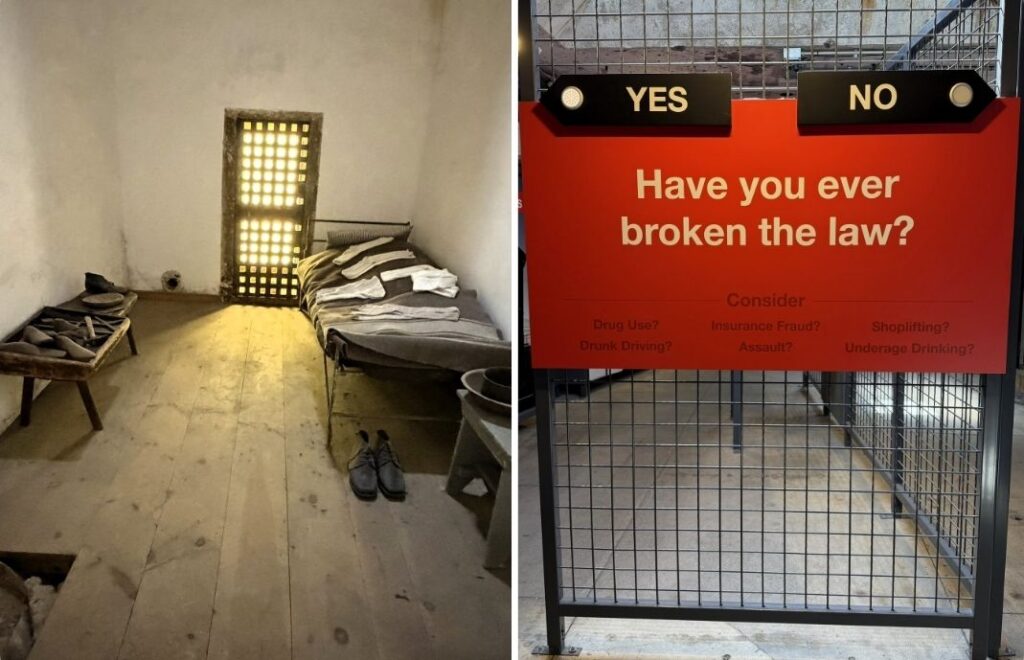
Why you should visit Eastern State Penitentiary
Today, walking through its crumbling halls offers a powerful glimpse into a time when society believed solitude could change the human soul – and invites us to question whether it ever truly could.
What makes a visit here so memorable is the balance between history and atmosphere. It’s educational, yes – but also deeply emotional. You don’t just observe the past at Eastern State – you feel it in the silence, the shadows, and the stories that still echo through its walls.
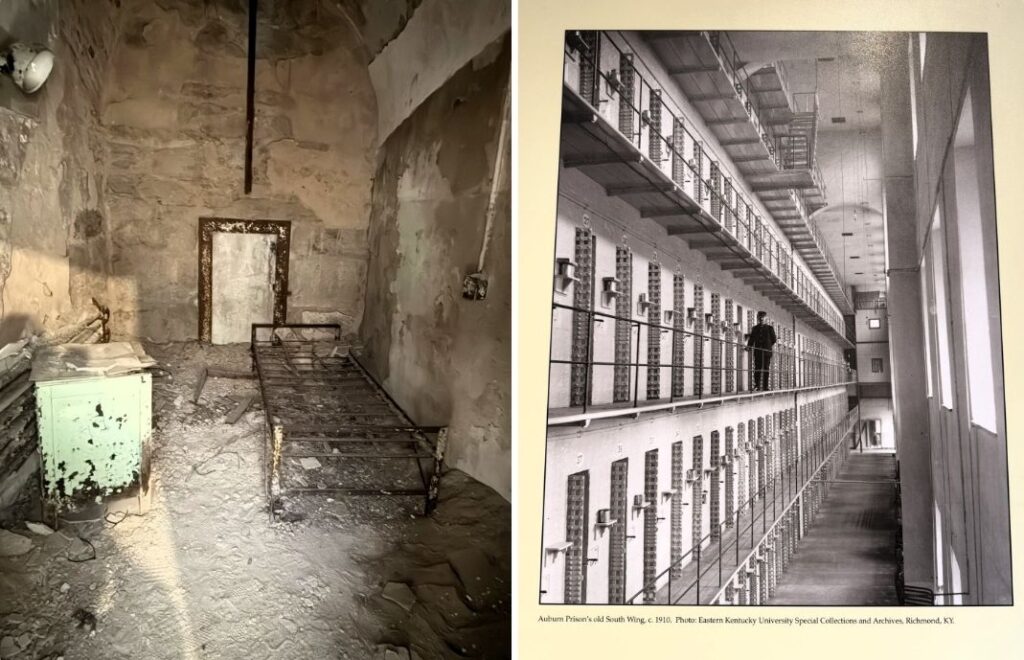
What is the best way to see this historic site?
All the daytime programming (audio tours, mini tours, art installations and exhibits) is included in the admission price.
Upon arrival, you will get an mp3 player and headphones that will guide you through the historic site complex and explain the prison’s history. The audio guide contains a main audio tour route, plus additional stops for subjects like escapes, sports, sexuality, race, and more.
It is recommended to start with the main audio tour (audio stops 1-10) which lasts about 40 minutes. The main audio tour ends at The Big Graph and the exhibit Prisons Today. From there, you can explore freely and tour at your own pace.
The historic site also offers quick, interactive tours led by educators throughout the day. These Mini Tours are a great way to explore otherwise off-limits areas and learn more about life at Eastern State Penitentiary and in prison today. Note that the Mini Tours schedule changes every day.
Practical guide
Planning a visit to Eastern State Penitentiary is straightforward, but a little preparation can make your experience much smoother – and more enjoyable.
Location & getting there
The penitentiary is located in the Fairmount neighborhood of Philadelphia, just a short distance from the city center. It’s easy to reach by public transport, or even on foot if you’re staying nearby. Parking is available in the surrounding streets, but it can fill up quickly, especially on weekends.
Opening hours & Tickets
Eastern State Penitentiary is typically open year-round, with longer hours during the peak tourist season (spring through fall). It’s a good idea to check opening times in advance, as they can vary depending on the season and special events. Buying your ticket online will save time and guarantee entry during busy periods.
How much time you need
Plan to spend around 1.5 to 2 hours exploring the site. If you enjoy photography, history, or taking your time with exhibits, you could easily stay longer.
Best time to visit
For a quieter and more atmospheric experience, try to visit early in the morning or later in the afternoon. Weekdays are generally less crowded than weekends.
Halloween
If you’re visiting in the fall, the experience takes on a completely different tone during the famous Terror Behind the Walls, when the prison transforms into one of the most well-known haunted attractions in the United States.
What to bring
Wear comfortable shoes – the ground can be uneven, and you’ll be doing a fair amount of walking. A light jacket is also a good idea, as some areas inside the prison can feel cool, even in summer. Don’t forget your camera; it’s one of the most photogenic spots in Philadelphia.
Accessibility
Parts of the site are accessible, but due to the historic nature of the building, some areas have limited access. The visitor center provides more detailed information, and staff are available to help plan your route.
A visit to Eastern State Penitentiary is as practical as it is powerful. A bit of planning ensures you can focus on what really matters: experiencing this unique and unforgettable place.
Other museums in Philadelphia worth visiting:
Your guide to the Museum of the American Revolution
