There is something wonderfully captivating about the American Southwest.
Perhaps it’s the fiery red landscapes, the enormous skies, or the feeling that every dusty road has a story waiting around the next bend. Or perhaps it’s the extraordinary blend of cultures that makes this corner of America unlike anywhere else.
Here, ancient Indigenous traditions, Spanish colonial influences, Mexican heritage, and the colorful chapters of the American frontier have all contributed to a fascinating regional identity.
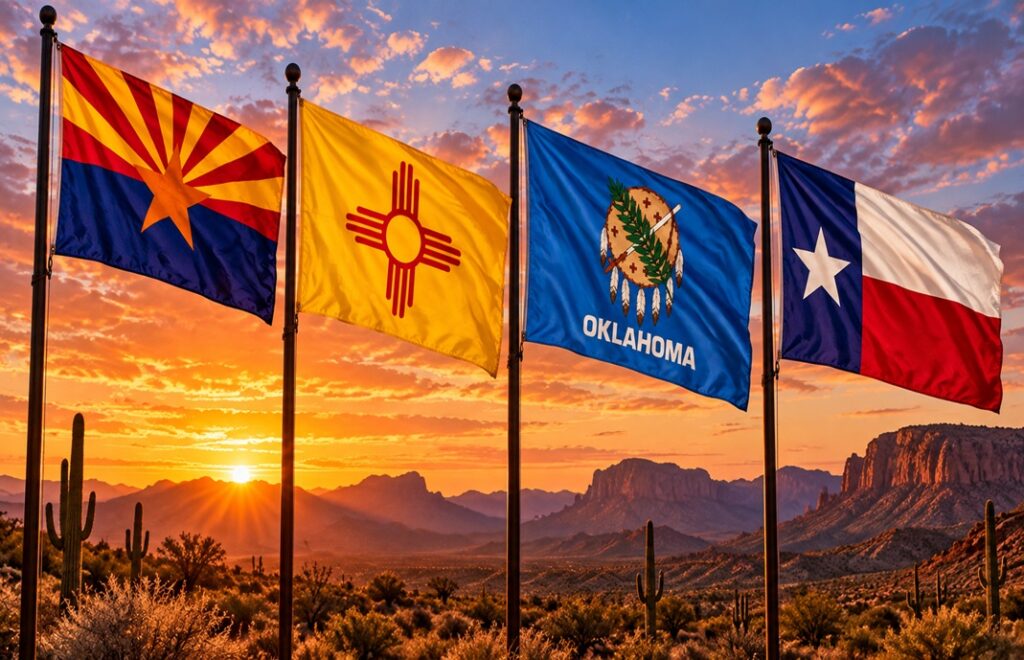
And surprisingly, you can discover glimpses of that identity simply by looking at four state flags.
Take Arizona, for example. Its flag looks almost like a spectacular desert sunset, with golden rays spreading across a brilliant red sky. New Mexico, meanwhile, has chosen a beautifully simple design inspired by an ancient sacred symbol.
Then there is Oklahoma, whose flag honors Native American heritage through an unusual combination of traditional objects and symbols of peace.
And Texas?
Well, Texas has never been particularly shy about expressing its independent spirit. Its famous Lone Star flag has a story that stretches back to the days when Texas was an independent republic.
But what makes these four flags particularly fascinating is how different they are.
While some American state flags feature elaborate seals and complicated historical scenes, the Southwest offers bold colors, striking patterns, and symbols that can tell remarkable stories without needing dozens of details.
There are connections to ancient traditions, struggles for independence, cultural identity, and the extraordinary landscapes that have helped shape this region.
Along the way, you’ll discover a few surprising details that might make you look at these familiar flags in a completely different way.
So, let’s explore the flags of Arizona, New Mexico, Oklahoma, and Texas.
Four states, four distinctive designs, and stories that take us from the cultures of the ancient Southwest to the dramatic days of the American frontier.
Because in the Southwest, even the flags seem to have a little more color, character, and attitude.
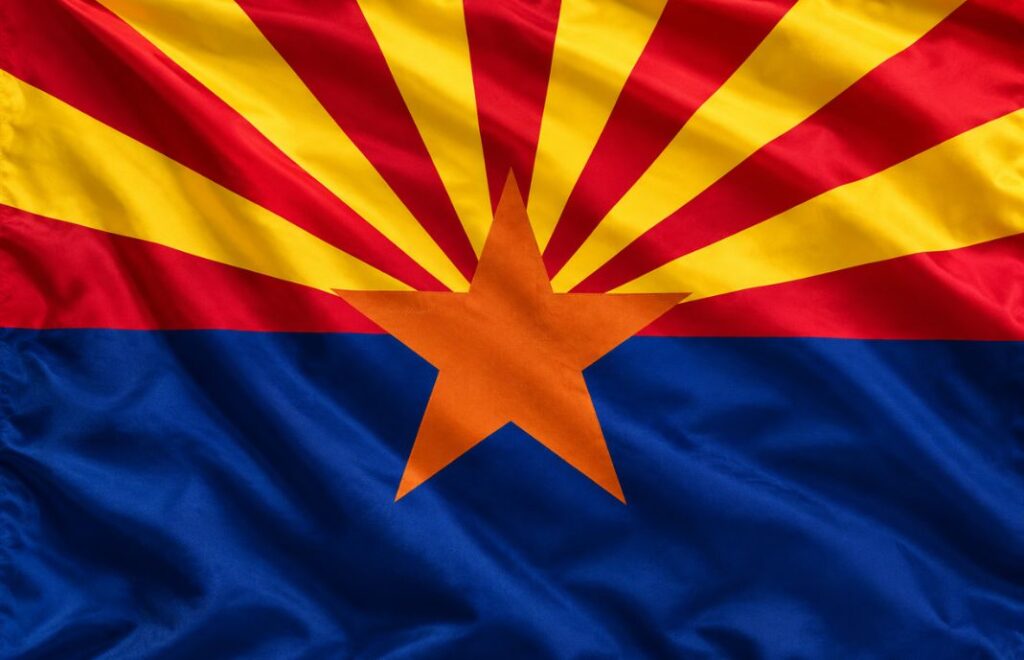
Arizona: A copper star and a spectacular sunset
Arizona’s state flag looks like a spectacular desert sunset, with its brilliant red and golden-yellow rays spreading across the sky.
The thirteen alternating rays represent America’s original thirteen colonies, while the colors recall the Spanish explorers who traveled through the region centuries ago.
Beneath them sits a deep-blue field, with a magnificent copper-colored star celebrating Arizona’s rich mining heritage.
But here’s something surprising.
The flag’s story began with an Arizona rifle team that needed a banner for a national shooting competition in 1910. Their solution eventually became the state’s official flag in 1917.
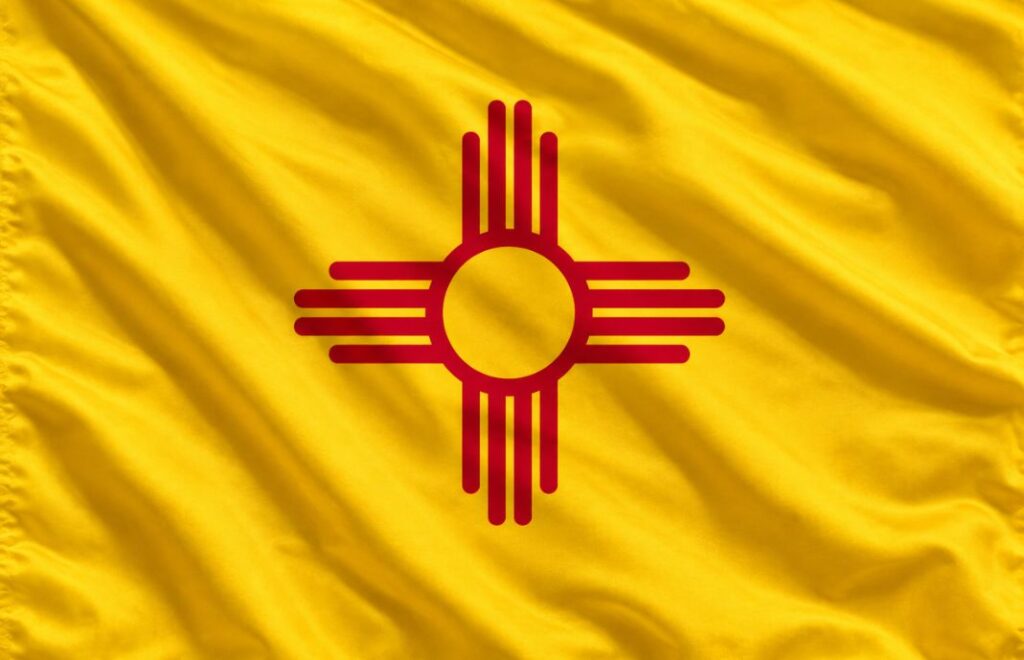
New Mexico: One sun, four directions, and an ancient tradition
Sometimes, the simplest designs carry the most extraordinary stories. And New Mexico’s beautiful state flag is a perfect example.
Against a brilliant golden-yellow background sits a red Zia sun symbol, inspired by the cultural and spiritual traditions of the Zia Pueblo.
Its four groups of rays represent the four cardinal directions, four seasons, four periods of the day, and four stages of human life.
But here’s something fascinating.
The flag was designed by Santa Fe physician Harry Mera and officially adopted in 1925. However, the sacred symbol was used without Zia Pueblo’s consent, adding an important and complicated chapter to its history.
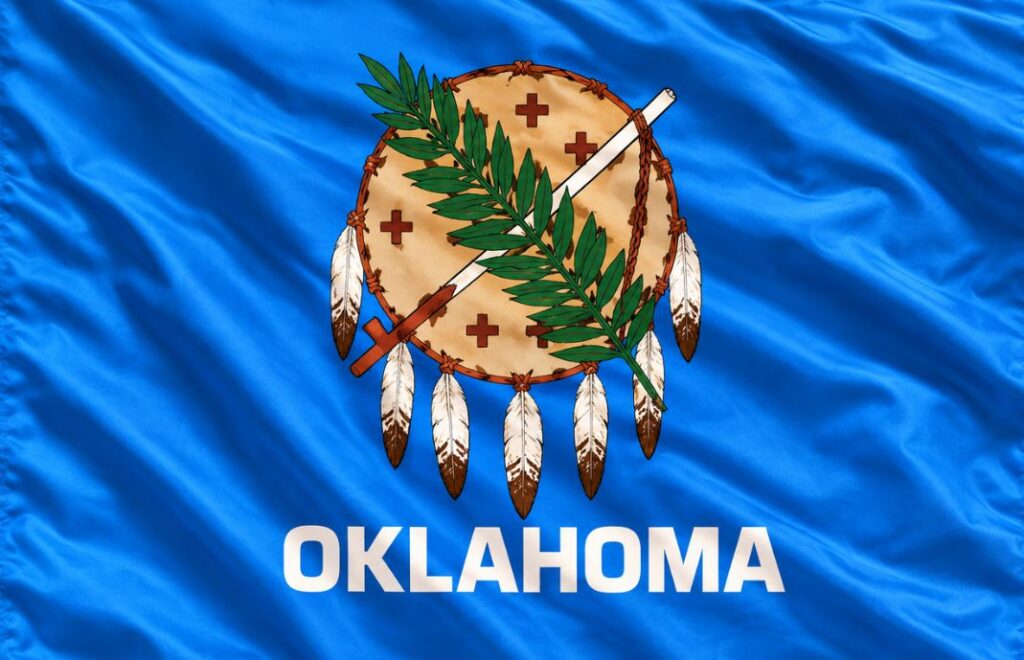
Oklahoma: A warrior’s shield and a message of peace
A warrior’s shield might seem like an unusual way to celebrate peace, but that’s precisely what makes Oklahoma’s state flag so fascinating.
Against a beautiful sky-blue background sits a traditional Osage warrior’s shield, decorated with eagle feathers.
Across the shield lie an olive branch and a ceremonial pipe, both representing peace and friendship between different cultures.
But here’s a surprising detail.
Oklahoma’s original state flag looked completely different. It featured a bright red background and a large white star containing the number 46.
The present design, created by artist Louise Funk Fluke, was adopted in 1925, with the state’s name added later.
Texas: One star, one republic, and a whole lot of pride
Everything is bigger in Texas, or so the saying goes. But its famous state flag makes an enormous statement with just one white star and three bold colors.
The Lone Star Flag features a vertical blue stripe alongside horizontal white and red bands, representing loyalty, purity, and bravery.
But here’s what makes this flag particularly special.
Before Texas joined the United States, it was an independent republic, and the familiar Lone Star design was officially adopted in 1839.
And here’s another interesting detail: Texas’s flag is occasionally confused with Chile’s national flag because of their remarkably similar colors and single white stars.
More inspiration: Discover the fascinating story behind Texas’s state flag