
The heavy water sabotage – also known as the Vemork Operation – is the most famous act of resistance ever carried out on Norwegian soil during World War II.
On April 9, 1940, Nazi Germany invaded Norway. At the same time, German scientists believed that heavy water was essential for developing an atomic bomb – a weapon that could determine the outcome of the war. And there was only one place in Europe producing heavy water on an industrial scale: Norsk Hydro’s hydrogen plant at Vemork, just outside Rjukan in Telemark.
The factory became a strategic focal point—not only for the occupying German forces but also for the Allied intelligence network.
The mission was clear: the Germans had to be stopped. No matter the cost.
What followed were a series of sabotage operations that rank among the boldest and most dramatic in all of World War II. Carried out under the cover of darkness in the unforgiving Norwegian wilderness, these missions combined extraordinary courage, military precision, and deep local knowledge. They were not only acts of sabotage – they were acts of defiance that helped shape the fate of a continent.
Operation Grouse
The year is 1942. Cloaked in secrecy and codenamed Grouse, a daring mission begins deep in occupied Norway.
It starts with a single man parachuted into the wilderness to gather vital intelligence on the German production of heavy water. On October 19, four more Norwegians, locals from Rjukan, intimately familiar with the rugged terrain, were dropped by parachute near Songadalen, west of the town.
Their mission: to prepare for a future sabotage strike and transmit radio messages back to England. What followed was a punishing journey through the wilds of Telemark. Battling the elements and isolation, the team endured weeks without contact with the outside world until a new battery arrived, reviving their vital radio link.
One month later, on November 19, 1942, the main assault force was dispatched from England. Two gliders carrying 34 elite British commandos were to land near the frozen lake Møsvann at Skoland. Their objective: destroy the heavy water plant at Vemork.
But the operation unraveled before it even began.
Harsh weather drove one towing aircraft into a mountainside in southwestern Norway, destroying the glider it was carrying. The second glider detached prematurely, crashing as well. The surviving soldiers were captured and subsequently executed by the Germans.
The sabotage mission was in ruins.
But the five men of Grouse survived.
With their cover still intact, they renamed their group Swallow and retreated deep into the frozen expanse of the Hardangervidda plateau. There, in the vast and desolate winter wilderness, they endured brutal conditions with little food and minimal gear.
On the brink of starvation, they managed to hunt a reindeer – and survived the winter by consuming every part of the animal, including the stomach contents.
Against staggering odds, their courage and resilience laid the groundwork for one of the most legendary sabotage missions in history.

Operation Gunnerside
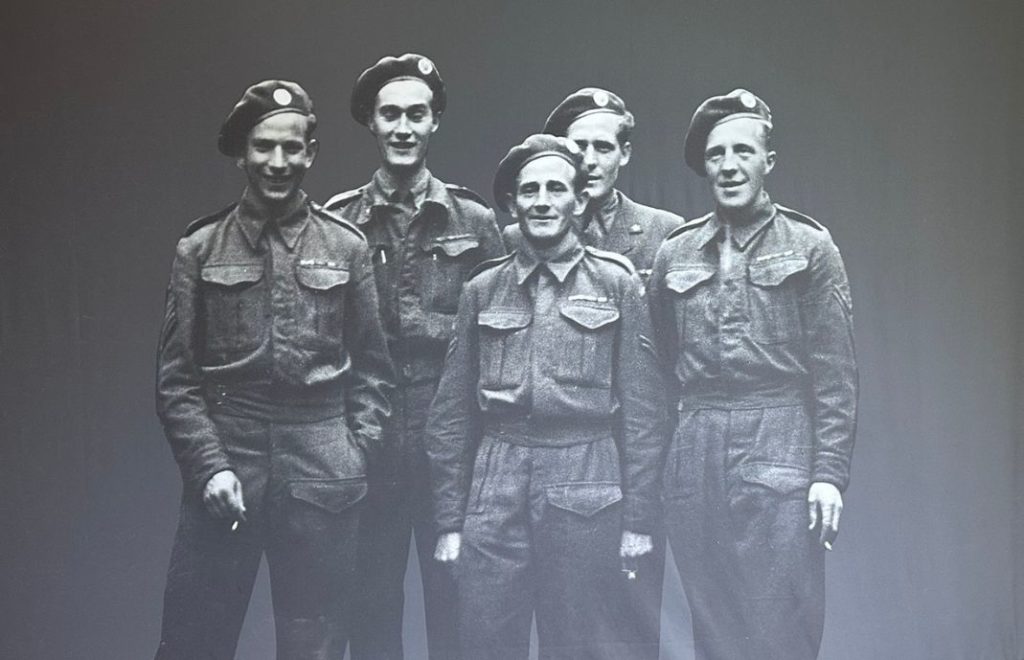
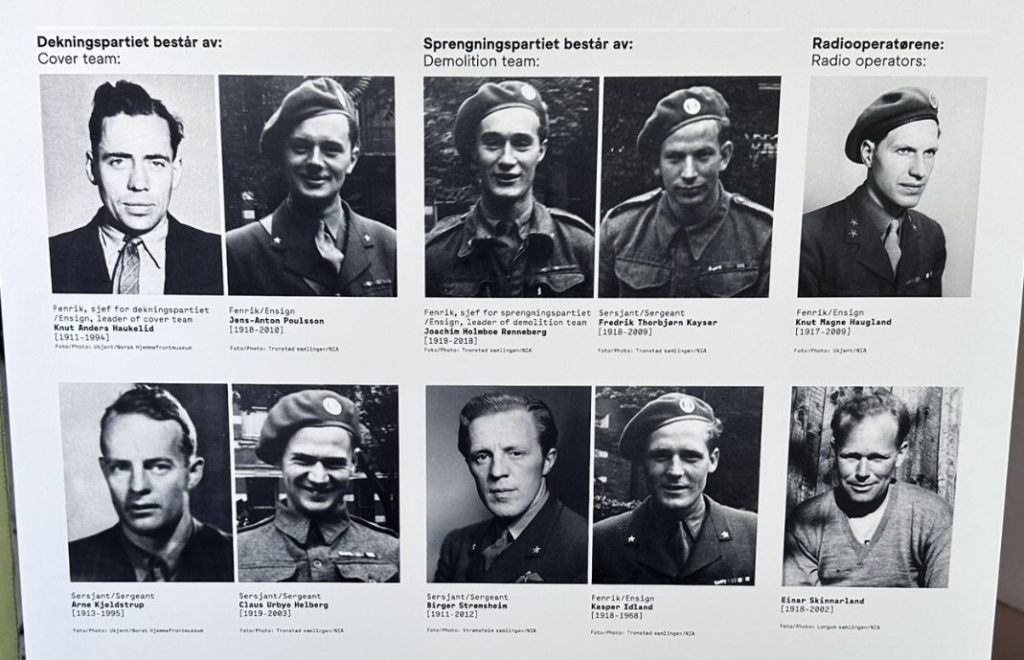
Building on the groundwork laid by the Grouse team, the British high command launched a bold new phase of the sabotage mission. On February 16, 1943, six elite Norwegian commandos – specially trained under the Norwegian Independent Company No. 1 – parachuted into the frozen vastness of the Hardangervidda plateau
Once again, the unforgiving Norwegian winter proved a formidable adversary. Fierce storms forced the Gunnerside team to land nearly 50 kilometers from their target. It took several grueling days through snow and wind before they finally rendezvoused with the Swallow team.
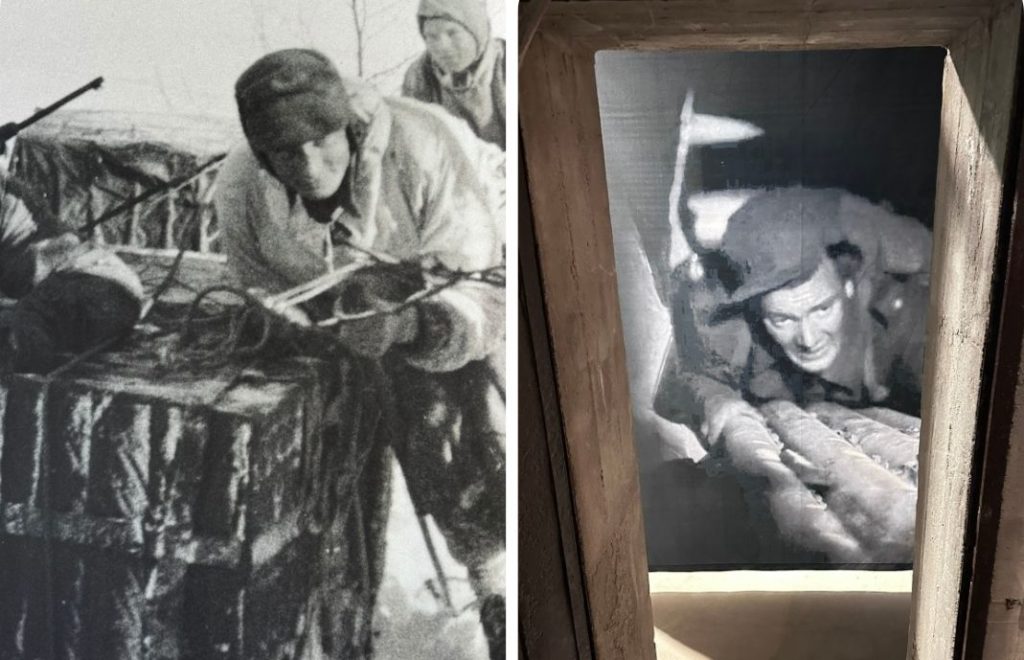
Then, on the night of February 28, the saboteurs lay in wait in Fjøsbudalen, just north of the Vemork plant. The time had come. Under the cover of darkness, they descended into the icy ravine below the facility -dangerous, steep, and slick with winter frost. After scaling the gorge, they clipped through a gate and silently infiltrated the plant.
The covering team took position. The demolition team advanced.
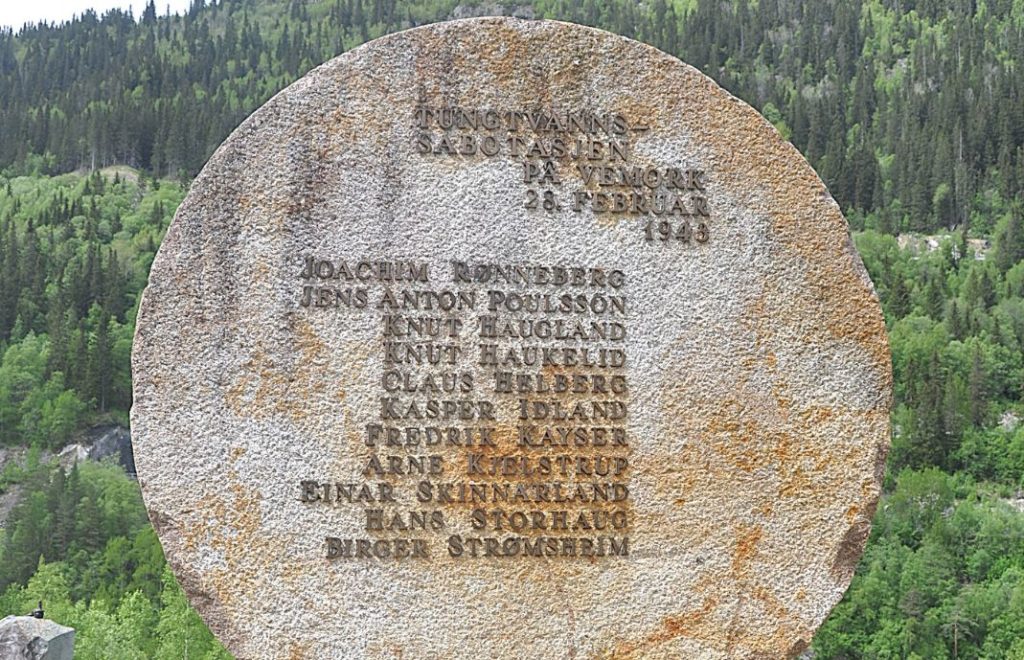
Explosives were carefully placed within the heavy water production unit. The resulting blast destroyed the high-concentration equipment and large stocks of the precious heavy water the Germans so desperately needed for their nuclear ambitions.
Amazingly, the German guards noticed nothing until the explosion shattered the night. By the time they reacted, the saboteurs were already climbing back up the mountain, following an old service road beneath the Krossobanen cableway.
Once safe, the group split. The demolition team – dressed in full uniform and carrying weapons – skied across the breadth of southern Norway: from Rjukan through Hallingdal, Valdres, Gudbrandsdalen, and Østerdalen, eventually making it across the border into neutral Sweden.
The others scattered across the vast, snow-covered Hardangervidda. Despite a massive German search operation involving 3,000 soldiers combing the plateau, not a single saboteur was captured. Their radio station remained operational, continuing to transmit to Allied headquarters in London until the very end of the war.
Operation Gunnerside has since become one of the most celebrated acts of sabotage in modern military history – a mission defined by courage, precision, and the unwavering resolve of a handful of men who altered the course of global events.
One final effort
Though the Vemork facility had been damaged, it was not the end. The plant was rebuilt – and its threat remained. So great was the danger that the Americans decided to act. On November 16, 1943, a squadron of 160 bombers flew over Rjukan, unleashing devastation upon the Vemork hydrogen plant and power station.
More than 20 Norwegian civilians – men, women, and children – were killed in the air raid.
But the bombing forced the Germans to abandon their production plans at Vemork.
Yet the battle for the heavy water was not over.
Allied intelligence soon uncovered the next move: the Germans intended to transport the remaining semi-processed heavy water from Rjukan to Germany. From London came a clear and urgent order – destroy the transport at all costs.
The weakest link in the route was the railway ferry Hydro, which crossed the deep waters of Lake Tinnsjøen. Since German guards were stationed only at the docks and not on the ferry itself, the saboteurs were able to board undetected. They planted a time-delayed explosive in the bow.
The explosion occurred on Sunday, February 20, 1944. Hydro was about halfway through its journey across Tinnsjøen. The ferry sank in a matter of minutes. The important heavy water barrels went down with it.
Four Germans lost their lives, along with fourteen Norwegian civilians.
With that final act, the long and harrowing Battle for the Heavy Water in Norway came to an end.
A story of science, sabotage, and sacrifice – forever etched into the cold waters of Tinnsjøen and the pages of world history.
Source: Visit Rjukan
More inspiration: Norwegian Industrial Workers Museum – Vemork
Recommendation
For a gripping dramatization of one of history’s most daring acts of sabotage, don’t miss the Norwegian TV series The Heavy Water War (Kampen om tungtvannet, 2015).
This critically acclaimed six-part drama delves deep into the true story behind the heavy water sabotage mission against Norsk Hydro’s plant at Vemork during World War II. With cinematic flair and historical depth, the series traces the events from multiple perspectives: the Norwegian resistance fighters, the Allied command in Britain, and the Nazi scientists racing to build an atomic bomb.
The Heavy Water War masterfully captures the tension, the stakes, and the human courage at the heart of a mission that helped change the course of the war. A must-watch for anyone fascinated by wartime history, espionage, and the raw power of human determination.
Facts about heavy water
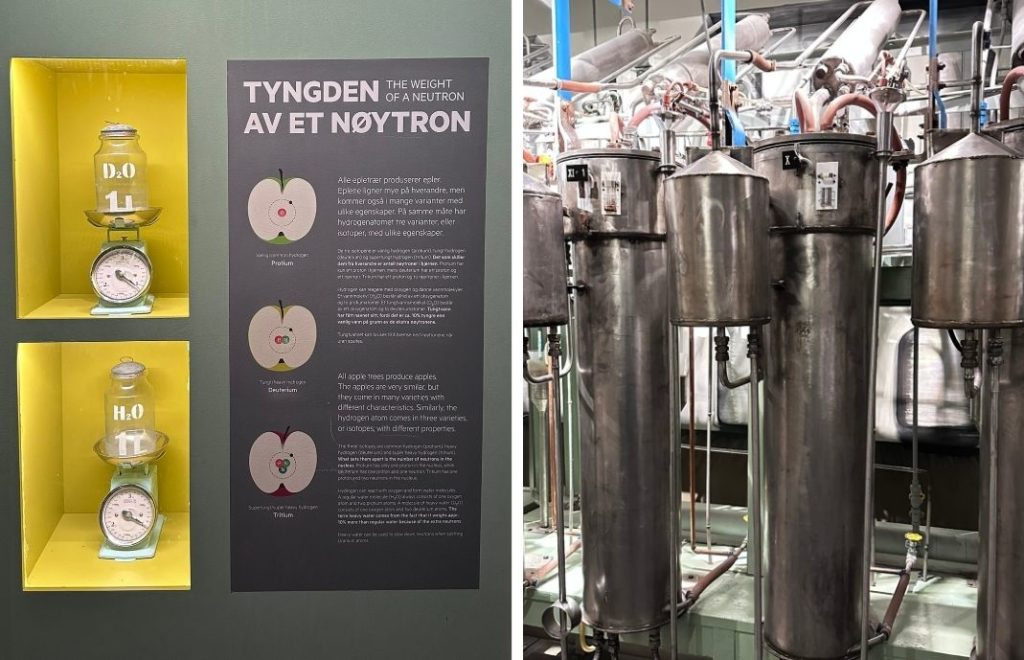
Heavy water, or deuterium oxide (D₂O), is a colorless, odorless liquid that closely resembles ordinary water (H₂O) – but its subtle difference made it a focal point in the race to build the atomic bomb.
What Is deuterium?
Heavy water contains deuterium (²H), a rare isotope of hydrogen. While regular hydrogen atoms consist of just one proton, deuterium atoms carry one proton and one neutron in their nucleus – doubling their mass.
How It differs from regular water
H₂O (regular water): Contains hydrogen atoms with only one proton.
D₂O (heavy water): Contains deuterium atoms – hydrogen with both a proton and a neutron.
This slight change gives heavy water distinct physical properties.
Physical properties
Melting point: 3.81 °C
Boiling point: 101.42 °C
These are both slightly higher than those of normal water, due to the added mass of deuterium.
How is it made?
Heavy water is produced through distillation or electrolysis of ordinary water, techniques that gradually separate out the heavier deuterium-containing molecules.
Uses
Nuclear Reactors: Heavy water is used as a moderator – it slows down neutrons to sustain a controlled nuclear reaction.
Nuclear Weapons Programs: Its role in enabling certain types of reactor designs made it a strategic material during WWII and beyond.
Historical significance
Heavy water was discovered by Harold Urey in 1932.
Norway began industrial production just two years later, in 1934, at the Hydrogen Plant in Rjukan.
This facility became the target of one of the most legendary sabotage missions of the Second World War – a critical moment in the effort to prevent Nazi Germany from developing nuclear weapons.
What appears to be “just water” was, in fact, at the heart of a global battle over the future of atomic power.
More inspiration to Gausta/Rjukan:
A guide to Gaustatoppen
