
Tupelo may not be the biggest city in Mississippi, but music lovers around the world know its name – because this is where Elvis Presley was born.
The Elvis Presley Birthplace & Museum is an iconic landmark, drawing over 100,000 visitors each year who come to see where the King of Rock ’n’ Roll began his extraordinary journey to fame and fortune.
The humble two-room house where Elvis entered the world has been recognized as a Mississippi historic landmark, and stands as a powerful symbol of his roots.
Beyond the birthplace, Tupelo offers several other Elvis-related sites, each adding a piece to the story of the boy who would become a global legend.
If you’re a fan of music history, Tupelo is a pilgrimage you won’t want to miss.
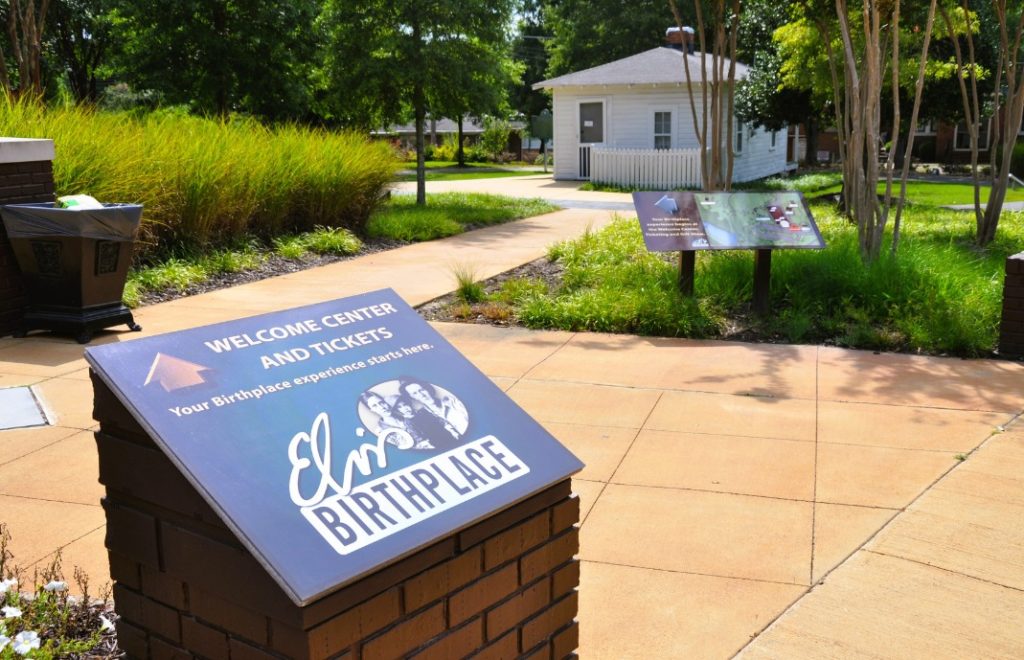
Elvis Presley Birthplace & Museum – Where the legend began
In 1934, Vernon Presley borrowed $180 to build a modest two-room house on the east side of Tupelo, Mississippi. It was in this humble home that Elvis Aaron Presley was born on January 8, 1935.
Life for the Presley family was tough. Struggling to make ends meet, Vernon couldn’t repay the loan, and after just three years, the house was repossessed by the bank. The family moved often around Tupelo, taking on various jobs to survive. When Elvis turned 13, they left Tupelo and moved to Memphis – a city that would become central to his rise to stardom.
Growing up in a deeply religious family, Elvis was heavily influenced by gospel music, regularly attending services at the Assembly of God Church. Gospel would go on to shape his musical style throughout his career. During his time in Tupelo, he was also exposed to blues through the Shake Rag community and listened to country music, forming a musical foundation that blended into his iconic sound.
The house and property were purchased by the City of Tupelo in 1957, and today, the home still stands in its original location – fully restored and furnished to reflect the era in which the Presley family lived there.
A visit to the Elvis Presley Birthplace & Museum is a deeply personal journey into the early life of the King, offering insight into the humble beginnings of a boy who would one day change music history forever.
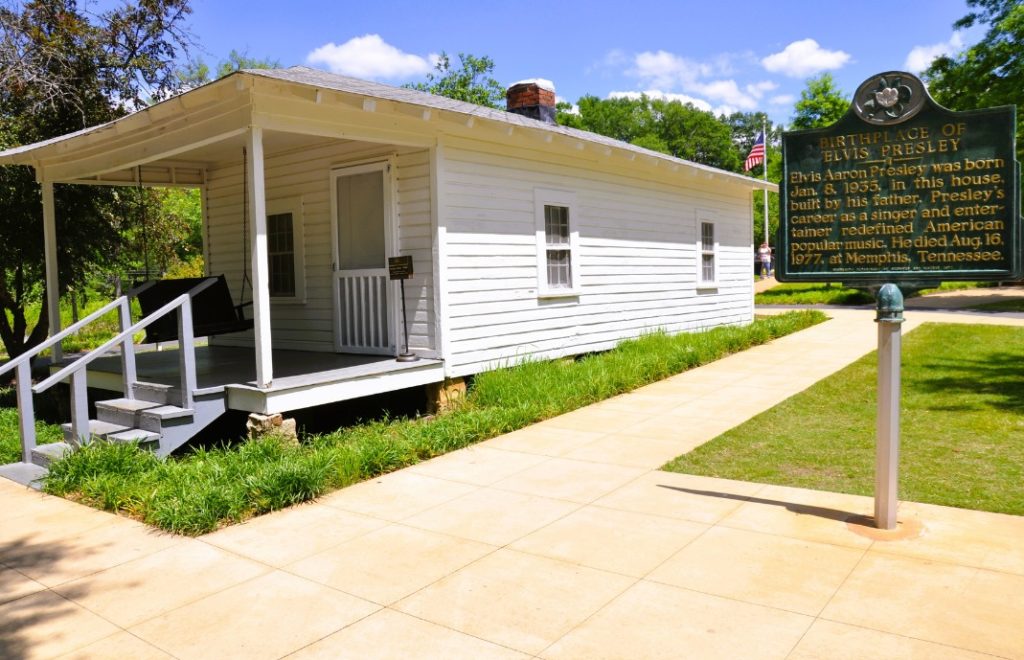
Walk of Life – Honoring the journey of a legend
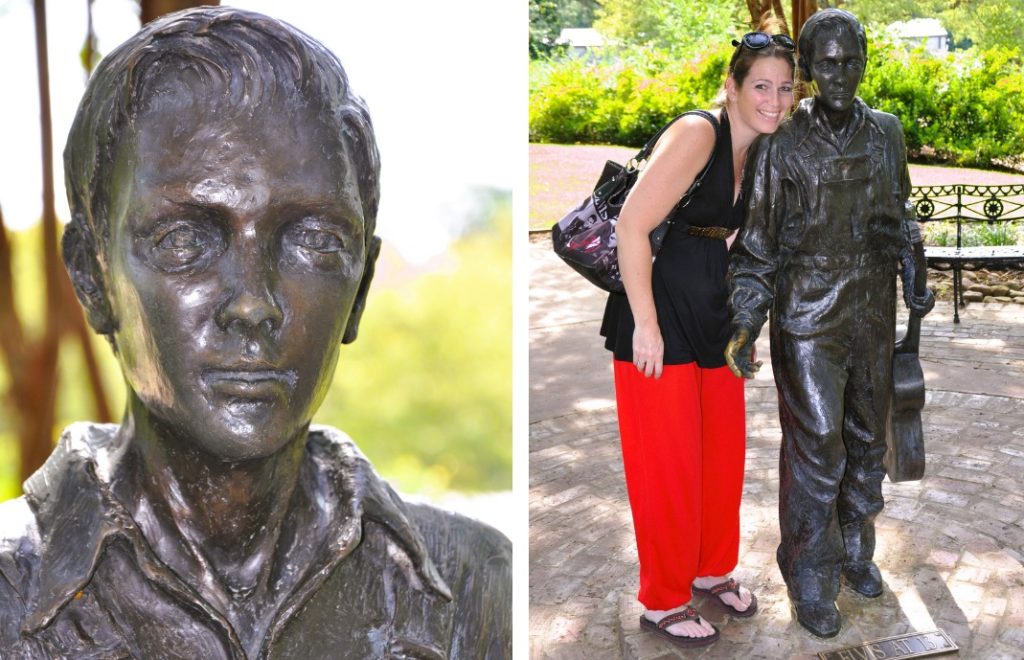
Surrounding the Presley family home in Tupelo is the beautifully symbolic Walk of Life – a circular path of granite stones, each one engraved with a year from 1935 to 1977, representing every year of Elvis’s life. It’s a quiet, reflective tribute that allows fans to walk the timeline of the King’s journey – from humble beginnings to global fame.
One of the most beloved stops along the walk is the 13-year-old Elvis statue – a bronze sculpture that has become a selfie hotspot for visitors. Depicting Elvis in a slightly oversized coverall, with an open shirt and simple shoes, the statue emphasizes the poverty and humility of his early life.
The statue is life-sized – exactly the height Elvis was at age 13 – and stands at ground level, allowing fans to connect with him not as a star, but as a boy with a dream. Sculptor Michiel Vander Sommen used vintage photographs to recreate his features, calculating his height by comparing Elvis to a classmate in a sixth-grade photo.
The statue captures Elvis as he walks toward Tupelo Overlook, a place he often went to sit, reflect, and play his guitar.
It was unveiled in 2002 and is dedicated to fans from around the world. Fittingly, the idea for the statue came from an Elvis fan in Ireland – a testament to the global reach of his legacy.
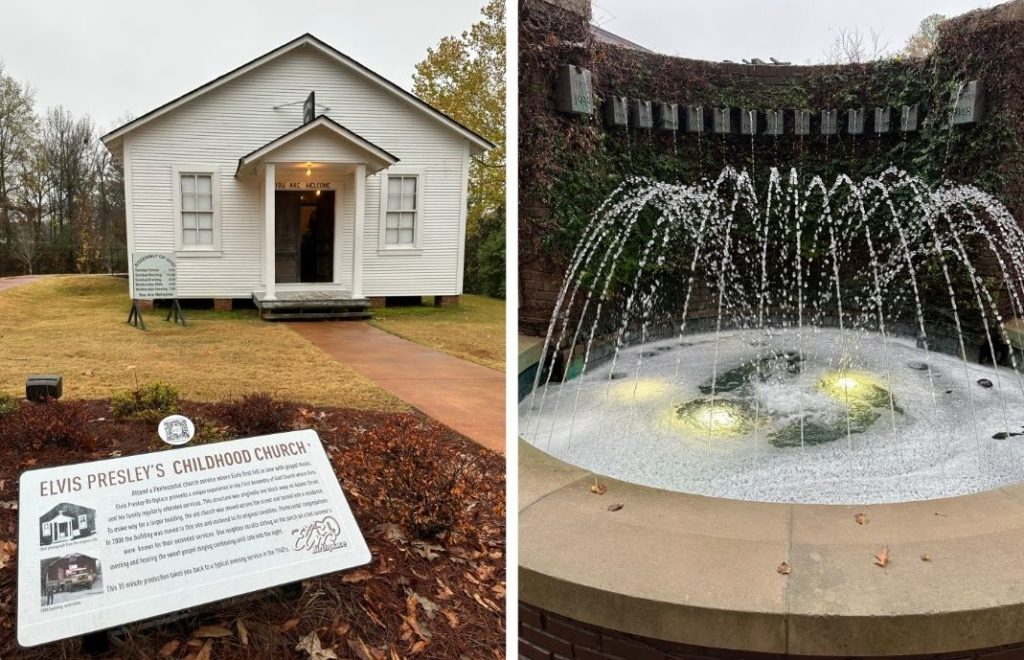
Elvis’s childhood church – Where the gospel journey began
Just steps away from the Presley home, you’ll find the original church building where the Presley family attended services. It is lovingly relocated to the Elvis Presley Birthplace site so fans can experience this deeply personal piece of his past.
It was in this humble church that young Elvis first encountered gospel music, a genre that would influence his sound throughout his entire career. The spirit, rhythm, and soul of gospel became the foundation of his musical identity.
According to Brother Frank Smith, the minister at the Assembly of God Church, Elvis was deeply drawn to music and eager to learn the guitar. It was Brother Frank who taught him the chords D, A, and E – just enough to strum out his first song, Ole Shep.
Visitors can relive this powerful chapter of Elvis’s life through an immersive multimedia presentation, which recreates a 1940s-style Assembly of God service, complete with gospel hymns and storytelling.
Fountain of Life – A tribute in water and time
Nearby, the Fountain of Life adds a poetic visual element to the site. Thirteen upward-shooting water jets represent the 13 years Elvis spent in Tupelo, while 29 lower jets symbolize his life and career in Memphis.
Together, they form a moving tribute to the two cities that shaped a legend – from the dusty streets of Tupelo to the glittering stages of Memphis.
Elvis Presley Museum – The boy behind the legend
Inside the Elvis Presley Museum in Tupelo, visitors are invited to discover the early life of Elvis as a boy, before the fame, the fans, and the flashing lights.
Through a touching collection of artifacts, family photos, and multimedia displays, the museum paints a vivid picture of Elvis’s childhood in Tupelo – his humble beginnings, deep love of music, and the everyday world that shaped him.
Memphis Bound – The journey begins
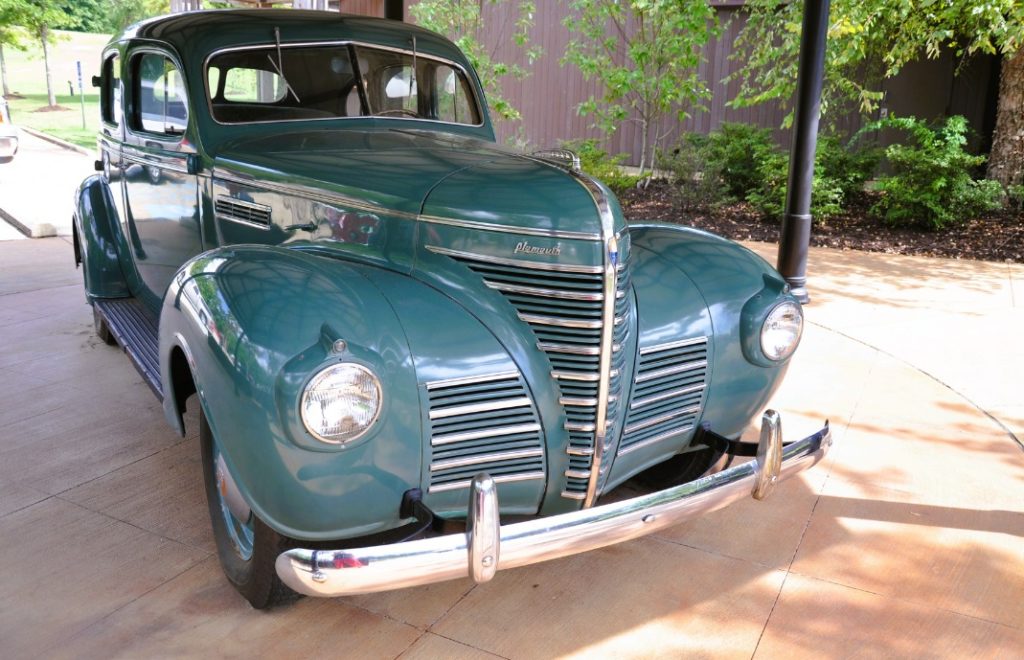
Just outside the museum stands a striking symbol of change: a green 1939 Plymouth Sedan, a replica of the car the Presley family drove when they left Tupelo for Memphis in 1948.
It was a journey that would change Elvis’s life – and the world of music – forever.
Next stop: Memphis.
Next chapter: The King.
Becoming – From boy to legend
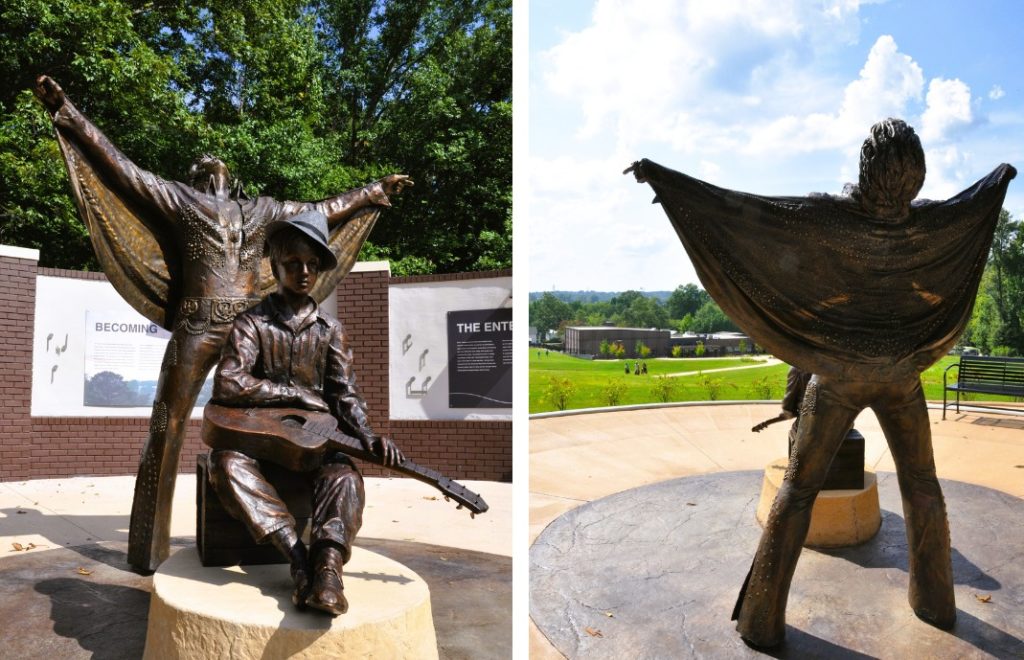
End your visit at the Overlook Pavilion, where two powerful statues – together known as Becoming – capture the heart of Elvis Presley’s extraordinary journey.
Perhaps it was here, on this quiet hill, that a young Elvis sat strumming his guitar, dreaming of a better life for himself and his family.
The statues depict two versions of Elvis: the hopeful boy with a guitar, and the polished performer he would become. Side by side, they symbolize the transformation of a humble Mississippi child into the global icon known as the King of Rock ’n’ Roll.
Though Elvis rose to unimaginable heights, he never forgot where he came from. His roots in Tupelo remained a constant part of his identity – a reminder that even legends begin with dreams.
Johnnie’s Drive-In – Dine like the King
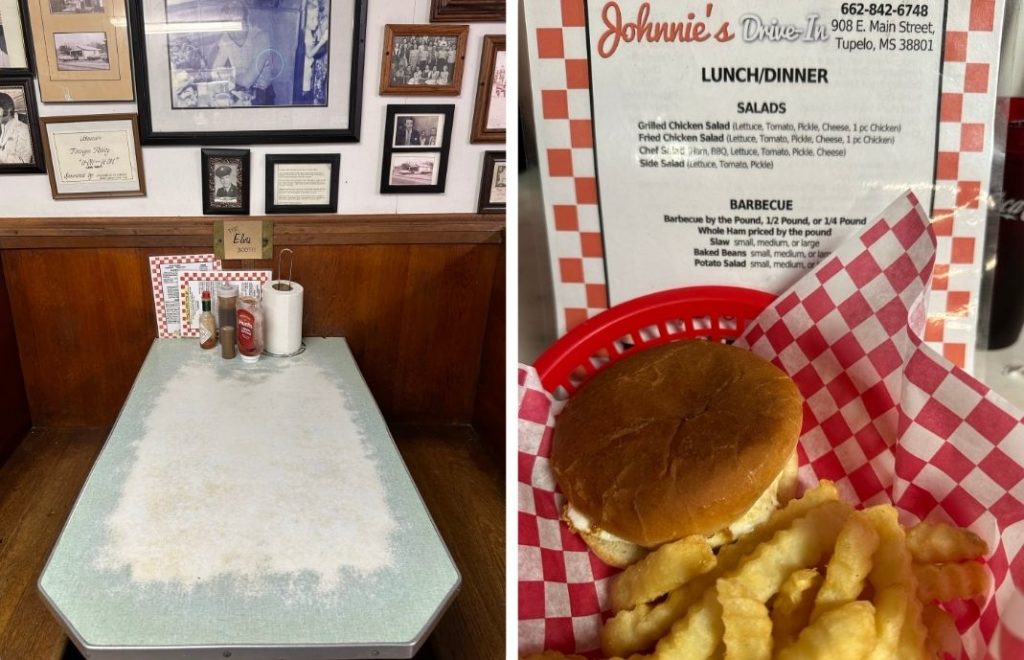
No Elvis pilgrimage to Tupelo is complete without a stop at Johnnie’s Drive-In. It’s a classic American diner where Elvis himself once sat down for a burger and a milkshake.
Still serving up breakfast, lunch, and dinner, this nostalgic eatery is known for its deliciously thick milkshakes and all-American comfort food.
But the real treat? You can sit in the very same booth where Elvis used to eat.
It’s a simple, authentic experience that brings you one step closer to the boy who became a legend – one bite at a time.
Elvis Presley Homecoming Statue – A monument to the King’s return
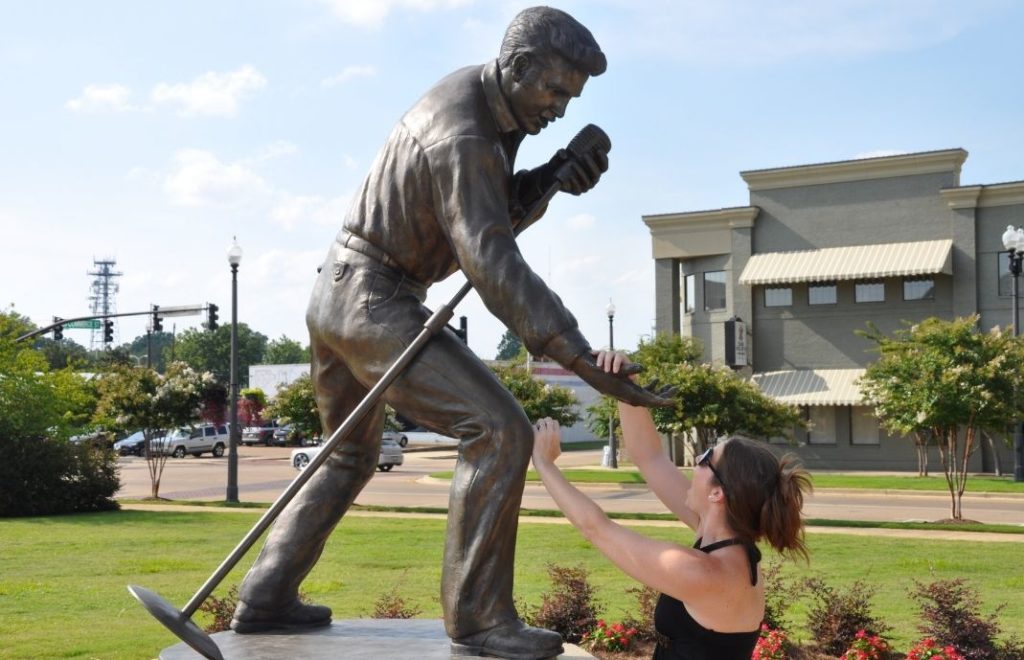
Standing proudly on the Tupelo Fairgrounds, the Elvis Presley Homecoming Statue captures an unforgettable moment from 1956, when Elvis returned to his hometown for a legendary performance.
The statue is modeled after the iconic photograph “The Hands” by Roger Marshutz, and was sculpted by Bill Beckwith. It was unveiled in 2012, commissioned by the Tupelo Elvis Fan Club and the Tupelo Convention and Visitor Bureau as a tribute to the city’s most famous son.
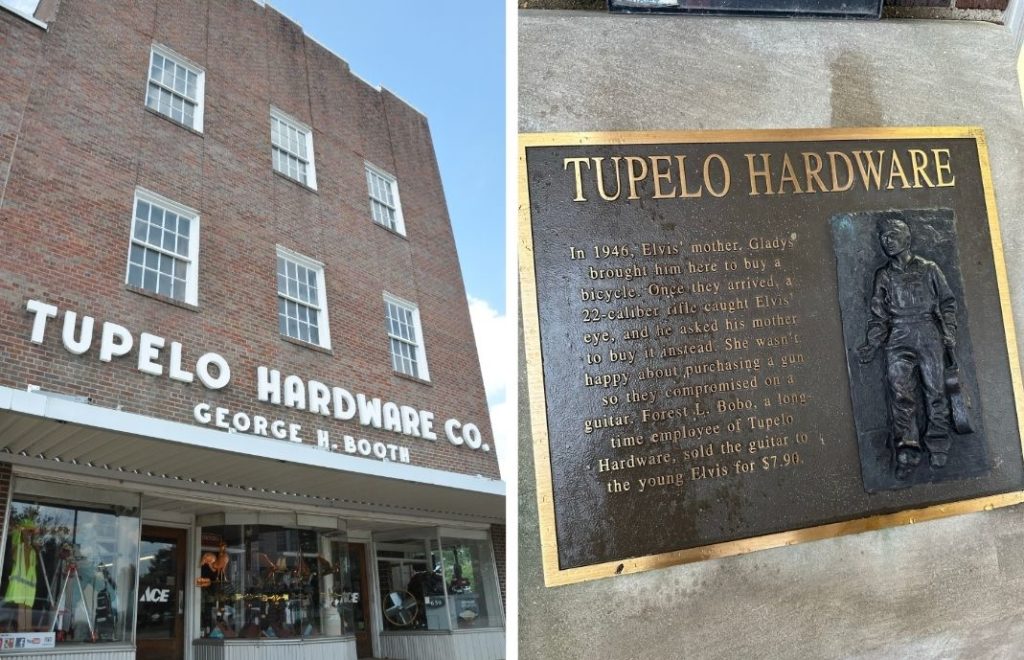
Facing east toward his birthplace, the statue is surrounded by landmarks from his past – Tupelo’s City Hall over his right shoulder, and Tupelo Hardware, where he got his first guitar, just beyond his left.
More than a monument, it’s a powerful symbol of Elvis’s journey coming full circle, honoring both the boy he was and the legend he became.
Tupelo Hardware Company – Where music history was made
Step inside Tupelo Hardware Company, and you’re standing on hallowed musical ground – the very spot where Elvis Presley received his first guitar.
In 1946, on Elvis’s 11th birthday, he walked into the store with his mother, Gladys, hoping to get a rifle. When she refused, a quick-thinking store clerk handed Elvis a guitar to calm him down. Curious, he began to strum the strings – and the rest is rock ‘n’ roll history.
The guitar cost just $7.95, a humble investment that would spark a career unlike any the world had seen.
Today, visitors can stand in the exact spot where Elvis made that life-changing choice, and imagine the moment when music first found its way into the young boy’s hands. It’s a simple hardware store with a legendary legacy – one that changed the sound of the 20th century.
Want more inspiration for Elvis attractions?
Elvis remains Memphis’ greatest attraction
A guide to Graceland
The best museums in Memphis
