
On May 16, 1943, SS General Jürgen Stroop delivered a chilling report to his superiors: “The former Jewish quarter in Warsaw no longer exists.”
Stroop and his forces had just crushed the Warsaw Ghetto Uprising, which had begun on April 19. By that time, most of the ghetto’s residents had already been deported to the Treblinka extermination camp. The remaining Jews, facing certain death, chose to resist – fighting with extraordinary courage against impossible odds. Their uprising was a final, desperate stand – a defiant protest against the planned annihilation of the Jewish people.
Walking through the streets of what was once the Jewish Ghetto of Warsaw today is an emotional experience. The area is undergoing a transformation, gradually evolving into Warsaw’s new business district. But traces of the past remain.
Turn onto the short Prozna Street, and you’ll catch a haunting glimpse of what once was. This narrow road, along with the surrounding neighborhoods of Mirow and Muranow, was once the vibrant heart of Jewish life in pre-war Warsaw.
Knowing what happened here during World War II sends a chill down your spine.
The Warsaw Ghetto was the largest of its kind in Nazi-occupied Europe. The uprising remains the most significant act of Jewish resistance during the Holocaust – a symbol of bravery, dignity, and the human spirit’s refusal to surrender, even in the face of total destruction.
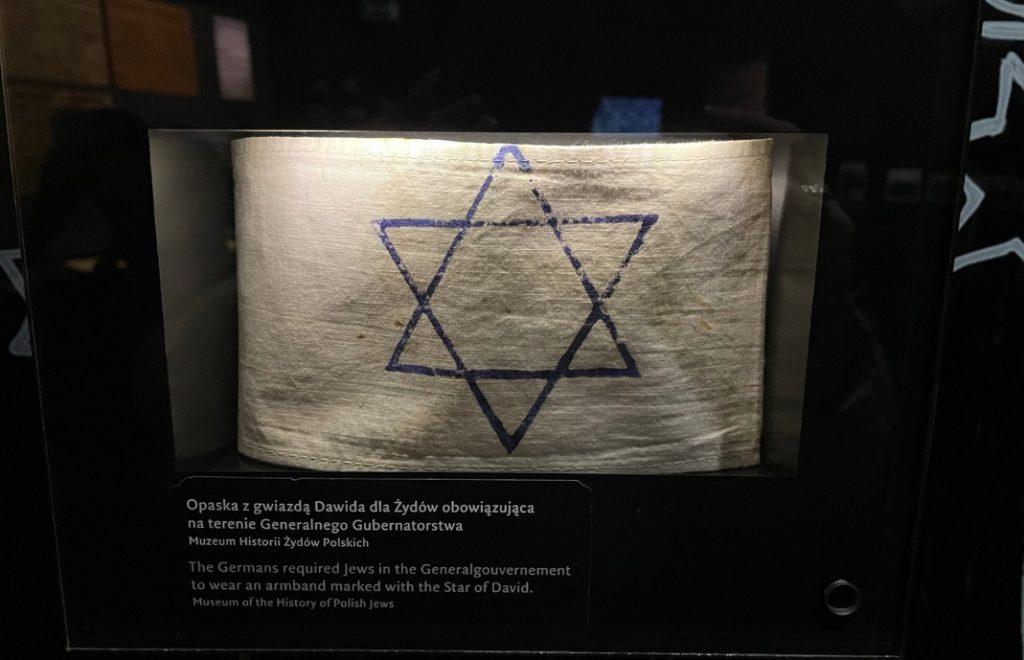
The Jewish Ghetto in Warsaw
The Warsaw Ghetto was officially established in October 1940. Non-Jews were forced to leave the area, while all Jewish residents of Warsaw were ordered to relocate within its walls by November 15, 1940.
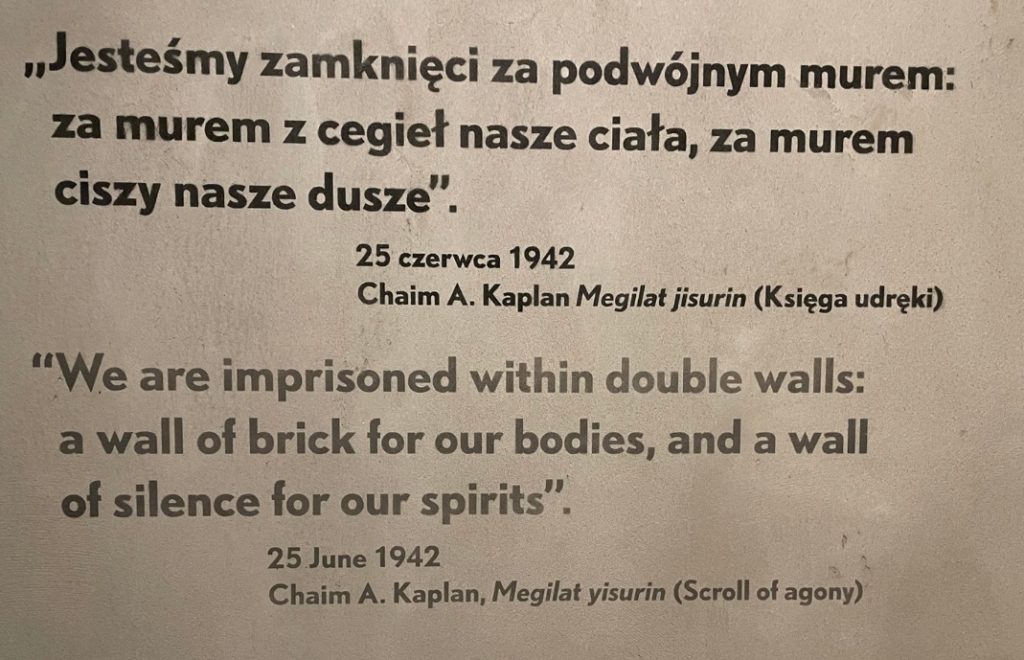
When the ghetto became operational, it housed around 138,000 Jews. By April 1941, that number had swelled to 460,000, isolating nearly half a million people from the outside world. The population density was staggering – over 100,000 people per square kilometer, often with eight to ten individuals crammed into a single room.
Living conditions were appalling. Daily food rations for Jews amounted to just 184 calories, compared to 2,613 calories for ethnic Germans living nearby. A thriving black market could only do so much, and starvation, disease, and exposure claimed tens of thousands of lives. In fact, the walls of the ghetto were moved multiple times – not to accommodate more people, but to reduce the area as the population dwindled. Between October 1940 and July 1942, an estimated 92,000 people died inside the ghetto.
And yet, in the face of horror, a secret world endured. An underground society emerged – one of resilience and resistance. Films were made, plays performed, music composed, poems written, and underground newspapers published. Even religious life, though heavily restricted, remained a quiet pillar of spiritual survival.
After the war, as Warsaw’s survivors cleared the wreckage, they uncovered a powerful and heartbreaking discovery: an extensive archive, hidden in the ruins, filled with writings, photographs, and firsthand accounts. These documents preserved the truth of what had happened behind the ghetto walls – a vivid, painful testimony of suffering, endurance, and the systematic crimes committed by the Nazi regime.
The Warsaw Ghetto stands as one of history’s darkest chapters, but also as a testament to the unbreakable human spirit in the face of unthinkable oppression.

The Deportation of the Jews
At the Wannsee Conference in January 1942, the Nazi regime gave its official green light to the Final Solution – the systematic extermination of Europe’s Jews.
By July of that year, mass deportations from the Warsaw Ghetto to the Treblinka extermination camp began. Each day, 5,000 Jews were herded onto cattle cars at the Umschlagsplatz – their final stop before being sent to their deaths.
In just a matter of months, the original population of 460,000 Jews in the ghetto was reduced to around 60,000. The Nazi plan was to deport the remaining Jews in April 1943, a looming horror that became the catalyst for a desperate act of resistance.
Rather than be led like cattle to the slaughter, the Jews chose to fight.
The Warsaw Ghetto Uprising was spearheaded by the Jewish Combat Organization (ŻOB – Żydowska Organizacja Bojowa), led by 24-year-old Mordechai Anielewicz. With few weapons and little hope of survival, they stood their ground.
On April 19, 1943, German forces entered the ghetto expecting a swift operation. Instead, they were met with fierce and unexpected resistance – so intense that they were forced to retreat.
The Jewish fighters moved through a secret network of bunkers and tunnels, striking quickly and disappearing underground. For nearly a month, they held off the German forces, fighting with extraordinary bravery against overwhelming odds.
It was not a battle for victory – but a battle for dignity, for memory, and for the right to resist annihilation. The uprising became a defining act of courage and defiance, etched forever into the history of the Holocaust.
The Jewish Uprising continues
As resistance in the Warsaw Ghetto held strong, the Nazis changed tactics. With brute force no longer enough, they began using flamethrowers to smoke out and incinerate both Jewish fighters and thousands of remaining civilians hiding in bunkers and cellars. Others were gunned down on the spot or deported to death camps.
But even as the flames engulfed their world, the remaining Jewish fighters refused to surrender. Against impossible odds, they held out for more than three weeks, a small force defying one of the most powerful military machines of the era.
On May 8, 1943, the Germans discovered the location of the main bunker at 18 Mila Street. Inside, ŻOB leader Mordechai Anielewicz and some 300 fighters and civilians had taken refuge. The Nazis offered them a grim choice: surrender or die by gas.
About half – mainly civilians – chose to surrender. The remaining 120 fighters, including Anielewicz, chose suicide over capture, refusing to allow the Nazis the satisfaction of another execution.
On May 16, SS Chief Heinrich Himmler ordered the total destruction of the Warsaw Ghetto. The operation was led by SS General Jürgen Stroop, tasked with wiping out the last vestiges of Jewish resistance in Poland.
To mark the final blow, Stroop stood before the Great Synagogue of Warsaw, once the spiritual heart of the Jewish community. He raised his arm in a salute, shouting “Heil Hitler!”, and pressed the button that detonated explosives, reducing the grand synagogue to rubble.
His infamous report read: “The former Jewish quarter of Warsaw no longer exists.”
After the war, Jürgen Stroop was captured by American forces, extradited to Poland, tried for war crimes, and hanged in 1952.
Though the ghetto was reduced to ashes, the heroism of the uprising lives on – a defiant stand for dignity, resistance, and remembrance in the face of annihilation.
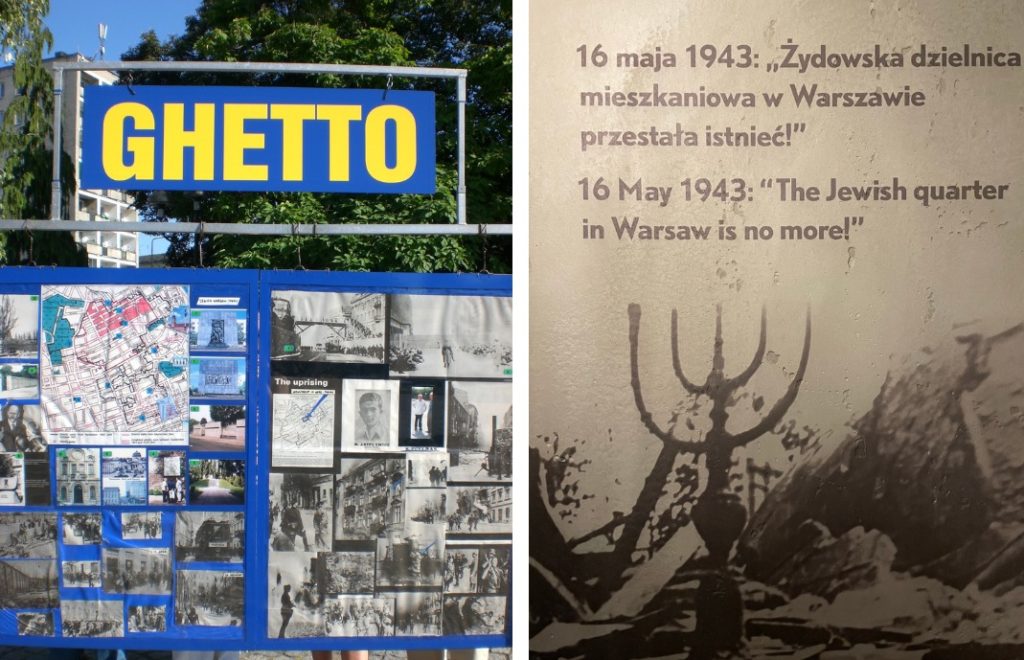
Memorials of the Warsaw Ghetto Uprising
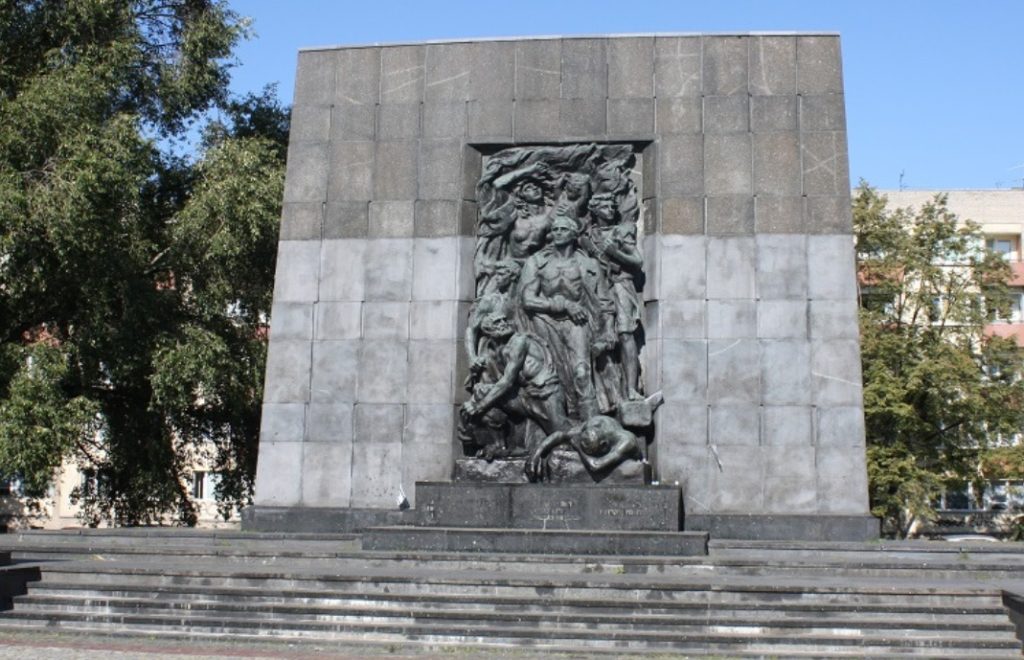
Across Warsaw, a series of powerful and moving memorials honor the courage and sacrifice of those who rose up against the Nazis during the Warsaw Ghetto Uprising.
The most prominent is the Monument to the Ghetto Heroes, which stands at the very site where the fighting erupted in April 1943. The monument marks the symbolic heart of Jewish resistance in Nazi-occupied Europe.
In a haunting twist of history, the stone blocks used to build the monument were originally brought to Warsaw by the Nazis for use in Albert Speer’s architectural plans for “New Warsaw” – the grandiose vision of a capital reimagined under Hitler’s rule. Instead, they now stand as a monument to defiance, remembrance, and the failure of those ambitions.
Standing nearby is POLIN: Museum of the History of Polish Jews, a world-class museum that traces a thousand years of Jewish life in Poland, from flourishing communities to the devastation of the Holocaust. Its location next to the monument creates a powerful dialogue between remembrance and education, past and present.
Together, these sites offer visitors not only a place to mourn, but also a place to learn, reflect, and honor the indomitable spirit of a people who chose resistance over silence.
Umschlagplatz – The Platform of No Return
Starting in the summer of 1942, this unassuming location in Warsaw became the site of unimaginable horror. Each day, 5,000 Jews were rounded up here, crammed into cattle cars, and sent to their deaths at the Treblinka extermination camp. Five thousand – the absolute maximum number the transport wagons could physically hold.
This place, known as the Umschlagplatz, was not a station of departure – it was a point of no return, where families were torn apart, hope was extinguished, and the machinery of genocide turned relentlessly forward.
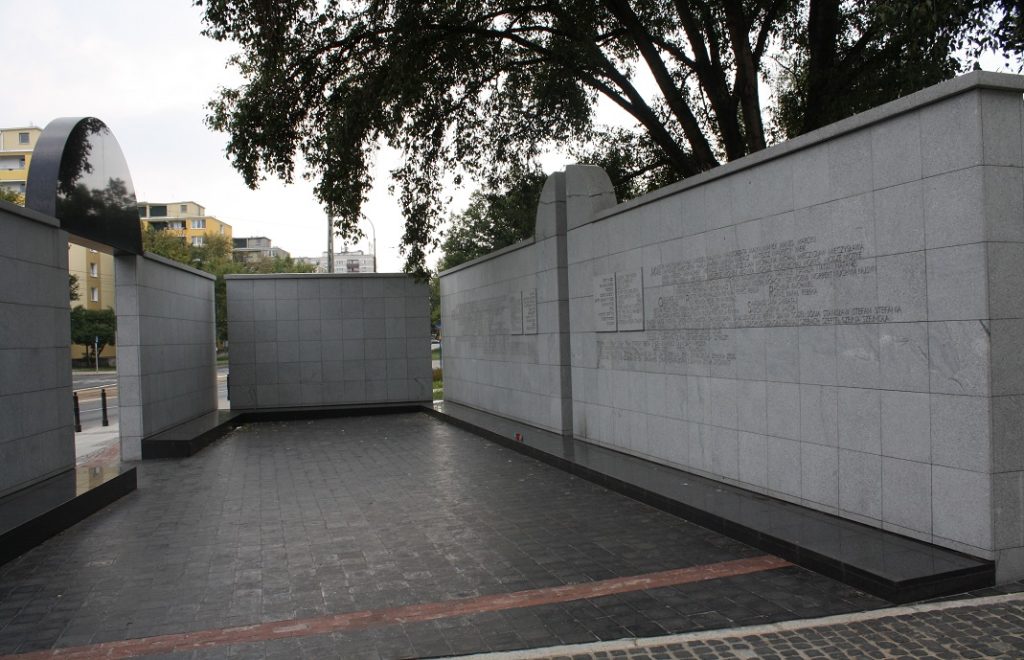
Today, a stark and deeply moving monument marks the site. It consists of three pale stone walls, forming the shape of an open cattle car, symbolizing the final transport. Etched into its surface are names of some of the victims – those who saw Warsaw for the last time from this exact spot.
The memorial stands in solemn silence, a permanent reminder of the lives lost, and a place where memory speaks louder than words. It’s not only a monument to the victims, but also a call to never forget the scale and speed of the destruction that began here.
Anielewicz Bunker – A silent testament to resistance
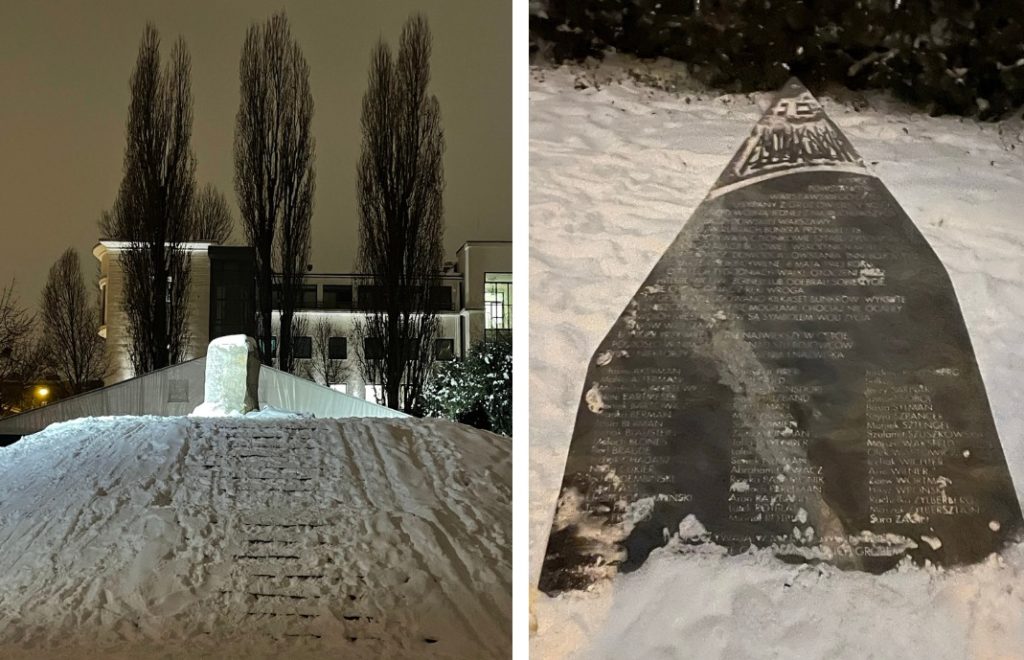
In a quiet corner of Warsaw, a modest grassy mound and a simple memorial mark the site of one of the most heroic and tragic moments of the Warsaw Ghetto Uprising. This is the location of the ZOB (Jewish Combat Organization) headquarters, where the resistance was coordinated – and where it ultimately came to a devastating end.
It was here, at 18 Mila Street, that Mordechai Anielewicz and roughly 120 fighters made their final stand. Surrounded by Nazi forces and facing certain death, they chose to end their own lives rather than be captured. Their bodies were never recovered. Instead, the bunker was sealed and covered with rubble from the surrounding destroyed buildings, creating the memorial mound that stands there today.
A plaque inscribed with heartfelt words honors their sacrifice – a stark, humble tribute to those who chose resistance over submission, even when all hope was lost.
The Anielewicz Bunker is more than a historical marker. It is a place of quiet reverence, a physical reminder of the courage, dignity, and unwavering spirit of those who stood against the darkness, even in their final hour.
Sienna Street 55 – A fragment of the Ghetto Wall
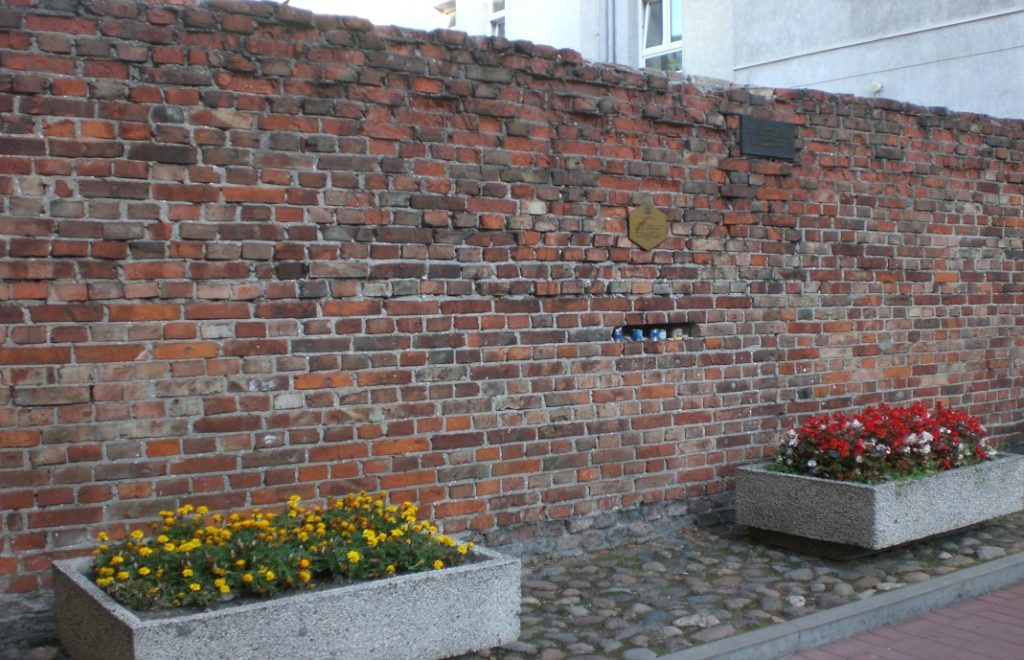
At 55 Sienna Street in Warsaw, a few haunting meters of the original Warsaw Ghetto wall still stand – a rare and powerful remnant of one of history’s darkest chapters.
This weathered stretch of brick, tucked between modern buildings, once marked the boundary that imprisoned over 400,000 Jews in inhumane conditions, cutting them off from the rest of the city – and the world.
Today, the wall is preserved as a memorial, with a commemorative plaque installed to honor the memory of those who lived and perished behind it. Standing here, with your hand on the rough stone, it’s impossible not to feel the weight of what this barrier once represented – oppression, isolation, and loss.
Yet it also stands as a witness, a fragment of truth left behind to educate, remind, and warn future generations never to allow such atrocities again.
My heartfelt thanks to the Polish National Tourist Office for inviting me to Warsaw. My flights, accommodation, transport, activities, and meals were generously covered as part of this trip. However, there were no obligations or expectations placed on me to write – or to write in any particular way.
As always, all thoughts and opinions are entirely my own.
Read more about the history of Warsaw:
World War II in Warsaw
7 must-visit museums in Warsaw
Warsaw Rising Museum
