
Poland’s capital is steeped in history, making Warsaw a treasure trove for travelers who love to spend part of their holiday immersed in museums.
From powerful wartime narratives to vibrant art, neon lights, cultural heritage, and even vodka history – Warsaw’s museum scene is as diverse as it is captivating.
No matter your interest, there’s a museum here that will spark your curiosity and leave a lasting impression.

Warsaw Rising Museum: Step into the heart of a city’s resistance
This powerful museum is dedicated to the 1944 Warsaw Uprising, when the Polish resistance – Armia Krajowa (AK) – rose up in a courageous attempt to liberate the city from German occupation.
But this isn’t just a place to read about history – it’s designed so you feel it. Pick up vintage telephone receivers to hear firsthand accounts from the uprising, peer through peepholes in the walls to discover hidden films and photographs, and crawl through replica tunnels that bring the underground resistance to life.
Just outside lies Freedom Park, home to the Memorial Wall, where nearly 11,000 names are etched in stone – honoring the fallen soldiers of the uprising.
The Warsaw Rising Museum is a deeply moving and immersive experience, paying tribute to the largest underground operation in Warsaw during World War II. It’s not just a museum – it’s a journey through bravery, sacrifice, and the unbreakable spirit of a city.
More inspiration:
Warsaw Rising Museum
World War II in Warsaw

Pawiak Prison Museum: Echoes of silence and survival
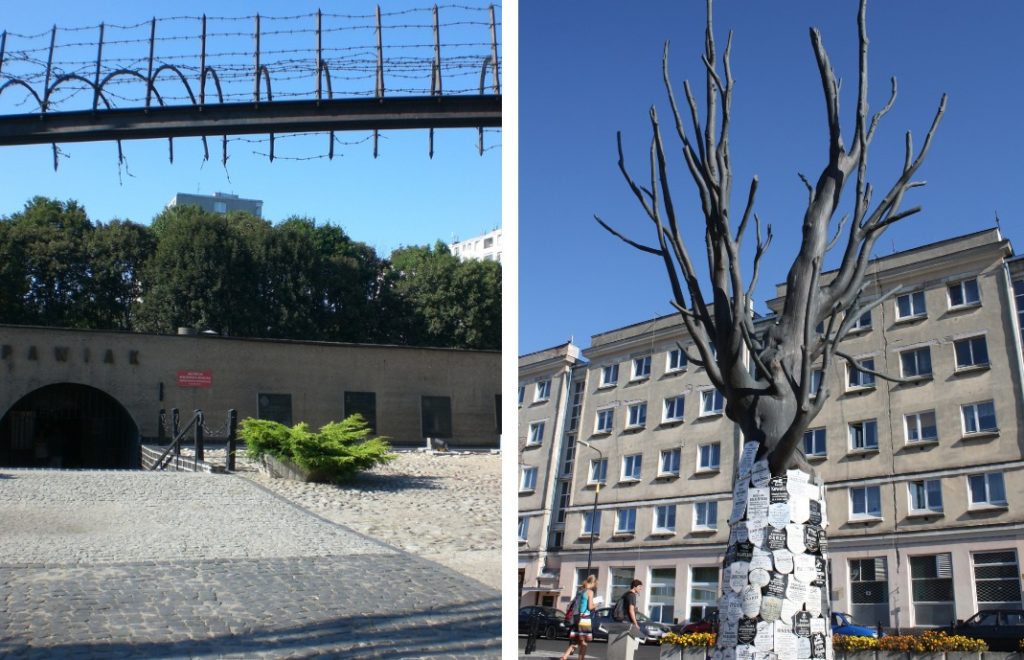
Just outside the former Pawiak prison, a large elm tree once stood – a rare symbol of hope for those held inside its walls. For decades, it offered a glimmer of comfort to prisoners who glimpsed its branches from behind bars. When the beloved tree was cut down in 1984, it marked a painful moment for survivors and families alike. Today, a meticulous copper replica stands in its place, its limbs heavy with memorial plaques, reaching skyward exactly where the original once grew.
Pawiak operated as a prison from 1835 to 1944. It held Polish patriots resisting Russian rule, members of the World War II resistance, and even women and children. During the Nazi occupation, the prison became a site of terror – an estimated 100,000 people were imprisoned here. Around 37,000 were executed, and some 60,000 were deported to concentration camps. On August 21, 1944, the Germans blew up most of the prison, leaving only fragments behind.
The Pawiak Prison Museum is housed in what remains – cell blocks VII and VIII. Quarantine and death cells have been reconstructed based on drawings and testimonies from former inmates. The exhibitions display prisoners’ personal items, handmade objects, coded messages, poems, and calendars – each a powerful testament to human resilience.
Walking the dim corridors and stepping into the reconstructed cells, it’s impossible not to feel the weight of the past. This is not just a museum – it’s a haunting reminder of suffering, survival, and the enduring power of memory.
POLIN: A thousand years of Jewish life in Poland
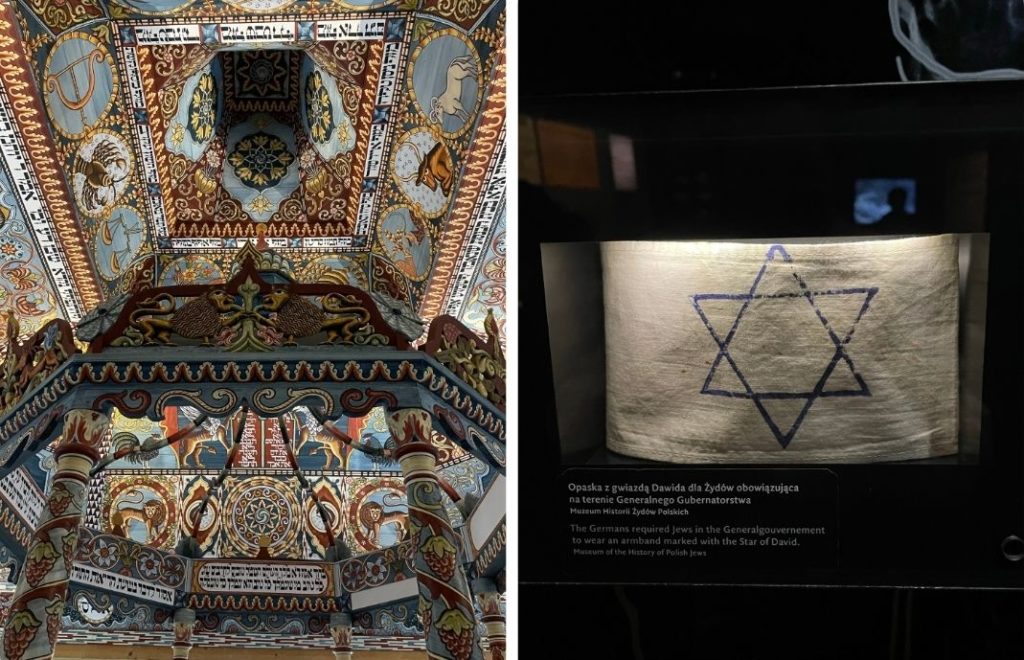
Set in the very heart of what was once the Warsaw Ghetto, POLIN – Museum of the History of Polish Jews stands as a powerful tribute to a rich, complex heritage and a community decimated by war. It’s a museum unlike any other, built on hallowed ground where the stories it tells actually unfolded.
Begin your visit at the Ghetto Heroes Monument, marking the site of the 1943 Warsaw Ghetto Uprising – a fierce and courageous stand by Jewish resistance fighters against the Nazis.
From there, step into the museum’s striking architectural space, designed to speak without words. The main hall features a vast, vertical split running from the floor to the ceiling – symbolizing the rupture in Jewish history caused by the Holocaust. The symbolism is quiet but profound, echoing the silence that followed the tragedy.
Opened on October 28, 2014, POLIN takes visitors on a sweeping journey through 1,000 years of Jewish history in Poland. Its eight galleries are filled with rare artifacts, restored artwork, immersive installations, and interactive exhibits that breathe life into the past.
You’ll explore everything from the earliest Jewish settlements to the grandeur of Polish-Jewish culture, from the horrors of World War II to the community’s postwar legacy. Highlights include a stunning reconstruction of the painted wooden ceiling of the 18th-century synagogue in Gwoździec – a masterpiece of Jewish folk art.
At the back of the museum stands a solemn memorial: a plaque honoring German Chancellor Willy Brandt’s historic 1970 visit, during which he knelt in silent apology before the monument – a gesture of reconciliation that reverberated around the world.
POLIN isn’t just a museum. It’s a living memorial, a space for reflection, and a profound reminder of both the fragility and endurance of culture through the centuries.
The Museum of Maria Skłodowska-Curie: A modest home, a monumental legacy
Tucked away in Warsaw’s Old Town is a quiet little gem that many visitors walk right past – yet it marks the birthplace of one of the most extraordinary women in scientific history: Marie Curie, born November 7, 1867.
Curie was not only the first woman to win a Nobel Prize, but the only person ever to win two in two different scientific fields – Physics and Chemistry.
This humble museum is entirely dedicated to her remarkable life and groundbreaking work.
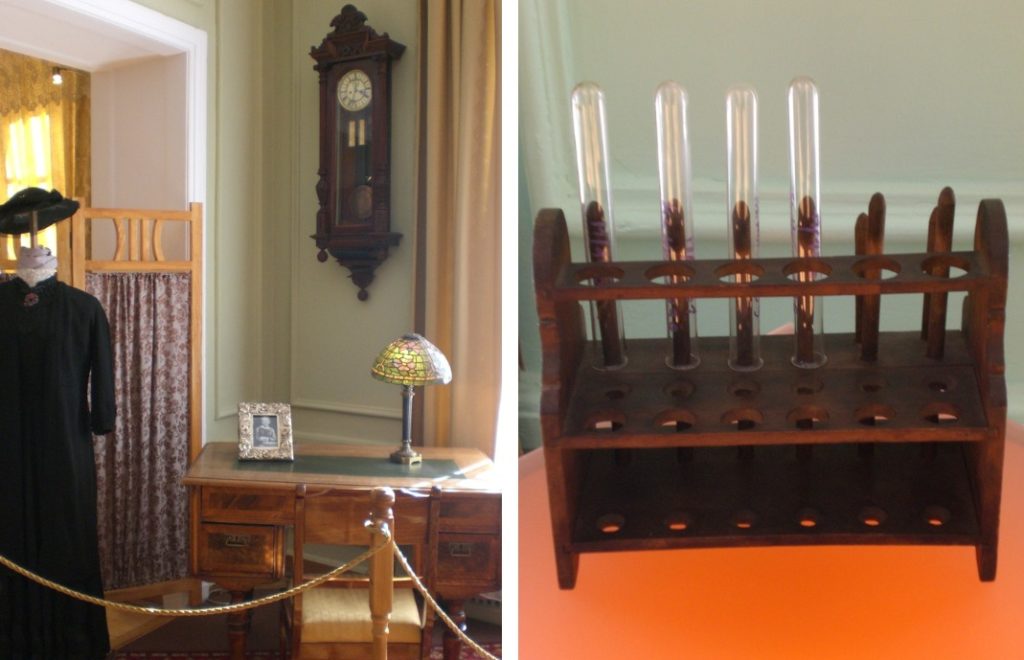
Inside, you’ll find an intimate collection of personal artifacts and scientific equipment that offer a glimpse into her world. The exhibits include photographs, handwritten letters, family correspondence, original documents, medals, furniture, and laboratory tools she once used.
Among the more curious items on display is an elephant figurine gifted by U.S. President Herbert Hoover, as well as the leather handbag that once held the funds she used to establish the Radium Institute – a foundation that would go on to change the course of medical science.
While small in scale, the Museum of Maria Skłodowska-Curie is rich in inspiration – a quiet tribute to a woman whose brilliance changed the world, one discovery at a time.
Life Under Communism Museum: A retro glimpse into Poland’s past
Step back in time and discover what daily life was like in Warsaw during the Communist era. Though small in size, the Life Under Communism Museum is packed with nostalgia, charm, and eye-opening insight into a bygone way of life under Soviet influence.
This immersive exhibit showcases everything from vintage food packaging and household goods to a fully recreated bedroom, corner store, café, and even an old-school phone booth. Each room feels like a time capsule, inviting you to see, touch, and remember how ordinary people lived behind the Iron Curtain.
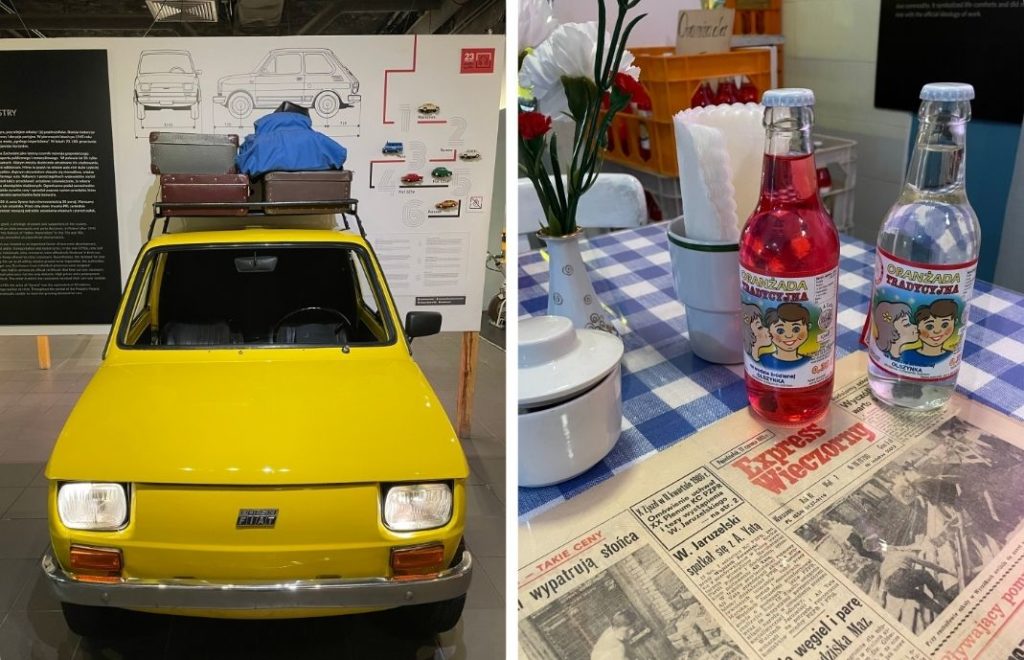
A standout feature is the iconic little yellow car – a Polish classic. It’s hard to believe entire families squeezed in, luggage and all, for cross-country road trips!
Before you leave, make sure to sip on a bottle of Oranżada tradycyjna – a sugary, fizzy relic of the era – while taking a breather in the museum’s charming café. Sweet, nostalgic, and a little surreal, this museum offers a playful yet poignant look at Poland’s not-so-distant past.
Polish Vodka Museum: A spirited journey through Poland’s liquid heritage
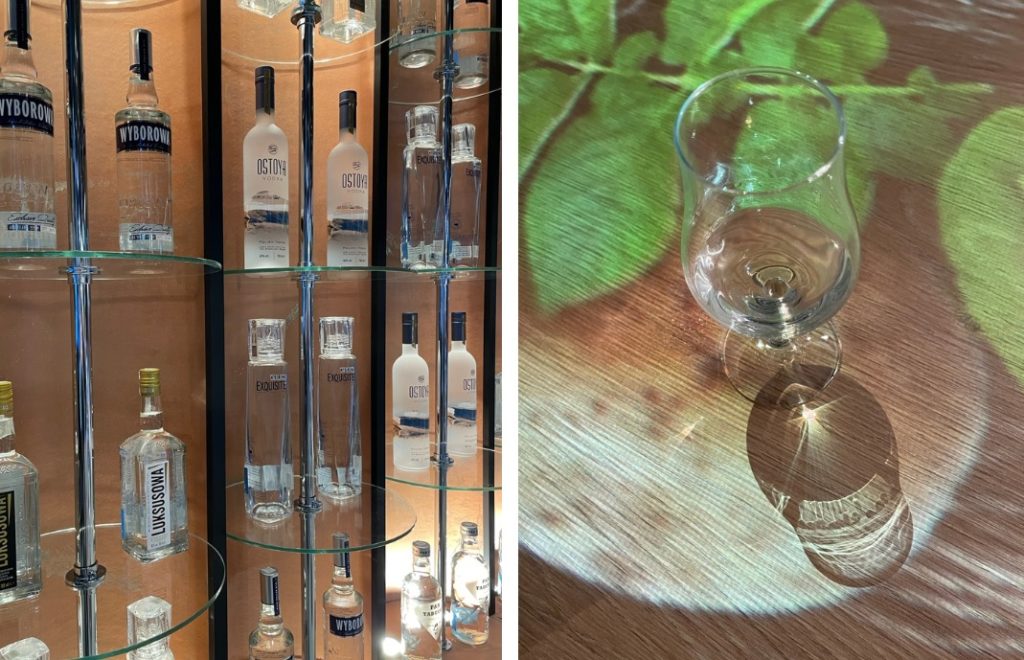
Polish vodka enjoys a well-earned reputation for purity, tradition, and exceptional quality. Typically served chilled and sipped straight, it’s more than just a drink in Poland – it’s a cultural icon. And few know that Poland is actually the birthplace of vodka. The very first written reference to the word “vodka” appeared right here.
Located in the atmospheric Praga district, the Polish Vodka Museum is a sleek, modern tribute to the nation’s deep-rooted vodka legacy. Housed in a historic distillery where production began in the early 1900s, this is where legendary brands like Wyborowa and Luksusowa came to life during the roaring 1920s and ’30s.
The museum offers a dynamic, interactive experience that guides visitors through the centuries-old story of aqua vitae – the “water of life.” From traditional distilling methods to the cultural role vodka played in Polish society, it’s a fascinating blend of history, science, and national pride.
Of course, no visit would be complete without a tasting. The tour concludes with a guided sampling of four different vodkas, where you’ll learn to smell, sip, and savor like a true connoisseur.
Na zdrowie! (Cheers!)
More inspiration: The history of Polish Vodka
Neon Museum: Where Warsaw’s Cold War glow still shines
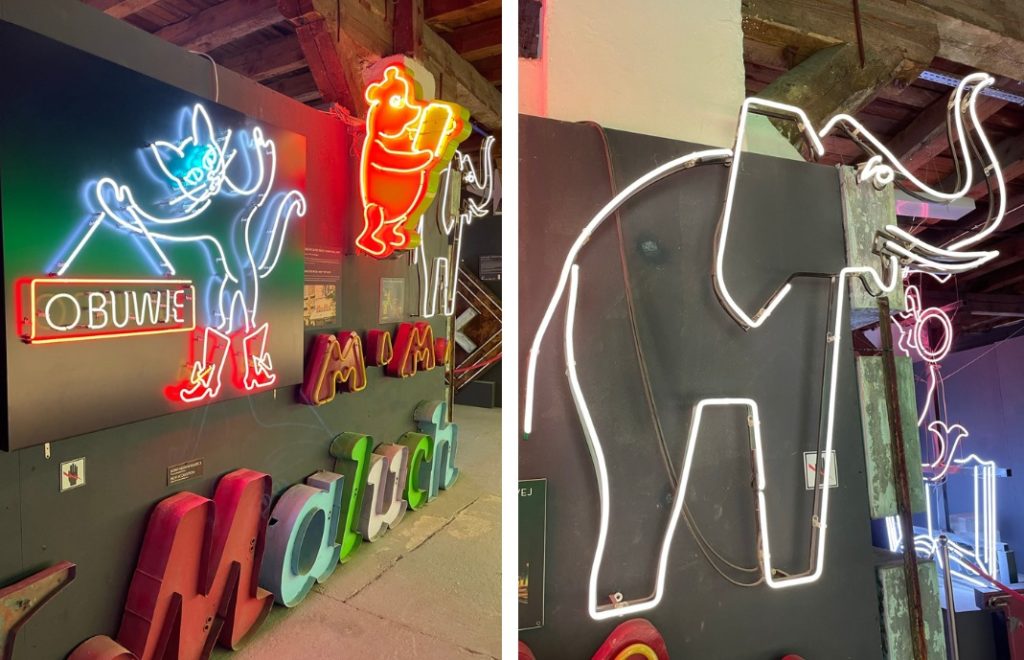
Looking to brighten your day – literally? Head over to the Neon Museum, tucked inside the creative hub of Soho Factory, and discover one of Europe’s most unique – and unexpectedly nostalgic – collections.
Housed in a former factory, this intimate museum glows with the light of over 200 vintage neon signs. While some may show their age, that’s part of the charm. The real magic lies in the stories each flickering tube of light has to tell.
Most of these neon signs lit up Warsaw during the Communist era, a time when their purpose wasn’t commercial but cultural. Unlike the West, where neon screamed competition and consumerism, Polish neon served a different role – offering information and prestige in a tightly controlled, state-regulated society. Signs were meticulously designed to harmonize in color and size, directing citizens to cinemas, libraries, shoe stores, and more – never to outshine one another.
The museum began as a passion project for founder Ilona Karwinska, who once watched a giant neon sign being dismantled and learned it was headed for the trash. She took it home instead – and the rest is history. Today, her collection draws both locals and travelers: the older generation comes to reminisce, while the younger crowd marvels at the bold, glowing icons of a city that once sparkled in socialist neon.
The Neon Museum is not just a visual delight – it’s a tribute to design, resilience, and the quiet brilliance that lit up a darker time.
My heartfelt thanks to the Polish National Tourist Office for inviting me to Warsaw. My flights, accommodation, transport, activities, and meals were generously covered as part of this trip. However, there were no obligations or expectations placed on me to write – or to write in any particular way.
As always, all thoughts and opinions are entirely my own.
More inspiration to visit Warsaw:
12 great reasons to visit Warsaw
