
After serving as Poland’s capital for over 500 years, Kraków has inherited a cultural richness few cities can match. Today, it stands as the country’s crown jewel of tourism – and a source of deep pride for the Polish people. The locals have a soft spot for the past, and the streets of Kraków overflow with nostalgic charm.
It’s also the birthplace of Pope John Paul II, and the influence of tradition and Catholicism still runs strong through the region. A walk through Kraków feels like walking through time itself – the historic streets remain as they’ve always been. Unlike many European cities, Kraków emerged from World War II almost untouched, preserving its architecture and soul.
And truly, it’s hard not to fall in love with Kraków. Wandering its lanes feels like stepping into a fairytale – a dreamy blend of legends, history, quiet modernity, a gentle rhythm, and an abundance of old-world charm.
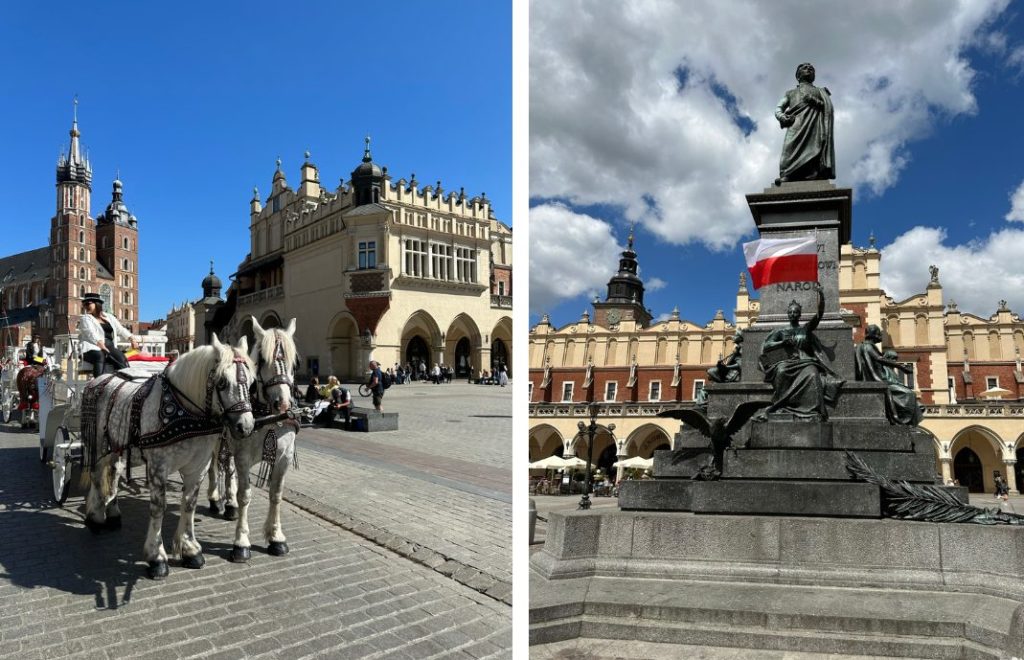
1. The Old Town – the timeless heart of Kraków
Kraków’s Old Town needs no grand introduction. With its rightful place on the UNESCO World Heritage List, it has long enchanted visitors from around the globe with its rich history and captivating charm.
Wandering through the Old Town is like stepping into a living postcard. A labyrinth of cobbled streets, hidden alleyways, and elegant thoroughfares unfolds before you. Along the sidewalks, gothic, baroque, and renaissance buildings stand shoulder to shoulder, whispering tales of centuries past. Towering medieval churches cast long shadows over the squares, while the rhythmic clip-clop of horse hooves echoes through the air as tourists glide by in decorated carriages, drawn by majestic, ribbon-adorned horses.
At the heart of it all lies Rynek Główny, the city’s 13th-century main square, where cafés, restaurants, and quaint little shops create a vibrant scene day and night.
For souvenirs with soul, step inside the historic Cloth Hall (Sukiennice). Once Kraków’s bustling trade center 500 years ago, today it still hums with life – just as it did in centuries past – as travelers browse stalls for crafts, amber jewelry, and handmade goods.
No visit to the Old Town is complete without a stop at the awe-inspiring Basilica of the Virgin Mary (Kościół Mariacki). This towering Gothic church dominates the square and has become one of Kraków’s most iconic landmarks. For a panoramic view of the city’s red rooftops and spires, climb the tower—it’s worth every step.
And listen carefully: every hour, a trumpet call rings out from the tallest tower, only to be cut off abruptly. This somber tradition honors the trumpeter who was shot mid-call while warning the city of an impending Mongol invasion.
It’s a haunting reminder of the city’s enduring spirit – and one of many legends that make Kraków’s Old Town simply unforgettable.
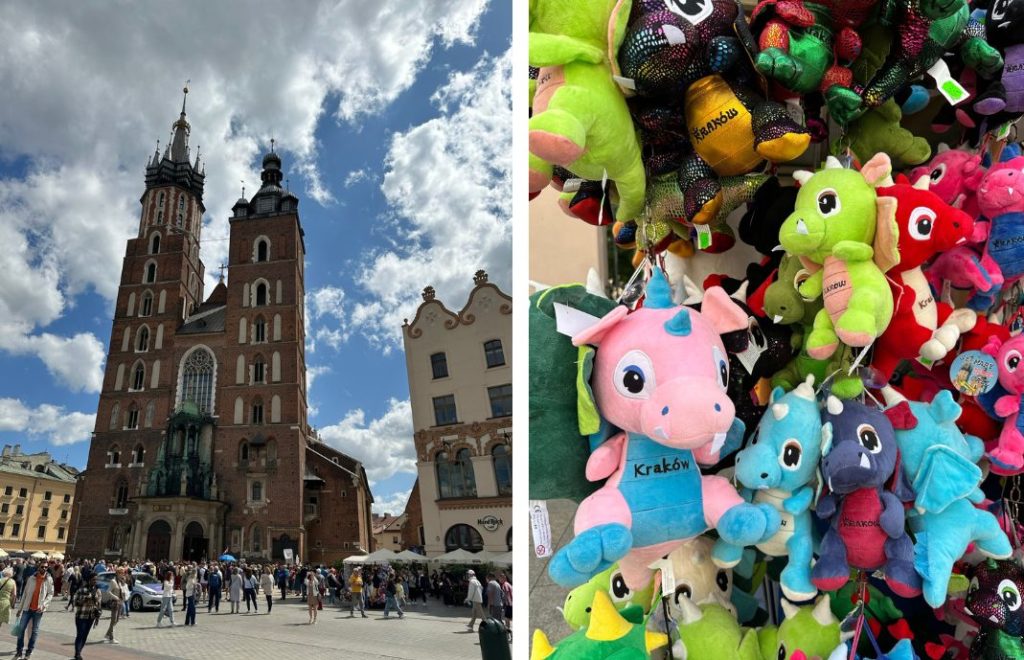
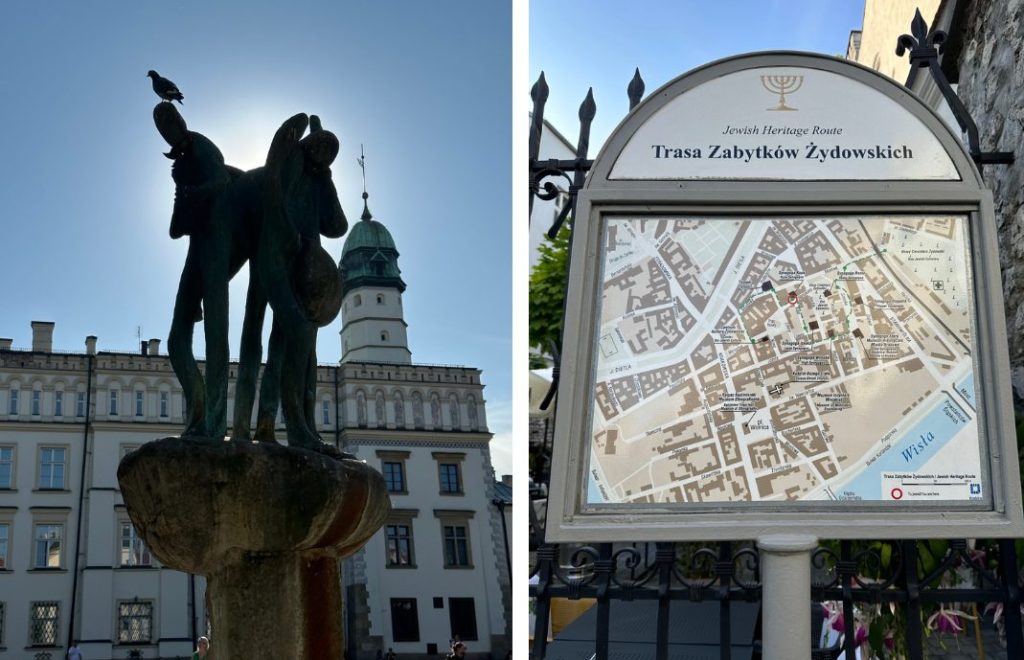
2. Kazimierz – Kraków’s Jewish soul
Just a short stroll from the Old Town lies Kazimierz, Kraków’s former Jewish quarter – a district with a heartbeat entirely its own. From the moment you arrive, you’ll sense the shift: the pace is slower, the vibe more laid-back, and the streets are lined with quirky boutiques, retro clothing stores, artsy cafés, and trendy cocktail bars – all steeped in bohemian charm.
Kazimierz was founded in 1335 by King Casimir III, and for centuries, it stood as a separate town where Jews and Christians lived side by side, creating a unique and thriving cultural mosaic.
But the neighborhood carries heavy history. During World War II, the area’s Jewish population was forcibly relocated by the Nazis to the Podgórze ghetto across the river in 1941. What followed was one of the darkest chapters in Kraków’s past.
In recent decades, however, Kazimierz has experienced a cultural revival, sparked in part by the filming of Schindler’s List, which was shot largely on location here. That renewed global attention led to the restoration of synagogues, the opening of Jewish museums and galleries, and the return of kosher restaurants and klezmer music – all contributing to the neighborhood’s rebirth.
Today, Kazimierz is a place where painful history, proud heritage, and creative energy coexist. It’s where Kraków’s soul whispers from the walls, and where the past lives on – not just in museums, but in the flavors, sounds, and stories that fill the streets.
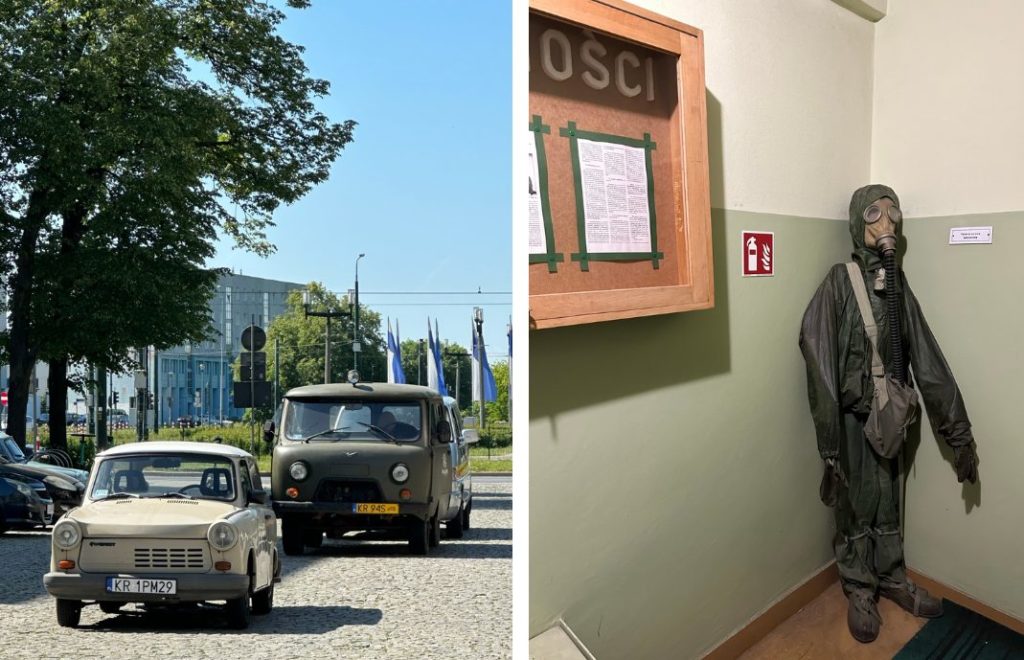
3. Nowa Huta – a journey back to communist Poland
While Poland bid farewell to communism in 1989, the spirit of that era lingers in the district of Nowa Huta- a place that offers a rare, unfiltered glimpse into one of Europe’s most turbulent chapters.
Founded in 1949, Nowa Huta was designed not merely as a city extension, but as a political project. Built from scratch to reshape the mindset of conservative Catholics, it was the communist regime’s bold attempt to mold a new, ideologically loyal working class.
The best way to experience Nowa Huta?
Hop into a vintage Trabant or Polish Fiat and embark on a guided tour that picks you up right at your hotel. As you cruise through the district’s wide boulevards and past towering apartment blocks, your guide will peel back the layers of its past.
Nowa Huta’s architecture is pure socialist realism – monumental, symmetrical, and laced with symbolism. But surprisingly, it’s also home to green parks, quiet side streets, and a layout designed to serve a utopian vision of urban life.
You’ll visit the once-massive Vladimir Lenin Steelworks (opened in 1954), descend into an underground bunker, and hear stories of resistance, surveillance, and silent rebellion.
The tour wraps up with lunch at a classic milk bar – a no-frills canteen serving traditional Polish dishes, just as they were eaten by factory workers during the communist era. It’s a bite of history on a tray.
Nowa Huta is more than a relic of the past – it’s a thought-provoking detour into a time when architecture was propaganda, and every building was part of the message.
4. The Salt Mine – a subterranean wonderland
A visit to the Wieliczka Salt Mine is a must when in Kraków. This underground journey is like no other, where art, history, and geology intertwine 135 meters below the surface.
It is one of the world’s oldest and most renowned salt mines, with continuous operation since the 13th century. Recognized by UNESCO in 1978, it’s now one of Poland’s greatest cultural treasures and most visited attractions.
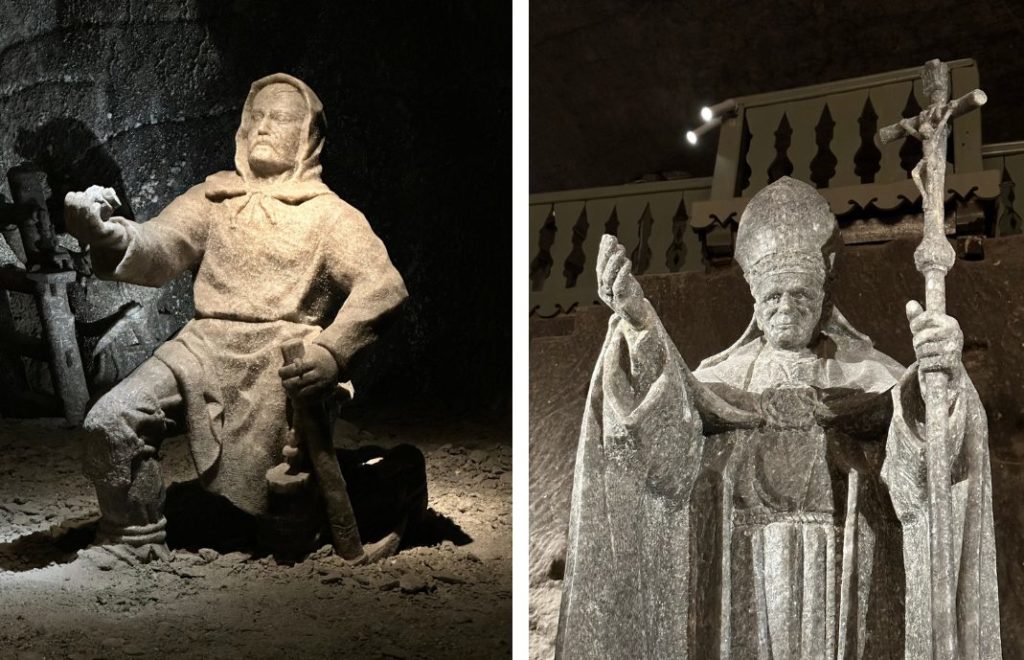
As you descend into the earth, a network of tunnels and chambers unfolds, revealing galleries filled with stunning salt sculptures – all carved by hand. From intricate figurines to sweeping reliefs, every detail is a testament to human craftsmanship in a place shaped by nature.
The crown jewel of the tour is the awe-inspiring Chapel of Saint Kinga – a vast underground cathedral carved entirely from salt by just three miners, over the course of more than 30 years (1895-1928). Chandeliers made of salt crystals dangle above, and the walls are adorned with biblical scenes etched in salt – an underground sanctuary unlike anything else on Earth.
The mine also houses subterranean lakes, mysterious corridors, and even the world’s deepest health spa, famed for its microclimate and therapeutic air.
Exploring Wieliczka is like stepping into a hidden world, frozen in time, where the ordinary becomes extraordinary – every wall, floor, and sculpture is made of salt, and every step takes you deeper into one of Poland’s most unforgettable wonders.
More inspiration: A guide to the Wieliczka Salt Mine
5. Wawel – Kings, legends, and fire-breathing dragons
Perched on a hill just beyond Kraków’s Old Town, Wawel Castle rises like something from a vivid medieval legend – and rightly so. With tales of fire-breathing dragons swirling around its foundations, it’s one of Poland’s most iconic and storied landmarks.
The Royal Castle at Wawel is not only an architectural marvel, but also one of the most historically and culturally significant sites in the country. Once the seat of Polish monarchs, it now stands as a proud symbol of the nation’s royal heritage.
Strategically built atop a limestone hill with the Vistula River flowing below, the castle’s elevated position made it nearly impossible for enemies to conquer.
The sprawling complex includes a cathedral, royal residences, and various structures from different historical periods. Walking through its grand courtyards, it’s easy to imagine kings, nobles, and courtiers gliding past in regal splendor.
Step inside to explore restored royal interiors, displays of weapons, armor, and state treasures, and the crypts where several Polish kings rest in peace – open to visitors who wish to pay their respects.
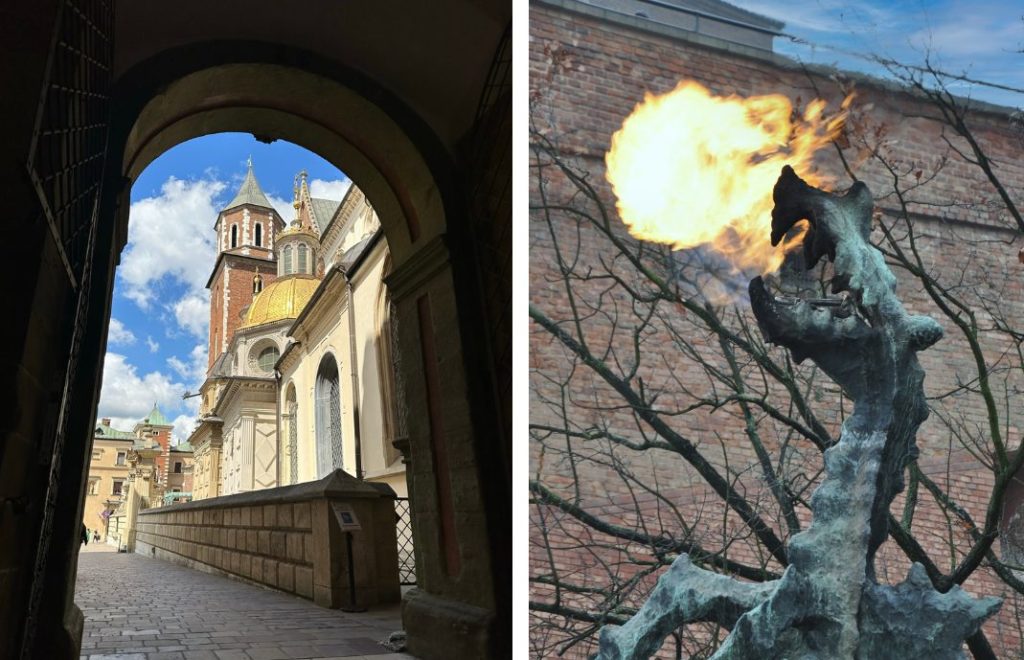
And then there’s the Dragon’s Den – the mythical lair of the Wawel Dragon, said to have terrorized the city before being slain by a clever shoemaker. Legend lives on beneath the castle, where you can descend through the Thieves’ Tower into the 270-meter-long cave, with 80 meters open to the public.
Outside the cave, don’t miss the famous dragon statue – which breathes real fire at regular intervals, delighting both children and adults.
A royal setting with a mythical twist, Wawel is where Poland’s past meets its most enchanting legends.
6. Schindler’s Factory – a story that cannot be forgotten
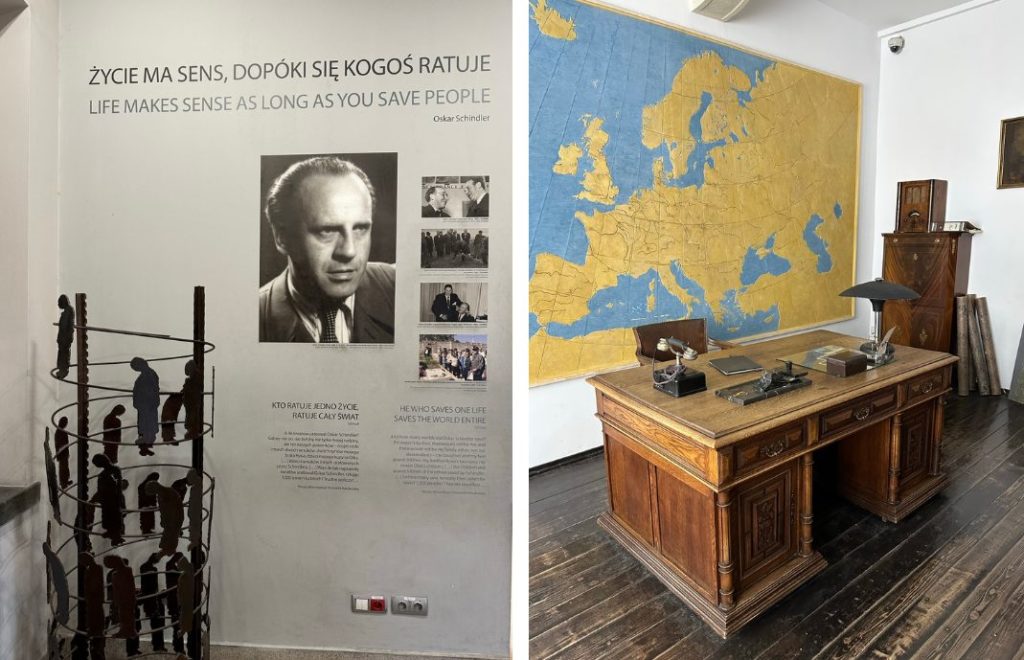
What appears from the outside to be an ordinary industrial building holds within it one of the most extraordinary stories of World War II. At Schindler’s Factory, the legacy of Oskar Schindler – the German businessman who saved over 1,000 Jews from Nazi concentration camps – is preserved with deep reverence and powerful storytelling.
Today, the former enamelware factory is home to a modern, immersive museum where history comes vividly to life. Visitors are taken on an emotional journey through Kraków under Nazi occupation, the rise of antisemitism, and the harrowing realities of the Holocaust.
As you move through the museum, you’ll encounter original artifacts, personal items belonging to Jewish families and civilians, haunting photographs, video recordings, and detailed recreations of life in wartime Kraków. You’ll also step into Oskar Schindler’s office, preserved as it was, with a glass installation listing the names of those he saved – “Schindler’s List.”
The museum also revisits scenes from Steven Spielberg’s acclaimed film, Schindler’s List, much of which was filmed in Kraków, particularly in the nearby Kazimierz district.
While Schindler’s Factory is one of Poland’s most compelling museums, it’s also one of the most emotionally intense. It offers a sobering, deeply human reminder of the atrocities of war – and of the courage, compassion, and moral strength it took to defy them.
This is not just a museum – it’s a memorial, a lesson, and a story that must never be forgotten.
More inspiration: Oskar Schindler’s Factory
7. Auschwitz-Birkenau – a visit that leaves no one unchanged
Roughly an hour’s drive from Kraków lies one of the most haunting places in human history: Auschwitz-Birkenau – the concentration and extermination camps that have become the starkest symbol of the Holocaust.
A visit to Auschwitz-Birkenau is a sobering, deeply emotional experience, one that confronts you with the full scale of Nazi brutality and the unimaginable suffering endured by millions.
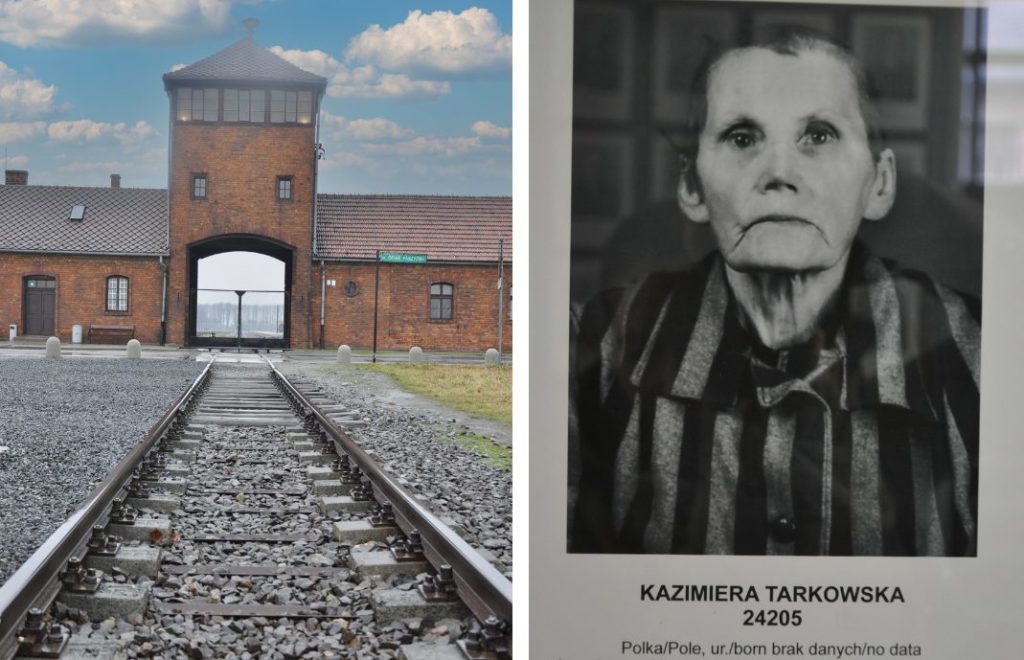
At the entrance to Auschwitz I, you pass beneath the infamous iron gate inscribed with “Arbeit Macht Frei” (“Work sets you free”). Inside, the barracks now serve as museum exhibits, filled with historical displays, personal belongings of victims, photographs, and records that piece together the chilling realities of life – and death – in the camps.
Just two kilometers away lies Birkenau (Auschwitz II), the site of the mass extermination. Here, the railway tracks that once transported prisoners lead directly to the ruins of gas chambers and crematoria. The scale of the site is staggering, and the silence heavy.
Much of the camp remains as it was when the Nazis abandoned it in January 1945 – a deliberate decision to preserve the memory and the warning.
Visiting Auschwitz-Birkenau is not easy, but it is essential. It’s a confrontation with history that challenges your heart and soul – a powerful reminder of what must never happen again.
8. Always something delicious on the plate
They say Kraków has more cafés, restaurants, and bars per square meter than anywhere else in the world. Whether that’s fact or folklore, one thing is certain: you’ll never go hungry here.
The city is a culinary playground, with menu after menu brimming with tempting dishes and decadent desserts. And while Kraków’s food scene is wonderfully diverse, you won’t want to leave without sampling some authentic Polish fare.
Local favorites include:
- Pierogi – Poland’s beloved dumplings, both savory and sweet.
- Barszcz – beetroot soup, often served with a dollop of sour cream.
- Bigos – a hearty hunter’s stew of cabbage and meat.
- Schabowy – breaded pork cutlets, crispy and comforting.
- Mushroom soup served in a bread bowl – rustic and rich.
Strolling through the Old Town, you’ll likely encounter the iconic blue pretzel carts, run by elderly vendors selling obwarzanek – a warm, chewy, sesame- or poppy-topped twist that’s Kraków’s answer to the bagel. Fresh off the cart and slathered with butter, it’s a simple joy.
If pizza’s more your style, don’t miss a stop at Pizzaria Cyclop, where wood-fired thin-crust pizzas draw both locals and tourists. Pair your slice with a Polish craft beer or top it off with one of their famously indulgent desserts.
Just be prepared for a queue – good food in Kraków is no secret – but trust us, the wait is worth every bite. Whether you’re dining on dumplings or devouring dessert, every meal here is part of the adventure.
More inspiration: How to make Polish pierogi

Although Krakow is one of Poland’s most visited cities, the country has so many other cities well worth exploring.
Click here for more inspiration to choose Poland as your next destination
