
Kruger is often hailed as the king of all national parks – and for good reason. Its name alone sparks excitement in the hearts of wildlife lovers across the globe.
Since the fences came down between South Africa, Mozambique, and Zimbabwe, Kruger has become part of the Great Limpopo Transfrontier Park, one of the largest conservation areas on Earth. This vast wilderness is home to 147 species of mammals, including the legendary Big Five – lion, elephant, buffalo, leopard, and rhino – drawing over 950 000 visitors every year.
And on this icy July morning, we are among them. The African winter chill bites hard as we huddle together in the inky darkness, waiting for our adventure to begin. Suddenly, twin beams of light pierce the night – the safari vehicle has arrived. Relief washes over us as we spot the thick blankets tucked inside, a small but precious comfort against the predawn cold.
The bush is calling, and soon, the magic of Kruger will unfold before our eyes.
South Africa’s most beloved park
Our guide steers toward Kruger, about a 45-minute drive from where we’re staying. More than once, I catch myself thinking I might freeze to death before ever setting foot in the park.
To be honest, we weren’t entirely sure whether Kruger should make it onto our itinerary. Time and again, we’d heard the same warning: the park is overrun with vehicles; crowds gather around the animals, and you end up crawling along in traffic.
It sounds strange, considering the park sprawls across a staggering 21,000 square kilometers. Yet the southern region is undeniably the busiest – not just because it’s prime lion territory, but also because it’s the most accessible.
As we arrive, the rumors start to ring true. An endless line of cars is queued at the gates, waiting for the 6 a.m. opening. Spoiled as I am, my previous safaris have been marked by near-solitude – a private communion with the wild.
Barely 500 meters inside the park, we spot about ten cars clustered around a tree. Word is, a leopard has just awakened and is lounging on a branch. Then, just as we’re craning our necks for a glimpse, a massive tour bus (!) pulls in and blocks the view entirely. Our guide gives a resigned sigh and decides it’s time to move on.
This isn’t the exclusive safari of glossy brochures – but it’s Kruger: wild, unpredictable, and full of surprises.
When the bush awakens
The black velvet sky begins to fade, replaced by a fiery explosion of red and orange hues as the sun stretches across the horizon. Slowly, the chill of night yields to the first kiss of warmth. Around us, the quintessential African savanna comes alive, its acacia trees etched in silhouette against the painted dawn.
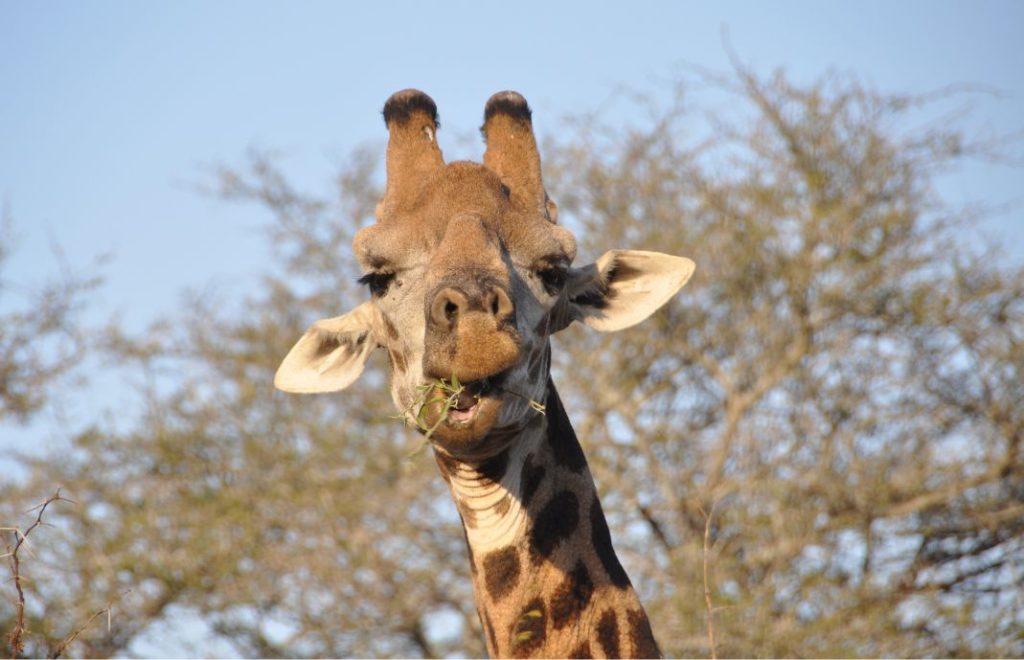
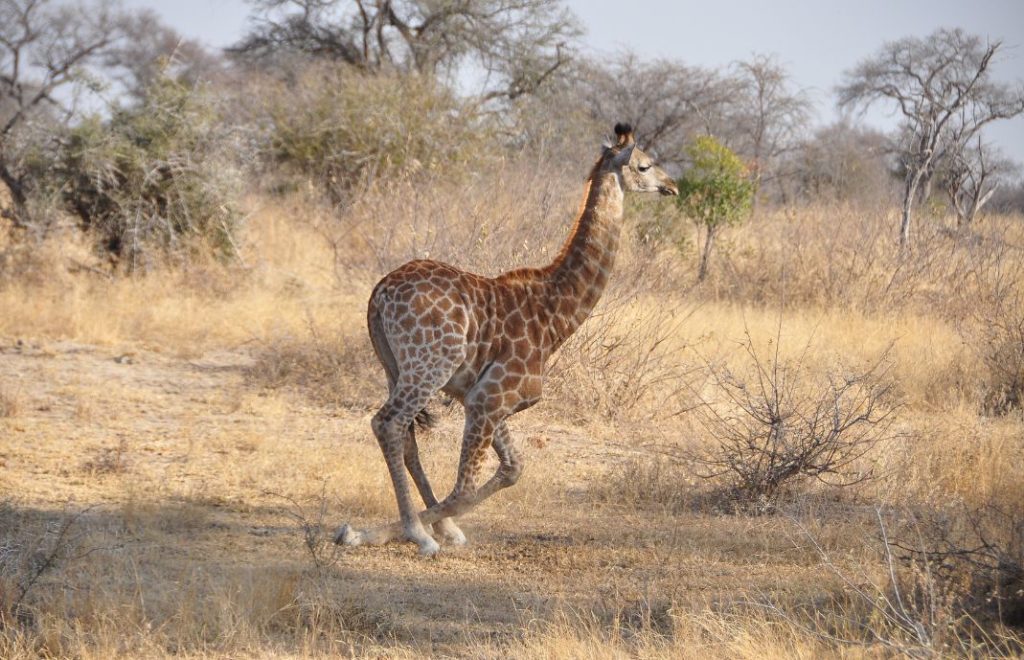
In the soft glow, a group of giraffes glides gracefully through the golden light. On impossibly long legs, they move with unhurried elegance, plucking tender leaves from treetops with delicate precision. Every toss of their slender necks, every shake of their sculpted heads, is pure poetry. They never fail to steal my heart – each sighting feels like the first time.
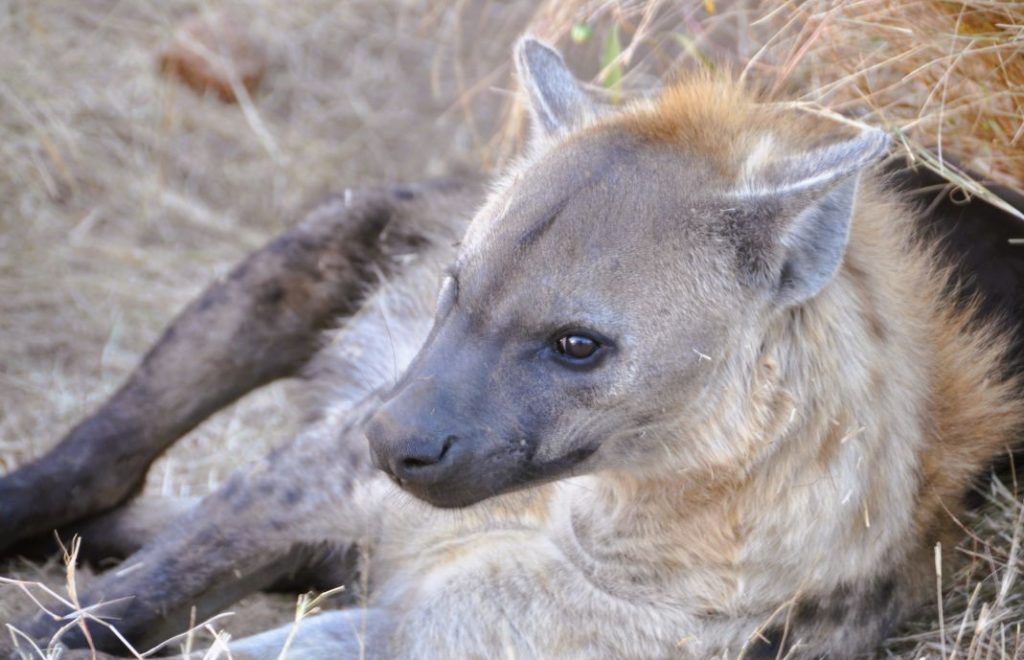
Not far away, a hyena mother is struggling to shake off sleep, her amber eyes heavy-lidded. Her pup, however, is buzzing with energy, bounding about like a mischievous toddler. When his playful explorations take him a little too far, a sharp grunt from mom halts him in his tracks. He slinks back to her side, tail low, before curling up in the safety of her spotted fur.
The savanna is stirring, and with every flick of a tail, every cry and call, the day promises a thousand wild stories yet to unfold.
Finally – solitude!
Kruger boasts an astonishing 850 kilometers of paved roads, 1,444 kilometers of gravel tracks, and 4,200 escape routes. At first, it feels as though every vehicle in the park is following us. But as we venture deeper into this vast wilderness, the traffic melts away, and the road becomes ours alone.
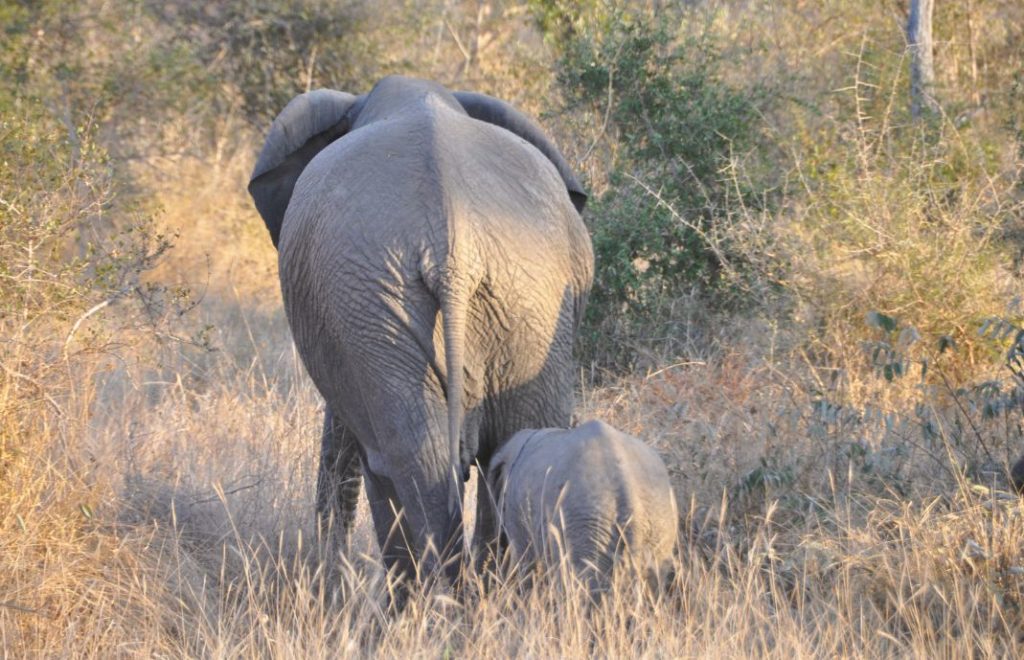
We sit in perfect silence, savoring the sight of a herd of elephants grazing just meters from the car. Unhurried and serene, they move with a majestic calm. Our attention, however, is stolen by the tiniest of them – a shy little calf who keeps trying to disappear behind its mother’s towering frame.
The adventure rolls on.
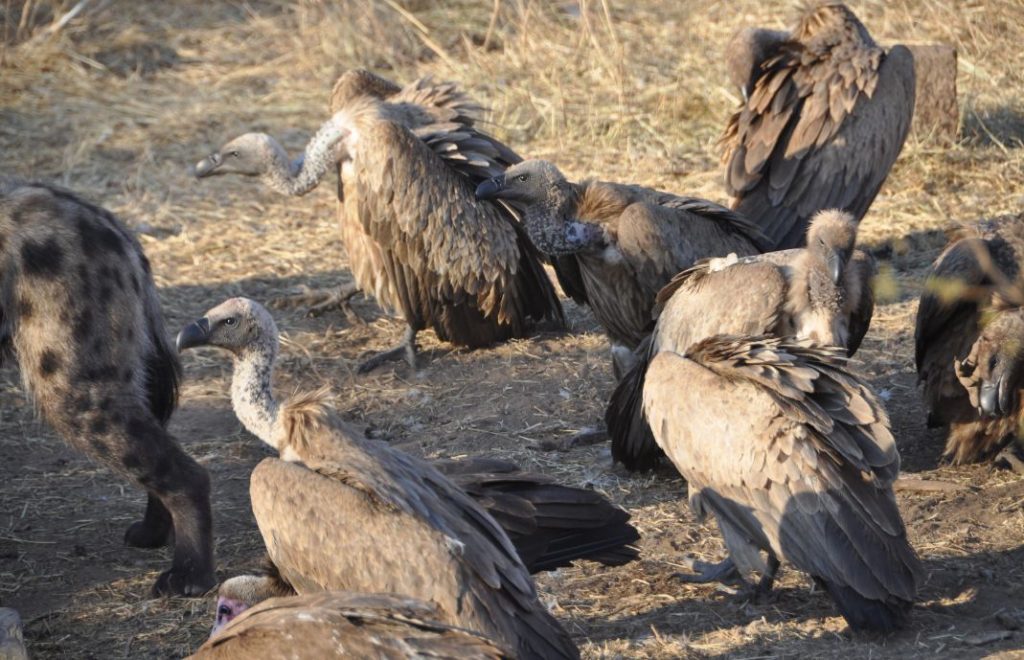
Our next encounter is far less serene. A pungent smell lingers in the air, mingling with the sound of bones crunching and sharp growls splitting the stillness. A giraffe, felled days ago, has become a feast for a clan of hyenas. Nearby, vultures circle hungrily, eager to join the banquet. Not all hyenas welcome their company, snapping and snarling whenever the scavengers venture too close.
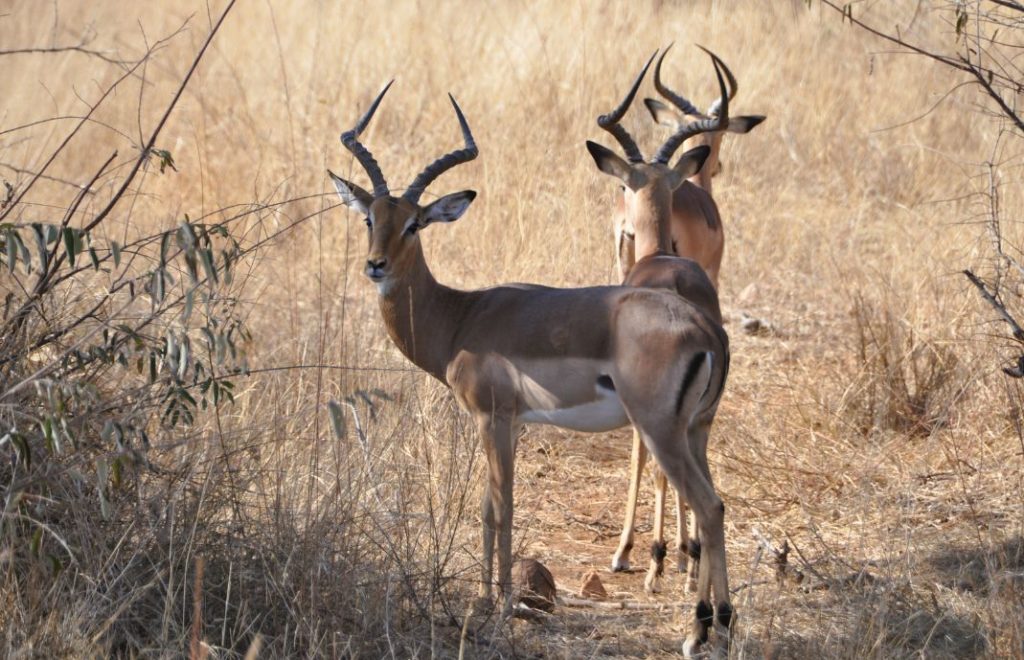
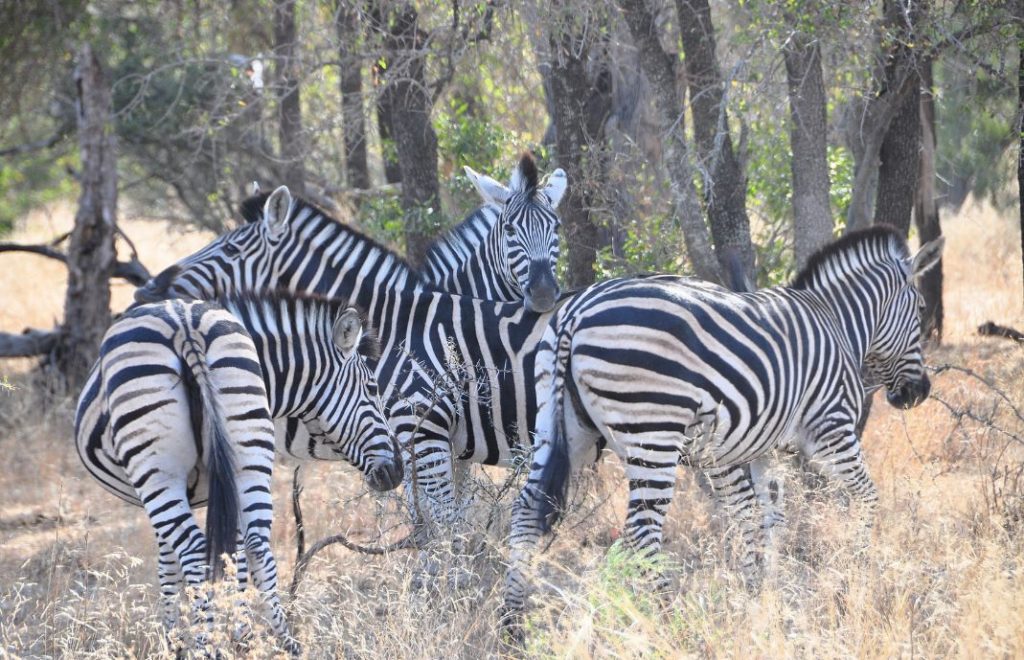
Baboons, zebras, more giraffes, elephants, impalas, and kudus. This land never ceases to astonish. Here, every turn of the road promises another unforgettable moment.
Kruger’s most exquisite cat
Every safari-goer dreams of spotting the great cats, and we are no exception. Our eyes sweep the horizon for signs of leopard or lion – the earlier “sighting” hardly counts.
Then, along a remote gravel road with not another vehicle in sight, our guide suddenly gestures toward the thicket.
He’s seen a leopard – and he intends to follow it. The tension in the car spikes. We silently will the magnificent creature to step out from the shadows and reveal its full glory.
And then, it happens.
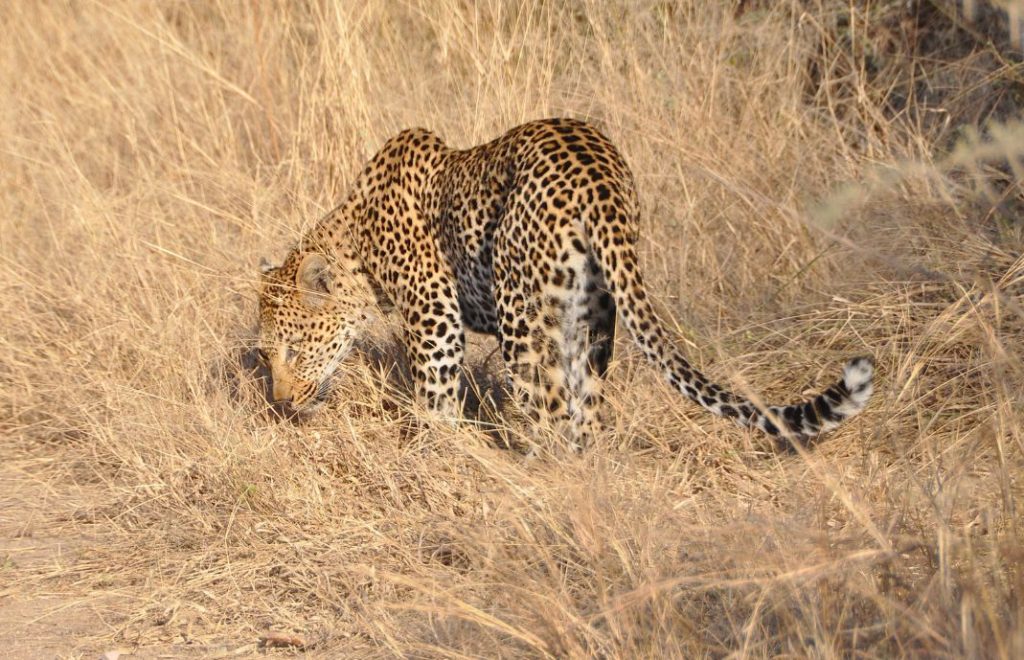
As if granting our unspoken wish, the leopard emerges from the dense undergrowth and saunters nonchalantly across the road, just meters from the car. Oblivious to our presence, he moves with unhurried grace, lost in his own world. We, on the other hand, are euphoric – awestruck by the sheer beauty of this elusive phantom finally materializing before us.
Us versus the monkeys
When lunchtime rolls around, we make our way to Skukuza, the park’s bustling headquarters. It’s practically a small town, complete with a shop, cafeteria, restaurant, clinic, police station, gas station, repair workshop – even a bank.
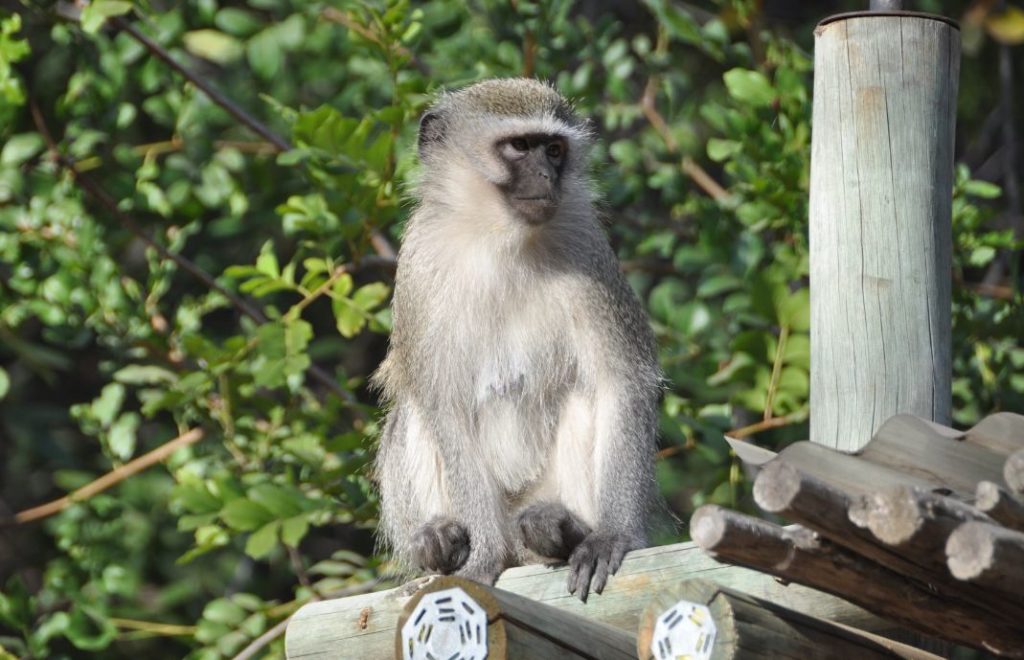
Our guide warns us in no uncertain terms: watch out for the vervet monkeys. They know all too well that it’s mealtime for hungry visitors – and they’ll seize any opportunity for a snack.
Down by the river, picnic tables and parasols beckon, offering a scenic spot for lunch. Or at least, an attempt at lunch.
The monkeys are everywhere. Quick as lightning the moment they’ve locked eyes on their prize. We cling to our lunch boxes as we nibble our sandwiches, chuckling at the optimism of those who dared set their food on the table. Their vision of a relaxed, restaurant-style picnic is swiftly dashed. Here, dining comes with a wild twist – and a watchful eye on the trees.
The naught little thief
An Englishman has laid out his cookies, sandwich, and apple on the table, valiantly trying to fend off three persistent monkeys while attempting to eat. It’s terrible to laugh at someone else’s misfortune – but honestly, he should have known this was a battle he was destined to lose.
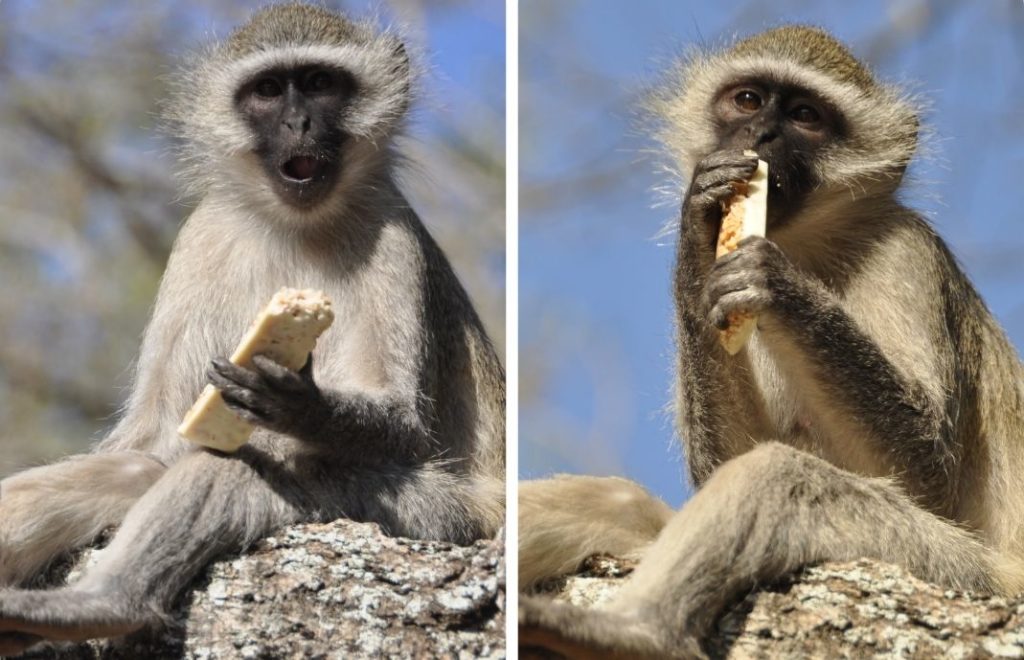
Sure enough, one of the mischievous rascals makes his move. In a flash – one, two, three – he’s snatched a cookie and darted up the nearest tree. The poor man barely has time to turn his head.
Perched comfortably on a branch, the thief works with practiced ease, peeling away the wrapper as if this isn’t his first cookie heist (and we all know it isn’t). Meanwhile, for reasons beyond comprehension, the Englishman stands beneath the tree, shouting at the culprit. The monkey gazes down calmly, stretches out a leg – and lets the wrapper flutter down squarely onto its former owner’s head.
We laugh until our sides ache.
The ultimate rulers of the savanna
Well-fed and content, we stroll back to the vehicle, eager for more adventures. At the top of our wish list now: lions.
And just like that, wish granted.
The lionesses are sprawled at a distance from the road, but lions they are nonetheless. Basking languidly under a sun that has finally turned up the heat.
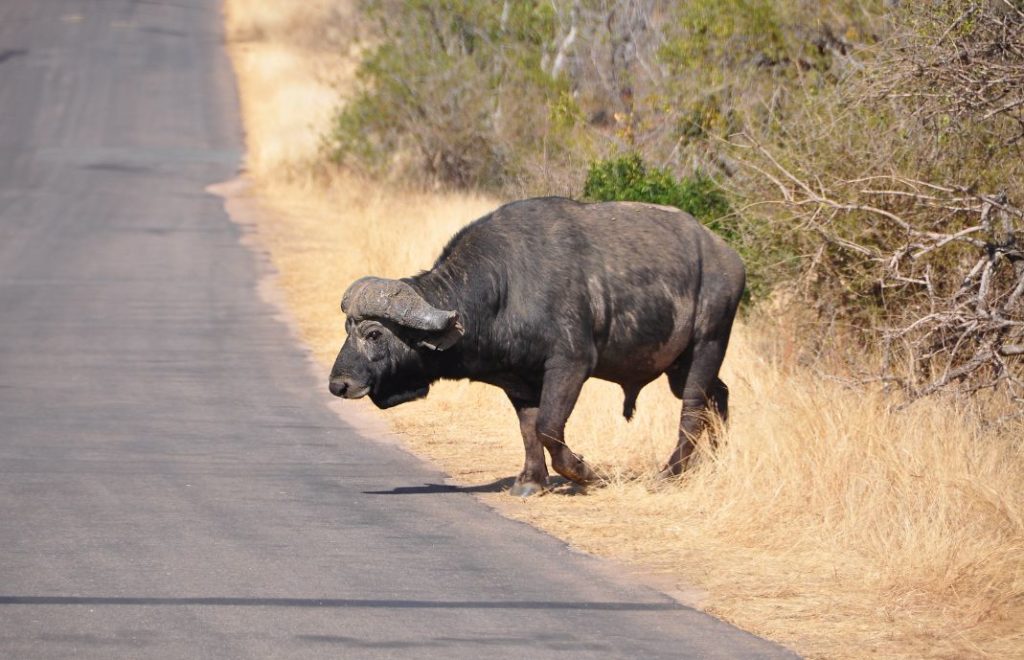
As we sit watching these regal queens of the savanna, a lone buffalo suddenly ambles across the road, heading straight toward the lions’ domain. Our guide snaps to attention, remarking that if the buffalo doesn’t change course soon, we might witness a hunt.
My stomach knots. I blanch and make it very clear: I do not want to see that. The Brazilian sharing our vehicle agrees wholeheartedly. The guide and the Americans? Not so much.
Fortunately for me – and, most importantly, for the buffalo – he veers off at the last moment, wandering away from the lionesses’ lethal embrace.
Where did all the animals go?
For the next few hours, it feels as if Kruger has been emptied of life. Not a zebra in sight. Not even a bird.
We drive along paved roads, then gravel tracks. We stop to ask other visitors.
Where have all the animals gone?
Of course, it’s midday, and the mercury has soared well past 30 degrees. The wildlife is likely lounging in the shade – much to our mounting frustration.
Our guide turns toward the river and a few waterholes. He doesn’t like this either; it’s a matter of professional pride for him.
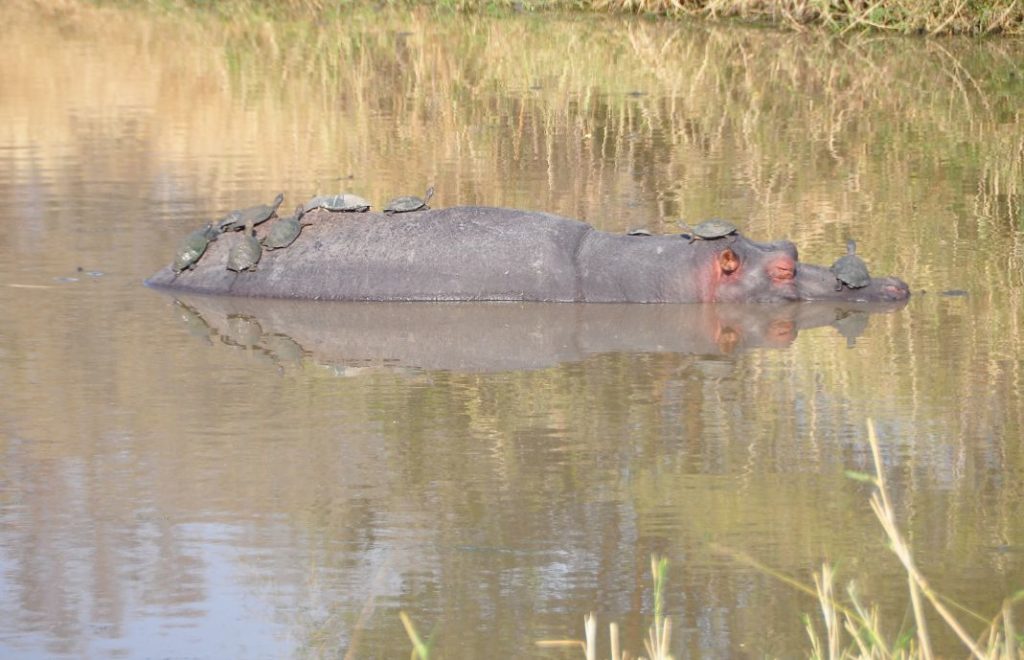
Finally, a flicker of life: a hippo, floating lazily in a waterhole, doubling as a sunbed for a cluster of turtles. They’ve scrambled onto his back, basking contentedly, while the gray giant seems entirely unbothered by his freeloading passengers, lying perfectly still to keep them from tumbling off.
Not far away, relief turns to delight.
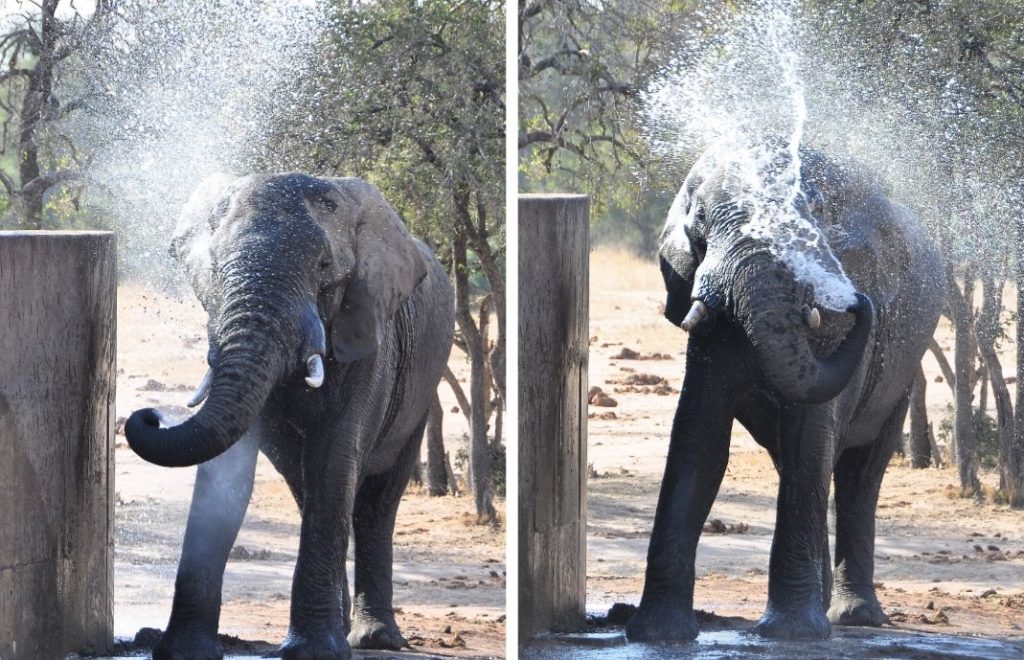
A parched elephant has discovered a pool of water and is indulging in a long, luxurious drink – then a shower, trunk spraying high into the shimmering air. We watch in awe as he cools himself for a good twenty minutes before strolling off into the sun-baked wilderness, leaving us grinning from ear to ear.
The end of the tale
As the day draws to a close, we return to Skukuza for dinner. The restaurant offers a generous menu, and we settle into one of the tables, savoring the comfort after a long day in the wild.
Strangely enough, there isn’t a single monkey in sight.
Curious, we ask our guide why. He chuckles:
“They’re clever. In the morning, tourists bring packed lunches – easy to steal. Dinner, not so much.”
Our experience in Kruger turned out to be nothing like what we had imagined.
The day wasn’t spent crawling in traffic or jostling with crowds for a glimpse of wildlife.
Instead, we spent long stretches alone on the road – just us and the animals, in most cases. Exactly the way a safari is meant to be.
Practical information
Size and significance
Kruger is South Africa’s largest national park and a crown jewel of African wilderness. Established in 1898 and named after Paul Kruger, former president of the Boer Transvaal Republic, it is now part of the Great Limpopo Transfrontier Park, the world’s largest conservation area, thanks to open borders with Mozambique and Zimbabwe.
Getting there
You can fly into Hoedspruit from major South African airports, or enjoy a scenic five-hour drive to the park.
How long to stay
Kruger is vast – 21,000 square kilometers – so it’s not a park you can fully experience in a day, or even a week.
Ways to explore
Choose between guided safaris with experienced rangers or the thrill of a self-drive adventure. The park offers both paved roads and rugged gravel tracks.
Where to base yourself
The main hub, Skukuza, lies in the southern section. It’s well-equipped with shops, restaurants, a cafeteria, picnic spots, restrooms, a gas station, medical facilities, police services, and even a bank.
Best time to visit
Kruger is a year-round destination. Remember, South African winter days are warm, but mornings and evenings can be chilly.
April-May and September-October are excellent, budget-friendlier alternatives to peak season.
Accommodation tips
Stay inside the park or in nearby lodges. Weekends and holidays draw big crowds of locals, so book well in advance, even in low season.
Tickets and access
Day passes and multi-day passes are available.
There are nine entry gates:
- North: Pafuri, Punda Maria
- Central: Phalaborwa, Orpen
- South: Paul Kruger, Phabeni, Numbi, Malelane, Crocodile Bridge
More inspiration:
Rules and Tips for a Self-Drive Safari in Kruger National Park
10 animals to search for in Kruger National Park
A guide to Kruger National Park
Respect the wild
Kruger National Park must be appreciated for what it is: a vast sanctuary, created more than a century ago to protect wildlife and nature.
We are guests here.
The animals hold all the rights – and they must never be disturbed or harassed.
Kruger’s three distinct regions
North – The untamed tropics
The northernmost stretch of Kruger is unique, lying firmly within the tropics. Here, sandstone dominates the landscape – unlike the granite and basalt found elsewhere in the park.
This region is South Africa’s premier destination for elephant sightings. During the dry winter season, herds migrate here from Mozambique, Zimbabwe, and deeper within Kruger.
The drive along the Luvuvhu River toward Crook’s Corner, where it converges with the Limpopo, ranks among Africa’s most breathtaking routes. Look out for eland – the most revered antelope of the San people and the largest in South Africa – as well as leopards that often drape themselves across the trees.
History buffs will also find this area fascinating, with traces of ancient civilizations and early pioneers dotting the terrain.
Central – Wildlife paradise
The heart of Kruger is its most wildlife-rich region, boasting some of the park’s most stunning scenery. Between the Sabie River in the south and the Olifants River in the north, vast open plains unfold, where zebra, wildebeest, and giraffe roam in abundance. Naturally, their presence lures predators – lion, cheetah, and leopard stalk these lands.
The southwest is a prime spot for rarer species such as African wild dog, rhino, sable antelope, and eland. The Satara area enjoys a legendary reputation for exceptional game viewing.
South – The big cat capital
The southern section is by far the most popular – not only because it’s prime lion territory but also thanks to its proximity to Johannesburg.
This region boasts the widest range of accommodations and requires the least advance planning. Known as “cat country,” it’s your best bet for spotting rhino as well.
Dense vegetation can make wildlife harder to spot, but don’t be discouraged – animals often wander onto the roads, offering thrilling encounters up close.
More inspiration to safari in South Africa:
A guide to Addo Elephant National Park
Ele-phantastic in Addo
Safari at Pumba Private Game Reserve
