
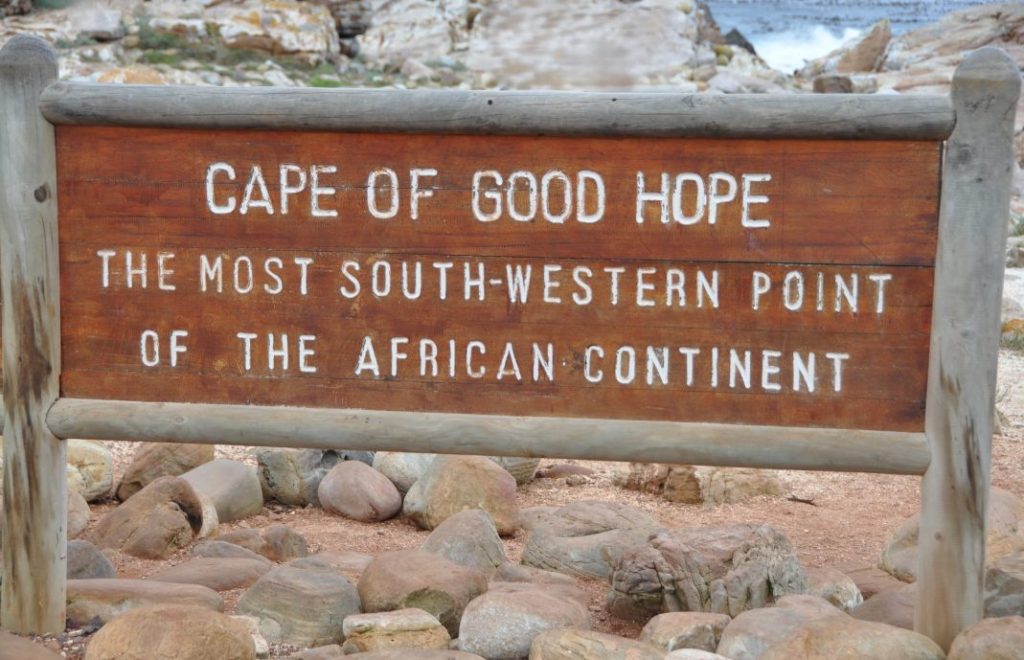
The Cape of Good Hope – once a beacon of both promise and peril. For centuries, it stood as a symbolic landmark for sailors venturing southward from distant shores. Beyond this rugged headland, their ships no longer pressed straight into the unknown south but pivoted east, chasing the riches and wonders of the Far East.
Today, the Cape of Good Hope is one of South Africa’s most celebrated attractions. Contrary to popular belief, it isn’t the continent’s southernmost tip – that honor belongs to Cape Agulhas, lying roughly 150 kilometers farther east. Yet it is the Cape of Good Hope that captures the imagination and draws the crowds.
Its very name evokes mystery and boyhood dreams. A place steeped in tales of tempestuous seas, heroic voyages, and tragic shipwrecks. Here, where two oceans seem to meet and wild waves lash against jagged rocks, the spirit of adventure lingers in the wind.
A scenic journey to the Cape
The drive along the Atlantic coastline is nothing short of spectacular. In several places, the road clings to the cliffs, suspended above the restless ocean below. It winds through charming seaside towns, with countless viewpoints where you can pause, breathe in the salty air, and drink in the vistas.
Eventually, the route leads to the Cape of Good Hope Nature Reserve, part of the Table Mountain National Park – South Africa’s second most visited reserve, surpassed only by the legendary Kruger.
After paying the entrance fee, we set off toward Cape Point, the dramatic promontory where rugged cliffs plunge into the sea. The reserve bursts with biodiversity, home to an astonishing array of flora and fauna, including over 250 species of birds.
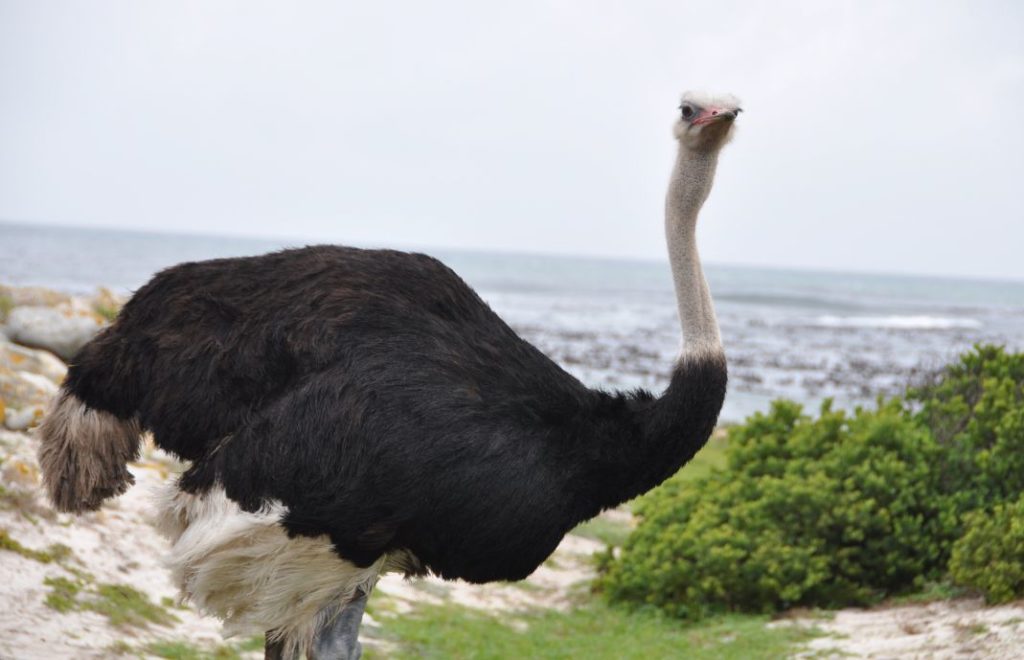
Luck is on our side: midway through, we brake to let a pair of ostriches saunter casually across the road – a surreal reminder that here, nature always has the right of way.
Cape of Good Hope – Where oceans and history collide
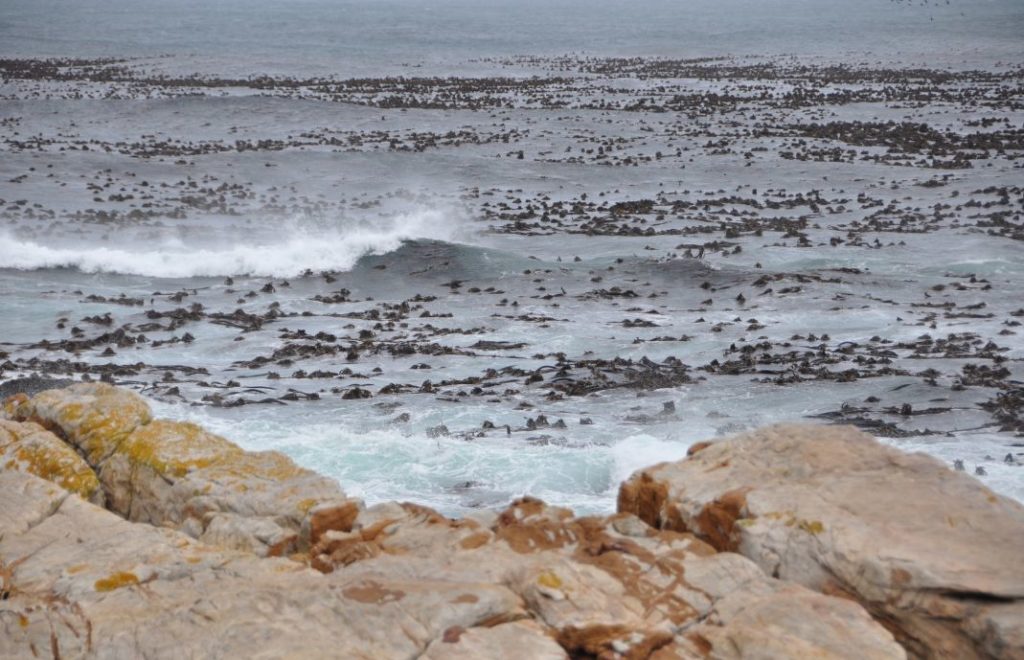
Cape Point rises before us in all its raw grandeur – towering cliffs, sweeping ocean views, and waves so fierce they hurl themselves against the mountainside in a white, foamy rage. Standing here, it’s easy to understand why Portuguese explorer Bartolomeu Dias first called this place the Cape of Storms when he rounded it in 1488, becoming the first European to do so.
The name we know today – Cape of Good Hope – was later bestowed by Portugal’s King João II, a nod to the optimism sailors felt once they passed this perilous headland: the promise of a clear route to India.
But hope alone can’t calm the elements. Today, the weather gods are merciless. The wind lashes everything that walks on two legs. A group of Indian tourists clings to their hats and scarves, battling gusts as they line up for the obligatory photo in front of the iconic sign marking the Cape of Good Hope.
We tempt fate and venture farther out along the rocky promontory. From here, you feel the power of the earth. Three continents lying beyond the horizon, their distant shores separated by roaring oceans. It’s a rare and humbling moment.
It was right here, at this very cape, that the story of Cape Town began. In the 17th century, as trade between Europe and Asia flourished, ships needed a resupply station along the treacherous route. Enter Jan van Riebeeck, a Dutch seafarer who, along with 90 settlers, landed in Table Bay in 1652 under the command of the Dutch East India Company. Their mission: to establish a refreshment station for passing ships.
From that modest beginning grew Cape Town, a city that now attracts millions of visitors each year -travelers drawn by the same sense of wonder that lured explorers to this wild, wind-battered edge of Africa centuries ago.
The legend of the Flying Dutchman
The plan was to ascend the dramatic cliff that towers above the Cape, where an old lighthouse – built in 1859 – still stands sentinel against the roaring sea. From up there, the views are said to be nothing short of breathtaking, a sweeping panorama of ocean and sky colliding at the world’s edge.
As I gaze out over the wild waters from below, it’s easy to understand why this beacon was necessary. Visibility around the Cape – especially when the fog rolls in – has always been treacherous. Over the centuries, no fewer than 23 ships have met their end here, their splintered remains claimed by the sea. Among them is the most famous of all: the legendary ghost ship, the Flying Dutchman, which vanished in 1641.
The tale endures: during a furious storm, the Dutch captain, determined to round the Cape, is said to have cursed the heavens and sworn he would succeed – even if God or the Devil opposed him, even if it took until the end of time. For his defiance, he was condemned to sail the oceans forever, a phantom adrift on eternal waves.
They say that in the fiercest storms, you might still glimpse his spectral ship slicing through the mist – a harbinger of doom for those who see it.
Today, despite the punishing winds whipping across the Cape, no ghostly silhouette haunts the horizon. The weather is wild, yes, but not quite apocalyptic.
We’d planned to take the less-spooky cable car up to the lighthouse, perched 249 meters above sea level. But the wind has other ideas – the service is suspended. And so, rather than risk a hike that might leave us wandering like the doomed Dutchman himself, we turn back toward Cape Town.
Still, as we trace the eastern shoreline on our return to the Mother City, we can’t help but scan the restless sea – just in case The Flying Dutchman sails by.

More inspiration to the Cape Peninsula:
The Penguins of Boulders Beach
A seal-icious adventure in Hout Bay
