
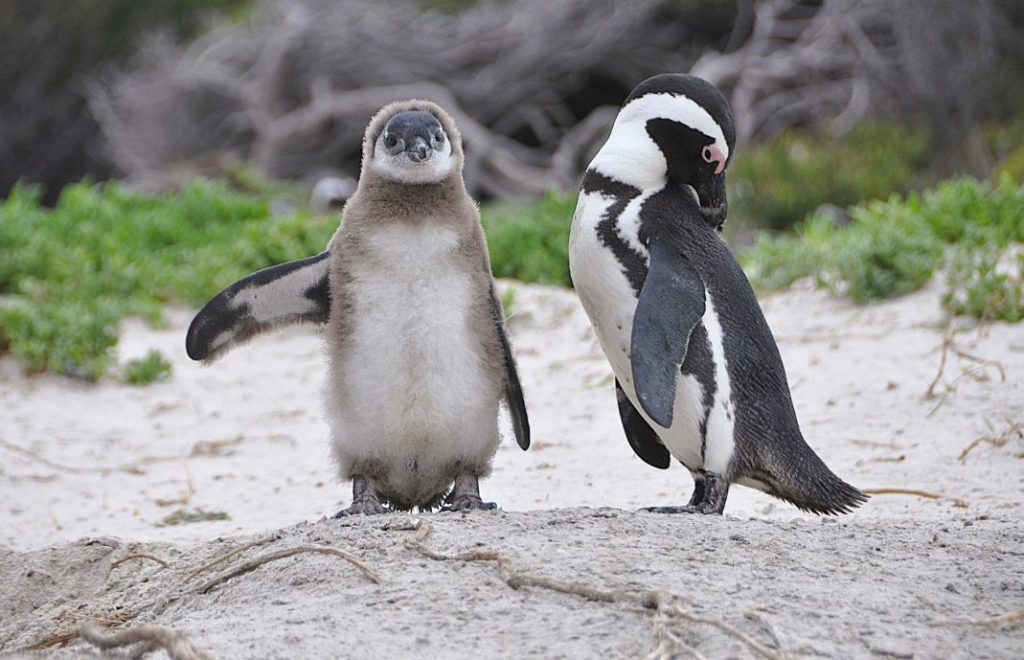
Boulders Beach is one of the most visited shores on the Cape Peninsula – but not for its powdery white sands. The real allure? A striking colony of black-and-white birds that cannot take flight.
This beach is home to one of the world’s largest populations of African penguins, and here you can get remarkably close – perhaps even share a swim with these charismatic creatures.
Dressed impeccably in nature’s own tuxedos, with their endearing faces and trademark waddle, it’s easy to see why visitors fall head over heels for these charming residents.
Where is Boulders Beach?
Boulders Beach is tucked away in Simon’s Town, about a 45-minute drive from Cape Town.
There are several ways to get there:
- Rent a car
- Hop in a taxi
- Take public transport.
- You can also join an organized excursion, which conveniently includes transportation.
The journey itself is part of the magic. Winding along the rugged coastline of the Cape Peninsula, offering breathtaking views at every turn.
The Penguins of Boulders Beach
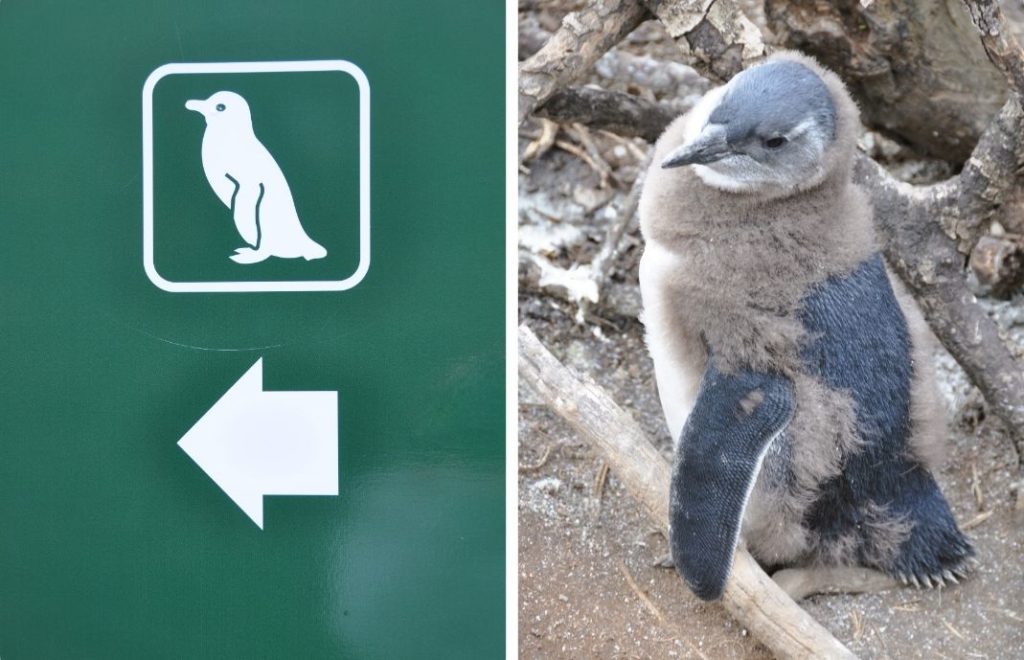
It all began in 1982, when a pair of these delightful creatures settled into the soft sands nestled between massive granite boulders – hence the name Boulders Beach. These natural rock formations shield the shore from wind, heavy waves, and strong currents, creating a safe haven.
Today, between 2,000 and 3,000 of these flightless birds call this place home.
Sadly, the African penguin is classified as an endangered species.
The reasons are many: overfishing, habitat destruction, pollution, and irresponsible tourism.
These pressures have also taken their toll on the Boulders Beach colony, causing penguin numbers to plummet dramatically in recent years.
Thankfully – much to the delight of both penguins and visitors – Boulders and its neighboring beaches are now part of the Table Mountain National Park Marine Protected Area. This means pristine, safe shores and a protected sanctuary where these charming tuxedoed residents can thrive.
Your visit to Boulders Beach
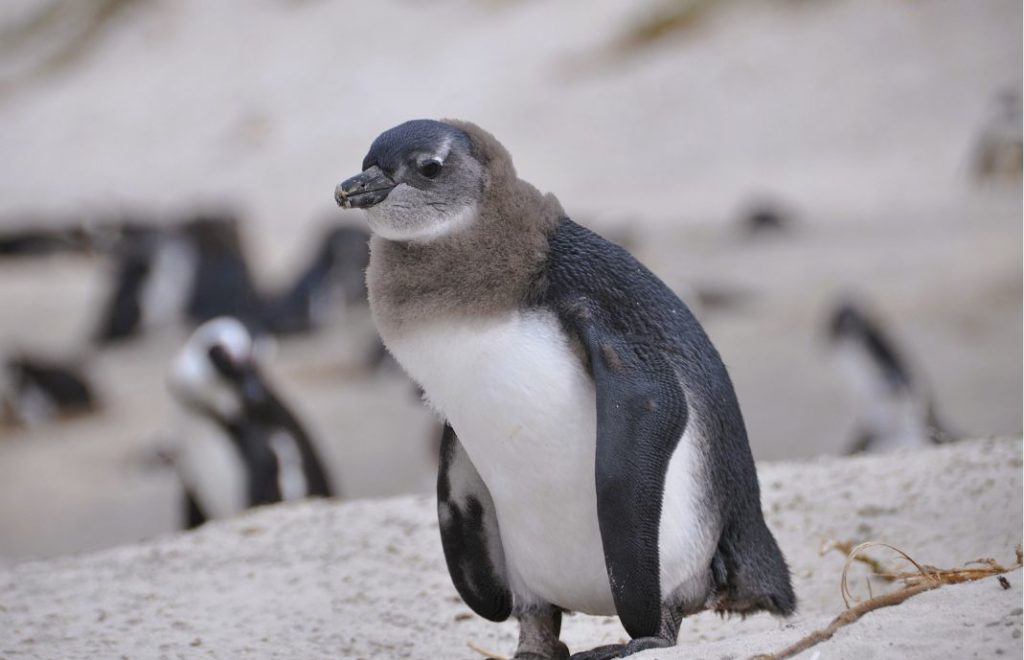
Today, wooden boardwalks – fully accessible for wheelchairs – allow the 60,000 annual visitors to get up close to the penguins without disturbing their natural habitat.
The best part? The nests, eggs, and penguins are safely protected!
Don’t be surprised if a curious penguin or two decides to waddle along the boardwalk, mingling with visitors in its own charming way.
There is an entrance fee at the gate, but it’s a small price to pay for an unforgettable experience in this unique sanctuary.
Meet the penguins of Boulders Beach
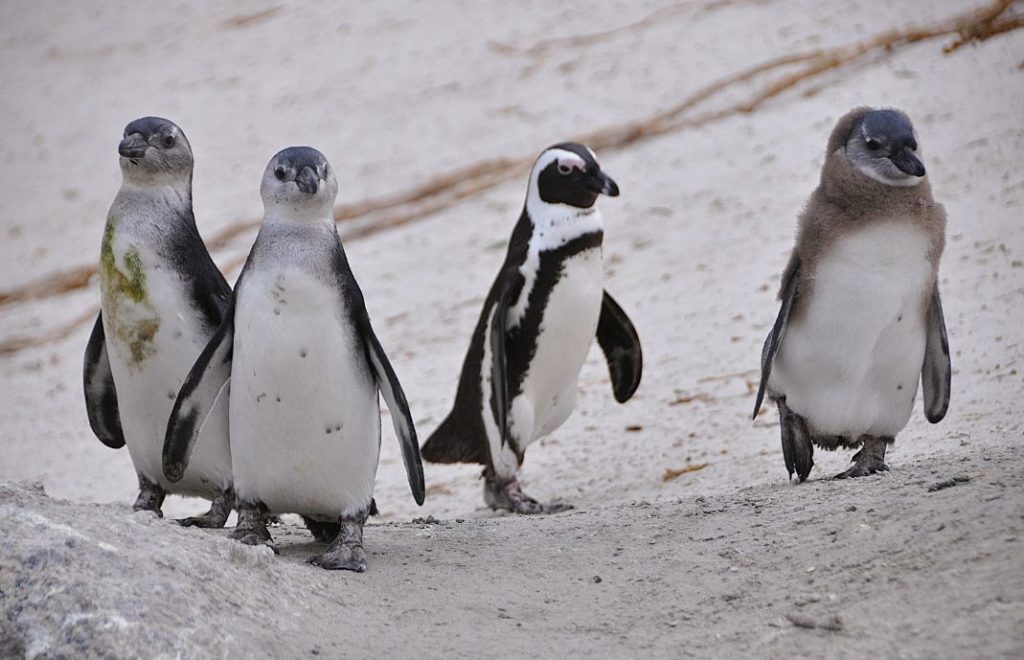
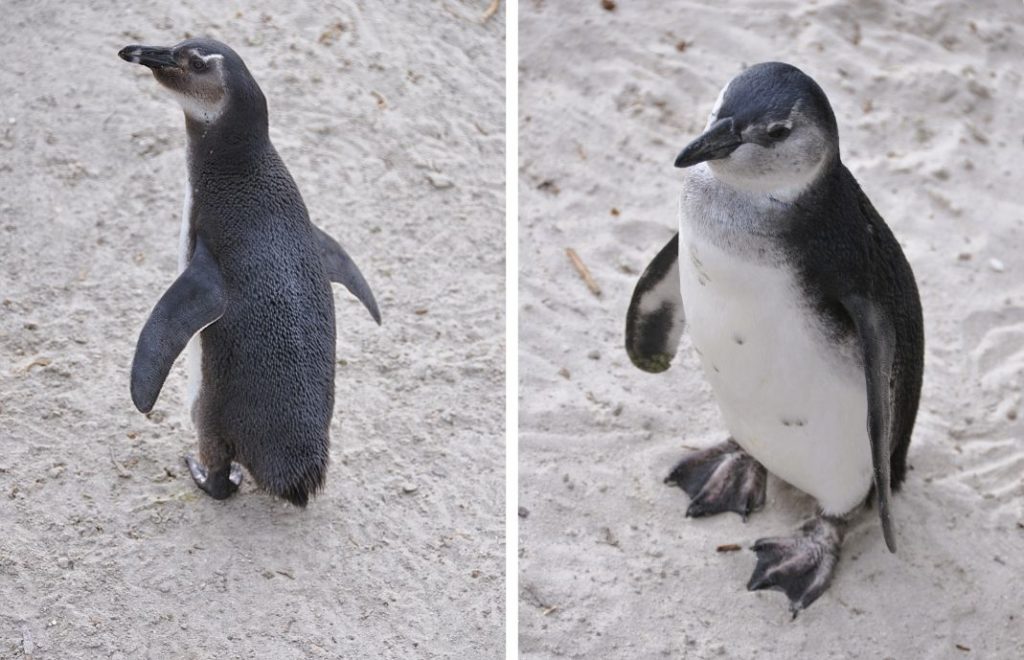
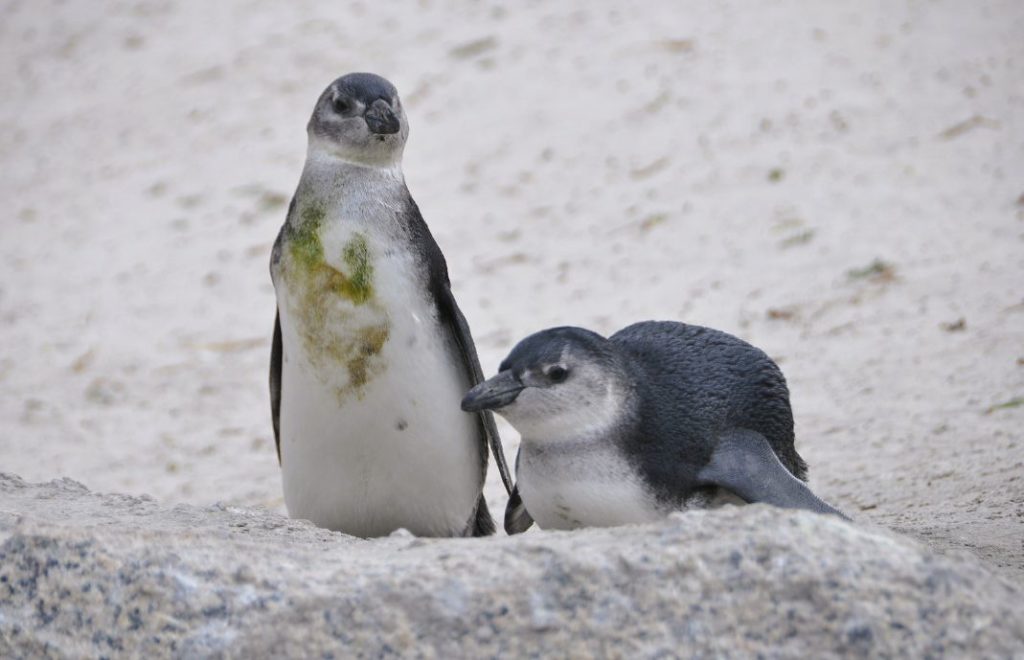
It doesn’t take long before the first penguins make their appearance. Some are nestled in their burrows, eyes closed in peaceful slumber. Others stand perfectly still, leaning slightly forward with their small wings tucked neatly by their sides – as if they’re standing at attention. Completely unfazed by the chorus of “Awww” and “So cute!” from onlookers, or the tourists eagerly snapping photos, they simply carry on with their day.
A few have just emerged from the sea, spreading their wings to dry in the gentle morning sun. Others waddle purposefully across the sand, while some are meticulously preening their sleek black-and-white plumage. Whatever they’re up to, one thing is certain: they are irresistibly adorable. Especially when they shake themselves dry and toddle off with that unmistakable penguin waddle.
It feels almost surreal to watch these birds nesting on a public beach, right in the heart of a town. Yes – you can actually swim at Boulders Beach. Don’t be surprised if a penguin darts past you underwater in pursuit of fish while you take a refreshing dip!
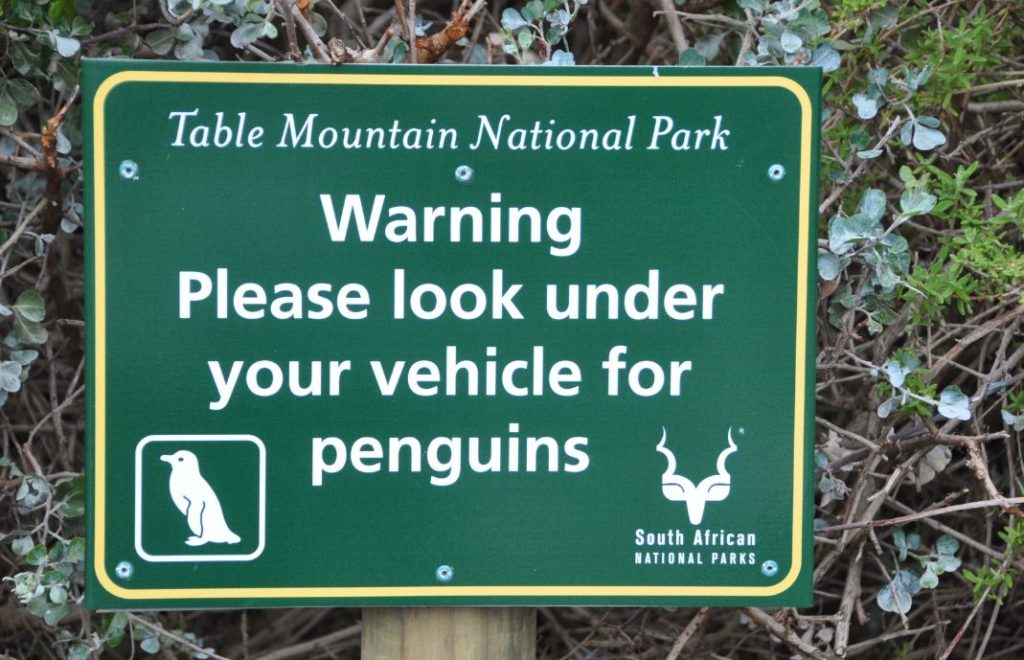
When it’s time to leave the parking lot, pay close attention to the signs: “Please look under your vehicle for penguins.”
Here at Boulders Beach, it’s not uncommon for these charming creatures to wander up to the lot and tuck themselves under cars.
The last thing you’d want is to harm one of these endearing little residents!
When is the best time to swim with Penguins?
Boulders Beach welcomes visitors year-round.
The ideal time to take a dip alongside these charming birds is during the summer months, when the water is warmer and the sun invites you to linger. Swimming in winter is certainly possible, but be prepared for a brisk chill in the Atlantic!
If you wish, you can spend the entire day on the beach, soaking up the sun, the scenery, and the company of these unforgettable little companions.
Good to know before you go
Location
Boulders Beach lies in False Bay, about a 45-minute drive from Cape Town.
Getting there
The easiest way is to rent a car and drive yourself – but remember, South Africa has left-hand traffic.
By train
You can take the train from Cape Town to Simon’s Town (be sure to buy a first-class ticket). The route along Kalk Bay is incredibly scenic. From Simon’s Town, it’s either a pleasant 30-minute walk through the town’s historic streets or a quick taxi ride to Boulders Beach.
Other options
Taxis or organized excursions are also available.
Entrance fee
Payable at the Visitor Center, where both Visa and Mastercard are accepted, as well as cash.
What to pack in winter (June-August)
Bring windproof and waterproof clothing, plus a warm sweater or jacket.
Parking
Spaces are limited, so arrive early – especially during peak season (South Africa’s summer).
Protected area
Boulders Beach is part of a conservation zone. It’s strictly forbidden to remove anything – take only photos and wonderful memories.
Penguin etiquette
Do not feed or touch the penguins, and always keep a respectful distance. They are wild animals and can bite.
Penguin facts
Name origins
The word penguin dates back to the 1500s, when explorers noticed a resemblance to the now-extinct great auk (Pinguinus impennis). In English, great auk was synonymous with “penguin,” and the name stuck.
Distinctive colors
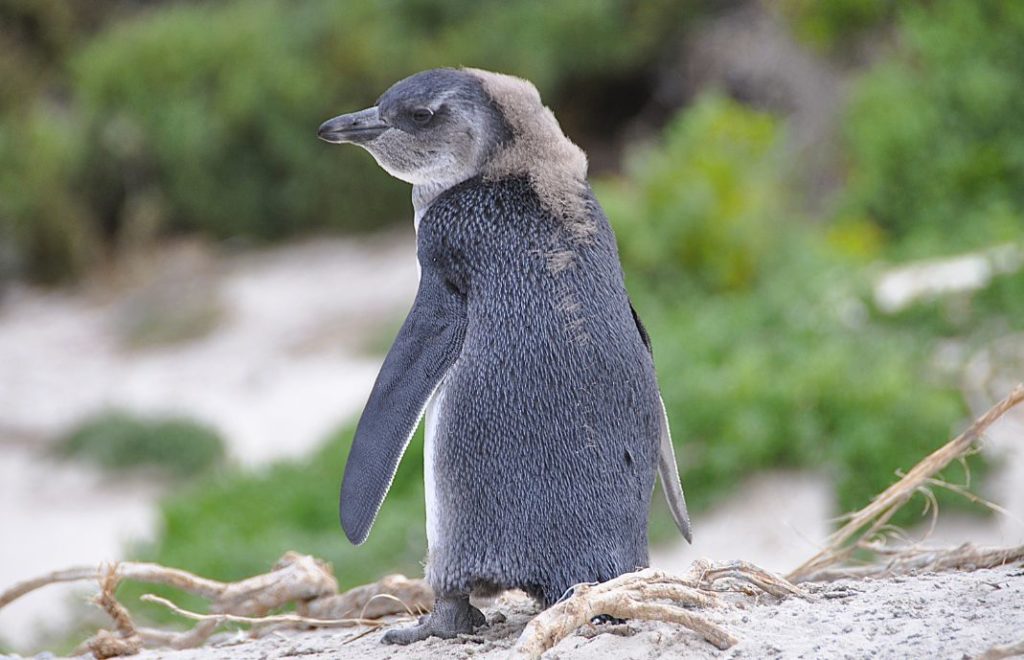
Penguins sport a striking black back and white belly, often accented with black chest stripes and white speckles on the head. This unique coloring provides excellent camouflage from predators, both above and below the water’s surface. Some species also display splashes of other hues.
Built for the elements
Their bodies are densely packed with stiff, brush-like feathers that trap heat and regulate temperature in and out of the water.
Flightless, yet agile
Though they have a breastbone like flying birds, penguins can’t fly. Over time, their wings evolved into powerful flippers, enabling them to “fly” through water with remarkable grace. Their swimming motion closely mimics a bird in flight, while their feet help steer.
On land
Short webbed feet allow them to waddle upright, and when speed is needed, they slide across the ice or sand on their bellies.
Social by nature
Penguins are highly social creatures, often living in vast colonies. Despite this, they have a strong instinct to find – and remain with – a single partner. Most penguins mate for life.
The African penguin
Sadly, this species is endangered. Its greatest threats include climate change, pollution, overfishing, habitat destruction, hunting, and irresponsible tourism.
More inspiration to Cape Town and Cape Peninsula:
Cape of Good Hope
Check-In: The Grand Daddy
A seal-icious adventure in Hout Bay
