
The mighty Mississippi River carves its way through America like a living legend, inspiring stories, songs, and the dreams of countless travelers. It’s been called many names – Old Man River, Father of Waters, Big Muddy – each evoking its timeless, commanding presence.
Stretching over 4,800 kilometers (3,000 miles), this National Scenic Byway winds through 10 U.S. states, following the Mississippi from its humble beginnings in Minnesota to its grand finale at the Gulf of Mexico in Louisiana. It’s a journey steeped in American history, culture, music, and soul – and one that offers an unforgettable taste of life along one of the world’s most storied rivers.
Most of us know the enchanting tales of Huckleberry Finn and his carefree adventures on the Mississippi River. Drifting down the current on a makeshift raft, watching the world slide by at a lazy pace – it sounds wonderfully romantic, doesn’t it?
But let’s be honest: in today’s world, most travelers choose a slightly faster and far more practical way to experience this legendary river.
If Huck Finn were alive today (and held a valid driver’s license), he wouldn’t be carving a raft – he’d be renting a car and cruising along the Great River Road. This iconic route is the ultimate way to follow in the wake of history, while savoring the freedom and adventure of the open road.

The story behind the Great River Road
The Great River Road (GRR) isn’t just a scenic route – it’s an American icon. Conceived in 1938, this vast network of federal, state, and local roads was designed to trace the sinuous path of the mighty Mississippi River, creating a one-of-a-kind journey through the heart of the United States.
Today, the GRR forms a continuous route from the river’s headwaters in Minnesota all the way to the Gulf of Mexico, cutting through 10 states that all share a connection to the Mississippi. Driving it is more than a road trip – it’s a cultural odyssey, offering a front-row seat to American history, landscapes, and lifestyles.
Sure, you’ll pass the occasional industrial plant, strip mall, or fast-food joint. But those fade quickly, like morning mist, as you take in the towering limestone bluffs, lush forests, sweeping farmlands, and vibrant wildflower meadows that define the route.
The term “Great River Road” refers to more than just a highway – it’s a tourism corridor and historical thread, celebrated by each state along the river. In every state, the GRR showcases heritage sites, music trails, nature preserves, and communities shaped by the river’s power and promise.
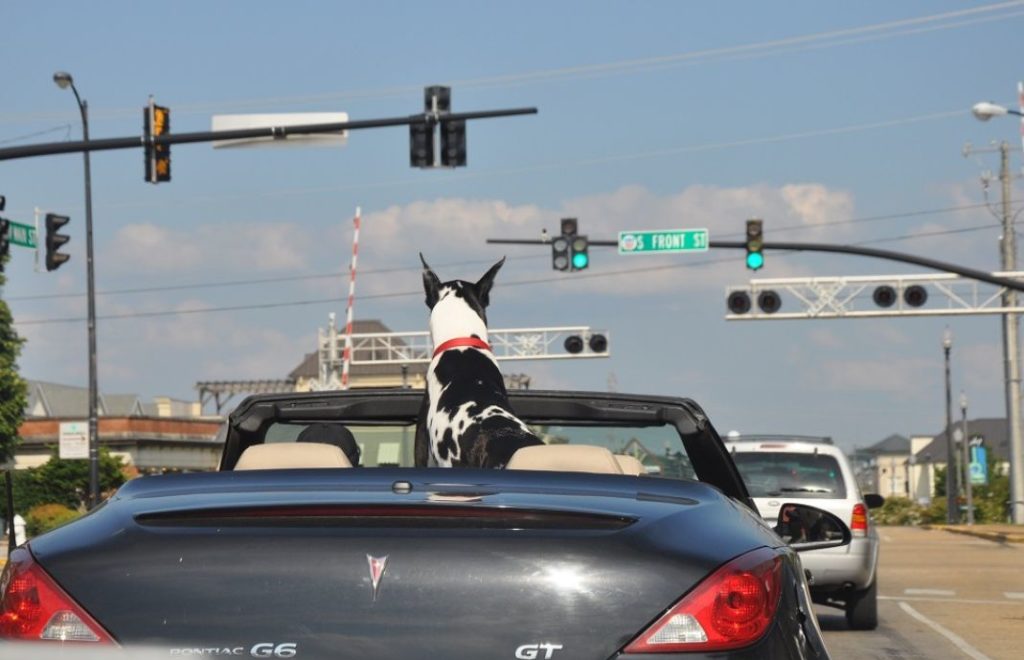
The Route: Driving the Great River Road
The Great River Road begins at the headwaters of the Mississippi River in Lake Itasca State Park, Minnesota, and winds its way south to its grand finale in New Orleans, Louisiana.
You can drive it north to south or in reverse, depending on your travel plans, but one thing is certain: this is no ordinary highway.
Quick facts about the route
- Length: 3,329 km (2,069 miles)
- States covered:
Minnesota, Wisconsin, Iowa, Illinois, Missouri, Kentucky, Tennessee, Arkansas, Mississippi, Louisiana - Signage: Look for the green-and-white steamboat icon inside a ship’s wheel, marked with the state name – your trusty guide along the way.
Why choose this road?
Compared to the interstate highways, the Great River Road is about 50% longer, but what it adds in distance, it doubles in character. This route is:
- Scenic – Expect lush forests, rolling farmlands, limestone bluffs, and sweeping views of the Mississippi.
- Historic – The road hugs the river, often crossing it, and takes you through small towns steeped in Americana – places the interstates left behind.
- Experiential – It’s not about getting from A to B as fast as possible. It’s about slow travel, roadside diners, blues music, river history, and detours that lead to unexpected treasures.
If speed is your goal, stick to the interstate. But if you’re craving retro charm and authentic American vibes, buckle up, roll down the windows, and let the Great River Road guide you into the heart of the USA.
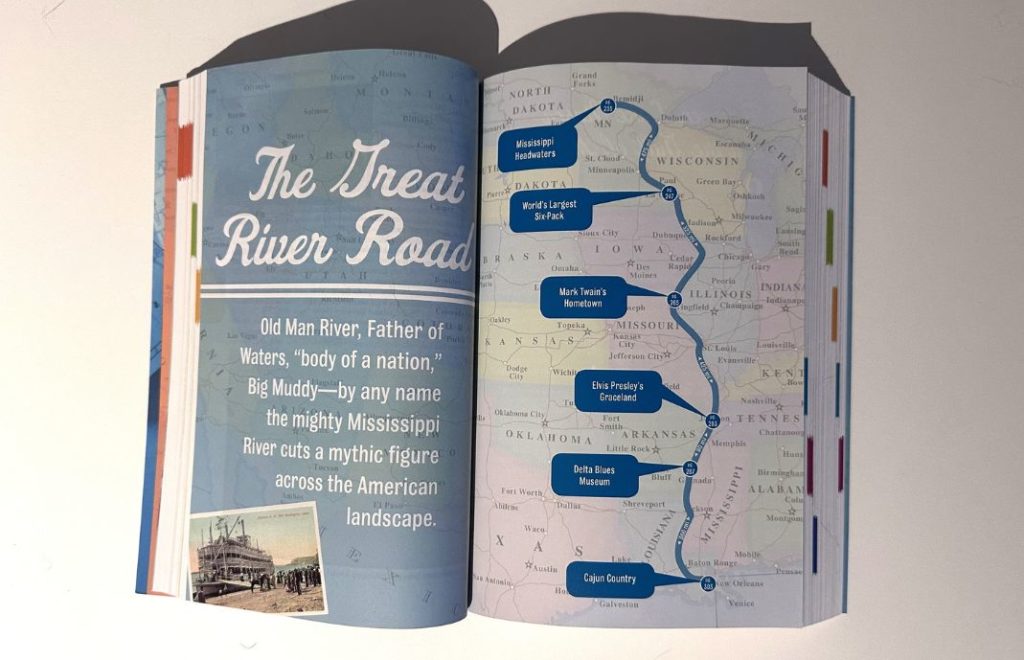
How I drove the Great River Road
My Great River Road adventure began in New Orleans, where the Mississippi spills into the Gulf of Mexico. From there, I headed north – mile after mile, riverbend after riverbend – following this legendary waterway all the way to its source.
Day by day, I cruised along the Mississippi River, taking detours through quirky towns, exploring historic sites, and savoring regional flavors that changed as dramatically as the landscapes.
The journey ended in Minneapolis, Minnesota, near the river’s headwaters, with my heart full of unforgettable memories and a camera roll overflowing with roadside gems.
The beauty of the Great River Road is its flexibility. There’s no single “right” way to experience it. Want to stop at every blues museum, Civil War site, and small-town diner? Go for it. Prefer a highlights-only itinerary that hits the best scenic lookouts and iconic cities? That works too.
Whether you take a week, two weeks, or a month, this road rewards curiosity. Every turn offers something new – a view, a flavor, a story.
Louisiana: Starting in New Orleans
Known as The Big Easy, New Orleans is the perfect place to start – or end – your Great River Road adventure. This vibrant city celebrates the art of living well – through music, food, and a spirit of joy that runs deep in its roots.
Founded during the earliest days of European settlement in North America, New Orleans proudly showcases a rich cultural tapestry, evident in its architecture, cuisine, and soundscape. Creole, Cajun, African, French, and Spanish influences collide here, creating a city unlike any other.
Why NoLa captures hearts
New Orleans isn’t just diverse – it’s adaptable, soulful, and endlessly entertaining. Whether you come for the history, the jazz, or the powdered-sugar bliss of a beignet, this city invites you to embrace everything it offers without reservation.
Must-see highlights
- French Quarter (Vieux Carré)
The city’s beating heart. Wander through narrow, cobblestone streets lined with historic brick buildings, adorned with iconic wrought-iron balconies. Bourbon Street, of course, is the epicenter of nightlife, music, and revelry. - Jackson Square
This lively square is the cultural hub of the French Quarter, home to the equestrian statue of Andrew Jackson and surrounded by street performers, artists, and open-air painters capturing the city’s essence.
Essential New Orleans experiences
No visit to The Big Easy is complete without diving deep into its soul. From historic trams to jazz-soaked nights, these experiences are as iconic as the city itself:
Ride the famous streetcars
Glide through New Orleans’ charming neighborhoods aboard its iconic streetcars – a nostalgic and efficient way to see the city. Take the St. Charles Avenue line to admire stately mansions and oak-lined boulevards or hop on the Canal Streetcar for a quick link to Mid-City treasures.
Cruise the Mississippi River
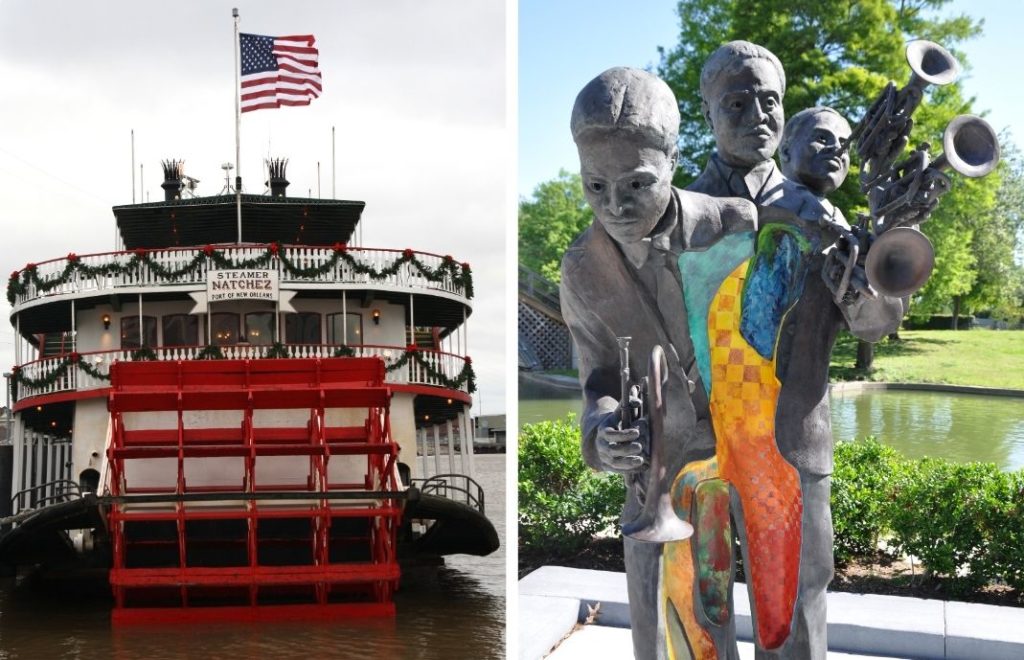
If you’re following the Great River Road, a riverboat cruise is a must. The most legendary option? Steamboat Natchez, the last authentic steamboat on the Mississippi.
- Daytime Cruises – Brunch accompanied by smooth jazz
- Evening Cruises – Romantic dinner with live music and glittering city views
Stroll among the tombs
New Orleans’ cemeteries are anything but ordinary. Known as the City of the Dead, they feature ornate above-ground tombs, history, and haunting beauty. Join a guided tour to uncover fascinating stories behind these resting places.
Don’t miss these cultural gems
- Old U.S. Mint – Showcasing the legacy of jazz and Mardi Gras
- National WWII Museum – One of the most acclaimed war museums in the U.S.
- Audubon Aquarium of the Americas – Perfect for families and marine enthusiasts
- New Orleans Museum of Art & City Park – A blend of fine art and lush landscapes
Live music magic
When night falls, New Orleans truly comes alive. The city pulses to every beat – from blues to brass bands – but if you only hit one venue, make it Preservation Hall. For over 50 years, this intimate space has been the temple of Dixieland jazz, a living soundtrack of the city.

Cajun country: A world between water and tradition
West of New Orleans, a watery wonderland known as Cajun Country stretches out along the Gulf of Mexico. This region isn’t just a stop – it’s a cultural deep dive into a world unlike anywhere else in the U.S.
Imagine this:
- Antebellum plantations, standing like timeless sentinels of the Old South
- Ancient oak trees draped in Spanish moss, whispering stories of centuries past
- Wildlife galore – from graceful herons to lurking alligators
- The soundtrack of accordions and fiddles, echoing from dance halls
- The irresistible aroma of Cajun delicacies like boudin sausages and boiled crawfish
Who are the Cajuns?
The word “Cajun” traces its roots to the Acadians, French-speaking settlers who were exiled from Canada in 1755 when the British seized their homeland. Denied settlement along the American East Coast, they journeyed south to Louisiana, then a French territory. Over time, they mingled with Spanish, African, and Native American cultures – but fiercely preserved their distinct language, cuisine, and music.
How to explore
The main artery through Cajun Country is U.S. Route 90, which roughly follows the historic Old Spanish Trail. Though modernized in sections, this highway often winds along bayous – narrow waterways lined with cypress trees, giving you a true sense of place.

Top stops for the ultimate Cajun experience
Cajun Country isn’t just about landscapes. It’s a cultural immersion, where food, music, and history blend into an unforgettable journey.
Here are must-visit stops along U.S. 90:
1. St. Martinville
Start your Cajun adventure here. Wander through tree-lined streets shaded by centuries-old oaks, and admire elegant historic buildings. Don’t miss the legendary Evangeline Oak, immortalized in Henry Wadsworth Longfellow’s epic poem Evangeline – a symbol of love and resilience.
2. New Iberia & Avery Island
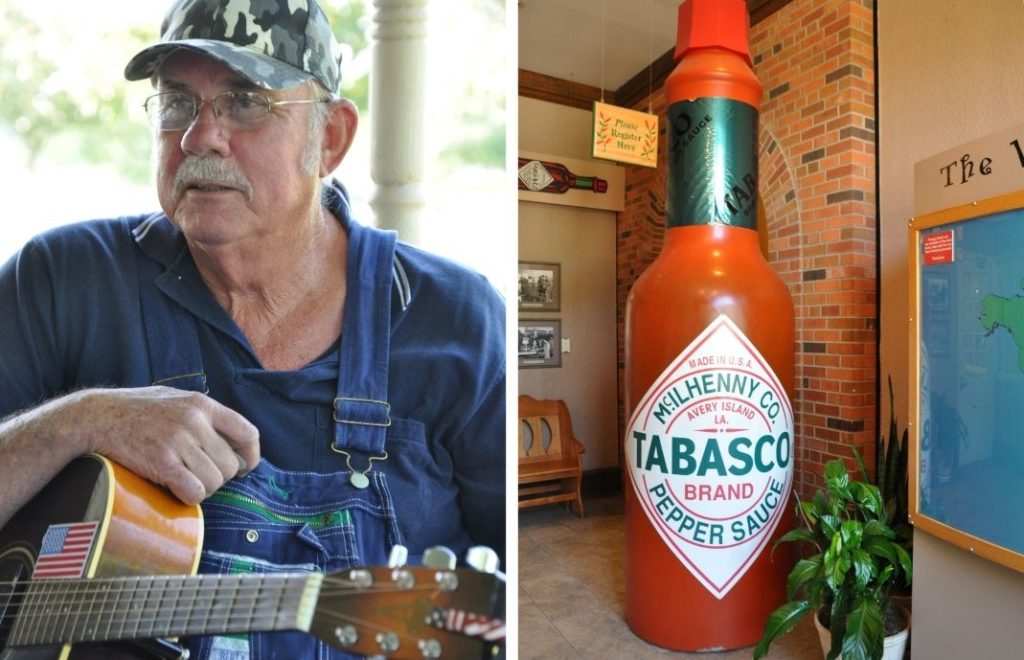
Spice lovers, rejoice! New Iberia is home to the world-famous Tabasco sauce, the fiery staple of Cajun cuisine.
Avery Island: Visit the McIlhenny Company’s Tabasco Brand Factory Tour, where the family has crafted its iconic hot sauce for five generations. Afterward, explore the lush Jungle Gardens, a wildlife haven brimming with exotic plants and birds.
3. Breaux Bridge – The crawfish capital of the world
If you love Cajun food, Breaux Bridge is non-negotiable. This charming small town proudly calls itself the “Crawfish Capital of the World.”
Don’t Miss: A visit to Café des Amis, famous for its legendary Zydeco Breakfast, served every Sunday morning. The festivities kick off early – around 8:30 a.m. – with a full Zydeco band playing while you dig into Cajun classics.
Baton Rouge: A capital full of surprises
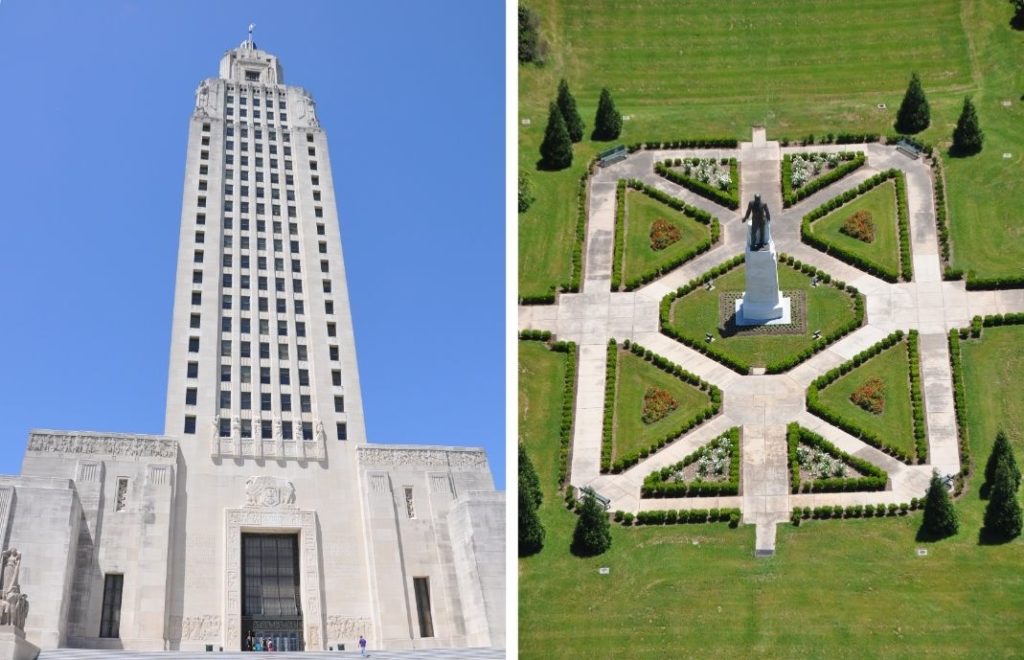
At first glance, Baton Rouge’s skyline might trick you into thinking you’ve stumbled upon just another industrial city. But this Louisiana capital holds an architectural and historical gem that makes it well worth a stop: the Louisiana State Capitol.
The tallest State Capitol in the U.S.
- Height: 137 meters (450 feet)
- Floors: 34
- Completion: Built in just one year, starting in 1930
- Visionary: Governor Huey P. Long, who commissioned the building and was later assassinated here in 1935. He now rests in the Capitol Gardens, his statue gazing toward the very building he created.
What to see
- Observation Deck (27th Floor): Offers sweeping views of Baton Rouge and the lush gardens below.
- Symbolism everywhere:
- The front staircase features 49 granite steps, each engraved with a U.S. state in order of admission to the Union.
- Alaska and Hawaii, added after construction, share the final step.
- Old State Capitol: A stunning Gothic Revival building that tells Louisiana’s dramatic political history through interactive exhibits and art.
Mississippi: Discover Natchez
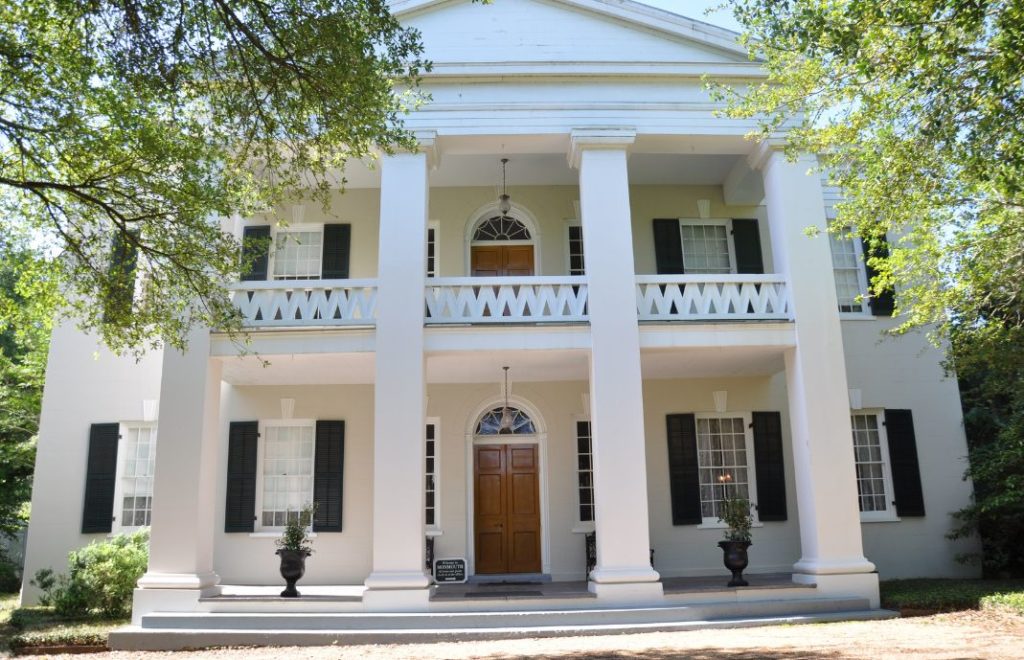
Before the American Civil War (1861-1865), Natchez was the wealthiest town per capita in the United States. The reason? Its strategic location on the Mississippi River and the booming cotton trade. The city’s grandeur is still visible today in its magnificent antebellum mansions – around 500 of them – a legacy of that opulent era.
Unlike neighboring Vicksburg, which endured devastating battles, Natchez surrendered peacefully to General Grant’s army, sparing its architectural treasures.
Must-see in Natchez
- Antebellum homes
Many are open to the public, but Longwood is the crown jewel – a stunning octagonal mansion, famously unfinished due to the outbreak of war. - Museum of Afro-American History and Culture
Tells the often-overlooked stories of Natchez’s large community of freed African Americans, offering a deeper understanding of the city’s complex past.
Mississippi: Vicksburg – The turning point of the Civil War
If Natchez embodies Southern elegance, Vicksburg represents grit and resilience. Perched on bluffs overlooking the Mississippi, this city played a pivotal role in the American Civil War – and it fought so fiercely that its story still reverberates today.
Unlike Natchez, Vicksburg refused to surrender easily. Its determination led to one of the longest sieges in U.S. military history, a 47-day standoff that culminated on July 4, 1863. This Union victory split the Confederacy and turned the tide of the war.
Must-see experiences in Vicksburg
- Vicksburg National Military Park
- Start at the Visitor Center for maps, exhibits, and an audio guide filled with gripping stories and sound effects.
- For a personalized experience, hire a licensed guide who will ride along in your car and decode every battlefield monument and tactical detail.
- USS Cairo
A fully restored ironclad gunboat, sunk by a torpedo during the war – an absolute highlight for history buffs. - War Cemeteries
- Vicksburg National Cemetery: The largest Union burial site from the Civil War, with 17,000 soldiers laid to rest – 12,000 of them unknown.
- City Cemetery: The final resting place of 5,000 Confederate soldiers.
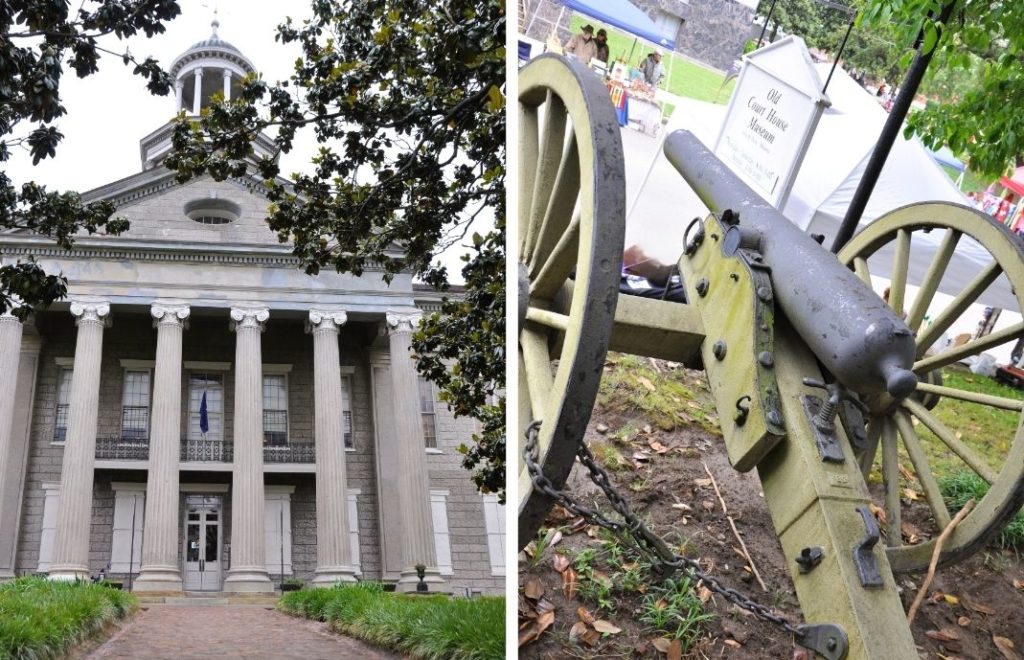
- Old Court House Museum
This striking Greek Revival building survived Union bombardment and now houses Confederate flags, antique furnishings, and Jefferson Davis’ inauguration tie.
Beyond the battlefields: A taste of the South
After a day steeped in history, indulge in Southern comfort at Walnut Hills, famous for its classic round tables and family-style dining. Feast on fried green tomatoes, pan-fried pork tenderloin, and other soulful dishes that define Mississippi cuisine.
Mississippi Delta: Greenwood – Where the Blues was born
Life in Greenwood moves to a rhythm that feels both soulful and raw – just like the music that was born here. This town sits at the heart of the Mississippi Delta, a region often called the birthplace of the blues, America’s original soundtrack.
A legacy of music and mystery
Greenwood is deeply tied to the story of Robert Johnson (1911-1938), one of the most influential Delta blues artists in history. His legend is as haunting as his music:
- According to folklore, Johnson sold his soul to the devil at the crossroads of Highway 61 and 49 (there’s a monument marking the spot), in exchange for unparalleled musical talent.
- His recordings from 1936 and 1937 immortalized his genius, but fame brought no peace. Johnson was allegedly poisoned by a jealous husband and died at just 27 years old, fueling the myth of the “27 Club.”
Where is he buried?
Here’s the twist: Robert Johnson has three graves – or at least three memorials:
- Mount Zion Missionary Baptist Church
- Payne Chapel
- Little Zion Missionary Baptist Church (widely accepted as the true site, confirmed by an eyewitness and marked on the Mississippi Blues Trail)
Follow the Blues Trail
If you’re even a little curious about music history, follow the Mississippi Blues Trail markers scattered across Greenwood. Each one tells a story about how blues – born in the fields where cotton was once picked by hand – spread across America to shape rock, jazz, and soul.
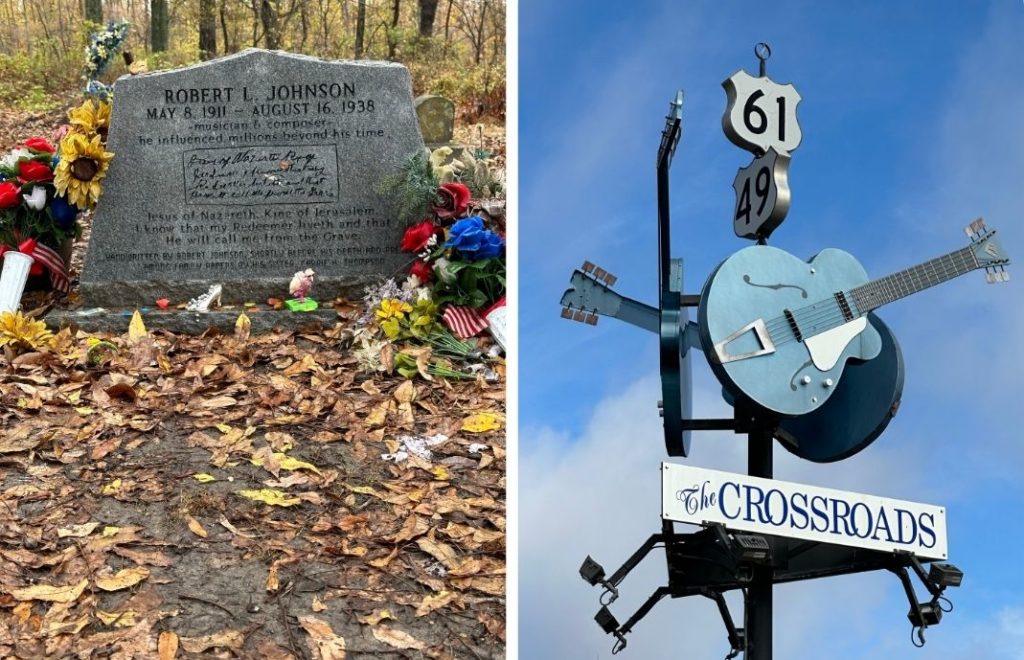
Clarksdale: Heartbeat of the Blues
If the Delta gave birth to the blues, then Clarksdale raised it into a full-grown legend. This small Mississippi town has an outsized musical legacy, having produced or inspired greats like Muddy Waters, Ike Turner, Sam Cooke, Ma Rainey, W.C. Handy, and so many more.
Delta Blues Museum
Located in a former 1918 freight depot, the Delta Blues Museum is the ultimate shrine to this genre. Inside, you’ll find artifacts, instruments, and stories that bring the music – and its creators – to life.
Tip: Pick up a Blues Trail map here to explore historic markers and landmarks across town and the state.
Ground Zero Blues Club
Owned in part by actor Morgan Freeman, this club is as authentic as it gets. Expect live blues that will shake your soul and a menu of hearty Southern dishes to keep you fueled well into the night.
Sleep in a Shack (Yes, really)
For the ultimate immersion into Delta life, book a night at the Shack Up Inn.
- What to expect:
- 14 lovingly restored sharecropper shacks on the historic Hopson Plantation
- Running water and electricity, but still rustic and atmospheric
- A porch made for strumming a guitar or blowing a harmonica as the sun sets
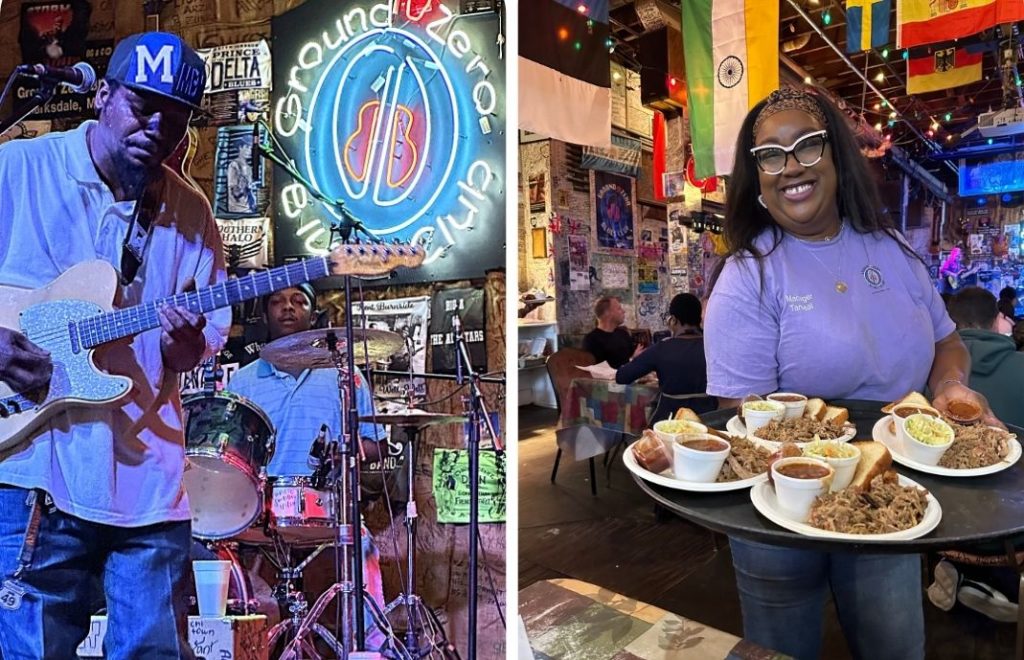
Tennessee: Memphis – The beating heart of American music
If the Great River Road had a soundtrack, Memphis would write it. This city’s cultural contributions are monumental, from Elvis Presley and rock ’n’ roll to blues, soul, and civil rights history.
Graceland: Home of the King
Memphis breathes Elvis everywhere, but Graceland is the epicenter.
What to expect:
- An audio tour through Elvis’ lavish home, from the Jungle Room to the trophy halls.
- Access to his car collection, iconic stage costumes, and two private jets.
- A solemn stop at Elvis’ grave in the Meditation Garden.
Tip: Book tickets early – Graceland is the second-most visited house in the U.S., after the White House.
Sun Studio: Where legends were born
“If music were a religion, Memphis would be Jerusalem, and Sun Studio its holy ground.”
- This is where rock ’n’ roll began in 1954, when a young Elvis stepped up to the mic.
- Guided tours share the magic behind artists who changed music forever: Elvis, Johnny Cash, Jerry Lee Lewis, Carl Perkins, Roy Orbison, and B.B. King.
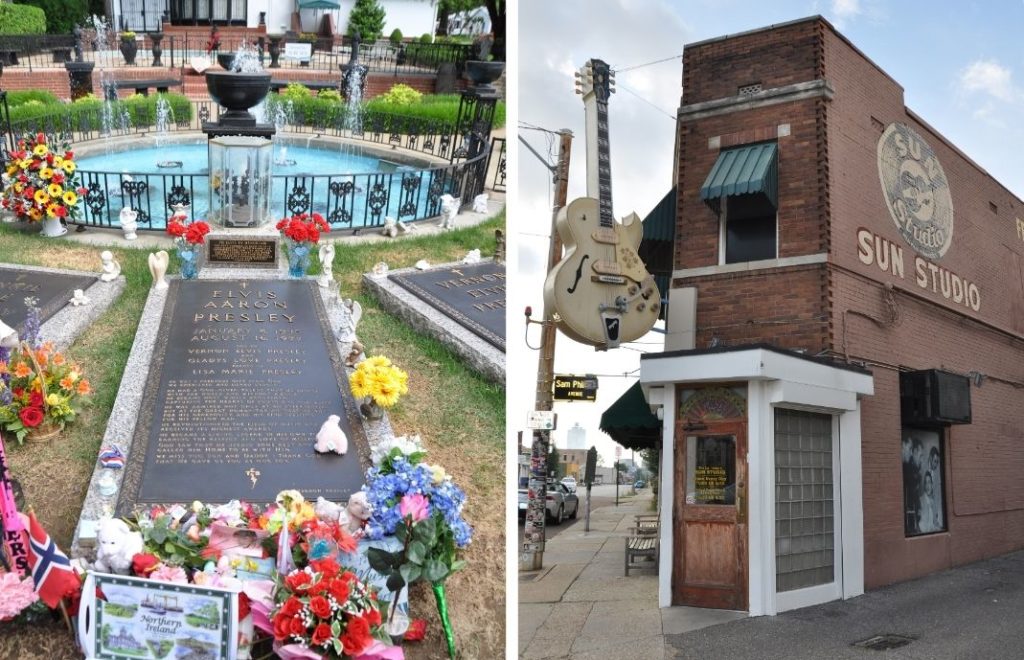
Memphis: A City of soul, struggle, and southern charm
Memphis is more than just the home of rock ’n’ roll – it’s a city where music, history, and culture intertwine, creating an experience that resonates long after you leave.
National Civil Rights Museum
Housed in the Lorraine Motel, this museum brings to life the powerful – and painful – struggle for civil rights in America.
- Highlights:
- Exhibits spanning five centuries of history through personal narratives, original artifacts, and immersive multimedia displays.
- The motel room where Dr. Martin Luther King Jr. spent his final moments remains preserved exactly as it was on April 4, 1968 – a haunting and deeply moving sight.
The Peabody Ducks
One of Memphis’ quirkiest traditions unfolds daily at The Peabody Hotel.
- At 11:00 a.m. and 5:00 p.m., the famous Peabody Ducks waddle down a red carpet from the elevator to the lobby fountain, to the delight of onlookers.
- It’s a whimsical slice of Southern hospitality you won’t find anywhere else.
Beale Street – The Soul of Memphis
If Memphis had a heartbeat, it would echo down Beale Street.
- What to expect:
- Non-stop live music: Blues, jazz, rock ’n’ roll, R&B, and soul spill out of every doorway.
- BBQ heaven: Follow the smoky aroma to one of the street’s iconic joints.
- Street performers, Beale Street Flippers, and open-air concerts keep the vibe electric.
- Fun fact: Beale Street was declared a National Historic Landmark in 1966 and named “Home of the Blues” in 1977.
Other must-see Memphis stops
- Stax Museum of American Soul Music – Dedicated to the legacy of soul legends.
- Memphis Rock ’n’ Soul Museum – Explore the roots of rock and soul.
- Blues Hall of Fame & Memphis Music Hall of Fame – Celebrating music royalty.
- Lansky Bros. – The store where Elvis bought his iconic outfits.
- Memphis Zoo – Award-winning and family-friendly.
More inspiration:
Must-do experiences in Memphis
The best museums in Memphis
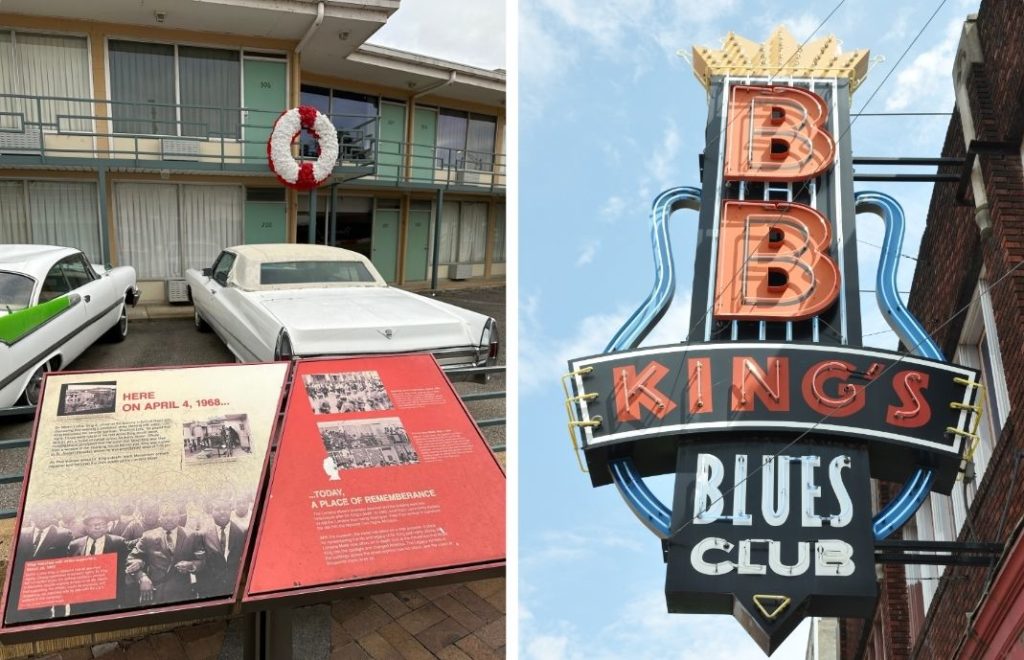
Illinois: Metropolis – The official hometown of Superman
Everyone has a little Superman (or Superwoman) inside them – and in Metropolis, Illinois, you can let yours soar. This quirky riverside town has become a must-visit pilgrimage for comic book fans ever since DC Comics officially declared it Superman’s hometown.
Strike your hero pose
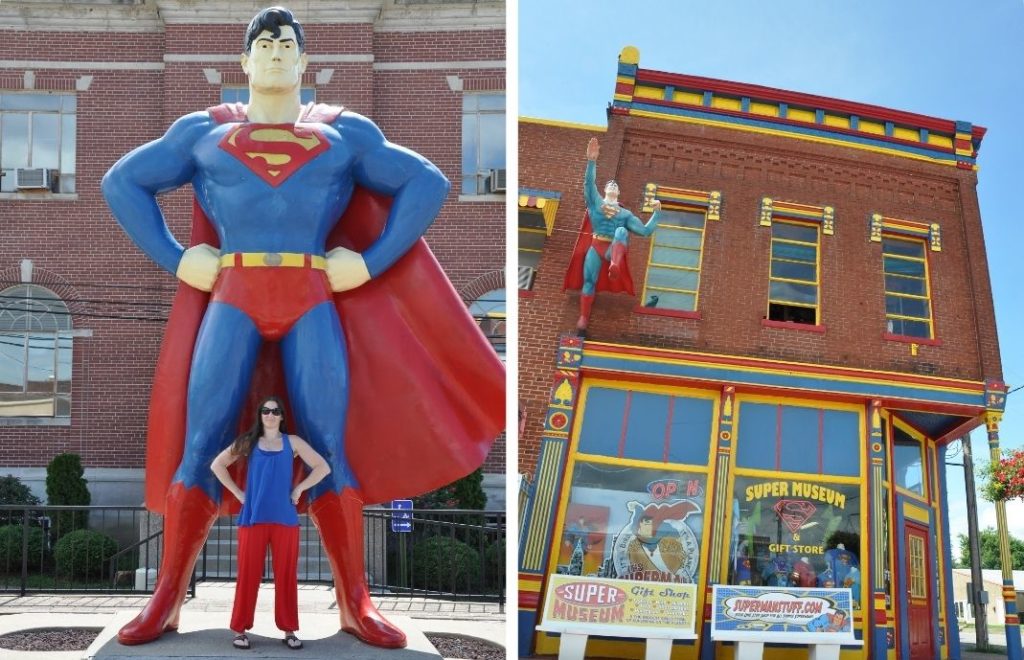
- 4.5-meter bronze Superman statue proudly stands in Superman Square, engraved with the famous motto: “Truth – Justice – The American Way.”
- Next to it? A classic phone booth – perfect for those Clark Kent transformation photos!
- Just two blocks away, find the Lois Lane statue, modeled after actress Noel Neill, immortalized as Metropolis’ “First Lady.”
The Super Museum
No Superman fan should skip this gem, home to the world’s largest Superman collection:
- Original movie and TV costumes
- Props, photos, and rare memorabilia
- Even a peek behind the scenes of Superman’s cinematic legacy
Missouri: St. Louis – Gateway to the West
As you follow the Great River Road, St. Louis is a natural stop – a vibrant city steeped in history, innovation, and Midwestern charm. Founded by French fur traders in 1764, St. Louis became a launching point for Lewis and Clark’s expedition and later earned fame when Charles Lindbergh’s Spirit of St. Louis crossed the Atlantic.
Gateway Arch – The icon of St. Louis
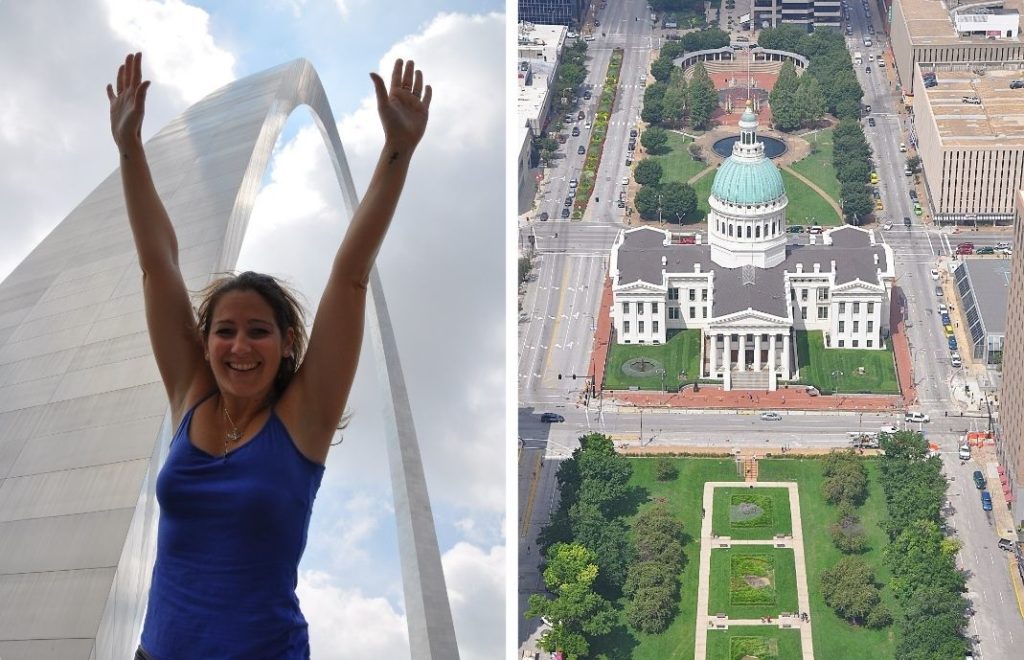
You can’t miss it – literally. The shimmering stainless-steel arch soars 192 meters (630 feet) into the sky along the Mississippi River. Officially called the Jefferson National Expansion Memorial, everyone knows it as the Gateway Arch.
- Must-do:
- Take the quirky tram-like capsules to the observation deck at the top for sweeping views of St. Louis and the Mississippi River.
- Underneath the Arch:
- Museum of Westward Expansion – Free entry, telling the story of America’s push westward.
Other St. Louis highlights
- Saint Louis Science Center – Hands-on fun for all ages.
- Forest Park – One of the largest urban parks in the U.S. (bigger than Central Park!).
- Saint Louis Zoo – Award-winning and free admission.
- Magic House – Interactive children’s museum.
- Catch a Cardinals game – Baseball is a way of life here.
- Anheuser-Busch Brewery Tour – For beer enthusiasts.
Missouri: Hannibal – The hometown of Mark Twain
You don’t need a literature degree to figure out who Hannibal’s most famous son is – his name is everywhere. Half the signs read Mark Twain, the other half reference his beloved characters: Huck Finn Mall, Injun Joe’s Campground, Becky Thatcher Bookshop, and more.
Yes, Samuel Clemens – better known as Mark Twain – grew up here, and this riverside town inspired the adventures of Tom Sawyer and Huckleberry Finn.
What to do in Hannibal
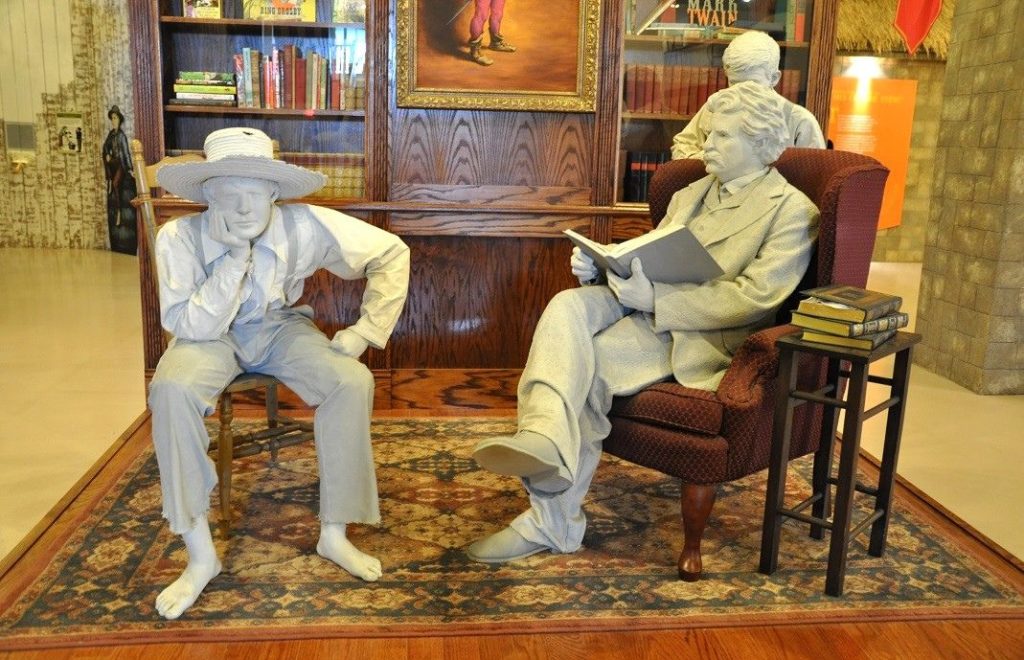
- Mark Twain Boyhood Home & Museum
- Explore the house where Clemens grew up and view rare artifacts.
- Mark Twain Museum
- Dive into the life and literary genius of one of America’s greatest authors.
- Mark Twain Riverboat Cruise
- Enjoy a scenic ride on the Mississippi – Huck Finn style, minus the raft.
- Quirky dining
- Try Mark Twain Fried Chicken at the iconic Mark Twain Dinette.
Hannibal – A step back into Twain’s America
Most of Hannibal’s Mark Twain mania is centered downtown – a charming, compact district just a few blocks from the Mississippi River. Here, you can practically walk into the pages of Tom Sawyer.
Must-see Twain landmarks
- Cardiff Hill – At its base, a bronze statue of Tom and Huck immortalizes their friendship.
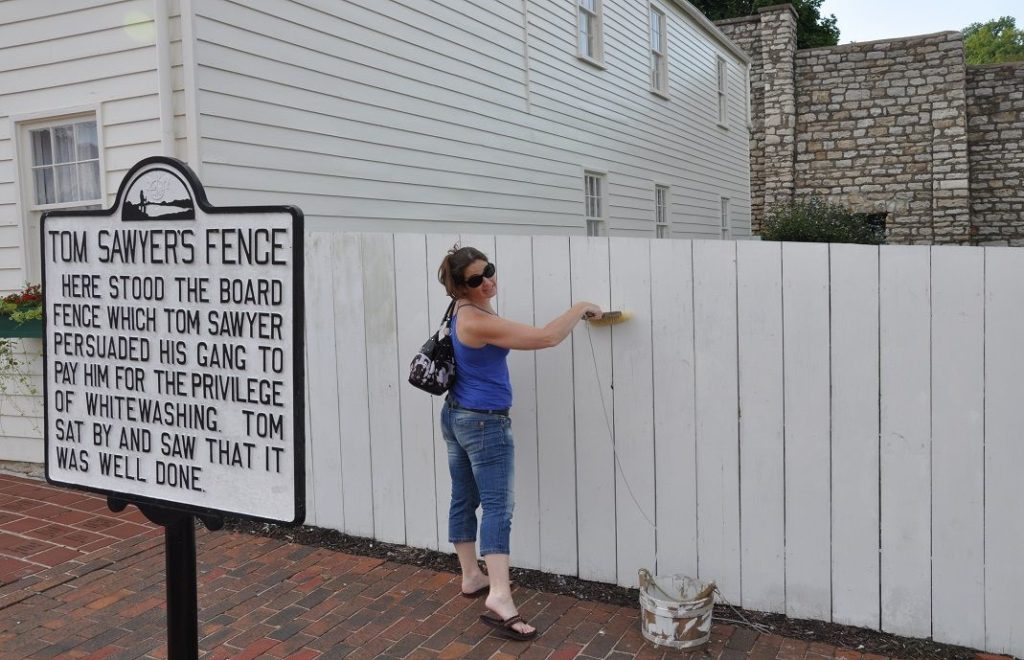
- The White Picket Fence – Yes, the fence Tom Sawyer famously painted! It stands proudly in front of the Mark Twain Boyhood Home, and yes, you can grab a brush and play along.
- Historic District Buildings
- Mark Twain’s Law Office
- The Clemens Family Home (above the old apothecary)
- Becky Thatcher’s House – Complete with period-decorated rooms to spark the imagination.
Kid-friendly highlight
- Mark Twain Cave Complex
- A short drive from downtown, this cave was featured in Twain’s novels.
- Guides in period costumes lead an hour-long storytelling tour, bringing Tom and Huck’s adventures to life underground.
Wisconsin: La Crosse – Beer, burgers & big surprises
Nestled along the Mississippi, La Crosse combines small-town charm with some wonderfully quirky attractions – and a big appetite for fun.
The name dates back to the fur traders who saw the local Winnebago tribe playing a stick-and-ball game – and called it “la crosse.”
World’s Largest Six-Pack – Cheers to that!
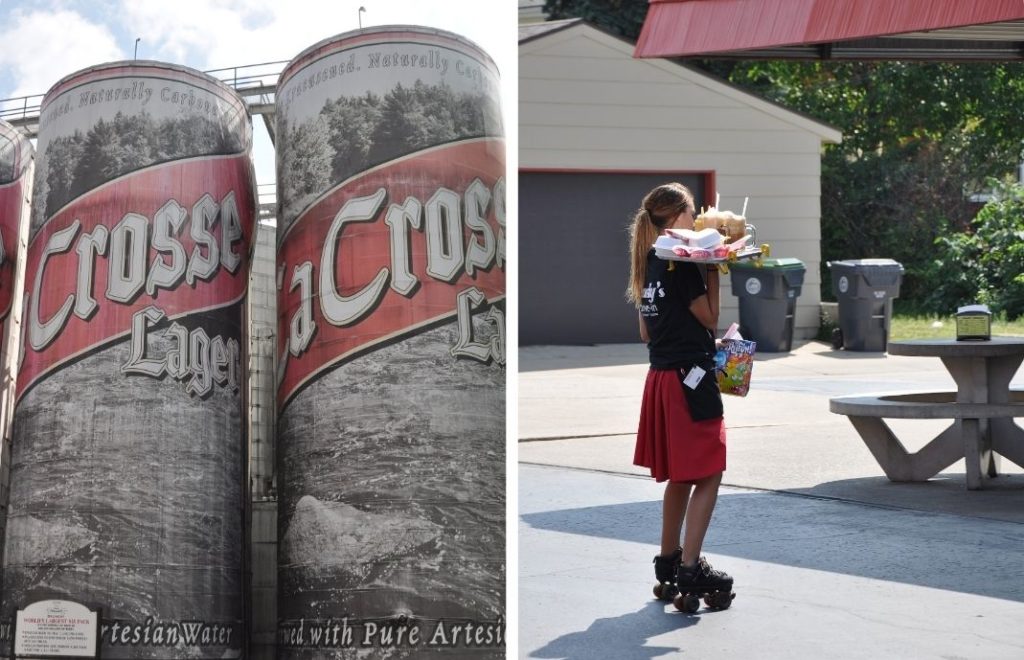
The showstopper in La Crosse? Six colossal beer tanks painted like a giant six-pack – each one so massive that, when full, they hold enough beer to fill 7 million cans.
Here’s a fun fact straight from the guides:
“Start drinking the day you’re born – one 355 ml beer on the hour, every hour, 24/7, and live to 120. You’ll just finish one of those tanks.”
Taste the classic Americana at Ruby’s Drive-In
Craving a burger, chili dog, frosty root beer, or an old-school milkshake? Head to Ruby’s, a nostalgic drive-in diner where your food is delivered to your car by servers on roller skates.
Open daily from 10:00 AM to 10:00 PM.
This is as retro-cool as it gets.
Trempealeau – A sleepy gem on the Mississippi
With just 1,435 residents, Trempealeau may feel like a sleepy riverside village – but that’s exactly its charm. Take the short detour off the Great River Road and you’ll discover a town steeped in history and outdoor adventure.
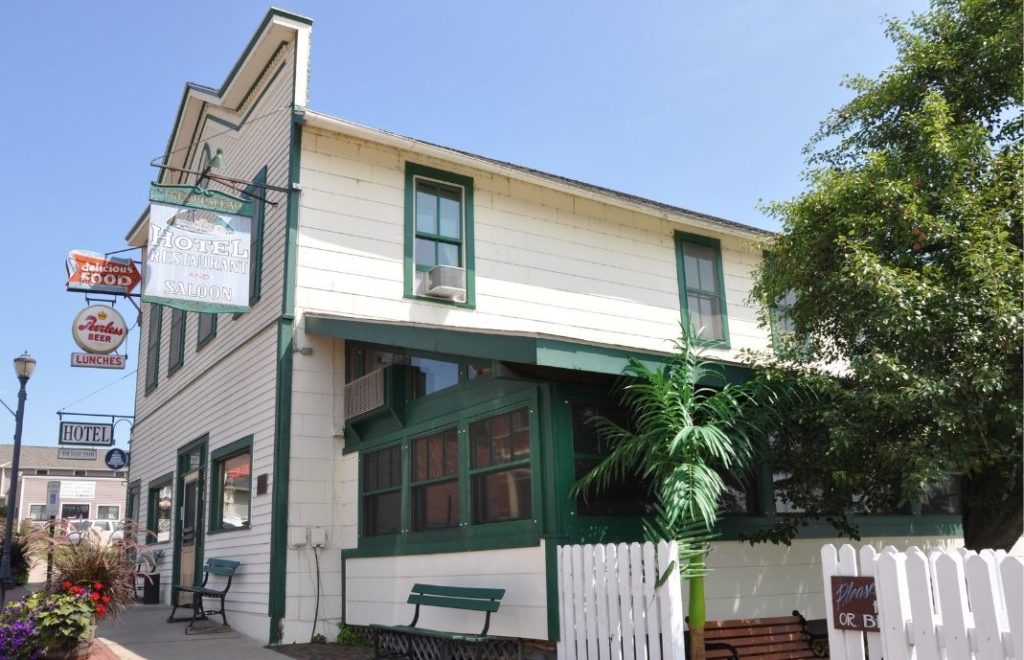
Historic Trempealeau Hotel, Restaurant & Saloon
Standing proud since 1888, this is the only building to survive the great fire – and it’s now a local icon. Inside, the vibe is rustic and welcoming, with hearty meals and a saloon that tells its own stories.
(Oh, and in case you’re wondering: Yes, smoking is strictly forbidden.)
Explore the outdoors
Want to stretch your legs or paddle the calm waters?
- Canoe Rentals – Head out on the Long Lake Canoe Trail for a peaceful glide along scenic waterways.
- Bike the trails – Trempealeau boasts well-paved cycling routes that wind through charming streets and lush riverside landscapes.
Minnesota – The Grand Finale of the Great River Road
Your Great River Road journey reaches its northern crescendo in Minnesota, where the mighty Mississippi begins its long trek south. And the adventure wraps up in the vibrant Twin Cities: Minneapolis and St. Paul – two cities, one river, and an endless list of things to see and do.
Twin Cities, double the fun
- Minneapolis pulses with sleek glass towers, modern art, and urban energy.
- St. Paul, the state’s capital, charms with a small-town vibe, historic buildings, and cultural depth.
Top picks in Minneapolis:
- Minneapolis Sculpture Garden – A lush urban oasis showcasing over 40 large-scale works of art, including the famous Spoonbridge and Cherry.
- Walker Art Center – Ranked among America’s top modern art museums.
Top picks in St. Paul:
- Minnesota History Center – Experience everything from interactive exhibits to a reconstructed 1940s dance hall.
- Fort Snelling – A historic site rooted in 10,000 years of Dakota heritage, fur trading, and military history.
Only-in-Minnesota experiences
- Baseball Fever – Watch the Minnesota Twins at Target Field or catch the St. Paul Saints for a more intimate, rowdy ballgame experience.
- Mall of America – A shopper’s wonderland in Bloomington with 522 stores, 60 restaurants, an indoor amusement park, mini golf, arcades, and even an aquarium.

Good to know
The Great River Road begins in Bemidji, Minnesota, and winds its way to New Orleans, Louisiana.
Drive the full stretch and you’ll cross 10 states: Minnesota, Wisconsin, Iowa, Illinois, Missouri, Kentucky, Tennessee, Arkansas, Mississippi, and Louisiana.
You can start anywhere, go as far as you like, and travel in either direction. This road is all about freedom and discovery.
Along the way, you’ll encounter iconic destinations such as Minneapolis, St. Louis, Memphis, and New Orleans, but don’t overlook the hidden gems tucked between the big names. These are what make the journey unforgettable.
Pro tip: Careful planning pays off. For the ultimate guide, pick up Road Trip USA (by Moon). It offers detailed, city-by-city coverage of the route, complete with maps, restaurant suggestions, and charming places to stay.
Practical information
To rent a car in the United States, all you need is a valid driver’s license and a credit card in the driver’s name.
Be aware that most car rental companies charge a one-way drop-off fee if you return the car to a different location than where you picked it up. This fee can often match the cost of the rental itself.
You won’t have any trouble finding gas stations, restaurants, or accommodations along the way.
For the most authentic experience, stay in the small towns. Here, you’ll discover genuine Americana and often find lodging in historic inns or charming motels. Plus, you’ll be supporting local communities rather than big hotel chains.
More inspiration to road trips in the US:
Road trip: From the Black Hills to the Badlands
Helt Texas bak rattet
Road Trip: The Blues Highway
En musikalsk reise gjennom Sørstatene
