
Nestled at the foot of the majestic Swartberg Mountains, Oudtshoorn is the beating heart of the Little Karoo. It’s a charming town founded in 1847, radiating small-town warmth with its relaxed streets lined with restaurants, boutiques, and welcoming guesthouses.
But Oudtshoorn’s true claim to fame? It’s the ostrich capital of the world, home to sprawling farms dedicated to these iconic, long-legged birds.
At the turn of the 20th century, ostrich feathers were the ultimate luxury – adorning the hats and gowns of Europe’s elite. This demand sparked a booming trade, making Oudtshoorn one of the wealthiest towns in South Africa. To this day, grand mansions and opulent “feather palaces” stand as proud reminders of that golden era.
Today, the focus has shifted from feathers to leather, meat, and tourism, but the ostrich remains an enduring symbol of this unique town – a creature that continues to captivate visitors from around the globe.
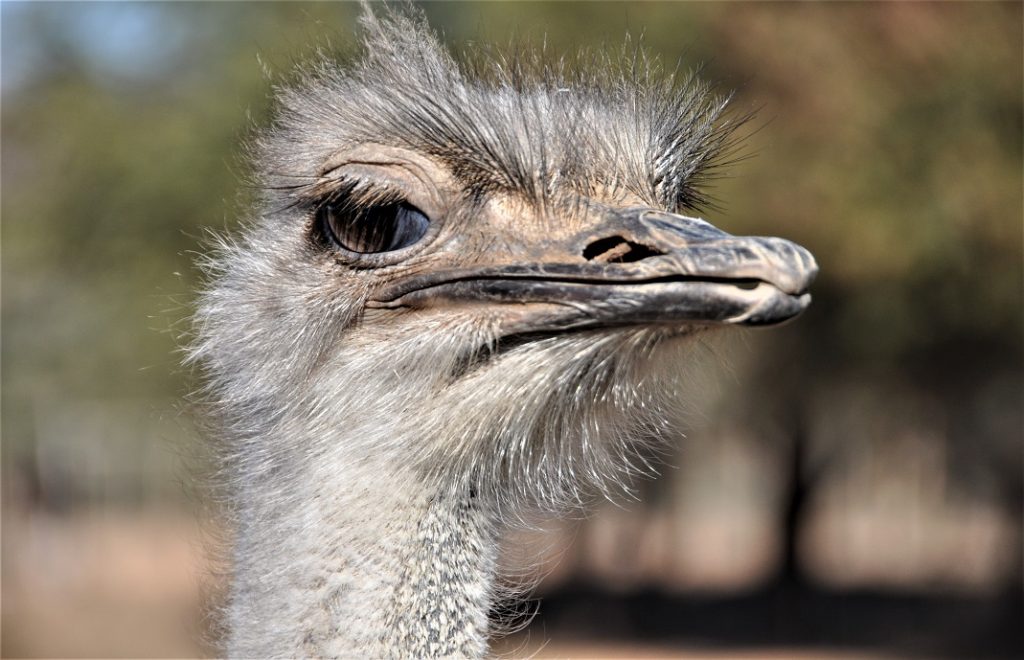
A visit to an ostrich farm
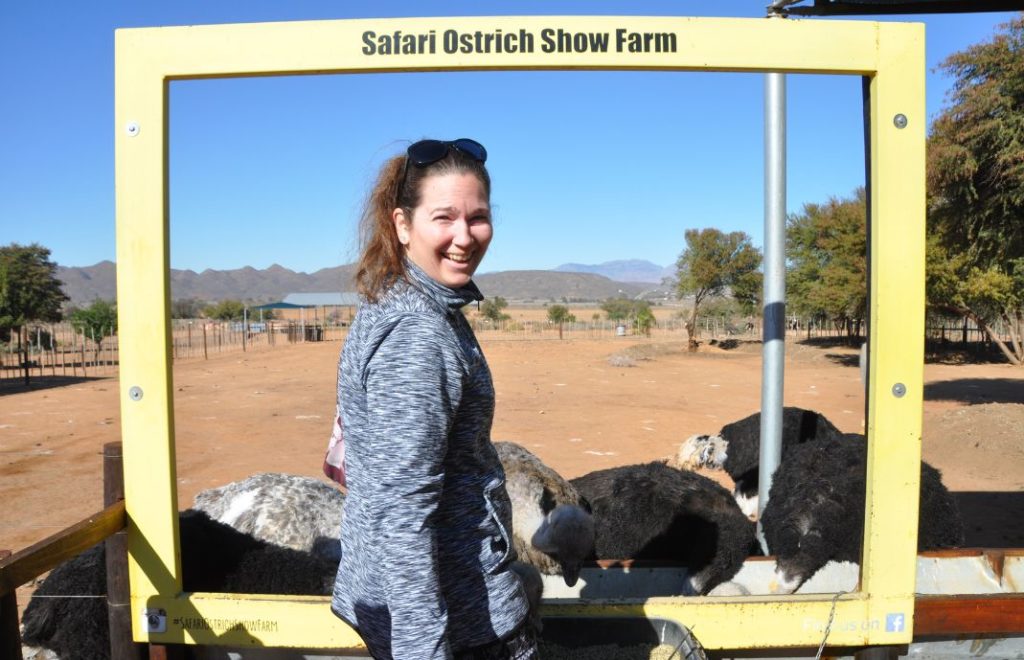
Our first stop: Safari Ostrich Farm, located just six kilometers outside Oudtshoorn.
This remarkable farm, established in 1956 and now run by the fourth generation of ostrich farmers, has a strong focus on breeding and conservation. Home to more than 2,500 birds, it’s the only ostrich farm where guided tours are done by tractor safari – a unique and fun twist.
Getting up close to these incredible creatures is fascinating, especially when you consider their lineage traces back to the age of dinosaurs.
The tour begins at the very start of an ostrich’s life – in the incubation room. A live “spy camera” reveals the hatching process, offering a rare glimpse of a chick breaking free from its massive egg. From there, we follow the bird’s development through its entire life cycle, gaining a deeper understanding of this extraordinary species.
The experience concludes with a look at how ostrich eggs are transformed into beautiful decorative pieces, and, of course, a dazzling display of ostrich feathers in every imaginable color and style – a vibrant echo of the town’s feathered legacy.
Fascinating creatures
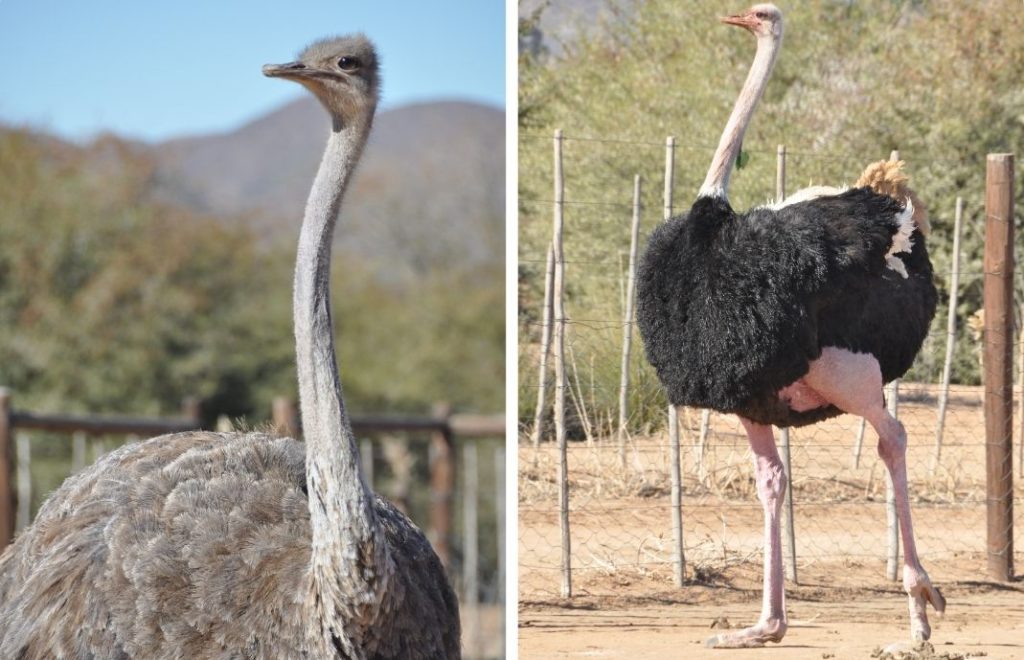
Safari Ostrich Farm is home to three ostrich species: Zimbabwean, Kenyan, and South African.
The ostrich is the largest living bird on Earth, native to Africa and adapted perfectly to its harsh landscapes. With its tiny head, long neck, and massive body balanced on powerful legs, it’s a study in elegance and strength.
Hard as it is to believe, these seemingly awkward creatures can reach a top speed of 74 km/h, making them the sprinters of the animal kingdom. Each foot has only two toes, unlike most birds, which have three or four – a unique adaptation for speed.
The next stop on the guided tour is decidedly hands-on: feeding time.
Guests line up with bowls of feed, but be warned—ostriches are lightning quick! If you hesitate, they’ll crane their necks straight into the bucket you’re holding. Their sharp pecks mean you’ll want to keep your fingers well clear.
With digits intact, it’s time to climb aboard the tractor-pulled wagon for a ride through the farm’s sprawling grounds. Ostriches sway and dance gracefully in their enclosures, an oddly hypnotic sight.
As a bonus, we even spot an emu – the world’s second-largest bird- adding a delightful twist to this up-close encounter with two of the planet’s most iconic flightless giants.
Shaking a tail feather
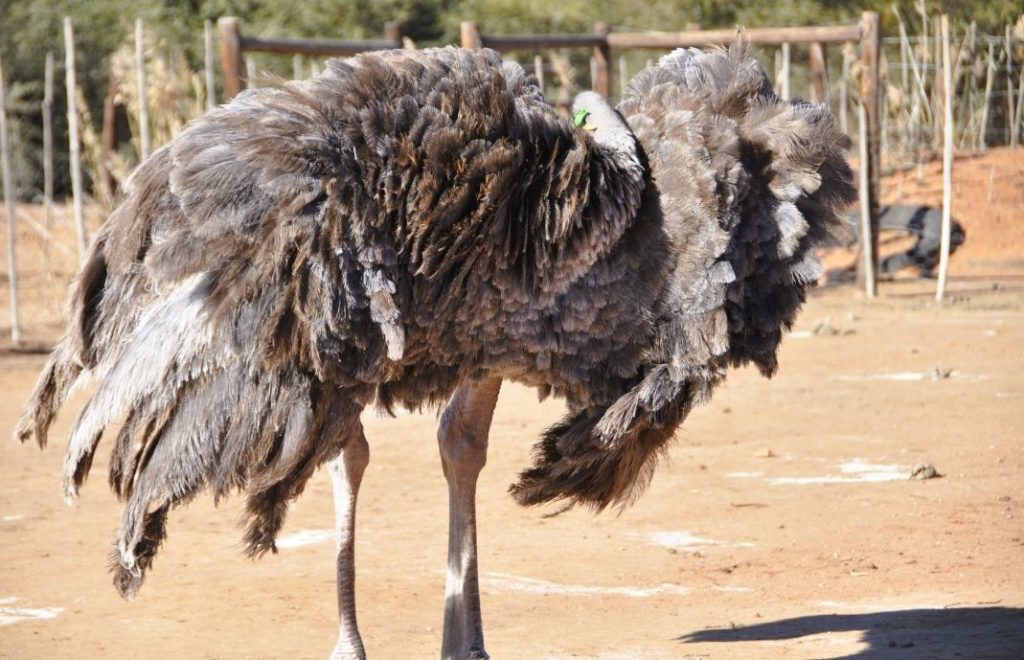
As our tour winds down, we witness a moment straight out of an avian ballroom: a male ostrich performing his graceful courtship dance, wings flaring dramatically in an attempt to impress a rather indifferent female. She, unimpressed, buries her head in her thick feathered plumage, patiently waiting for the ardent suitor to give up.
Our guide seizes the moment to debunk one of the most persistent myths in the animal kingdom: ostriches do not bury their heads in the sand. In reality, a female hides her head in her own feathery halo to avoid the attention of a persistent male – a far more charming explanation than the old tale.
Males are easy to distinguish by their bold plumage: glossy black with white-tipped wings and tail feathers, while females and younger males sport more subdued shades of gray-brown and white. Look closely, and you’ll even notice claws on two of the wing “fingers,” a vestige of evolutionary history.
By the end of the tour, these quirky giants – already high on my list of favorites – have managed to charm me even more. They’re adorable, yes, but above all, they’re utterly fascinating.
Before leaving, we browse the farm’s boutique and peek at the restaurant menu, where ostrich fillet and roast take pride of place. Needless to say, I politely declined – being vegetarian gave me the perfect excuse to sidestep that culinary adventure.
A moral dilemma
Lunch is served at Buffelsdrift Game Lodge, where the restaurant overlooks a tranquil waterhole. As we wait for our meal, we watch a pod of hippos lounging lazily along the shore – a scene that feels quintessentially African.
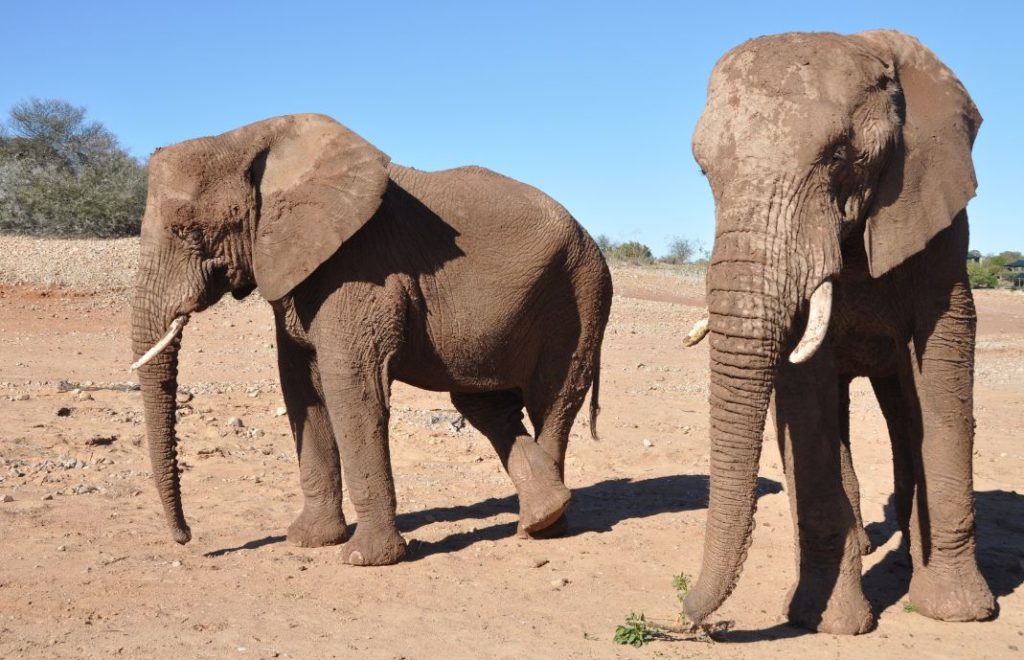
Buffelsdrift is also home to three elephants, all orphans whose mothers were killed by poachers. Without intervention, they wouldn’t have survived. There’s no question that their handlers care deeply for these gentle giants – the bond is evident.
And yet, for me, the situation poses a moral dilemma. Visitors can pay to feed the elephants, walk with them, even brush their leathery hides. While many see this as an unforgettable experience, I struggle with the idea of turning wildlife into a tourist attraction.
To be fair, the elephants roam across an expansive territory and enjoy plenty of “free time.” Still, something about it doesn’t sit right with me.
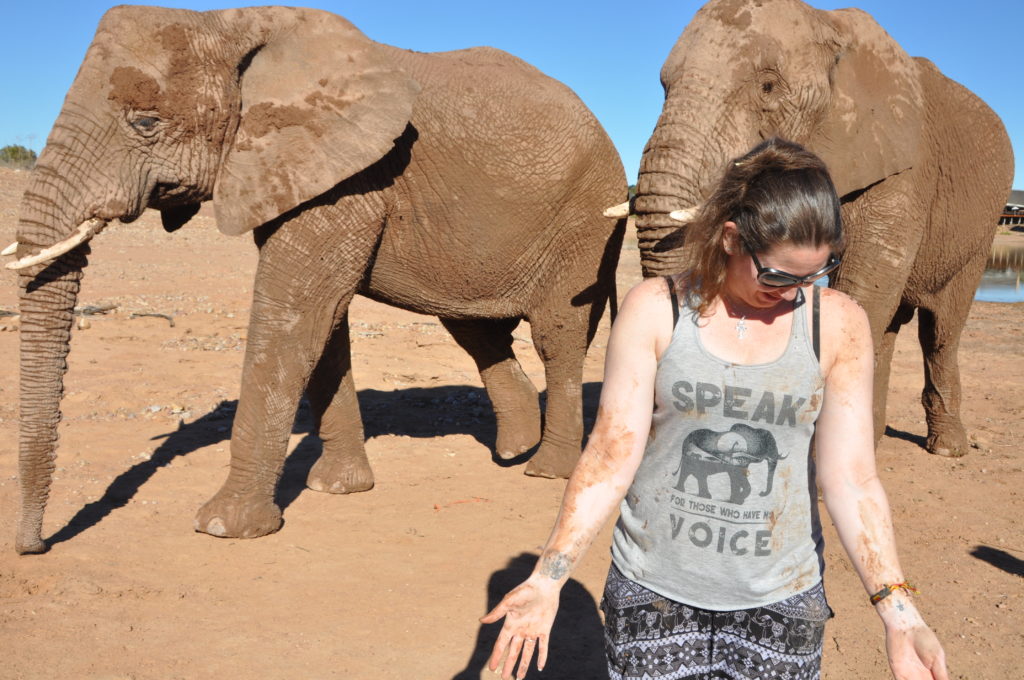
I make my stance clear to the handlers: I’m happy to observe the elephants, but only if they choose to approach us. No food, no coaxing, no tricks.
When we finally find them, they’re down by the waterhole, blissfully at ease – majestic as ever, completely in their element. Watching them like this, on their own terms, feels like the only way to truly honor their wild spirit.
On the elephants’ terms
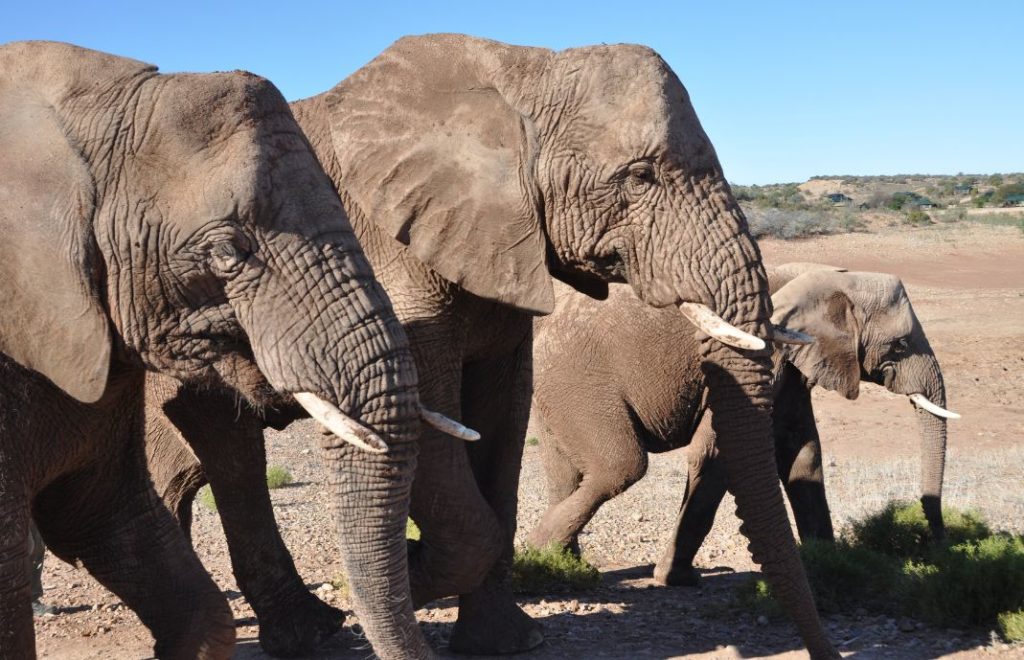
Their names are Jabari, Malaika, and Bulelo, meaning Mighty, Thank You, and Angel in Swahili. Each carries a story – and a distinct personality:
Jabari, the youngest male, is the mischievous one.
Bulelo, the elder and largest, exudes quiet strength.
Malaika, the lone female, rules with a gentle yet commanding presence.
All three hail from Kruger National Park, brought here after tragedy left them orphaned. Without this sanctuary, they would never have survived.
It takes time, but eventually, these magnificent giants choose to approach us. Slowly, deliberately, they close the gap, their sheer size reminding us who truly owns this space. At 3,500 to 4,500 kilos each, there is no question of dominance – only awe.
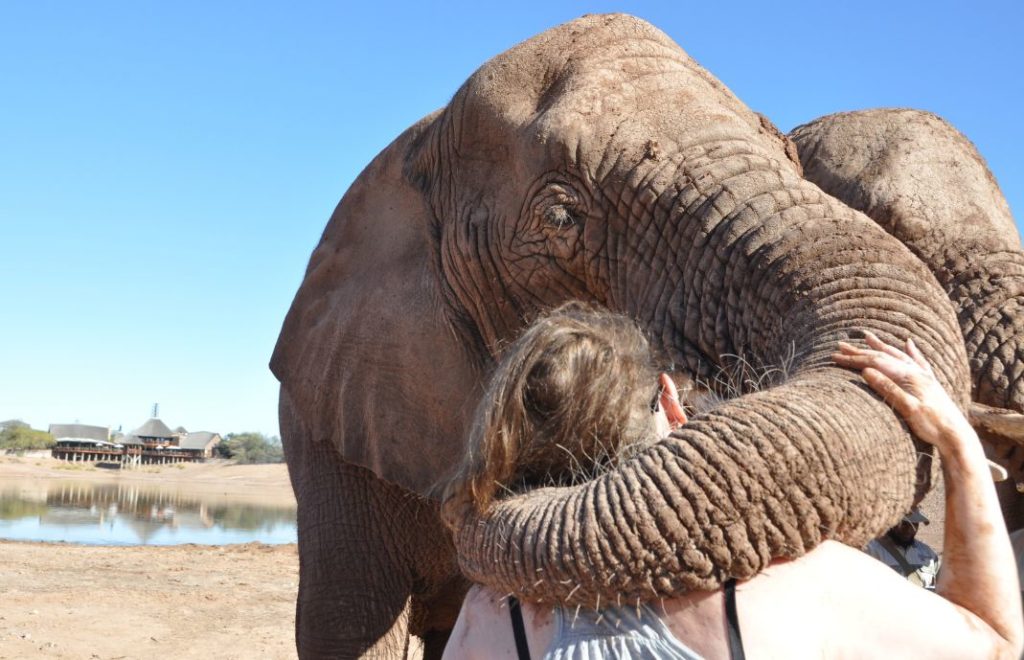
And then, the moment that will stay with me forever: Malaika steps forward, extends her trunk, and wraps it gently around me. Completely unprompted. No food, no coaxing – just an elephant’s voluntary gesture of connection.
I stand there, heart pounding, tears welling as her soulful eyes meet mine. Elephants have always been my favorite, and here I am, embraced by one. It’s overwhelming, humbling, and utterly magical.
Even the handlers are stunned. One admits, “They usually do that after being fed, and only on command. I’ve never seen this happen before.”
Then he adds softly, with conviction:
“She knows you love them. She feels you mean no harm.”
A taste of olive oil
Our time in Oudtshoorn ends on a fragrant note at Surval Boutique Olive Estate. Tucked along the scenic Route 62, this charming farm blends rustic authenticity with understated elegance. Neat rows of silvery olive trees, lush lawns, and bursts of colorful blooms greet us as we arrive – a little slice of Mediterranean flair in the heart of the Little Karoo.
Inside the reception, we’re welcomed by Frikkie, the owner, whose warm hospitality feels quintessentially South African. He shares the story of Surval Village, a boutique estate offering 31 individually designed luxury rooms – each infused with local character yet fitted with modern comforts.
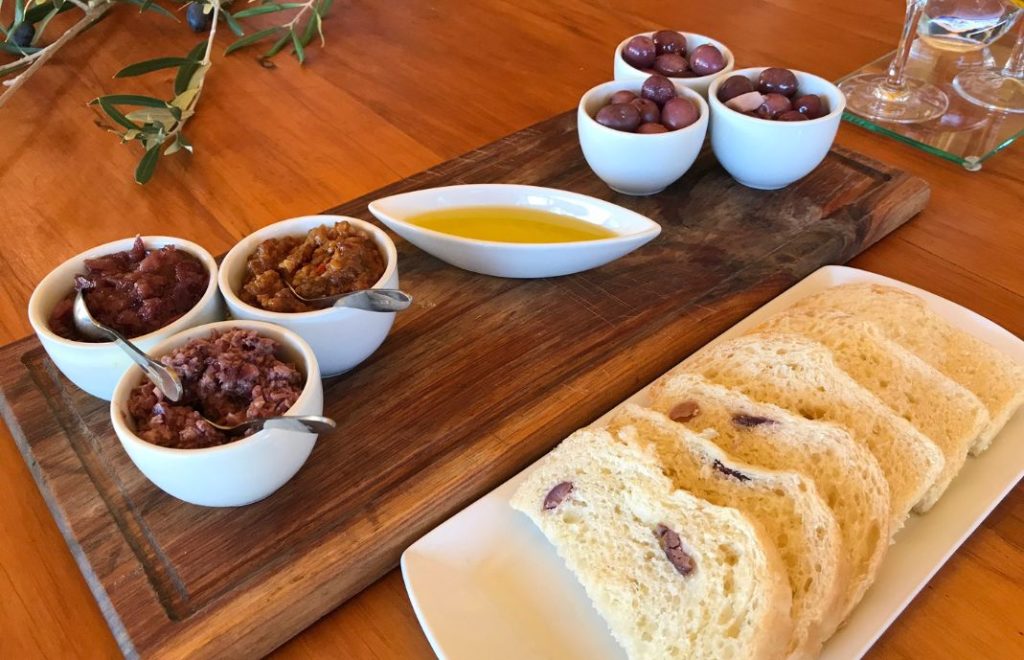
In the cozy tasting room, the stage is set for an introduction to the estate’s artisanal olive oils. Fresh bread and an assortment of olive-based jams await, promising a sensory journey.
I casually remark that, to me, all olive oil tastes the same. The effect on Frikkie is immediate – he nearly chokes, his eyes widening in mock horror.
“After this experience,” he says with a confident smile, “I guarantee you’ll change your mind.”
The truth about olive oil
The passionate South African olive enthusiast launches into his demonstration with infectious energy. We listen, clink glasses, dip bread, and savor every olive-infused creation laid before us.
Thirty minutes later, I’ve discovered a jam that’s nothing short of divine and – much to Frikkie’s amusement – polished off every slice of bread in sight. I’ve learned more than I imagined possible and solemnly vow to choose my olive oil with the utmost care from now on.
Frikkie beams with satisfaction. Mission accomplished: the Norwegian visitor now knows the truth (and the secrets) of olive oil.
Full of flavors and memories – of olives, laughter, and sun-kissed rows of trees – we make our way back to George. My day has been a tapestry of experiences: standing on an ostrich egg, receiving a hug from an elephant, and discovering the subtle art of olive oil.
The only question that remains? Whether I’ll remember Frikkie’s lesson the next time I wander down a supermarket aisle…
Practical information
Where
Oudtshoorn is the capital of the Little Karoo (Klein Karoo), located in South Africa’s Western Cape province.
Climate & landscape
Expect a dry, sunny climate with semi-desert scenery – perfect for outdoor adventures.
Getting there
From the Garden Route, the easiest way is to drive from George (about 60 km) via the scenic Outeniqua or Montagu Passes, then onward through Holgate to Oudtshoorn.
Highlights:
Ostrich Farms
Oudtshoorn is the world’s ostrich capital. There are three major farms open to visitors; I explored Safari Ostrich Farm, which offers an educational tractor tour and up-close encounters. (Ostrich riding is thankfully prohibited.)
Cango Caves
A spectacular network of dripstone caves – one of South Africa’s natural wonders.
Elephants
Meet Jabari, Malaika, and Bulelo at Buffelsdrift Game Lodge, where rescued orphans are cared for with compassion.
Olive tasting
Sample artisanal olive oils at Surval Boutique Olive Estate, which also offers elegant accommodation.
Day trip option
It’s possible to visit an ostrich farm, Cango Caves, and enjoy olive oil tasting in a single day trip from George.
More inspiration to South Africa:
Click here to see some of what South Africa has to offer
