
The mist drifts slowly into the valley, curling like whispers around emerald treetops, slipping between ancient trunks, and gliding along the forest floor. Sunlight fades beyond the jagged peaks, casting the jungle in hues of twilight. From somewhere deep within the canopy, the evening calls of chimpanzees echo – a haunting lullaby that ripples through the silence.
Night settles over Bwindi Impenetrable National Park, blanketing the wilderness in stillness. The creatures of the forest have retired, but I find no rest. I sit on the balcony, gazing over this untamed kingdom, my heart beating with anticipation. Tomorrow holds a rare privilege: an encounter few on earth will ever experience. Tomorrow, I trek into the mist to meet the mountain gorillas.
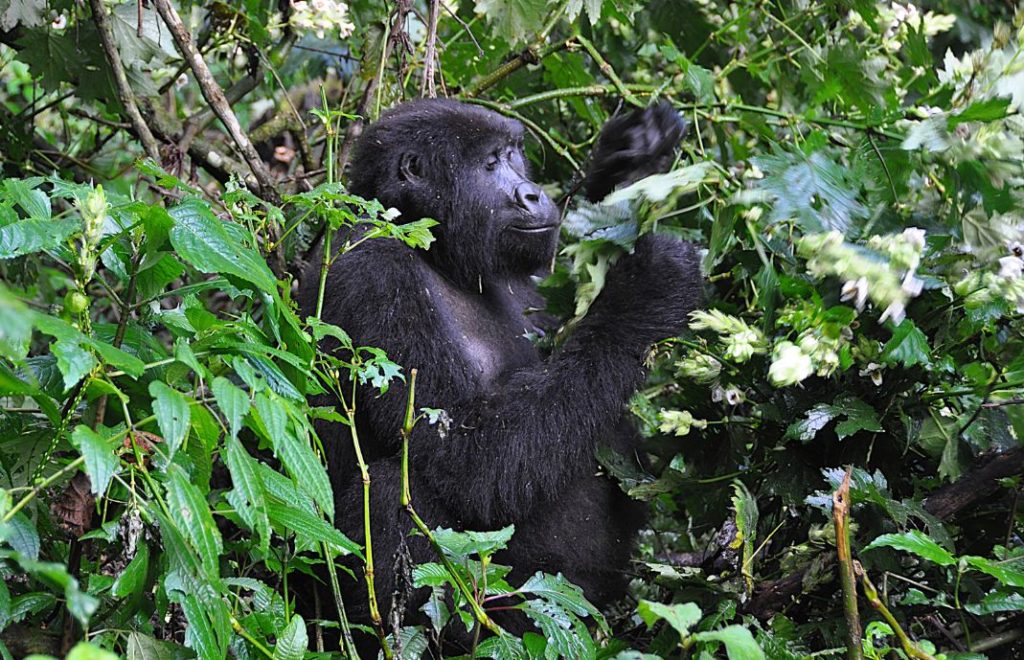
The gorillas are waiting!
I wake before the chimpanzees, before the birds, before the gorillas themselves. My body hums with anticipation, hands trembling as I struggle to lace my boots. Today is the day. The day I’ve dreamed about. The gorillas are waiting – at least, I hope they are.
One last check of the essentials: water bottle, rain jacket, camera, extra batteries, memory cards, passport, hat, gloves. Packed and ready.
At the lodge reception, a packed lunch is pressed into my hands. Outside, our driver, Robert, has already stowed the walking sticks in the car. The short five-minute ride to the Bwindi Impenetrable National Park entrance feels endless, my mind a blur of excitement and nerves.
Then, music greets us – soft at first, then swelling in rhythm. Local women, dressed in vibrant fabrics, welcome us with traditional Ugandan songs, their voices rising in harmony to bless our journey into the jungle. It’s a beautiful gesture, yet every traveler here shares the same restless energy. The gorillas are calling us.
Registration complete, passports checked, permits approved. Groups are formed, each assigned a skilled guide and an armed ranger – a silent reminder that this wilderness still belongs to the wild.
Before we set off, a briefing: clear, firm, and unforgettable. “We are here for the gorillas’ sake – not the other way around.”
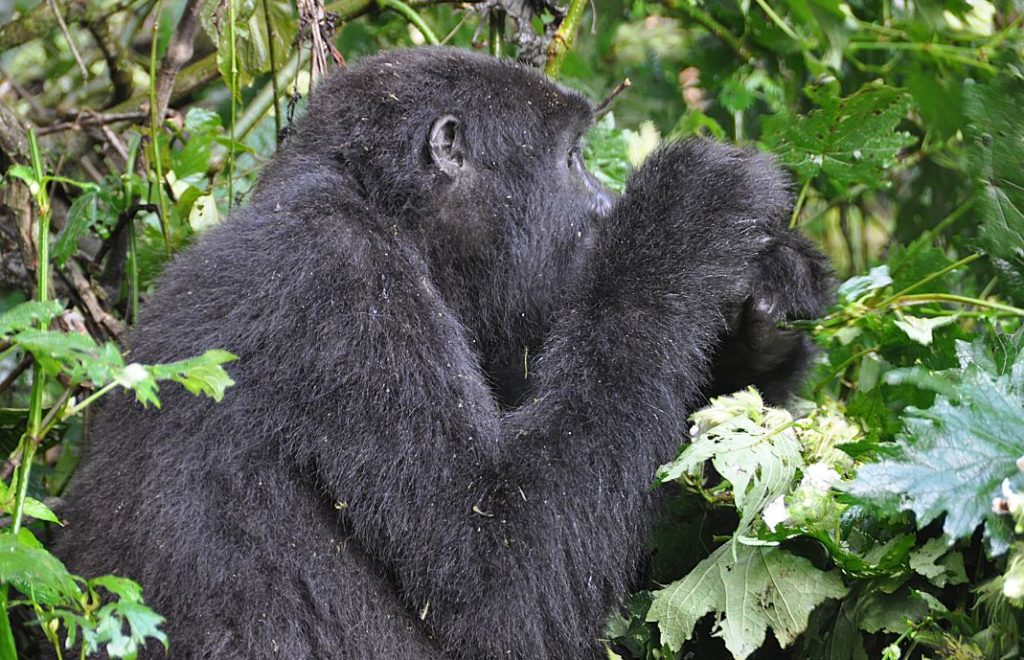
The Rushegura family
Our destination: the Rushegura family, one of Bwindi’s largest and most renowned gorilla groups, with 16 powerful yet gentle members calling the Buhoma sector home. Their name comes from a plant native to this lush corner of Uganda – a poetic reminder of how deeply intertwined these great apes are with their forest sanctuary.
The good news? Rushegura often lingers near the park’s headquarters, meaning the trek to find them is usually shorter than some of the grueling five-hour hikes required for other groups. Usually. Our guide offers a knowing smile and a quiet caveat: “They are wild animals. There are no guarantees.”
Stories ripple through our group, tales of Rushegura’s curiosity leading them beyond park boundaries – once even spending a night just outside a campsite. Imagine unzipping your tent at dawn to find a silverback watching you! The thought sends a thrill down my spine.
But there’s no time to daydream. Our mission is clear: to venture into the emerald depths and track down these forest giants ourselves. Adventure awaits – and the Rushegura family is out there, somewhere in the mist.
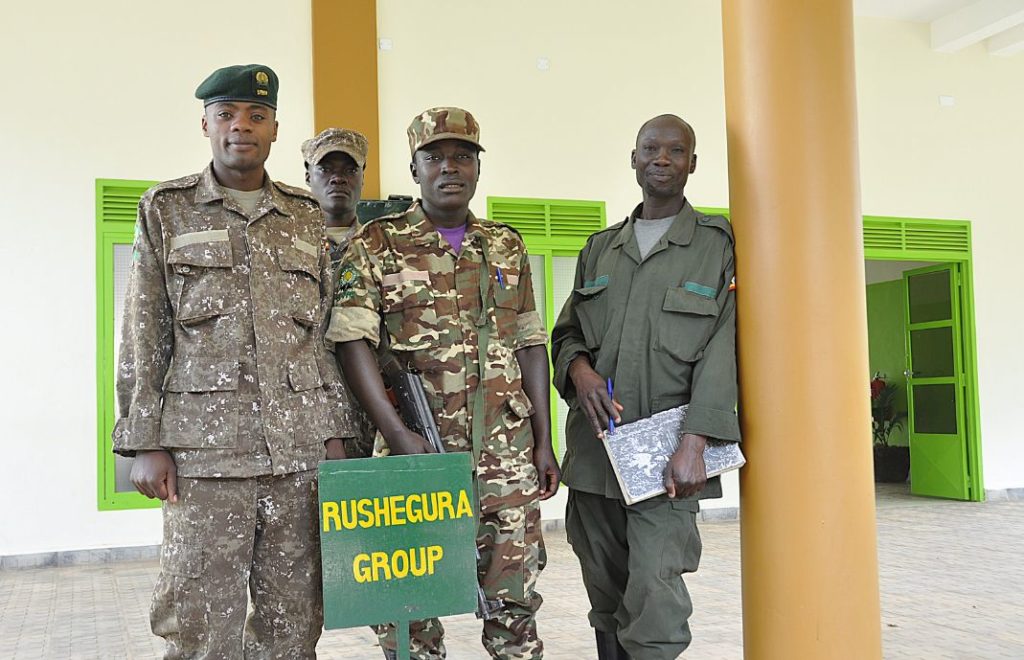
A partnership that changes lives
Before we set foot in the jungle, our guide explains an option: hiring a porter – a local villager who will assist with carrying gear. At first, it seems unnecessary; our packs are light. But then we understand the bigger picture. This initiative isn’t about convenience – it’s about community empowerment.
Every porter’s fee goes directly to their family, and the system rotates among villagers to ensure fair opportunities for income. It’s part of a larger program connecting conservation with livelihood: a collaboration between local communities, park authorities, and the government. A portion of the hefty gorilla permit fee also funds education programs, teaching the value of living in harmony with nature.
The results are undeniable. Since this initiative began, illegal hunting has plummeted, and Bwindi hasn’t seen a single case of gorilla poaching in years. This isn’t just eco-tourism – it’s a lifeline, a model for sustainability.
Our porter is Joseph, a gentle soul with an easy smile. He takes my small daypack and assures me I’m in good hands. The terrain is steep and slippery after last night’s downpour, and before I know it, Joseph is there. Steady, supportive – offering a firm hand as we climb. I swallow my pride and accept. His warmth makes it easy.
When the path levels out, Joseph opens up. He’s married, with three children: two girls, aged 11 and 7, and a little boy of two. His voice softens as he speaks of them, his pride shining brighter than the sun piercing through the canopy. This job means school fees, food on the table, and independence. For Joseph, being a porter isn’t just work – it’s the key to a future for his family.
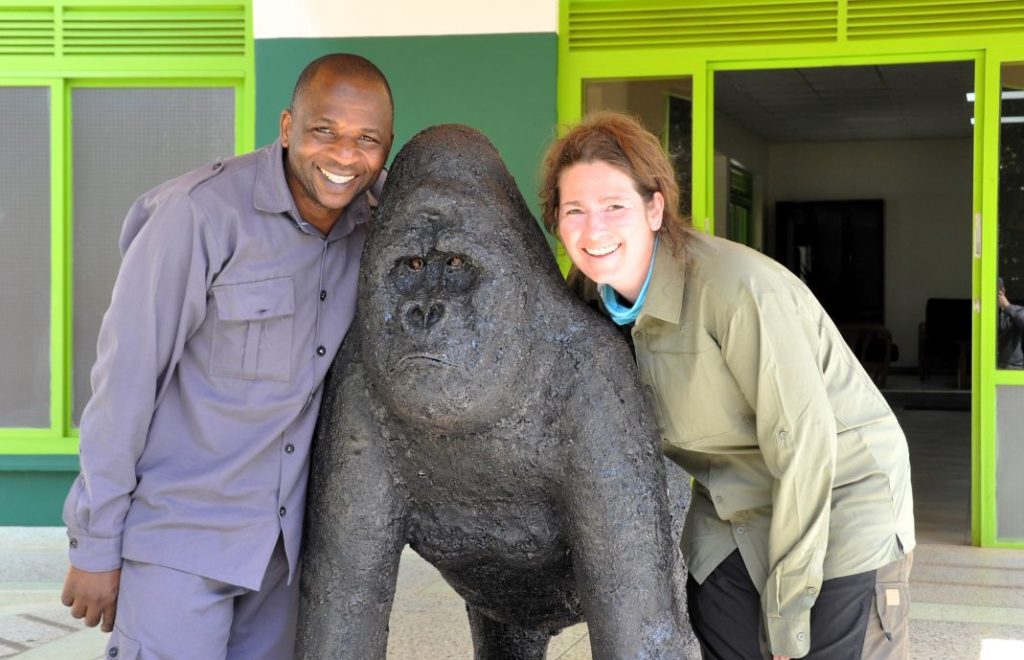
The adventure begins
Upward and onward. Time stretches as we push deeper into the emerald labyrinth, urged on by our guide’s steady pace. There are six of us in the group – never more than eight per trek – struggling through a tangle of vines and dense undergrowth. The forest closes in, thick and untamed, yet crisscrossed with faint animal trails that ease our passage.
At the rear, a ranger shadows our steps, rifle slung across his shoulder – a silent reminder that this is still wild country. The weapon isn’t for the gorillas but for the rare occasion when an elephant or forest buffalo strays too close for comfort.
Sweat trickles down my spine, and my breath comes harder. Excitement pulses through the group. Every time the guide pauses, hearts skip a beat. Is this it? Are they here?
Midway up a steep slope, where the vegetation grows so thick it could swallow an elephant whole, two trackers emerge like spirits of the jungle. These are the unsung heroes of gorilla trekking. At dawn, they fan out into the forest, tracing last night’s nests and fresh droppings, shadowing the gorillas’ every move. Through crackling radios and whispered updates, they guide us closer to the giants of the mist.
The guide turns, his face breaking into a grin. His voice is a low whisper, electric with excitement:
“Leave your bags with the trackers. Phones off. From here, silence.”
My pulse surges. The world narrows to the sound of my own breathing, the rustle of leaves beneath my boots. Somewhere – just a few meters ahead – the gorillas are waiting.
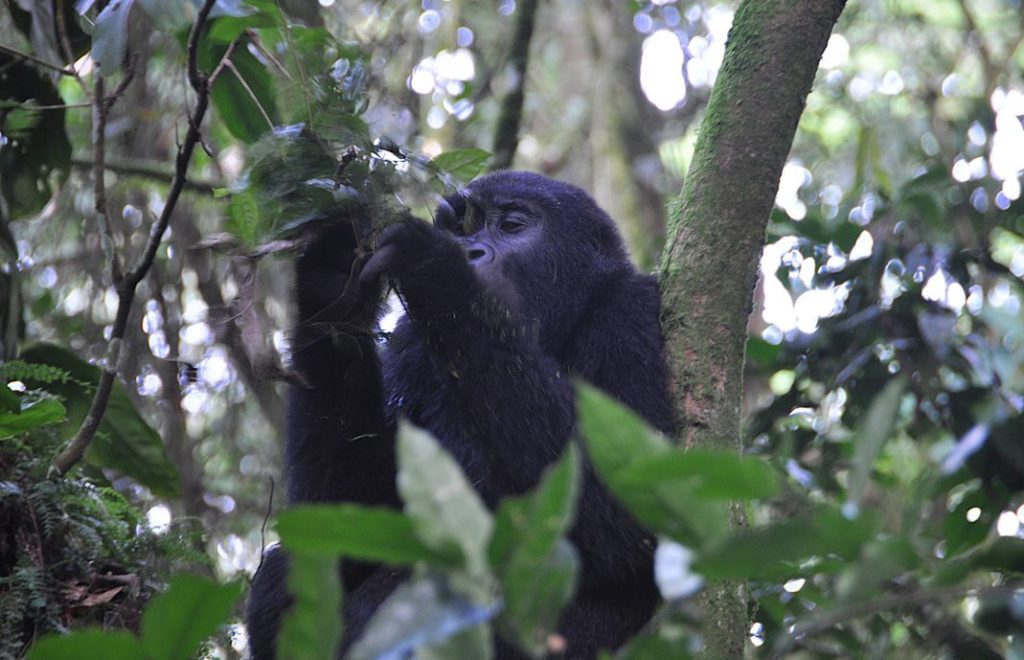
The moment we’ve been waiting for
There they are.
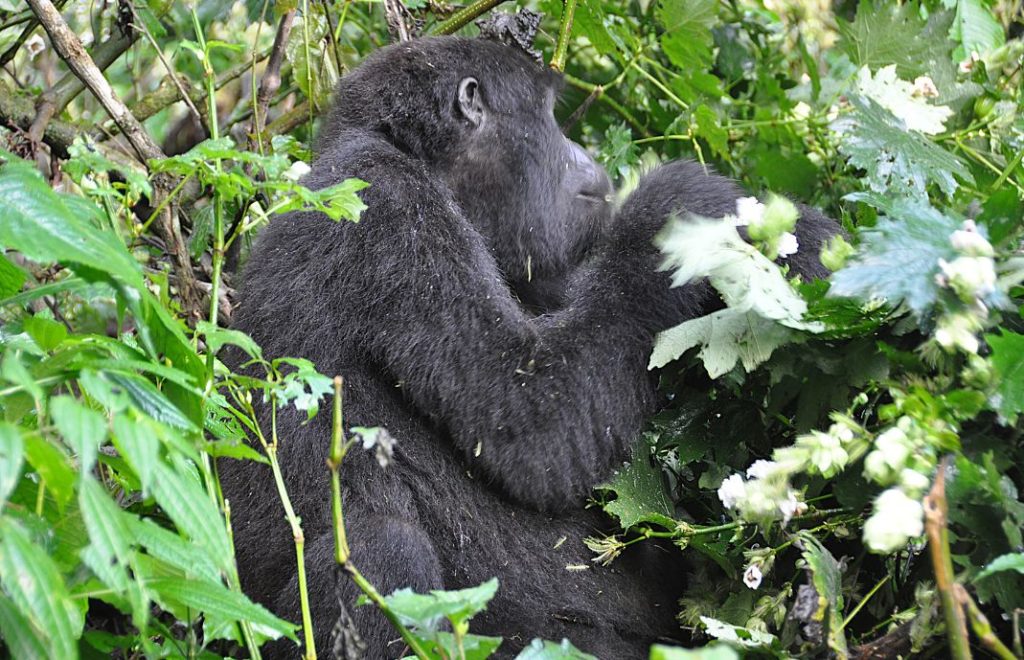
The Rushegura family has paused to rest in a quiet clearing. A pair of females sits contentedly, stripping leaves from overhanging branches, utterly unbothered by our presence. One mother shields her eyes with a leathery hand as she dozes, though her gaze never strays too far from her curious youngster, now clambering up a nearby tree. Two older juveniles tumble in a playful wrestling match, while a gangly adolescent brandishes a branch like a saber – who his imaginary opponent might be, only he knows.
I stand frozen, heart pounding, barely daring to breathe. Just two hours ago, I was slogging through dense rainforest, every muscle aching, the air heavy with the scent of earth and rain. Now – this. A moment so pure, so humbling, it steals the very words from my lips. Exhaustion melts away, replaced by a rush of euphoria, reverence, and raw, uncontainable joy. My eyes sting with tears.
Before me is one of Earth’s most extraordinary creatures – the mountain gorilla – living, breathing, thriving in the wild. To stand so close, to share this fleeting sliver of its world, feels like stepping into a miracle.
Every hardship, every bead of sweat, was for this. And I would do it all again in a heartbeat.
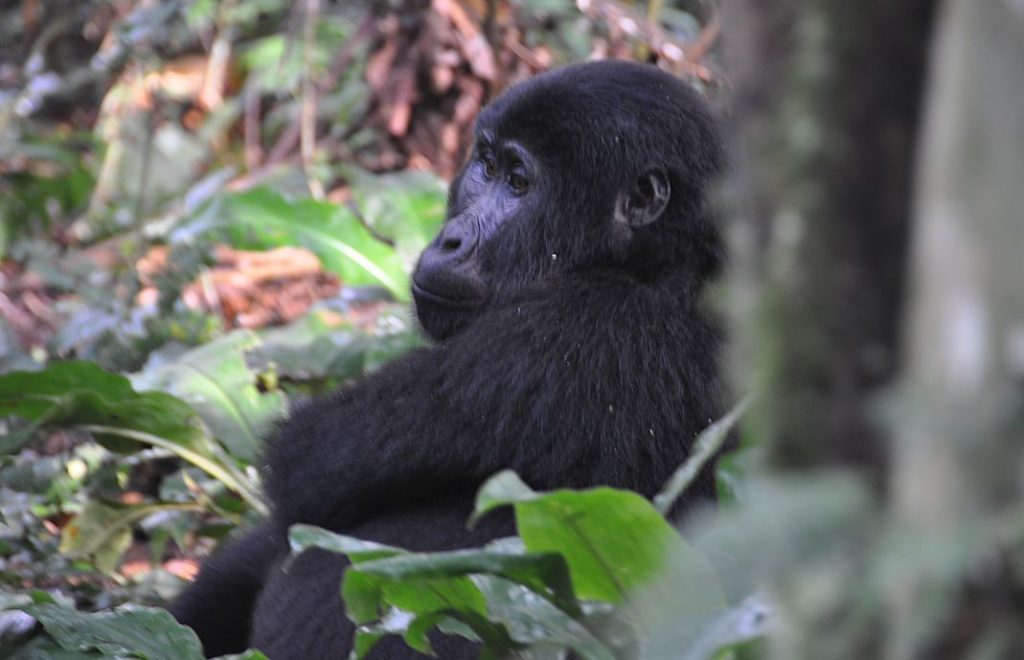
Then the Boss arrives
And just like that – the forest trembles. Out of the thicket charges a massive figure, all raw muscle and authority: the silverback. He barrels forward, scattering a few juveniles in his path before planting himself squarely in the clearing. Then, with a thunderous thud-thud, he pounds his chest, the sound reverberating through the jungle like a primal drumbeat. It’s a declaration as old as time: I am king here.
We’ve just been introduced to Kabukojo, the undisputed leader of the Rushegura family. This formidable troop counts 16 members: four blackbacks, four adult females, three teenagers, four babies – and Kabukojo, of course. His name translates to “the one with many scars”, a testament to battles past. Since 2014, he has ruled with quiet dominance, after succeeding the former patriarch, Mwirima. His younger brother, Kalembezi, plays second-in-command, ensuring harmony within the ranks.
All sense of time and place evaporates. Nothing exists but this: gorillas, wild and free, in their ancestral realm. It feels like witnessing a living miracle.
Nearby, the tiniest family member wobbles after his mother, still unsteady on stubby legs. His older sibling clambers through the branches above – sending an unexpected “gift” raining down on an unlucky German tourist below. The lesson? In gorilla country, never stand under the play tree. Our guide chuckles. The German does not.
This is the wild – unfiltered, unpredictable, and utterly unforgettable.
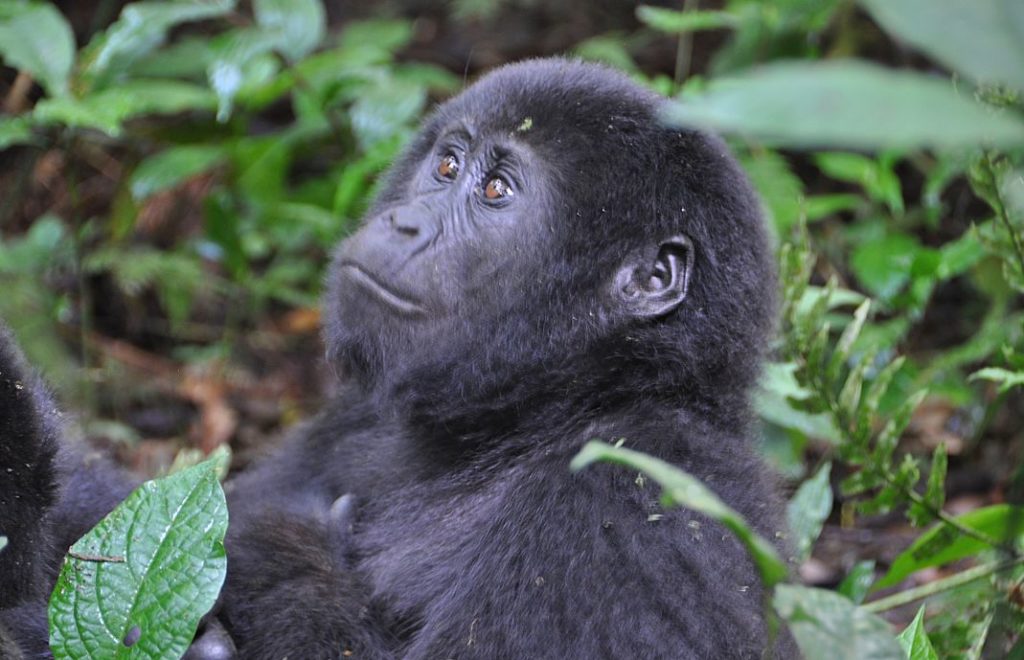
What an experience!
Never has an hour vanished so quickly. As suddenly as it began, it’s over. Our guide signals that it’s time to pull back, to return to the waiting porters – and to reality. A reality without gorillas.
That single hour feels like an entire lifetime distilled into pure magic – intense, humbling, and unforgettable. Yes, it comes at a price, but it’s an investment in memories that will last forever. Few people on earth can say they began their day face-to-face with a silverback staking his claim to the jungle.
To encounter these critically endangered mountain gorillas is one of the most profound wildlife experiences imaginable. There are only about 1063 left in the wild. Thankfully, relentless efforts by park rangers, conservationists, and local communities – working hand in hand – are giving them a fighting chance.
The descent is quiet, a literal and emotional downhill journey. None of us are ready to leave, but rules are rules: one hour only. The forest seems to sense our melancholy, its towering trees closing around us in solemn stillness. Sunlight struggles to pierce the dense canopy.
We pause for water, and Joseph – the ever-watchful porter – looks worried. “Why are you crying?” he asks gently. And I don’t hesitate: “Tears of joy.” He breaks into an even wider grin, proud that I’ve fallen for “his other family.” His love for the gorillas runs just as deep as mine.
Back at headquarters, there’s a small ceremony. Each of us receives a certificate of achievement, proof that we braved the jungle and lived to tell the tale – “and survived,” our guide adds with a laugh.
Saying goodbye to the team – our guide, the ranger, and Joseph – feels bittersweet. They’ve given us more than an adventure; they’ve given us a glimpse of a world few will ever know.
A gorilla encounter isn’t just a trek. It’s a perfect harmony of humanity and nature – a moment when the wild allows us in, and leaves us forever changed.
More inspiration: A guide to Gorilla Trekking
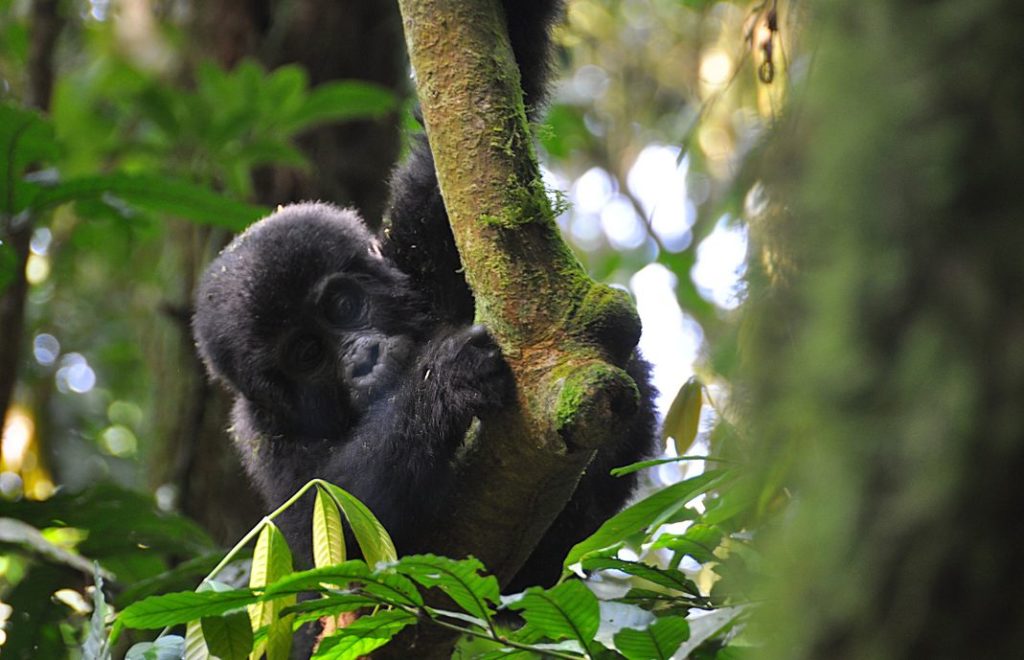
Facts about the mountain gorilla
Habitat
Mountain gorillas live in only two regions: the Virunga Mountains, spanning the Democratic Republic of Congo, Rwanda, and Uganda, and Uganda’s Bwindi Impenetrable National Park and Mgahinga Gorilla National Park.
Height
Up to 180 cm (5 ft 11 in)
Weight
Between 90-200 kg (198-441 lbs)
Conservation status
Critically Endangered (CR) – listed on the IUCN Red List
Major threats
- Habitat loss due to deforestation and infrastructure development
- Poaching (though often targeted at other animals, gorillas become accidental victims)
- Disease transmission from humans, especially respiratory illnesses
- Political instability in the region, which hampers conservation efforts
- Weak law enforcement, meaning poachers are rarely prosecuted
- Now, climate change poses an additional threat, altering the ecosystems they depend on
Current estimates suggest there are only about 1,063 mountain gorillas left in the wild. Conservation programs, tourism revenue, and community partnerships are crucial to their survival.
There are so many reasons to visit Uganda.
Click here to find more inspiration to go to Uganda
