
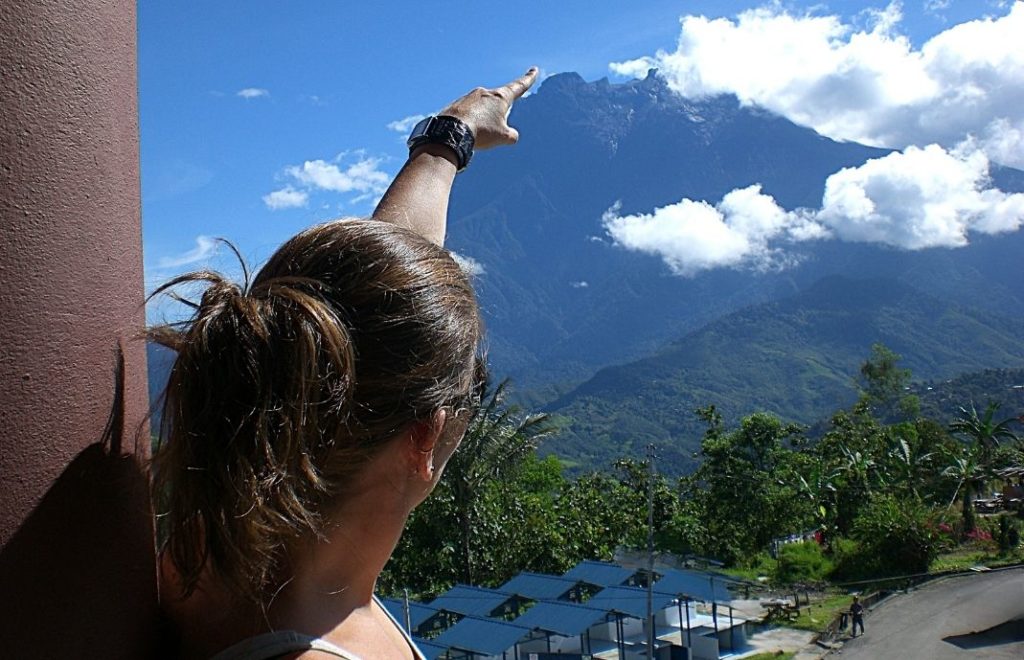
Before us rises Mount Kinabalu, Southeast Asia’s highest peak, piercing the sky at 4,095 meters. Against a backdrop of cobalt blue and clouds drifting lazily like silk scarves around its summit, it looks both majestic – and inviting.
After a few blissful, sun-soaked days on Borneo’s beaches, my body feels recharged, ready for a new kind of adventure. The time has come to trade sand for stone, sea breeze for mountain air, and embark on this epic climb.
Our journey begins at the Kinabalu Park Headquarters, where we meet our guide – a man whose broad smile masks the sheer challenge that lies ahead. He walks us through the essentials, sprinkling advice and warnings in equal measure. His most insistent recommendation? Rent a walking stick. We take his word for it – and later, we’ll be grateful we did.
With boots laced tight, backpacks secured, and spirits soaring, we set off toward the looming giant. Every step brings us closer to the roof of Borneo – a climb that promises not just altitude, but awe.
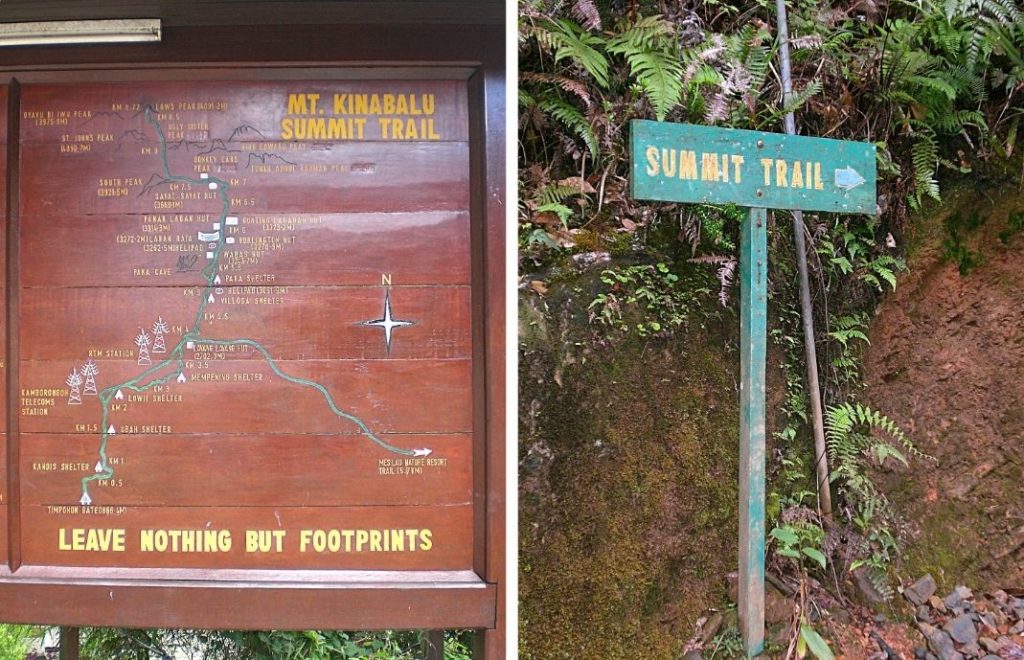
Hiking Mount Kinabalu
Mount Kinabalu – or Gunung Kinabalu in the local tongue – rises proudly from the heart of Sabah, on the storied island of Borneo. First conquered in 1851, this towering giant has since become a magnet for adventurers worldwide, earning a coveted spot on UNESCO’s World Heritage List.
To stand on its summit is no quick feat. The climb demands two full days, with an overnight stay midway. Day one begins at dawn, leading trekkers through lush, untamed landscapes to rustic mountain lodges. The second day starts in the dead of night – 2:00 a.m., to be precise – because the ultimate reward is greeting the sunrise from Low’s Peak, the very crown of Borneo.
We set off with the swagger of the invincible, boots crunching against the earth as we snake upward through a world unlike any other. The path winds past cascading waterfalls, ferns dripping with dew, and orchids so vivid they look painted by the hand of a master. Overhead, birdsong threads the crisp mountain air.
It doesn’t take long for reality to settle in. The heat presses down like a heavy cloak, and beads of sweat trickle freely. Still, the first few kilometers feel manageable – almost pleasant. Then the trail bares its teeth. This is no gentle alpine path; instead, steep stair-like steps carved into the earth demand relentless effort. Some are so high that each lift of the leg feels like an act of defiance.
Our breathing turns ragged, legs heavy as lead, hearts pounding in our chests. When the guide finally calls for a break, we collapse onto a scatter of rocks, gulping lungfuls of thin, cool air. Lunch tastes like salvation. A cheeky squirrel joins the party, tilting its head as if to say, You’re going where? Up there? You must be mad.
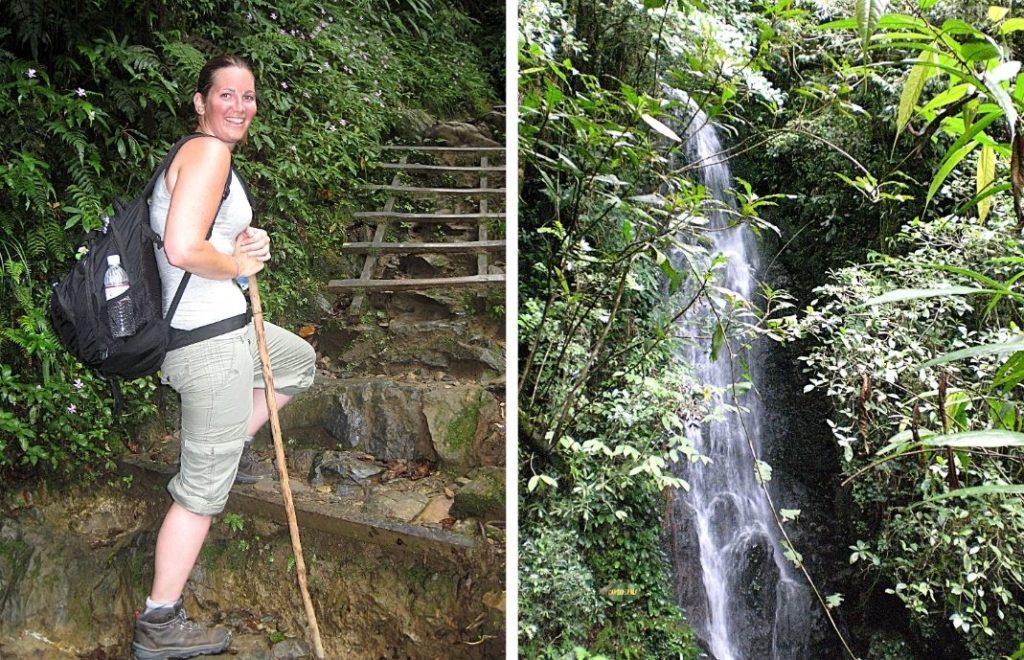
Don’t give up!
When the guide signals it’s time to move, a collective groan ripples through the group. Silently, we send a prayer to any higher power willing to listen. Our legs are leaden, and the backpack – once manageable – now feels like a slab of iron fused to a sweat-soaked spine.
How our guide manages this climb is beyond comprehension. Barely 150 centimeters tall, he carries a load that looks heavier than he is – yet he glides up the path with the ease of a mountain goat, springing from step to step. We, on the other hand, cling desperately to our walking sticks, shuffling upward at a snail’s pace.
And then – finally – salvation comes into view: Panalaban, our overnight stop.
But of course, there’s a twist. A booking mix-up means we’re bumped to huts farther uphill, instead of the ones conveniently located by the restaurant. “Just 15 minutes more,” they say. Under normal circumstances, nothing. Right now? It feels like Everest. Every step is agony, stomachs are growling like wild animals, and the temperature has started its merciless plunge.
When we stagger through the door of our hut, relief gives way to dismay. Spartan rooms with bunk beds, thin mattresses, and air so frigid it bites through layers. And then the crushing realization: we left our sleeping bags behind – at the advice of the booking clerk who assured us they weren’t necessary. How wrong she was.
Shivering and exhausted, we collapse onto the bunks, scavenging for extra blankets. Luck is on our side – no other guests mean we can raid the empty beds for warmth. Wrapped in mismatched layers, we burrow down, praying we’ll make it through the night without freezing solid.
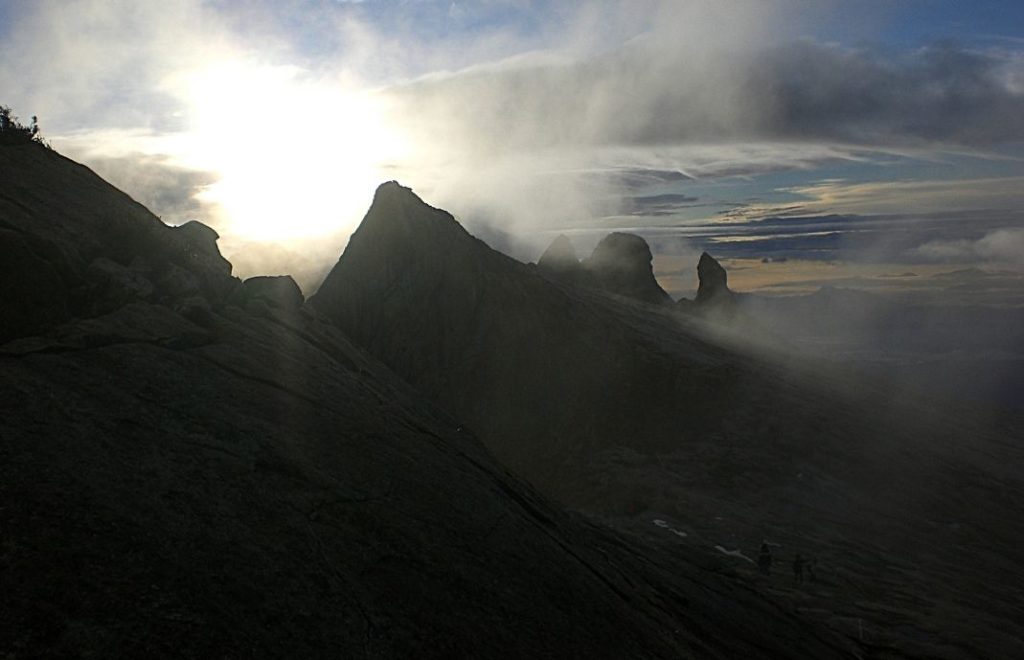
A new day, new possibilities
When the alarm shatters the silence at 01:30, every fiber of my body screams for mercy. I want to fling it against the wall, crawl deeper into the blankets, and forget this madness. But the summit calls. It’s now or never.
With fingers stiff as icicles, we fumble into our layers and stumble into the night. Normally, darkness feels magical – a cloak of mystery. Not tonight. Tonight, it’s mercilessly cold, hostile, and unnervingly vast.
Our guide beams, his weathered face glowing in the light of his headlamp, as if this were the easiest stroll in the world. For us, it’s anything but. The final push to 4,095 meters looms – a grueling 4-5 hour ascent that tests every muscle and shred of willpower.
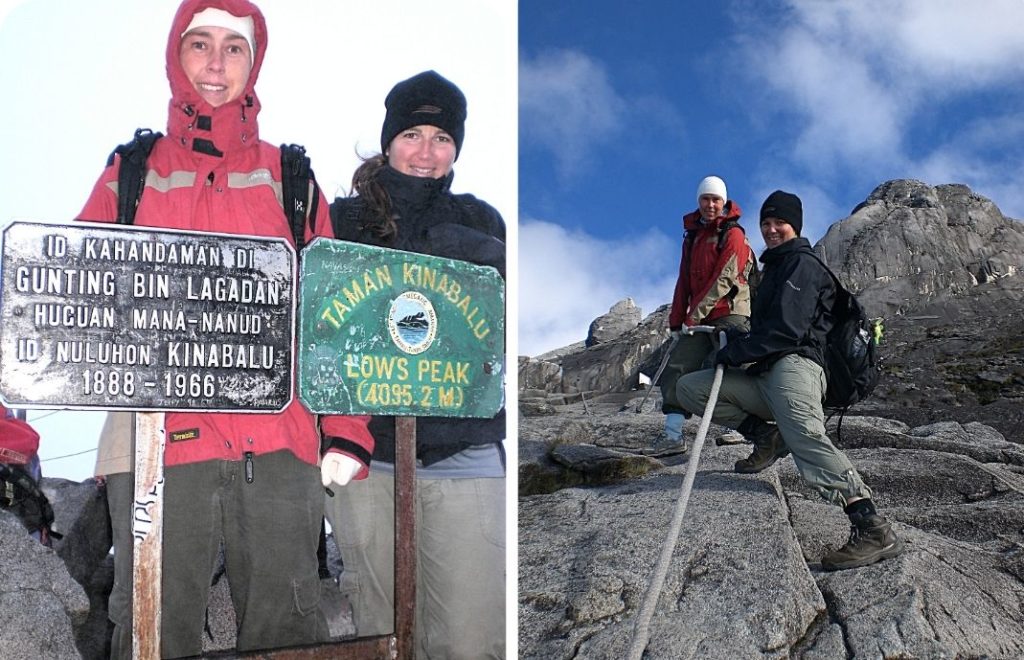
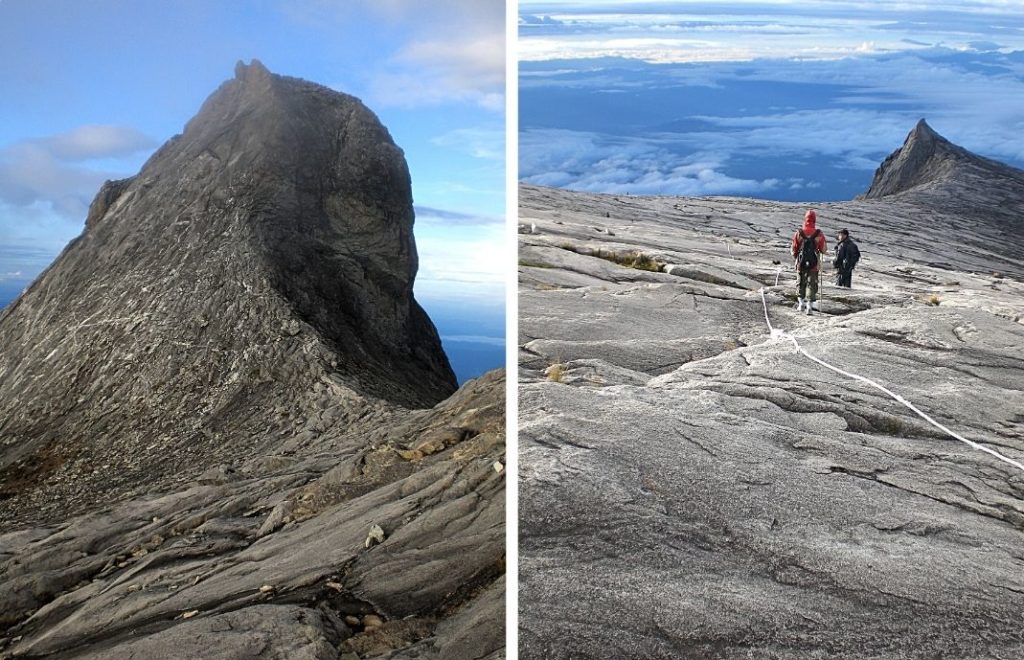
The path transforms into a near-vertical wall. Ropes, anchored into the rock, are our lifelines. We clutch them with frozen hands, hauling ourselves upward inch by agonizing inch. The void yawns on all sides, swallowed in darkness. Every step feels heavier than the last. The temperature hovers just above freezing – and so does my mood.
The mountain claims its casualties along the way. As dawn begins to smudge the horizon, we pass climbers slumped on the granite, their breaths ragged, their dreams of the summit surrendered.
Then – at last – a sign materializes through the gloom: “Welcome to Taman Kinabalu – 4,095 m.”
We collapse onto the rocky crown, teeth chattering, the wind slicing through layers like glass. Was it worth it? In this moment of bone-deep exhaustion, I can only hope so.
And then it happens. The sky stirs. A whisper of gold stretches across the horizon, swelling into a cascade of crimson and molten orange. The sun breaches the edge of the world, blazing like a colossal ember, flooding the sky with fire. This is no ordinary sunrise. This is a spectacle paid for in sweat, pain, and sheer determination.
A new day dawns – and from the roof of Borneo, it feels like the beginning of everything.
A real downer
It hits us like a cruel joke: what goes up… must come down.
Our legs feel like timber, every step sending a sharp jolt through aching muscles. The euphoria of summiting Mount Kinabalu evaporates, replaced by the grim reality of a six-hour descent— – a marathon of groans, sighs, and muttered curses.
When we finally stagger back to the parking lot – the very spot where this ordeal began – we’re hollowed out, limbs trembling, bodies pleading for mercy. Salvation awaits in the form of lunch… except the restaurant is even farther downhill. The thought of going down and then climbing back up again nearly breaks us. Hunger, however, wins the argument. And yes – it tastes divine.
The climb turned us from spirited hikers into penguins – waddling, stiff-legged caricatures of ourselves. For three days, we shuffled sideways through Singapore like tuxedoed birds, dreading curbs as if they were alpine ridges.
For weeks, the mere mention of Kinabalu was taboo. We were too sore to even joke about it. But time works magic. Blisters heal, bruises fade, and memories soften at the edges. Now, when we look back, we can only laugh – and marvel at the madness that drove us to conquer that mighty peak.
Good to know: Climbing Mount Kinabalu
Location & height
Mount Kinabalu towers at 4,095 meters and sits within Kinabalu Park, a UNESCO World Heritage Site, in the state of Sabah, Borneo.
Routes
Two main trails lead to the summit:
- The Summit Trail – the more accessible route
- The Mesilau Trail – longer and more challenging
Duration
The trek takes two days, including an overnight stay.
Route overview
Start at Timpohon Gate (1,800 m) → Overnight at Panalaban (3,273 m) → Final push to the summit, Taman Kinabalu (4,075 m).
What to expect
- Cold temperatures at night and during the early morning – dress warmly.
- The final section requires rope-assisted climbing – bring gloves.
Fitness level
A good level of physical fitness is recommended for this challenging ascent.
More inspiration to visit Borneo:
Face to face with Borneo’s wild souls
The magical Turtle Island
Kuching – The city of cats
When is the best time to visit Malaysia?
