
The Orkney Islands, scattered like emeralds in the wild waters north of Scotland, are a dream for travelers seeking a mix of raw, untamed landscapes and deep-rooted history. This windswept archipelago boasts Europe’s highest concentration of ancient monuments, where every turn of the road feels like a step back in time.
Life on Orkney is dictated by the elements. The climate is rugged, the winds persistent, and the scenery breathtakingly wild. Here, nature calls the shots – and that’s precisely what makes these islands so captivating.
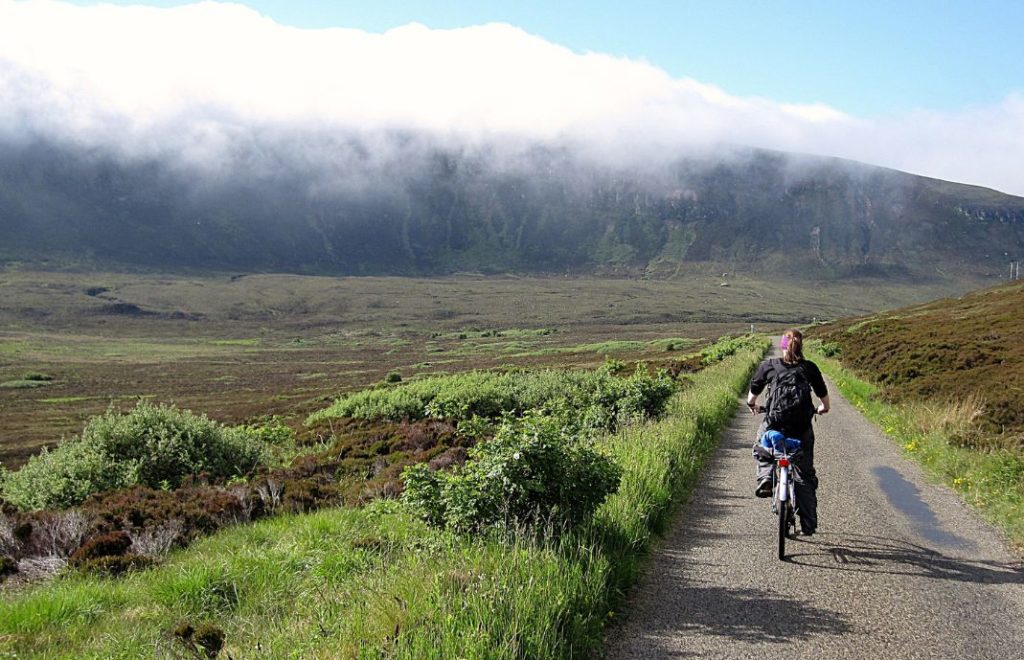
With 70 islands and skerries, only about 20 of which are inhabited, Orkney offers vast stretches of solitude and serenity. Picture yourself cycling along coastal roads, the Atlantic on one side and rolling green pastures on the other, with nothing but the cries of seabirds breaking the silence.
Orkney isn’t just about dramatic landscapes – it’s a treasure trove of archaeology. This UNESCO World Heritage site harbors relics that date back over 5,000 years. From Neolithic stone circles to Viking ruins, the islands hum with stories of the past, waiting to be explored.
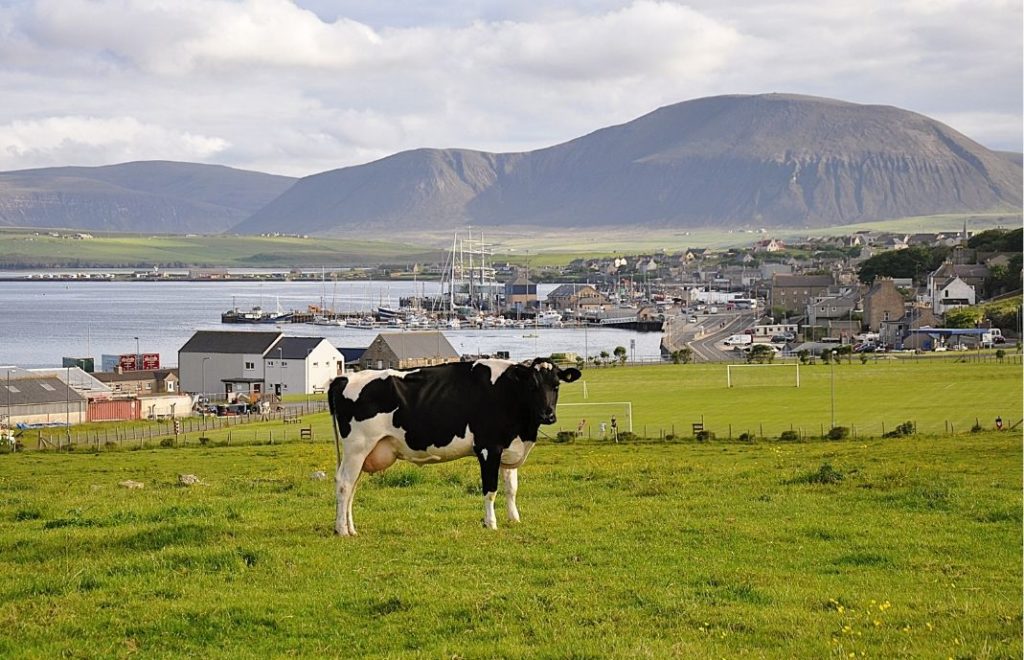
Stromness – Gateway to an Orkney adventure
A misty gray morning greets us as we touch down at the tiny airport in Kirkwall, the main hub on Orkney’s largest island, aptly named Mainland. From here, a local bus takes us to the archipelago’s only other town of note: Stromness – a picturesque harbor town of just 2,000 residents.
Life here moves at a rhythm dictated by the tides, not by the ticking of a clock. Stress? It feels like a foreign concept in this peaceful coastal haven.
Though officially founded in 1620, Stromness has roots that reach far deeper into history. Long before its charter, Norse seafarers docked their ships here in the 1100s, calling the sheltered harbor Hamnavoe. The Vikings left their mark not only in name but in the spirit of the place – a rugged, seafaring soul that endures to this day.
The 1800s brought a herring boom, transforming Stromness into a bustling port. Well into the early 1900s, majestic sailing ships set course from these very docks toward North America and Canada, carrying goods – and often dreams of a new life – across the Atlantic.
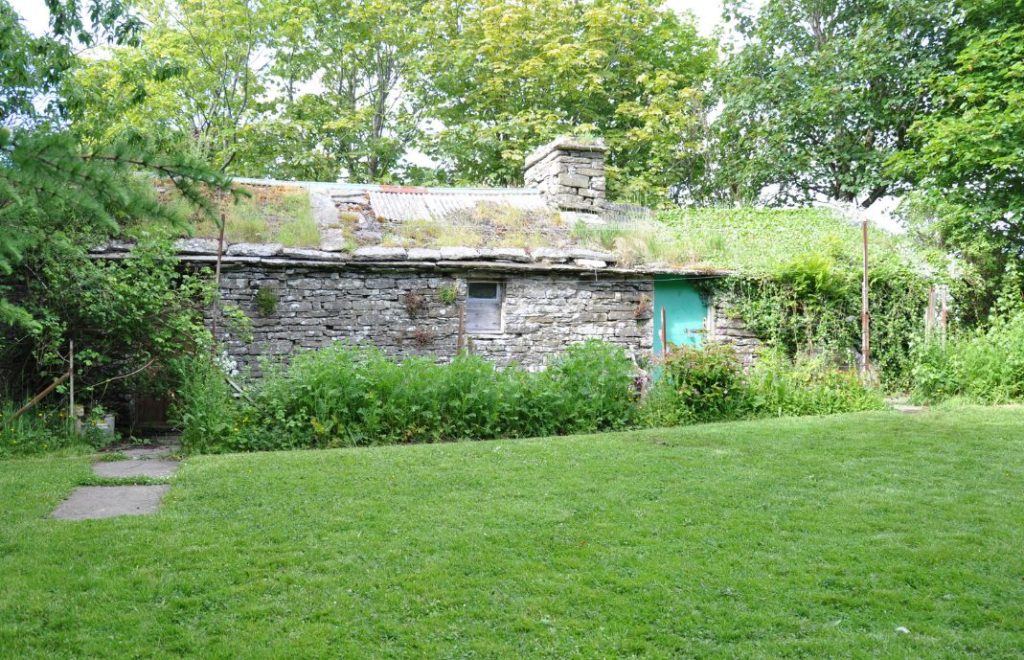
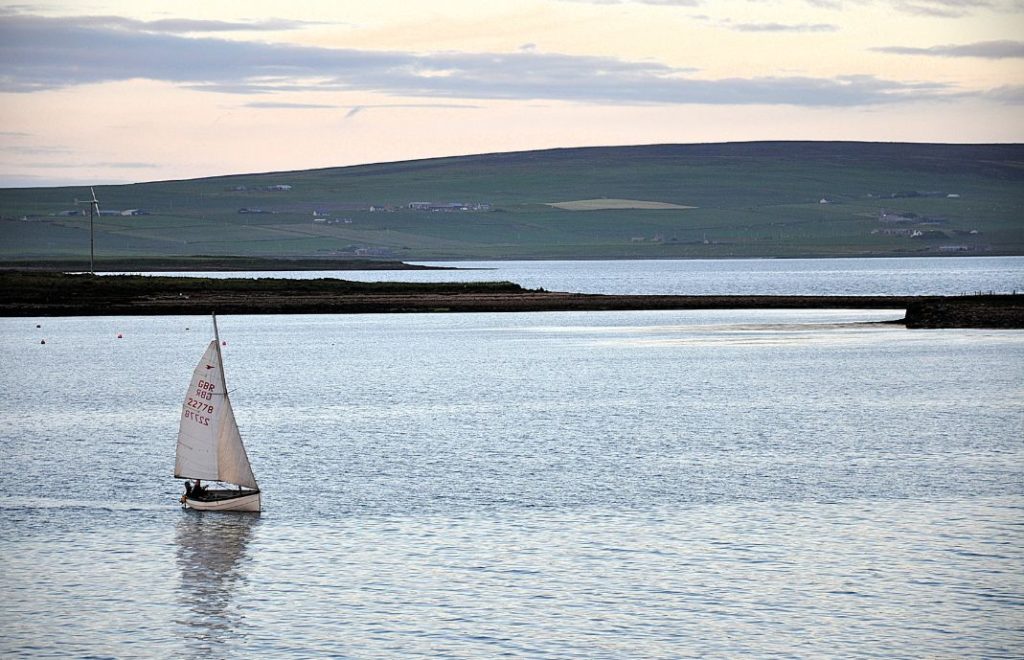
Today, the town’s cobbled streets, stone cottages, and lively harbor exude a charm that feels untouched by time. And for us, Stromness is the perfect launching point for an adventure on two wheels, as we prepare to follow in the footsteps – or rather, the wake – of our ancestors.
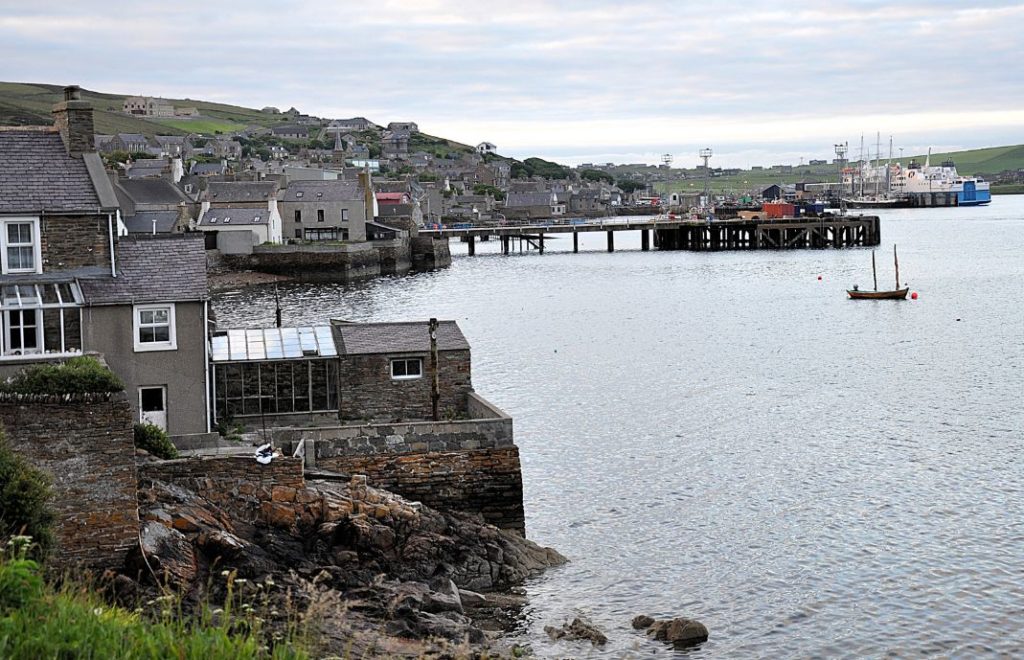
Pedaling back in time – The road to Skara Brae
Our cozy little Bed & Breakfast in Stromness greets us with warmth – and a steaming pot of tea – before the owner points us toward Orkney Cycle Hire, where our trusty bikes await. A quick glance at the map, and the adventure begins.
Leaving Stromness behind, we pedal along the gently undulating country road toward one of Europe’s most extraordinary archaeological sites: Skara Brae, often called “The Pompeii of the North.”
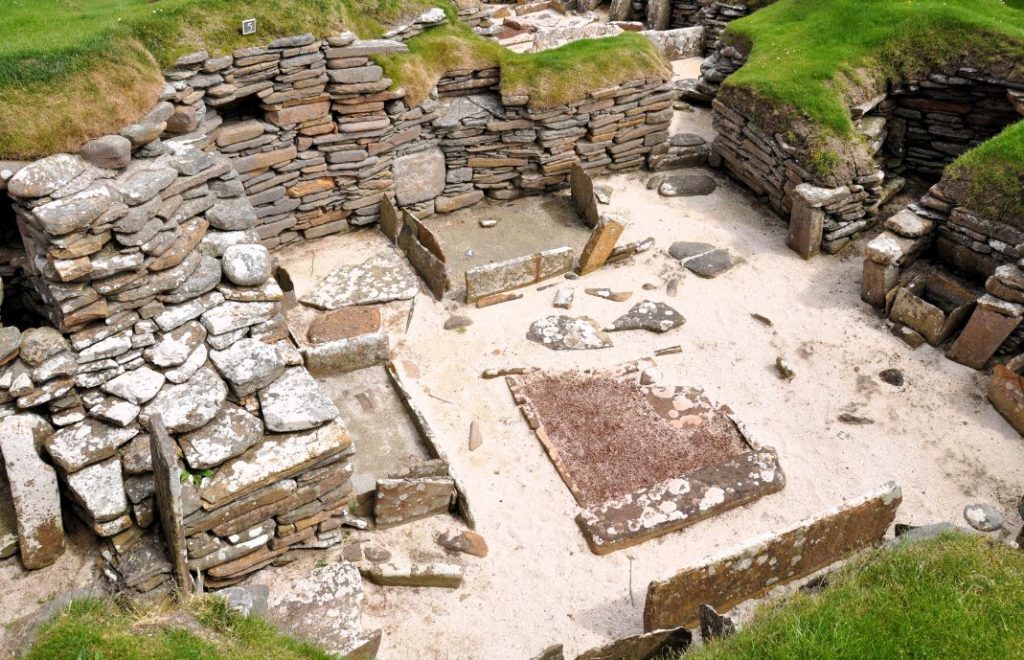
This remarkable Stone Age village predates the pyramids of Egypt and offers a hauntingly vivid glimpse into life some 5,000 years ago. For millennia, Skara Brae lay hidden beneath sand dunes until a fierce storm in 1850 tore away its cloak and revealed a perfectly preserved settlement.
Imagine a small community of about 50 people, living in stone-built houses sunk into the earth for warmth. The interiors, astonishing in their sophistication, are fully “furnished” with stone beds, chairs, storage niches, and even early drainage systems. Walking among these ruins, it’s easy to picture the hum of ancient life – the flicker of firelight, the rhythm of daily chores, the whisper of wind across a Neolithic hearth.
Just steps away stands Skaill House, the elegant manor of William Graham Watt, the laird who uncovered Skara Brae. Today, its grand rooms and family heirlooms offer a fascinating counterpoint to the stark simplicity of the village outside.
The Ring of Brodgar – Where time stands still
The ominous gray clouds that shadowed us earlier have drifted away, unveiling a brilliant blue sky as we mount our bikes and continue this journey through history. What we see around us is far removed from the harsh, windswept image most people associate with Orkney.
Instead, lush green meadows stretch to the horizon, dotted with grazing sheep and cows. Sapphire lochs glisten under the sun, and wildflowers sway in the breeze like tiny bursts of color against the rolling hills. Overhead, seabirds wheel and cry, while the road ahead is blissfully empty—no honking cars, no rush, just us and the hum of our wheels.
Orkney’s story stretches back 6,000 years, and these islands cradle more than a thousand ancient sites, silent witnesses to millennia of human ritual and resilience. Our next stop is among the most evocative of them all: The Ring of Brodgar.
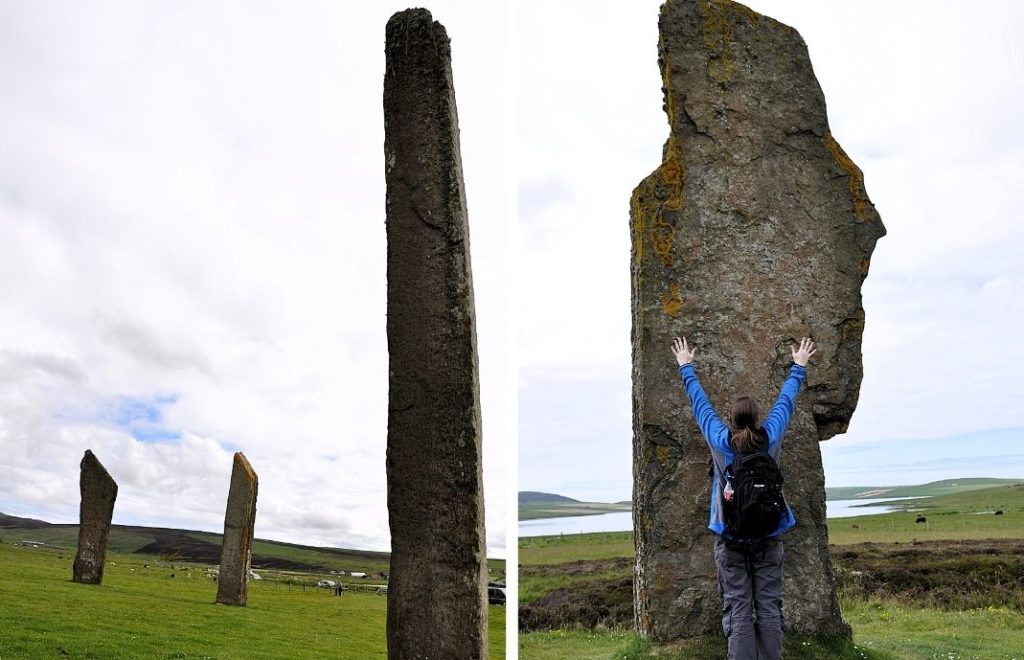
We leave our bikes at the roadside and walk up the gentle rise, where towering monoliths pierce the sky. At 104 meters in diameter, this is the third-largest stone circle in the British Isles. Originally, 60 stones stood sentinel here; today, 20 remain, their weathered forms etched by time and wind.
Dating back some 4,000 years, the Ring of Brodgar is shrouded in mystery. Was it a ritual center, a place where people communed with gods and spirits? Or an astronomical observatory, charting the movements of sun, moon, and stars?
Standing here, encircled by stones and silence, the air feels thick with something ancient, something otherworldly. It’s as if time folds in on itself, and for a moment, you’re not just looking at history – you’re part of it.
The Enchanted Forest – Orkney’s hidden gem
Orcadians are as warm and welcoming as the landscapes are wild. During a brief chat with a local woman – delighted by our choice of cycling Orkney over lounging on some sun-drenched beach – she shares a secret: “You must visit the Enchanted Forest.”
Curiosity piqued, we follow her advice, and soon the scenery changes. A canopy of trees sways overhead, casting cool shadows across sun-dappled clearings. The air hums with birdsong, while bursts of color from wildflowers paint the forest floor. A gentle brook winds lazily between mossy banks, its soft murmuring adding to the enchantment.
It feels like stepping into a fairytale. You half expect to glimpse a gingerbread cottage, or see Red Riding Hood skipping along a path, or perhaps stumble upon seven dwarfs at work in a glade.
By the water’s edge, a tiny frog croaks with determined persistence. We joke about who should kiss him to break the spell – clearly, the forest’s magic has gone to our heads. The frog remains firmly un-kissed, and with smiles on our faces, we return to our bikes and the open road.
Maes Howe – A tomb and a Viking graffiti gallery
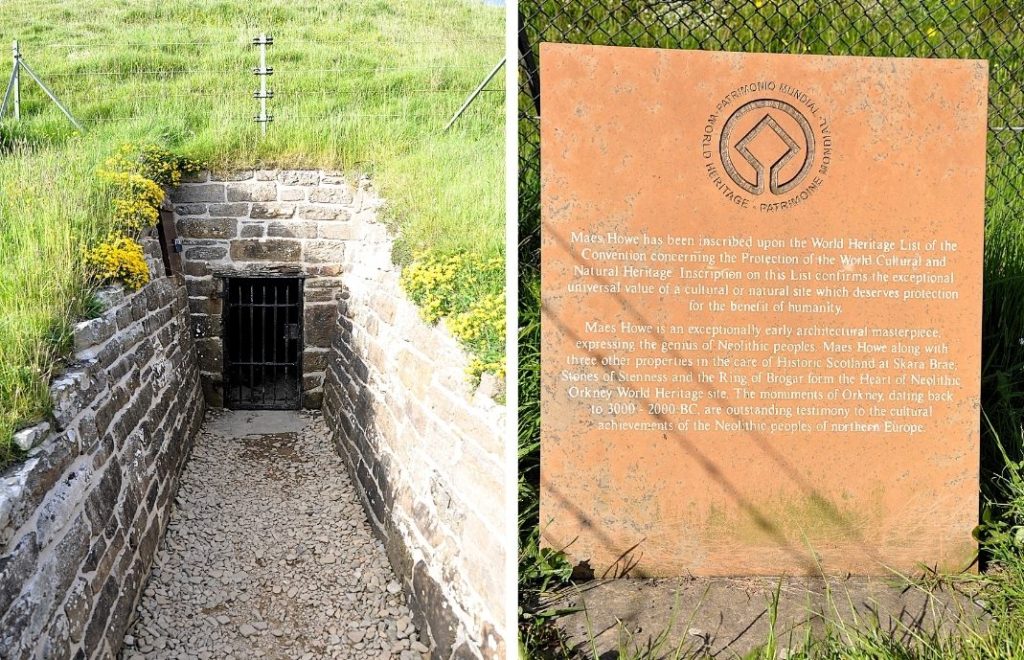
Dusk settles over Orkney as we make our final stop of the day – a place steeped in mystery and awe: Maes Howe. This ancient burial mound offers a truly magical experience when the fading light slants through its narrow stone passage, illuminating the inner chamber in a golden glow.
Before us rises a grassy mound, humble in appearance yet extraordinary in significance. Dating back to around 2700 BC, Maes Howe is considered the best-preserved Neolithic chambered cairn in Western Europe. Measuring 40 meters in diameter and 8 meters high, it was likely built as a resting place for Orkney’s ruling elite.
But Maes Howe’s story doesn’t end with the Stone Age. In the 12th century, Norsemen broke into the tomb, looting its treasures – and leaving behind their own mark. Today, its walls bear the largest collection of Viking runic inscriptions ever found, etched by marauding seafarers.
Some messages are startlingly modern in tone: “Ingibjorg is the most beautiful of women.”
Who says medieval men weren’t romantic?
With the echoes of history still swirling in our minds – and a certain soreness from the saddle – we pedal back to Stromness, hungry and exhilarated. Dinner awaits in a cozy local pub, its low-beamed ceiling and crackling fire the perfect end to a day that has spanned millennia. Soon, the lilting Orkney dialect mingles with our own as curious locals join our conversation, and we trade stories of Vikings, winds, and life on these islands at the edge of the world.
Ship O’Hoy – Onward to the high isle
The day begins early – after all, this is holiday mode, Orkney-style. A hearty breakfast is served in Maureen’s cheerful kitchen, fueling us for the next leg of our adventure. Bikes loaded, we glide down to the harbor, where the ferry to Hoy waits patiently.
Forecast: rain. Our armor: rain gear and thermal layers – a uniform that seems almost mandatory here in the islands. Yet, as we set sail, the weather gods grin mischievously. The skies clear to a shimmering blue, and the North Atlantic sparkles like liquid glass.
Fishing boats chug past, trailing clouds of seabirds, while curious seals pop their sleek heads above the waves to inspect the newcomers. It’s a welcome committee like no other.
Hoy – the “High Island” – lives up to its Norse name (haey), rising proudly against the horizon. Covering 143 square kilometers, it boasts some of the most dramatic and diverse landscapes in the entire archipelago.
By the time we disembark, the sun is blazing. So much for the grim forecast! Layer by layer, we shed our rainproof armor, stuffing jackets into panniers as sweat trickles down our backs. The road ahead snakes upward, a series of thigh-testing climbs softened by sweeping views over sea and moor.
Not a car in sight. Just us, the whisper of wind, and the rhythmic crunch of gravel beneath our tires. Eventually, the tarmac gives way to a simple parking area – the trailhead for one of Scotland’s most iconic landmarks: The Old Man of Hoy.
The Old Man of Hoy – A sentinel in stone
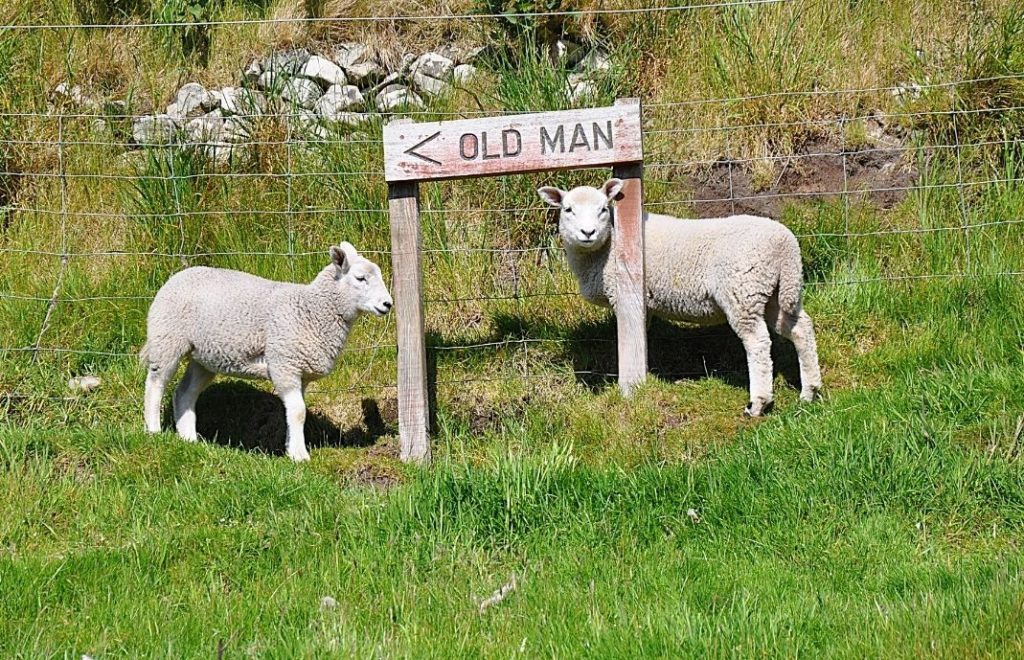
A small flock of curious sheep greets us at the trailhead, ambling alongside for a few steps before resuming their grassy breakfast. The path hugs the rugged coastline, an easy, windswept walk with the Atlantic stretching endlessly to our left. Above the cliffs, seabirds wheel and dive, their cries mingling with the whisper of the surf below.
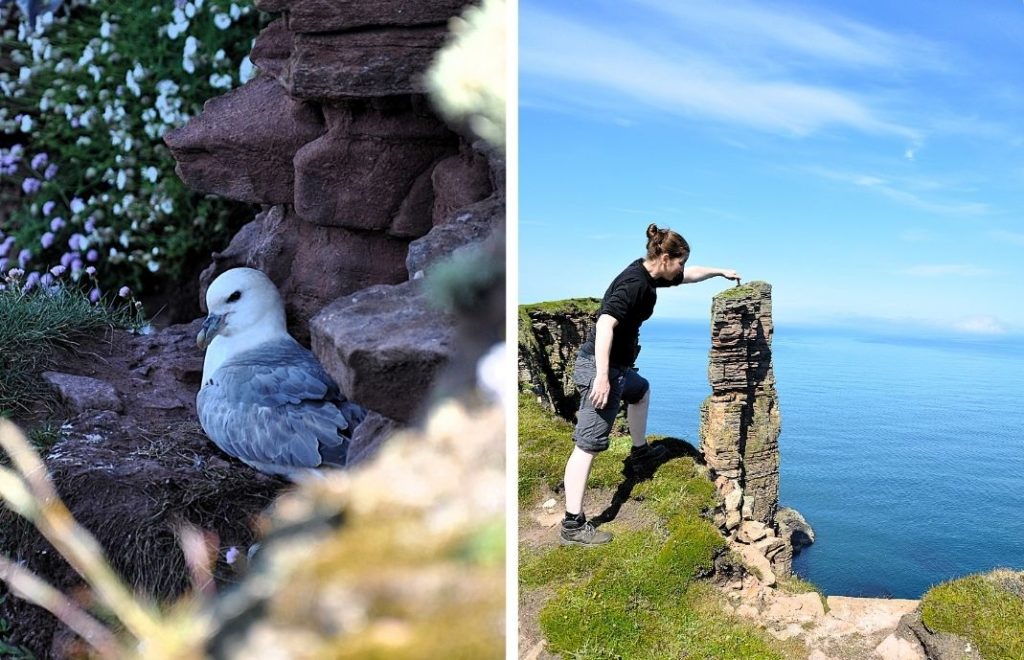
Everywhere, life clings to the edge: fulmars nest in neat ledges, while attentive mothers shelter their eggs, waiting for mates to return from the open sea.
Then, suddenly, there he is. The Old Man of Hoy – a solitary giant rising 137 meters skyward, a sandstone sentinel defying time and tide. Crimson-hued and weather-beaten, this iconic sea stack looks almost alive, as though striding toward the horizon.
We linger, mesmerized by crashing waves at its base and the sheer audacity of nature’s design. Cameras click, but the memory will live far longer than any photograph.
The ride back offers one last brush with Orkney’s ancient past: Dwarfie Stane, a Neolithic chambered tomb carved directly from a single massive block of Old Red Sandstone. Dating back to circa 3000 BC, it is a marvel of prehistoric craftsmanship and utterly unique in Northern Europe.
Back at the ferry terminal, our adventure takes an unexpected twist: the next crossing is canceled. So we wait – three long hours on unyielding wooden benches, swapping stories with fellow travelers as the sky darkens and the wind teases the water into silver ripples. At last, the ferry arrives, and we roll our bikes aboard, tired yet content, hearts still full of Hoy’s raw beauty.
Kirkwall – The charming Viking capital
We bid farewell to our warm-hearted hosts in Stromness and board the bus to Kirkwall, the proud yet petite capital of the Orkney Islands. With barely 7,000 residents, it’s more a village than a city – but what it lacks in size, it makes up for in soul.
The streets here are cobbled with history and charm. Boutiques, cozy cafés, and artisanal bakeries spill their warm aromas into narrow alleys. We find ourselves lured by a tiny bakery tucked into a stone-clad lane. Its star attraction? Buns the size of dinner plates, stuffed with silky vanilla cream and topped with powdered sugar – a decadent treat best tamed with a steaming cup of cocoa.
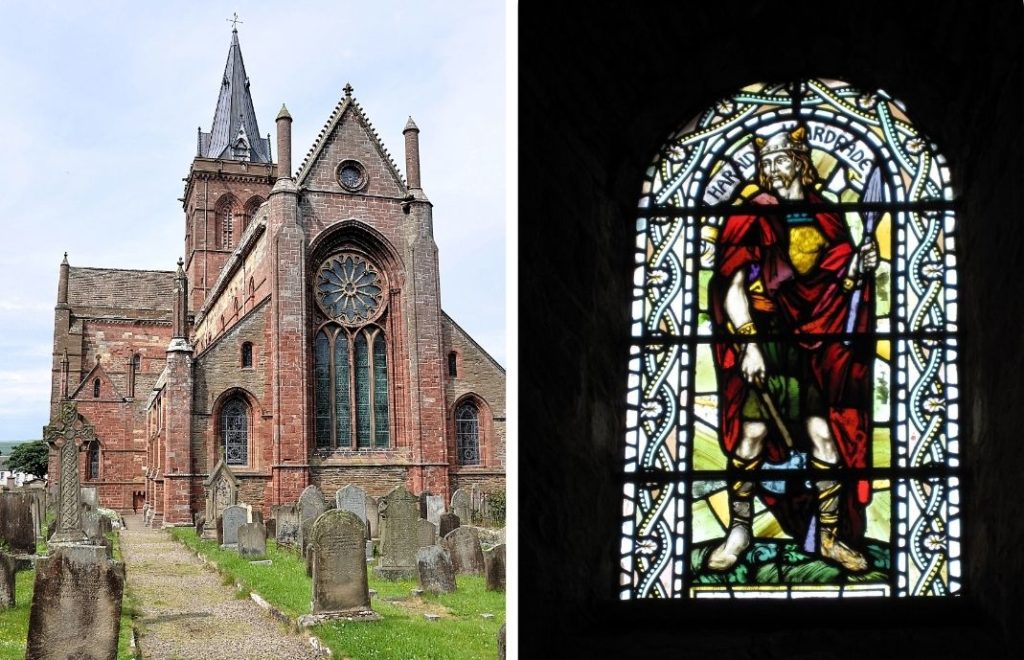
Kirkwall wears its Norse heritage with quiet pride. In the very heart of town rises the magnificent St. Magnus Cathedral, visible long before you step into its shadow. Dedicated to Saint Magnus, Earl of Orkney from 1108 to 1117 and later martyred, the cathedral is a beacon of faith and fortitude. Built in 1137 by his nephew, Ragnvald-Kali, this sacred edifice fuses Northwestern Romanesque architecture with early Gothic elegance.
Inside, reverent silence reigns. Light pours through kaleidoscopic stained glass, casting jewel-toned reflections on sturdy stone columns – columns that guard the relics of Magnus and Ragnvald themselves. Our whispers echo faintly, as though the building itself disapproves of breaking its solemn spell.
Then, serendipity: an elderly gentleman, a proud member of the Friends of St. Magnus Cathedral, approaches with a smile that could warm the Orkney wind. Delighted by our Norwegian roots, he shares tales of Viking earls and tireless restoration efforts, transforming a simple visit into a private masterclass in history.
Before leaving, we steal moments at the ruins of The Earl’s Palace, a crumbling echo of Renaissance grandeur, and the Orkney Museum, brimming with artifacts that whisper of seafaring sagas and storm-lashed lives.
As the bus carries us back to the airport, a truth settles in: Orkney is more than a destination. It’s a dialogue between past and present, etched in stone, sky, and sea. Like our Viking forebears, we leave our footprints here, and in return, these islands leave indelible marks on our hearts.
Worth knowing – Orkney essentials
Getting there
- By air: Daily flights to Kirkwall from Aberdeen, Glasgow, Edinburgh, Inverness, and Shetland.
- By sea: Regular ferries from mainland Scotland to Stromness and Burwick.
Where to stay
- Stromness: A variety of welcoming B&Bs, all including a hearty breakfast.
- Kirkwall: The Kirkwall Hotel, centrally located, known for excellent service and a traditional Scottish breakfast.
Getting around
- Airport transfers: Local buses from Kirkwall Airport to Stromness are reliable and efficient.
- Island hopping: Ferries connect Stromness to Hoy daily. Check schedules in advance – weather and tides can affect departures.
Top experiences on the Orkney Islands
Stromness – your perfect base
A charming harbor town ideal for exploring Orkney by bike. Stroll its quaint streets or use it as your launch point for unforgettable cycling routes.
Skara Brae – Scotland’s Pompeii
One of Northern Europe’s most captivating prehistoric sites, older than the Egyptian pyramids. Explore its stone-built homes, then visit Skaill House, the elegant manor belonging to William Graham Watt, the man who discovered Skara Brae in 1850.
Brough of Birsay
A tidal island with Norse ruins, including a Viking longhouse and ancient church. Check tide times carefully before crossing the causeway.
Broch of Gurness
Among Orkney’s best-preserved Iron Age stone towers, offering a glimpse into life 2,000 years ago.
Birsay Moors Reserve
A vast bird reserve where you might spot hen harriers and kestrels soaring above the moorland.
Maes Howe
Considered Western Europe’s best-preserved Neolithic chambered tomb. Visit at sunset for an otherworldly experience. Entry is by guided tour only.
Standing Stones of Stenness
Once a grand ring of 12 stones; only four remain, yet they exude a haunting power that transports you back millennia.
Ring of Brodgar
A mystical circle of stones – originally 60 monoliths, around 20 still stand proudly. One of Britain’s greatest prehistoric monuments.
Hoy – The wild island
Ferry from Stromness to Hoy for breathtaking cycling and hiking trails. Don’t miss The Old Man of Hoy, a dramatic 137-meter sea stack of red sandstone rising sheer from the Atlantic.
Kirkwall – The heart of Orkney
The islands’ capital boasts cozy cafés, craft shops, and fascinating museums.
- St. Magnus Cathedral – A striking Romanesque-Gothic masterpiece and the grandest Norse monument in the British Isles.
- Bishop’s & Earl’s Palaces – Echoes of medieval power and Renaissance grandeur.
- Orkney Museum – An intimate, engaging exploration of Orkney’s history and heritage.
More inspiration to visit Orkney Islands:
8 reasons to fall in love with the Orkney Islands
The best places to see puffins in the Orkney Islands
