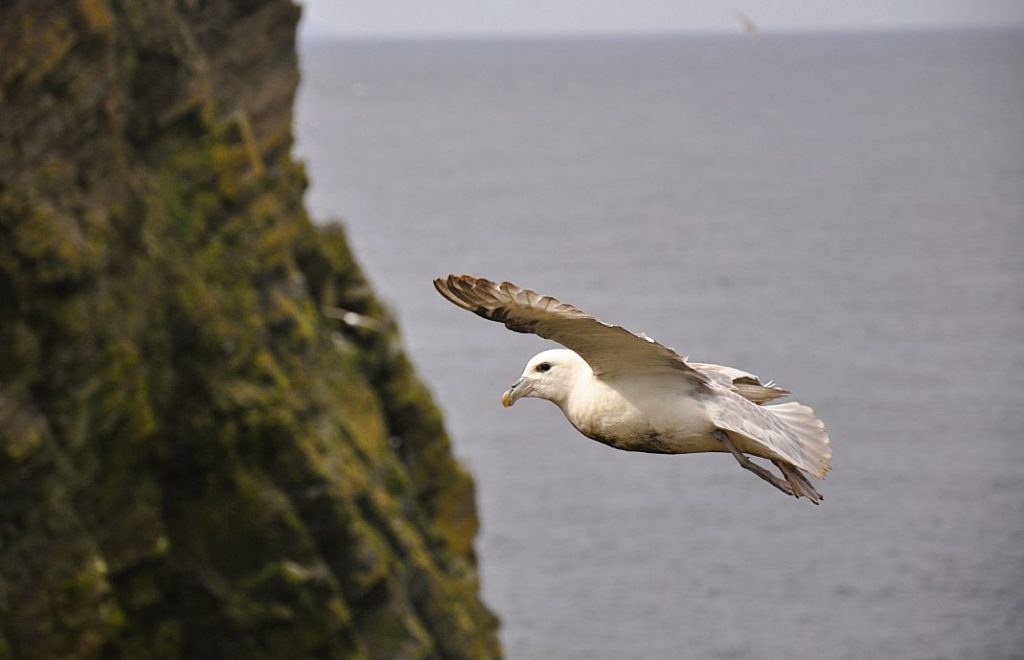
The wind grabs hold of our tiny aircraft as if Njord himself – the Norse god of wind and sea – has decided to play a mischievous game. It shudders, rattles, and lurches like a tin can tossed about by unseen hands.
The gentleman to my left has gone a shade too pale, and the woman in front lets out a startled gasp as a sudden gust nearly flips us on our side. Somewhere in the cockpit, the pilot must have a white-knuckled grip on the controls, sweat beading on his brow.
But he lands us safely – drawing an audible sigh of relief and even a smattering of applause from the 20 or so shaken passengers. Knees wobbling and stomach doing somersaults, I shuffle into the tiny arrivals hall, claim my luggage, and make a beeline for the car rental desk.
It’s a short drive to the hotel, but the battle to keep my little car on the road begins immediately. Wind lashes against the doors, roaring like a living thing. The sky unleashes a sudden, savage downpour – fat raindrops pelting the windshield with the ferocity of a thousand tiny fists. The wipers thrash back and forth in desperation, barely making a dent in the deluge.
Ten minutes later – drenched, frazzled, and thoroughly humbled – we burst through the hotel doors. Behind the desk, the receptionist greets us with a cheerful smile, her voice calm as the sea on a windless day.
“Welcome to Shetland,” she says. “This is perfectly normal.”
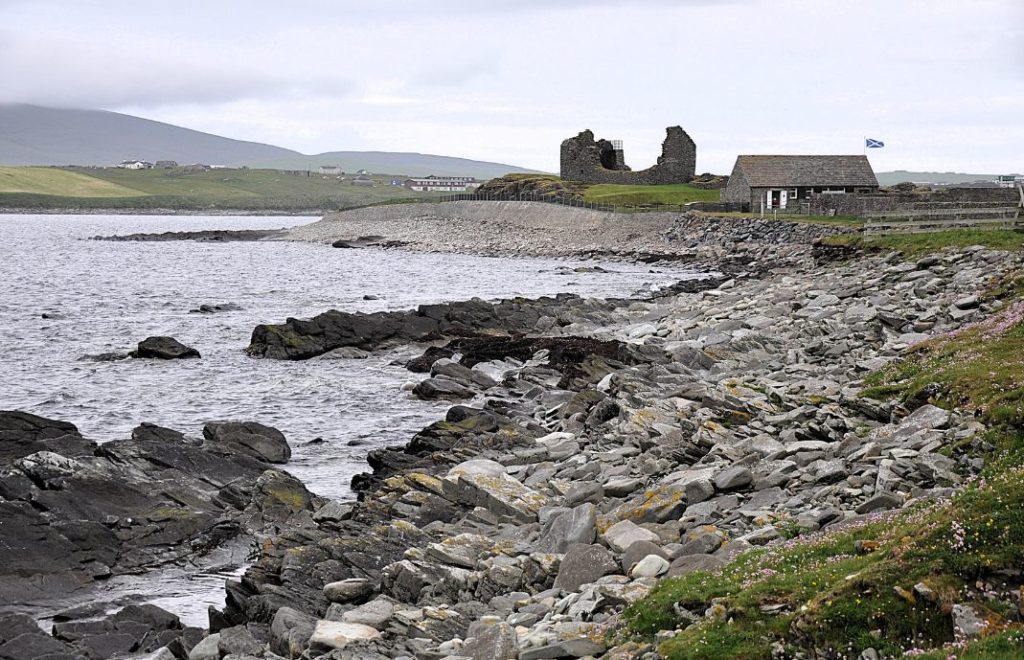
Shetland – Where the North Sea whispers stories of the past
At some point during the night, Njord finally surrendered his fury. The storm that shook every windowpane yesterday has given way to something far calmer. No sunshine yet – but after yesterday’s raging winds and horizontal rain, even a dull grey sky feels like a blessing.
I’m standing on Britain’s northernmost frontier. Here, where the Atlantic collides with the North Sea, Shetland rises like a rugged guardian – over a hundred islands and skerries scattered like emeralds halfway between Norway and the Faroe Islands.
There’s an undeniable kinship with Scandinavia. These islands share our Viking blood, and walking here feels a little like tracing the footsteps of long-lost ancestors.
Shetland is raw and real – its beauty understated but overwhelming. The air tastes fresher, purer, as if the wind has scrubbed it clean of all impurities. And how could it be otherwise? No matter where you stand, the sea is never more than five kilometers away.
Yet, for all this vastness, only about 15 of Shetland’s 100-plus islands are inhabited. Around 22,000 hardy souls call this place home – alongside 330,000 sheep, 700,000 seabirds, and 12,000 seals. Life here isn’t about taming nature. It’s about coexisting with it, on its terms.
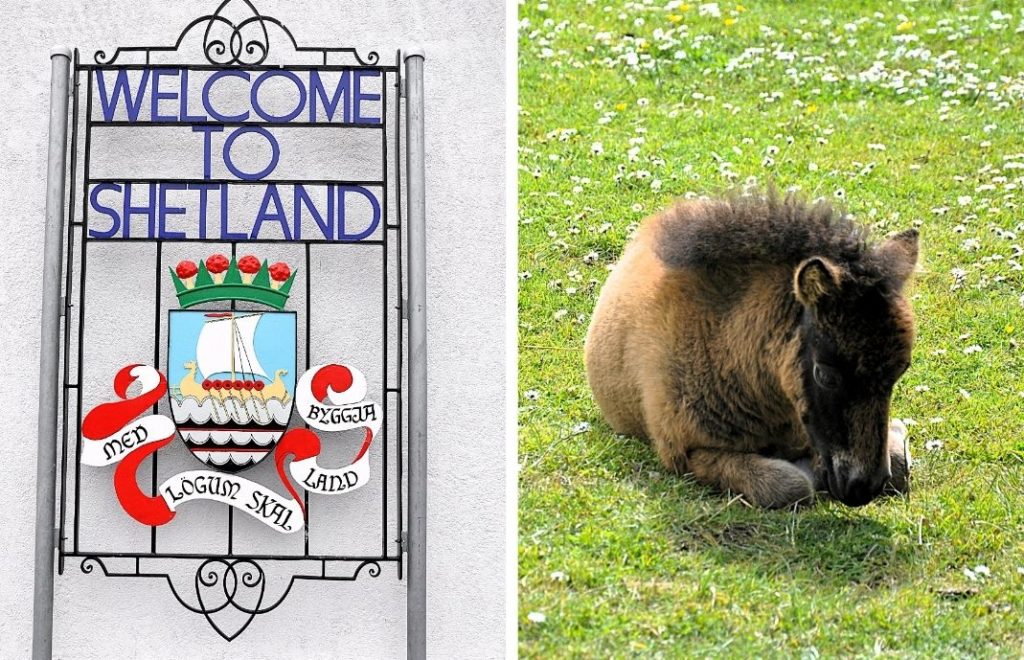
Shetland’s untamed Viking spirit
The spirit of the Vikings lingers over the Shetland Islands like a soft, invisible cloak. Our ancestors once called this rugged archipelago Hjaltland – “The High Land.”
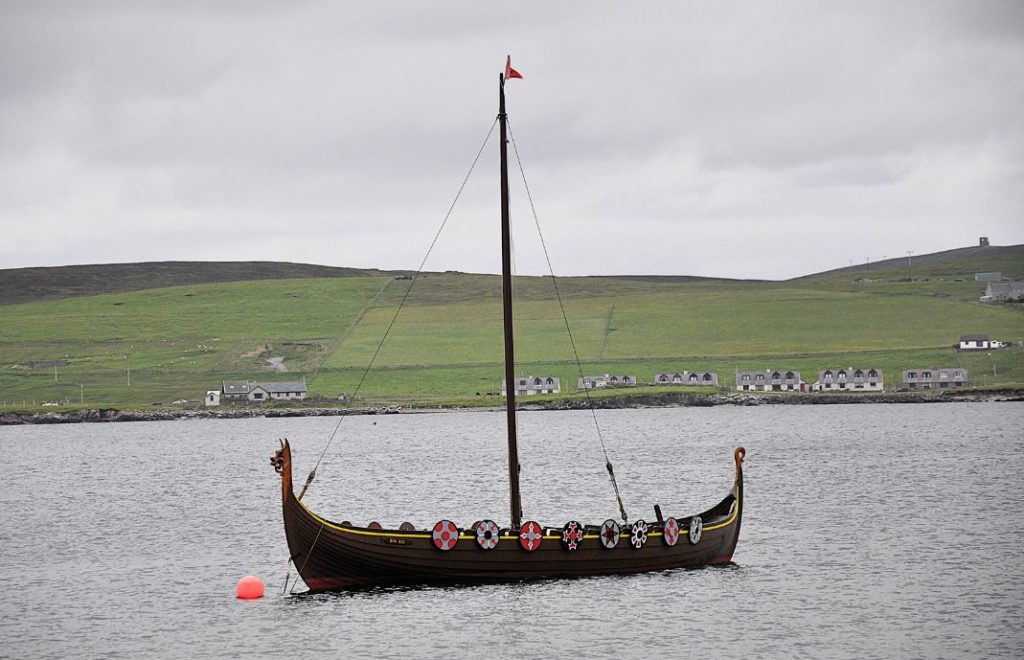
As I gaze out across the restless sea, a steaming cup of tea warming my hands, I can almost picture the longships gliding toward these shores, their dragon-headed prows slicing through the waves.
The very first Vikings are said to have landed on the island of Bressay. Today, their legacy is woven into the fabric of island life – echoing in the lilting dialect, steeped in the traditions, and etched across the landscape in nearly 50,000 Norse place names. Even the word Shetland itself is a linguistic echo of that Nordic past.
But their influence runs deeper than names and words. Many locals can trace their ancestry back to the Norse settlers, and even modern Shetland DNA carries a strong Scandinavian imprint. Stroll through the streets of Lerwick and you’ll notice Nordic motifs on everything from architecture to jewelry – quiet reminders of a culture that refused to fade with the tides.
And then there’s Up Helly Aa, the fiery heartbeat of Shetland’s Viking soul. On the last Tuesday of January, the islands blaze with torchlight as squads of modern-day “Vikings” in full regalia parade through town, their shields glinting like molten gold in the winter dark. The night crescendos in a breathtaking spectacle: the burning of a replica longship, flames leaping sky-high against the North Atlantic night – a ritual believed to echo ceremonies held more than a thousand years ago.
For those who crave a deeper connection, Shetland offers living history. Wander among ancient broch ruins – circular stone towers that predate the Vikings yet were later claimed by them. Visit the Shetland Museum, where treasures like silver hoards and rune-carved stones whisper tales of seafaring warriors. Or venture farther north to the windswept island of Unst, home to one of the world’s largest collections of reconstructed Viking longhouses, where you can sit by a roaring fire and feel the past breathe around you.
Here, at the edge of the world, Norse legends are not just remembered – they’re lived. The Shetlands aren’t merely a destination; they’re a time machine, a wild and windswept stage where history roars back to life. Come, follow the echoes of the longships – you may just find the Viking in yourself.
In search of the Puffins
Our plan was to kick off our Shetland adventure by stepping straight into Viking history. But after a spirited chat with the waiter over breakfast, we’re tempted by another suggestion: a coastal hike just beyond the hotel.
From the windswept heights of Sumburgh Head, vast colonies of puffins can be spotted – those comical, wide-eyed darlings of the bird world. And truly, who could resist such an invitation?
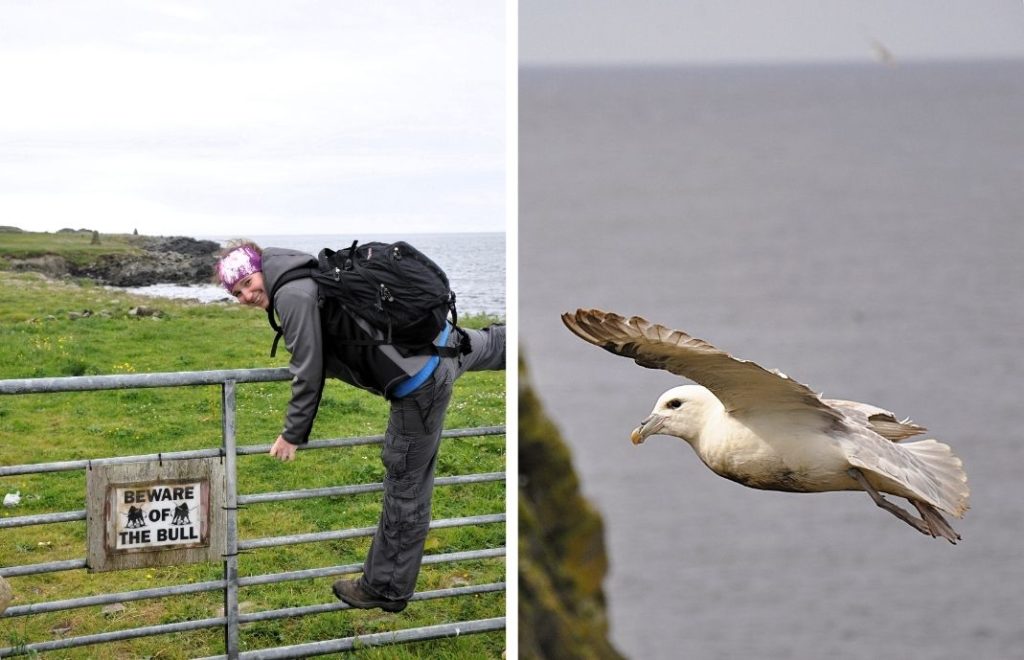
The path ahead feels like a rustic pilgrimage trail, worn by centuries of footsteps – and perhaps a few wandering cows. To our left, sheer cliffs plunge into the Atlantic; to our right, emerald pastures stretch beneath an endless northern sky. Every so often, we’re obliged to climb over fences – practical barriers meant to keep the livestock contained, rather than adventurous travelers like us.
My companion’s excitement wavers when we encounter a sign warning of a “dangerous bull.” Suddenly, the grassy idyll feels like a potential battleground. Still, the presence of built-in steps reassures us that we’re hardly the first intrepid souls to venture this way.
Eyes darting left, right, and back again, we steel ourselves for the possibility of a horned guardian charging from the mist, steam billowing from its nostrils like an angry locomotive. In a unanimous decision, we nominate the most flamboyantly dressed among us – me – as the first to scale the fence. If Ferdinand is indeed lurking out there, inhaling the sweet scent of daisies, he chooses to keep his secret. Not a single black, bellowing beast appears. And so we press on, hearts light, toward the rocky cliffs where the puffins await – tiny, winged jesters perched on the edge of the world.
The enchanting puffins
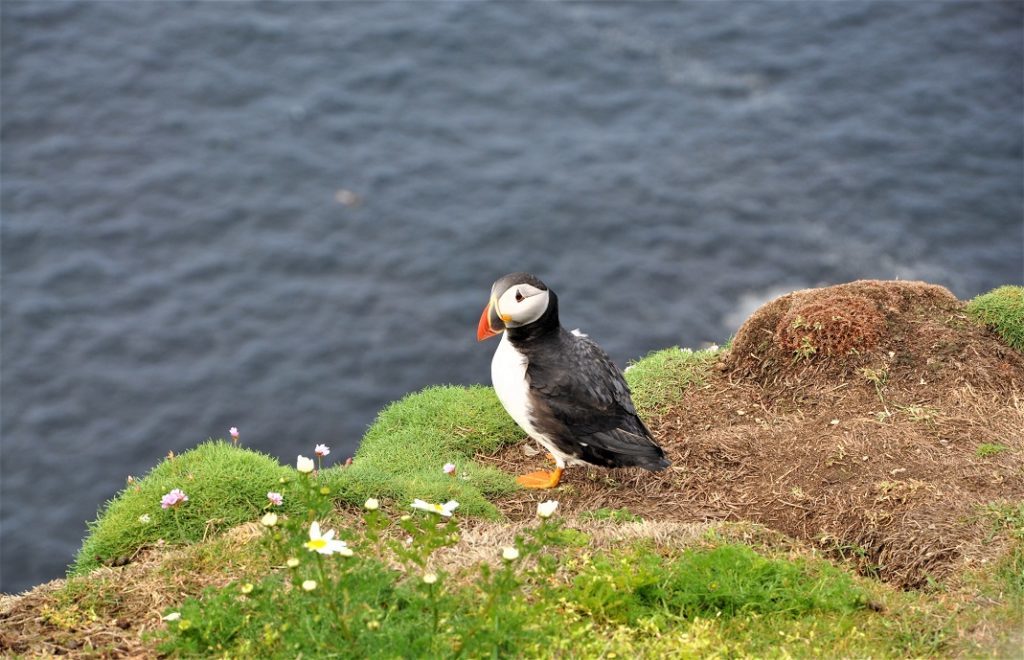
The climb to the top is surprisingly gentle, and soon we’re rewarded with a sight that could melt the hardest of hearts: puffins. Those delightful little seabirds, affectionately nicknamed sea parrots for their vibrant beaks during breeding season.
They’re utterly unfazed by our presence, lounging in the sun and carrying on as if we weren’t there. Their scientific name, Fratercula arctica, translates poetically to “little Arctic friar” – a nod to their black-and-white plumage, reminiscent of a monk’s robe.
At just 30 centimeters tall, these birds are tiny marvels of the northern seas. They’re also remarkably quiet. Even as thousands surround us, the cliffs are cloaked in an almost reverent hush. Now and then, a few exchange soft, guttural calls – a charming arr-uh sound, most common during the breeding season from April to August.
But beyond their cuteness lies a sobering truth: puffins are considered a vulnerable species, their numbers threatened by hunting, dwindling food sources, overfishing, and the mounting pressures of climate change.
To stand here, so close to these fragile treasures, feels like an immense privilege – a fleeting glimpse of nature’s artistry on the very edge of the Atlantic.
In the footsteps of the Vikings
The Shetland Islands have been inhabited for at least 5,000 years – first by the enigmatic Picts. In 875, these rugged isles were swept into the Norwegian kingdom under the rule of Harald Fairhair. Nearly six centuries later, King Christian I of Norway and Denmark pledged both the Orkneys and Shetlands as collateral for his daughter Margaret’s dowry to the Scottish crown – a debt never repaid. Since 1707, the islands have belonged to the United Kingdom, though Norse roots still run deep in the local soil and soul.
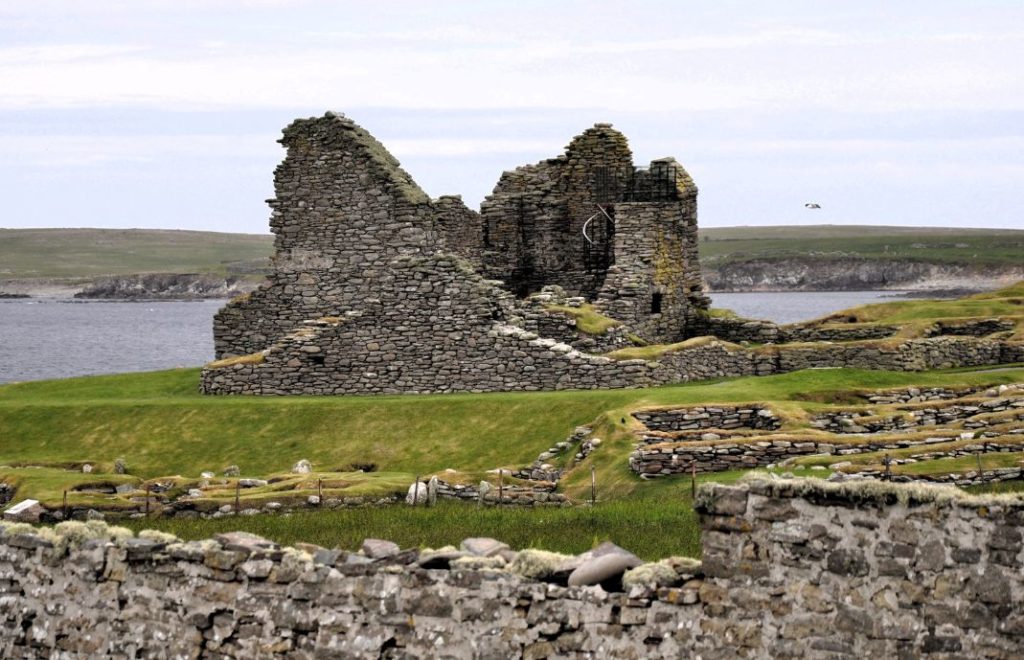
One of Shetland’s most extraordinary treasures is Jarlshof, an archaeological site that chronicles 3,000 years of human history. Here, layer upon layer of civilization lies exposed: from Stone Age and Iron Age dwellers to Norse settlers and, eventually, a medieval manor.
Visitors can step inside the remains of Viking longhouses – homes where Norse families lived peacefully for half a millennium. Archaeologists have also unearthed traces of medieval farmers who worked this very land between the 14th and 16th centuries.
Today, Jarlshof is ranked among Britain’s most remarkable archaeological sites – a living timeline etched into earth and stone, and an unmissable stop for anyone drawn to the mysteries of the past.
Back to the Iron Age
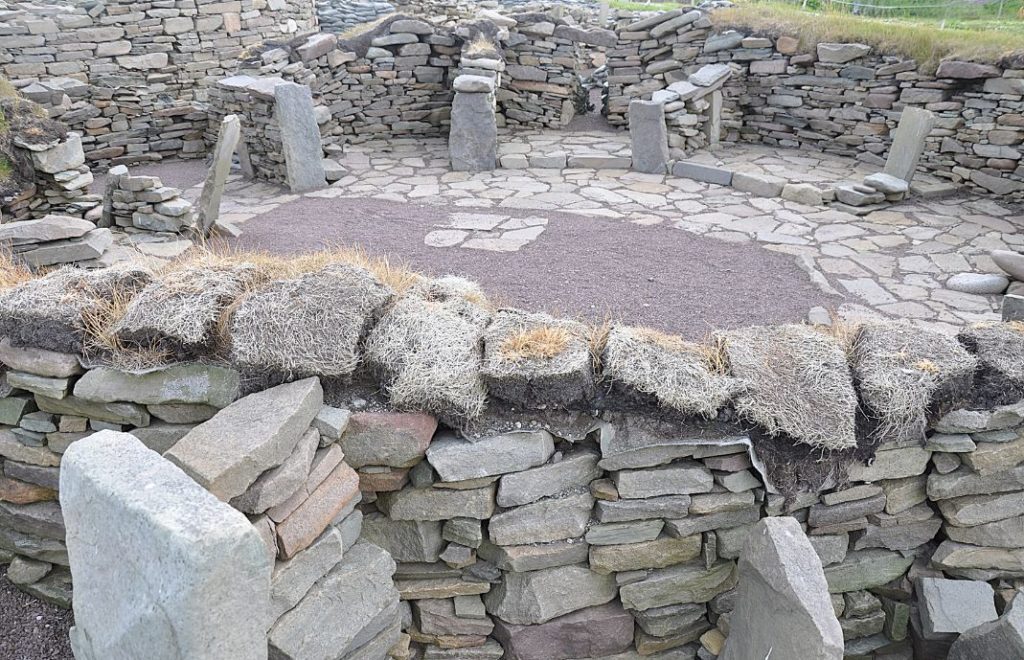
Our next stop takes us to Old Scatness, a remarkable archaeological site that was discovered quite by accident in 1975. What began as a routine construction project unearthed an extraordinary time capsule: a perfectly preserved Iron Age village, dating back to between 400 and 200 BC.
Excavations began in the late 1990s, and archaeologists were thrilled to uncover a settlement that had evolved through centuries – first inhabited by Iron Age farmers, later by the mysterious Picts, and eventually by Viking settlers.
Among the site’s many treasures is a carved stone etched with the image of a bear, a rare and intriguing link to a distant past. Adding to the immersive experience, staff dressed in full Viking regalia bring history vividly to life, demonstrating age-old crafts from weapon forging to textile making.
The visitor center itself is a delight, offering interactive exhibits and hands-on experiences. And, of course, we couldn’t resist the chance to don Viking attire and engage in a little “battle practice” with swords and shields – a playful nod to the warrior spirit that once ruled these northern isles.
Lerwick – The heart of Shetland
Given the rugged terrain and relentless winds, we’re grateful for choosing a car over a bicycle as our mode of transport across the Shetlands. Sharp gusts sweep in from the Atlantic without warning, and brief but stubborn rain showers pelt us from time to time.
Fortunately, the drive to Lerwick – Shetland’s charming capital – is no more than half an hour.
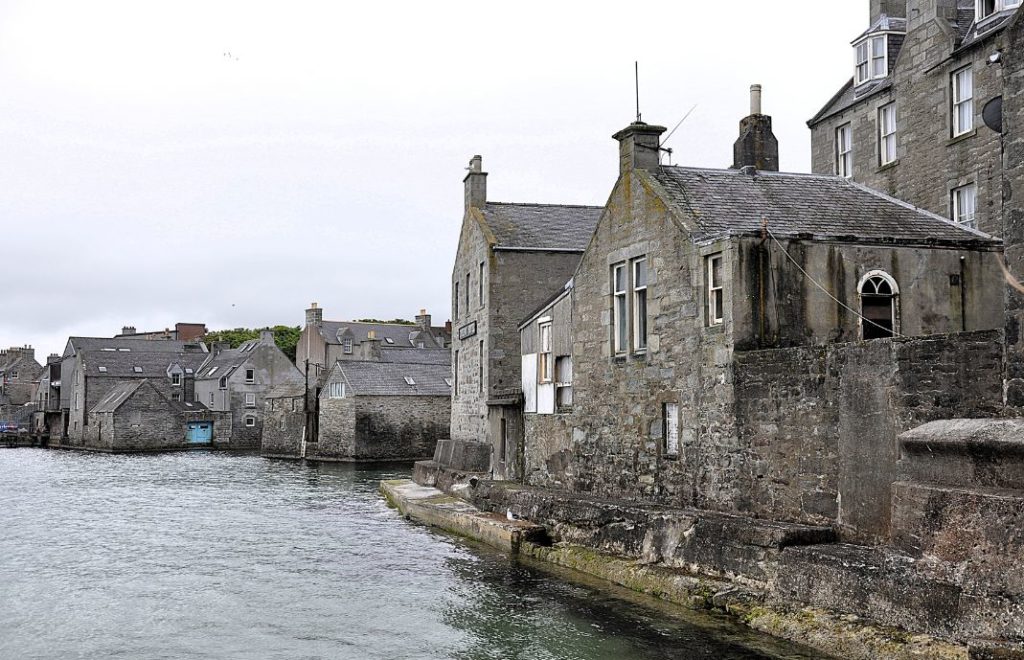
Back in the Viking Age, this bustling little town was known as Lervig, or “muddy bay,” a practical name inspired by its sheltered harbor. Even then, it served as a hub for visitors, much as it does today.
With a population of just 7,300, Lerwick is a delightful mix of old-world charm and contemporary life. Its narrow, winding streets are lined with solid Victorian buildings, their stone façades weathered by centuries of North Sea winds. The town’s character is one of quiet resilience, a place where history lingers in every cobbled lane yet blends seamlessly with the rhythm of modern island life.
In search of the island’s most charming residents
We point the car north, leaving behind the bustle of Lerwick for a world that feels untouched by time – an almost uninhabited stretch of Shetland where rolling hills meet sweeping valleys, and the silence is broken only by the whisper of wind and the distant bleating of sheep.
The narrow road rises and falls in rhythm with the rugged landscape, curving past clusters of whitewashed cottages clinging to the slopes. Herds of sheep graze with serene indifference as we venture deeper into this windswept wilderness.
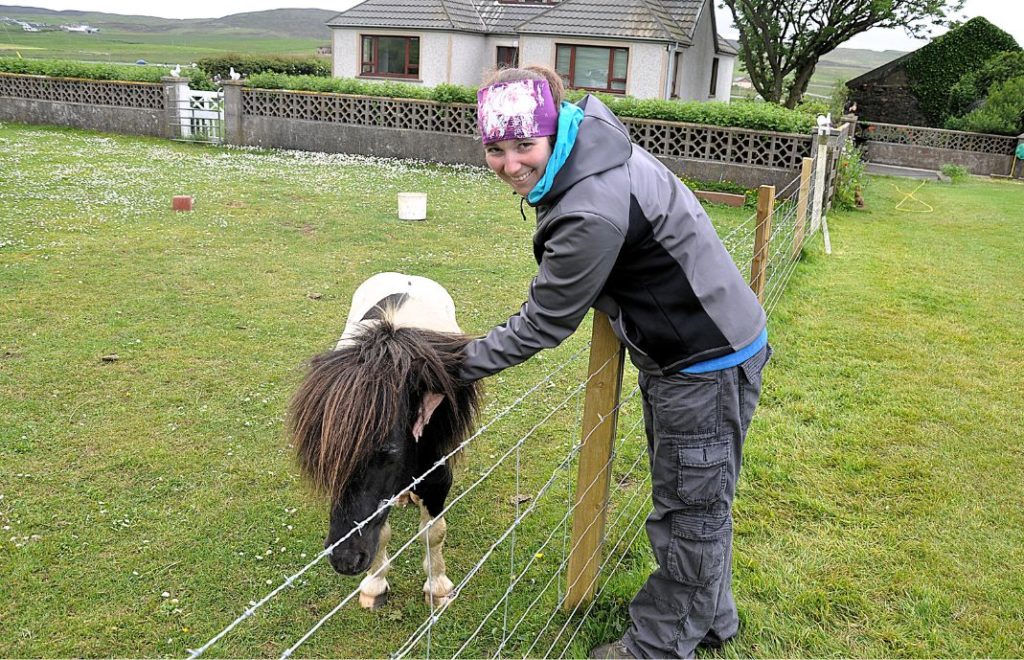
My mission? To catch a glimpse of the iconic Shetland pony. And when we finally pass a small farm where these sturdy little horses graze lazily behind a low fence, my heart leaps with delight.
My travel companion is a little more hesitant about pulling over – “Just for photos?” comes the skeptical voice from the passenger seat. But really, how risky can it be to greet a few pint-sized equine legends from behind a gate? These gentle creatures, with their tousled manes and soulful eyes, are Shetland’s living mascots – a perfect embodiment of the island’s hardy, resilient spirit.
Camera in hand, I step closer, the wind tugging at my jacket as the ponies lift their heads and gaze back at me, curious but calm. For a moment, it feels as if the entire island has paused to watch this quiet exchange between visitor and native.
Cuddles with the Shetland ponies
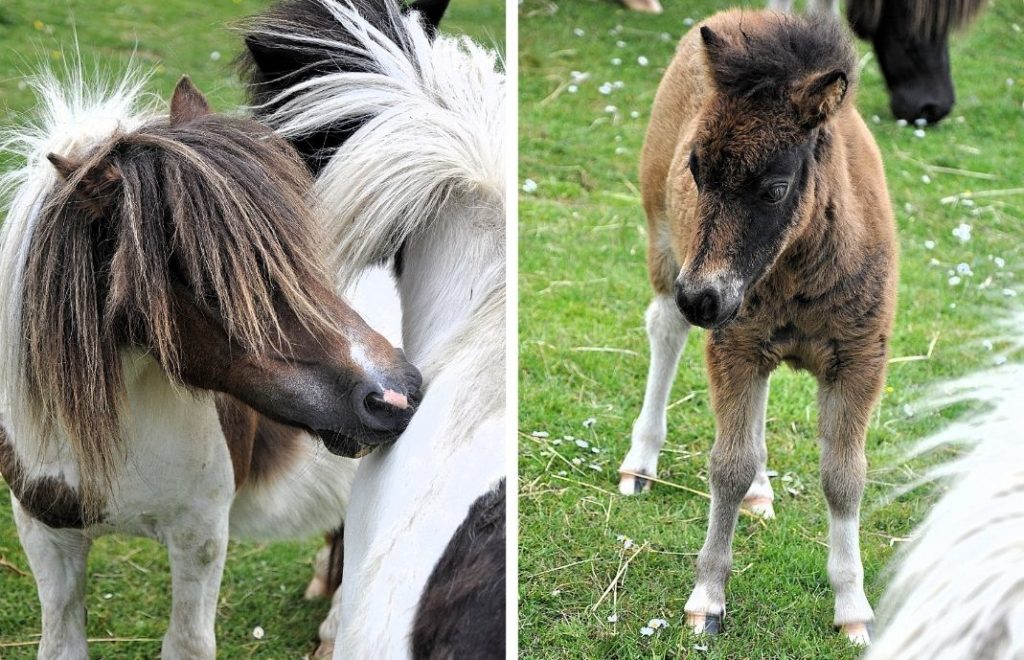
It turns out our instincts were spot on. Barely a few minutes into stroking those shaggy little ponies, an older, broad-shouldered man ambles toward us, his smile as warm as the peat fire in a crofter’s hearth.
“You’re more than welcome to pet them,” he chuckles, explaining that we’re far from the first to pull over for a closer look at the island’s most famous residents.
Shetland ponies have roamed these islands for more than 2,000 years. Archaeological digs reveal their presence as far back as the Bronze Age. As for their origin? That’s where things get interesting.
When the farmer hears we’re from Norway, he grins and says, “One theory claims they came from your side of the sea.”
But with a good-natured scratch to his beard, he adds, “I’m not so sure about that – they’re warm-blooded, so my bet is they wandered here from somewhere farther south.”
Here, in this treeless land where only wiry grass and heather cling to the thin soil, survival has shaped these ponies. Hardy, stoic, and a touch selective in their diet, they’re a breed forged by wind, stone, and salt air.
The little fellow nudging at my sleeve for more attention? He’s just a few months old, the farmer says with a smile. Fully grown, these ponies never exceed 107 centimeters at the shoulder. Yet what they lack in size, they make up for in charm – those soulful eyes, now gazing up at me with a plea that says,”just one more scratch behind the ear…”
And then, a quintessential Shetland moment: the farmer waves us inside for tea. In a snug kitchen that smells of baking, his wife quickly appears with generous slabs of homemade cake. Hospitality, like the wind here, knows no bounds.
Hard to believe that only an hour ago we were worried about being chased off for trespassing. Instead, we leave with full hearts, sticky fingers, and the memory of ponies who’ve perfected the art of asking for more affection.
More inspiration: Get to know the Shetland pony
The ultimate Shetland experience
Overnight, Njord has unleashed his fury once more, and we awaken to a day that could not be more Shetland – at least weather-wise. The wind, mercifully, eases its grip in the early hours, yet the sky remains a brooding quilt of gray. A few last raindrops patter against the quay as we arrive at the ferry dock, where the captain greets us with the easy confidence of someone who knows these waters as intimately as his own heartbeat.
No visit to the Shetland Islands is complete without a boat trip to Bressay and Noss, two gems adrift in the North Sea. I confess, a flicker of worry gnaws at me – will the swell turn me green? The captain pats my shoulder with a reassuring grin.
“Never had a seasick passenger yet,” he says.
“Well, someone has to be the first,” I laugh. “Maybe I’m here to ruin your perfect record.”
Just in case, I choose a spot out on deck, where the wind can whip any queasiness away.
With a gentle hum, the boat slips its moorings and Lerwick recedes behind us, its stone façades softening in the mist. The rhythmic thrum of the engine becomes our soundtrack as the horizon stretches wide and wild.
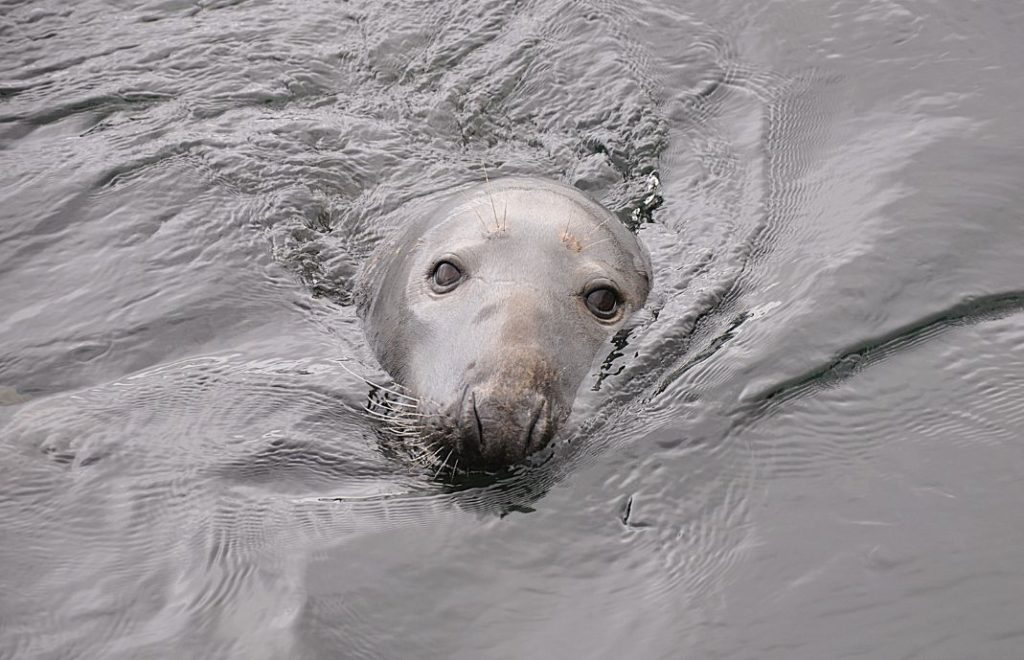
Not far from the harbor, the first thrill of the voyage appears: a rocky headland, sunning itself in morning calm – and upon it, a cluster of seals, languid as aristocrats. The captain eases the throttle, giving us time to marvel. Suddenly, one curious soul slides into the water, slicing through the steel-gray surface toward us. A sleek head pops up, two glistening black eyes fixing on ours with an almost human curiosity. For a moment, time stills – just us, the sea, and this silent, watchful creature of the deep.
A symphony of wings on Noss
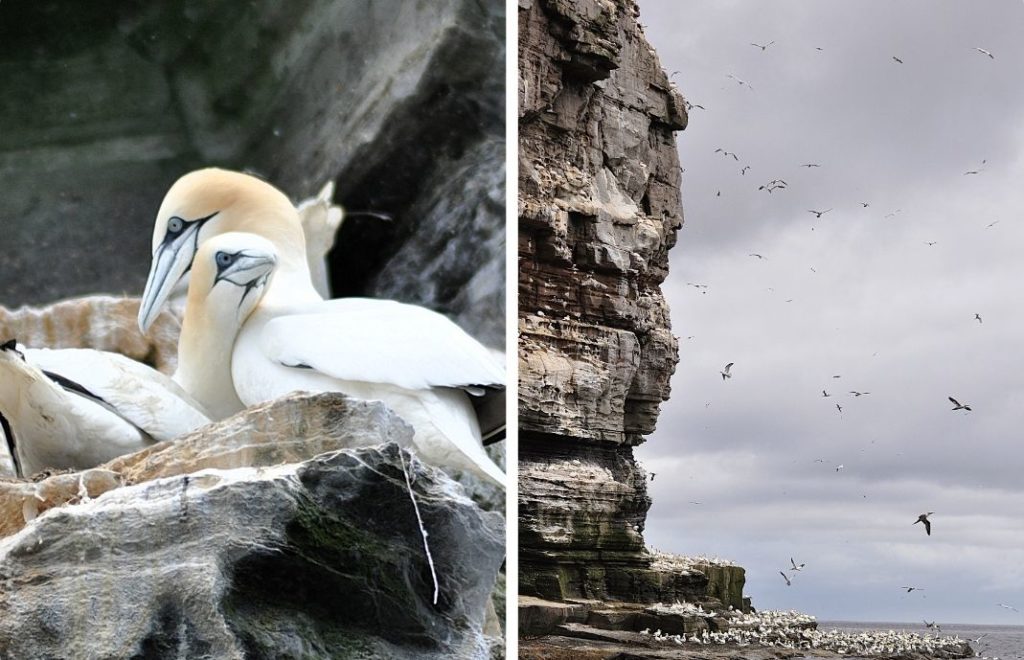
Just beyond Bressay, its rugged twin, lies the island of Noss – a sheer fortress of cliffs rising out of the steel-blue sea. White-tipped waves crest like icing on the restless water, spray leaping high as the boat slices forward. The wind has softened, and the sun strains to pierce a veil of silver clouds. At the helm, our captain steers steadily toward what locals call the bird paradise – home to an astonishing 10,000 seabirds.
The closer we draw, the louder the island hums with life. At first, the growl of the engine drowns it out, but when the captain cuts the motor, the truth rushes in: a raucous, jubilant chorus unlike anything I’ve ever heard. Every cliff, every ledge seems alive – wings flashing, beaks clashing, voices tangling in a wild avian symphony.
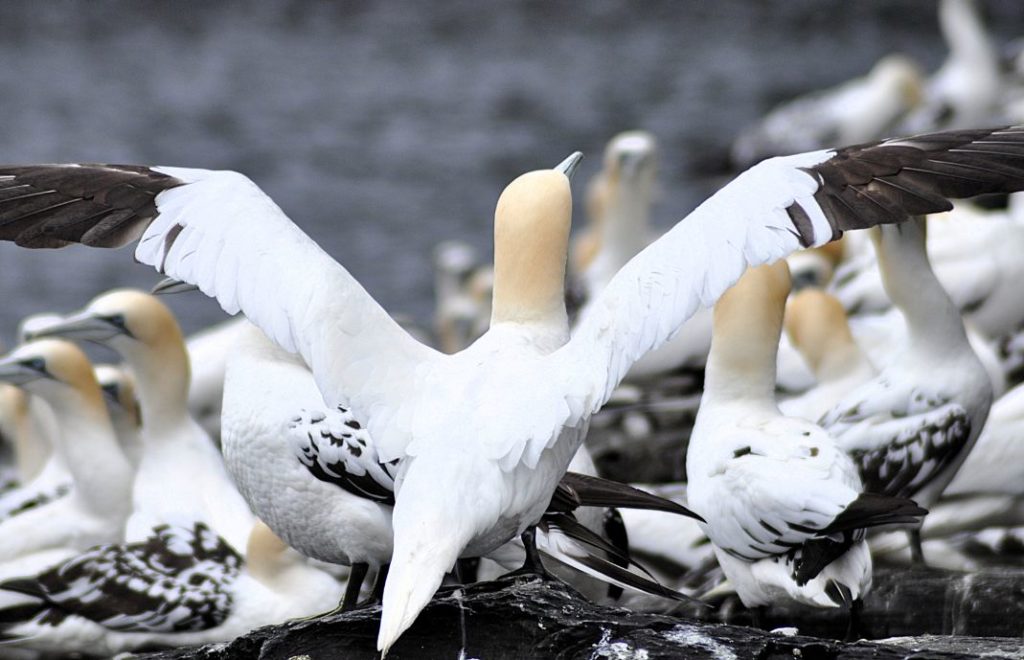
The gannets steal the show. Sleek and muscular, with dagger-like bills and a wingspan built for the hunt, they glide above us like pale torpedoes. During breeding season, their heads and necks glow with a delicate wash of gold – nature’s finest courtship attire. Everywhere I look, pairs flirt and preen, their movements a ballet on the wind, while bachelors strut and posture, flexing their wings in a desperate bid for attention.
Space is precious on these sheer rock faces, and the colonies crowd every inch of the vertical cliffs, their cries echoing like a living tide.
Then comes the true spectacle: the dive. From 45 meters high, a gannet folds its wings tight and plummets, a white streak against the brooding sea. It hits the surface like a spear, slicing into the depths at speeds of up to 100 kilometers per hour. Seconds later, it bursts back into daylight, prize clutched firmly in its razor beak.
Here I sit – no trace of seasickness – utterly spellbound by this raw, untamed theater of life. Around me, the North Atlantic breathes its eternal rhythm, and above, the air thrums with wings. If there’s a moment that defines Shetland’s wild heart, this is it.
Shetland: Wild, rugged, and utterly unforgettable
As a finale to our voyage, the captain noses the boat into a vast sea cave. Here, in the hushed embrace of rock and shadow, the wind fades to nothing. Time seems to pause as we gaze at the cathedral-like walls – sculpted by nature over millions of years – dripping with secrets of tide and stone.
Back in Lerwick, we thank our captain, and I admit with a grin that his record remains intact: not a single seasick passenger today.
Despite a tempestuous arrival, our journey to Shetland has been nothing short of extraordinary. The drama of the North Atlantic – its restless skies, howling winds, and sudden bursts of rain – faded in the glow of what awaited us: breathtaking landscapes, hardy Shetland ponies with manes tousled by centuries of gales, ancient Viking settlements whispering of long-lost worlds, warm island hospitality, and seabird cliffs alive with ten thousand beating wings.
These islands are wild. They are raw. They are beautiful beyond measure. Storms may rage, and Njord may roar – but none of it matters. For those bold enough to venture here, Shetland rewards in ways words can barely capture. This is a land that doesn’t just beg to be seen – it demands to be felt, with the wind in your face and the Atlantic in your veins.
Planning your Shetland adventure
Where in the world?
The Shetland Islands rise from the North Atlantic, just six degrees south of the Arctic Circle – a dramatic, wind-swept archipelago at the very edge of Britain.
The islands at a glance
- Over 100 islands, though only 15 are inhabited.
- A population of about 15,000, three-quarters of whom live on Mainland Island.
- This is a dream destination for nature lovers, birdwatchers, and travelers seeking an off-the-beaten-path escape.
Culture & tradition
Every January, Shetland blazes into life with Up Helly Aa, a spectacular Viking fire festival that honors Norse heritage. Nearly every town hosts its own torchlit procession on the last Tuesday of the month, culminating in the burning of a Viking longship – a sight you’ll never forget.
Getting around
- Best option: Rent a car for maximum flexibility – you’ll want to pull over often for photo stops and pony encounters!
- Local buses reach most major sights, and adventurous travelers can also explore by bicycle.
Where to stay
- Sumburgh: Sumburgh Hotel – perfect for puffin lovers and history buffs.
- Lerwick: Aald Harbour Bed & Breakfast – a cozy base in the island capital.
Unmissable experiences
- Sumburgh Head: Puffin paradise (best viewing: May-July).
- Jarlshof: One of Britain’s most extraordinary archaeological sites, revealing 3,000 years of history.
- Old Scatness: An immersive step back to the Iron Age and Viking era.
- Shetland ponies: Spot them grazing roadside in West Mainland, Tingwall, and Dunrossness – or book The Shetland Pony Experience for an up-close encounter.
- Boat trip to Bressay & Noss: Witness soaring seabirds, dramatic cliffs, and maybe even seals! (I sailed with Shetland Seabird Tours – highly recommended.)