
“Hush! Don’t move. Don’t make a sound.”
Our guide’s voice is low, tense – a sharp contrast to his earlier easy chatter. His face, usually warm and bronzed, has turned a shade paler. Not that I’m in much better shape; after six sunless months in Norway, I started out pale, and now I must look like chalk.
My pulse is hammering so hard I’m convinced it’s audible across the savanna. Eyes wide, breath shallow, I can feel beads of sweat forming on my forehead. Out of the corner of my eye, I catch the driver’s reflection in the rearview mirror. His jaw tight, a single drop of sweat sliding down his freshly shaven cheek.
Slowly, almost imperceptibly, he leans to the left and grips the rifle resting by his seat. A precaution, nothing more, I tell myself. Still, my lungs constrict; I barely dare to breathe. Any sudden move feels like an invitation for chaos.
The cause of this collective stillness?
A two-meter-long predator, weighing roughly 50 kilos, designed for speed and precision, and fueled exclusively by meat. And right now, this apex hunter has chosen our hood as its personal lookout post.
Its amber eyes scan the horizon, tail flicking lazily, every muscle coiled with silent strength. We are inches from raw, untamed Africa – the kind you see in documentaries, except now it’s so close I can count the spots on its fur.
This is not a drill. This is a moment that etches itself into your bones. A heart-stopping, sweat-soaked reminder that out here, we’re just visitors in their world.
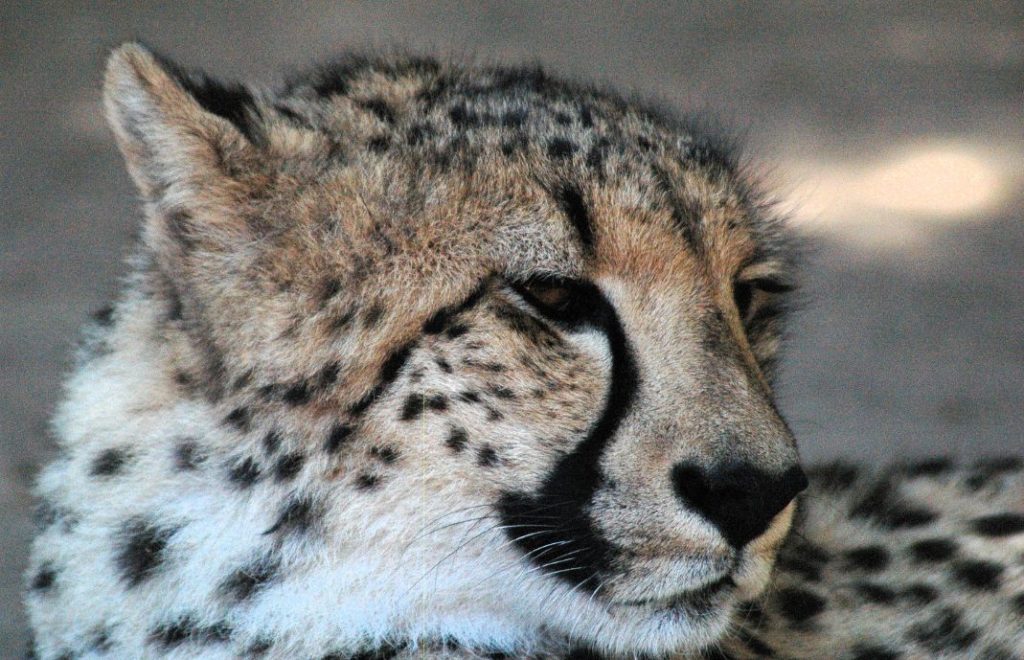
I am just going to take a nap…
My lifelong dream of seeing a cheetah in the wild has just come true. I should be ecstatic, grinning from ear to ear, heart soaring with joy. And yet, here I sit – pulse racing for an entirely different reason.
The magnificent predator I’ve longed to witness has chosen an unexpected resting spot: the hood of our open safari vehicle. Yes, the very car I’m sitting in.
The roof? Removed before departure for “better views.” The only barrier between me and this lean, lethal feline? A single sheet of glass – the windshield. One effortless leap, barely a calorie burned, and those sleek paws would land squarely in my lap. Or worse – around my throat.
I know the facts. Cheetahs are diurnal hunters, visual predators, and masters of precision. I silently pray that today, their extraordinary hunting skills don’t extend to humans.
Then it happens – a jaw-cracking yawn. Rows of razor-sharp teeth gleam in the sunlight, a chilling reminder of just how finely tuned this creature is for the kill. His amber eyes lock onto ours, and for a breathless second, I swear he’s debating whether to break the habit of a lifetime and try something new.
Finally – mercifully – he decides that sleep trumps experimentation. His sleek body relaxes, settling deeper into the warmth of the hood. Relief washes over me, mingled with awe. Inches away, the fastest animal on land dozes peacefully, while my heart pounds like a tribal drum.
Out here, you don’t just observe nature – you surrender to it.
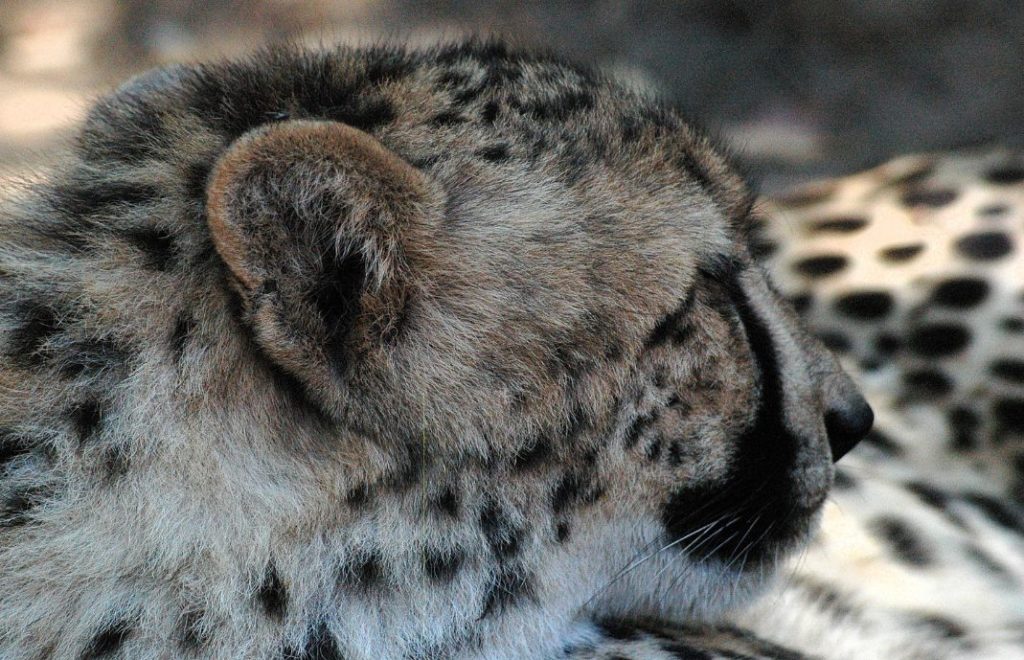
An intense encounter
Slowly, carefully, I raise my camera. My palms are slick, a river of sweat tracing down my spine – but how can I not capture this moment? Four quick clicks, and then… silence. The camera dies, leaving me holding a useless piece of plastic in the face of perfection.
Before me lies a creature of pure design: the cheetah.
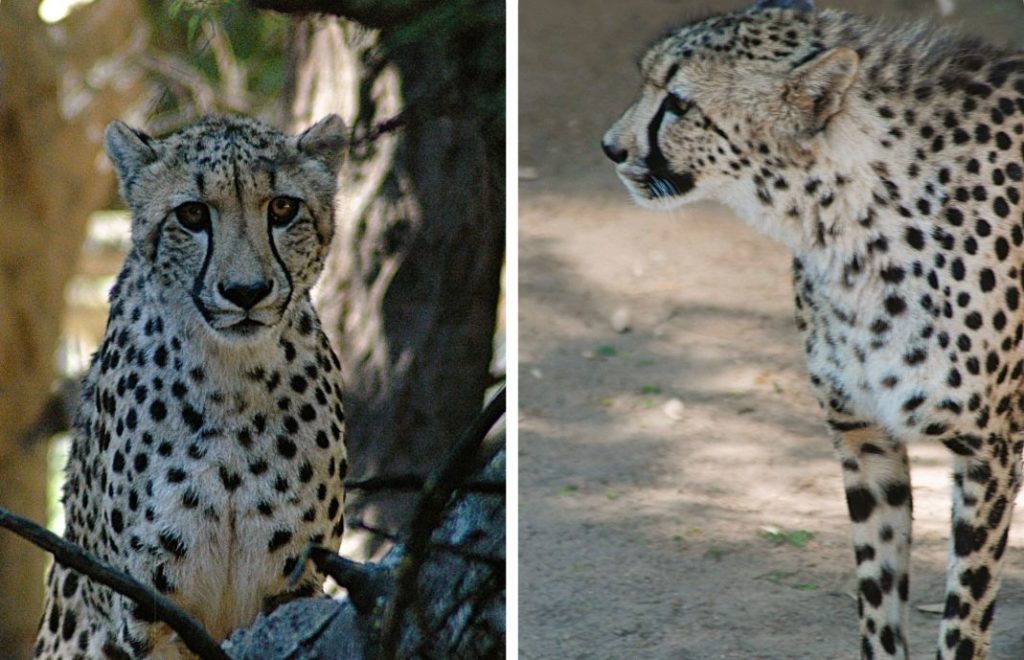
Sleek, streamlined, a living sculpture honed by evolution for one thing – speed. Its frame, all long legs and narrow lines, recalls the elegance of a greyhound, yet cloaked in golden fur adorned with inky black spots. Its head is small and rounded, ears neat, and those iconic dark tear marks sweep down from amber eyes to the corners of its mouth – a built-in sun visor for the African glare.
The tail, long and supple, sways lazily from side to side, stirring up little clouds of dust as it brushes against the side of the vehicle. Its breathing is steady, unhurried, the rise and fall of its slender ribcage hypnotic. Ours, by contrast, is a frantic staccato – hearts pounding, lungs shallow.
And then, with the casual grace of a housecat, it lowers its head onto its paws, eyelids droop, and… it sleeps.
“Must like the hum of the engine,” the driver mutters with a strained smile. His job, after all, is to keep me safe – though at this point, it feels like the cheetah is running the show.
So I surrender. I lean back in my seat, a grin spreading across my face despite the adrenaline still surging through me. Because this – this – is why you come to Africa. For the unplanned, the unscripted, the moments that take your breath away and remind you just how small and fragile you are in the grand scheme of nature.
Today, my wish came true: to get close to Africa’s wild heart. And close I got – closer than I ever dreamed.
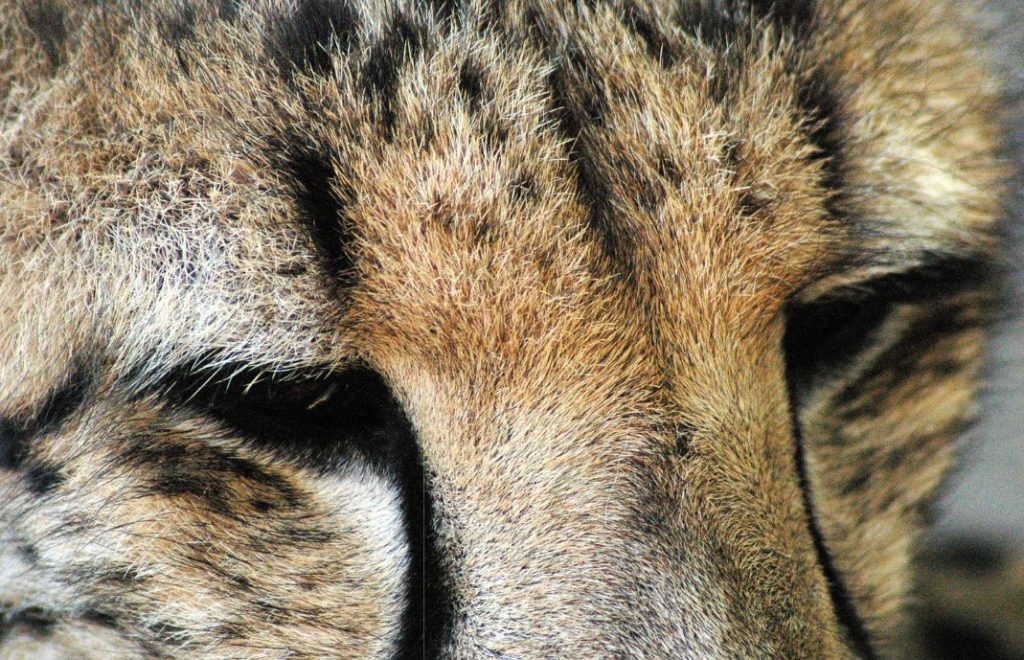
The one who sleeps…
The sun inches across the sky, casting shifting shadows over the golden plains. Nearby, zebras graze unbothered before moving on, their striped silhouettes melting into the grasslands. Overhead, a pair of large birds trace lazy spirals in the air, while elephants lumber in the hazy distance like gray phantoms of the wild.
Time drips away. The hands of my watch tick forward, but our unexpected hood ornament remains blissfully unaware. He snores softly, shifts his head just enough to get comfortable, and slips deeper into feline dreams.
Finally, I whisper the question that’s been building for half an hour:
“So… how do we get him off the car?”
Our guide, arms draped casually over the steering wheel, doesn’t miss a beat.
“You wanted to see a cheetah, right? Can’t get closer than this.”
Fair point – but right now, my priorities have shifted. After nearly an hour, nature is calling loudly, and for once, nature will have to wait. Getting out of the car is not an option, so we sit tight, captives of our own awe and biology.
And then – movement. A stretch, a jaw-cracking yawn, and a lazy glance back at us, as if to say: Thanks for the bed, humans.
In one fluid motion, he springs down from the hood, tail swinging like a royal banner, and pads off into the shimmering savanna. No rush, no fear – just pure, unbothered grace.
In this vast kingdom, he knows who rules. For sixty-five minutes, we shared space with the savanna’s sleek monarch. And as his silhouette fades into the golden horizon, one thought lingers:
There are safari stories – and then there are stories like this.
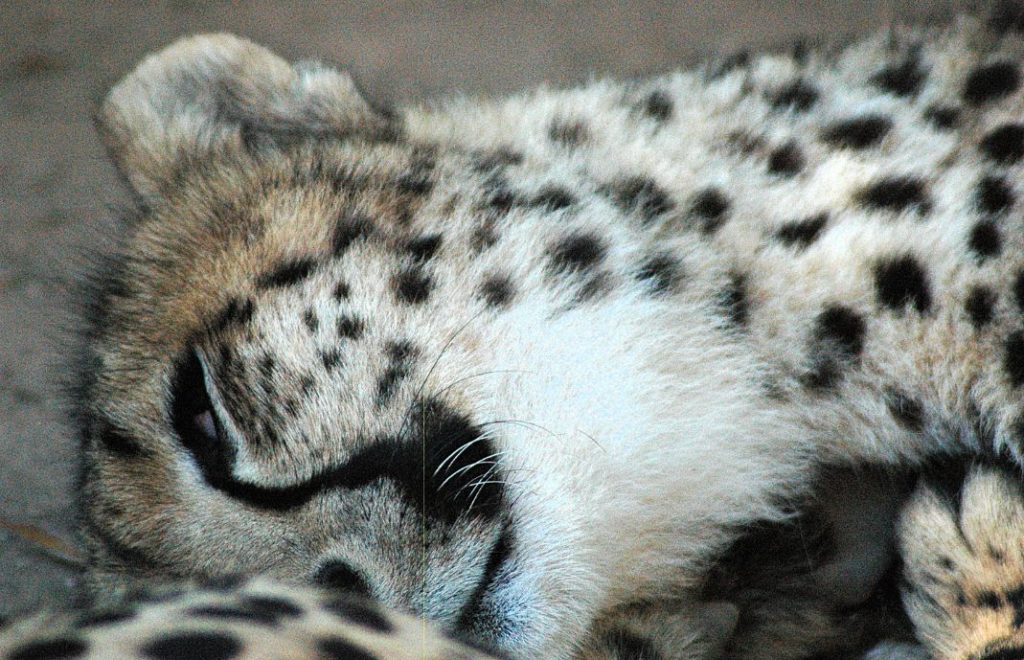
A once-in-a-lifetime encounter
With the cheetah finally gone, our driver eases the jeep into gear and heads back toward the lodge – where, at last, a long-awaited restroom awaits.
Later that evening, the guests gather around the flickering glow of the campfire, voices tumbling over one another as stories of the day spill into the warm night air. The laughter, the gasps, the animated gestures – it’s a symphony of safari memories.
Then we share ours. The words barely leave our lips before the group falls silent, eyes wide, faces glowing in the firelight. A cheetah. On the hood. For sixty-five whole minutes.
Jealous smiles and incredulous murmurs ripple through the circle. Because while every safari is an adventure, this was something else. A chapter that doesn’t belong in an itinerary but in the realm of luck and wild fortune.
As I pack my bag later that night, the weight of the day settles in. This was no ordinary sighting. It was raw, rare, and utterly real. The kind of experience that binds you forever to Africa’s wild heart.
Sometimes, you just get lucky.
Lucky enough to have the savanna’s most elegant hunter stretch out for a nap – on your hood.
Cheetah facts & conservation status
Status: Vulnerable (IUCN Red List)
Estimated global population: 6,500 individuals
Scientific name: Acinonyx jubatus
Family: Felidae (cat family)
Habitat & range
- Found primarily in sub-Saharan Africa and small populations in northeastern Iran.
- Adapted to savanna, steppe, desert, and open woodland habitats where speed and camouflage are key survival tools.
Speed & hunting
- The fastest land animal on Earth, capable of reaching 110 km/h, and can accelerate from 0 to 96 km/h in just three seconds!
- Specializes in hunting small to medium-sized ungulates, using stealth, speed, and precision.
Physical characteristics:
- Length: 175-220 cm (from nose to tail tip)
- Shoulder height: 80-85 cm
- Weight: 50 kg
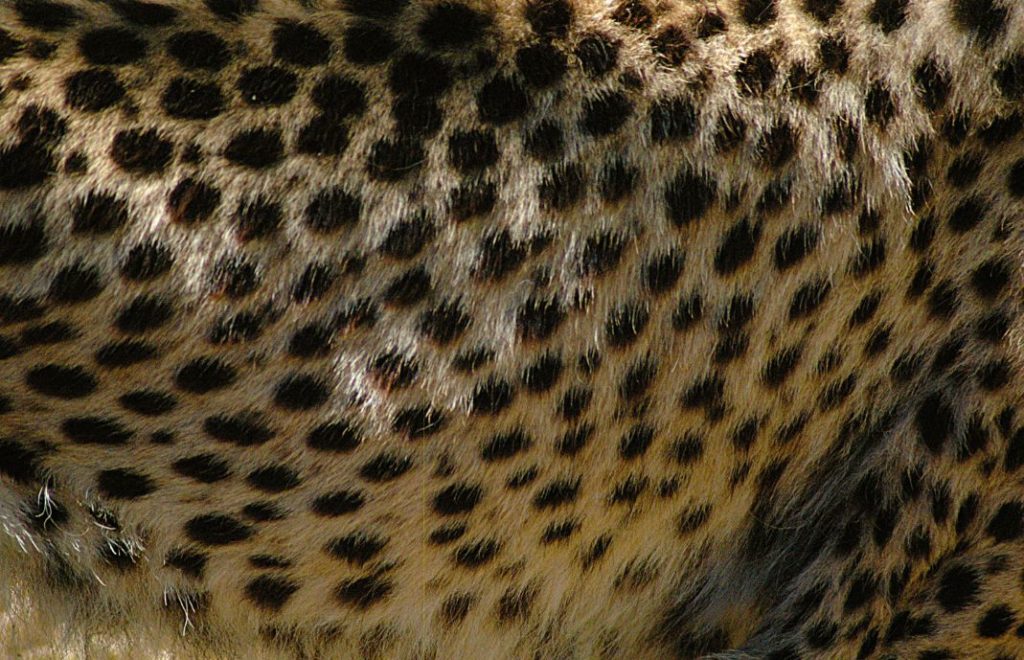
- Coat: Golden-yellow with distinctive black spots; white underbelly
- Dark “tear marks” running from eyes to mouth help reduce glare and improve focus—hence the nickname “the weeping cat”.
- Unlike other big cats, cheetahs have round pupils, semi-retractable claws, and a smaller, more aerodynamic head.
- Tail acts as a rudder for balance during high-speed chases.
Interesting fact
The name “cheetah” originates from the Greek via the Italian word gattopardo, meaning “spotted cat”.
More inspiration to Botswana:
Safari in Chobe National Park
A guide to Chobe National Park
Walking with the San People
Gliding silently in a mokoro
When is the best time to visit Botswana?
