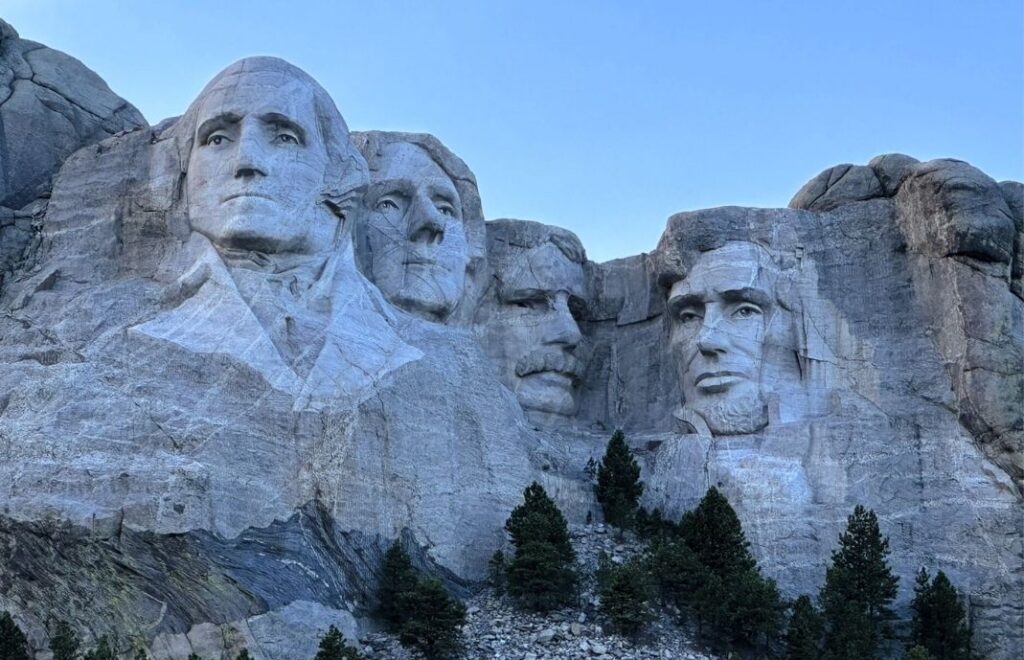
Carved high into the granite cliffs of the Black Hills, Mount Rushmore National Memorial is one of the most iconic and instantly recognizable landmarks in the United States. Featuring the 18 meters (60-foot) faces of George Washington, Thomas Jefferson, Theodore Roosevelt, and Abraham Lincoln, this monumental sculpture draws millions of travelers each year to South Dakota’s rugged wilderness.
But Mount Rushmore is more than a quick photo stop. The memorial is surrounded by scenic trails, historic exhibits, Lakota cultural sites, wildlife-rich landscapes, and winding mountain drives that reveal the true character of the Black Hills. Whether you’re road-tripping through the Great American West or making a dedicated visit, Mount Rushmore offers a fascinating mix of history, artistry, and natural beauty.
This guide will help you plan the perfect visit, from the best viewpoints and walking paths to practical tips, seasonal considerations, and nearby attractions worth exploring.
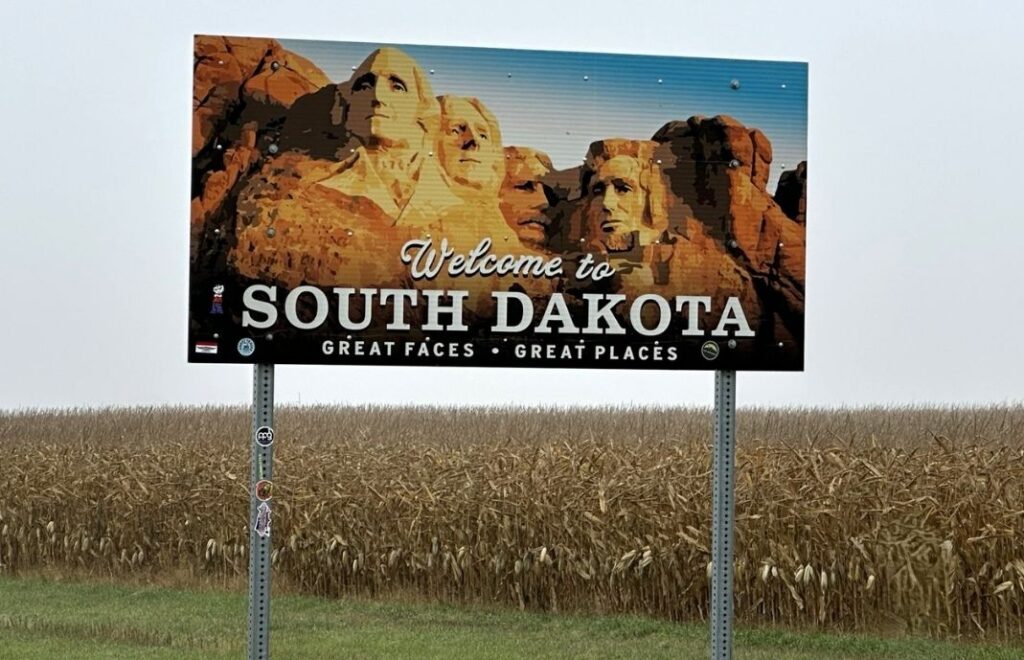
A brief history of Mount Rushmore
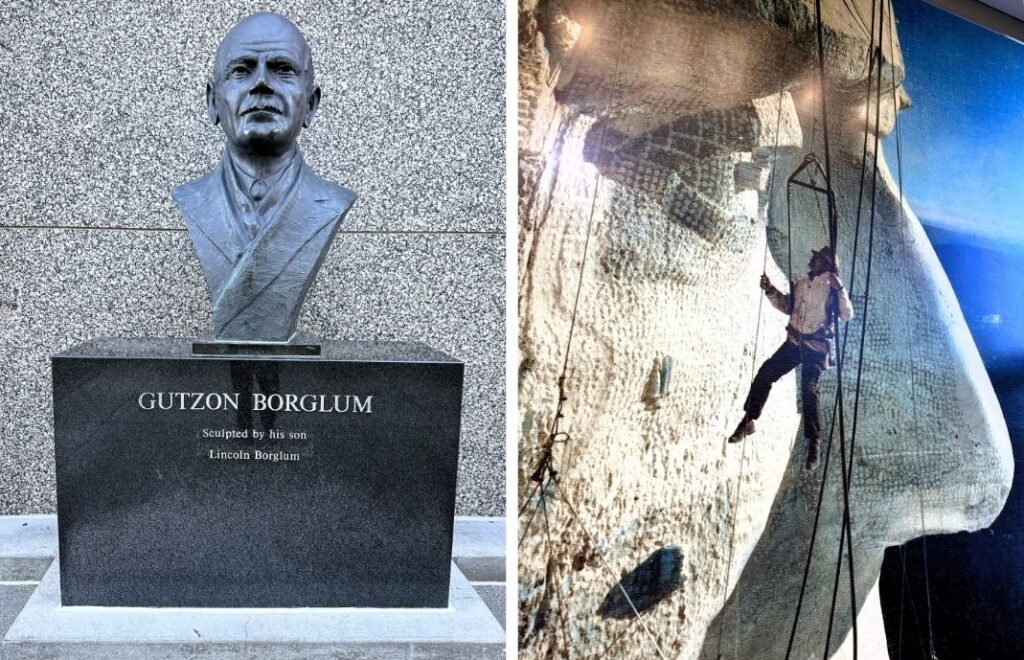
Mount Rushmore began as an ambitious idea to bring tourism to South Dakota’s Black Hills. In 1927, sculptor Gutzon Borglum was commissioned to carve a monumental tribute to four U.S. presidents who shaped the nation: George Washington, Thomas Jefferson, Theodore Roosevelt, and Abraham Lincoln.
Borglum chose Mount Rushmore for its strong granite and dramatic setting, and construction continued – through harsh winters, the Great Depression, and dangerous working conditions – until its completion in 1941.
Over 400 men worked on the project, using dynamite, drills, and hand tools to shape the 60-foot-tall faces we see today. Although originally conceived as a larger sculpture showing torsos and other details, the final version focuses solely on the presidents’ heads.
It’s also important to acknowledge that Mount Rushmore stands on land sacred to the Lakota Sioux, known traditionally as the Paha Sapa (Black Hills). The mountain was taken from the Lakota after the U.S. government violated the Treaty of Fort Laramie (1868) – a history that adds complexity and cultural significance to any visit.
Today, Mount Rushmore remains a symbol of American history, artistic achievement, and ongoing conversation about the land’s heritage.
More inspiration: 40 things you (did not) know about Mount Rushmore
Top things to see at Mount Rushmore
There’s plenty to explore at Mount Rushmore beyond the iconic view from the terrace. These are the must-see features that bring the memorial’s history and landscape to life.
1. The Grand View Terrace
This is Mount Rushmore’s most iconic viewpoint – and the spot where most travelers get their classic photo. From here, you’ll have a direct, unobstructed view of all four presidential faces framed by the rugged Black Hills. It’s also the starting point for several trails and exhibits.
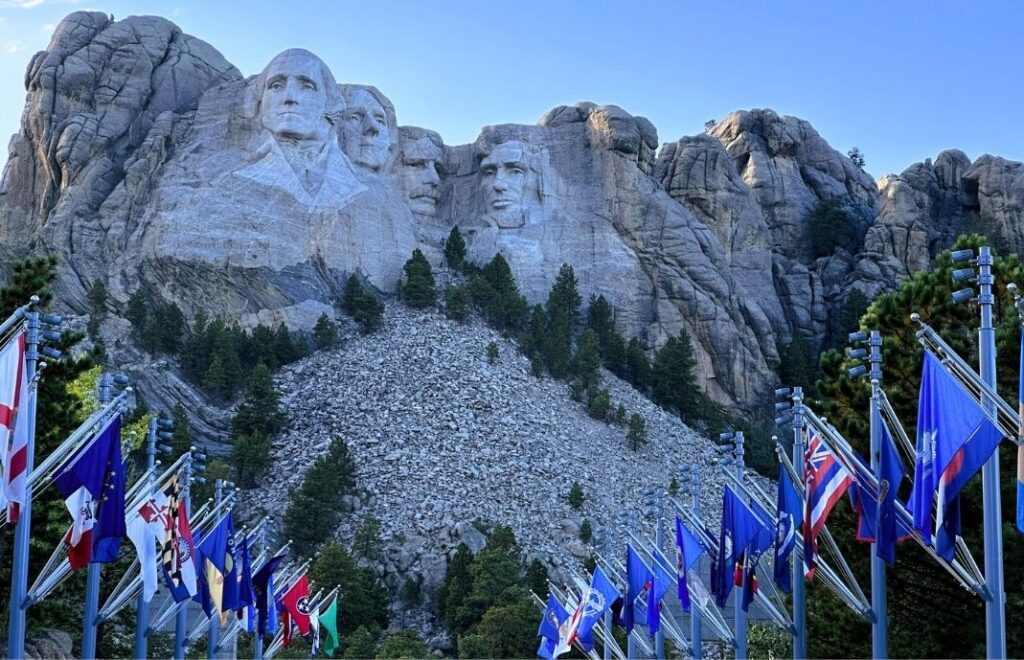
2. The Avenue of Flags
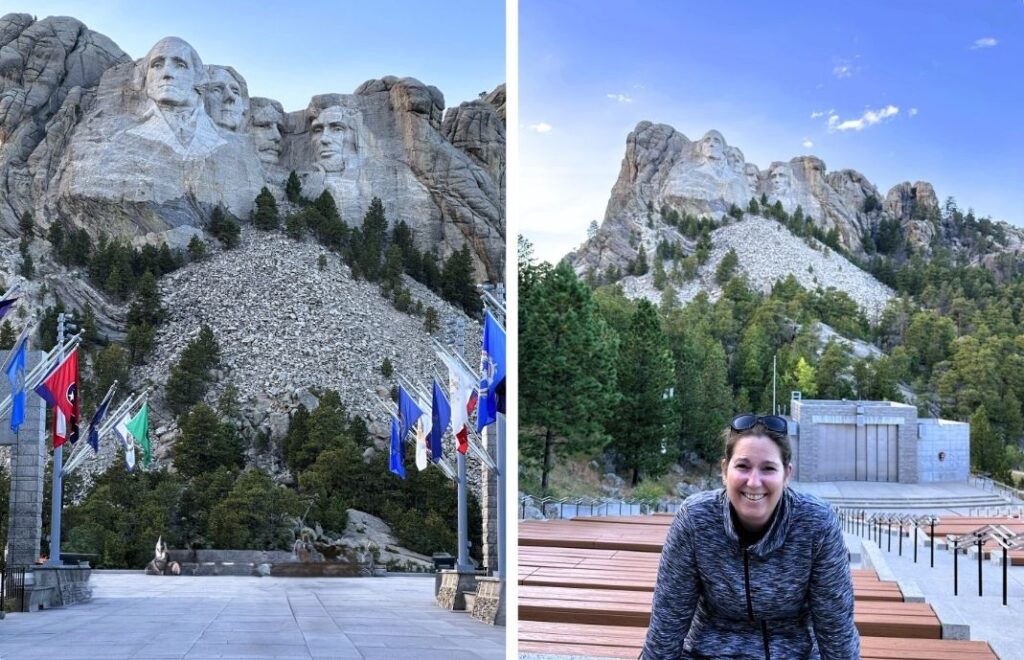
Leading from the main entrance to the Grand View Terrace, this walkway showcases the flags of all 50 U.S. states and several territories. It adds a sense of ceremony to your arrival and provides a dramatic build-up to the memorial itself.
3. The Presidential Trail
This short, scenic loop brings you closer to the mountain than any other path. Parts of the trail wind through forests and boulder fields, offering unique angles and up-close views of the carvings – especially Washington and Lincoln. Expect stairs but rewarding perspectives.
4. The Sculptor’s Studio
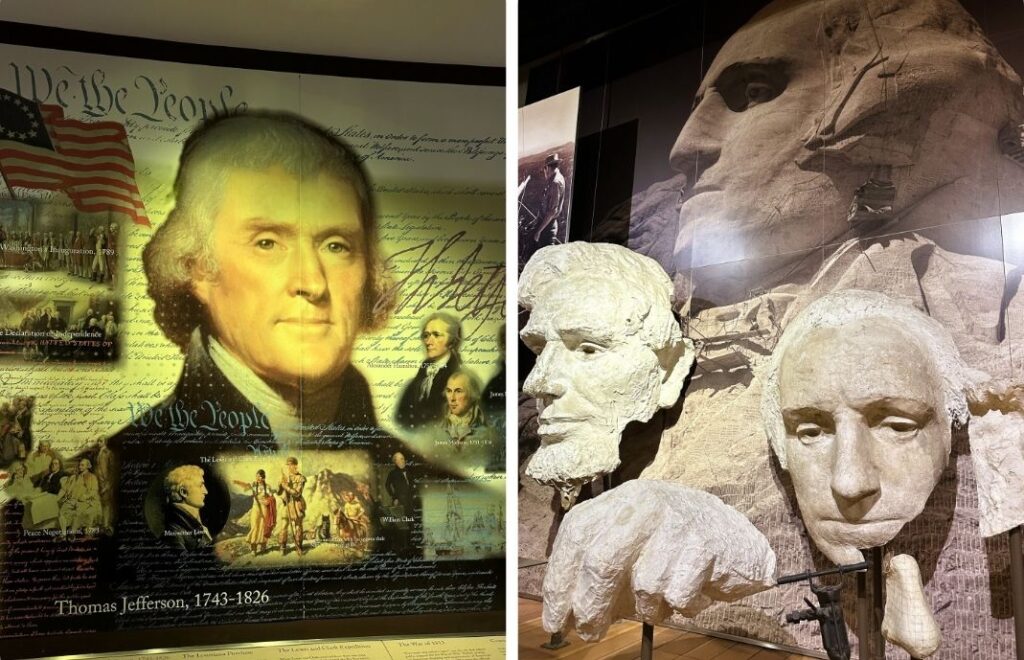
Located along the Presidential Trail, this is where Gutzon Borglum worked on many design elements of the monument. Inside, you’ll find scale models, tools, and historical exhibits explaining how the sculpture was carved. It’s one of the most fascinating parts of the visit.
5. The Lincoln Borglum Visitor Center
This main visitor center provides a deeper understanding of the memorial through films, interpretive exhibits, historic photographs, and ranger talks. It’s an excellent place to learn about the engineering, artistry, and political context behind the monument.
6. The Evening Lighting Ceremony
Held nightly during summer, this powerful program includes a short film, ranger presentation, and the dramatic illumination of the monument. It’s a memorable way to experience Mount Rushmore and a highlight for many visitors.
7. The Sculptor’s Studio Overlook
Slightly off the main path, this vantage point offers one of the best lower-angle views of the carvings, making it ideal for photographers. It tends to be less crowded than the Grand View Terrace.
8. Wildlife viewing around the memorial
The surrounding forest is home to mountain goats, deer, marmots, and birds of prey. While wildlife sightings aren’t guaranteed, early mornings and evenings offer your best chances.
Best viewpoints & walking trails
1. Grand View Terrace
The most iconic viewpoint at Mount Rushmore, Grand View Terrace offers a sweeping, perfectly centered look at all four presidential faces. It’s the ideal spot for classic photos and sunrise or sunset views.
2. Presidential Trail
This 1-kilometer (0.6-mile) loop is the closest you can get to the carvings on foot. The trail takes you through pine forests, past granite formations, and directly beneath the sculpture, offering unique angles – especially of Washington and Lincoln. Expect stairs but rewarding views throughout.
3. Sculptor’s Studio Overlook
A quieter viewpoint that many visitors miss, this overlook sits near the historic studio where Gutzon Borglum worked. From here, you’ll get one of the best low-angle perspectives of the monument -perfect for photographers seeking a fresh composition.
4. Avenue of Flags View
As you walk through the Avenue of Flags, the memorial gradually comes into view, framed by the flags of all 50 states. It’s a dramatic approach and a great mid-distance viewpoint.
5. Borglum Viewpoint (Amphitheater Area)
Located just below Grand View Terrace, this area offers a slightly lower angle and is especially atmospheric during the evening lighting ceremony. It’s a great place to sit, observe, and take in the scale of the sculpture.
6. Nature Trail to the parking lot
A short, shaded trail leading from the Visitor Center to the parking area, this path offers peaceful forest views and an occasional glimpse of wildlife. It’s not a major viewpoint, but it adds a scenic touch if you’re looking to extend your walk.
Practical visitor information
A visit to Mount Rushmore is easy to navigate with a little preparation. These practical details will help you make the most of your time at the memorial.
Location
Mount Rushmore National Memorial, Keystone, South Dakota.
Located in the heart of the Black Hills, about 30 minutes from Rapid City.
Hours of operation
The memorial is open year-round, including holidays.
- Visitor facilities have seasonal hours, typically longer in summer.
- The grounds are open from early morning until late evening.
Tip: Check the National Park Service website for updated seasonal schedules.
Entrance fees
Free entry to the memorial.
Parking fee: A one-time charge that covers your vehicle for the entire year.
(No national park pass required and no additional fees inside the site.)
Parking & accessibility
Multi-level parking structure located near the entrance. Spots fill fastest in late morning and midday during summer.
The main viewing areas, terrace, visitor center, and trails are largely accessible, though some sections of the Presidential Trail include stairs.
Visitor Center & services
- Lincoln Borglum Visitor Center with exhibits, a movie, and ranger programs
- Gift shop and Carvers’ Café for food and souvenirs
- Restrooms available throughout the grounds
- Water refill stations (seasonal)
Best time to visit
Early morning or late afternoon for fewer crowds and softer lighting.
Summer evenings feature the popular Lighting Ceremony, a highlight for many visitors.
How much time do you need
Most travelers spend 1.5 to 2.5 hours exploring the memorial.
Add extra time if you plan to hike the Presidential Trail.
Weather tips
The Black Hills can change quickly – bring layers.
Afternoon thunderstorms are common in summer.
Winter temps can be severe, but the memorial stays open.
Nearby attractions
Mount Rushmore is just the beginning of what the Black Hills have to offer. These nearby attractions are easy additions to your itinerary and showcase the region’s most stunning landscapes and cultural landmarks.
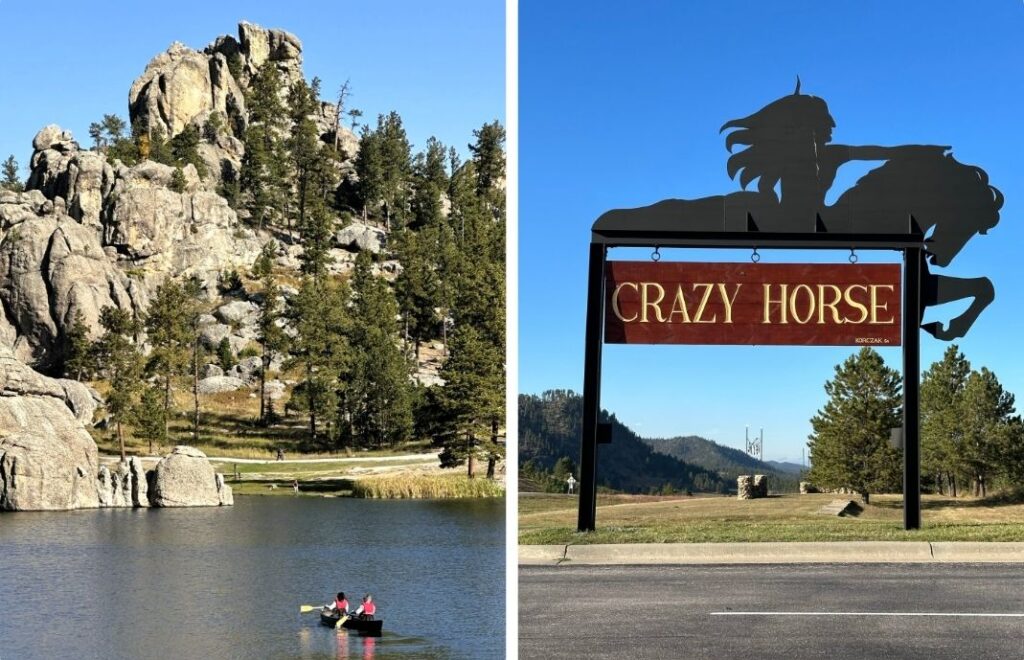
1. Custer State Park
Just a short drive south of Mount Rushmore, Custer State Park is one of the most spectacular wildlife and scenic areas in the American West. Its rolling prairies, granite spires, and clear mountain lakes make it a must-visit.
Don’t miss Wildlife Loop Road, where bison herds, pronghorn, burros, and prairie dogs roam freely.
For stunning landscapes, explore Sylvan Lake, Needles Highway, or Black Elk Peak, the highest point in South Dakota.
2. Crazy Horse Memorial
Located only 20 minutes from Mount Rushmore, the Crazy Horse Memorial is the world’s largest ongoing mountain carving – and an important cultural site honoring the Lakota leader Crazy Horse. Although still under construction, the scale of the sculpture is breathtaking. The on-site Indian Museum of North America and Native American Cultural Center add depth, context, and powerful storytelling to any visit.
Evening laser light shows are offered in summer.
3. Needles Highway
One of the most scenic drives in the Black Hills, Needles Highway (SD-87) winds through narrow granite tunnels, sharp rock formations, forests, and spectacular overlooks. Famous stops include the Needles Eye and Cathedral Spires – towering rock pinnacles carved over millions of years. The road is especially beautiful at sunrise or late afternoon.
Plan extra time: the curves are slow, but the views are incredible.