
In the leafy suburb of Lang’ata, just a short drive from Nairobi’s bustling center, a group of graceful giraffes has become one of Kenya’s most beloved ambassadors. The Giraffe Center isn’t just a place to admire these towering icons of Africa – it’s a heartwarming encounter with conservation in action. Here, visitors can stand eye-to-eye with the endangered Rothschild’s giraffe and feed them by hand. You will also learn how a small idea grew into one of Kenya’s most inspiring wildlife success stories.
Established by the African Fund for Endangered Wildlife (AFEW) in 1979, the Giraffe Center was created to protect and reintroduce the Rothschild’s giraffe to the wild after its numbers had fallen to near extinction. Today, the center combines education, conservation, and pure delight – giving guests the rare chance to connect with wildlife in a way that’s both personal and purposeful.
From the moment you step onto the elevated feeding platforms and feel a gentle nudge from a curious giraffe, you realize this is more than a tourist stop. It’s a reminder of how close humans and nature can be – and how every encounter can help preserve Kenya’s wild heritage for generations to come.
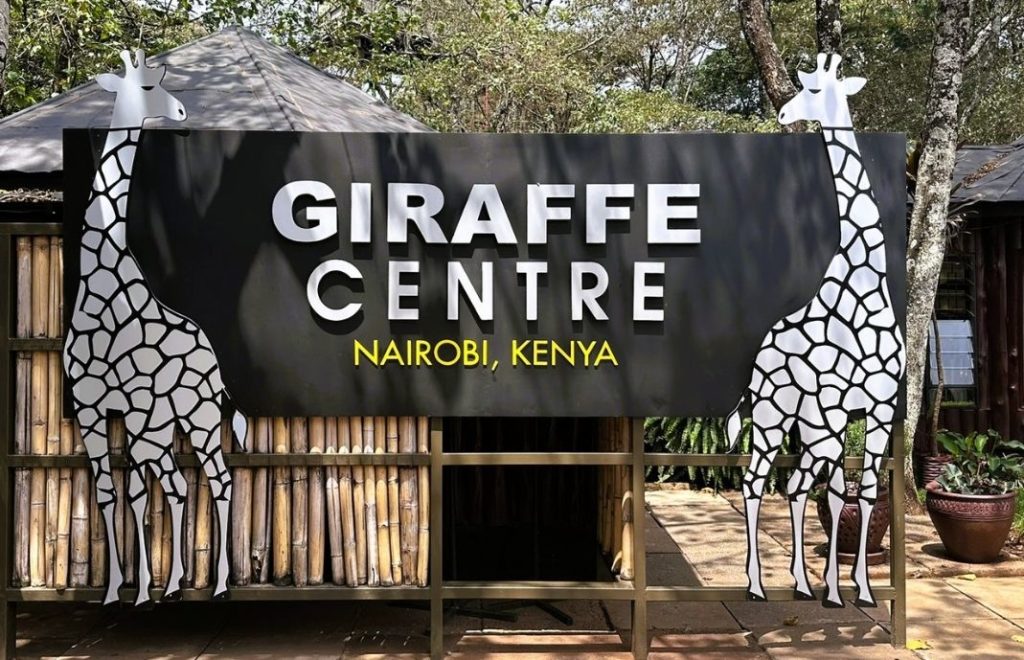
How to get to the Giraffe Center
Reaching the Giraffe Center is refreshingly easy – one of the many reasons it’s a must-visit while in Nairobi. Located in the peaceful suburb of Lang’ata, about 20 kilometers (12 miles) southwest of the city center, the journey takes roughly 30 to 40 minutes by car, depending on traffic.
Most visitors choose to travel by private taxi, rideshare (such as Bolt or Uber), or organized tour, all of which can pick you up directly from your hotel. The route passes through leafy neighborhoods and often combines well with visits to nearby attractions like the Sheldrick Wildlife Trust (Elephant Orphanage) or Karen Blixen Museum – making it ideal for a half-day excursion.
For those who prefer independence, renting a local driver for the day offers flexibility to explore Lang’ata’s scenic surroundings at your own pace.
The Giraffe Center is open daily from 9:00 AM to 5:00 PM, including weekends and public holidays. It’s best to arrive early in the morning or late in the afternoon when the crowds are lighter and the giraffes are most active.
Once you arrive, you’ll step into a sanctuary of tall acacias, bird calls, and gentle giants. This is a serene contrast to Nairobi’s urban rhythm and an easy reminder of just how close the wild still is.
What to expect
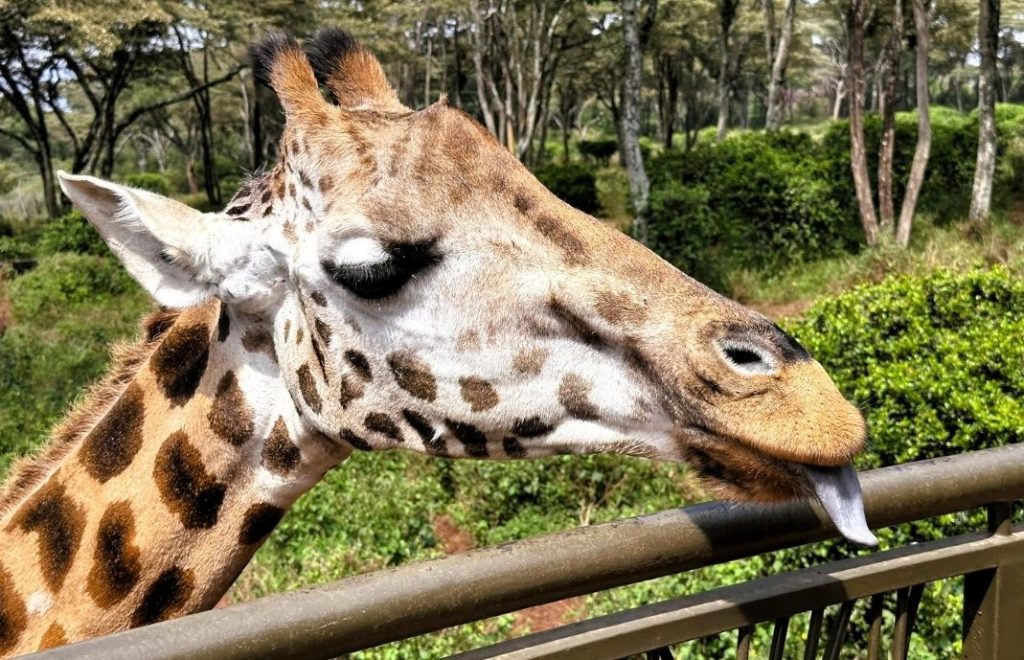
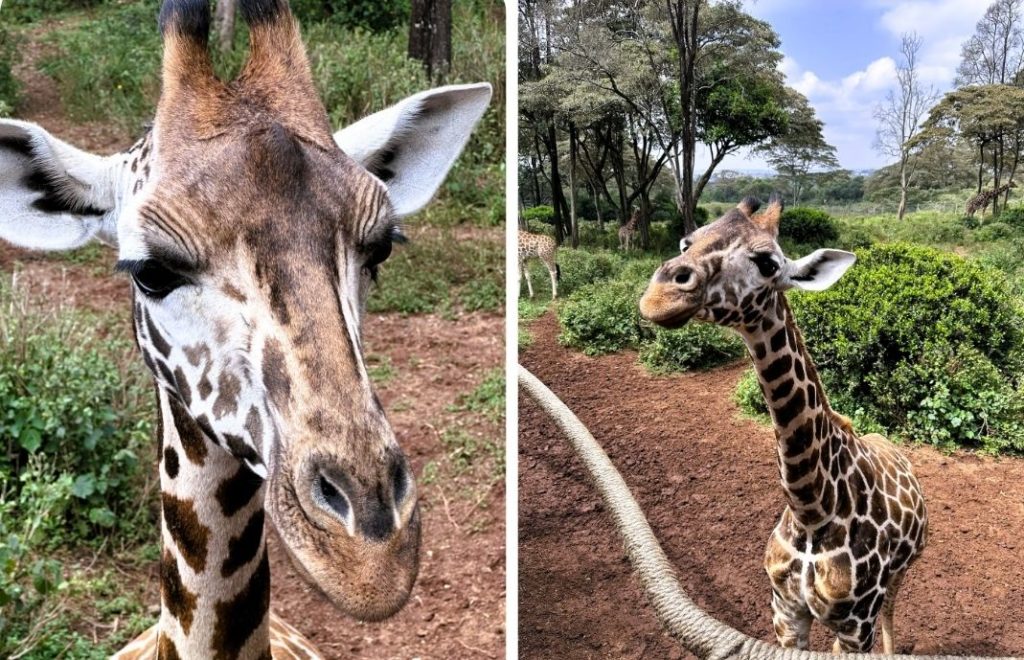
A visit to the Giraffe Center is unlike anything else in Nairobi – intimate, joyful, and surprisingly moving. The moment you step onto the shaded grounds, you’re greeted by the sight of towering Rothschild’s giraffes strolling gracefully across the lawns or leaning curiously toward the elevated feeding platform. Within minutes, you’re eye-to-eye with one of Africa’s most iconic animals.
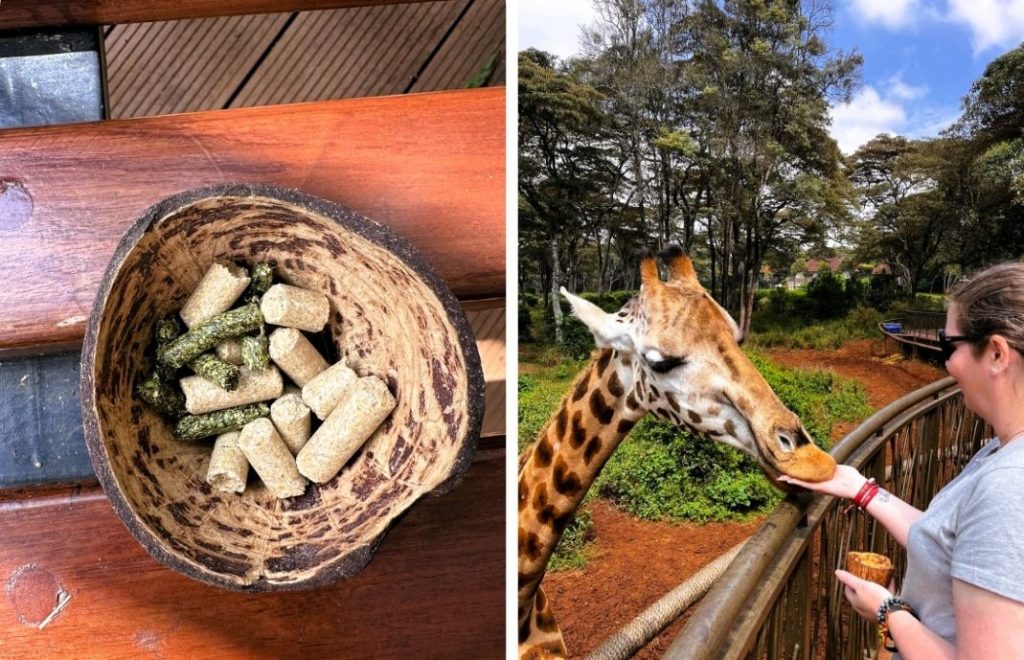
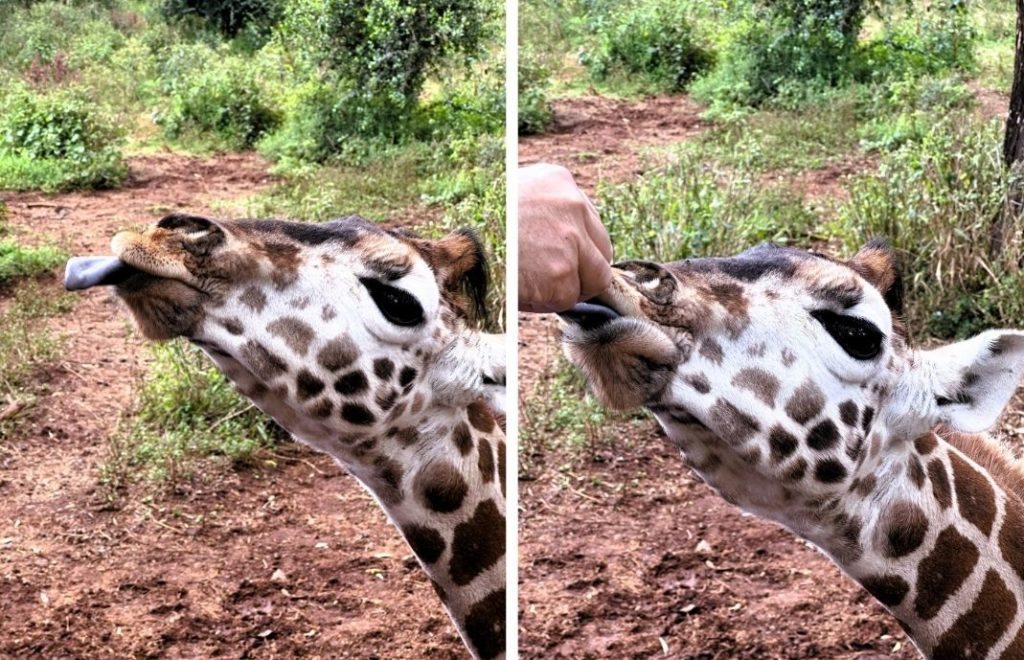
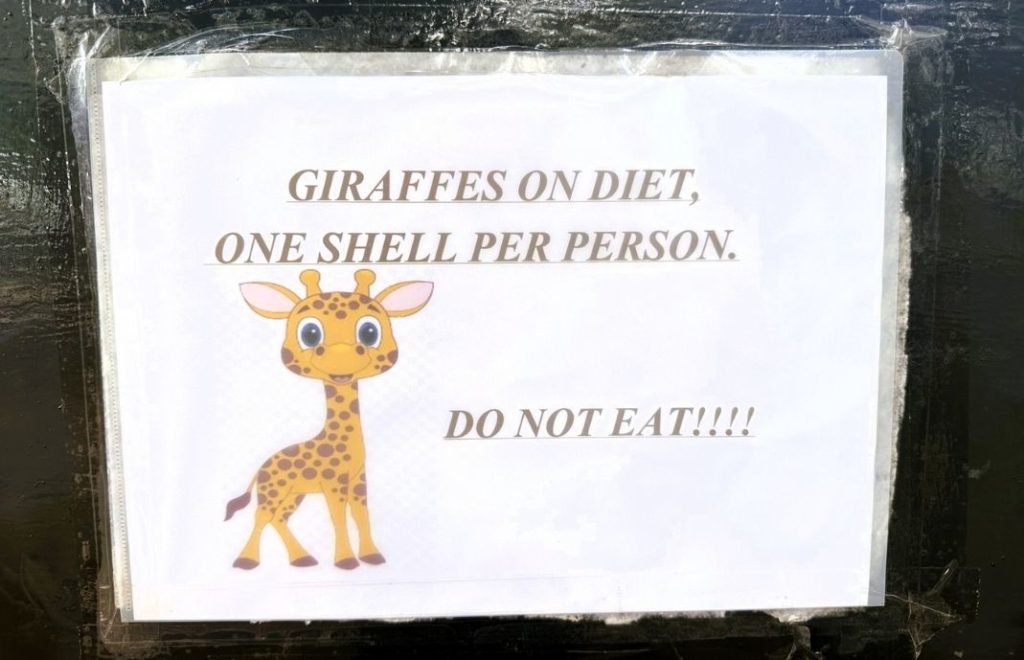
The main attraction is the feeding deck, where visitors can hand-feed the giraffes specially formulated pellets made from grass, wheat, and molasses. It’s a rare chance to experience their gentle nature up close. You’ll be amazed by the slow blink of long lashes, the velvet nudge of a soft nose, and, yes, the famous long, purple tongue reaching delicately for your hand.
Beyond the excitement of feeding, the Giraffe Center is also an inspiring education and conservation hub. The knowledgeable staff share stories about the endangered Rothschild’s giraffe, explaining how careful breeding and reintroduction programs have helped restore their population in protected areas across Kenya. Interpretive signs and guided talks make the visit both fun and meaningful – especially for families or travelers interested in wildlife conservation.
The surrounding grounds offer nature trails, shaded gardens, and birdwatching spots, where you might glimpse warthogs grazing or colorful tropical birds flitting through the trees. And for those wanting a deeper experience, the nearby Giraffe Manor, a boutique hotel famous for its free-roaming giraffes, offers a glimpse of what living alongside these elegant creatures truly feels like.
A visit here lasts about an hour or two – but the feeling of standing face-to-face with a giraffe, its calm eyes meeting yours, tends to linger much longer. It’s a gentle reminder of how small gestures of protection and awareness can make a world of difference.
History and conservation
The story of the Giraffe Center is one of vision, compassion, and quiet triumph – proof that determined individuals can change the course of a species’ future.
It all began in the 1970s, when Jock and Betty Leslie-Melville, a Kenyan couple with a deep love for wildlife, discovered that the Rothschild’s giraffe – one of Africa’s rarest giraffe subspecies – was on the brink of extinction. Fewer than 130 individuals remained in the wild, their habitats along the western Kenyan border steadily disappearing.
Determined to act, the Leslie-Melvilles brought two young giraffes to their home in Lang’ata, just outside Nairobi. There, they began a breeding and protection program, nurturing the animals in safety while raising awareness about their plight. What started as a private conservation effort soon evolved into something much larger.
In 1979, they established the African Fund for Endangered Wildlife (AFEW), and with it, the Giraffe Center – a place where conservation could meet education and community engagement. Their goal was simple but profound: to save the Rothschild’s giraffe while inspiring Kenyans and international visitors alike to care for their country’s wildlife.
Conservation that works
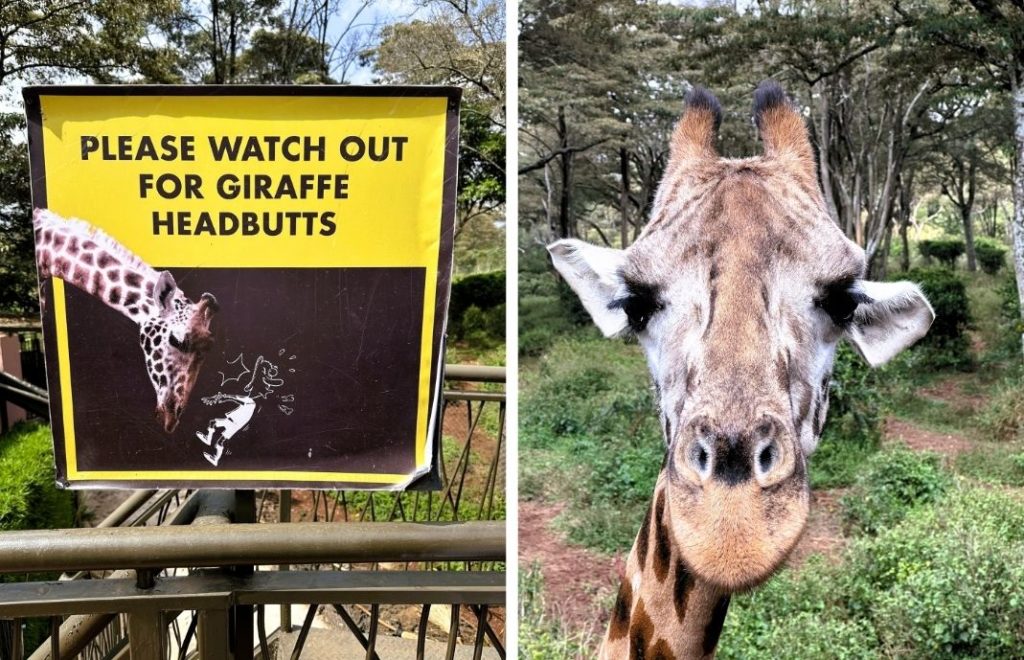
The results have been extraordinary. Since then, hundreds of giraffes have been successfully bred and reintroduced into protected areas across Kenya, including Lake Nakuru National Park, Ruma National Park, and Soysambu Conservancy. The Rothschild’s giraffe population, once critically endangered, is now recovering – a direct result of the Center’s decades-long dedication.
Today, the Giraffe Center continues to fund environmental education programs for thousands of Kenyan schoolchildren each year, ensuring that future generations grow up understanding the value of wildlife conservation.
So, while most visitors come for the thrill of meeting a giraffe face-to-face, they leave with something deeper – the knowledge that every entrance ticket, every handful of feed, and every moment of wonder contribute to the survival of a species that almost vanished.
Practical information
The Giraffe Center in Nairobi is open year-round, and its close proximity to the city makes it one of Kenya’s most accessible wildlife experiences. That said, knowing when to go – and how to make the most of your visit – can turn a fun outing into an unforgettable encounter.
The best time to visit is during the dry seasons, from June to October and December to February, when Nairobi enjoys warm, sunny weather and clear skies. These months are perfect for outdoor exploration, and the giraffes are typically more active during the cooler hours of the morning and late afternoon.
To enjoy a more personal experience, try to arrive early in the morning (around 9:00 AM) or later in the day, when the crowds thin out and the giraffes are most eager to interact. Midday can be busier, especially on weekends and during school holidays.
Entry & opening hours
Open daily
9:00 AM – 5:00 PM (including weekends and public holidays).
Entrance fee
Approximately KES 1,500 (about USD 10) for non-resident adults; discounted rates for Kenyan citizens and children apply.
Tickets
Can be purchased at the gate. Payment by cash or card.
Travel tips
Here’s a few tips to make your visit even better:
- Combine your visit with nearby attractions such as the Sheldrick Wildlife Trust (Elephant Orphanage) or the Karen Blixen Museum – all within a short drive.
- Wear comfortable shoes and sun protection – you’ll spend most of your time outdoors.
- Bring a camera or smartphone – the elevated platform offers incredible photo opportunities.
- Respect the animals – feeding is encouraged but always use the provided pellets and follow staff guidance.
Whether you’re stopping by before a safari, spending a weekend in Nairobi, or introducing your children to Kenya’s wildlife for the first time, the Giraffe Center offers one of the city’s most charming and meaningful experiences. This unique place is also a reminder that conservation begins not in the wilderness, but in the small, shared moments between people and nature.
More inspiration to Nairobi:
Meet Dumbo
Safari in Nairobi National Park
A guide to Nairobi National Park
Why you must visit the Ivory Burning Site
