
Deadwood is a town where history doesn’t sit quietly in the background. It lingers in the streets, the buildings, and the stories that refuse to fade. Tucked into the Black Hills of South Dakota, Deadwood rose quickly during the gold rush era, drawing gamblers, outlaws, lawmen, and dreamers chasing fortune and survival in equal measure.
Today, Deadwood invites visitors to step into a place where myth and reality are deeply intertwined. Its appeal lies not only in famous names and dramatic events, but in the way the town has preserved its identity while adapting to the present.
Visiting Deadwood is about understanding the frontier spirit that shaped the American West and experiencing a historic town that continues to embrace its past rather than distance itself from it.
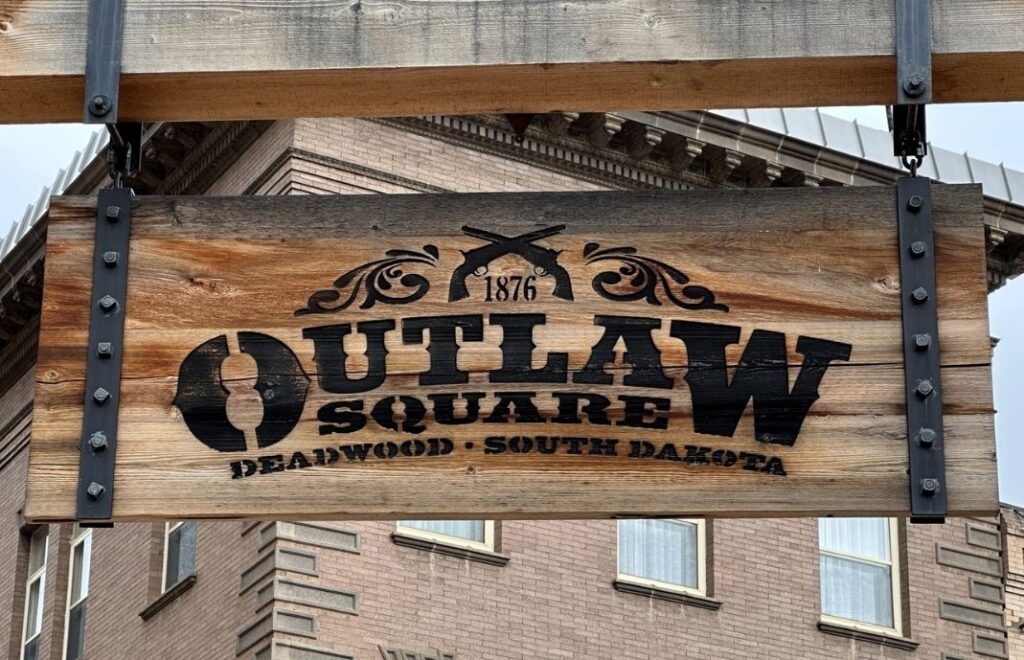
The Gold Rush origins of Deadwood
Deadwood’s story begins with gold. In the mid-1870s, the discovery of gold in the Black Hills triggered a rapid and chaotic rush into the area, despite it being sacred land to the Lakota people and officially closed to settlement. Prospectors, miners, and fortune-seekers poured in almost overnight, transforming a quiet valley into a booming frontier town.
The speed of Deadwood’s growth shaped its character. With little formal law in place, the town developed a reputation for risk, excess, and opportunity, attracting those willing to gamble everything for a chance at wealth. Saloons, gambling halls, and makeshift businesses lined the muddy streets, creating a rough-edged settlement driven by ambition and survival. These gold rush origins laid the foundation for Deadwood’s enduring legend – a place born out of defiance, urgency, and the relentless pursuit of possibility.
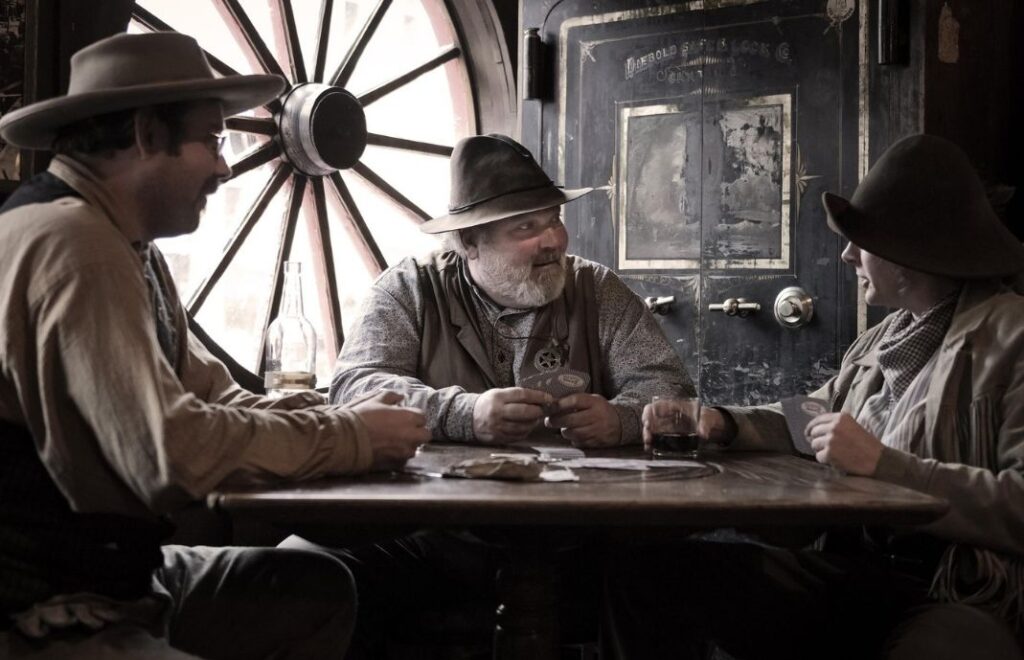
Legends and larger-than-life characters
Deadwood is inseparable from the figures who helped shape its reputation. The town became a magnet for gamblers, gunfighters, entrepreneurs, and outlaws. People whose lives blurred the line between history and legend. Their stories, often dramatic and sometimes violent, contributed to Deadwood’s enduring mystique as a place where fortunes were made and lost just as quickly.
What makes these characters so compelling is not just their notoriety, but the way their lives reflect the unpredictability of the frontier. Deadwood was a place that rewarded boldness and punished hesitation, and the personalities drawn to it embodied that reality. Today, their stories remain woven into the town’s identity, giving Deadwood a narrative depth that feels cinematic yet firmly rooted in real events.
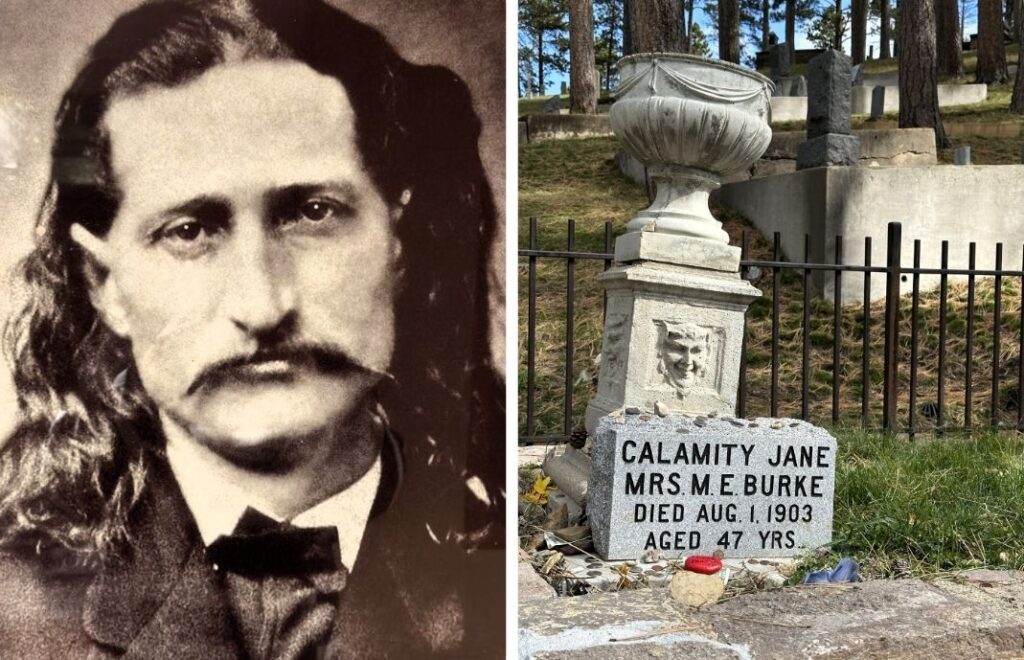
These are the figures that genuinely shaped the town and its reputation:
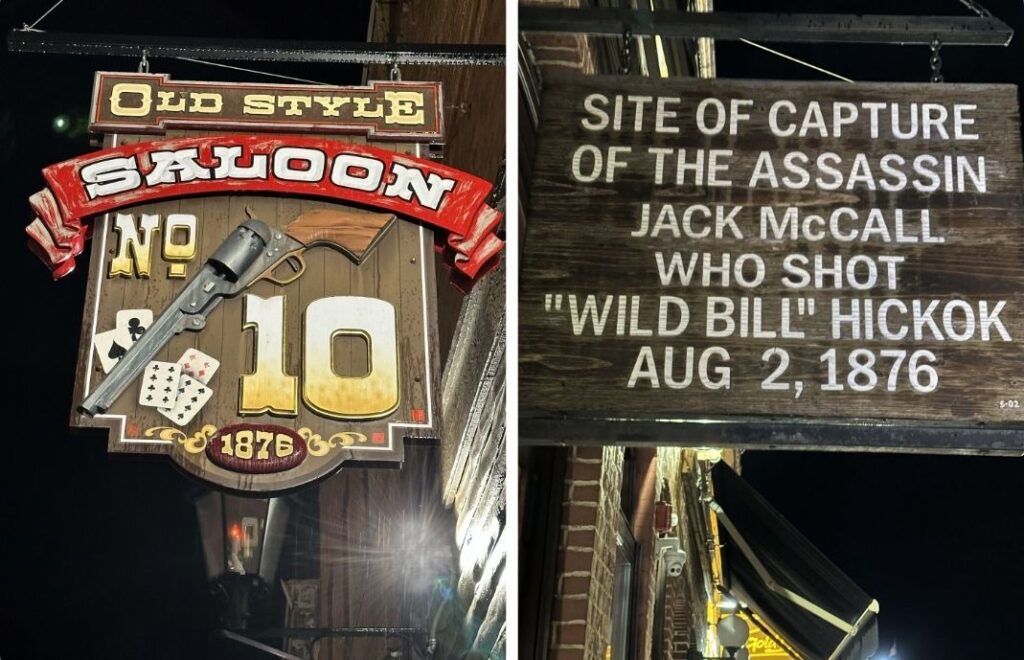
- Wild Bill Hickok – A lawman, scout, and gambler whose death in Deadwood became one of the most famous moments of the American frontier.
- Calamity Jane – A complex and often mythologized figure whose life blurred facts and folklore, closely tied to Deadwood’s identity.
- Seth Bullock – One of Deadwood’s first sheriffs, known for bringing order to a chaotic town and later becoming a respected civic leader.
- Al Swearengen – A powerful and controversial businessman who played a central role in Deadwood’s early economy and politics.
- Charlie Utter – A businessman and close associate of Wild Bill Hickok, representing the entrepreneurial spirit of the gold rush era.
- Martha Canary – Often included separately in historical records, highlighting the divide between legend and documented history.
More inspiration: Wild Bill Hickok & Calamity Jane: Between legend and reality
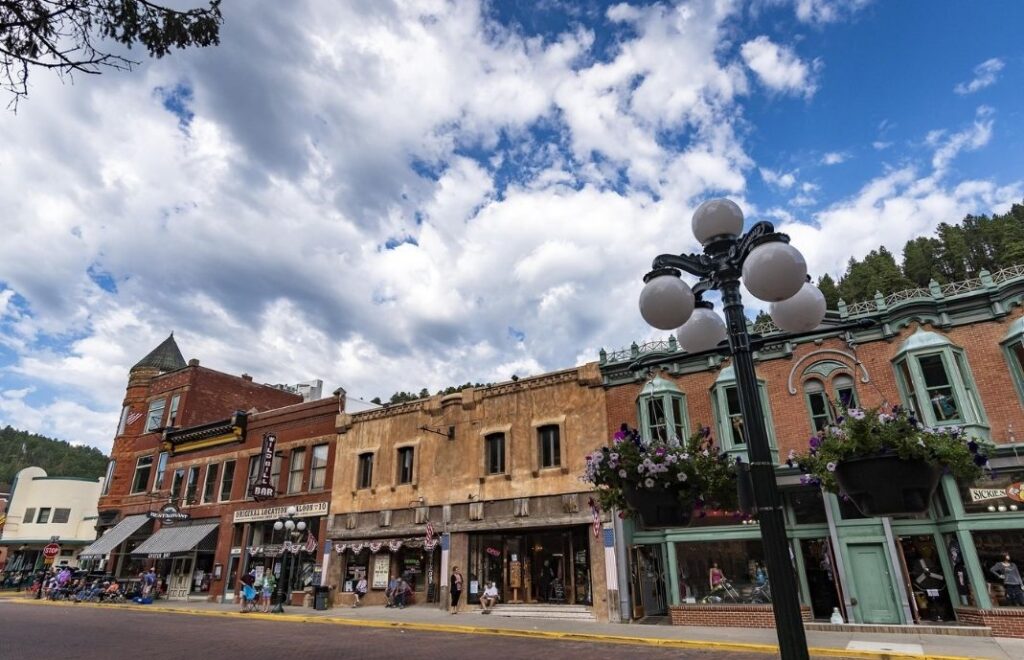
Historic streets and preserved buildings
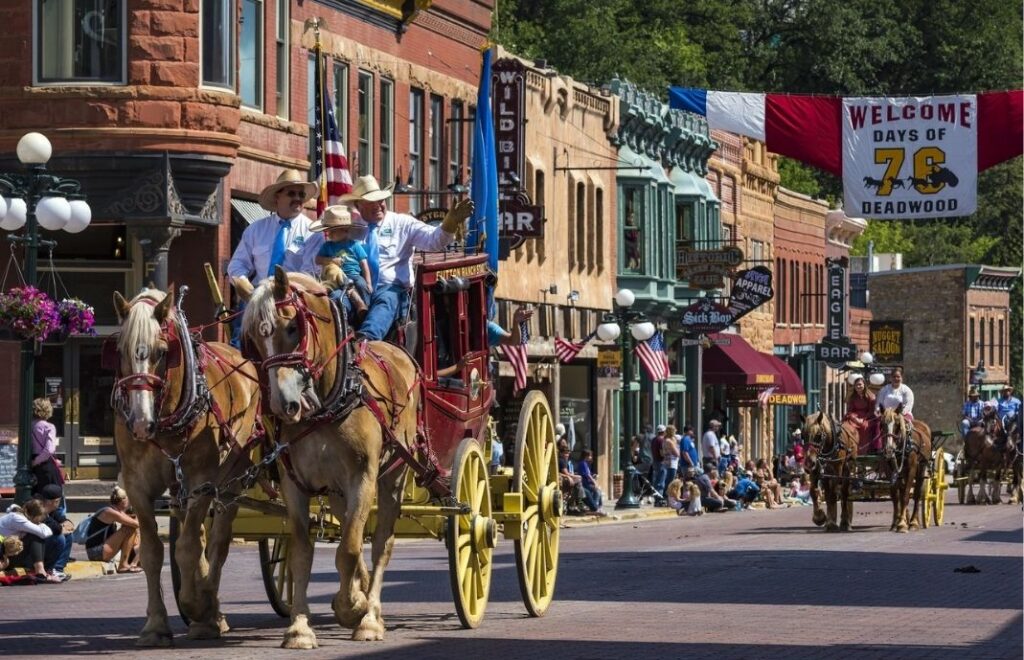
Walking through Deadwood today feels like moving through layers of time. Many of the town’s original streets still follow their 19th-century layout, framed by preserved buildings that reflect Deadwood’s rapid rise from mining camp to permanent settlement. Brick facades, narrow alleys, and historic storefronts give the town a tangible sense of continuity.
What makes Deadwood especially engaging is how its historic structures remain part of everyday life rather than static relics. Hotels, saloons, museums, and shops occupy buildings that once served similar purposes more than a century ago. This integration of past and present allows visitors to experience history not as something observed from a distance, but as something lived within the rhythm of the town itself.
What to see and do in Deadwood
Deadwood offers a mix of history, atmosphere, and simple pleasures that reward unhurried exploration. Much of the experience comes from walking around the town itself. Here, you will be following historic streets, stepping into preserved buildings, and letting the stories unfold naturally rather than through a fixed itinerary.
Historic sites and small museums provide context to Deadwood’s gold rush past and legendary figures, while cemeteries, saloons, and old hotels add layers of character and storytelling. Beyond history, Deadwood’s setting in the Black Hills invites scenic drives, short hikes, and easy day trips, making it a natural base for exploring the surrounding landscape.
What stands out most is the balance. Deadwood doesn’t overwhelm with attractions or performances; instead, it offers moments – quiet corners, lingering views, and conversations with history. The combination allows visitors to engage at their own pace and shape their own experience of the town.
Deadwood’s place in the Black Hills
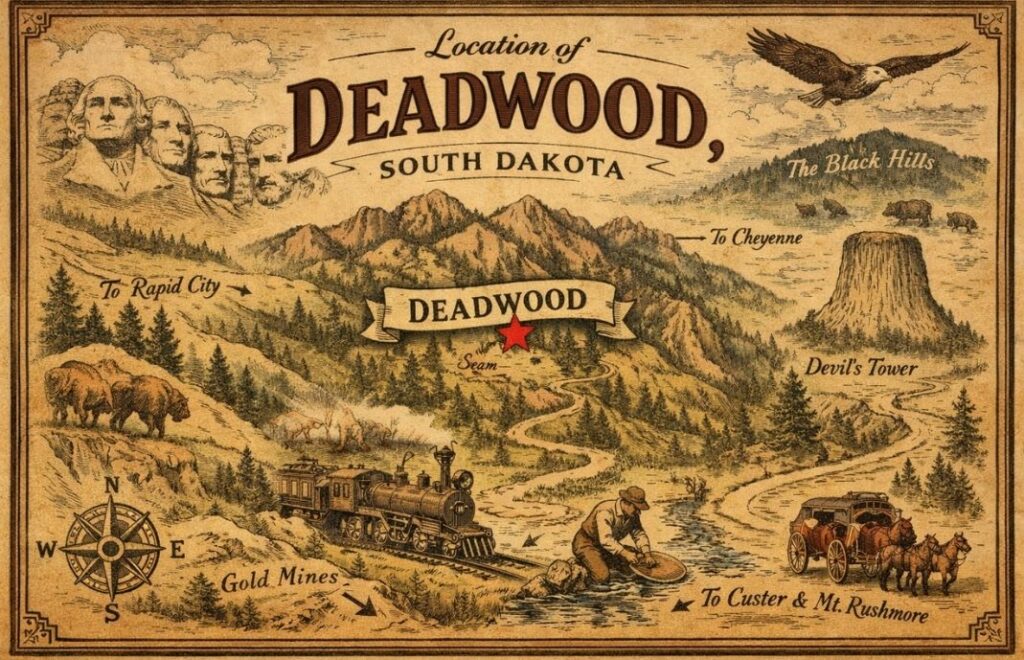
Deadwood’s appeal is inseparable from its setting in the Black Hills, a region known for its forested slopes, winding roads, and deep cultural significance. The town feels tucked into the landscape rather than imposed upon it, shaped by the same terrain that once drew prospectors in search of gold.
This location makes Deadwood more than a standalone destination. It sits naturally within a wider journey through the Black Hills, offering a historic counterpoint to the region’s natural beauty. Time spent here adds narrative and context to the landscape, connecting dramatic scenery with the human stories that unfolded among these hills and continue to shape their identity today.
Why Deadwood still captivates
Deadwood captivates because it refuses to smooth out its edges. The town embraces its contradictions – lawlessness and order, myth and reality, ambition and consequence – without turning them into spectacles. There is an honesty to Deadwood that allows its history to feel present rather than performed.
What lingers after a visit is not just the stories of famous figures or dramatic events, but the atmosphere itself. Deadwood feels lived-in, shaped by time and terrain, and comfortable with its own complexity. It’s a place that invites curiosity and reflection, rewarding those who look beyond the surface and take the time to understand why this small town continues to hold such a powerful place in the American imagination.
Practical visitor guide
For those inspired to experience Deadwood firsthand, a bit of practical context helps shape the visit. This guide offers simple insight into timing, expectations, and how to make the most of your time in town.
When to visit
Late spring through early fall is the most pleasant time to visit Deadwood, when the weather is mild and the town is fully active. Summer brings the most energy, while early fall offers fewer crowds and beautiful Black Hills scenery.
Getting there
Deadwood is easily reached by car and fits naturally into a Black Hills road trip. Its compact size makes it ideal for exploring on foot once you arrive.
How much time to allow
A full day is enough to experience Deadwood’s highlights, but an overnight stay allows you to enjoy the town’s atmosphere after day-trippers leave and to explore the surrounding area at a relaxed pace.
What to expect
Deadwood blends history with modern tourism. While some elements lean into its legendary past, much of the town remains grounded and authentic. Walking, observing, and allowing time for spontaneous discovery are key to appreciating it fully.
How to approach the experience
Deadwood rewards curiosity more than speed. Take time to read plaques, explore side streets, and connect the town’s stories to its setting in the Black Hills. The experience is richest when approached with patience and openness rather than a checklist mindset.
This post is a collaboration with Travel South Dakota. I am grateful for their cooperation.
