The Uganda kob may not be as famous as the lion, elephant, or mountain gorilla, but this elegant antelope is one of the most meaningful animals in Uganda. With its golden-brown coat, proud stance, and graceful movements across open savannahs, the Uganda kob has become a powerful symbol of the country’s rich wildlife and natural beauty.
Seen grazing in national parks such as Queen Elizabeth and Murchison Falls, the Uganda kob is often part of that classic East African safari scene: wide grasslands, warm light, and herds of antelopes moving calmly through the wilderness. Yet there is more to this animal than its beauty. It represents abundance, resilience, and the deep connection between Uganda and its wild landscapes.
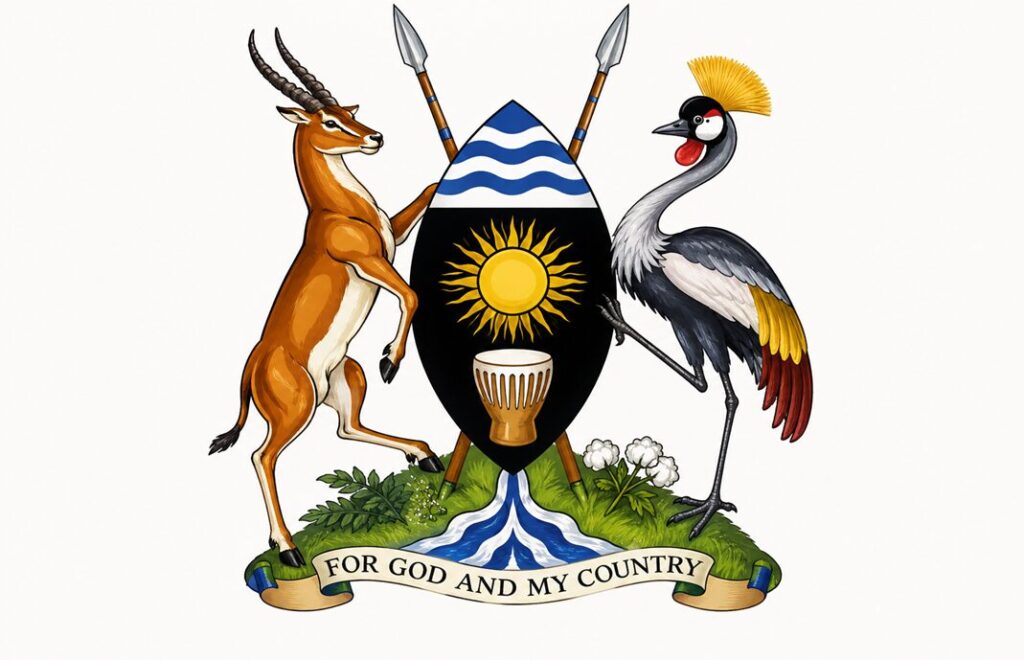
The Uganda kob is also featured on Uganda’s Coat of Arms, standing proudly as a national emblem. This gives the animal a special place not only in the country’s ecosystems, but also in its identity. It is a reminder that Uganda’s wildlife is not just something to see on safari – it is part of the nation’s story.
Elegant, alert, and full of character, the Uganda kob is one of those animals that quietly steals the spotlight once you know what to look for.
Physical description
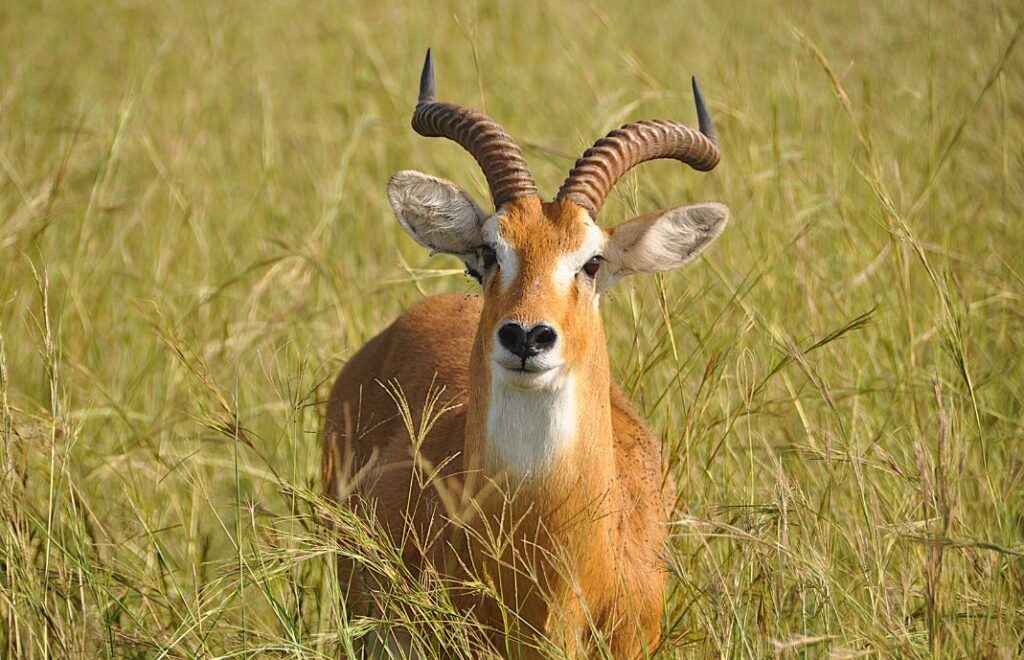
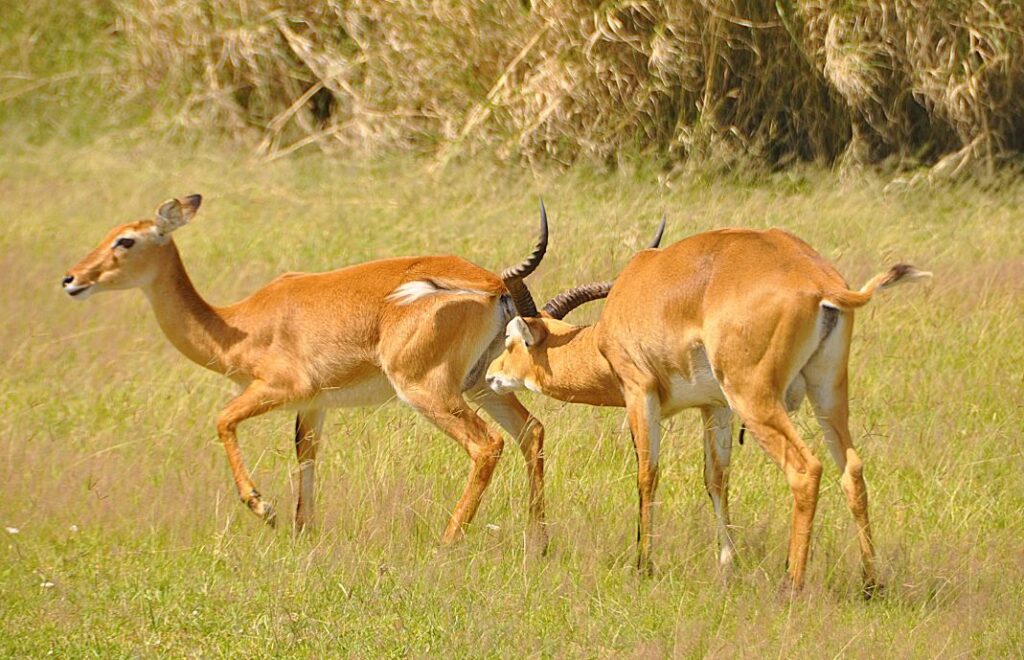
The Uganda kob is a beautifully built antelope, elegant without looking fragile and strong without losing its graceful appearance. It has the classic look of an animal made for open grasslands: alert eyes, slender legs, a smooth body, and a confident way of standing that makes it easy to recognize on safari. The body is compact and athletic, built for quick movement across open plains when danger appears.
Its coat is usually a warm reddish-brown to golden-brown color, often glowing beautifully in the soft morning or late afternoon light. The underside is paler, and there are lighter markings around the eyes, muzzle, throat, and inner legs. This natural coloring helps the Uganda kob blend into the dry grasses and sunlit savannahs where it is often found.
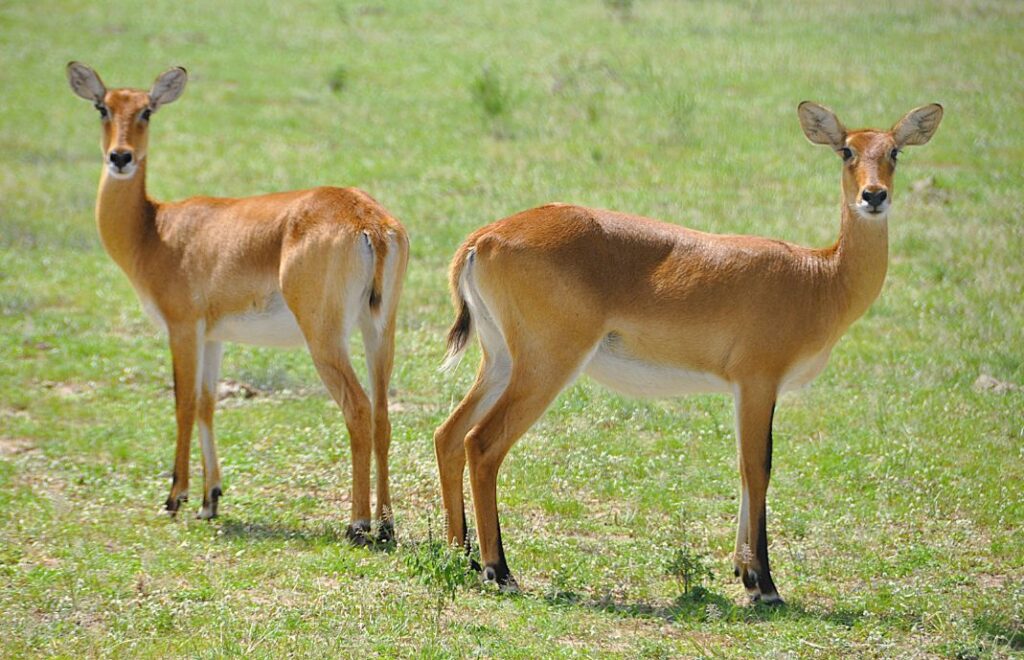
Male Uganda kobs are larger and more powerful than females, with strong necks and impressive ridged horns that curve backward and slightly upward. These horns are one of the easiest ways to identify a male, and they give the animal a proud, almost regal appearance. Females are smaller, more delicate, and do not have horns, but they share the same alert expression and graceful movement.
A fully grown male stands up to 90 to 100 cm (3 to 3.4 feet) and weighs around 95 kilos. The females are smaller and lighter, about 82 to 92 cm (2.7 to 3 feet) and 63 kilos.
What makes the Uganda kob especially striking is not only its shape or color, but its posture. Males are often seen standing tall on open ground, watching over their territory or keeping an eye on nearby rivals. Females and young usually gather in groups, moving calmly through the grass as they graze.
For many safari goers, the Uganda kob becomes one of the most charming animals on the plains.
Habitat
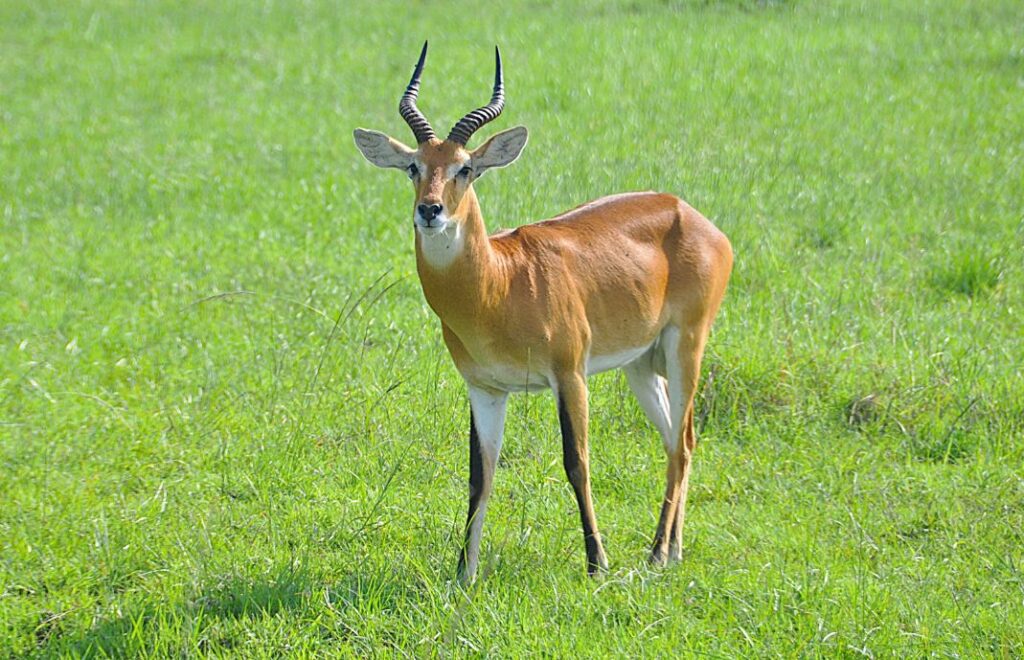
The Uganda kob is most at home in open grasslands, savannahs, and floodplains, where there is plenty of fresh grazing and access to water. These landscapes suit the kob perfectly, giving it both space to move and good visibility to watch for predators.
This graceful antelope is often seen in national parks and protected areas such as Queen Elizabeth National Park and Murchison Falls National Park, where herds graze across wide plains and near wetlands. The Uganda kob prefers areas with short grasses, especially after seasonal rains when the land becomes green and full of new growth.
Spotting a Uganda kob standing in golden grass, with the open plains stretching behind it, feels like seeing a living symbol of the country’s wild heart.
Reproduction
The Uganda kob has a fascinating breeding system that often makes it one of the most interesting antelopes to watch on safari. Males compete for small territories, usually in open areas where females gather during the breeding season. These display grounds are known as leks, and they can become lively places filled with movement, tension, and rivalry.
Male kobs show their strength by defending their space from other males, using posture, chasing, and sometimes horn-to-horn clashes. The strongest and most successful males attract females, while younger or weaker males often wait nearby for their chance.
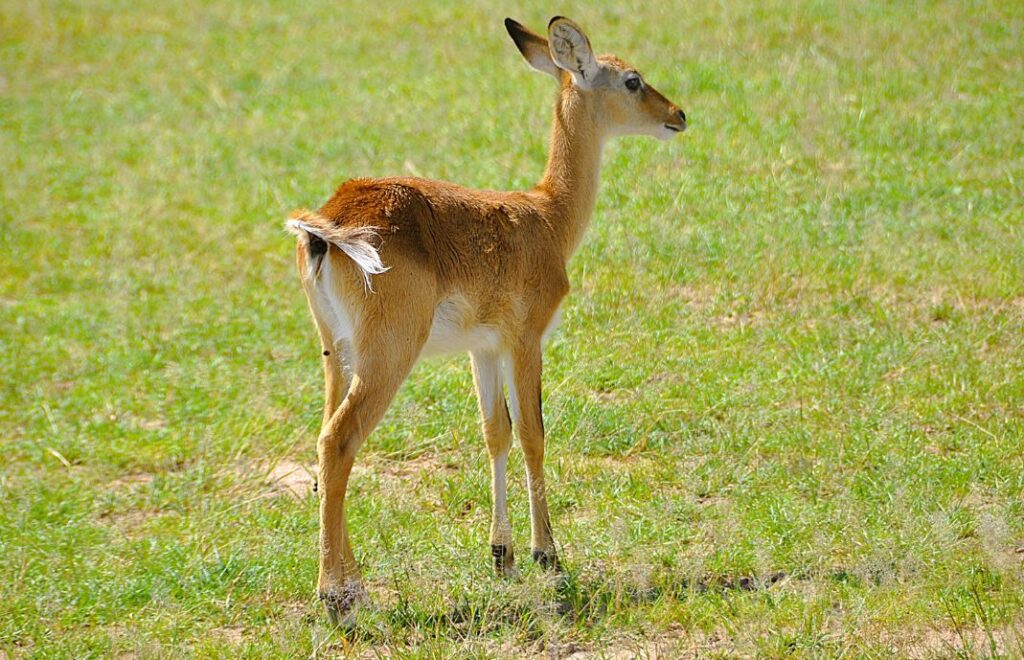
After mating, the female gives birth to a single calf. Like many antelopes, the young calf is hidden in tall grass during its first days of life, staying quiet and well camouflaged while the mother returns to nursing it. This helps protect the calf from predators such as lions, leopards, hyenas, and large birds of prey.
As the calf grows stronger, it begins to follow its mother and eventually joins the herd. These young kobs quickly become part of the rhythm of the plains – grazing, resting, and learning to stay alert in a landscape where danger can appear at any moment.
Every newborn calf is part of the continuing story of this graceful animal in Uganda’s wild landscapes.
Eating habits and diet
The Uganda kob is a grazer, feeding mainly on grasses found across open savannahs, floodplains, and grassy wetlands. It prefers fresh, tender grass, especially after the rain when new shoots cover the plains and food is easier to find.
Because good grazing is closely linked to water, Uganda kobs are often found near rivers, lakes, and wetlands. These areas provide both drinking water and the rich grasslands they depend on. During drier periods, they may move in search of better grazing, following the rhythm of the seasons across the landscape.
Most feedings take place during the cooler parts of the day, especially in the morning and late afternoon. In the heat of midday, kobs often rest, chew cud, and stay alert for predators.
Their diet may seem simple, but it plays an important role in the ecosystem. By grazing across the plains, Uganda kobs help shape the grasslands and provide prey for large predators. They are part of the natural balance that makes Uganda’s wilderness feel so alive.
Conservation status
The Uganda kob is currently listed as Least Concern by the IUCN, which means it is not considered globally threatened with extinction. In Uganda, it can still be seen in healthy numbers in several protected areas, especially in places like Queen Elizabeth National Park and Murchison Falls National Park.
Still, “Least Concern” does not mean “no concern.” Like many wild animals, the Uganda kob depends on healthy grasslands, wetlands, and safe migration areas. Habitat loss, expanding human settlement, poaching, and pressure around protected areas can all affect local populations.
The good news is that conservation efforts in Uganda have helped wildlife recover in important areas. Protected national parks, anti-poaching patrols, tourism income, and community conservation all play a role in keeping the Uganda kob’s future more secure. When travelers visit Uganda’s parks responsibly, they are also supporting the landscapes that this beautiful antelope depends on.
The Uganda kob is more than an animal on the plains. It is a national symbol, a sign of wild abundance, and a reminder that Uganda’s natural heritage is worth protecting. Seeing one standing alert in the golden grass is not just a lovely safari moment. It is a glimpse of a country still deeply connected to its wilderness.