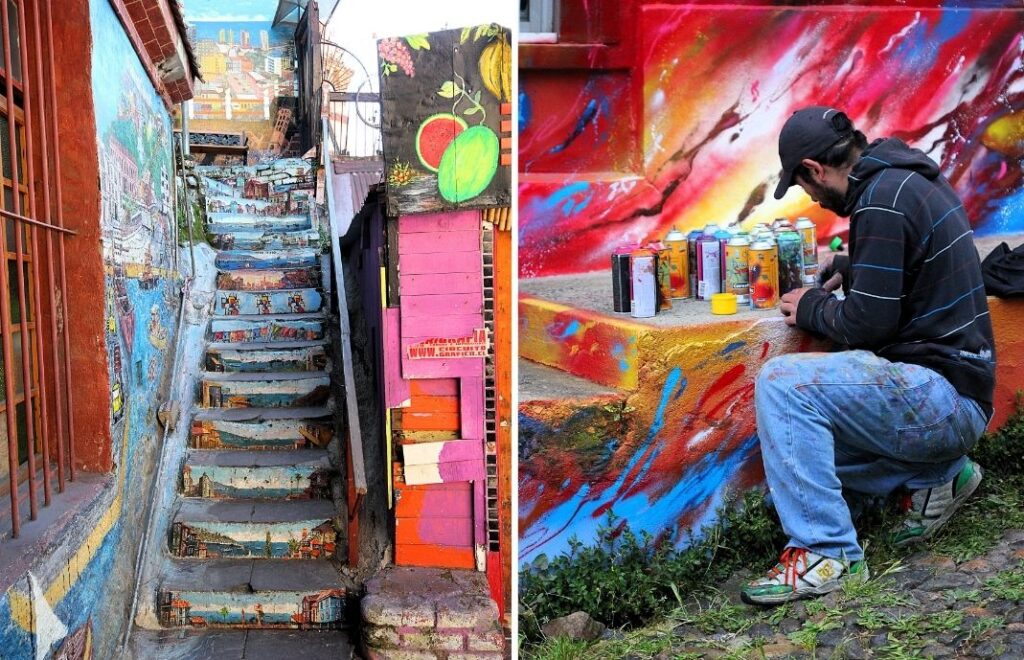
Some cities are beautiful because they are polished. Valparaíso is beautiful because it is alive.
Spread across steep hills beside the Pacific Ocean, this legendary Chilean port city feels like a place painted by memory, music, salt air, and imagination. Bright colored houses climb the slopes, street art turns ordinary walls into open-air galleries, and old funiculars creak their way up to viewpoints where the city spills dramatically toward the sea.
Valparaíso is not a city that reveals itself all at once. It is made for wandering. Up stairways, through narrow lanes, past murals, cafés, balconies, and unexpected ocean views. Around every corner, there is something that feels slightly imperfect and completely unforgettable.
Once one of South America’s most important ports, Valparaíso still carries the romance of travel, trade, sailors, poets, and restless movement. It has a creative spirit that feels raw and independent, shaped by its hills, history, and people.
Valparaíso is more than a stop between Santiago and the coast. It is a city with personality – colorful, chaotic, artistic, and deeply atmospheric. No wonder it’s a UNESCO World Heritage Site.
The Elevator Route
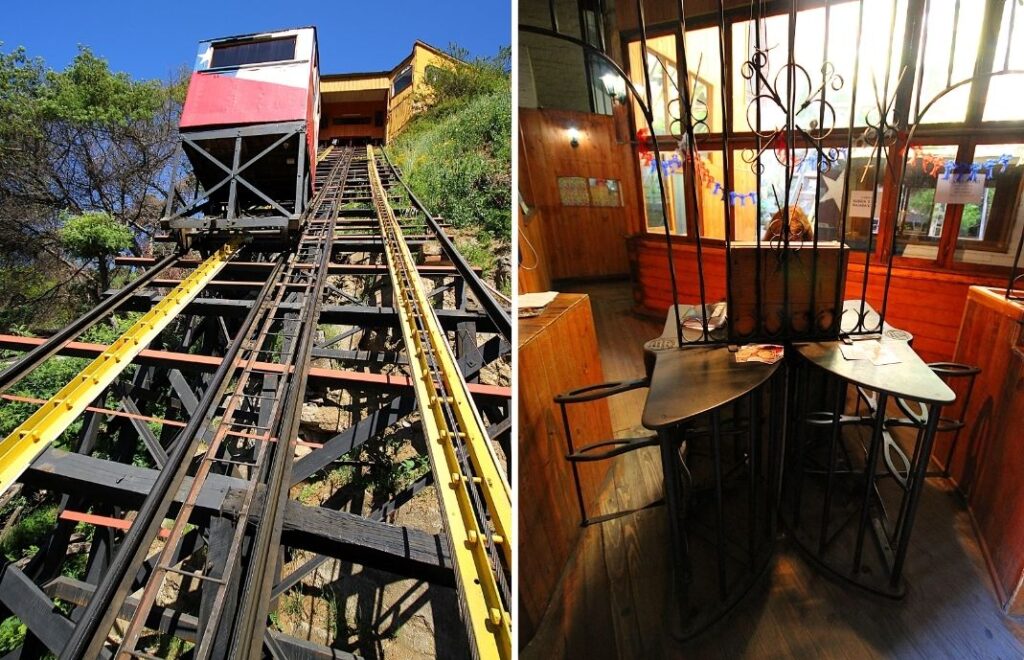
One of the most charming ways to experience Valparaíso is through its historic elevators, or ascensores. These old funiculars climb the city’s steep hills, connecting the busy port area below with the colorful neighborhoods above. They also reflect the industrial and cultural history of the city.
The elevators are more than a practical way to avoid the steep stairways. They are part of Valparaíso’s identity. Some have been carrying locals up and down the hills for more than a century, creaking and climbing between painted houses, murals, viewpoints, cafés, and narrow streets full of character.
Following the Elevator Route is a wonderful way to explore the city slowly. Each ride feels like a small journey into a different side of Valparaíso. You might step out onto a quiet residential hill, a lively artistic quarter, or a viewpoint overlooking the harbor and the Pacific Ocean.
Elevators such as Concepción, Artillería, El Peral, and Reina Victoria connect the port with the Alegre and Concepción hills.
The experience is simple, but memorable: old wooden cabins, steep tracks, glimpses of colorful rooftops, and the feeling of moving through a city built vertically into the hills. This is one of the most atmospheric ways to understand Valparaíso.
Plaza Sotomayor
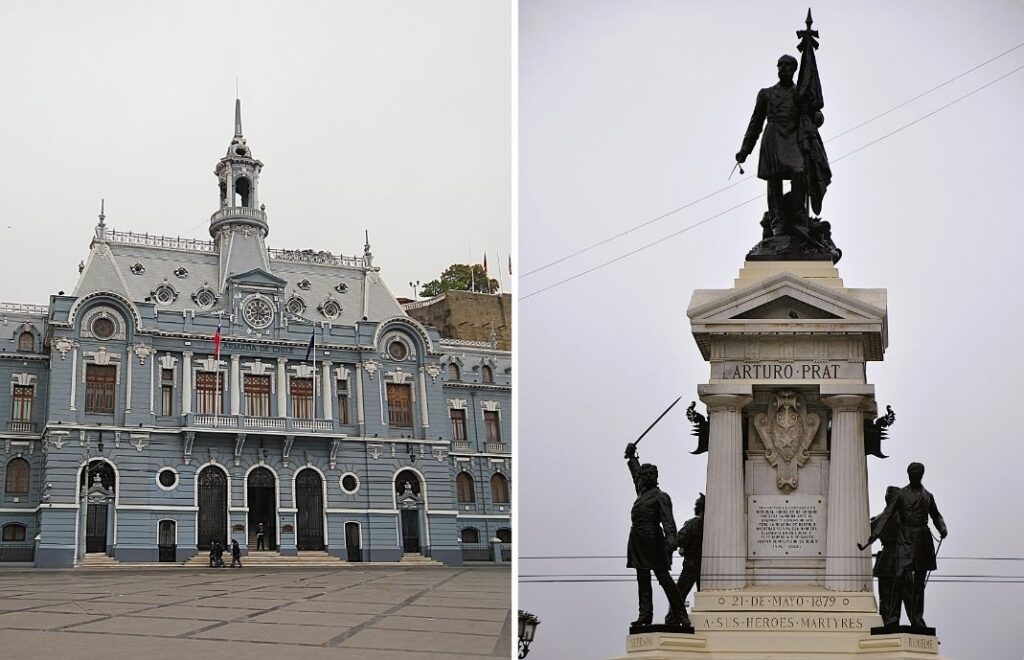
Plaza Sotomayor is one of the most important and recognizable squares in Valparaíso. Located near the port, it sits at the heart of the city’s historic maritime identity. This beautiful square is surrounded by grand buildings, busy streets, and unique heritage architecture.
The square is best known for the impressive Monument to the Heroes of Iquique (1879), which honors Chilean naval history and gives the plaza a strong ceremonial character. Around it, the architecture reflects Valparaíso’s past as a powerful port city, when ships, trade, travelers, and sailors helped shape its place in South American history.
For visitors, Plaza Sotomayor is a natural starting point for exploring the lower part of the city. From here, it is easy to continue toward the harbor, nearby historic streets, or the elevators that climb into the colorful hills above.
Plaza Sotomayor may not have the bohemian charm of Valparaíso’s mural-filled neighborhoods, but it offers something just as important: a sense of history, scale, and arrival.
La Sebastiana: Pablo Neruda’s House Museum
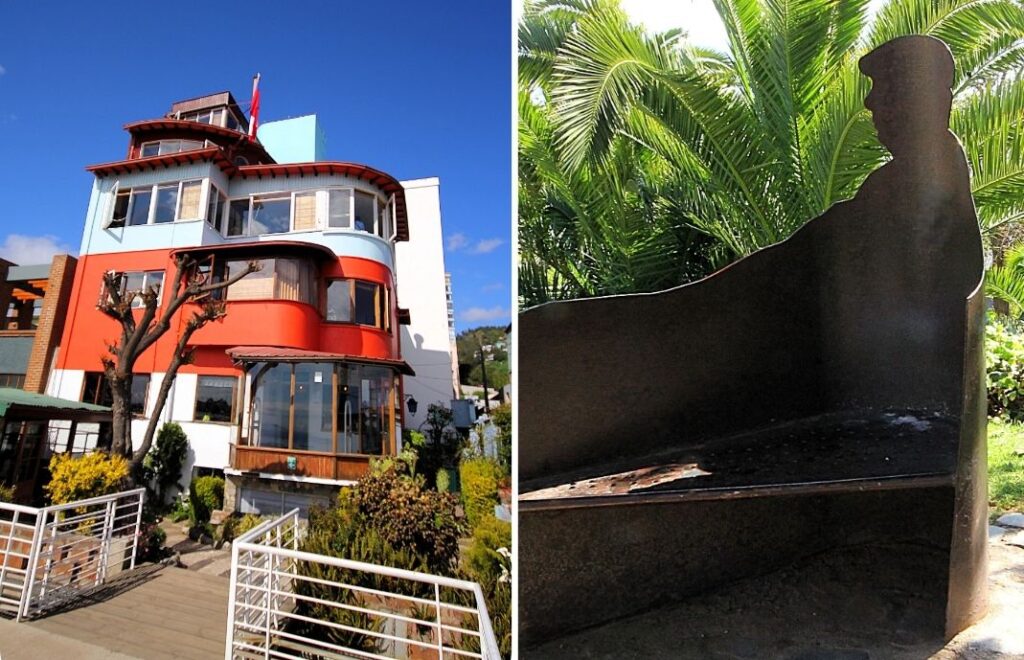
La Sebastiana is one of Valparaíso’s most fascinating attractions, and a place that perfectly matches the city’s creative spirit. Once the home of Chilean poet Pablo Neruda, the house sits high on one of the city’s hills, with sweeping views over Valparaíso and the Pacific Ocean.
Like the city itself, La Sebastiana feels full of personality. The house is quirky, colorful, and imaginative, filled with objects, details, and corners that reflect Neruda’s love of the sea, travel, art, and unusual things. It is not just a museum about a poet; it feels like stepping into the mind of someone who saw the world with wonder.
The views are part of the magic. From the house, Valparaíso spreads out below in layers of rooftops, hills, harbour cranes, and ocean blue. It is easy to understand why a poet would be drawn to a place like this – dramatic, restless, and full of life.
La Sebastiana offers a quieter and more intimate way to experience Valparaíso. After wandering the colorful streets, visiting Neruda’s hillside home adds depth to the city’s artistic identity. It is a reminder that Valparaíso is a place that has inspired words, dreams, and imagination.
Cerro Alegre and Concepción
These are two of Valparaíso’s most atmospheric hills, and for many travelers, they capture the city at its most charming. Cerro Alegre and Concepción exhibit the valuable architectural heritage driven by European immigration in the 19th century.
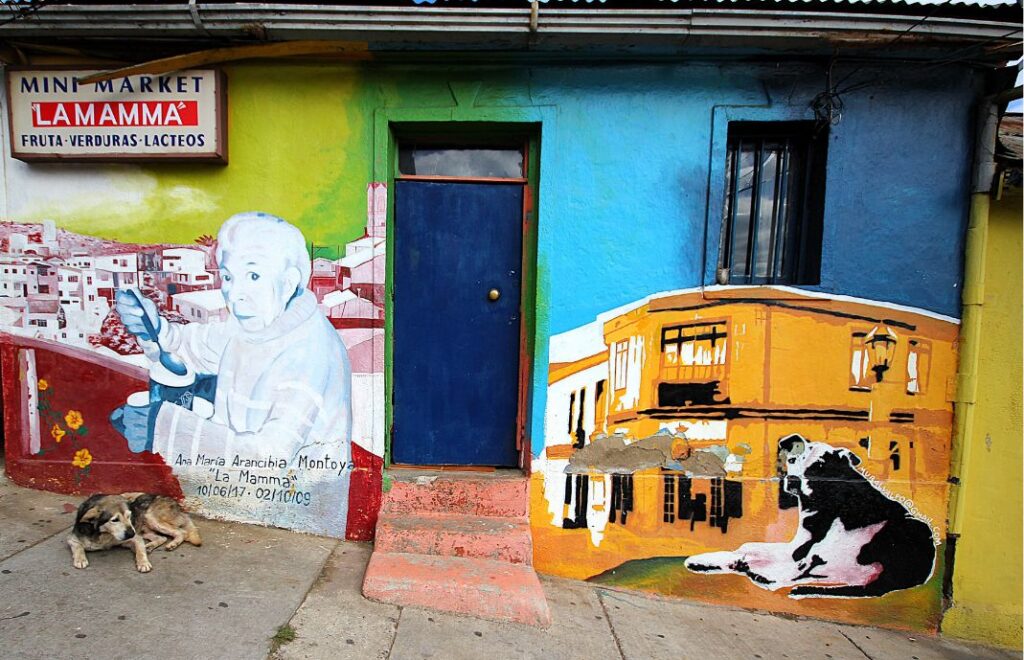
This is where Valparaíso’s colorful personality truly comes alive – in painted houses, steep stairways, hidden cafés, boutique hotels, viewpoints, and walls covered in bold street art.
These neighboring hills are made for wandering without rushing. Narrow lanes twist between old mansions, murals, flower-filled balconies, and unexpected ocean views. Every turn seems to reveal a new splash of color, a small gallery, a quiet courtyard, or a terrace looking out over the harbor.
Cerro Concepción has a slightly historic and elegant feel, with restored buildings and some of the city’s classic viewpoints. Cerro Alegre feels equally creative, lively, and bohemian, with some of Valparaíso’s best street art and a relaxed neighborhood atmosphere.
Together, they offer one of the best introductions to the city’s soul. If Plaza Sotomayor represents Valparaíso’s maritime history, Cerro Alegre and Concepción represent its imagination. They are colorful, artistic, layered, and wonderfully easy to fall in love with.