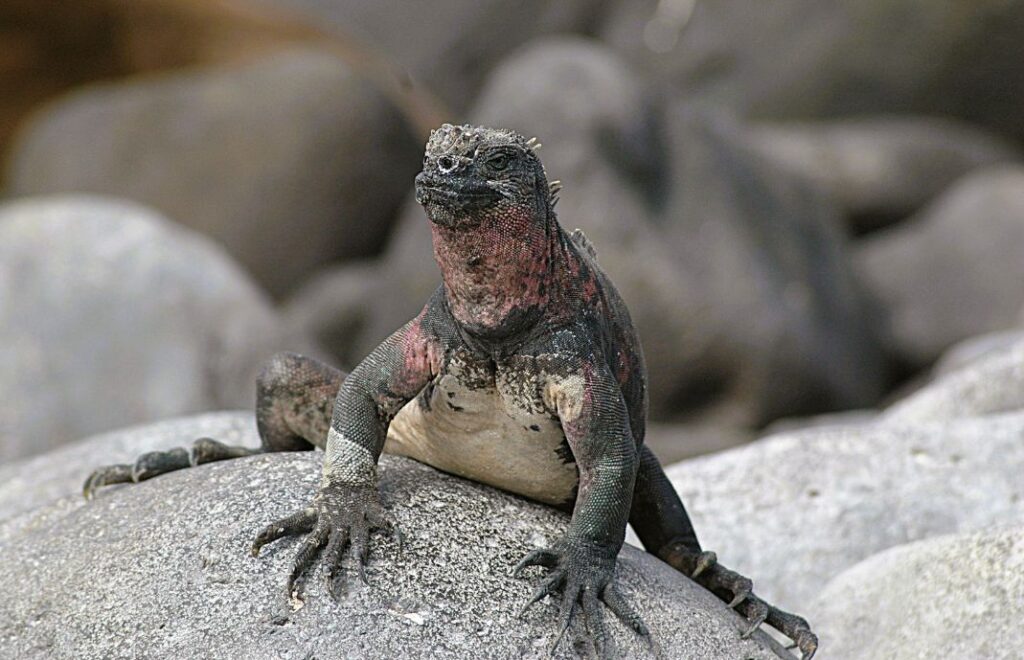
Imagine meeting a creature that looks as though it survived the extinction of the dinosaurs, has the expression of someone who hasn’t had their morning coffee, and considers a mouthful of seaweed a perfectly acceptable lunch.
Welcome to the wonderful world of Galápagos marine iguanas.
With their spiky backs, enormous claws, scaly bodies, and permanently grumpy expressions, these extraordinary reptiles look like miniature dragons that have somehow wandered into the modern world.
But here’s where things get really interesting.
These dragons can swim!
And not just a little paddle along the shoreline. They actually dive into the Pacific Ocean to search for food, before returning to the volcanic rocks to warm themselves in the sunshine.
Oh, and did I mention that they sneeze salt?
Yes, really!
From their extraordinary underwater adventures and peculiar eating habits to spectacular color changes and some rather disgusting sneezing, these prehistoric-looking island residents are full of surprises.
Let’s meet the Galápagos’ wonderfully grumpy little sea dragons and discover why they’re among the most extraordinary reptiles on Earth.
1. (Even) Charles Darwin thought they were ugly
Can you imagine being one of the most extraordinary reptiles on Earth, only to have one of history’s greatest naturalists call you ugly!
Poor marine iguanas. They really didn’t get off to a good start with Charles Darwin.
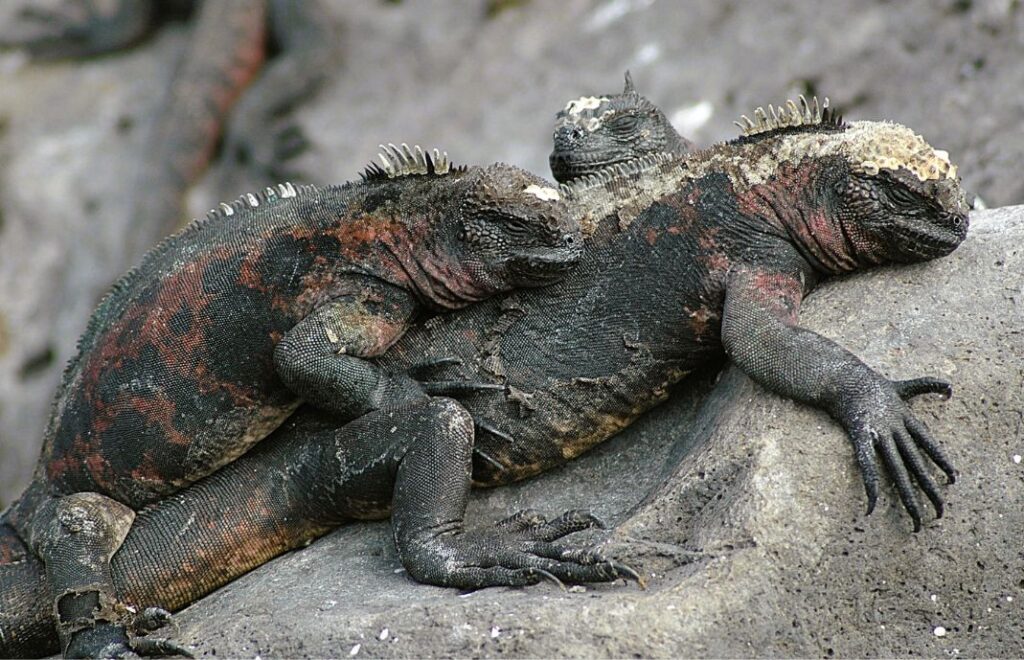
When Darwin visited the Galápagos Islands in 1835, he encountered these strange, dark-colored reptiles lounging on the volcanic rocks.
And he wasn’t particularly impressed.
He described them as “hideous looking” creatures and complained about their clumsy movements. Then went on to referring to them as “most disgusting, clumsy Lizards.”
Ouch! That’s rather harsh, Charles.
But take one look at a marine iguana, and you might understand his reaction.
With their spiky backs, wrinkled skin, enormous claws, and permanently grumpy expressions, they look like miniature dragons that have somehow survived into the modern world.
Here’s the funny part.
Despite their rather intimidating appearance, marine iguanas are peaceful vegetarians.
They spend much of their time lounging on sun-warmed rocks and eating marine algae.
Not exactly the terrifying behavior you’d expect from something resembling a prehistoric monster.
Although Darwin wasn’t impressed by their looks, he became fascinated by their extraordinary adaptations.
So perhaps these wonderfully grumpy little dragons deserve a little more appreciation than Darwin originally gave them.
2. The only lizards that go swimming for dinner
Imagine being a lizard and deciding that the best place to find your lunch is at the bottom of the ocean.
Sounds ridiculous, doesn’t it?
Well, nobody told the Galápagos marine iguanas.
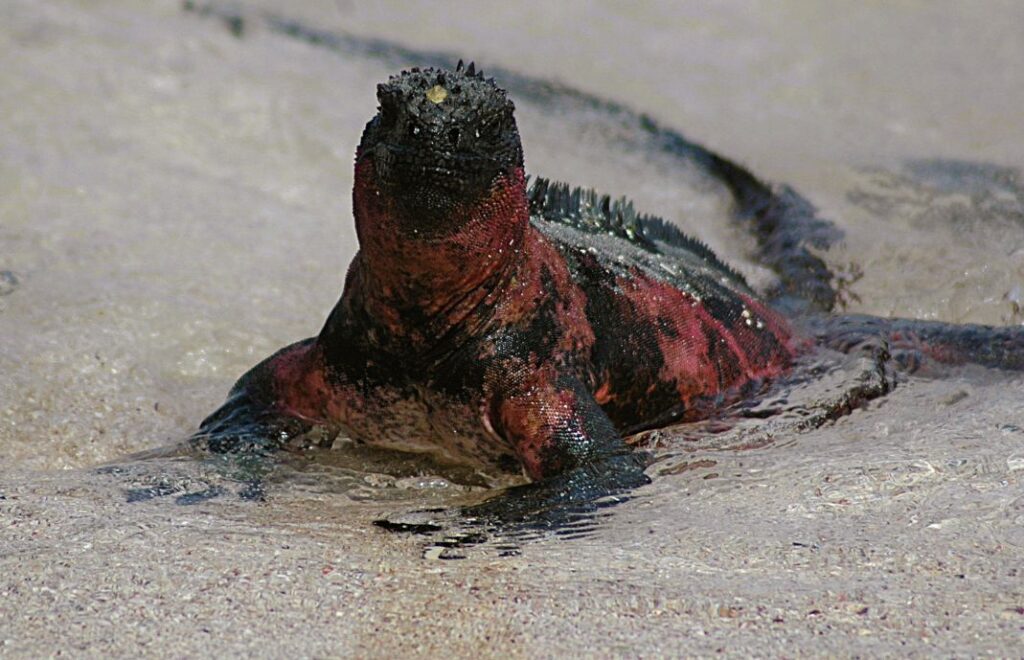
These extraordinary reptiles are the only lizards in the world that regularly venture into the sea to feed.
And they’re surprisingly good at it.
Using their powerful tails to propel themselves through the water, marine iguanas swim along the rocky coastline and dive beneath the waves in search of their favorite food.
What’s on the menu?
Seaweed!
Well, technically, marine algae. These prehistoric-looking creatures use their sharp teeth to scrape algae from underwater rocks.
Not exactly the diet you’d expect from something resembling a miniature Godzilla.
Larger iguanas can dive several meters below the surface, while smaller ones often prefer feeding on algae exposed along the shoreline at low tide.
But there’s a catch.
Because marine iguanas are cold-blooded, the chilly Pacific waters gradually lower their body temperature.
So, after their underwater feast, they must return to the volcanic rocks to warm themselves in the sunshine.
A refreshing swim, an all-you-can-eat seaweed buffet, and an afternoon of sunbathing.
Honestly, these dragons might have life figured out.
3. These dragons sneeze salt
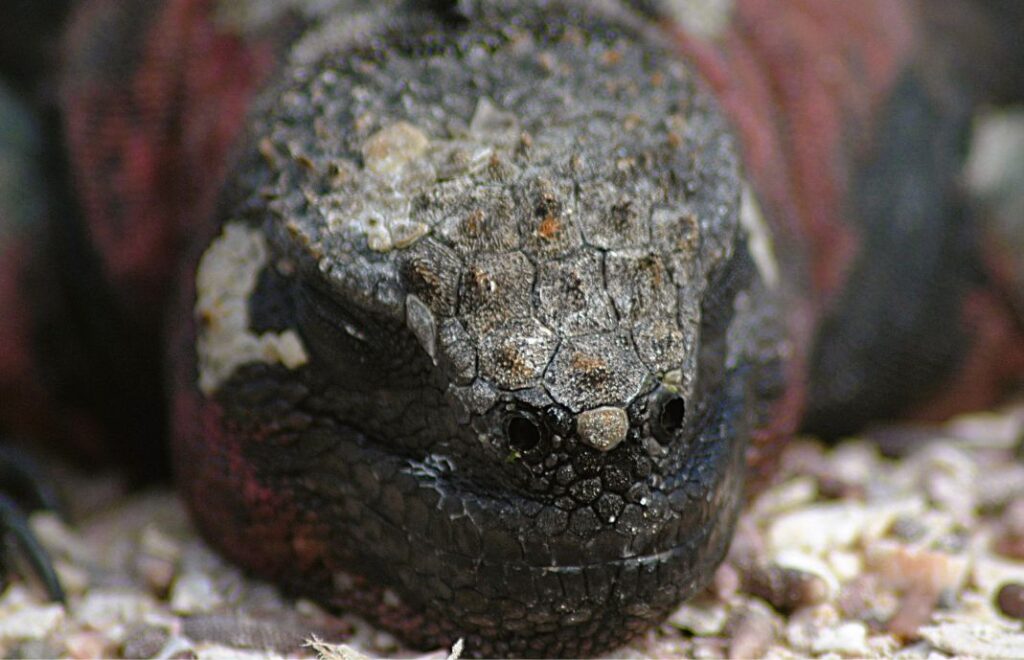
Your are relaxing on a beautiful Galápagos beach when suddenly, the grumpy-looking little dragon beside you lets out an enormous sneeze.
And another.
And another!
Welcome to one of the strangest habits in the animal kingdom.
You see, marine iguanas have a rather unusual problem.
Because they spend so much time feeding in the ocean, they swallow considerable amounts of salt along with their delicious underwater meals.
And too much salt isn’t exactly good for a lizard.
Fortunately, nature has given these extraordinary reptiles a rather ingenious solution.
Special salt glands near their noses filter excess salt from their blood, allowing them to expel it through their nostrils.
And how do they get rid of it?
By sneezing, of course!
With a sudden snort, they blast a salty spray into the air, sometimes sending tiny droplets flying surprisingly far.
Over time, the expelled salt can leave pale, crusty deposits around their heads, giving them an even more wonderfully scruffy appearance.
So, if you spot a marine iguana sitting on a volcanic rock and repeatedly sneezing, don’t worry.
It’s not suffering from a terrible cold.
It’s simply getting rid of yesterday’s salty lunch.
Who knew that being a prehistoric sea dragon involved so much nose maintenance?
4. The Galápagos’ ultimate sun worshippers
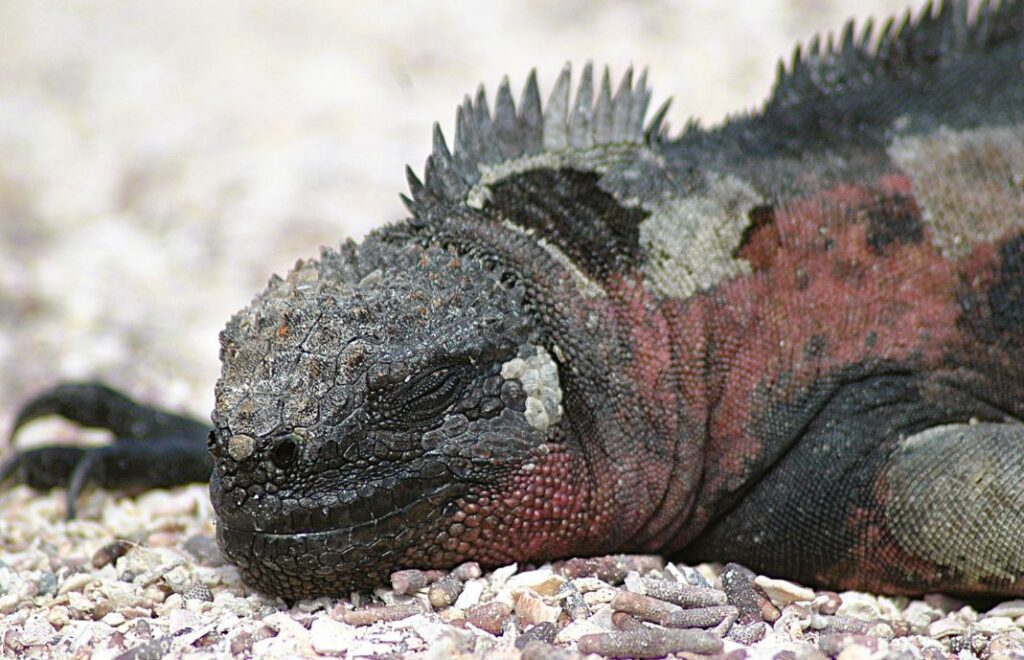
If lounging on warm rocks were an Olympic sport, Galápagos marine iguanas would probably bring home every gold medal.
Just look at them.
Stretched out on the black volcanic rocks, eyes half-closed, looking as though they haven’t a care in the world.
These prehistoric little dragons have truly mastered the art of doing absolutely nothing.
But here’s the fascinating part.
Their seemingly lazy lifestyle is actually essential to their survival.
Marine iguanas are cold-blooded reptiles, which means they depend on external sources of heat to regulate their body temperature.
And swimming in the chilly waters surrounding the Galápagos Islands can leave them rather cold and sluggish.
So, what does a sensible little sea dragon do?
Find a sunny rock and turn itself into a reptilian solar panel.
By basking in the tropical sunshine, marine iguanas warm their bodies, helping them digest their food and regain the energy needed for their next underwater adventure.
They may even flatten themselves against the rocks to absorb more warmth.
And when the sunshine becomes too intense?
They simply move into the shade to cool down.
Sunbathe. Eat seaweed. Sneeze salt. Repeat.
With a daily schedule like that, it’s difficult not to feel a little jealous.
5. They change color when love is in the air
Whoever said romance was dead clearly hasn’t met a Galápagos marine iguana during breeding season.
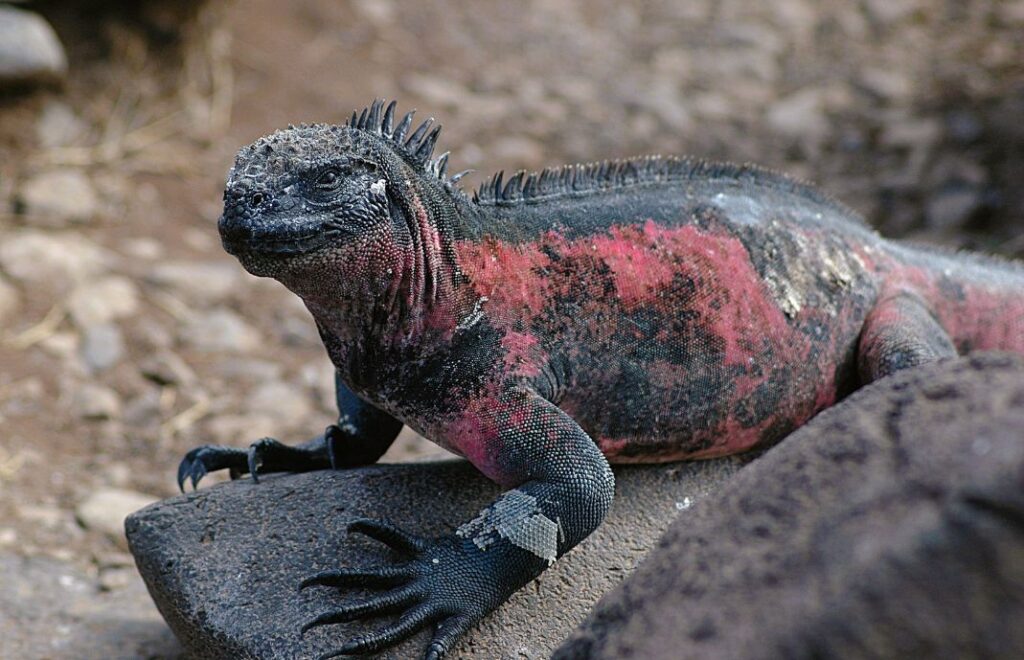
For much of the year, these prehistoric-looking reptiles blend beautifully into the dark volcanic rocks, sporting shades of black, grey, and brown.
Not exactly the most exciting wardrobe in the animal kingdom.
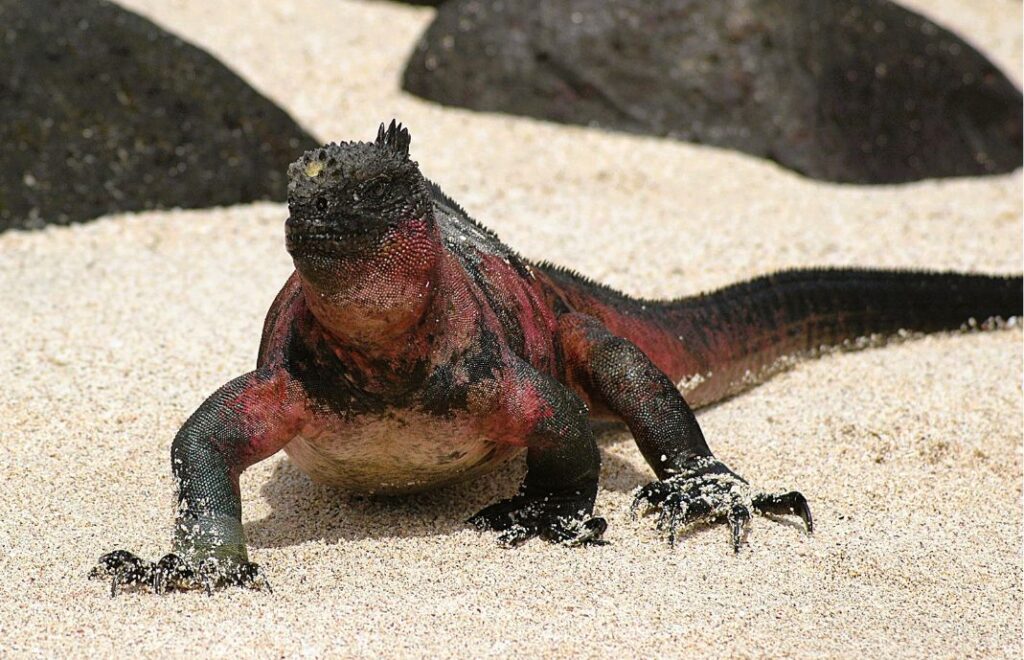
But when love is in the air, some male marine iguanas suddenly become surprisingly colourful.
During the breeding season, males in certain Galápagos populations develop spectacular shades of red, green, and even turquoise.
And the transformation can be quite extraordinary.
On Española Island, for example, the males become so brilliantly colored that they’ve earned the delightful nickname “Christmas iguanas.”
Red and green dragons wandering around volcanic rocks?
Now that’s something you don’t see every day.
But their colourful appearance isn’t just about looking fabulous.
During breeding season, males also become more territorial, competing for the attention of females through impressive displays that include plenty of head-bobbing.
Believe me, a marine iguana enthusiastically nodding its spiky head is quite a sight.
So, beneath those permanently grumpy expressions, there’s apparently a little romantic trying to impress the ladies.
Who knew these prehistoric sea dragons had such a colorful love life?
6. These dragons can actually shrink
Imagine stepping onto your bathroom scale, discovering that food has become scarce, and deciding the best solution is to simply shrink your entire body.
Sounds impossible, doesn’t it?
Well, Galápagos marine iguanas have apparently figured out how to do exactly that.
When food becomes scarce, particularly during strong El Niño events, these extraordinary reptiles face a serious problem.
Warmer ocean waters can drastically reduce the algae they depend on, leaving our seaweed-loving dragons with very little to eat.
But instead of simply accepting their unfortunate situation, marine iguanas have developed a remarkable survival strategy.
They can actually become shorter, reducing their body length by several centimeters.
And we’re not just talking about losing a little weight.
Scientists have discovered that marine iguanas can shrink in length during periods of severe food shortages, with changes in their skeletal structure thought to play a role.
Even more astonishing?
When food becomes plentiful again, they can grow back.
Now that’s a trick most of us wouldn’t mind borrowing occasionally.
For marine iguanas, however, this extraordinary ability is no laughing matter. Shrinking appears to help them survive when their favorite underwater buffet temporarily disappears.
Beneath those grumpy expressions lies one of nature’s most remarkable survival specialists. A swimming, salt-sneezing, color-changing dragon that can shrink when life gets difficult.
7. From ocean castaways to prehistoric sea dragons
Imagine being a lizard, peacefully minding your own business somewhere along the coast of South America, when suddenly you find yourself drifting across the Pacific Ocean on a floating raft of vegetation.
No luggage. No travel insurance. And absolutely no idea where you’re going.
Believe it or not, scientists think something rather similar happened to the ancestors of Galápagos marine iguanas millions of years ago.
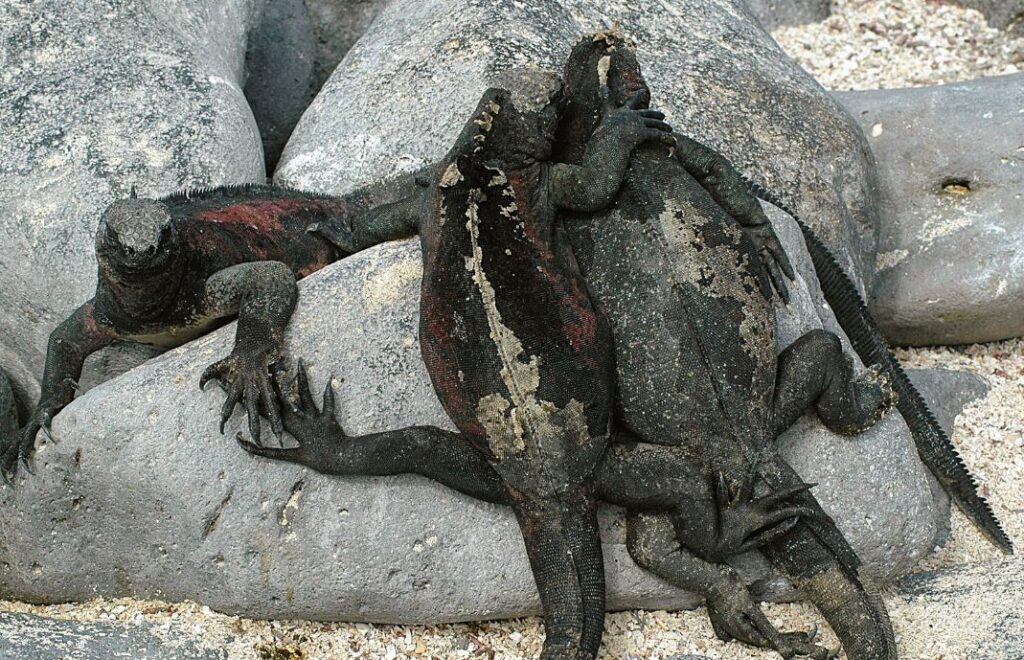
These ancient reptiles likely reached the remote volcanic islands by floating across the ocean on natural rafts of vegetation.
Once they arrived, life presented them with quite a challenge.
The Galápagos Islands offered little of the lush greenery their ancestors would have been accustomed to.
But there was one thing in abundance.
Marine algae.
Over countless generations, the ancestors of today’s marine iguanas evolved remarkable adaptations that allowed them to exploit this underwater food source.
Their flattened tails became excellent swimming tools, their powerful claws helped them grip slippery rocks, and their salt glands allowed them to cope with their salty meals.
The result?
The world’s only living lizard that regularly feeds in the sea.
From accidental ocean castaways to extraordinary underwater foragers, these prehistoric-looking reptiles have certainly come a long way.
Just imagine what their ancient ancestors would think if they could see them today. Their descendants are swimming through the Pacific, sneezing salt, and lounging on volcanic rocks like they own the place.
Not bad for a bunch of lizards that may have arrived without even buying a boat ticket.
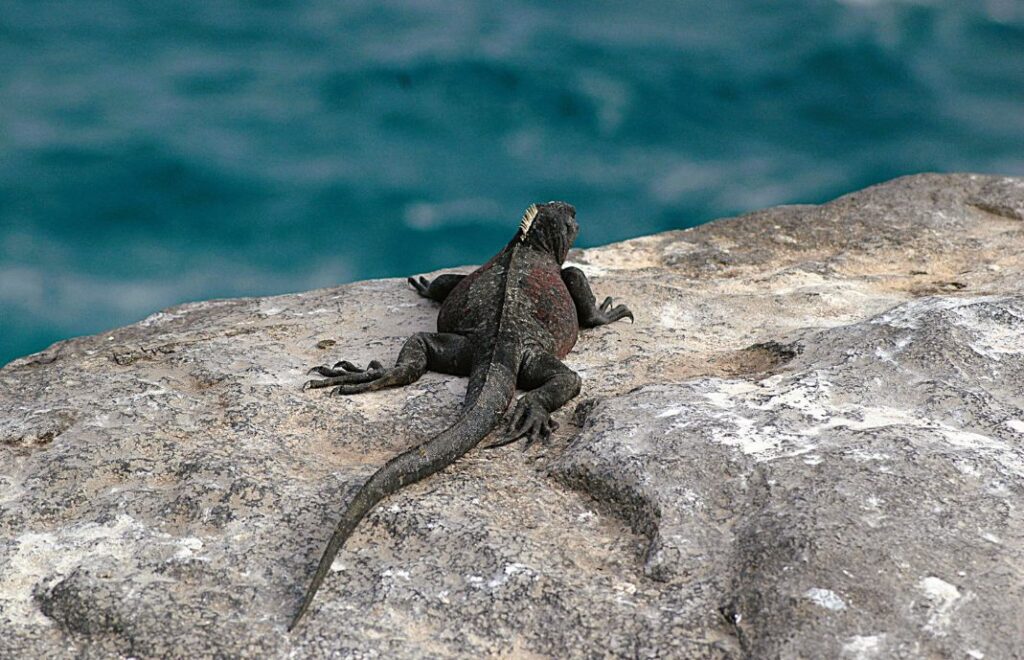
The Galápagos’ most lovable little dragons
Let’s face it. Galápagos marine iguanas are never going to win a beauty contest.
Not with those wrinkled faces, spiky backs, enormous claws, and expressions that suggest they’re permanently annoyed with the entire world.
But who needs good looks when you’ve got this much personality?
These extraordinary reptiles are living proof that nature has a wonderfully peculiar sense of humor.
They swim through the Pacific Ocean in search of seaweed, sneeze salt through their noses, dress up in spectacular colors for romance, and can even shrink when life gets difficult.
And somehow, they manage to do it all while looking thoroughly unimpressed.
But perhaps that’s what makes them so irresistible.
There’s something truly magical about encountering a creature that looks like a miniature dinosaur yet spends its days peacefully sunbathing on volcanic rocks.
If you ever find yourself exploring the extraordinary Galápagos Islands, don’t walk past those dark, grumpy-looking reptiles without stopping to admire them.
Because beneath those prehistoric faces are some of the most remarkable survivors on Earth.
And who knows? You might even discover that Charles Darwin was wrong about one thing.
These wonderfully grumpy little dragons are absolutely adorable!