
Wyoming is a natural paradise and wildlife lovers come from across the world in search of animals. The state is a scenic wonderland filled with furry and feathered creatures like pronghorn, bears, bison, bald eagles and mule deer. In Wyoming, you can truly hear the call of the untamed wilderness beckoning.
Make no mistake: If you don’t practice savvy wildlife safety tips, spectacular animals can shift to dangerous wildlife in the blink of an eye.
Here are some key guidelines to follow which will keep the animals safe and you out of harm’s way:
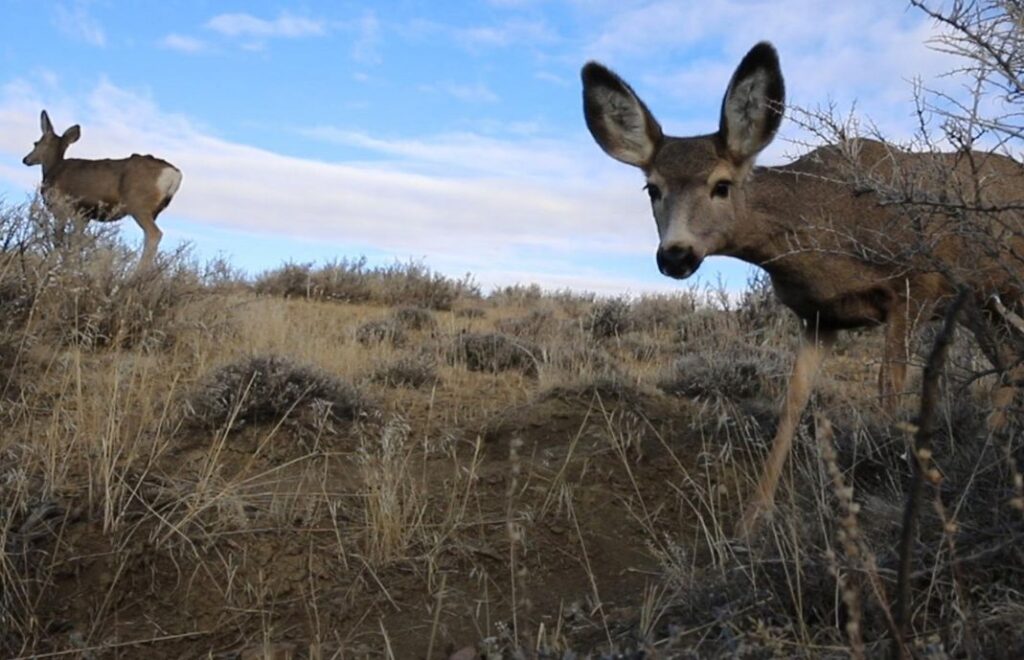
Maintain a safe distance
Never forget that you are the visitor to wild animals’ sacred home!
Stressing the animals can hurt their ability to survive and place your own safety at risk.
Do not approach animals to take pictures and remain at least 91 meters (100 yards) from predators like grizzlies and 23 meters (25 yards) from other mammals like bison or elk. If wildlife comes closer than anticipated, it is just as crucial to keep that same distance.
If you find yourself stuck in a bison jam on the road (a classic experience in Yellowstone National Park), remain inside your vehicle for your own safety.
The wide-open landscape of Wyoming offers an incredible opportunity to view wildlife in its natural habitat. A good set of binoculars or a spotting scope is a great way to view the animals from afar. It also gives you a chance to observe their natural behaviors.
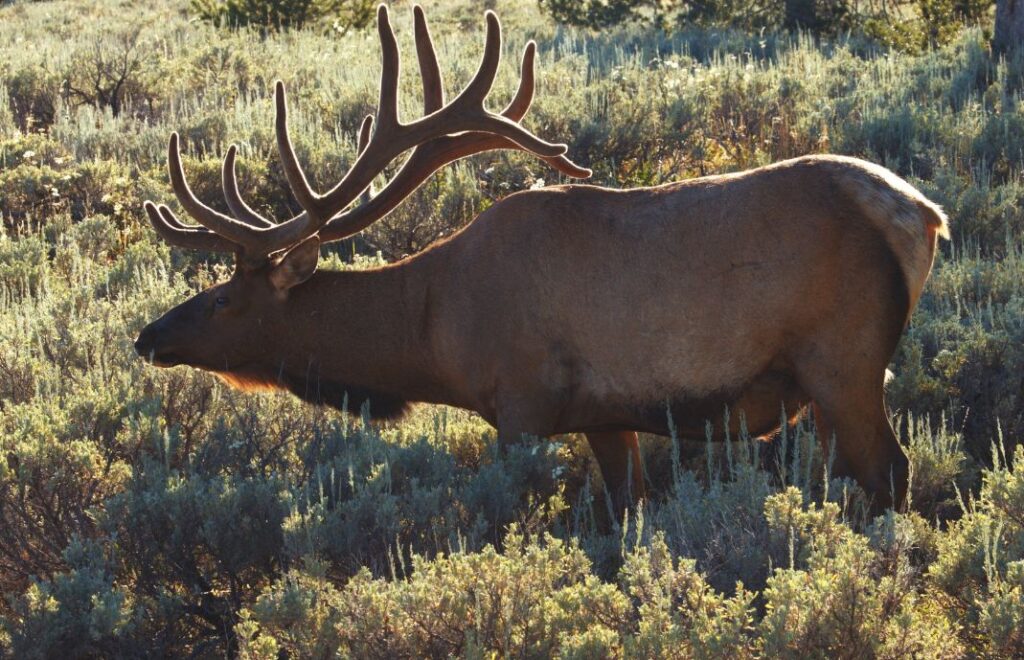
Respect dangerous animals
Staying informed and well prepared is essential when interacting with wildlife in Wyoming. Knowing how to practice mindful viewing calls for vigilant attention and awareness of your surroundings.
If a bear starts huffing or growling at you, it is in a predator mood. Rutting season means love is in the air for elk, but it also means they are on the lookout to ward of rivals. If a bull (male elk) starts to paw at the earth while curling its lips, that is a clear sign to back away.
Explore in a group
It is always safer to roam Wyoming’s rugged landscape with your friends or in a group. You will have more than one set of eyes looking out for wildlife surprises and helping you to keep a safe distance.
Grizzlies are also unlikely to attack groups. If you encounter one of these magnificent animals, stand next to each other so the bear can see multiple people.
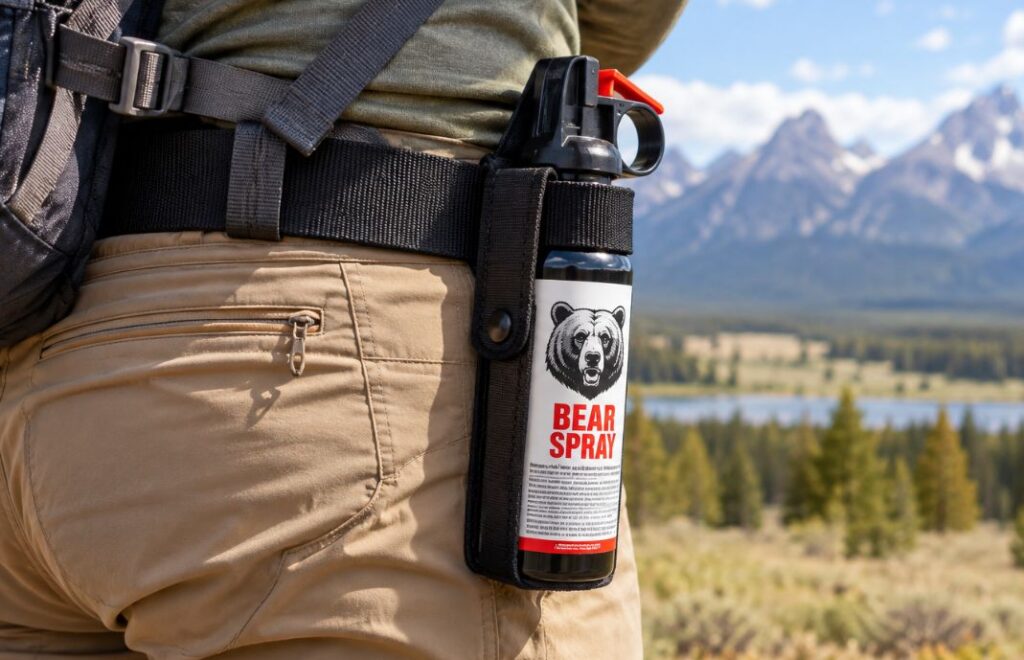
Always carry bear spray.
Don’t feed the animals
Until the 1970s, animals in Yellowstone National Park were routinely fed. This is no longer the practice as it was a threat to both animals and people. Humans are not here to give wildlife snacks.
Today, the parks work hard to avoid food conditioning bears and other animals, so they don’t seek food rewards from people. Bears that are fed become more dangerous to people.
You must always properly dispose of waste and store food in a locked vehicle with windows rolled up, in a bear canister or in a bear box.
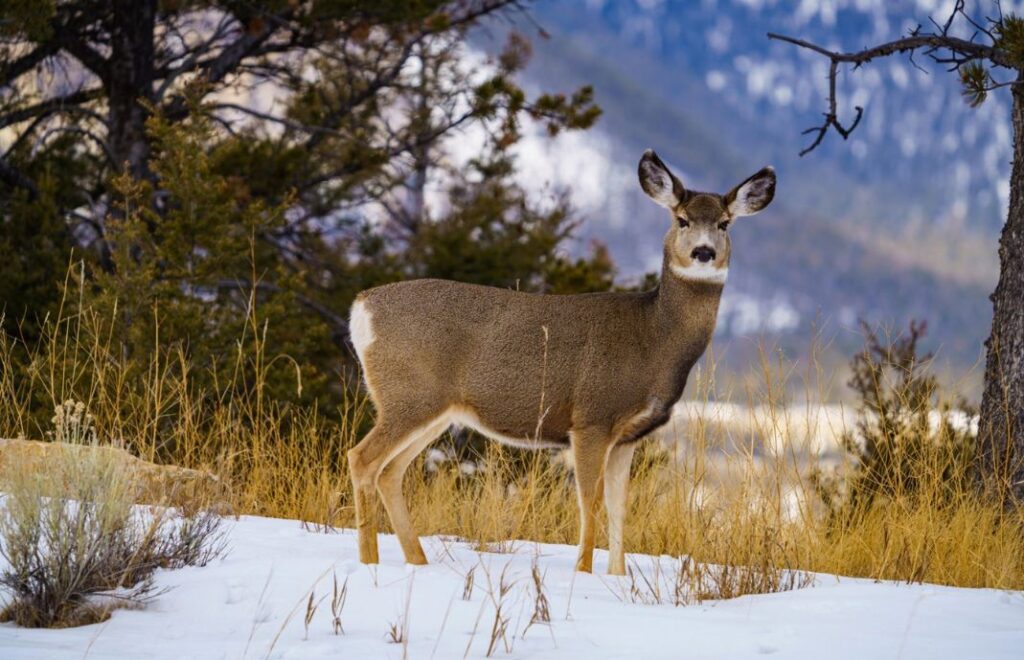
Bear safety tips
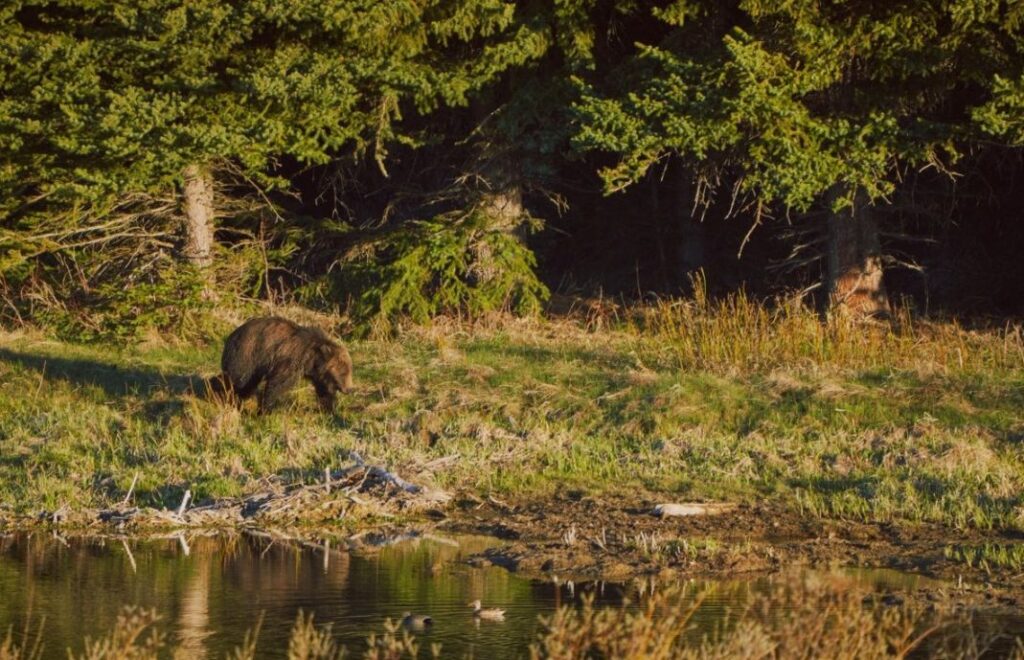
Wyoming is one of the best places in the United States to see bears in the wild, especially in areas like Yellowstone and Grand Teton National Park. Spotting a grizzly or black bear from a safe distance is a thrilling reminder of how wild and untamed this part of America still feels.
Black bears live throughout Wyoming while grizzlies are mainly found in the northwest corner of the state. Taking steps to avoid a negative encounter is especially important when traveling in grizly country.
- Keep your eyes peeled towards the trees, where you may find black bears climbing up, seeking refuge or eating fruit and nuts. At the same time, watch out for a territorial grizzly, who might come charging right at you if they feel threatened.
- Avoid hiking at dawn or dusk as it will minimize the likelihood of a tense bear encounter. This is when bears are most likely to come out to avoid the afternoon heat.
- Make noise whenever you hike so bears won’t feel caught off guard.
- Never let fear jolt you into running, or the bear will see you as prey and give in to the thrill of the chase. Stay calm, stand your guard and slowly back away while softly speaking, asserting your presence in a non-threatening way. In the case of a bear, slow and steady wins the race.
- Carry bear spray and make sure it is accessible. Place it on your belt at your hip or just a tug away on your backpack strap.
Bison safety tips
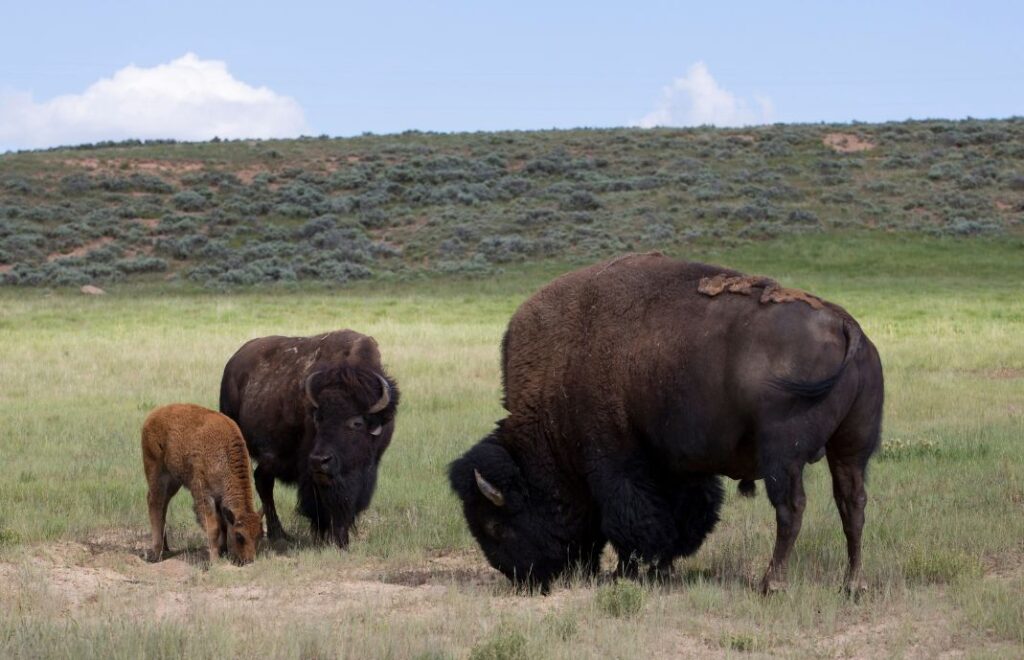
Across Wyoming’s wide valleys and protected national parks, bison are part of the landscape itself. Watching these powerful animals move across open grasslands is a classic Western wildlife experience. It’s wild, dramatic, and deeply connected to America’s frontier landscapes.
When a bison raises its tail mid-twitch, it is your sign that the animal is feeling all sorts of agitated. The recommended distance between you and these powerful animals is 23 meters (25 yards). This will give you a protective buffer.
If you find yourself too close to a bison, the last thing you want to do is run. Distance is your best friend. Lock calm eyes with the bison, hold visual contact as you slowly put distance between you. Find a larger barrier (a tree is a good resource) for extra protection as you inch backward to safety.
General animal safety tips
Wildlife encounters are one of the great highlights of travelling in Wyoming, but they should always be enjoyed with respect and caution. Animals may look calm from a distance, yet they are still wild, unpredictable, and best observed with plenty of space.
- Stay on designated trails, carefully marked for smooth navigation. Venturing off trail not only disturbs natural habitats, but you also run the risk of threatening wild animals that, if frazzled, pose an unwanted danger to you.
- Never forget you are the guest and an observer.
- It is prohibited and harmful to feed animals. They should thrive in their element, digesting the nutrients they are meant to find with their inherent survival skills.
- Ethical wildlife viewing means leaving no trace. Make sure you leave no trash of food behind.
- Stand clear from moving around any piece of this special habitat. The only souvenir you should take home is the memory of your visit.
- Enjoy Wyoming’s incredible outdoor spaces and leave speakers and headphones in the car. Savor the soundtrack of nature in all its splendor. Enjoy the melody of elk bugling, the birds chirping and the enchanting howl of wolves.
Main photo: Wyoming Office of Tourism
This post is a collaboration with Wyoming Office of Tourism. I am grateful for the cooperation.
