
Tipping on safari can feel a little confusing, especially if it is your first time in Africa. Who should you tip? How much is appropriate? Is it expected, appreciated, or already included?
Safari travel involves many people working directly with you and behind the scenes to make the experience smooth, safe, and memorable – from guides and trackers to lodge staff, drivers, porters, and housekeeping teams. A thoughtful tip is a way to show appreciation for their knowledge, care, and hard work.
This guide will help you understand the basics of tipping on safari in Africa, so you can travel with confidence, avoid awkward moments, and reward good service in a respectful way.
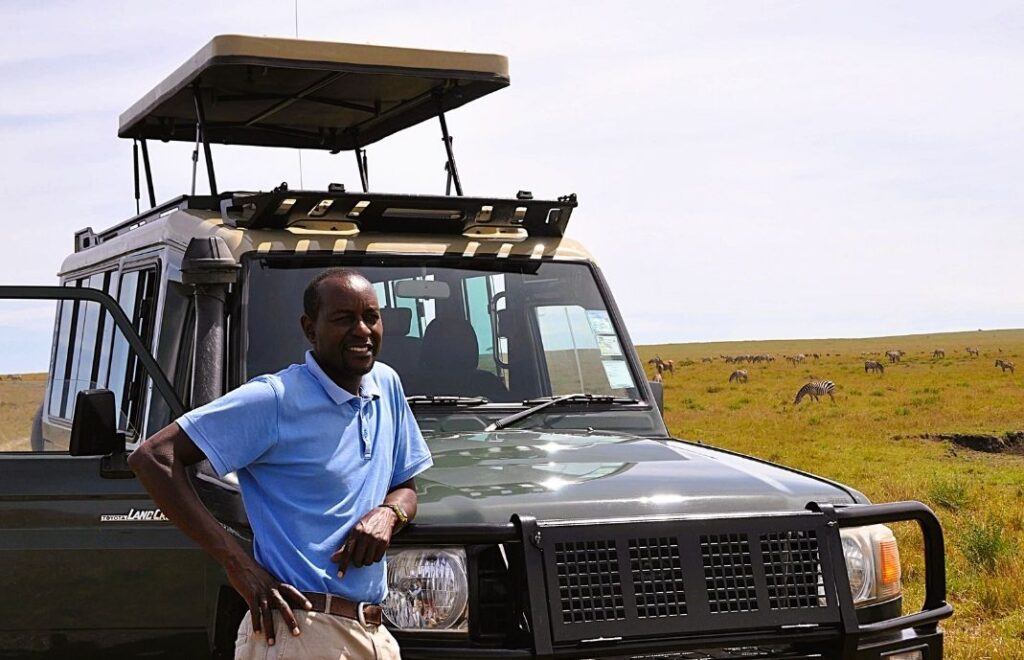
Why do you tip on a safari?
In Africa it is customary, but not mandatory or obligatory, to give tips to service staff. It’s a way of showing appreciation to the people who help make your journey special. A safari may look effortless from the outside, but behind every game drive, meal, clean room, luggage transfer, and warm welcome, there is a team working long hours to create a smooth and memorable experience.
Your guide may spend hours tracking wildlife, reading animal behavior, positioning the vehicle for the best sightings, and sharing knowledge about the landscape. Trackers, drivers, lodge staff, chefs, waiters, porters, housekeeping teams, and camp managers all play a part in the experience as well.
In many safari destinations, tips are an important addition to local income. Tips are not usually meant to replace fair wages, but they can make a meaningful difference to the people working in camps, lodges, parks, and tourism communities.
Tipping is also a personal gesture. It says thank you for patience, care, expertise, early mornings, late evenings, and all the small details that often turn a good safari into a truly unforgettable one.
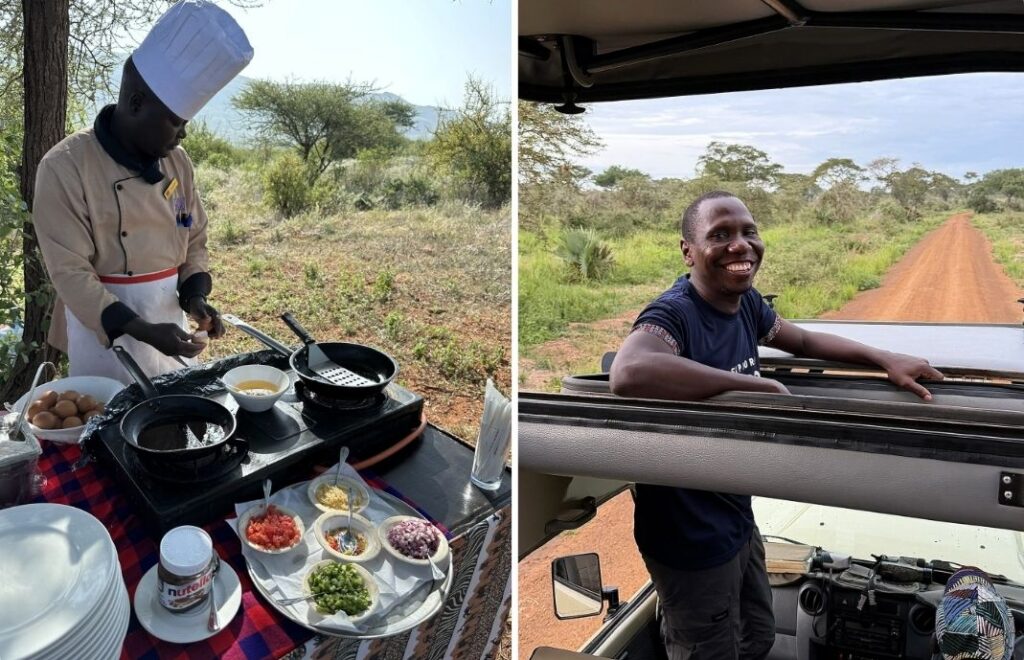
Should you tip on a safari?
This is hard to answer, but I recommend you do it if you are happy with the service provided by the staff taking care of you. Tipping is a part of the African culture, and even though it is not part of culture at home, please take it into consideration. A safari is expensive, but most people can afford to tip $100.
Let’s look at it from the staff’s perspective. Instead of thinking about tipping as “free money” for the staff or a simple “thank you”, you should consider the following:
- The staff spend a lot of time away from family, friends, and home. They can be on duty for weeks at a time, as it is not easy to get in and out of the bush. A tip is compensation for not being able to return home after a long day at work.
- The expense incurred traveling home. Most staff live in far-flung rural areas or cities that are difficult and expensive to get to. Your tip helps the staff reunite.
- The long hours that the staff work. If you think you must get up early for the morning safari, you can be sure the driver-guide was up way before you. Same goes for the staff at the lodge, who prepare coffee and tea and deliver a 5 am wake-up call. They all go to bed long after you have turned in for the night. The staff clean up, prepare the vehicle, patrol the lodge area, and perform endless other tasks to ensure your stay is as perfect as possible.
- The extra lengths the staff do to make your stay as memorable as possible. That goes from remembering your name, making your perfect cocktail without asking, leaving a towel folded as your favorite animal on your bed, or extending the game drive so you can see as many animals as possible. Staff members in Africa go way out of their way to cater for you, and they always do so with a smile and friendliness.
The staff do so many things that go unnoticed by the guests. They ensure our safety, comfort, health, and nutrition – among many things. While you are out enjoying your game drive, the staff deal with behind-the-scenes drama and should be rewarded.

Who do you tip on a safari?
Generally, tips are given to workers who are not “professionals”, except for guides and spa therapists.
You should tip:
- Front-of-the-house staff: Guides, spotters, trackers, waiters, spa therapists, and transfer drivers.
- Back-of-the-house staff: Cleaners, cooks, gardeners, maintenance workers, guards, and anti-poaching units.
You usually don’t tip:
- Lodge and camp managers
- Lodge or tour owners
- Pilots
- Cabin crew
- Airport desk staff
- Sales assistants in safari shops
- Medical or evacuation crews
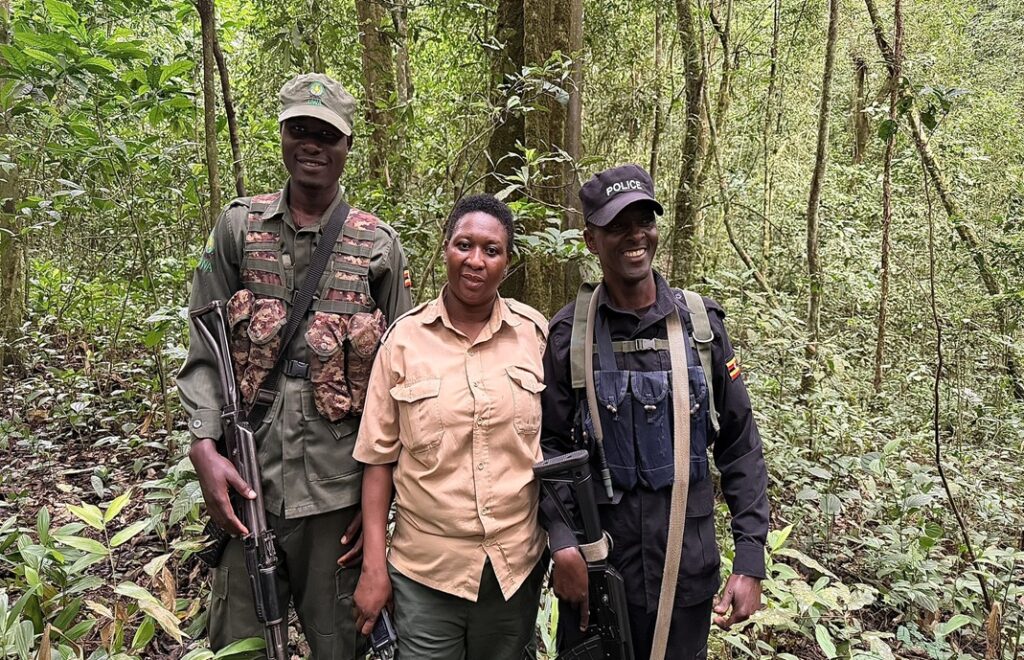
How to tip on safari
There is no set rule or uniformity of tipping on safari. Every camp or lodge has its own system.
Generally, these are the most common methods:
Placing cash in a communal tip box
The box is in the main area and is the easiest option. You simply put the tip into a locked box. The manager shares the tips among the staff. This system eliminates any awkwardness about handing over money and does not allow staff to know how much each guest tipped them.
Handing cash to individual staff
Also an option, but this way makes it clear that you are tipping some and not others. It also reveals how much you are tipping.
Leaving cash in your room when you check up
This is not recommended as staff may assume you forgot it and will call your guide to return. Staff are well trained not to “steal” and will hand over anything found in your room to the lodge manager. Honesty is a big part of running a successful lodge.
If you do decide to leave cash in your room, make sure you leave a note explaining the money is tip for great service. That way there is no confusion.
Adding it to a credit card bill
This is only possible in a few lodges and camps with credit cards machines. These machines attract heavy surcharges, and many camps don’t have them. But it can be a lifesaver if you are short of cash.
How much do you tip on a safari?
It’s a tricky question as the amount of tipping includes many factors: the service you received, your personal budget, your thoughts about gratuities etc. A good rule is to tip as much as you can when the moment comes.
Remember: No matter how much you tip, don’t apologize for the amount. Hand it over and say thank you sincerely. The staff always welcome gratitude, appreciation, and recognition.
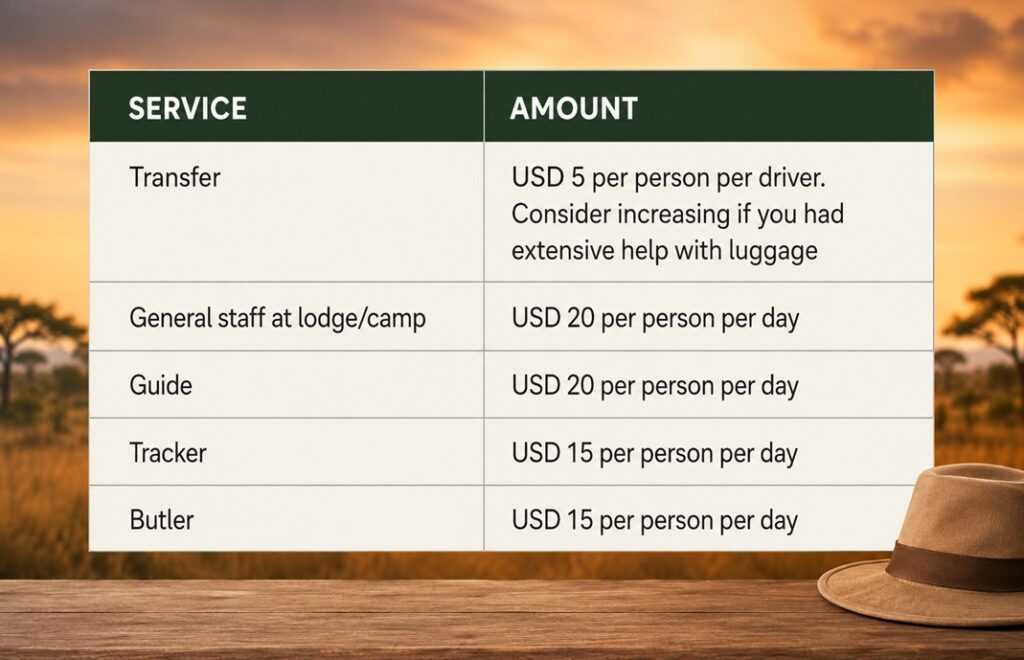
How to make tipping easier
I have done around 70 safaris across Africa, and here are some practical suggestions that will make tipping on safari easier.
1. Study your itinerary
Mark the instances where you think it is expected to tip. This can be your driver, porters, waiter, guides, and staff at lodges/camps. Also note how much you want, or can afford, to tip them.
2. Bring cash with you
Although most countries in Eastern and Southern Africa have ATMs (cash machine) at the airport and bigger cities, don’t rely on this.
Bring USD (American dollars) in cash with you from home. This currency is the most widely accepted across Africa. It is also much easier to stick to one currency if you are crossing borders.
3. Get small bills
Small bills such as USD 5, 10, and 20 are easier to hand over. Few places can break $50 or $100 notes.
4. Keep your cash secure
Use the safe in your room. If there isn’t one, ask the manager to put your money and passport in the lodge’s safe.
5. Divide the tips into separate envelopes
Split the tip either per day, per guide, or per accommodation. This makes it easier to keep track of your cash.
