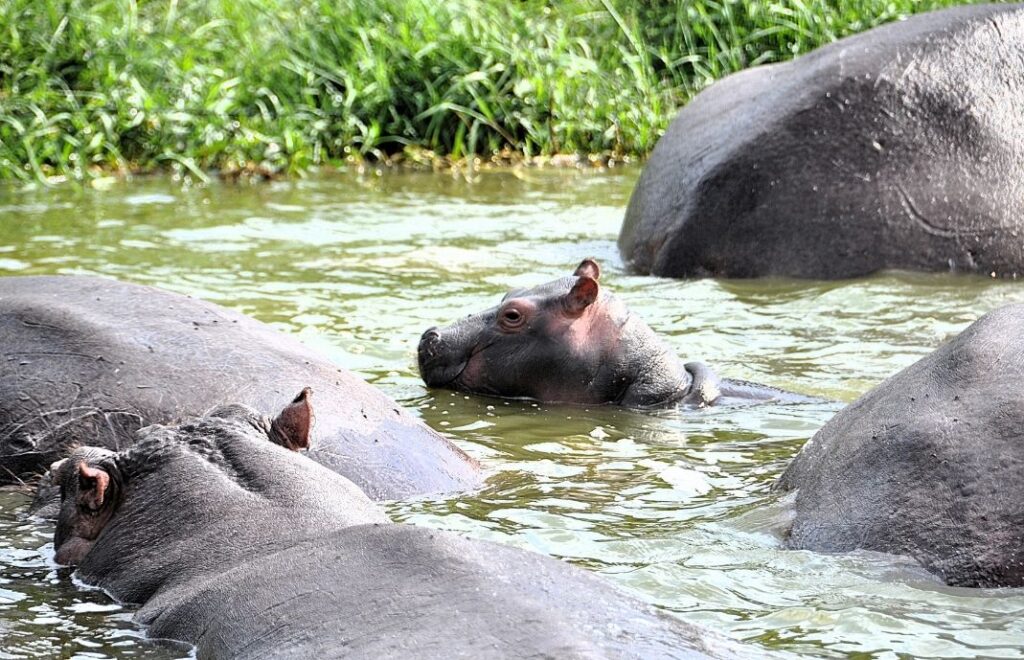
A hippo’s diet and feeding habits are fascinating. It’s massive size, wide mouth, razor sharp incisors, big yawn, and bad temper will impress any traveler. But it also makes you wonder what these enormous animals eat.
Hippos are the third largest land mammal on earth, following the elephant and rhino. An adult hippo weighs between 1,500 to 1,800 kilos and stands at about 1,5 meters tall.
As you venture out on your safari, you are likely to find hippos in the water and not feeding. Being the third largest land animal requires a lot of food. Hippos feed through the night, on land. You might see a few hippos feeding on the riverbank during the day, but this comprises a very tiny portion of their total food intake.
What do hippos eat?
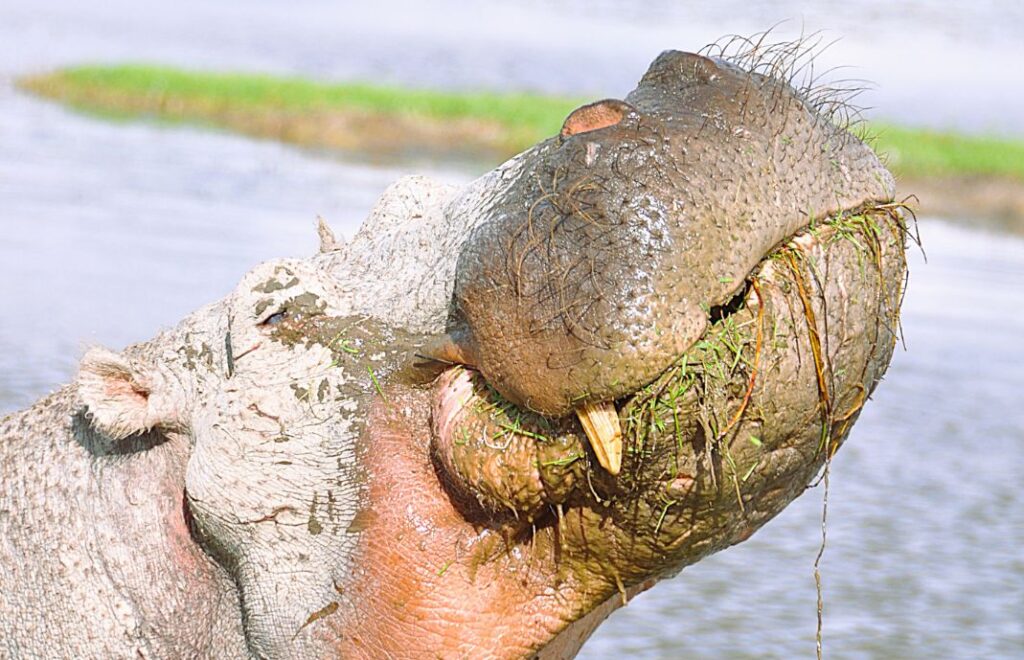
Thanks to their size, hippos look like animals that could eat almost anything, but they are mainly herbivores. Their diet consists mostly of grass, and they eat the same short grass that other herbivores like zebras and buffalos feed on.
During the day, hippos spend much of their time resting in rivers, lakes, or wetlands to keep their massive bodies cool. When evening comes, they leave the water and walk onto land to feed. A single hippo can travel several kilometers in search of fresh grazing areas.
Although they live in water, hippos do not normally eat fish or aquatic plants as a major part of their diet. Their food is found mostly on land, and their daily rhythm is closely connected to water for safety and cooling, and grasslands for feeding.
This simple grass-based diet may seem surprising for such a large and powerful animal, but it is exactly what keeps hippos thriving in Africa’s rivers, floodplains, and savannah landscapes.
Feeding adaptions of hippos
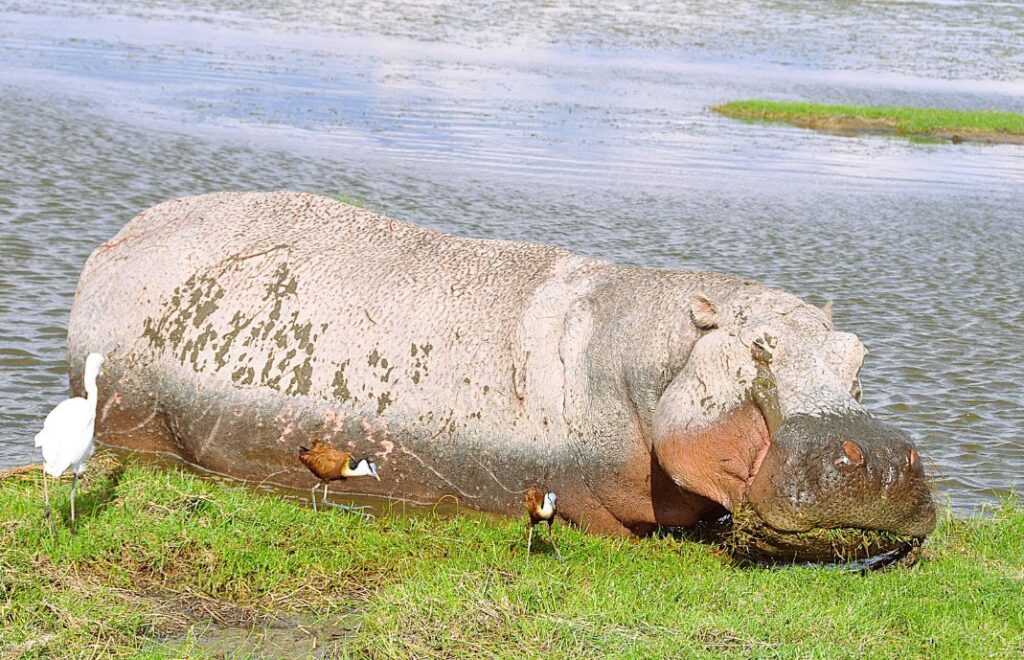
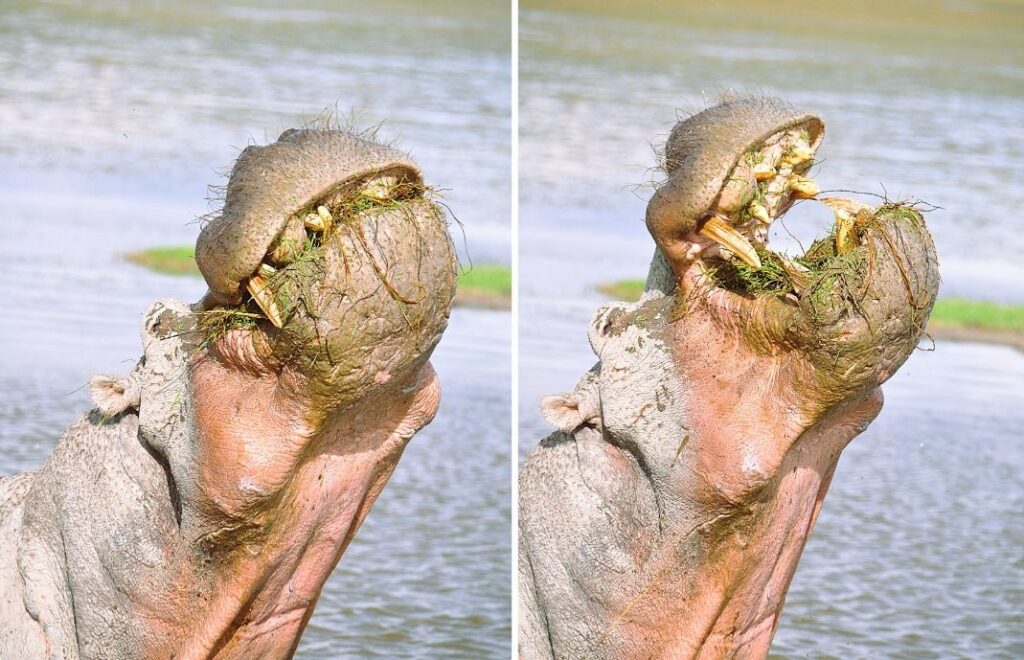
Even though hippos spend much of their day in the water, they are well adapted to grazing. Their wide mouths and strong lips help them pull up grass efficiently, while their large, powerful jaws allow them to bite through tough vegetation.
Despite their huge canine teeth, hippos do not use these for eating grass. The tusk-like teeth are mainly used for fighting and display, especially between males. For feeding, their lips, jaws, and grinding teeth are far more important.
The hippo’s digestive system is also adapted to a plant-based diet. They have a large, complex stomach that helps break down fibrous grasses, allowing them to get energy from relatively simple vegetation. This makes it possible for such a massive animal to survive mainly on grass.
Feeding habits of hippos
Hippos do most of their feeding at night. After spending the day resting in rivers, lakes, or wetlands, they leave the water after sunset and walk onto land to graze.
They usually follow familiar paths to feeding areas and may travel several kilometers in one night. Even though they are large and heavy, hippos can move surprisingly well on land when searching for fresh grass.
Hippos are selective grazers. They often use their strong lips to crop grass close to the ground rather than pulling it out by the roots. This allows the grass to regrow and helps maintain the grazing areas they return to repeatedly.
Most of the day is spent conserving energy in the water, while the night is for feeding. This rhythm makes the hippo perfectly suited to life between two worlds – the safety of water and the grasslands that sustain it.
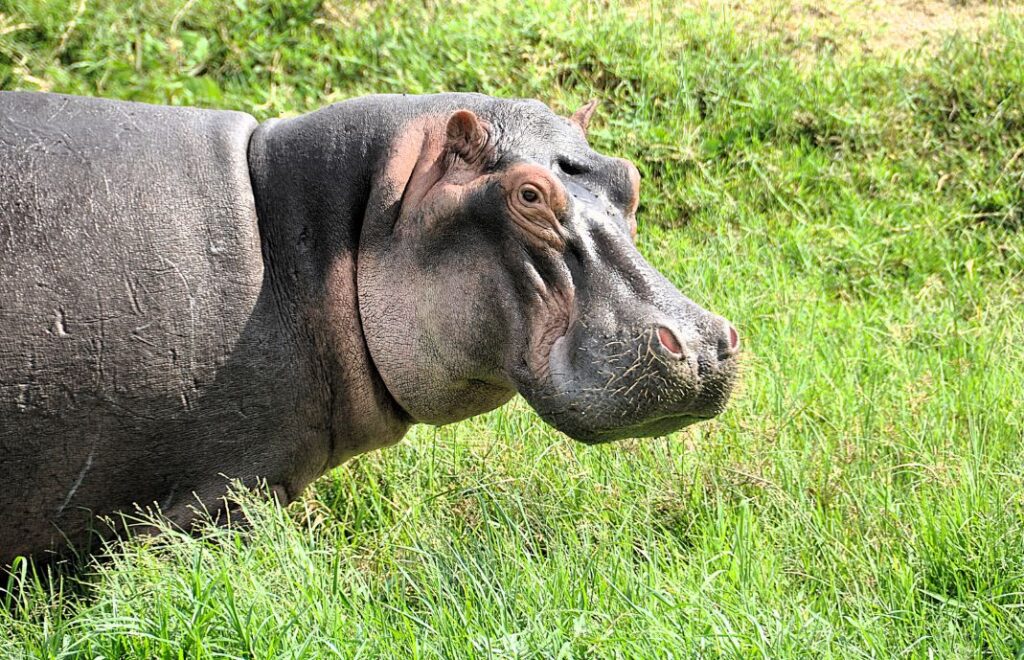
Do hippos eat meat?
Hippos are mainly herbivores, and their normal diet consists almost entirely of grass. However, hippos have occasionally been observed eating meat or scavenging from carcasses. This behavior is unusual and not considered a normal part of their diet. It may happen during times of stress, food shortage, overcrowding, or when an easy food source is available.
Even though hippos are not true carnivores, their size, strength, and powerful jaws make them extremely dangerous animals. Their reputation comes less from what they eat and more from their territorial nature, especially in and around water.
So, while hippos can sometimes eat meat, they are still best understood as grazing animals. Grass remains the foundation of their diet and the food source they depend on most.
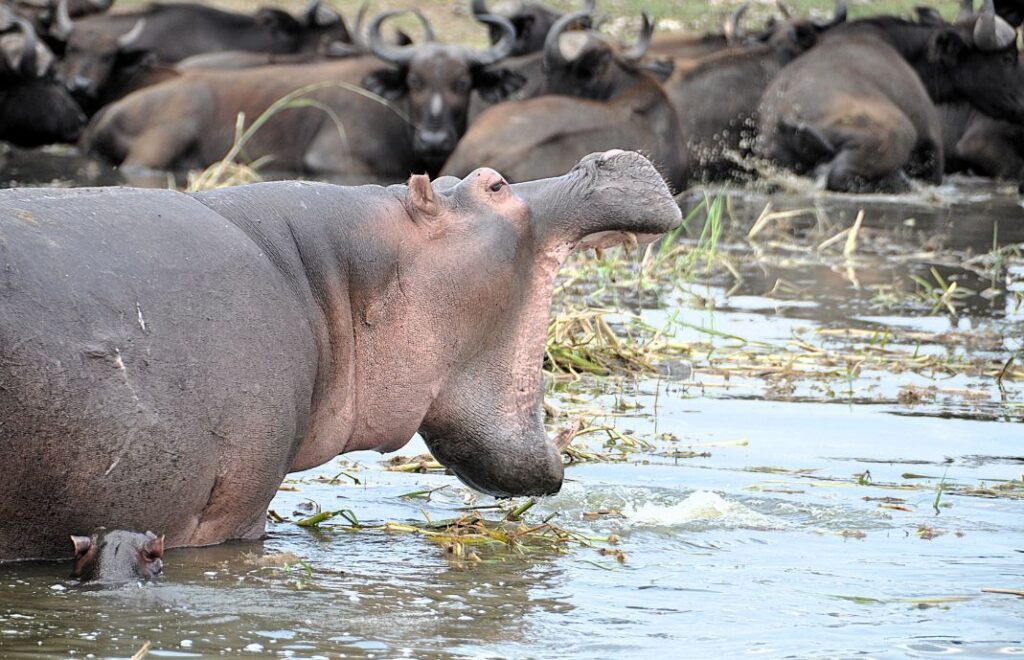
How do baby hippos eat?
Baby hippos, called calves, begin life by drinking their mother’s milk. They can even nurse underwater, which is unusual and perfectly suited to their semi-aquatic lifestyle.
In the first weeks and months, milk is their main source of nutrition. As they grow stronger, young hippos gradually start nibbling on grass and learning the same grazing habits as adults. They usually follow their mother closely, both in the water and when moving onto land to feed.
This early bond is important for survival. The mother protects her calf from predators and from other hippos, while the calf learns where to rest, when to leave the water, and how to graze safely at night.
Over time, the calf becomes more independent, but its first lessons in feeding come from staying close to its mother and copying the rhythm of adult hippo life.
More inspiration: Why hippos don’t eat fish – according to the Kikuyu people