“This war,” declared Adolf Hitler before the Reichstag in 1942, “is one of those fundamental conflicts that herald a new millennium destined to shake the world.”
On that point, he was correct – though not as he intended. His so-called Thousand-Year Reich crumbled in ashes less than three years later.
For anyone fascinated by World War II history, Berlin is nothing short of essential. No other German city bears the scars of Nazism so visibly, nor tells its story so vividly. Here, the stormtroopers of the SA clashed brutally with communists in the streets. From here, the Nazi regime orchestrated its vast, devastating empire. And here, in the city’s shattered ruins, the Third Reich met its bloody end.
Today, Berlin invites you to explore those layers of history on foot. It’s a journey through sites where decisions that altered the course of humanity were made, where heroes who dared to resist paid the ultimate price, and where the haunting echoes of war remain etched into the cityscape.
This isn’t just sightseeing. It’s a walk through the very heart of a past that shaped the modern world – and a sobering reminder of how fragile freedom can be.
In the footsteps of war
When the roar of bombs finally fell silent, World War II had raged for 2,174 days, cost an unfathomable $1.5 trillion, and claimed over 50 million lives – an average of 23,000 deaths every single day, six lives extinguished every minute.
Berliners are far from proud of this chapter in their history, yet they no longer hide from it. Take Hitler’s Führerbunker, for instance – a location concealed for decades. Today, its site is marked by a simple information board, standing just a few steps from the Memorial to the Murdered Jews of Europe. The irony is as stark as the lesson it carries.
This openness makes Berlin one of the most compelling cities in the world for history enthusiasts. Though Nazism collapsed more than 80 years ago, its remnants remain embedded in the city’s fabric.
Some monumental structures survived the devastation, while others have been reborn as memorials and museums. A few massive bunkers still loom over neighborhoods – so heavily reinforced with concrete that they defied demolition. Walk down almost any street, and you might spot bullet scars on an old brick wall – mute witnesses to the Soviet assault in April 1945.
To wander these streets is to experience a deep paradox – fascination and horror intertwined. Berlin wears its past openly, its memorials standing as solemn sentinels against forgetfulness, warning future generations with silent conviction: This must never happen again.
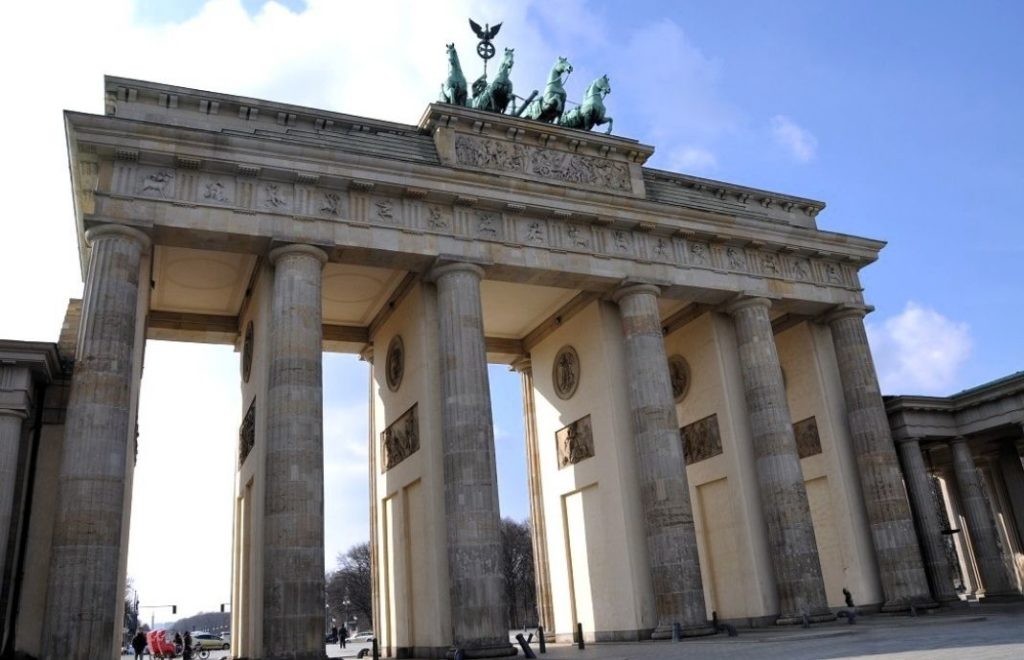
Brandenburg Gate – From Nazi triumph to reunification
Your journey begins at Brandenburger Tor, Berlin’s most iconic landmark and a structure steeped in layers of history. Once the ceremonial gateway to the city, it later stood as a potent symbol of division during the Cold War, stranded in the no-man’s land of the Berlin Wall. Today, it represents unity and freedom, a powerful emblem of Germany’s reunification in 1989.
But its history is darker still. On January 30, 1933, as Hitler seized power, 25,000 SA stormtroopers gathered here, torches in hand, chanting and singing as they marched down Wilhelmstrasse toward Hitler’s new seat of power, the Reich Chancellery.
It was a chilling prelude to the regime that would plunge the world into chaos.
Address: Pariser Platz / Wilhelmstrasse
Reichsluftfahrtministerium – Göring’s powerhouse
Continuing down Wilhelmstrasse, once the beating heart of Nazi power, you’ll find reminders of the regime’s inner circle etched into the cityscape. Many buildings here, including the Reich Chancellery, were obliterated when the Red Army stormed Berlin in 1945. Today, discreet information panels recount the lives – and crimes – of Nazi leaders like Himmler, Göring, Goebbels, and Hess, who once prowled these streets.
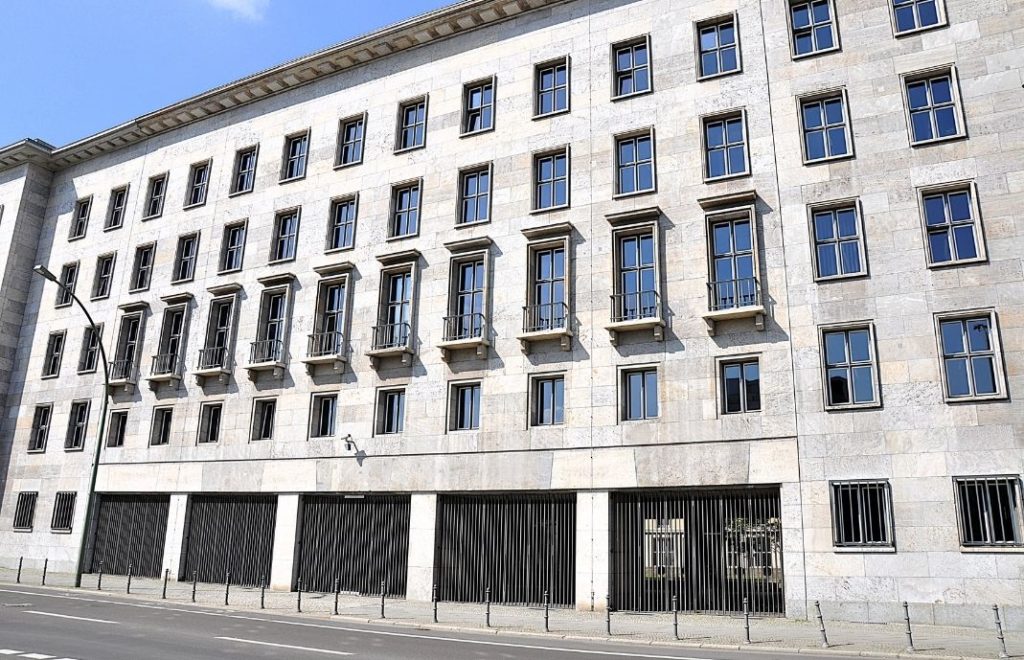
Amid the ruins of history, one monolithic survivor still stands: the Reichsluftfahrtministerium – Hermann Göring’s Air Ministry. Built from gray sandstone and sprawling across an entire block, it was, with its 2,000 offices, the largest office building in Berlin at the time. Remarkably, it emerged from the war almost unscathed.
Now housing the German Ministry of Finance, this massive structure is a sobering relic of Nazi ambition and bureaucratic might. Back then, it was meant to spearhead the rise of the Luftwaffe, the air force that Hitler placed such faith in. Yet Göring, bombastic and corrupt, proved disastrously inept.
- The Luftwaffe failed to defeat Britain in the skies during the Battle of Britain (1940).
- His bold promise to resupply 200,000 German troops encircled at Stalingrad from the air collapsed in humiliating failure (1943).
Göring’s response to these debacles? To deflect blame onto his pilots.
Address: Wilhelmstrasse 97
Gestapo Headquarters – The nerve center of terror
Your next stop brings you to one of the most chilling addresses of the Nazi era: Prinz-Albrecht-Strasse, now renamed Niederkirchnerstrasse 8 in honor of a female communist resistance fighter.
Here stood the headquarters of the Gestapo, Hitler’s dreaded secret police. This was the epicenter of fear, where countless victims were interrogated, tortured, and sentenced to death. The Gestapo’s neighbors were equally sinister – the SS leadership and the intelligence service, SD – forming a triangle of terror overseen by Heinrich Himmler, the architect of the Holocaust and chief orchestrator of Nazi brutality.
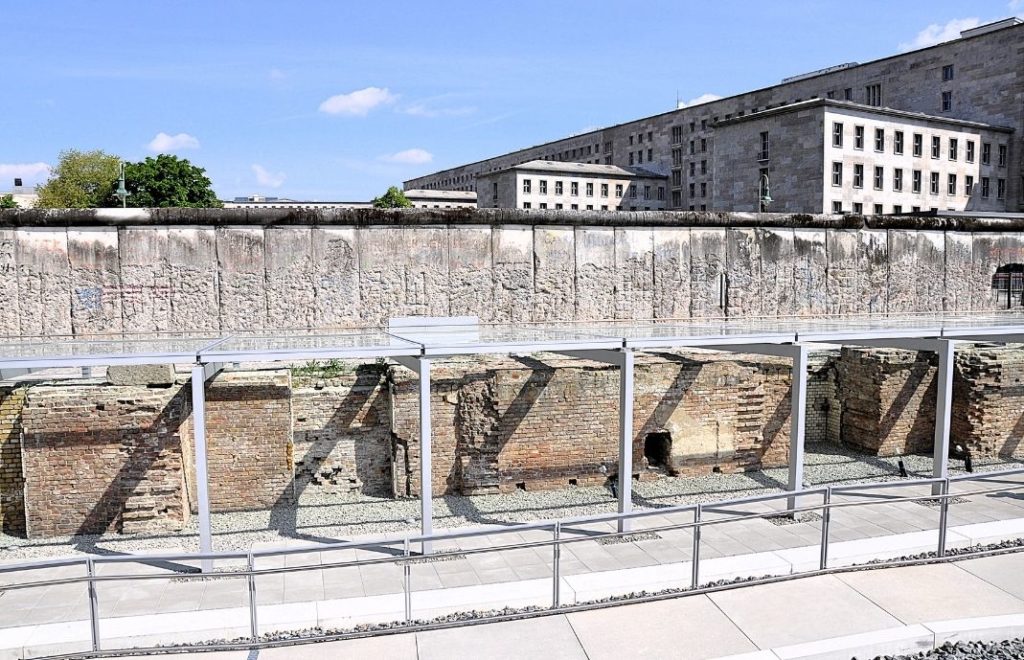
The original complex was reduced to rubble during the war, but its foundations remain – a skeletal reminder of a regime built on surveillance and violence. Today, these remnants form part of the Topography of Terror, a harrowing open-air museum. Along the preserved cellar walls, you’ll find powerful photo panels and detailed exhibits that lay bare the Gestapo’s role in a machinery of oppression that claimed millions of lives.
Standing here, amid stark ruins and haunting images, is an unflinching encounter with the darkest chapter of Berlin’s history – a place where silence speaks louder than words.
Address: Niederkirchnerstrasse 8
The Berlin Wall – The “Wall of Shame”
At this stop, you’ll come face-to-face with one of the most powerful symbols of the Cold War: the remnants of the Berlin Wall. For nearly three decades, this barrier carved a scar through the heart of the city, dividing East and West Berlin – and by extension, two opposing worlds.
The wall was more than concrete; it was a sprawling, 45-kilometer-long death strip fortified with barbed wire, guard towers, electric fences, and armed patrols. It earned the grim moniker “The Wall of Shame”, a stark embodiment of political oppression and isolation.
Between 1961 and 1989, more than 8,000 East Germans attempted the perilous escape across this fortified frontier. Around 3,000 were captured, 5,000 succeeded, and 136 paid with their lives, gunned down or fatally injured as they chased freedom.
Then came the night that changed everything: November 9, 1989. In a single euphoric moment, the wall crumbled – physically and ideologically – marking the end of an era and the beginning of Germany’s reunification.
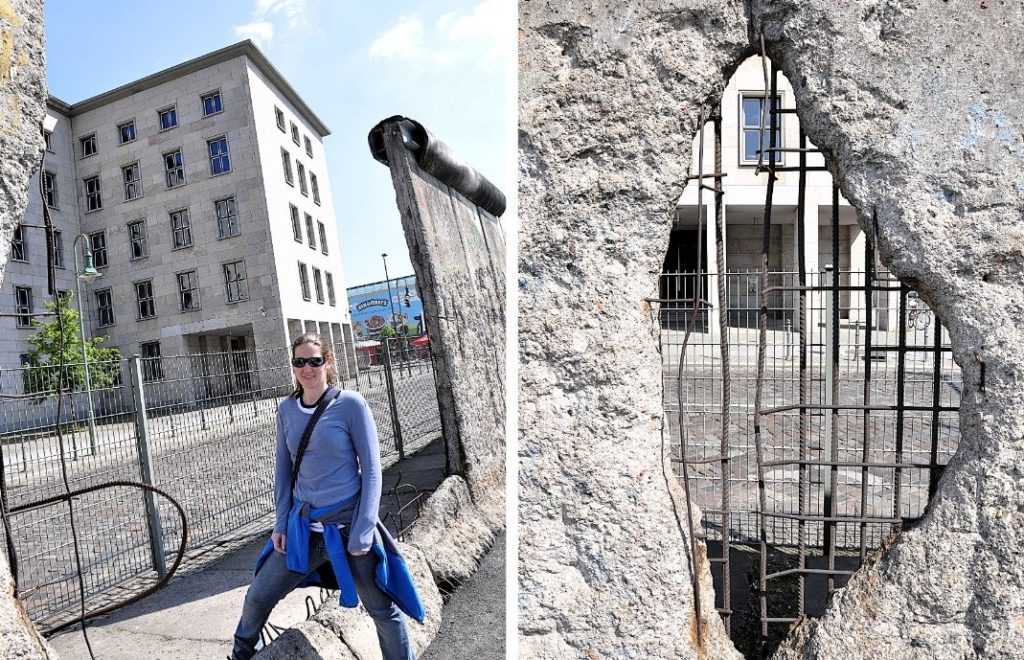
Today, very little of the wall remains, but here – next to the Gestapo headquarters and the Topography of Terror exhibit – you can still see a preserved section. Standing before it, you can trace the cracks, feel the cold surface, and imagine the countless stories of hope, fear, and resilience it once bore witness to.
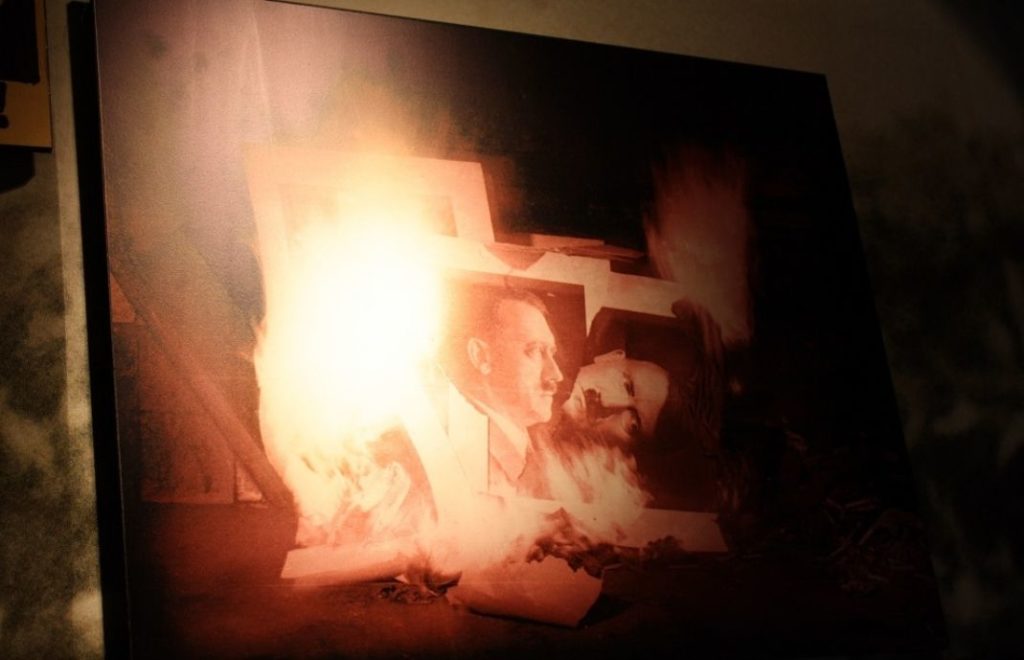
Bebelplatz – Where books turned to ashes
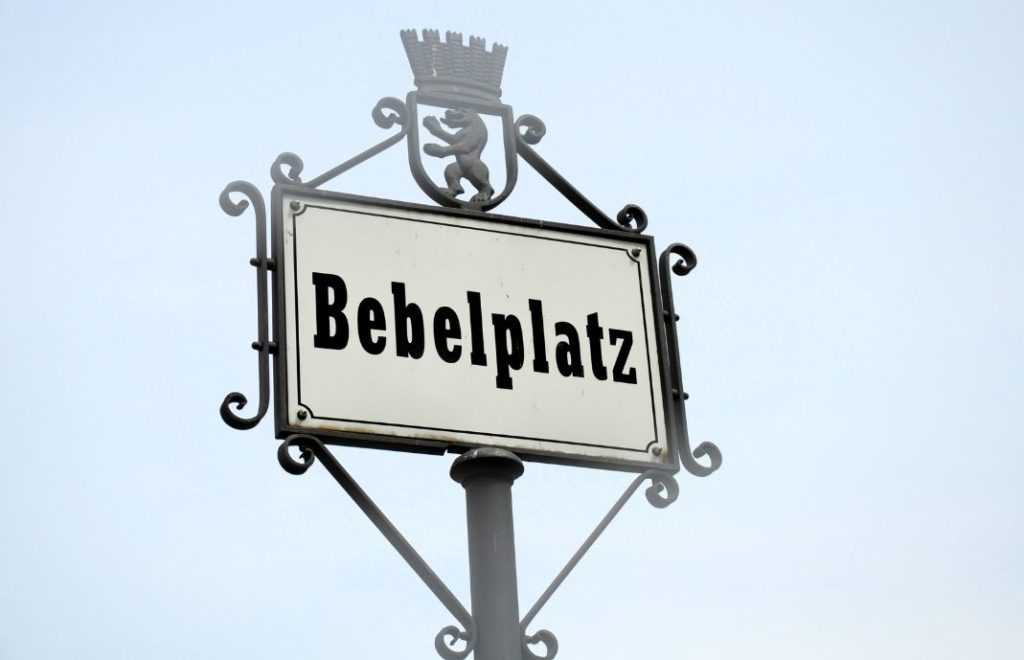
In the heart of Berlin lies Bebelplatz, a square framed by grand architecture – and haunted by a grim memory. On the night of May 10, 1933, flames devoured 25,000 books deemed “un-German.” This orchestrated purge was carried out by SA stormtroopers and university students, cheered on by Nazi propaganda, as part of a chilling campaign to control thought and culture.
Today, a subtle yet striking memorial confronts this act of cultural vandalism. Set into the cobblestones, a glass panel reveals empty white bookshelves – enough to hold those 25,000 volumes that once fed the flames. The void speaks louder than any words: a warning against censorship, intolerance, and the fragility of intellectual freedom.
As you stand here, take a moment to read the bronze plaque inscribed with Heinrich Heine’s prophetic line from 1821: “Where books are burned, in the end, people will be burned.”
Address: Bebelplatz
Bendlerblock – Where courage faced certain death
Tucked near Berlin’s Tiergarten, Bendlerblock (now Stauffenbergstrasse) holds one of the most dramatic chapters in German wartime history. During the Nazi era, this imposing complex served as a hub for military administration – where the machinery of war was planned and directed.
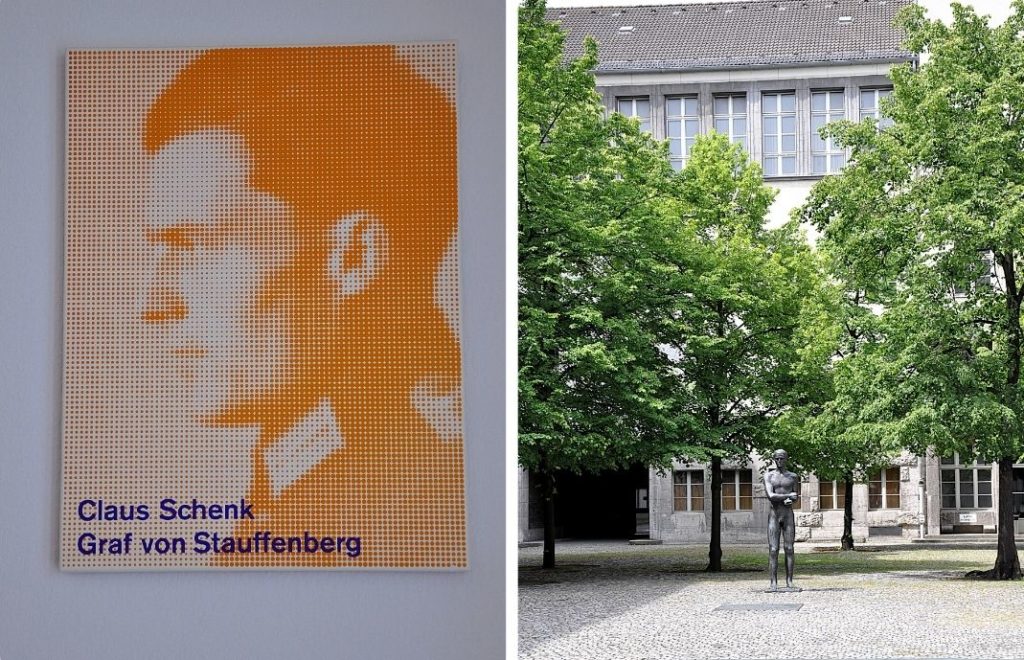
But it was also here, in July 1944, that a handful of officers dared to defy tyranny. The July 20 plot, an audacious attempt to assassinate Hitler and seize control of the government, was spearheaded by Colonel Claus von Stauffenberg. He planted a bomb inside Hitler’s command center in East Prussia, hoping to end the dictator’s life and the nightmare engulfing Europe.
The plan failed. Within hours, Stauffenberg and his fellow conspirators were arrested. That same night, in the dim light of Bendlerblock’s courtyard, they were executed by firing squad – becoming martyrs for a cause that came too late, yet remains profoundly symbolic.
Today, Bendlerblock houses the German Resistance Memorial Center, an evocative museum that chronicles acts of defiance against the Nazi regime. Its exhibits tell stories of moral courage in an age of fear – ordinary men and women who risked everything to resist absolute power.
Address: Stauffenbergstrasse 13-14
Hitler’s Führerbunker – The final act
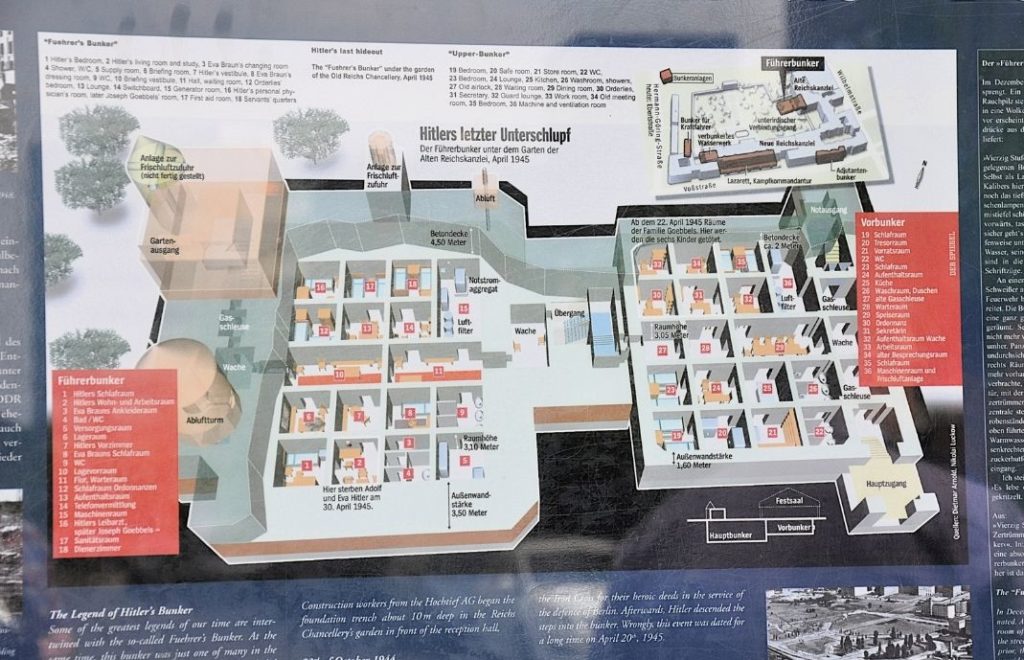
The last stop on this journey through Berlin’s dark past is one of its most infamous: the site of Hitler’s Führerbunker, tucked away on Gertrud-Kolmar-Strasse. This was the fortified underground complex where Adolf Hitler spent his final days as the Red Army closed in on Berlin – and where, on April 30, 1945, he took his own life alongside Eva Braun.
Ironically, there is nothing left to see of the bunker itself. After the war, Soviet engineers attempted to demolish it. Their efforts failed, so the remains were simply buried under tons of rubble and earth. Today, the spot is an ordinary parking lot, marked only by a discreet information board – a stark reminder that history’s most consequential events can echo in the most unassuming places.
Standing here, it’s hard to imagine the chaos and despair that once gripped these grounds: the collapse of a regime that promised a thousand-year Reich but fell in just twelve. This is where Hitler’s Berlin ended – and where your walk through history does too.
Address: Gertrud-Kolmar-Strasse
Don’t miss these additional stops
Your WWII and Cold War journey through Berlin doesn’t end at the Führerbunker. A few more iconic and poignant sites lie just steps – or a short stroll – away:
Holocaust Memorial – Memorial to the Murdered Jews of Europe
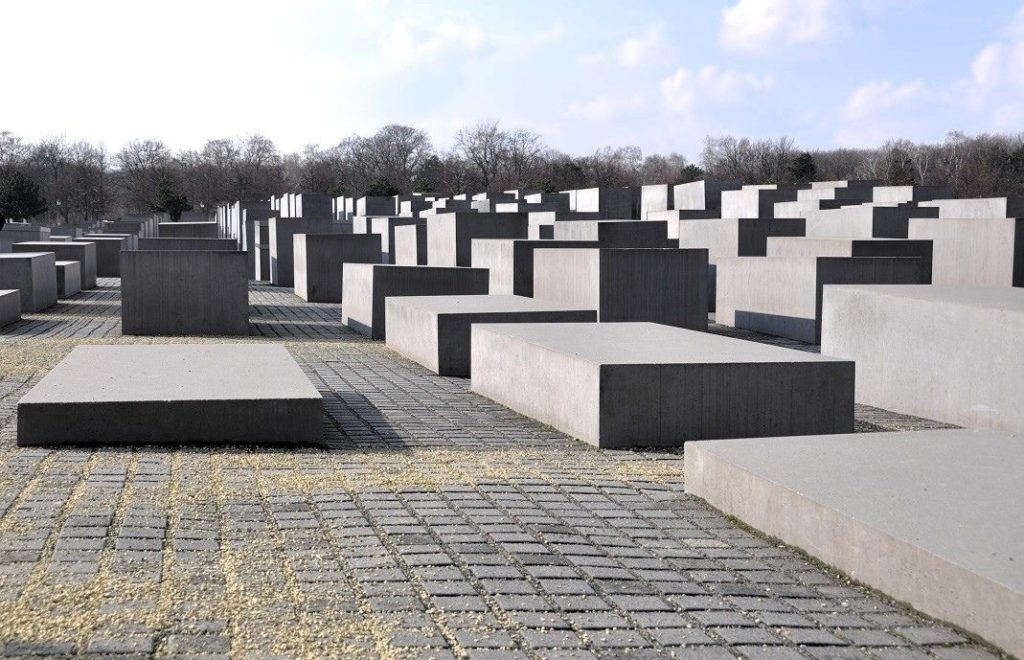
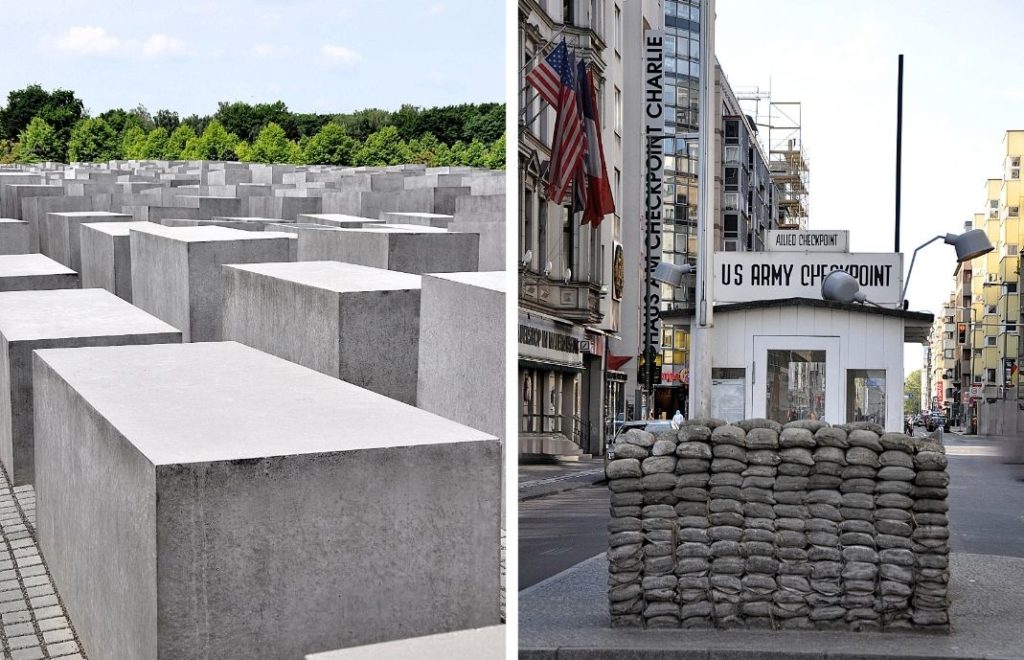
In stark, almost poetic irony, the concrete stelae of the Holocaust Memorial rise just a few meters from where Hitler’s Führerbunker once lay. This vast field of 2,711 gray slabs invites quiet reflection on the unimaginable loss of six million Jews. Walk among the towering columns, feel the disorienting slopes, and let the silence speak.
Checkpoint Charlie – The icon of division
Once the most famous border crossing between East and West, Checkpoint Charlie stood as the tense flashpoint of the Cold War. Today, the original structures are gone, but the recreated guardhouse and sign – “You are leaving the American Sector” – remain a magnet for visitors and photo ops.
Museum Checkpoint Charlie, just steps away, offers a gripping, chronological narrative of the Berlin Wall, daring escape attempts, and life in a divided city.
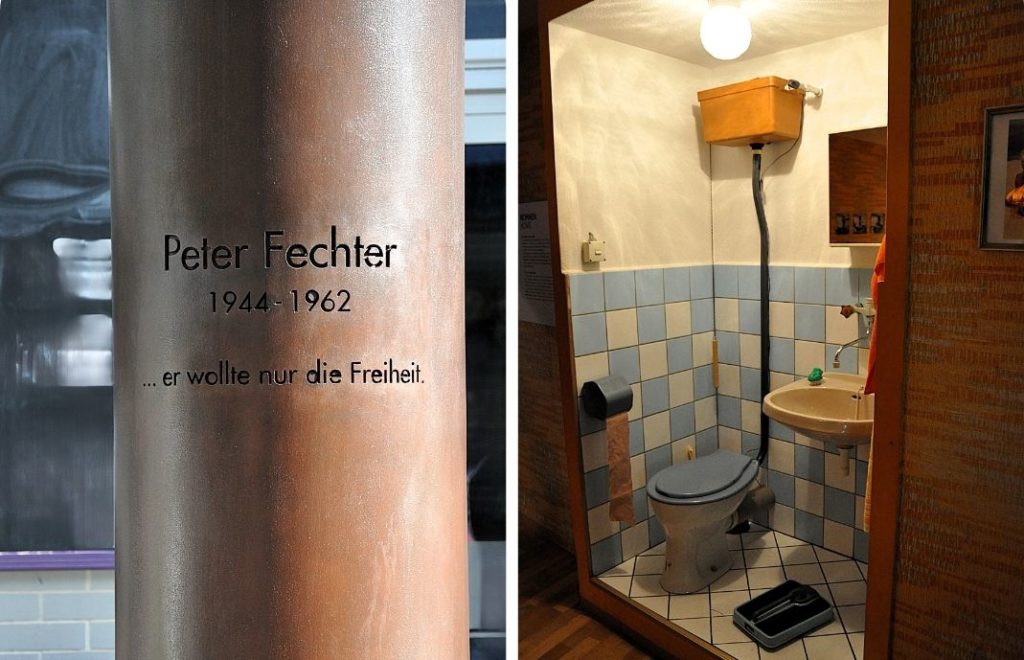
Peter Fechter Memorial – A tragic symbol
A short walk from Checkpoint Charlie, a small but powerful memorial marks the spot where 18-year-old Peter Fechter was gunned down in 1962 while attempting to flee East Berlin. Left to bleed to death by border guards, his death became a symbol of the Wall’s brutality.
DDR Museum – Life behind the Wall
Wrap up your historical deep dive at the DDR Museum, an interactive experience that immerses you in everyday life under East German communism. Sit in a Trabi, browse a recreated socialist-era apartment, and explore a world defined by surveillance and scarcity.
Hitler’s Berlin – Stop by stop
1. Brandenburger Tor
Berlin’s most iconic landmark – once a stage for Nazi parades and later a symbol of Cold War division. Today, it represents freedom and unity.
Address: Pariser Platz / Wilhelmstrasse
2. Göring’s Reichsluftfahrtministerium
The massive gray-sandstone building that housed Hermann Göring’s Air Ministry, almost unscathed by war. Today, it’s home to the German Finance Ministry.
Address: Wilhelmstrasse 97
3. Gestapo Headquarters & Topography of Terror
The heart of Nazi terror, where Gestapo and SS coordinated mass persecution. Now an open-air memorial and documentation center.
Address: Niederkirchnerstrasse 8
4. Ministry of Propaganda (Joseph Goebbels)
Goebbels orchestrated the regime’s propaganda machine here, fueling Nazi ideology across Germany and beyond.
5. Bebelplatz – The Book Burning Site
Where 25,000 “un-German” books were burned in May 1933. Today, an underground memorial of empty bookshelves commemorates the loss.
Address: Bebelplatz
6. The Synagogue on Oranienburger Strasse
A surviving symbol of Jewish life in Berlin, partially destroyed during Kristallnacht but rebuilt as a memorial and cultural center.
7. Air Raid Shelters
Remnants of underground bunkers still exist, with some open for guided tours showing Berliners’ wartime survival strategies.
8. Germania – The Unfinished Dream
Hitler’s grandiose vision for a “world capital” left behind a few eerie traces, like Schwerbelastungskörper, a massive concrete test structure.
9. Memorial to the German Resistance (Bendlerblock)
Where Claus von Stauffenberg and fellow conspirators were executed after the failed July 20 plot to assassinate Hitler.
Address: Stauffenbergstrasse 13-14
10. Führerbunker (with Holocaust Memorial nearby)
The site of Hitler’s suicide, now just a parking lot with an information board. A few steps away lies the Memorial to the Murdered Jews of Europe.
Address: Gertrud-Kolmar-Strasse
Don’t miss these Cold War highlights
- Checkpoint Charlie – Iconic crossing point between East and West Berlin.
- Mauermuseum Checkpoint Charlie – Tells stories of daring escapes and Cold War espionage.
- Peter Fechter Memorial – Honors the 18-year-old killed during an escape attempt in 1962.
- DDR Museum – Interactive insight into daily life in East Germany.
Source: Illustrastred History