
One foot in the West and one foot in the East. Still caught in the past yet looking to the future. Tbilisi brims with history and has a dramatic setting on hillsides either side of the swift Mtkvari River. Its Old Town, in the narrowest part of the valley, is still redolent from an ancient Eurasian crossroads. This charming part offers winding lanes, old balconied houses, leafy squares, handsome churches and countless busy bars and cafes. It is all overlooked by the 17-century old Nariqala Fortress.
Georgia’s capital is also a modern city trying to move forward in the 21st century. Its streets are crowded with pedestrians, construction and hurling (or crawling) traffic. New building projects, museums and parks coexist with crowded old markets and shabby Soviet apartment blocks.
Tbilisi is the beating heart of Georgia and should not be missed by any visitor.
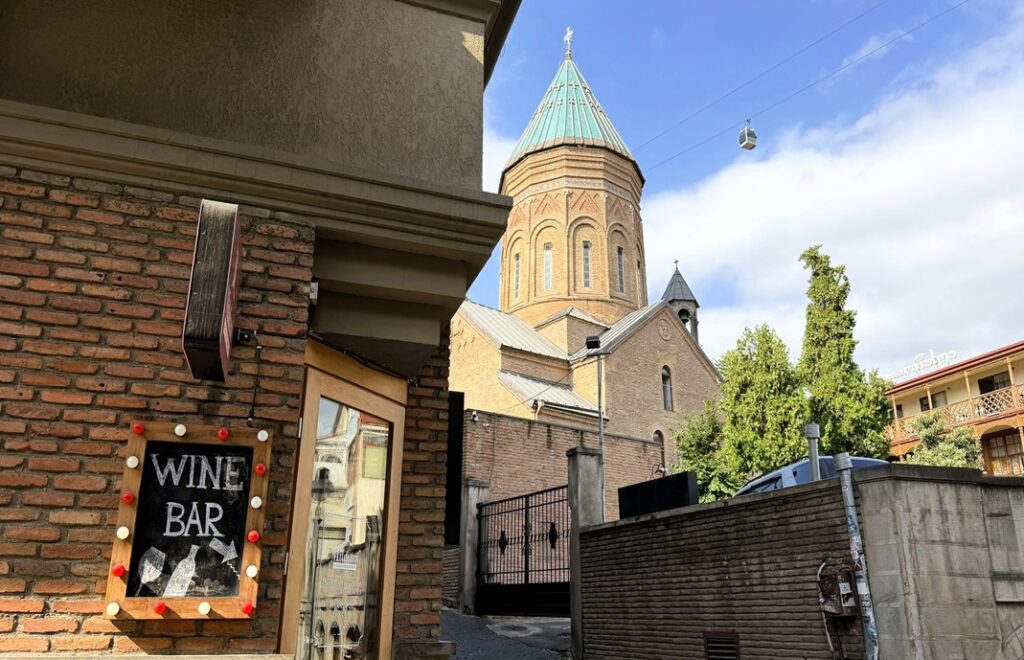
The ancient soul of Tbilisi
About a third of Georgia’s 3,6 million people live in Tbilisi. Yet, the country’s capital is not a gigantic city. For most visitors, the main attractions are within walking distance.
Tbilisi is one of Europe’s oldest cities, and has been the cultural, political, and economic center of Georgia for fifteen centuries. The Old Town (Qala), where Tbilisi began, is the most fascinating area for exploring. Tbilisi grew up below the walls of the Nariqala Fortress, which stands on the Sololaki ridge above the west side of the Mtkavri River.
This two square kilometer section of the city with twisting alleys are full of hidden courtyards and carved wooden balconies leaning at rakish angles. Old Town is also home to some of the city’s most iconic sites.
The main attraction in Old Tbilisi is the colorful domed 17-century baths, which are fed by naturally hot sulfur water. Legends say it was these very waters that convinced King Vakhtang Gorgasali to found the city.
Walking through Tbilisi’s layers of time
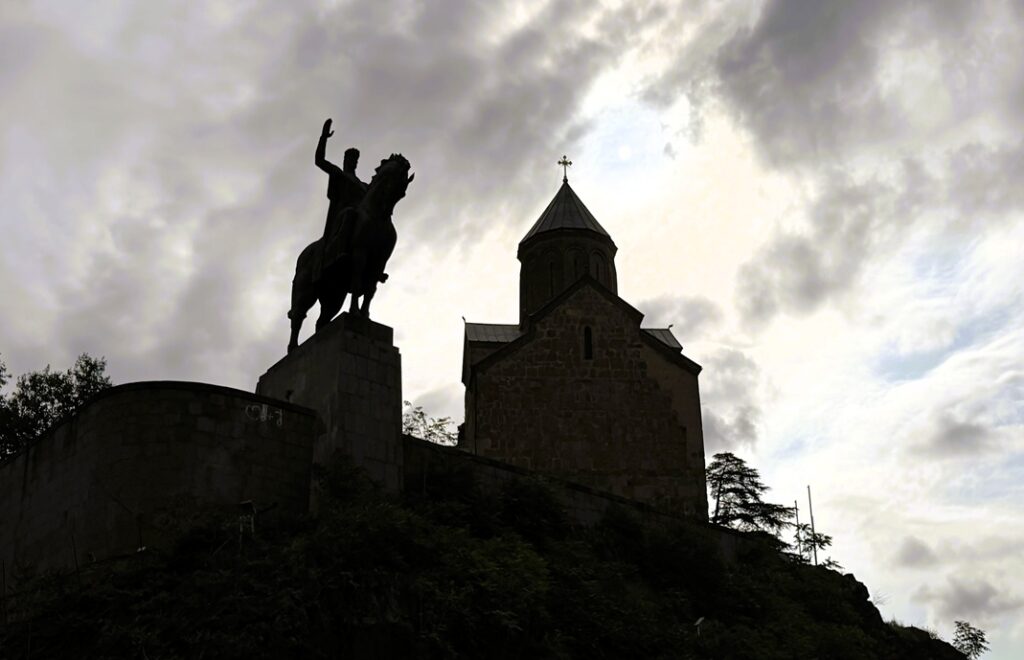
My adventure starts at the noble Metekhi Temple, that sits on a cliff high above the city. This iconic landmark was built in the 13th century and has served as a royal residence, a mosque, and a prison. A statue of Vakhtang Gorgasali, the temple’s builder and the founder of Tbilisi, stands in the courtyard. It is cast in bronze and depicts Gorgasali in full armor, majestically mounted on horseback. The statue is a symbol of Gorgasali’s enduring influence, immortalizing the warrior-king, poised for battle, in the heart of the city he founded.
As I make my way through Old Town, I am struck with how the romance of Georgia’s past blends with its striving for a new future. Winding lanes lined by rakishly leaning houses lead me past tranquil old stone churches to shady squares with small cafes and wine bars. The ultracontemporary Peace Bridge spans across the Mtkvari River and the silhouette of Nariqala Fortress supervises everything.
Another thing you will notice as you wander the old streets, is a style known as Tbilisi Modern. Buildings are decked with facades and painted entrance halls, each of which is ready to tell its own emotional story.
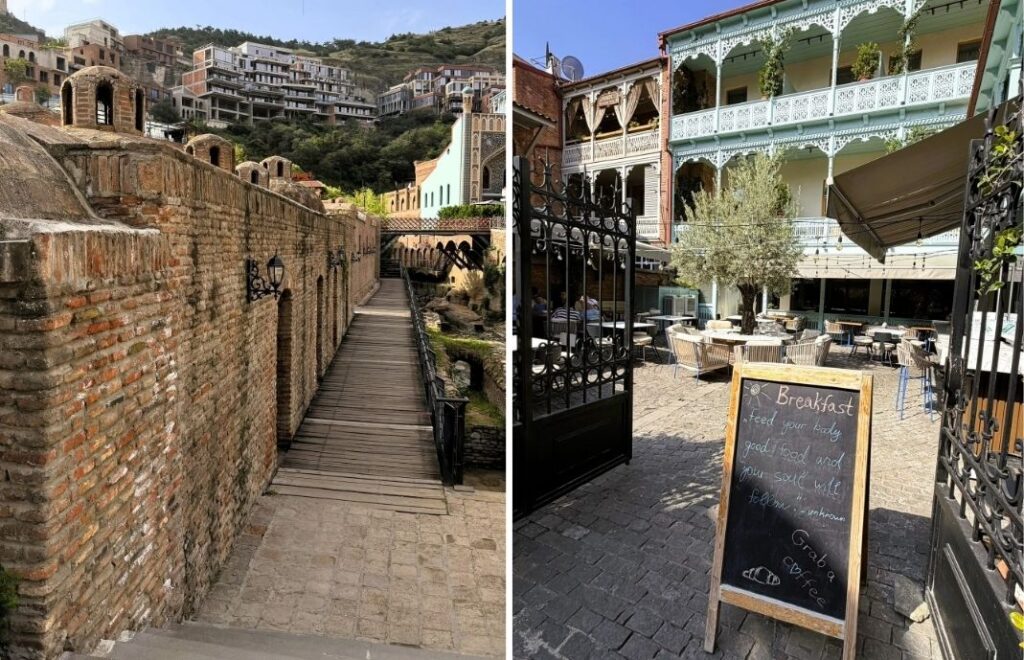
Tbilisi’s creative pulse and culinary soul
It is easy to understand why Tbilisi has emerged as one of Europe’s most compelling cultural hubs in recent years. The city is an unlikely creative nexus where centuries-old traditions collide with a restless, innovative spirit.
After decades in which their proud traditions and national pride were frozen under Soviet rule, Tbilisi feels more alive than ever, blooming with culture. It feels both dynamic and deeply creative. It is fascinating to see a natural wine bar next to a Soviet relic, and underground music venues coexist with ancient Orthodox churches.
The same spirit that fuels Tbilisi’s cultural scene is alive in its kitchens. Here (and Georgia in general), cooking is an art form. Thanks to the country’s geographical position between Europe and Asia, Georgian cuisine has evolved into a unique and tantalizing mixture of exquisite flavors, some which you cannot find anywhere else on earth.
Georgian food has always been inventive, shaped by centuries of trade, migration, and local improvisation. Thanks to a new generation of chefs, Tbilisi is now a paradise for foodies. Throughout the capital, you will find restaurants, cafes and bars with a dizzying selection of both local and foreign foods. All accompanied by Georgia’s famous wine of course.
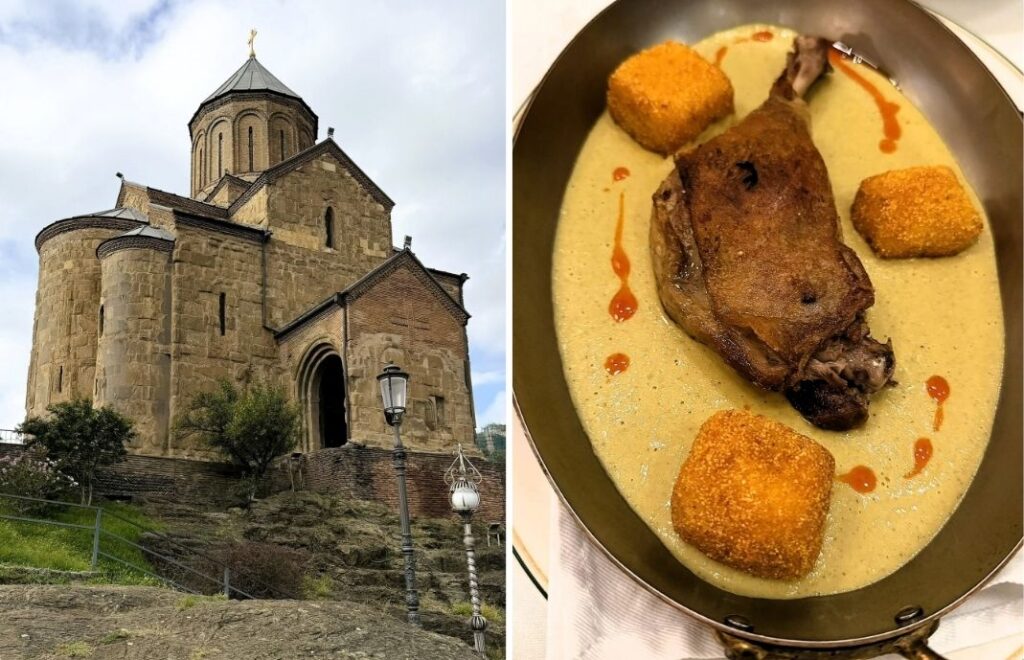
The icons of Tbilisi
Like all capitals, Tbilisi has its fair share of attractions. Along the 1.5-kilometer long Rustaveli Avenue, you will find historic buildings such as the Parliament of Georgia, Opera House, National Gallery, Modern Art Museum, and Kashveti Church.
There are also multiple monuments built to commemorate and honor Tbilisi. Among these are Sameba Cathedral, the impressive statue of Kartlis Deda (Mother of Georgia), the imposing Narikala Fortress, and the modern Bridge of Peace.
No visit to Tbilisi is complete without taking a ride with the funicular, a beloved and enduring landmark. It opened in 1905, and this mountain railway stands out as a symbol of the city. At a length of 501 meters, the funicular takes five minutes to reach the city’s highest point (727 meters). Atop is Mtatsminda Park, which offers breathtaking view of the Georgian capital.
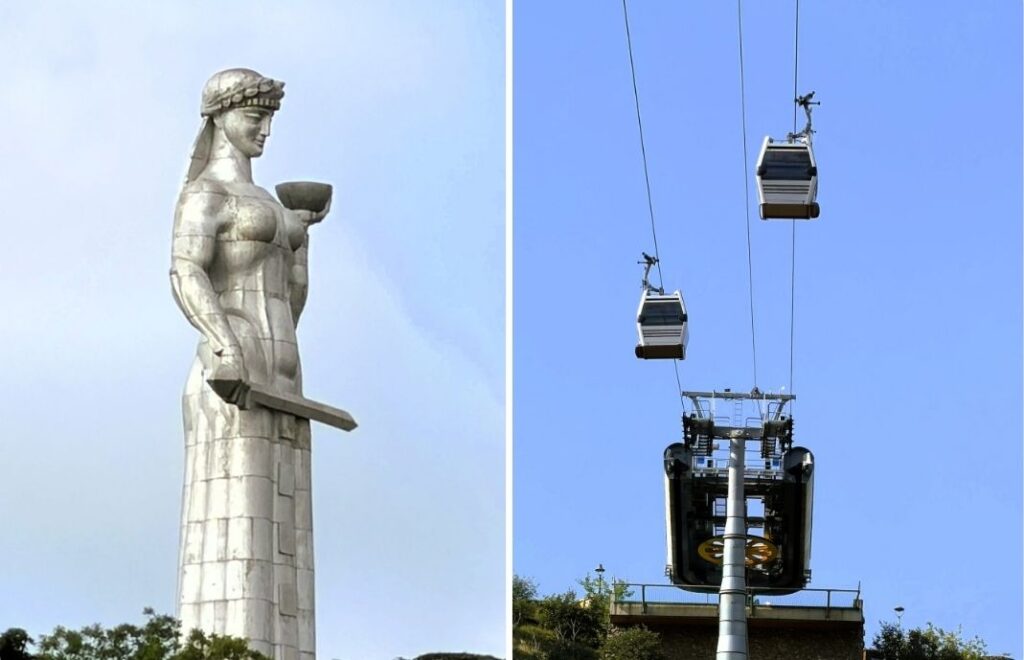
The charm of Tbilisi’s contradictions
Split in two by the fast-moving Kura River and watched over by a ring of towering mountains, Tbilisi plays host to curious wanderers. To all visitors, it quickly becomes clear that Georgia’s capital isn’t defined by its past. It is defined by a very independent, bold spirit.
Tbilisi has this old-world charm, with remnants of its multi-faced past everywhere, layered atop one another. It is crowded and eclectically arranged and delightfully chaotic. Here are ancient grandeur, brutalist architecture, contemporary eccentricity and sleek modernism in a delightful mix.
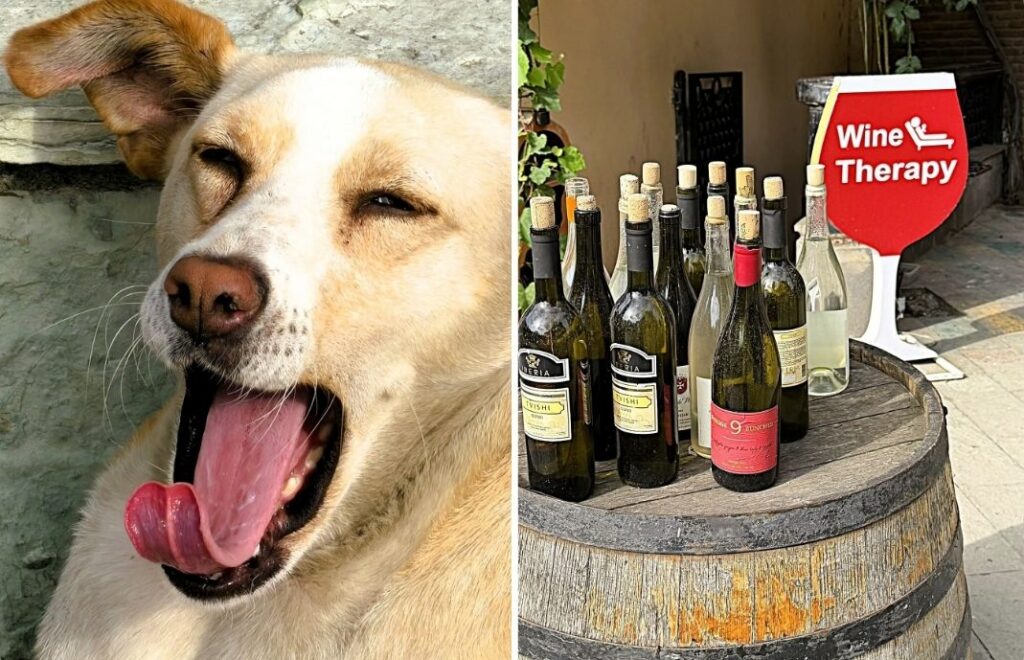
In Tbilisi, there are friendly street dogs, ubiquitous graffiti, dimly lit underground wine bars and a lot of traffic. There are, of course, chic courtyard cafes, trendy food courts, casinos and modern shops.
But it is the former that makes Tbilisi indefatigable charming.
My warmest gratitude to Georgia Tourism, Aviareps Sweden and Norwegian for inviting me to Georgia. My flights, accommodations, meals, transportation, and activities were covered. There were no requirements from the partners regarding posts on social media or promotion. Options and photos (unless otherwise stated) are entirely my own.
