
The Samburu live in northern Kenya and are closely related to the Maasai, yet they have preserved their own unique culture and identity. They are a proud, semi-nomadic people who for generations have lived in harmony with nature, in one of the country’s most rugged yet beautiful regions.
The Samburu lifestyle is deeply connected to their livestock – especially cattle, goats, and camels – which provide not only food and milk, but also serve as symbols of wealth and status. Their nomadic way of life, moving with their herds in search of water and pasture, has shaped both their social structure and their values.
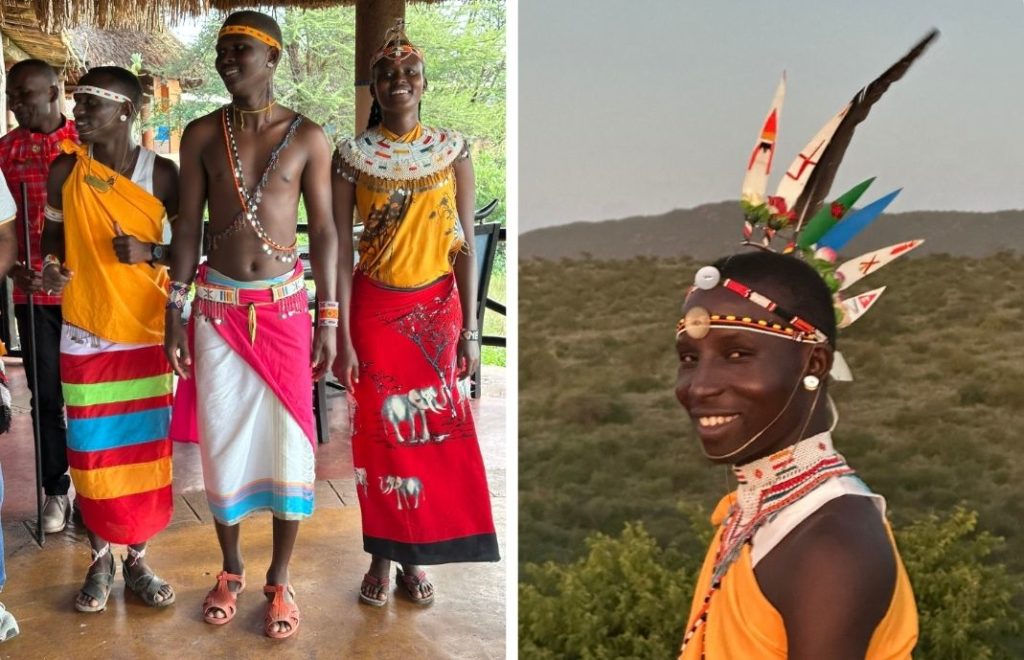
The Samburu are renowned for their colorful attire, jewelry, and intricate beadwork. Women often wear large, brightly colored beaded necklaces, while men adorn themselves with elaborate headdresses and decorations that reflect pride and belonging. Storytelling, song, and dance play an important role in passing traditions on to the next generation.
Here is the legend of the elephant according to the Samburu people:
Where does the elephant come from?
Once upon a time, there was a young girl who had to leave her family’s manyatta – the traditional circle of huts – to be married. Her father warned her never to look back at the manyatta or grieve over leaving her family behind. But with a heavy heart, the girl set out with her new husband, and before long, she turned to steal one last glance at her home.
God saw that the young girl had disobeyed her father and decided to punish her. That very night, as she slept beside her husband, something strange happened. She began to swell – until she grew as large as an elephant and disappeared into the night.
According to the Samburu people, today’s elephants are the descendants of that girl. This is why elephants and the Samburu are said to share the same blood. To confirm this legend, the elders of the tribe point out that an elephant only has two teats in between its front legs, and that there are sections on the elephant’s body that’s not covered with hair – similarities shared with humans.
When a member of the Samburu encounters an elephant skull in the wilderness, they place fresh grass upon it – spitting on the offering before laying it down. This gesture is a mark of deep respect.
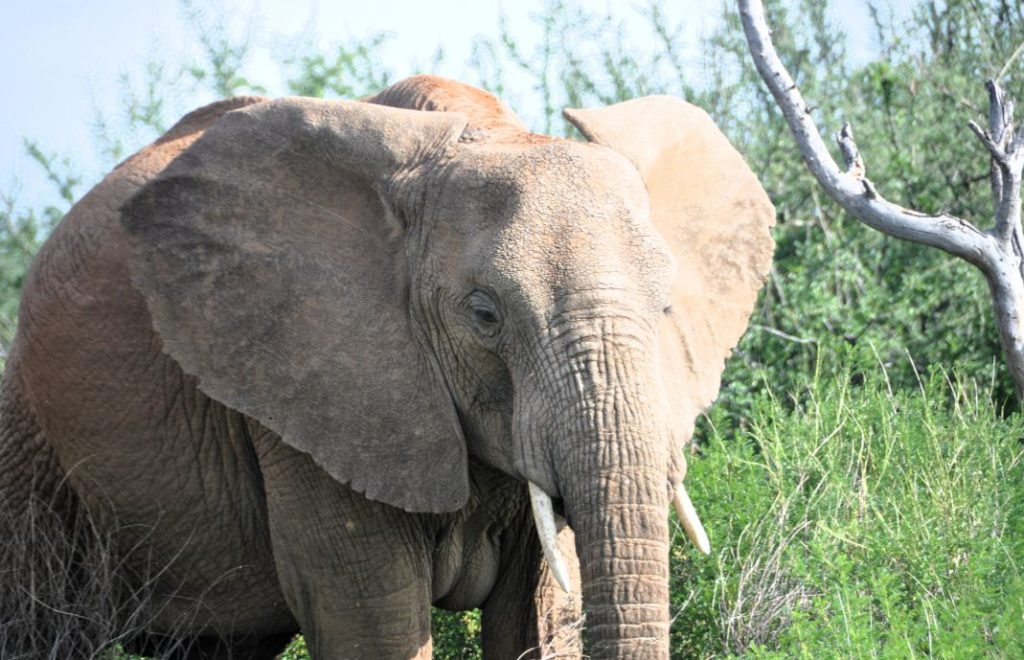
How the elephant got its big ears
Long ago, the Samburu people lived together with an elephant inside a traditional manyatta.
The women and the elephant worked side by side, taking care of daily chores both in and around the homesteads. The elephant would help carry water and gather firewood.
One day, while the people were asleep, the elephant decided to be kind and collect firewood on his own. He returned with the largest tree trunk he could find. But the women grew angry at the sheer size of it, shouting at the elephant: “Do you think we can cook with such a massive log? The only thing we could cook on that would be an elephant!”
Hurt by their reaction, the elephant tried again. He went back into the forest and this time gathered only tiny twigs. But when he returned, the women were once again furious: “You foolish animal! These sticks are so small that the only thing we could cook with them would be insects!”
The elephant, upset and humiliated by the women’s ingratitude, flew into a rage. He stormed around the manyatta, trying to destroy everything in his path. Then he rushed into one of the huts, grabbed a cowhide, and threw it over his head. Suddenly, the hide transformed into two great, flapping ears. Overcome with shame, the elephant bolted into the bush.
From that day on, humans and elephants no longer lived together.
Yet even now, elephants continue to help Samburu women: by carving pathways that lead to water, and by breaking branches that make it easier to gather firewood.
More African folklore: Why hippos don’t eat fish – according to the Kikuyu people
More inspiration to Samburu National Reserve:
A guide to Samburu National Reserve
Samburu’s Special Five
Check-in: Samburu Sopa Lodge
