
The crowd is buzzing, cameras locked and loaded, conversations tumbling in a dozen different languages. All eyes are fixed on a cluster of mud puddles inside the fenced clearing. It looks empty – until the ground begins to tremble.
Then, chaos. A stampede of baby elephants barrels toward us, ears flapping, trunks flailing like party streamers in the wind. At the head of this delightful charge is a tiny dynamo named Ziwa, barely half a meter tall, legs wobbling like overcooked spaghetti – but oh, he runs with purpose. His mission? That glorious two-liter bottle of milk dangling from a keeper’s hand.
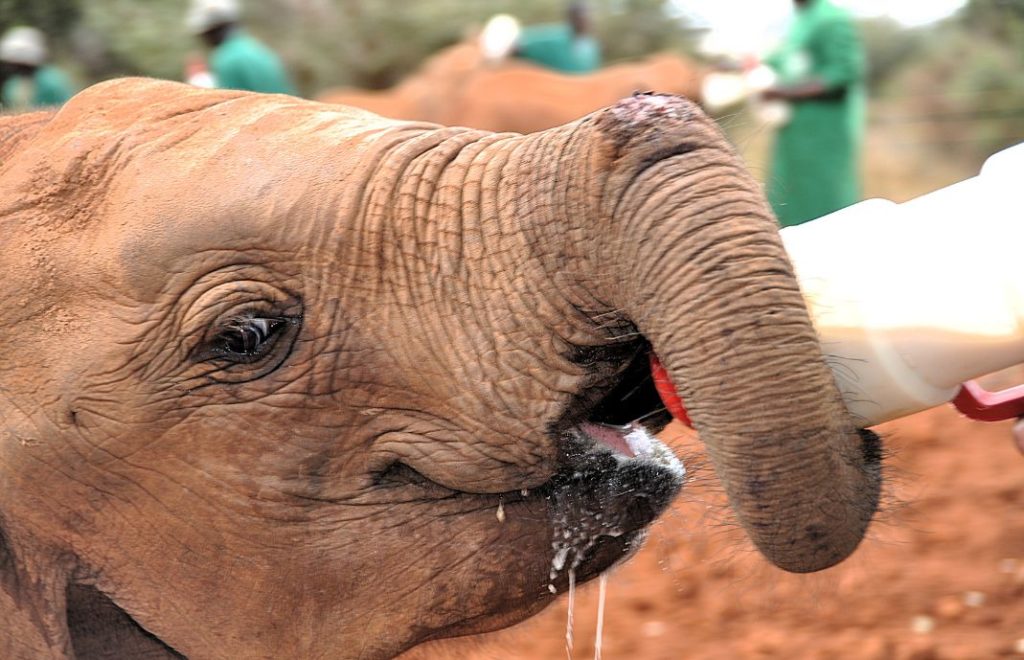
He skids to a halt, trunk reaching skyward like a question mark, and clamps onto the bottle with greedy determination. The milk flows, and Ziwa’s world is complete. Ours too, because watching this orphaned elephant gulp his breakfast is an overdose of pure joy.
Ziwa is one of about 40 orphaned elephants cared for by the Sheldrick Wildlife Trust, a sanctuary on the outskirts of Nairobi National Park. Each calf here has a story – most tragic, all hopeful. Victims of poaching, drought, or human-wildlife conflict, they’re rescued, nursed, and raised until they’re strong enough to return to the wild.
For visitors, it’s more than a photo op – it’s a front-row seat to conservation in action. You leave not just with adorable videos, but with the sense that your visit (and donation) is helping give these gentle giants a second chance.
And as Ziwa drains the last drop of milk, his round belly swaying, he turns his bright eyes toward us. For a second, I could swear he smiles.
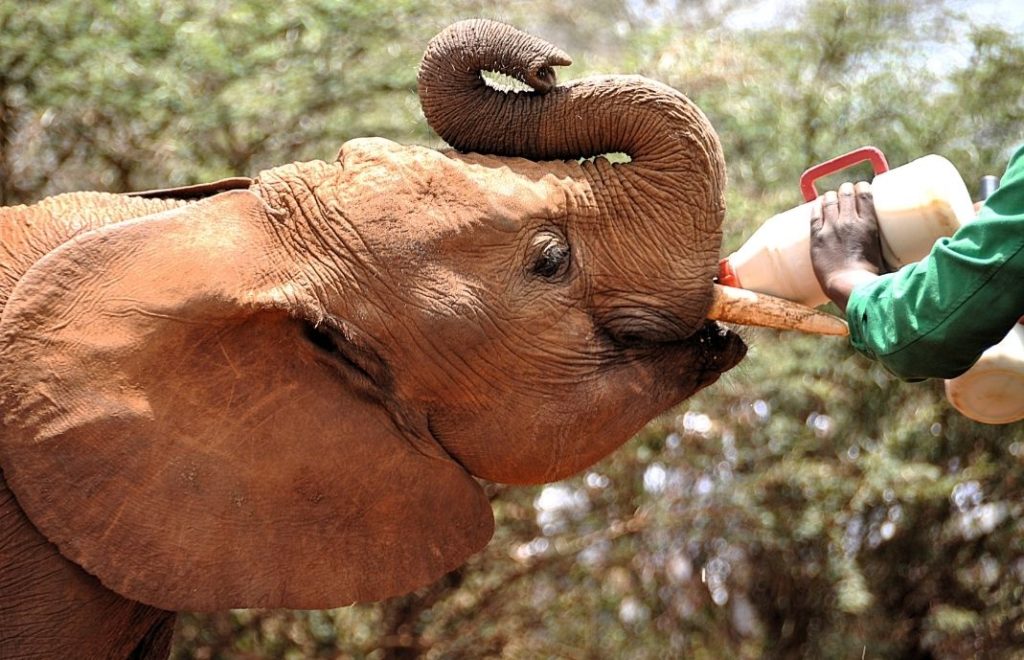
Elephants are on the brink of extinction
Every year, thousands of elephant calves are orphaned. Most lose their mothers to poachers – victims of the lucrative ivory trade. In southern Africa alone, over 40,000 elephants are killed annually, often the oldest females with the largest tusks. Their deaths ripple through the herd, leaving fragile calves stranded in an unforgiving wilderness.
The statistics are gut-wrenching: In 2007, Africa was home to an estimated 470,000-690,000 elephants. Today, more than 60% of that population is gone, slaughtered at a pace faster than the species can reproduce. In the last three years alone, over 100,000 elephants have been killed. And the engine behind this crisis? The insatiable global demand for ivory, a market that turns living icons into lifeless commodities.
Sometimes, mothers die of natural causes – but the result is the same: tiny, vulnerable calves fighting for survival in a world that feels colder without their maternal shield.
Each orphan represents a story of loss – but also, perhaps, of hope. Sanctuaries like the Sheldrick Wildlife Trust work tirelessly to rescue, rehabilitate, and release these calves back into the wild. Supporting them isn’t charity; it’s a lifeline for a species standing on the edge.
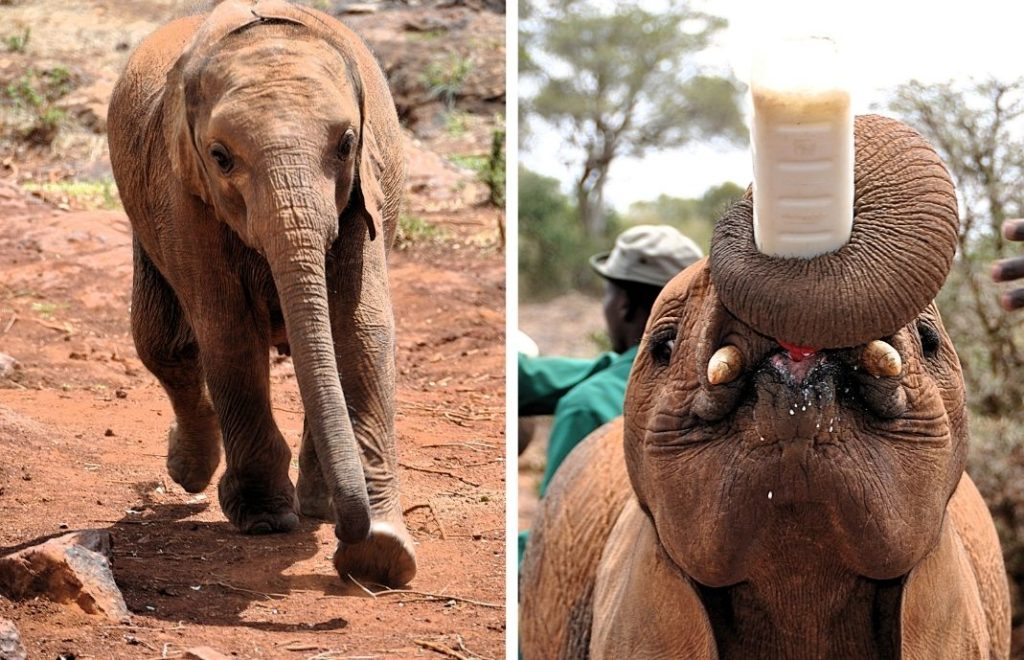
Sheldrick Wildlife Trust – A sanctuary of hope
Amid the grim reality of poaching, there is a place that whispers hope: Sheldrick Wildlife Trust, fondly known as the Elephant Orphanage. Here, survival stories unfold daily – tiny giants given a second chance at life.
The gates open to visitors for just one precious hour each day. At exactly 11:00, the magic begins. From behind the trees, they come – dozens of baby elephants, ears flapping, trunks swinging wildly like unruly party streamers, their clumsy legs carrying them at surprising speed. It’s an entrance worthy of royalty, and the crowd gasps in unison.
The calves splash in the muddy pools, roll gleefully in the red dust, and sip milk from giant bottles clutched by their devoted keepers. Between giggles and camera clicks, the handlers share the heartbreaking backstories – orphans of poaching, drought, and conflict – each tale a reminder of both human cruelty and human compassion.
Standing there, watching these fragile yet resilient creatures tumble and trumpet, something shifts inside you. The statistics fade; the crisis becomes heartbreakingly personal. You understand, viscerally, why this sanctuary exists. And you feel it – that fierce, unshakable resolve: the world cannot afford to lose elephants.
For these calves, this hour is playtime. For us, it’s a plea. A call to action disguised as the most heart-melting spectacle on earth. Because the future of Africa’s giants depends not only on sanctuaries like Sheldrick – but on every person who leaves this red-dusted arena with hope in their heart and purpose in their stride.
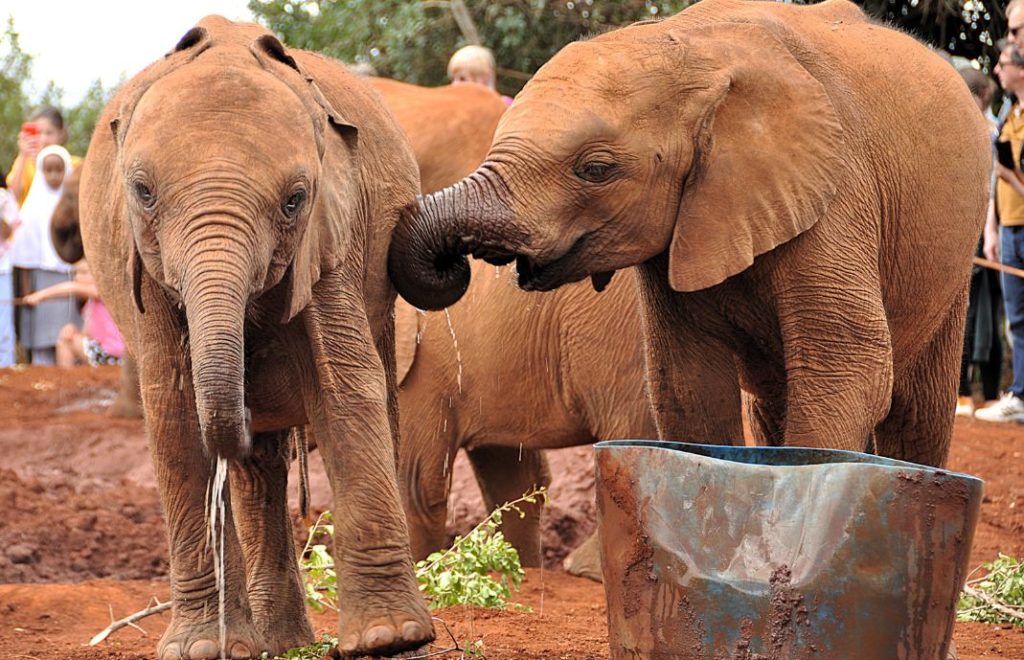
Elephants are extraordinary
As the demonstration winds down, the little giants trot back toward their immaculate stables – each stall marked with a nameplate, a tiny identity in a vast fight for survival. Inside, the atmosphere is calm and tender: fresh hay piled high, leafy branches arranged like bouquets, and, of course, a couple of oversized bottles of the perfect milk formula waiting patiently for eager trunks.
Watching them disappear into their cozy quarters tugs at something deep inside me. I’ll admit it – I’m an elephant fanatic. Some might even call it an obsession, and they wouldn’t be wrong. These creatures aren’t just animals to me; they are living testaments to grace and resilience.
What fascinates me most isn’t just their physical power – though their strength is awe-inspiring – but their hearts and minds. Elephants are fiercely intelligent, capable of complex emotions and deep bonds. They grieve, they celebrate, they protect, and they love – with a devotion and tenderness that rivals our own.
They are social, empathetic, and governed by an unspoken code of respect within their herds. Watching them, you can’t help but feel that the line between “them” and “us” is far thinner than we imagine.
And perhaps that’s why their plight hurts so much – because losing them would feel like losing a part of ourselves.
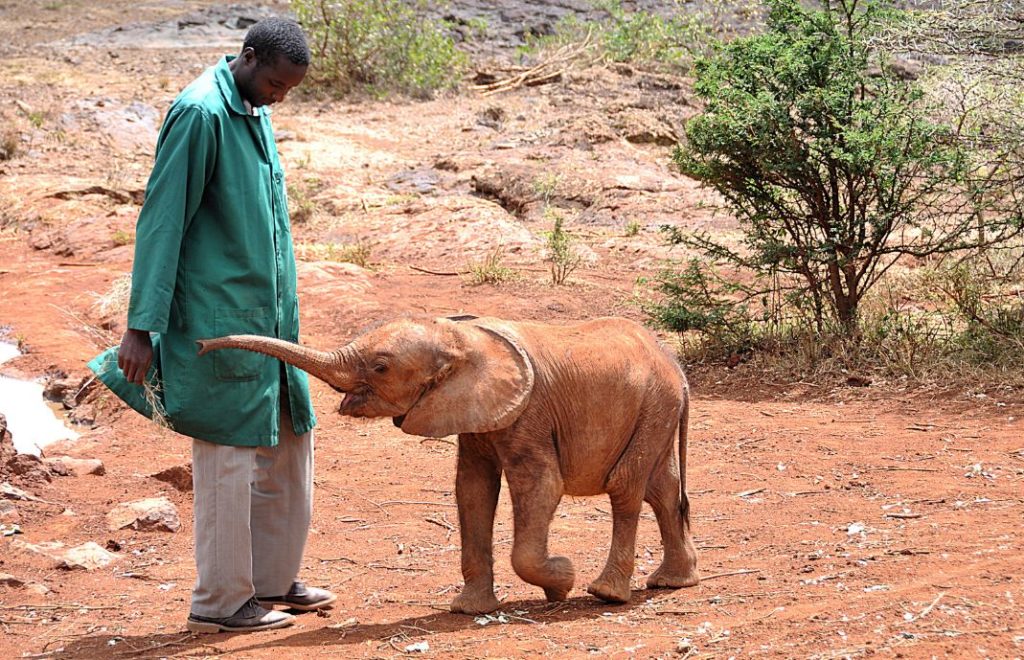
Adopt your own elephant calf
The Elephant Orphanage isn’t just one of my favorite places – it’s a sanctuary that steals a piece of your heart the moment you step in. My first visit was overwhelming in the best possible way: pure awe, a dash of heartbreak, and an irresistible urge to help. No surprise then that I’ve “adopted” a couple of these remarkable babies.
The first was Murka. She was barely 20 months old when she was discovered in the borderlands of Tsavo West National Park, a spear buried deep in her head. Her mother was presumed killed by poachers. For weeks, Murka teetered on the edge of life and death, but with round-the-clock care, she fought her way back – and today, she’s thriving under the gentle watch of her keepers.
Then came Ziwa – a mischievous, cuddle-loving little rascal of two years. Rescued in Amboseli, he was found standing guard over his dying mother at a waterhole, refusing to leave her side. His name means “waterhole” in Swahili, a bittersweet tribute to where his story began. Now, Ziwa is safe and thriving at the orphanage, until the day he’s strong enough to reclaim the wild in Tsavo National Park.
Adopting a calf through the Sheldrick Wildlife Trust isn’t just a donation – it’s a lifeline. It’s watching your chosen elephant grow from vulnerable to victorious, knowing you played a part in that transformation. And trust me, once you see those soulful eyes and cheeky trunks in person, you’ll want to adopt them all.
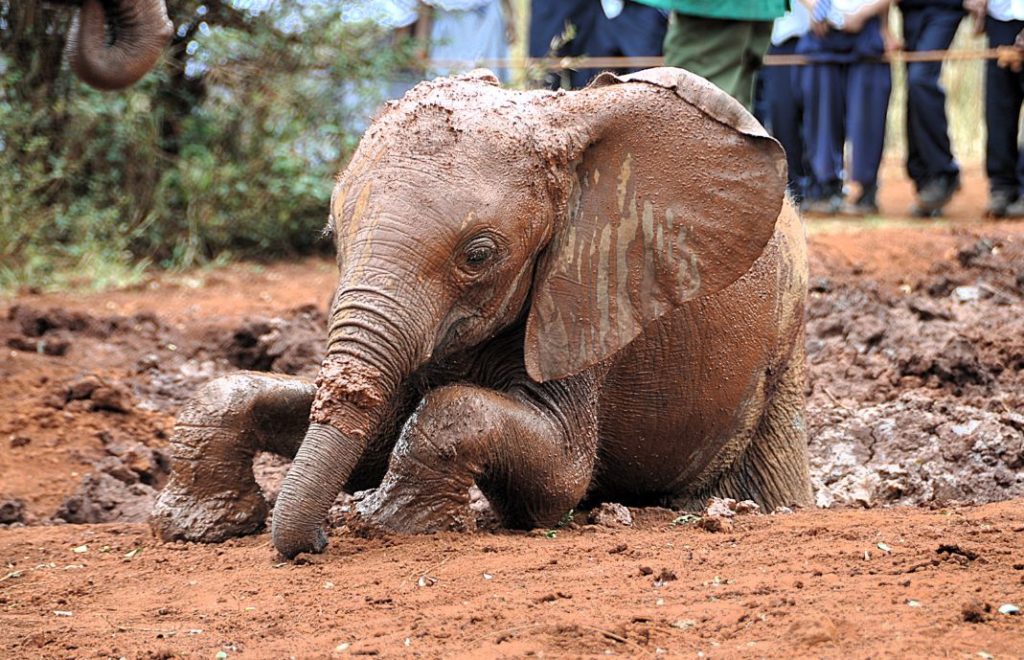
Sheldrick Wildlife Trust
Location
Just outside Nairobi, Kenya, near the entrance to Nairobi National Park.
Opening hours
The orphanage is open to visitors one hour per day (11:00–12:00).
Booking
Tickets must be reserved in advance – they sell out quickly, so book early.
Adopt from anywhere
You don’t need to visit in person to make a difference. You can adopt or donate online through the official Sheldrick Wildlife Trust website.
Adoption details
- Foster an elephant for yourself – or gift an adoption to someone special.
- Cost: USD 50 per year.
- Perks: Receive regular email updates, photos, and news about your adopted calf.
About the trust
- Founded in 1977 by Dr. Dame Daphne Sheldrick and her husband David (the founder of Tsavo National Park).
- One of the world’s most successful elephant and rhino rehabilitation programs.
- Has rescued over 150 elephant calves, most of which have been successfully reintegrated into the wild – the ultimate goal.
Conservation work
- Active anti-poaching efforts in partnership with the Kenya Wildlife Service.
- Funds 9 full-time anti-poaching units, 4 mobile vet units, and the SkyVets air rescue initiative.
- Entirely funded by donor and adoption programs.
Want to help?
Be part of the herd. Your contribution is more than a donation – it’s a fight for the survival of one of Earth’s most iconic species.
JOIN THE ELEPHANT FAMILY. SUPPORT A CAUSE THAT MATTERS.
More inspiration to Nairobi:
Up close with Kenya’s Rothschild giraffes
A guide to Nairobi National Park
Safari in Nairobi National Park
Why you must visit the Ivory Burning Site
