
North Dakota may not be the first place that comes to mind when thinking about dinosaurs, yet few landscapes tell the story of prehistoric life as vividly as its badlands and open plains. Long before highways and small towns traced the land, this region was shaped by ancient rivers, lush floodplains, and creatures that once ruled the earth.
A dinosaur-focused road trip through North Dakota is as much about imagination as it is about place. It’s a journey through deep time, where eroded hills reveal fossil-rich layers and quiet museums connect modern travelers to a world millions of years old. Travelling on these roads offers a rare chance to explore a landscape where science, history, and wide-open space come together – inviting you to see the state not just as it is today, but as it once was.
A prehistoric landscape shaped by time
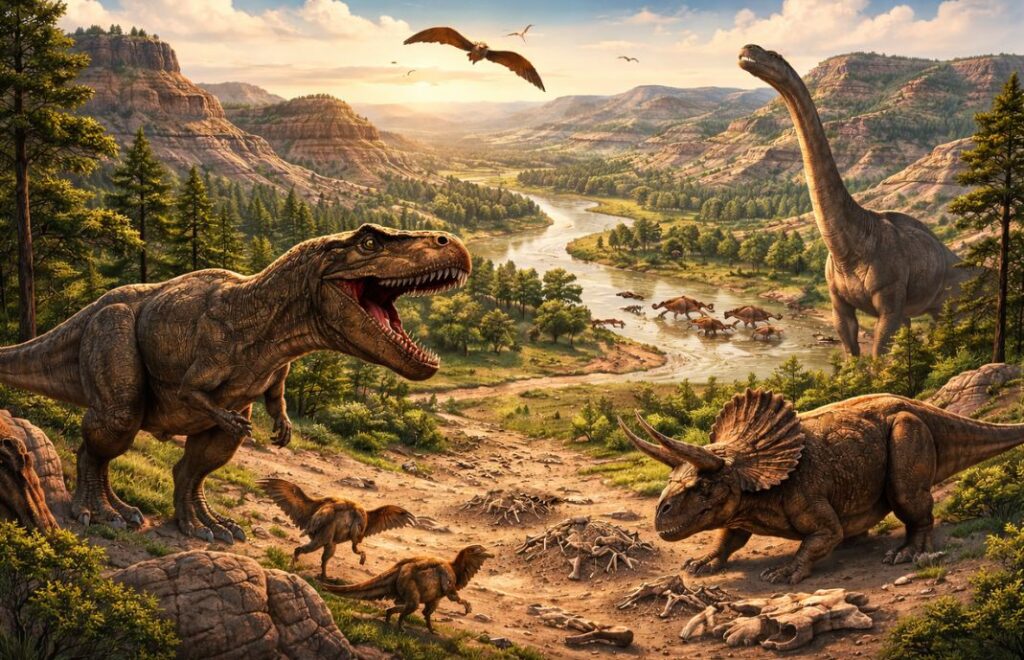
Millions of years ago, North Dakota looked nothing like it does today. What is now open prairie and rugged badlands was once a warm, swampy environment crisscrossed by rivers and wetlands. Over time, this landscape evolved into a broad, mostly treeless savanna that supported an astonishing variety of life. Early ancestors of many modern animals roamed here, including primitive horses, camels, deer, dogs, cats, and even rhinoceroses.
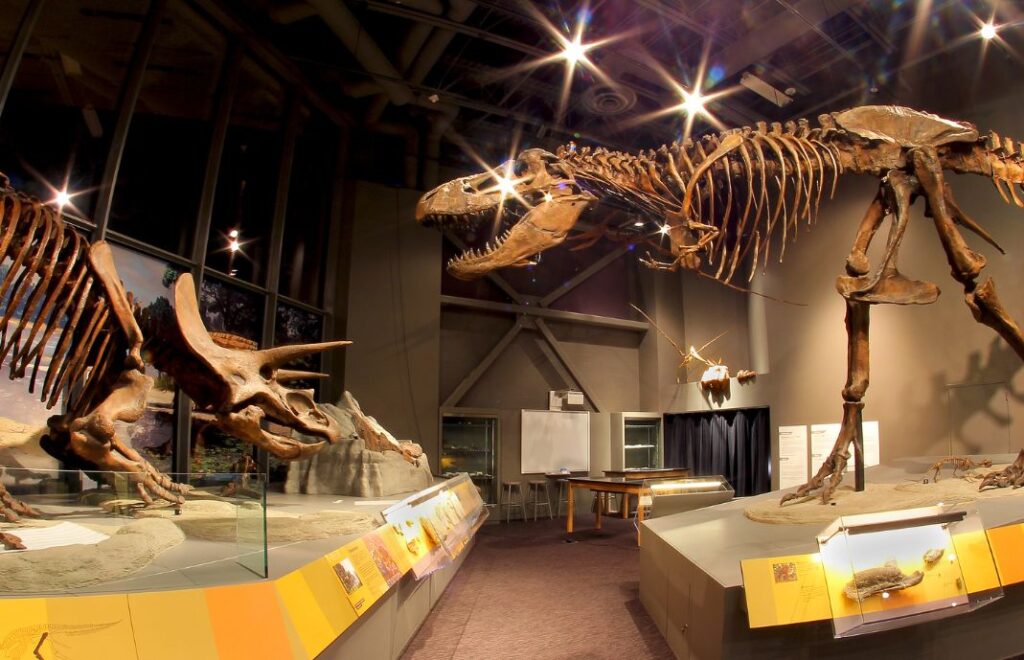
During the final chapter of the dinosaur age, this region formed part of a vast river delta known as the Hell Creek Delta. Sediments carried by ancient waterways slowly buried plants and animals, preserving them in layers of sandstone, siltstone, and mudstone that today make up the famous Hell Creek Formation. This geological treasure trove has yielded fossils of iconic dinosaurs such as Triceratops and Tyrannosaurus rex, along with sharks, turtles, crocodiles, birds, mollusks, and marine reptiles that lived in nearby shallow seas. These were the last dinosaurs to walk the Earth before their sudden extinction.
What makes North Dakota especially compelling is how accessible this deep history remains. Fossils of prehistoric plants and animals are found across the state, from petrified trees to Ice Age mammals, revealing a continuous story of life long before humans arrived. Traveling through North Dakota today feels like moving across the surface of an ancient world – one where traces of dinosaurs and early mammals still lie hidden beneath the land, waiting to be discovered.
Road trip: North Dakota’s Dinosaur Trail
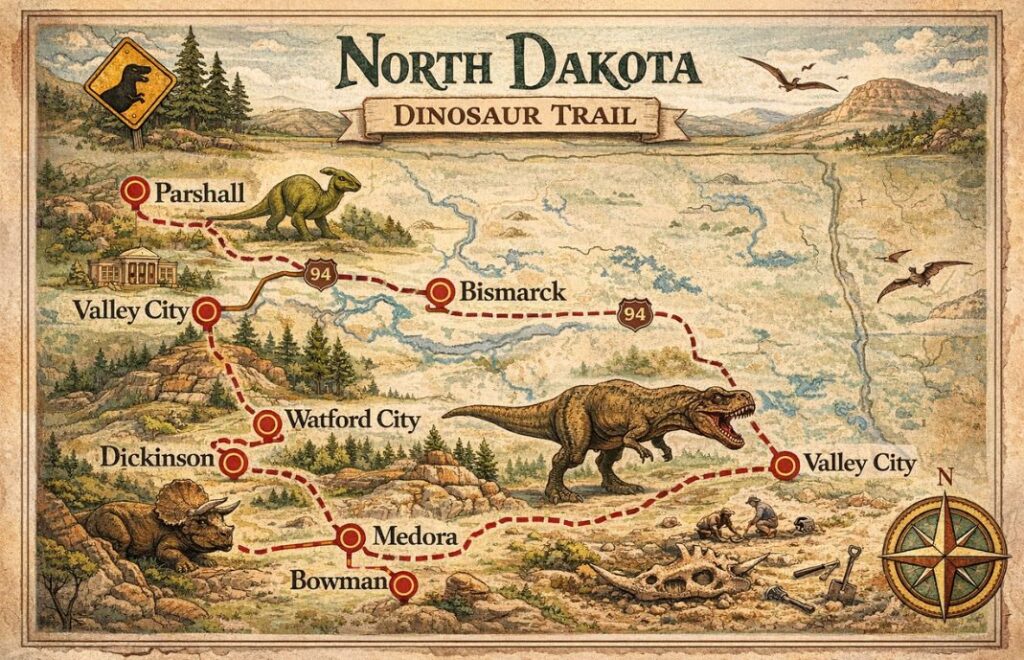
This road trip unfolds at an easy pace, allowing time to connect landscapes, fossils, and stories across the state. Each day builds on the last, moving gradually deeper into North Dakota’s prehistoric past while keeping the journey grounded in place and discovery.
Day 1: Valley City → Bismarck
Day one sets the tone for the journey, easing into North Dakota’s prehistoric story through museums that quietly reveal just how ancient this landscape really is. The route moves from the rolling terrain of eastern North Dakota toward the Missouri River, tracing a path from local discovery to statewide context.
The day begins in Valley City at the Barnes County Historical Society Museum, where regional history opens a window into the area’s deep past. Fossils and geological exhibits connect the modern prairie to a time when very different creatures inhabited the land. It’s an intimate introduction, grounding the dinosaur story in a local setting and reminding you that prehistoric history isn’t confined to remote badlands alone.
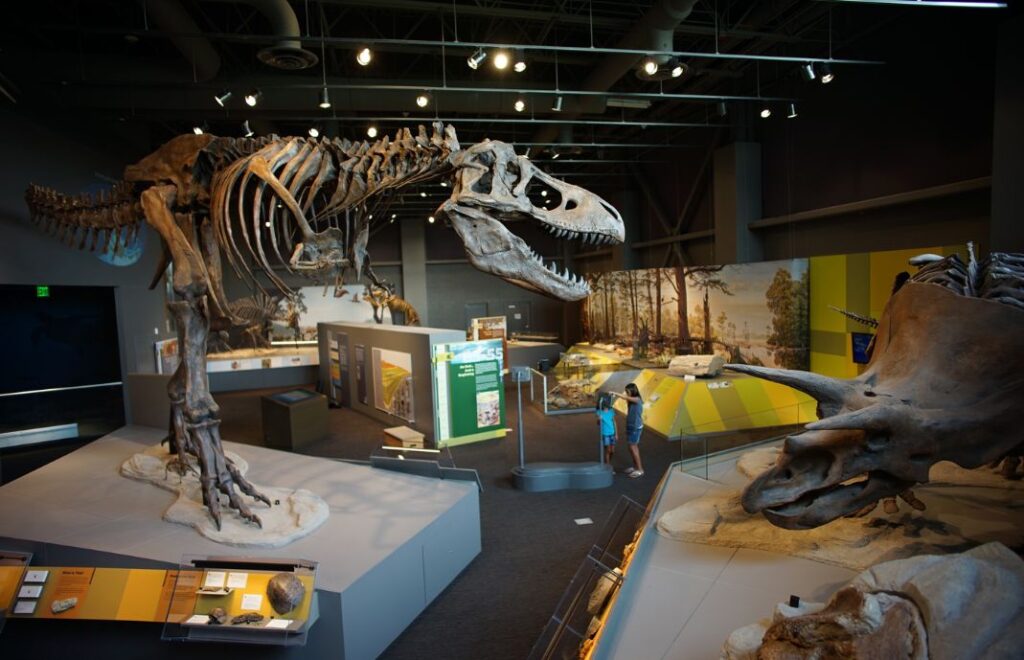
From there, the drive west leads to Bismarck and the North Dakota Heritage Center and State Museum. This is the state’s most comprehensive repository of natural history. Here, the scale expands dramatically. Life-size prehistoric animals, fossil displays, and detailed exhibits place North Dakota within the broader story of dinosaurs, ancient seas, and Ice Age mammals. By the end of the day, the journey has shifted from curiosity to context – revealing that this road trip is not just about isolated sites, but about understanding an entire landscape shaped by deep time.
Day 2: Parshall → Watford City
Day two move deeper into North Dakota’s fossil-rich landscapes and into the heart of dinosaur country. Here, geology becomes more visible, and the sense of prehistoric time feels closer to the surface. The route passes through wide plains and river valleys, reinforcing how water once shaped the environments dinosaurs inhabited.
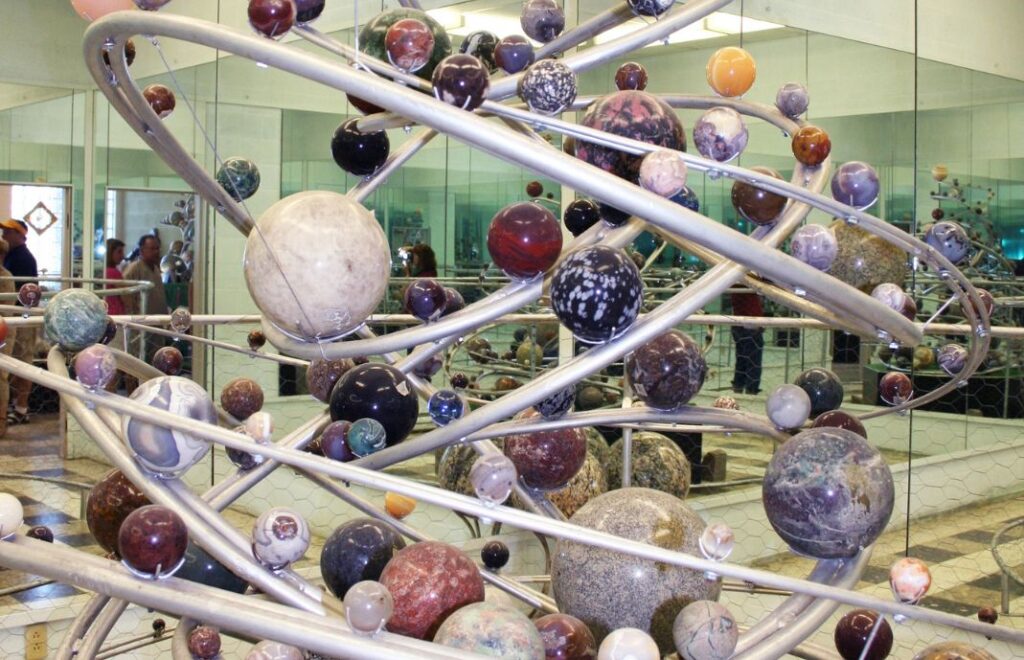
The first stop is the Paul Broste Rock Museum, a small but fascinating collection built around a lifelong passion for geology and fossils. The museum offers an approachable, hands-on look at rocks, minerals, and prehistoric finds from the region, making the ancient story feel personal rather than academic. It’s a reminder that some of the most meaningful discoveries come from individual curiosity and local dedication.
Continuing west, the journey reaches Watford City and the Long X Visitor Center. Here, exhibits focus on the natural and cultural history of northwestern North Dakota, including prehistoric life that once thrived in this landscape. Fossils and geological displays place the region firmly within the story of ancient ecosystems, while the surrounding badlands hint at what lies ahead.
By the end of the day, the road trip has shifted from museum-based discovery to landscape-driven understanding. This is where North Dakota’s dinosaur story begins to feel tangible – not just preserved behind glass but embedded in the land itself.
Day 3: Dickinson → Medora
Day three brings the journey into North Dakota’s most dramatic prehistoric landscapes, the Badlands. Here, eroded hills and layered rock formations reveal the physical traces of ancient worlds. The drive itself becomes part of the experience, with the land beginning to mirror the stories told by the fossils.
The day starts in Dickinson at the Badlands Dinosaur Museum, a place dedicated entirely to the region’s dinosaur heritage. Exhibits focus on fossils discovered in the surrounding badlands, connecting scientific research directly to the landscape outside. Seeing real specimens from nearby dig sites makes the prehistoric past feel immediate and grounded, reinforcing Dickinson’s role as a gateway to dinosaur country.
From there, the road leads to Medora and the North Dakota Cowboy Hall of Fame, where the story shifts forward in time. Alongside Western history, the museum houses the skeleton of the Oligocene (30-million-year-old) horse, Mesohippus. This might be a surprise to visitors. Most people are under the false impression that horses did not inhabit North America until they were introduced by the Spaniards during the early days of conquest. Truth is that horses are indigenous to North America.
Your visit here is a powerful reminder of the evolutionary bridge between dinosaurs and the mammals that followed. This contrast adds depth to the journey, showing how North Dakota’s story spans far beyond a single era.
By the end of the day, the road trip reaches a natural climax. Medora’s setting at the edge of the badlands underscores everything encountered so far. Ancient rivers, vanished species, and landscapes shaped over millions of years – bringing the dinosaur-focused journey full circle through both science and scenery.
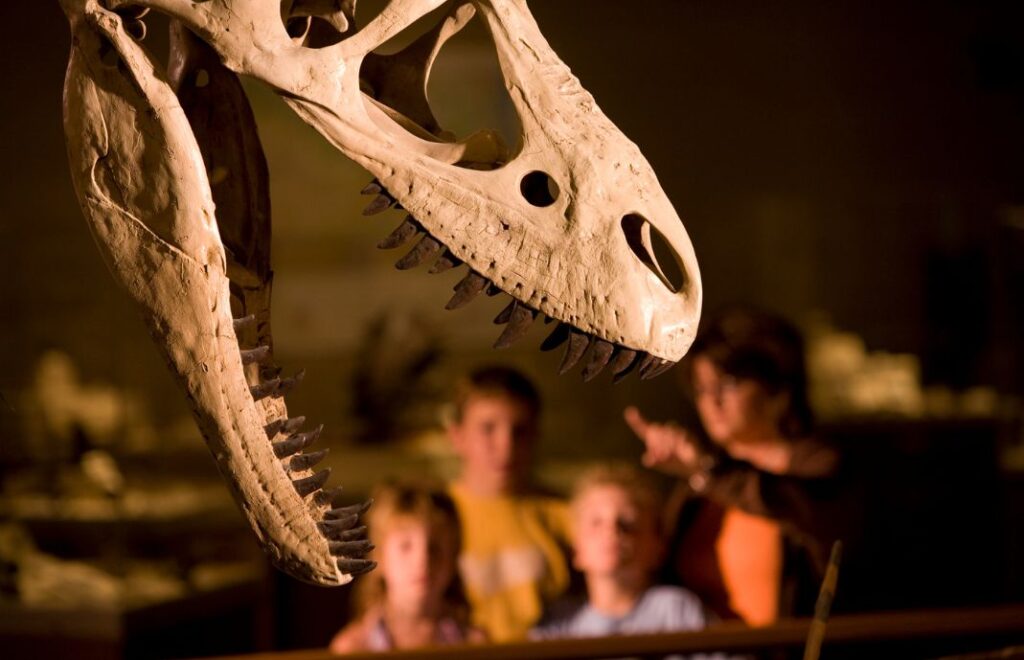
Day 4: Bowman
The final day of the road trip brings the journey south to Bowman, a quiet town where North Dakota’s prehistoric story continues far from the main tourist routes. This is a fitting place to slow down and reflect, as the landscape here feels expansive and unassuming, yet deeply connected to the ancient past.
The main stop is the Pioneer Trails Regional Museum, home to an impressive Paleontology Department that highlights fossil discoveries from southwestern North Dakota. The exhibits focus on locally found specimens, grounding the science firmly in place and reinforcing how widespread prehistoric life once was across the state. Fossils on display reveal ecosystems that existed long before the badlands took their current form, adding another layer to the journey through deep time.
Ending the road trip in Bowman feels intentional rather than final. It underscores one of North Dakota’s greatest strengths as a dinosaur destination: prehistoric history isn’t concentrated in one dramatic location but scattered quietly across the landscape.
By the end of day four, the road trip comes full circle. It is less about chasing dinosaurs, and more about understanding how an entire state became a window into Earth’s distant past.
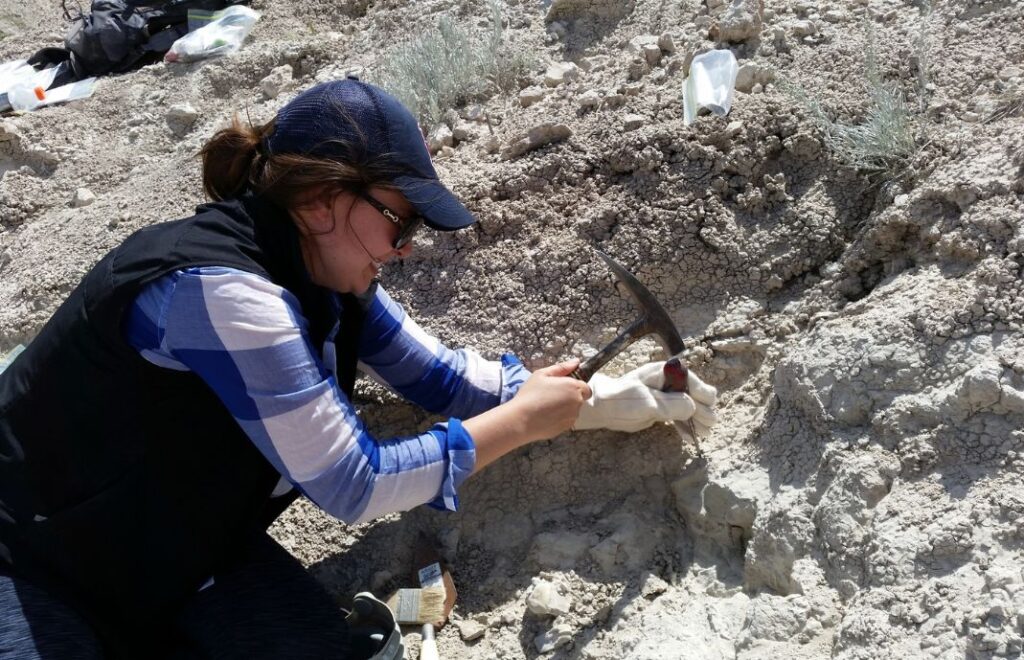
Participating in a dinosaur dig
North Dakota offers a rare opportunity for visitors to move beyond observation and take part in real paleontological discovery. Each year, supervised fossil digs allow the public to experience what it’s like to work alongside scientists, uncovering bones and traces of prehistoric life embedded in the state’s ancient rock formations.
These experiences are typically organized through educational programs and guided fieldwork, often connected to the North Dakota Geological Survey. Participants learn how to identify fossils and document finds. A great way to understand the geological context that makes the region so important to dinosaur research. The focus is on learning and preservation rather than collection, ensuring that discoveries contribute to scientific knowledge.
Joining a dig adds a powerful, hands-on dimension to a dinosaur road trip. Standing in the badlands, tools in hand, visitors gain a deeper appreciation for the patience and precision behind paleontology – and for the vast stretches of time hidden beneath North Dakota’s surface. It’s an experience that transforms the landscape from something you drive through into something you actively explore, connecting you directly to a world that existed millions of years ago.
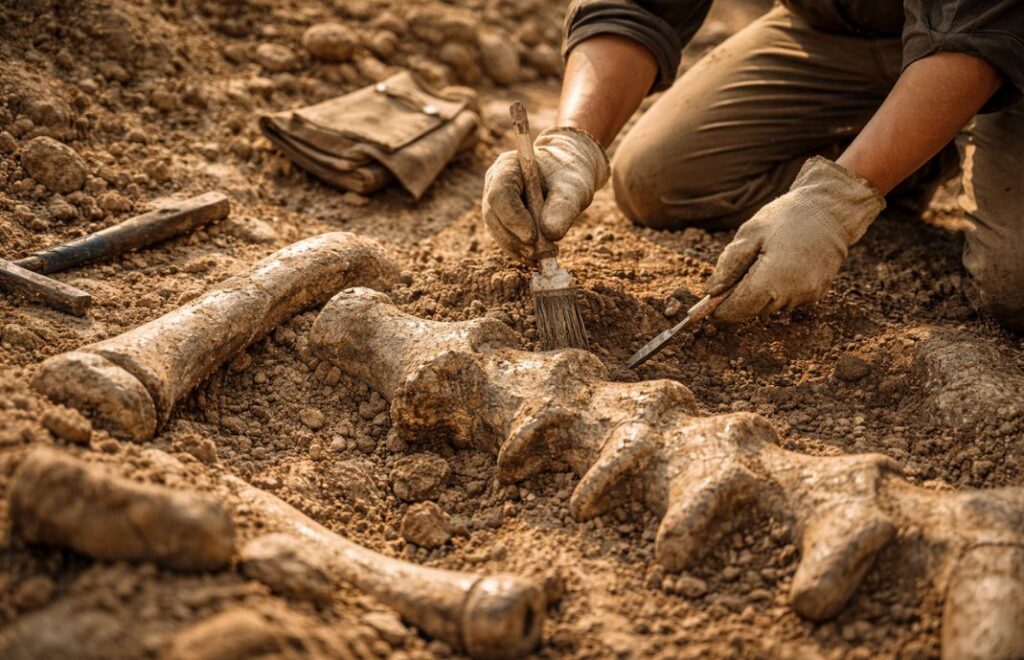
When to go: Timing your dinosaur road trip
Late spring through early fall is the best time for a dinosaur-focused road trip in North Dakota. Warmer weather opens museums, visitor centers, and guided programs, while the badlands landscapes are most accessible and visually striking. Summer offers the longest days for exploration, while early fall brings cooler temperatures and dramatic light across the plains.
Why a dinosaur road trip in North Dakota feels different
A dinosaur road trip through North Dakota is not about spectacle or crowds. It’s about scale – of time, land, and discovery. Fossils are not hidden behind barriers here; they are part of the landscape, waiting quietly beneath open sky and eroded hills.
What makes this journey memorable is the way it changes perspective. Driving between small towns, museums, and badlands, you begin to see the land not just as scenery, but as history made visible. North Dakota doesn’t present its prehistoric past loudly – it lets you discover it, layer by layer, mile by mile.
Main photo: North Dakota Tourism
This post is a collaboration with North Dakota Tourism. I am grateful for the wonderful cooperation.
