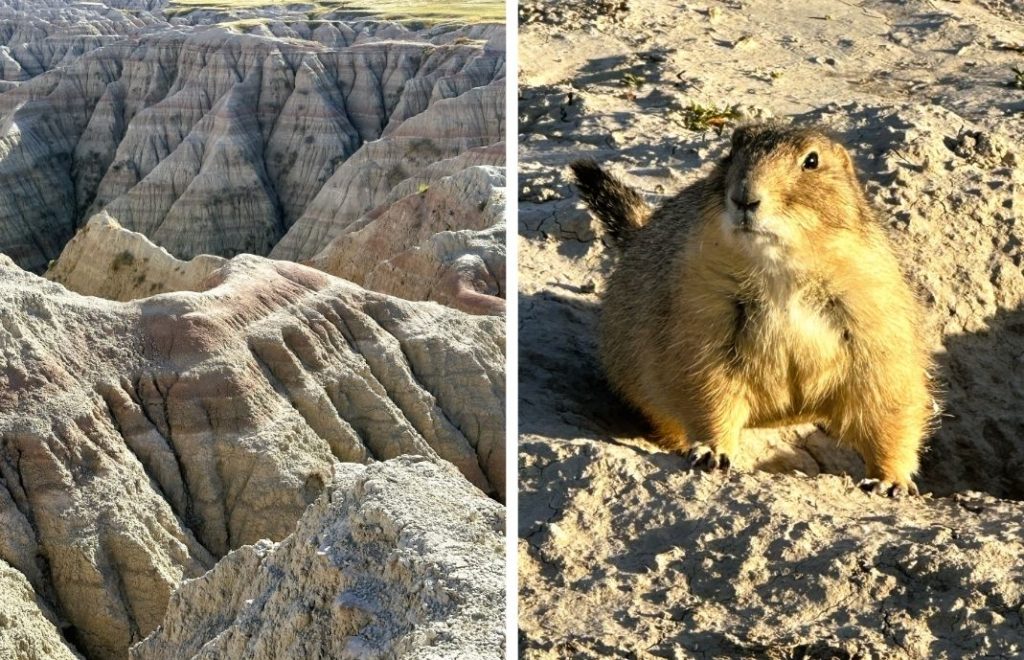
In the heart of South Dakota, nature has crafted a masterpiece – timeless, untamed, and utterly unforgettable.
The Black Hills and The Badlands are not merely landscapes. They are living poetry shaped by wind, water, and time. Over millennia, Mother Nature has carved a world that stirs the soul – where every ridge and every rugged canyon whisper stories older than memory.
Visitors find themselves struck silent in the presence of such raw beauty. There’s a reverence here, almost sacred, as you stand on the edge of sweeping vistas, awash in awe and wonder.
Immortalized in countless cinematic classics, the region still feels like a well-kept secret. No screen can capture the magic of standing amid towering granite peaks, pine-clad hills, and the surreal, sculpted formations of The Badlands.
This is a road trip through a living canva – beginning with four presidents carved into the mountain and continuing through land filled with Native American heritage, crystal-clear lakes, and charming towns pulsing with frontier spirit.
Every turn reveals a new layer of the American story – rugged, resilient, and radiant.
Recommended journey time: 4 days
Total driving distance: 208 km (129 miles)
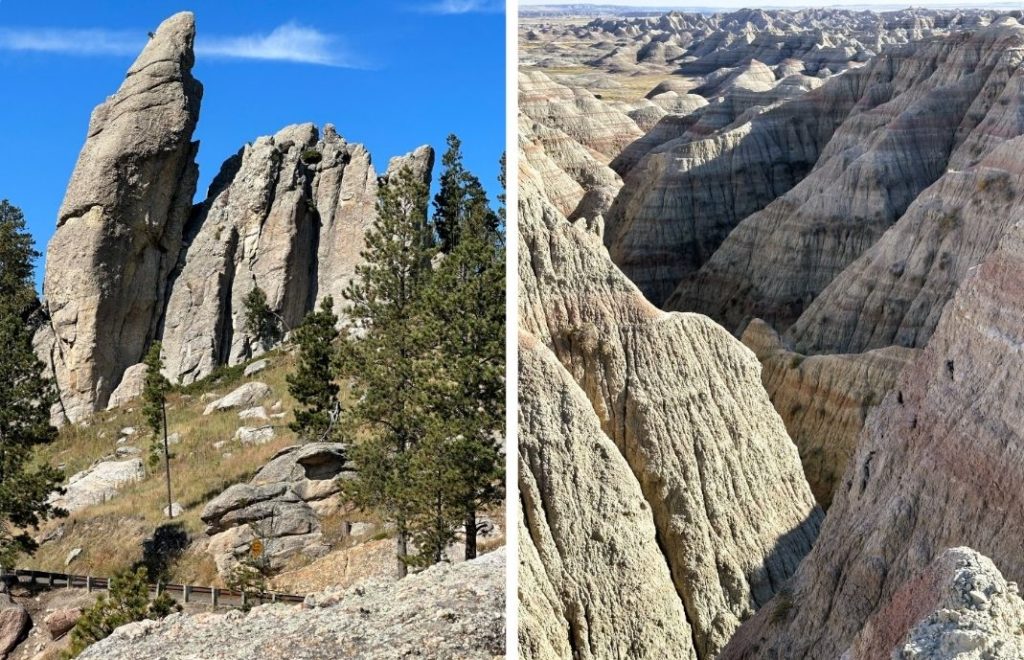
Custer State Park: Where the buffalo roam
Your journey begins in Rapid City, the closest airport to your adventure through the Black Hills and The Badlands.
Just 60 kilometers (about 37 miles) southwest of the city lies your first destination: Custer State Park.
This vast State Park offers two strikingly different landscapes. In the north, dramatic granite spires rise above pine forests and serene mountain lakes. In the south, the terrain softens into sweeping prairies where herds of bison still roam, wild and free.
Begin your visit at the Custer State Park Visitor Center, where you can gain insight into the park’s natural wonders and past. It’s the perfect starting point to ensure you don’t miss the park’s many highlights.
In the northern part of the park, scenic byways weave through a fantasy-like terrain of smooth cliffs and steep, winding passes.
The most famous drive is Wildlife Loop Road, a route that cuts through open grasslands and offers a chance to spot some of the park’s 1,500 bison – one of the largest free-roaming herds in North America. These majestic animals are a living legacy, survivors of near-extinction during the Buffalo Bill era. Keep a safe distance – while they may seem calm, an agitated bull can reach speeds of up to 50 km/h (30 mph).
Custer State Park is a paradise for outdoor lovers, offering hiking trails, kayaking, fishing, and refreshing lakes tucked in nature’s embrace.
Every September, the park hosts the iconic Buffalo Roundup, where cowboys and cowgirls on horseback drive the bison into corrals for health checks and branding – a dramatic and authentic glimpse into the American West.
It’s not just bison you might encounter. Keep your eyes open for pronghorn antelope, coyotes, mountain goats, and over 180 species of birds – who all call this wilderness home.
Distance from Rapid City: 28 km (17 miles)
Estimated drive time: 30 minutes
More inspiration: A guide to Custer State Park
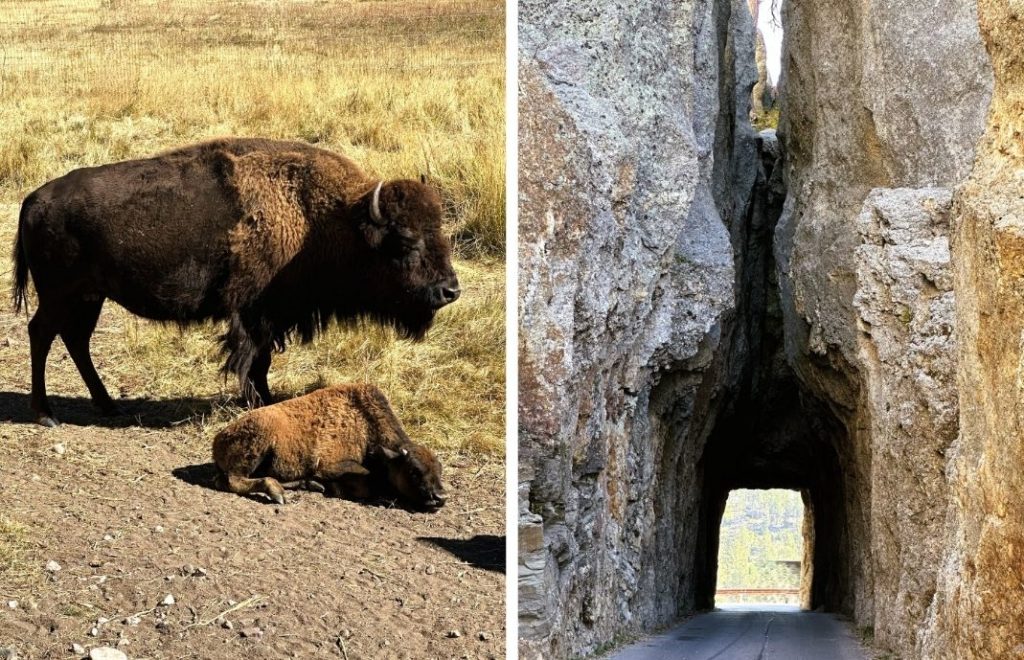
Crazy Horse Memorial: The world’s largest sculpture in progress
A child of the Black Hills, Crazy Horse was more than a warrior – he was a symbol of defiance, spirit, and the sacred bond between the Lakota people and the land. Alongside Sitting Bull, he led Native Americans warriors against the U.S. Cavalry’s efforts to force the Sioux onto reservations.
In 1876, at the Battle of Little Bighorn, Crazy Horse and his warriors defeated General George Custer’s troops in one of the few Native victories to echo through American history. Just one year later, Crazy Horse was killed. His legacy, however, was just about to start.
The story of the Crazy Horse Memorial is nothing short of extraordinary. It is the largest sculptural undertaking in the world.
After the completion of Mount Rushmore in the 1940s, Lakota Chief Standing Bear believed it was time to remind the world that Native Americans also had heroes worth honoring. None embodied the spirit, courage, and pride of Indigenous America more than Crazy Horse.
Enter sculptor Korczak Ziolkowski – a man with bold vision and unshakable determination. He set out to create a monument that would surpass Mount Rushmore not only in scale, but in meaning. The planned sculpture would depict Crazy Horse om horseback, pointing into the distance. Once complete, it will stand 172 meters high and 195 meters long.
Work began in 1948. When Ziolkowski passed away in 1982, the sculpture was still in its infancy – just the outlines of Crazy Horse could be seen, after millions of tons of granite had been removed.
Finally, in 1998, Crazy Horse’s 27-meter-high face was unveiled to the world. Work continues to this day, carried on by Ziolkowski’s family and foundation, with no set completion date in sight.
At the visitor center, you can view a scale model of the finished monument, watch an engaging documentary about Ziolkowski’s journey, and explore a remarkable collection of Native American art and craftsmanship.
Distance from Custer State Park: 25 km (15.5 miles)
Estimated drive time: 30 minutes
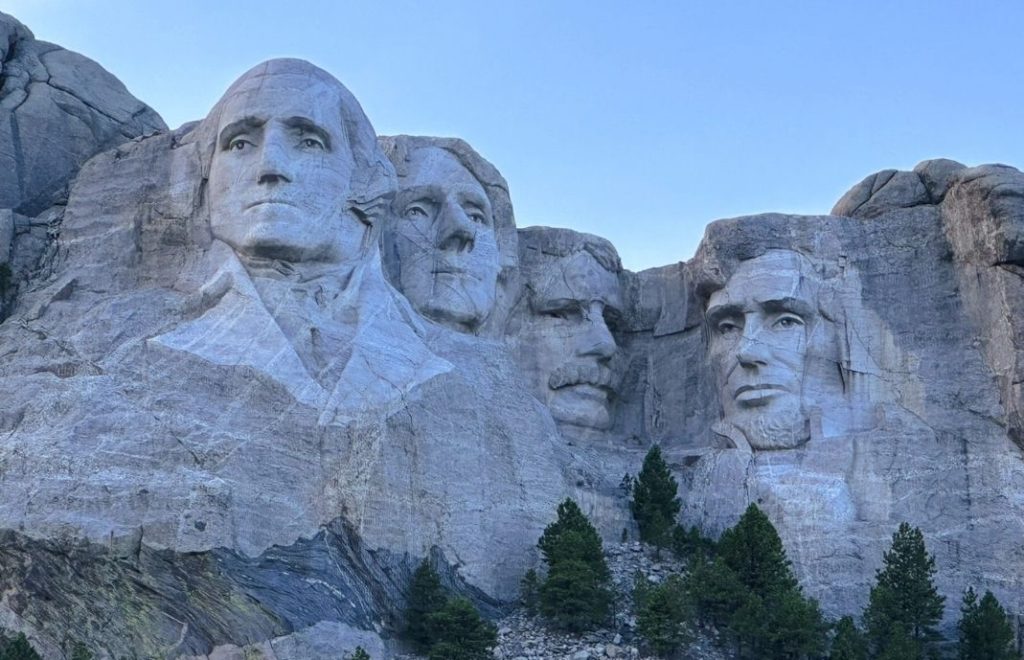
Mount Rushmore: Four Presidents etched in stone
Carved high into the granite face of the Black Hills, the iconic visages of four American presidents stand as a monumental tribute to the ideals of the American democracy.
Mount Rushmore pays tribute to the following presidents (from left to right):
George Washington: The founding father who led the fight for independence from Britain.
Thomas Jefferson: Architect of American democracy and the nation’s westward expansion.
Theodore Roosevelt: Champion of conservation and progressive reform who ushered the U.S. onto the world stage.
Abraham Lincoln: Who preserved the Union through civil war and abolished slavery.
Each face is approximately 18 meters (60 feet) high, with noses stretching 6 meters and mouths nearly 5.5 meters wide.
The monument is a testament to the ambition of sculptor Gutzon Borglum, who began the project in 1927. After his death in 1941, his son, Lincoln Borglum, completed the finishing touches – just months after his father’s death.
Mount Rushmore is not just a feat of artistry. It is a symbol woven into the very fabric of American identity. For the most striking views, visit in the soft light of early morning, when shadows and sunlight dance across the stone.
From the parking area, stroll along the Avenue of Flags, featuring banners from all 56 U.S. states and territories. It leads you to a grand viewing terrace that offers a clear and awe-inspiring view of the monument.
At The Lincoln Borglum Visitor Center you can see fascinating exhibits about the artists, the tools, and the vision that brought the monument to life.
Before you leave, stop by Carver’s Marketplace and treat yourself to a scoop of Thomas Jefferson’s vanilla ice cream. It is based on the third president’s own historic recipe, said to be the first recorded in the United States.
From here, the journey winds back to Rapid City, where you can reflect on the day’s wonders and have a good night’s rest.
Distance from Crazy Horse Memorial: 28 km (17 miles)
Estimated drive time: 30 minutes
Distance from Mount Rushmore to Rapid City: 37 km (23 miles)
Estimated drive time: 30 minutes
More inspiration:
Mount Rushmore: A complete visitor guide
40 Things you (probably) didn’t know about Mount Rushmore
Badlands National Park: Strangely beautiful
The Badlands are unlike anywhere else on earth – a surreal landscape carved by wind, water, and time.
Eroded canyons, rugged buttes, and rainbow-hued rock formations stretch out like a dream. At sunrise and sunset, the land glows in shades of gold, rose, and violet – an almost otherworldly spectacle.
Driving the Badlands Loop Road, you’ll pass colonies of prairie dogs, chirping and dashing across the open plains. Keep your eyes peeled for bighorn sheep perched on cliff edges, graceful pronghorn antelope grazing in the distance and bison lumbering through the grasslands. If you’re lucky, you will see the elusive coyote sneaking in the shadows.
This is one of South Dakota’s most unusual natural treasures – a kaleidoscope of colors and contours, filled with life and mystery. It feels like stepping into another world, one sculpted not by man, but by the patient artistry of the elements.
Hiking trails weave throughout the park, ranging from easy strolls to challenging ascents. Some lead you to the top of towering plateaus, where breathtaking panoramas reward your every step.
But don’t wait too long – this strange beauty is vanishing. The Badlands are eroding at a rate of 2.5 centimeters per year. In roughly half a million years, it will be flat prairie once more. Go before it’s too late, while time and terrain still collide in wild, wonderful chaos.
Distance from Rapid City: 101 km (63 miles)
Estimated drive time: 58 minutes
More inspiration: 10 reasons to visit Badlands National Park