
The ancient Inca capital, a sacred valley once traversed by the people of a mighty empire. Gracefully preserved temples and terraces cling to the mountainsides, their precision-cut stones whispering tales of glory. Llamas graze on emerald-green Inca terraces as clouds drift lazily across the jagged peaks, and rivers carve silver ribbons through the valleys below.
The Incas forged the largest empire in the Americas before the Spanish conquest, spanning from modern-day Colombia to northern Chile and Argentina. Renowned as master builders, they carved roads through mountains, raised terraces on steep slopes, and constructed cities like Cusco and Machu Picchu with astonishing precision. Deeply spiritual, the Incas worshipped the sun god Inti and aligned their architecture with celestial movements.
Though the empire fell in 1533 with the arrival of the Spanish conquistadors, the memory of the Incas lingers – etched into the very soul of Peru.
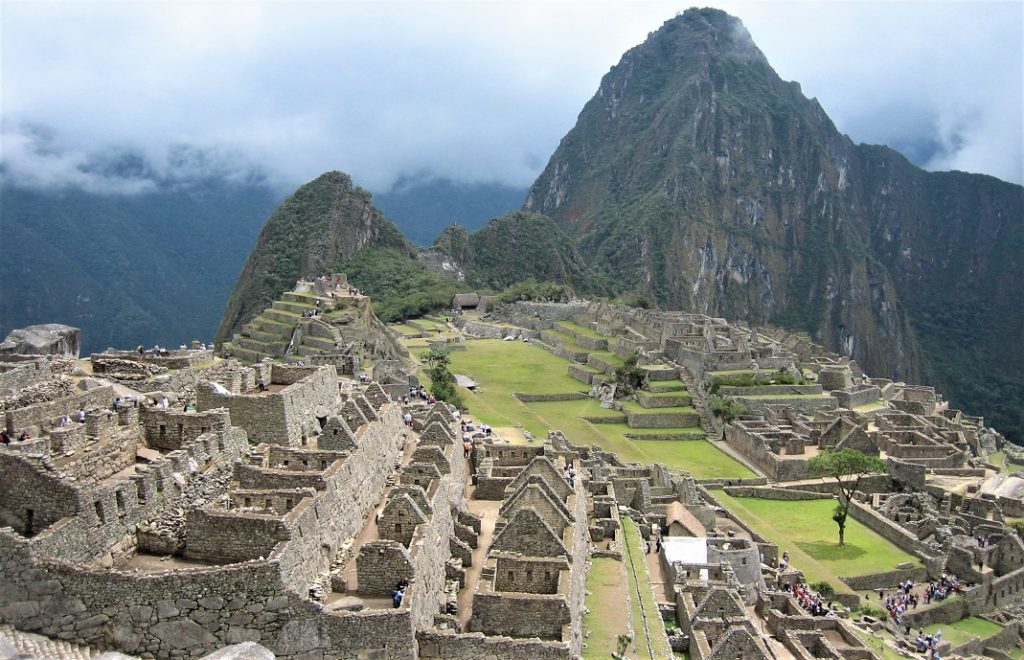
Cusco – The navel of the world
The journey in the footsteps of the Incas begins, naturally, in Cusco, the former capital of an empire and the beating heart of its civilization. Its name in Quechua, the ancient Inca language, means “The Navel of the World.” Remarkably, Quechua still lives on – spoken by some 10 million people across the Andes.
It was here, in the early 1400s, that the Inca culture first flourished before expanding across vast swaths of South America – from Colombia in the north to northern Chile and Argentina in the south.
Cusco today is a fascinating blend of two worlds – a living testament to the clash and fusion of civilizations. Cobblestone streets wind past whitewashed churches built atop indomitable Inca foundations, an architectural dialogue between empires.
Founded in 1438 by the visionary ruler Pachacútec, Cusco was more than a city – it was a cosmic statement. Designed in the shape of a puma, a sacred animal, its “head” is marked by Saqsaywaman, an imposing fortress-temple that still crowns the hillside above the city.
Most travelers treat Cusco as a stopover en route to Machu Picchu. But linger here, and you’ll discover a city that is itself a masterpiece. It’s a vibrant blend of history, culture, and living tradition, well worth savoring before the road leads onward to the mountains of myth.
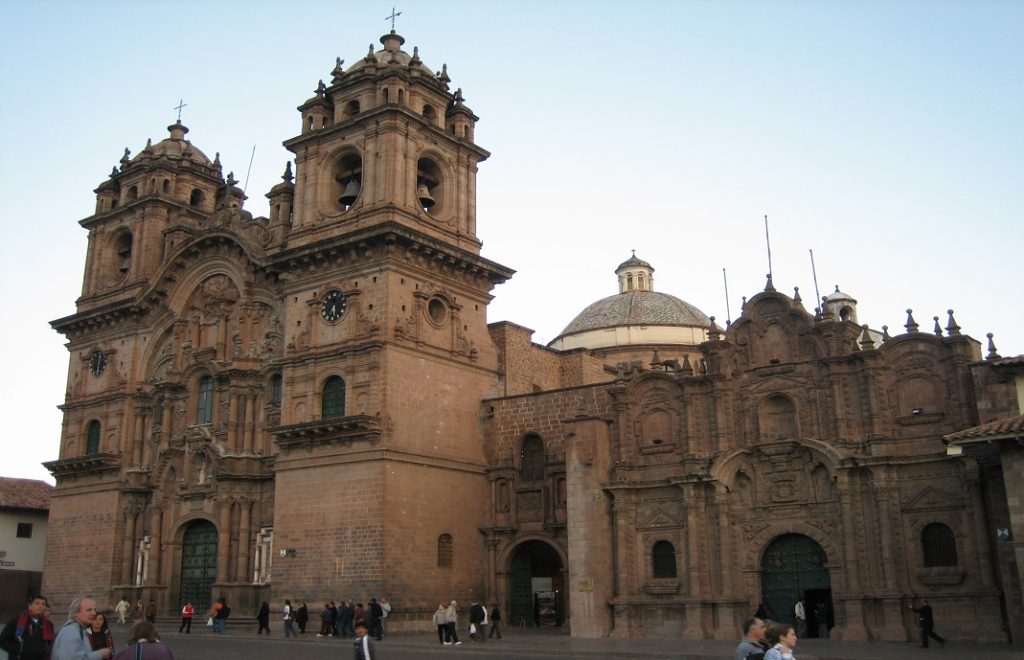
The Sacred Valley – A breathtaking place
Northwest of Cusco lies the breathtaking Sacred Valley (El Valle Sagrado), a lush corridor stretching from Pisac to Ollantaytambo. Originally known as the Urubamba Valley, it earned its more poetic name in the 1980s – thanks to travel marketers – but whatever you call it, the scenery is nothing short of spectacular.
The Urubamba River winds gracefully through the valley, flanked by towering Andean peaks that rise like guardians over the landscape. A drive through this fertile region is a journey into Peru’s living history – past vibrant villages, golden maize fields, ancient Inca terraces, and herds of llamas grazing peacefully on the slopes.
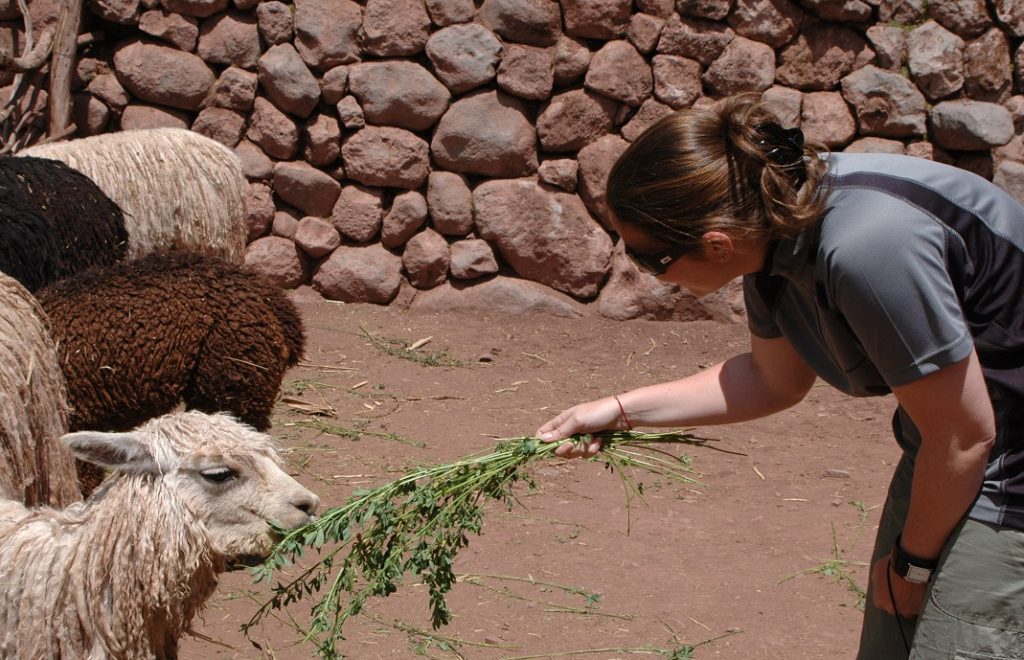
Along the way, stop at a rustic bakery for fresh, oven-warm treats, or greet a local farmer still working the land as his ancestors did centuries ago. Many visits include an encounter with the valley’s most beloved residents – the llamas – and the chance to hand-feed these gentle, woolly icons of the Andes.
The Sacred Valley isn’t just a route to Machu Picchu. It’s a destination in its own right, a place where the spirit of the Incas lingers in every stone, every river bend, and every smiling face you meet.
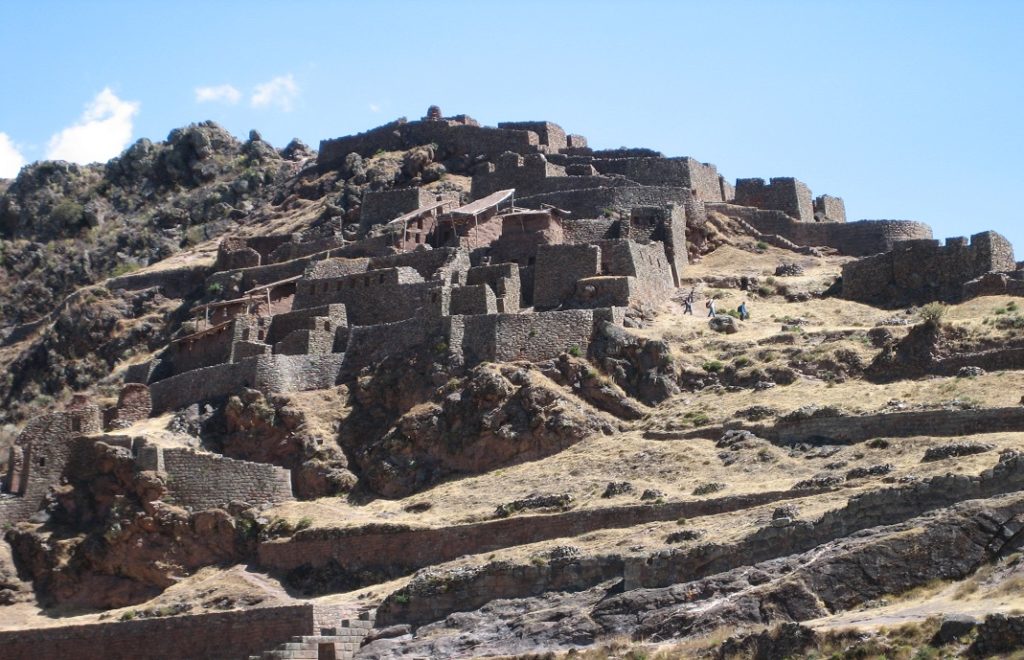
Pisac – Gateway to the Sacred Valley
In the charming village of Pisac, Inca terraces climb the mountainside like an emerald staircase, stretching from the valley floor to the majestic ruins crowning the summit. Above the town lies one of the most impressive and best-preserved Inca archaeological sites in Peru.
Built in the 15th century by the visionary Inca ruler Pachacútec, Pisac served as a royal estate, a religious hub, and a strategic fortress. Its vast agricultural terraces reveal just how essential farming was to life in this rugged terrain.
A hike to the top rewards travelers with sweeping views of the Sacred Valley, a panorama worthy of every breath stolen along the way. While the Temple of the Sun – once used for spiritual ceremonies and astronomical observations – remains closed to the public after vandals damaged part of its sacred Intihuatana stone, there is still much to admire. Water channels and fountains used in rituals, the endless terraces, and the surrounding vistas speak volumes of Inca ingenuity.
Look closely at the cliffs and you’ll notice small caves – ancient burial chambers forming one of the largest Inca cemeteries ever discovered.
After exploring the ruins, descend to the lively town of Pisac, where a vibrant market awaits. Here, colorful stalls overflow with local treasures: fresh fruit, golden ears of corn, fragrant spices, handwoven textiles, shimmering jewelry, and intricate ceramic crafts – a feast for the senses and the perfect way to connect with the valley’s living culture.
Ollantaytambo – The fortress that stopped the Conquistadors
Today, Ollantaytambo is a charming, tranquil town nestled in the Sacred Valley – but back in 1537, it was the scene of one of the most dramatic confrontations in Inca history.
When 70 heavily armed Spanish cavalrymen and thousands of native allies advanced to crush Manco Inca, they met a literal wall: Ollantaytambo – then a sprawling temple and fortress, bristling with terraces and towering stone defenses. From above, Inca warriors rained down arrows, spears, and stones, making every step a blood-soaked challenge for the Spaniards.
Historians estimate that each side fielded around 30,000 fighters, making this one of the largest battles of the conquest. It ended in humiliation for the Spaniards – the only time they were forced to retreat during the campaign. They fled back to Cusco for reinforcements, only to find Manco Inca long gone.
Ollantaytambo’s ruins remain awe-inspiring. It’s a testament to Inca military genius and resilience. Its terraces rise like giant steps toward the sky, while the massive stone walls still whisper tales of resistance and glory. Stroll through the town and you’ll feel history underfoot in its narrow cobblestone streets, flanked by canchas – rectangular Inca homes with gateways hewn from stone – and open water channels flowing gently alongside.
In the main square, a statue of Manco Inca honors the warrior king. Around it, cozy eateries serve up local specialties – don’t miss the freshly made pancakes!
Once reserved for Inca nobility, the city’s outskirts still hold traces of simpler dwellings – yanaconas, where servants lived. Today, Ollantaytambo stands not just as a gateway to Machu Picchu, but as a living museum of Inca life and the spirit of defiance.
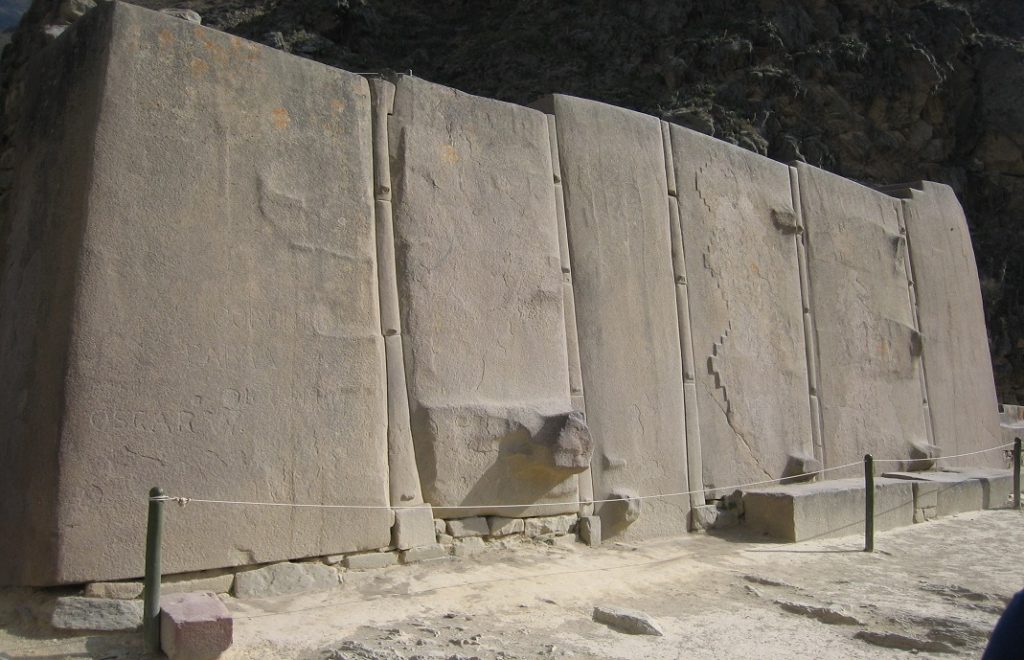
Inca ruins above Ollantaytambo
Just beyond the town of Ollantaytambo, an awe-inspiring series of Inca ruins climbs the mountainside – 16 terraces of masterfully carved stone, ascending toward a windswept plateau. The hike is a bit strenuous, but the reward is spectacular: a sweeping panorama of the ruins, the valley below, and the jagged peaks beyond.
At the summit stands the Temple of the Sun, its defining feature a wall composed of six massive slabs of rosy rhyolite, a volcanic stone transported from the far side of the Urubamba River. If you look closely, you’ll spot Chakana symbols – the Inca Cross – and figures resembling sacred animals etched into the stone. The precision of the work is staggering, especially when you consider that these colossal stones were hauled uphill along an earthen ramp, remnants of which still lie to the left of the temple.
Directly below the Sun Temple sits the Temple of the Ten Niches, believed to have served as a burial chamber for the elite. At the base of the ruins lies the Baño de la Ñusta (Princess’s Bath), once used for ritual ablutions, where crystal-clear water still flows through ingeniously carved channels.
Look across the valley, and you’ll notice a series of openings dotting the mountainside. These are qollqas, ancient storehouses built of stone and ventilated to preserve grains like maize. Positioned high to take advantage of wind and cooler temperatures, they are a brilliant example of Inca ingenuity in food conservation.
Every corner of Ollantaytambo’s ruins tells a story of ambition, engineering genius, and spiritual devotion – an open-air museum where the past still speaks.
Machu Picchu – The crown jewel of the Inca Empire
Perched high above the town of Aguas Calientes, Machu Picchu is nothing short of legendary – a world-class icon that continues to captivate and astonish travelers from every corner of the globe.
Built around 1460 under the reign of the great Inca ruler Pachacútec, this awe-inspiring citadel thrived until the Spanish conquest of Peru in 1532. Why it was abandoned remains one of history’s enduring mysteries.
What makes Machu Picchu truly extraordinary is that it was never discovered by the conquistadors. Hidden deep in the folds of the Andes, the city escaped the destruction that befell so many other Inca sites. As a result, masterpieces like the Temple of the Sun, the sacred Intihuatana stone, and the Sun Rock – the only surviving example of its kind in Peru – still stand today as silent witnesses to a vanished world.
Machu Picchu is magical, mythical, and utterly peerless. It is the ultimate reason travelers journey to Peru – a sacred city in the clouds, where time seems to pause and history breathes in every stone.
More inspiration: Machu Picchu: Magical and peerless

In the footsteps of the Incas
In just a few days, you can journey through mystical Peru, tracing the paths once walked by the Incas – a voyage through a civilization whose empire was as powerful as it was organized. Their world was built on precision, hierarchy, and devotion to the gods, and the remnants of this greatness still rise proudly from the Andean heights.
Every stone temple and terraced slope stands as a silent testament to their genius. Exploring these ruins isn’t just a trip – it’s a passage back in time, an encounter with a culture that shaped the history of South America.
The Inca Empire at a glance
- The Inca Empire flourished in South America from 1100 to 1533.
- At its peak in 1532, it spanned modern-day Peru and Ecuador, the highlands of Bolivia, and stretched into northern Chile and Argentina.
- Its capital, Cusco, was considered the “Navel of the World” – the spiritual and administrative heart of the empire.
- The supreme ruler, the Inca, was regarded as a direct descendant of the sun god Inti. He ruled Cusco with absolute authority, supported by four governors who oversaw each quadrant of the empire.
- The first Inca ruler was Manco Cápac.
- The last, Tupac Amaru, was captured and executed by the Spanish in 1572 – long after the empire had fallen and the Viceroyalty of Peru had taken hold.
Even centuries later, the Incas’ monumental achievements – Machu Picchu, the Sacred Valley, and a vast network of roads – continue to awe and inspire, making Peru a living museum of one of history’s greatest civilizations.

More inspiration to visit Peru:
Sailing across Lake Titicaca
