
At 3,810 meters above sea level, the landscape that unfolds before your eyes is nothing short of breathtaking – raw, serene, and utterly unique. Lake Titicaca shimmers along the border of Bolivia and Peru, its vast expanse dotted with tiny islands that rise like emerald mushrooms from the water. Ivory-hued beaches trace the shoreline, while blue-green waves ripple gently toward the land.
Traditional reed boats glide silently across the lake, local fishermen returning home with the day’s catch. On the docks, eager travelers shift with anticipation, waiting to board the vessels that will whisk them into this world of Andean magic.
This is the highest navigable lake on Earth, an awe-inspiring body of water stretching over 8,500 square kilometers – a majestic masterpiece sculpted by Mother Nature herself.
The legend lives on
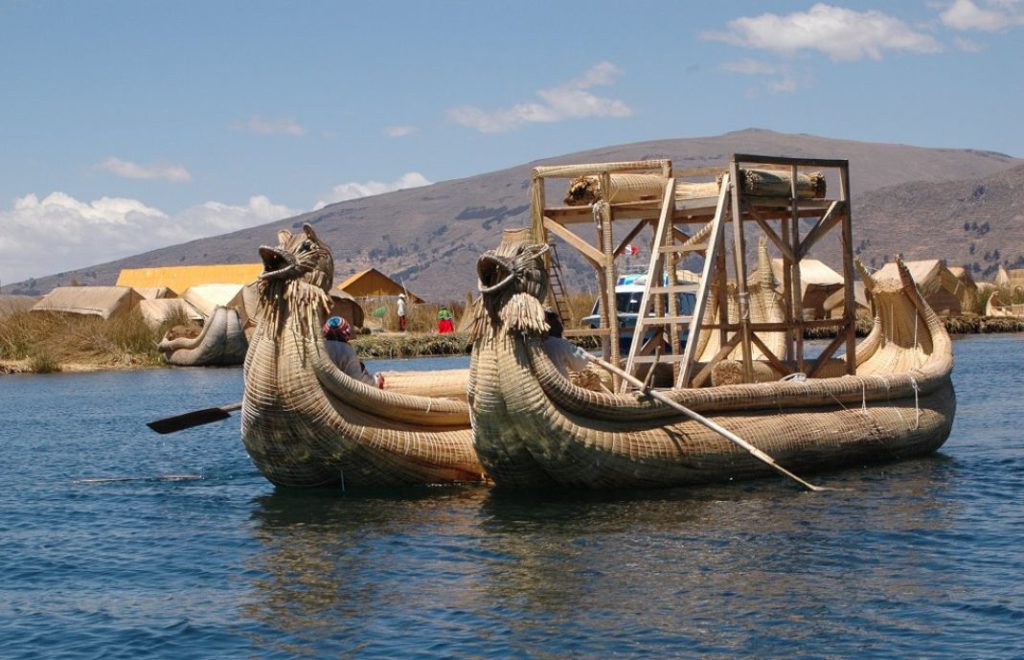
The sun blazes overhead as the boat chugs away from the small wooden pier, its hull slicing through waves that leap and sparkle in the light. We glide past slender reed boats drifting lazily on the water, while on the horizon, floating islands come into view – tiny worlds of woven reeds, home to people who live beneath the fierce high-altitude sun. Scattered across this vast lake are 41 islands, most of them silent and uninhabited.
Titicaca is more than a lake – it is the cradle of Inca mythology. On the Bolivian side lies the revered Isla del Sol, a sacred place to the indigenous people. It was here, legend tells, that Manco Cápac and Mama Ocllo – children of the Sun and Moon – rose from the shimmering waters, destined to bring light to the darkness and to found what would become the great city of Cusco.
At the helm, the captain steers with steady hands, while a crew member moves through the cabin with steaming tea and crisp biscuits. As we sip, he recounts tales of the ancient civilizations that flourished here long before the Inca. The mighty Tiwanaku, whose ruins still guard the Bolivian shores, was once the heart of a powerful empire that thrived from 400 BCE to 1000 CE.
When the captain learns I’m from Norway, a smile spreads across his face. “Have you heard of Thor Heyerdahl?” he asks. I nod with a laugh – of course I have.
“Well,” he continues with a gleam in his eye, “those reed boats you see out there – they inspired Heyerdahl when he built the Ra.”
And it all makes sense. Many scholars believe the origins of Inca culture can be traced right here, to the mystical waters of Lake Titicaca – a place where myth and history still dance on the waves.
The floating reed islands
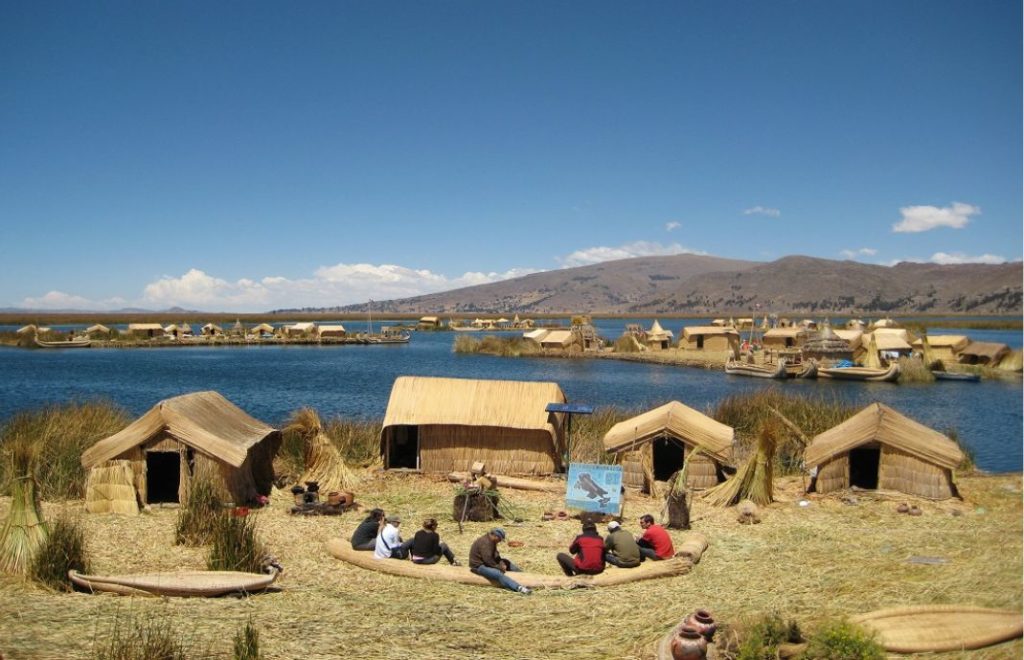
Today’s destination is Los Uros – the legendary floating reed islands of Lake Titicaca. Here thrives a remarkable community that has turned life on water into both an art and a livelihood. Their culture bursts with color, tradition, and a spirited sense of joy.
There are 86 islands in total, though only about half welcome visitors. The Uros people greet us with warm smiles and an open-hearted charm, inviting us into their unique world.
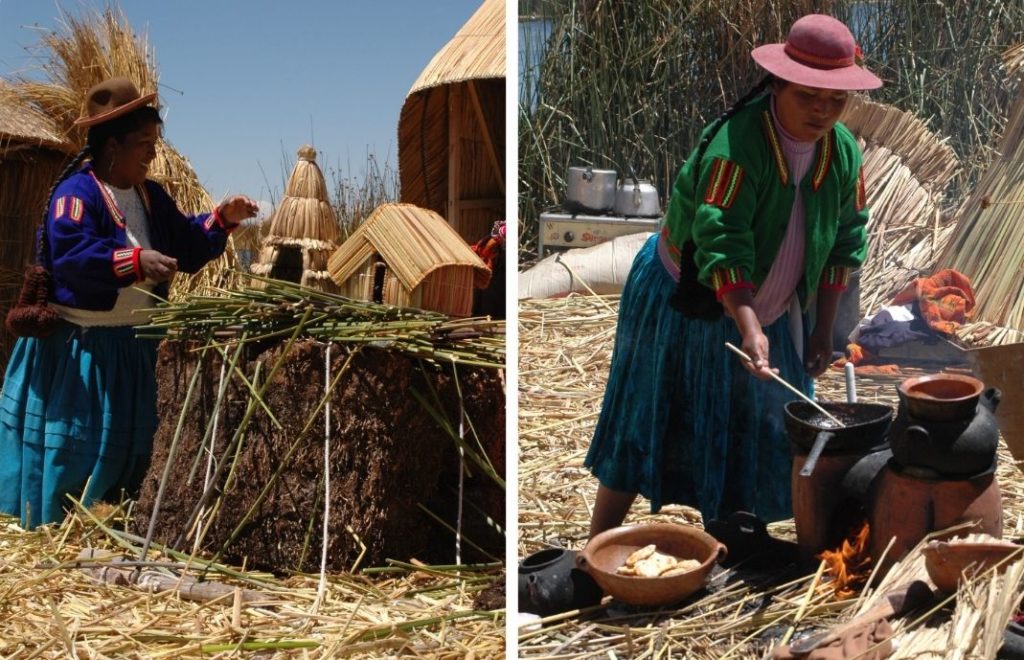
Life here revolves around the totora reed, which grows in abundance on the lake. These versatile reeds form the very ground beneath our feet, woven tightly into platforms anchored to the lakebed. As the base begins to rot, fresh layers are added, ensuring the islands remain afloat. Totora also provides material for homes, boats, and even a source of sustenance. Alongside this, the Uros rely on hunting, fishing, and tourism to survive.
Towering lookout posts rise from the islands, once used to signal danger – fire being the greatest threat. But don’t be fooled into thinking this is a world untouched by modernity. Here and there, a solar panel gleams in the sun, and the soft murmur of a TV soap opera drifts from a reed hut. Technology, it seems, finds its way even to the most remote corners of the Earth.
Our guide shares that these islands were first created during Inca times by indigenous people fleeing enemies. Today, the inhabitants speak Quechua and Aymara, their ancestral tongues still thriving on the waves.
According to legend, the Uros once possessed black blood, a mystical gift that allowed them to endure the freezing nights and shielded them from drowning. True or not, the stories that linger here are as captivating as the lake itself – a place where myth and reality float side by side on beds of golden reeds.
A night with a local family
On the island of Taquile, life unfolds in quiet harmony with the land. Neat rows of potatoes and corn bask under the generous Andean sun, a testament to the islanders’ reliance on agriculture. Taquile itself is no more than six kilometers long, home to about 1,700 inhabitants who make their living primarily from farming and fishing. At its highest point, 4,050 meters above sea level, remnants of Inca ruins whisper of a storied past.
But today, my journey takes me further – to the lesser-visited island of Amantani, where I will spend the night with a local family. Their home lies high on the slopes, and the climb is demanding for someone unaccustomed to the altitude. I find myself gasping for breath, grateful that my load consists of nothing more than a small backpack.
As I trudge upward, smiling islanders greet me with cheerful waves. The path seemed modest when I began, but now the summit feels as though it drifts ever farther away.
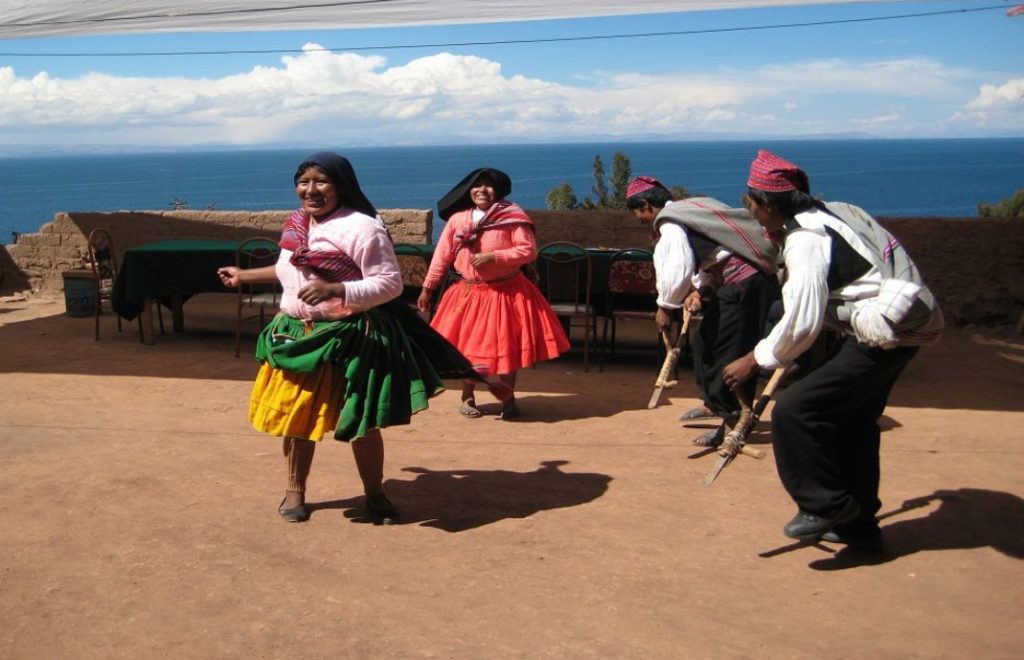
The locals are unmistakable in their traditional attire. Men wear crisp white shirts, black vests, and distinctive hats— – the color of the hat telling their story. A red cap signifies a married man, while a partially white one hints at bachelorhood. The women, resplendent in layered skirts and deep-black woolen shawls, move gracefully despite the rugged terrain.
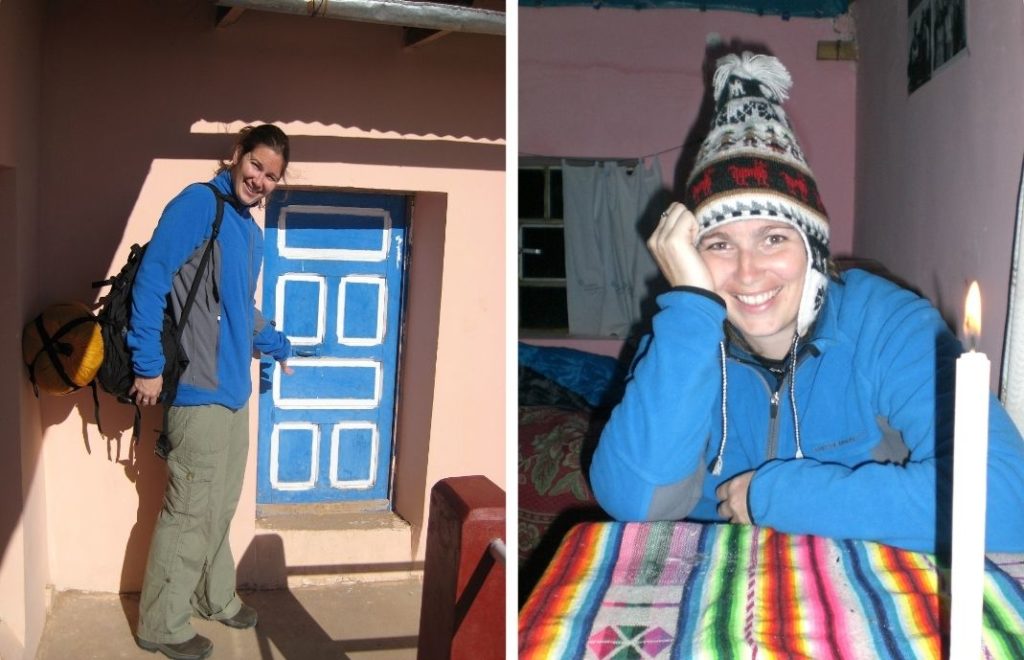
Breathless, sweaty, and parched, I finally arrive at my hosts’ welcoming home. The kitchen radiates warmth and comfort, the air scented with the promise of a hearty meal, while a few hens scuttle about my feet. The mother of the house speaks only Spanish, so her 14-year-old daughter steps in as translator. I take a seat at the simple wooden table, and soon a steaming cup of cocoa and a bowl of fragrant soup are set before me – a humble yet heartwarming feast after the long climb into the clouds.
Tourists vs. Locals
On the bed in my room lies a vibrant, handwoven hat— – a welcoming gift of sorts, though one you’re expected to purchase before departure.
The craftsmanship here, much like on the reed islands, is among the finest in Peru. The division of labor is well-defined: women weave, while men knit everything from ponchos and belts to bags, gloves, and those colorful hats.
Curious, I ask the daughter if they have more in stock. She smiles warmly and waves me down to the living room, where a spread of hand-knit treasures awaits. These hats will make perfect gifts for friends and family back home – and more importantly, the purchase provides the family with a much-needed source of income.
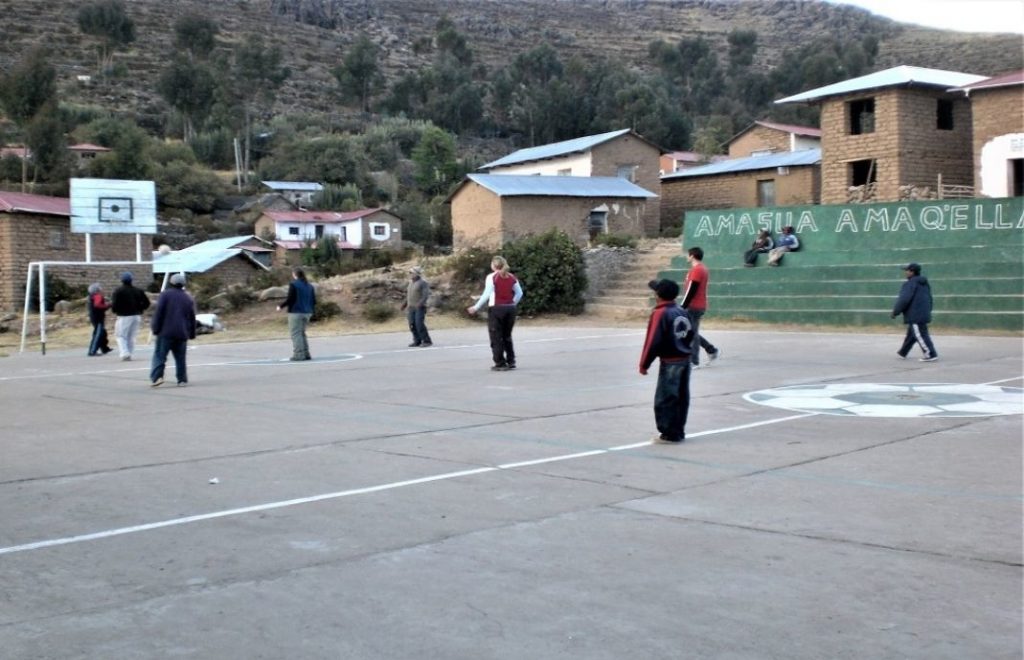
Later, all of us travelers who arrived by boat gather on the tiny village square, where we’re challenged to a football match against the locals. The “international team” is a mixed crew of men and women, while the home team fields an all-male lineup. Women and children crowd the sidelines, cheering with infectious energy.
The whistle blows, and the match erupts into laughter and grit. There’s one undeniable advantage on their side – they’re born and bred at this altitude! For us outsiders, every sprint feels like a battle for oxygen. Within minutes, we’re gasping and grabbing at our knees. Luckily, the field is small, and competitive spirit keeps us moving.
After trailing by two goals, we muster a second wind, push through the thin air, and somehow manage to score four quick goals – snatching an unlikely (and hardly deserved) victory. Football here is taken seriously, and we’re treated to a proper celebration: a trophy presentation and a group photo featuring both teams, grinning ear to ear.
The evening ends at the island’s modest “pub,” where glasses clink and conversations flow. The space is snug, the air filled with warmth and laughter. And as the saying goes – where there’s heart, there’s always room.
With a little help from the Gods
After a delicious homemade breakfast, I bid farewell to my warm-hearted host family.
The sun blazes in a brilliant blue sky as our boat sets off toward Puno on the mainland.
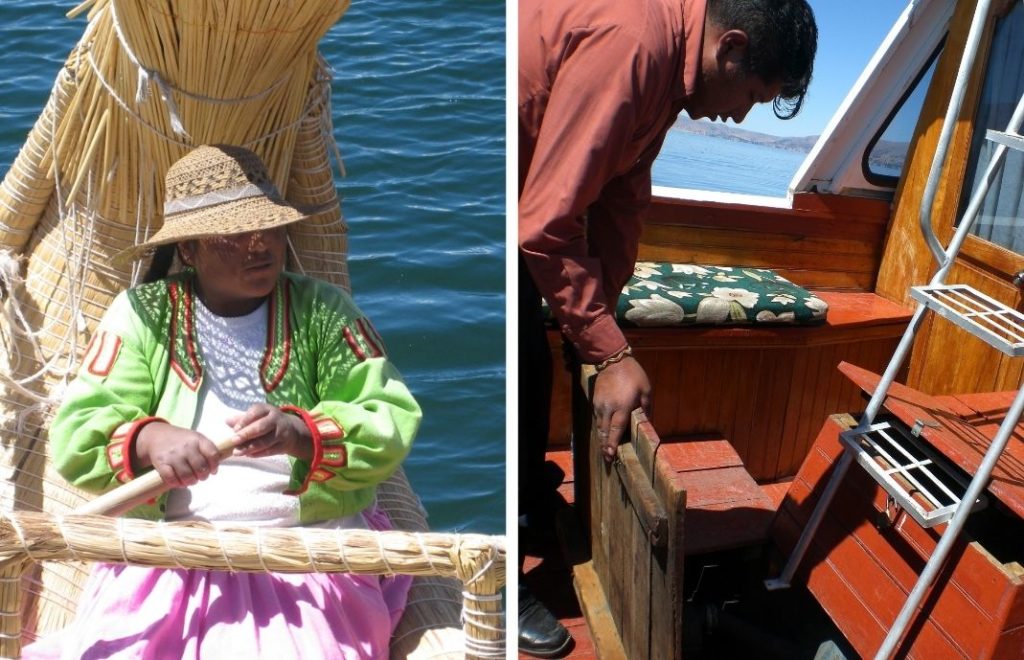
Then, without warning, the air fills with thick black smoke – acrid and alarming. The captain lets out an exclamation of dismay while his assistant darts forward with a toolbox in hand. I’m relieved it’s not me climbing down into that “engine room.”
The motor coughs and sputters, belching out more smoke as if protesting its endless duty of ferrying tourists back and forth. Finally, with a dramatic braaahhhh, it takes a final gasp.
Panic erupts among the crew. Animated gestures fly through the air – arms waving, tools clanging, voices rising in sharp bursts of debate. Meanwhile, our boat drifts aimlessly, sliding back toward Amantani like a leaf on the breeze. There’s nothing to do but lean back, surrender to fate, and wonder where destiny will take us.
Whether it was raw muscle, mechanical genius, or a whispered prayer to the gods, I’ll never know. But just as suddenly as it failed, the engine roars back to life.
And so, with a puff of smoke and a sigh of relief, we’re once again on our way to shore…
Practical information
Getting there
- Fly from Lima or Cusco to Juliaca, the closest airport to Lake Titicaca.
- Alternatively, long-distance buses connect Lima (21 hours) and Cusco (7 hours) to Puno.
- For a more scenic route, take the train from Cusco to Puno – a journey as beautiful as the destination itself. From Puno, it’s about an hour’s drive to Juliaca.
- Boats to the reed islands and beyond depart from Puno’s harbor, your gateway to Titicaca’s wonders.
Experiences
- A boat trip on Lake Titicaca with an overnight stay in a local home is an absolute must.
- Choose Amantani for a more authentic experience – it’s less visited and offers a glimpse into genuine island life.
- Bring a small gift for your host family as a gesture of gratitude.
- Taquile Island is renowned for its exquisite handicrafts and handwoven textiles – perfect souvenirs to take home.
More inspiration to visit Peru:
Machu Picchu: Magical and peerless
In the footsteps of the Incas through Peru
