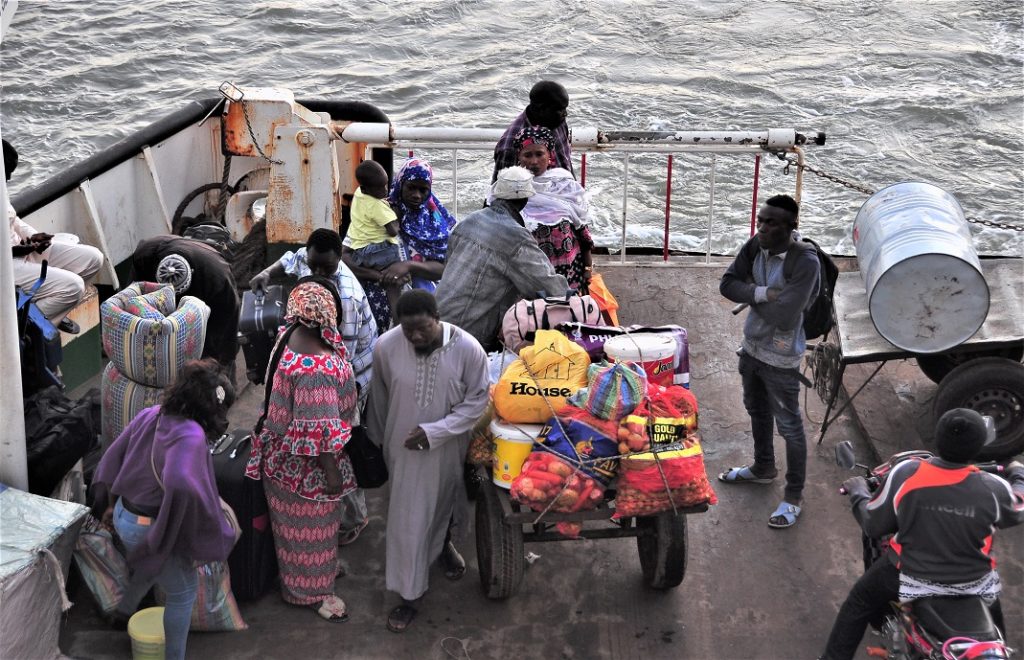
The clock hasn’t even struck seven, yet the ferry dock is already buzzing with activity. Cars, trucks, bicycles, pedestrians, carts, and goods. All vying for a spot on the ferry between The Gambia and Senegal.
It’s a charming chaos, unfolding in every direction. Pedestrians weave between vehicles of every size, while horns blare like a symphony of urgency.
Women, babies strapped to their backs and towering sacks balanced expertly on their heads, glide through the crowd. Coolers, barrels, and oversized bags of produce wobble precariously on squeaky-wheeled handcarts.
When the ferry looks full to me, it apparently just means there’s room for twice as much.
Departure schedules? They’re more of a suggestion. The ferry leaves when the captain decides it’s full enough. Simple as that.
Roughly 45 minutes after leaving Banjul, the ferry docks in Barra.
Disembarkation is just as chaotic as boarding – but there’s a rhythm to it. Drivers maneuver aging cars and massive trucks through the sea of people with a finesse that’s nothing short of impressive.
It’s not just a means of transportation – this ferry ride is an experience in itself.
Welcome to Senegal
The actual border crossing into Senegal lies a few kilometers beyond the town of Barra, where the ferry docks.
First, you’ll need an exit stamp from The Gambia – then it’s time to queue again for entry into Senegal.
This is no sterile immigration hall, but an open-air border post, offering a front-row seat to daily life as you wait your turn.
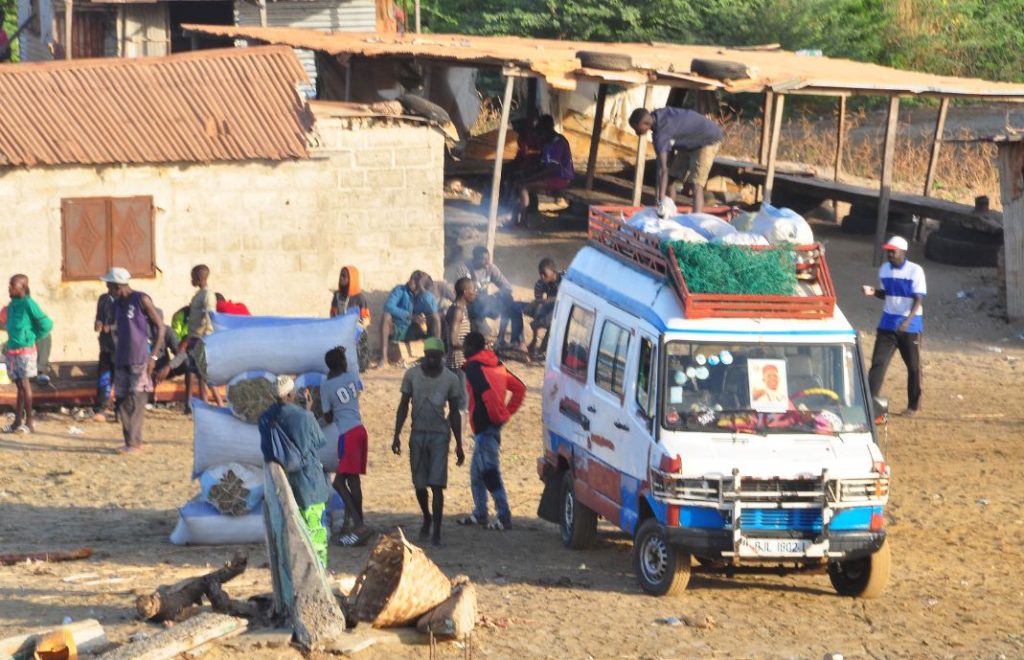
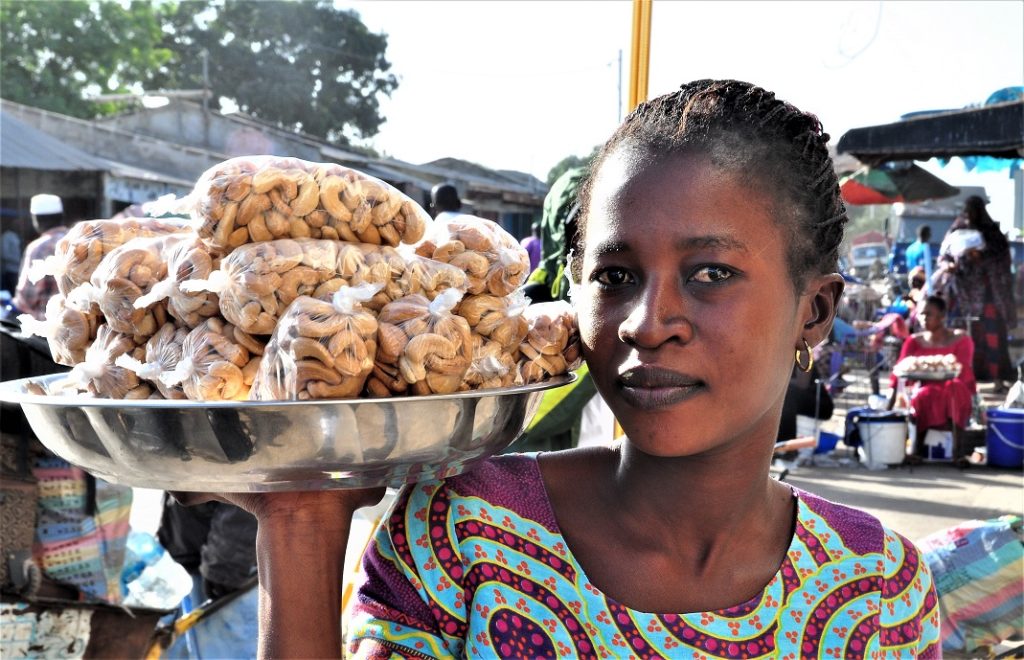
Countless times, we’re offered water, cashew nuts, bananas, and vibrant scarves while slowly inching forward in line. Everyone has something to sell, and – naturally – everyone has the best price.
At last, a fresh stamp in the passport!
With formalities behind us, we set our sights on the day’s destination: the Fathala Wildlife Reserve.
Fathala Wildlife Reserve
Established in 2006, Fathala Wildlife Reserve spans 60 square kilometers and offers a sanctuary for antelopes, giraffes, rhinos, buffaloes, warthogs, zebras, monkeys, and a variety of birds. While the reserve isn’t vast by African standards, it offers a charming opportunity to connect with nature and observe wildlife in an accessible and intimate setting.
If you’ve experienced safaris in Kenya, Tanzania, or South Africa, it’s best to lower your expectations – significantly. Fathala is not about sweeping savannahs teeming with wildebeest or prides of lions lounging under acacia trees.
Still, that essential safari thrill remains. The quiet anticipation as your vehicle winds between trees and bushes, eyes scanning the undergrowth, heart leaping when a silhouette suddenly materializes. First one animal, then another. The joy of a close encounter in the wild.
You won’t find massive herds or elephant processions here. But if luck is on your side, you might spot a rhino or the mighty eland antelope. There’s delight in the sight of warthogs scuttling comically across the path, or monkeys going about their curious, chaotic routines. It may be a smaller stage, but the magic of the African bush is still very much alive.
Safari in Fathala Wildlife Reserve
Fathala offers guided safari experiences led by the reserve’s own rangers, and ours turned out to be a gem – affable, knowledgeable, and delightfully talkative. With a grin that rarely left his face, he enthusiastically shared facts about the park and insights into where the animals might be hiding.
And hide, they certainly do.
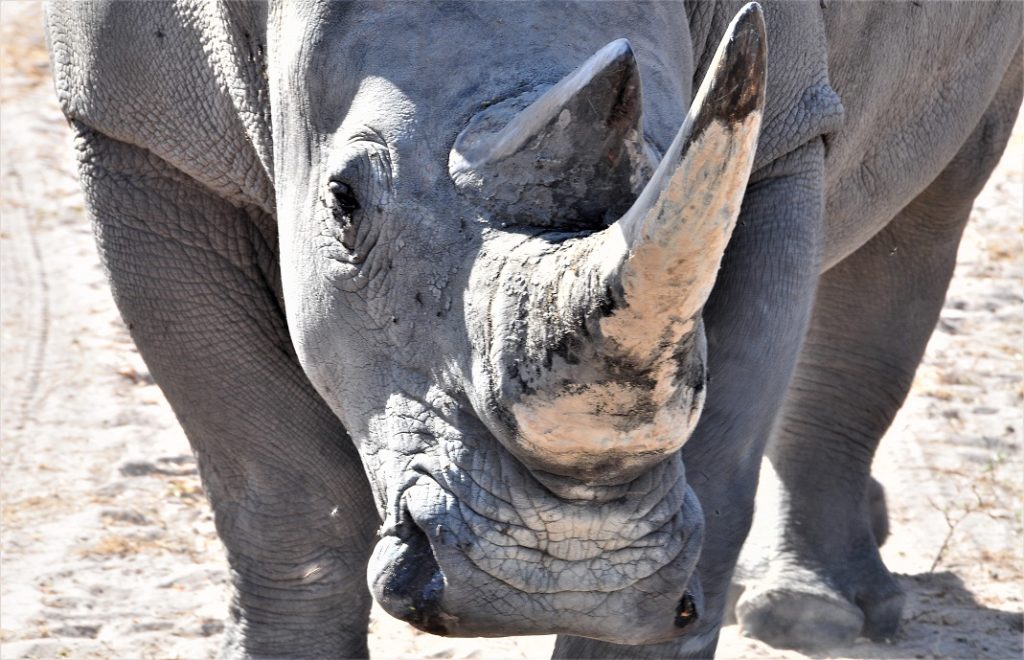
We had two hours to explore the reserve, and nearly half of that passed in quiet anticipation before any animals made an appearance. But patience was richly rewarded: a rhino, massive and prehistoric-looking, emerged from the bush – and not alone. Trailing close behind was Pumba, the resident warthog, loyally shadowing its bulky companion.
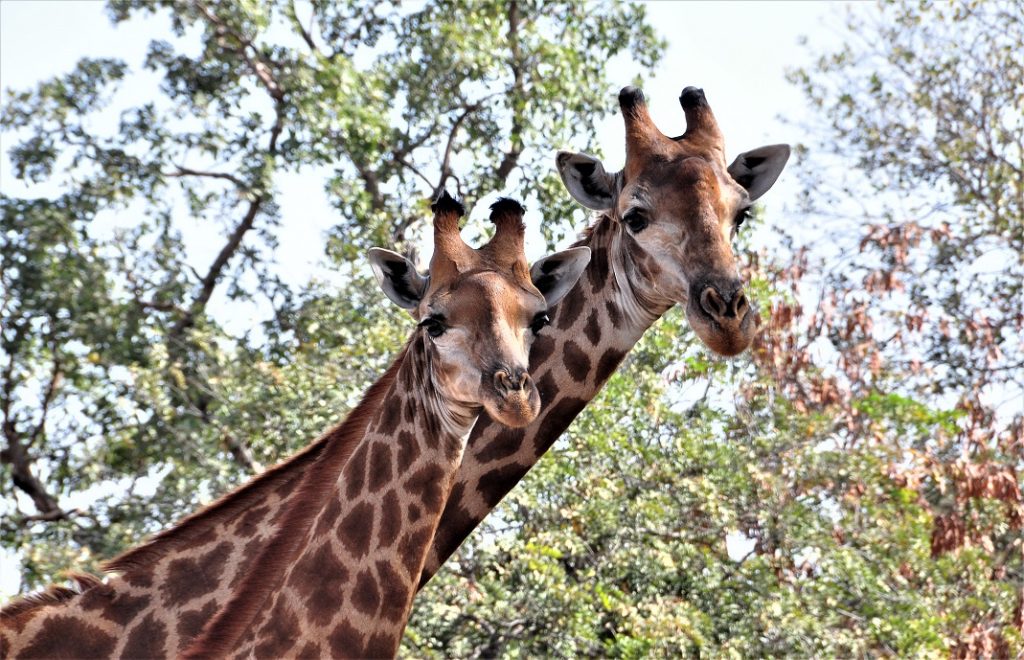
From that moment, the savannah seemed to come alive. Zebras stepped gracefully through golden grass, giraffes peeked through the treetops, monkeys chattered overhead, antelopes darted through the underbrush, and crocodiles lurked silently by a waterhole.
The safari vehicles are open-air, with simple benches mounted on the back of a truck. The ride itself is part of the adventure. Bouncing, jolting, and rattling over uneven trails. You quickly learn to brace yourself and dodge the branches that whip by at surprising speed.
And don’t expect your driver to take it slow. In Fathala, brakes are apparently optional, especially around sharp bends and bone-rattling potholes. But that just adds to the thrill. This may not be a luxury safari, but it’s every bit as wild – and wonderfully memorable.
The mighty baobabs – Nature’s treasure chest
Scattered throughout the reserve are the majestic baobab trees – towering sentinels of the savannah and an essential part of life in Fathala. Our ever-enthusiastic guide was eager to share just how vital these remarkable trees are. Not just to the animals, but to the people of the region as well.
Baobabs are astonishingly versatile. Their leaves, rich in calcium, iron, protein, and vitamin C, are cooked like vegetables and even used in traditional medicines to treat everything from malaria and fevers to asthma, digestive issues, and urinary infections. The bark, prized for its anti-inflammatory properties, is also used to reduce fevers, while fibers from the trunk are woven into baskets, mats, and even ropes.
And then there’s the tree itself. Hollow baobab trunks have served as water reservoirs, storage huts – and even boats.
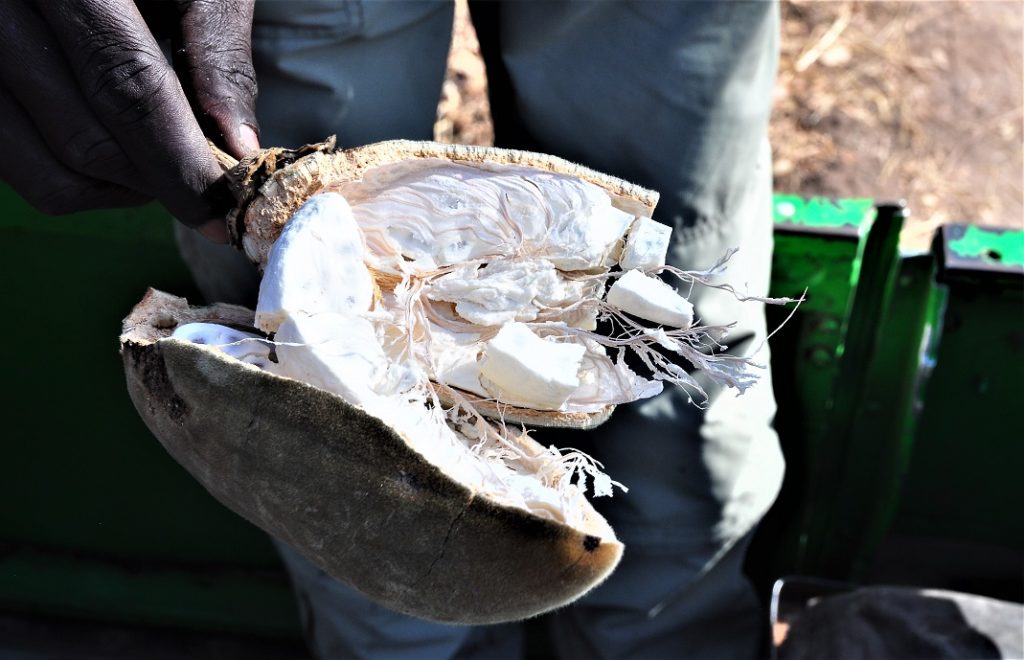
With a gleam in his eye, our guide was determined to let us experience the baobab’s benefits firsthand. Leaping from the safari vehicle with more enthusiasm than caution, he darted behind one of the towering trunks and returned moments later, beaming, with a handful of baobab fruit pulp – famed for its high vitamin C content.
He proudly sliced it open and offered us each a piece.
Was it delicious?
Well… let’s just say the texture was unique, the flavor tart and chalky. But not wanting to offend our passionate host, we smiled, nodded, chewed bravely – and gave him a hearty thumbs up.
The same old drill
As with all great adventures, our time in Senegal must come to an end.
Our ever-reliable guide Barry is ready and waiting, steering us back toward Barra in time for a quick lunch and the ferry crossing into Gambia. By now, we’ve learned that the ferry doesn’t run by the clock – but by capacity. It departs when it’s deemed “full enough,” whatever that may mean to the captain that day.
At the border, we go through the familiar routine.
Another long queue snakes toward the exit point from Senegal. The same cheerful girls approach us again, expertly balancing trays of bananas, cashew nuts, and vibrantly colored scarves on their heads. Their memory is razor-sharp.
“You promised to buy on the way back,” they say, eyes twinkling.
There’s no escape now. We hand over a few bills, and in return, we’re showered with radiant smiles – and enough cashews and bananas to feed a small herd of elephants for a month.
A fair trade, we’d say.
When time is of the essence
Lunch is served at a nameless little restaurant by the harbor. The noise of the crowd outside – eagerly awaiting the ferry gate to open – filters in through the open windows like the buzz of a busy marketplace.
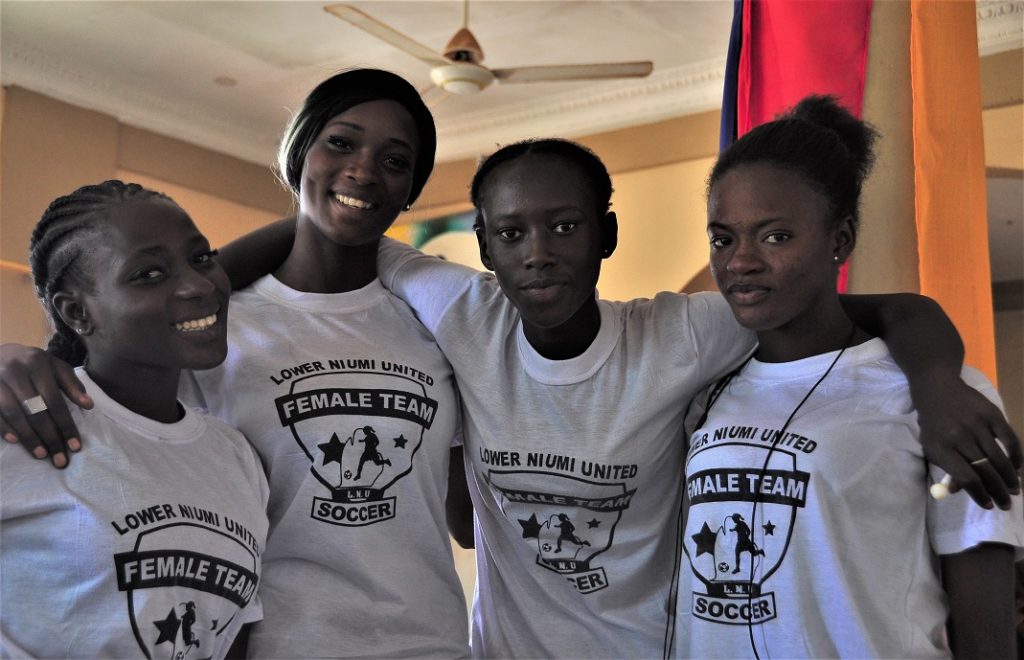
As we wait for our meal, a small group of girls wanders over. At first shy, they soon warm up and sheepishly admit they’d love for us to take their picture. Suddenly, they’re striking model-like poses, giggling and approving the shots with nods and bursts of laughter.
Then, the ferry lets out a blast of its horn – sounding more like a trumpet with a sock jammed in it than a proper maritime signal. But it’s enough to get Barry moving.
With the last chicken bones clutched in one hand and his other arm flailing toward the ferry, he shouts, “We need to go – NOW!”
We don’t argue. We dart through narrow alleys, squeeze through a hole in the fence, and scramble aboard just in time.
Settling into our seats, we watch Senegal slip away behind us.
One thing is certain: We’ll be coming back.