
The Karst region – known locally as Kras – is a striking landscape sculpted from limestone, where nature has carved out some of the most enchanting geological formations in Europe. Often referred to as the Land of Caves, this area hides a world beneath the surface, a subterranean realm of breathtaking beauty.
Here, nestled within this dramatic terrain, lies one of Europe’s most spectacular natural wonders: Postojna Cave – a legendary destination and the most visited cave on the continent.
Join us on a journey into the depths of the Earth, where nature’s artistry has shaped a hidden world so mesmerizing, it leaves visitors utterly spellbound.
“Here is a new world, here is paradise!”
Luka Čeč, the man who discovered Postonja Cave
What is Postojna Cave?
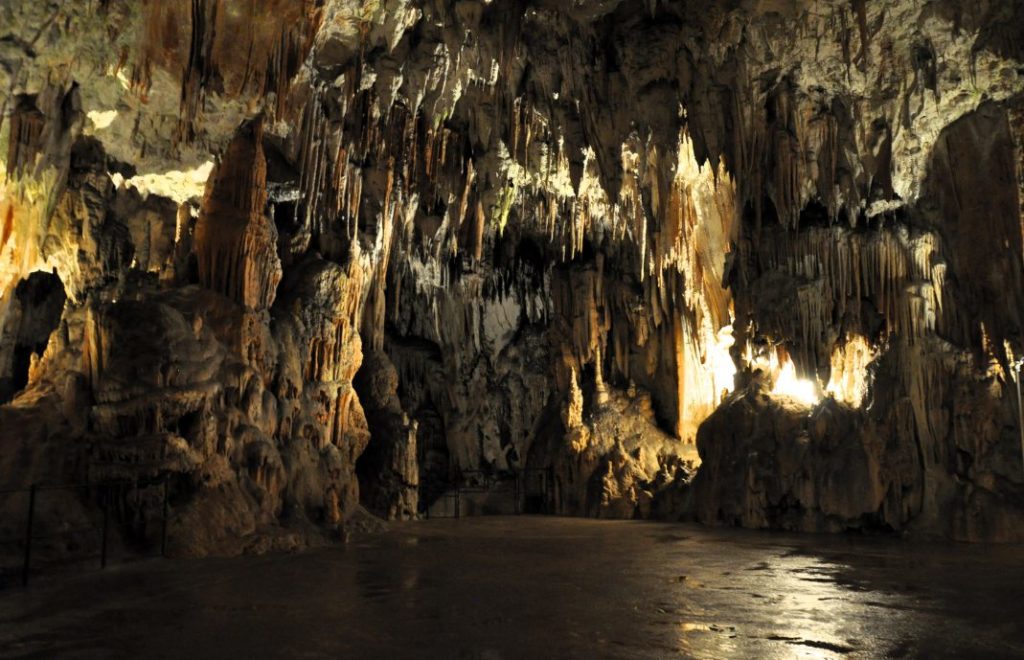
Postojna Cave holds the prestigious title of Europe’s most visited cave, having welcomed over 40 million curious souls from across the globe since it first opened to the public in 1818.
This subterranean marvel stretches an astonishing 24 kilometers into the mountain, weaving through an intricate network of passages, galleries, and grand halls that seem lifted from the pages of a fantasy novel.
More than two million years in the making, this natural wonder was sculpted by none other than the Pivka River, which vanishes into the depths of the cave. Deep underground, it merges with the Rak River, creating the largest subterranean confluence in all of Europe – a hidden meeting of waters that continues to shape this breathtaking underworld.
How to get to Postojna Cave
Postojna Cave is located in the charming town of Postojna, roughly 50 kilometers southwest of Slovenia’s capital, Ljubljana.
If you’re arriving by car, finding your way is a breeze. The cave is the town’s pride and joy – clearly marked with signs that make it easy to navigate. A spacious parking area awaits visitors just below the cave entrance.
Travel times by car:
- From Lake Bled: around 40 minutes
- From Trieste, Italy: approximately 1.5 hours
- From Rijeka, Croatia: approximately 1.5 hours
Public transport is also a convenient option. You can hop on a bus or train, or join an organized day trip from Ljubljana for a hassle-free adventure.
Whichever route you choose, the journey promises scenic views and the anticipation of a truly unforgettable subterranean experience.
Visiting Postojna Cave
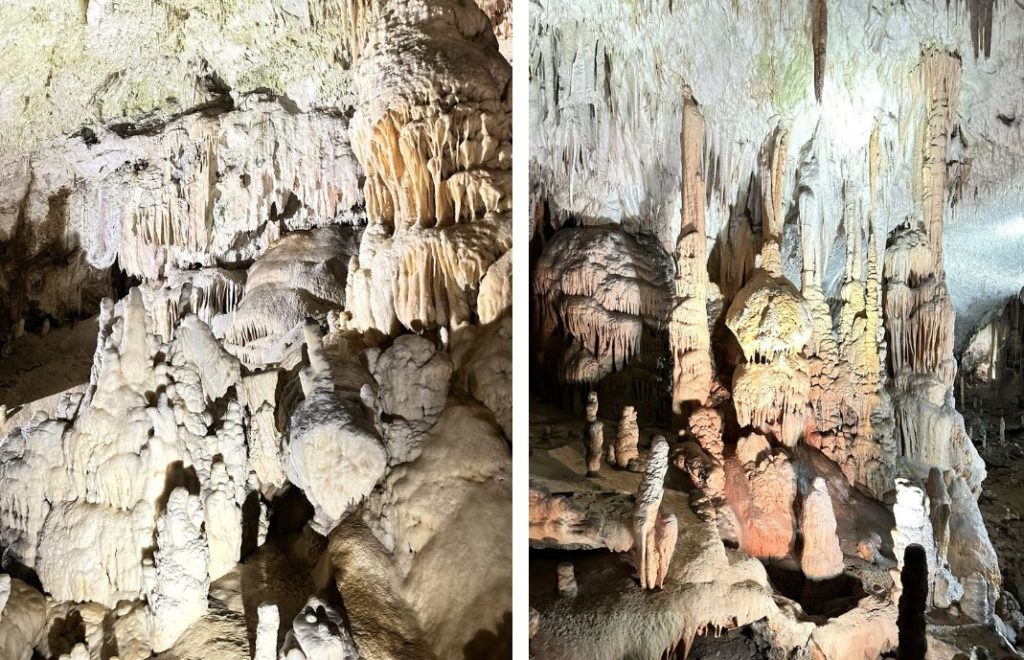
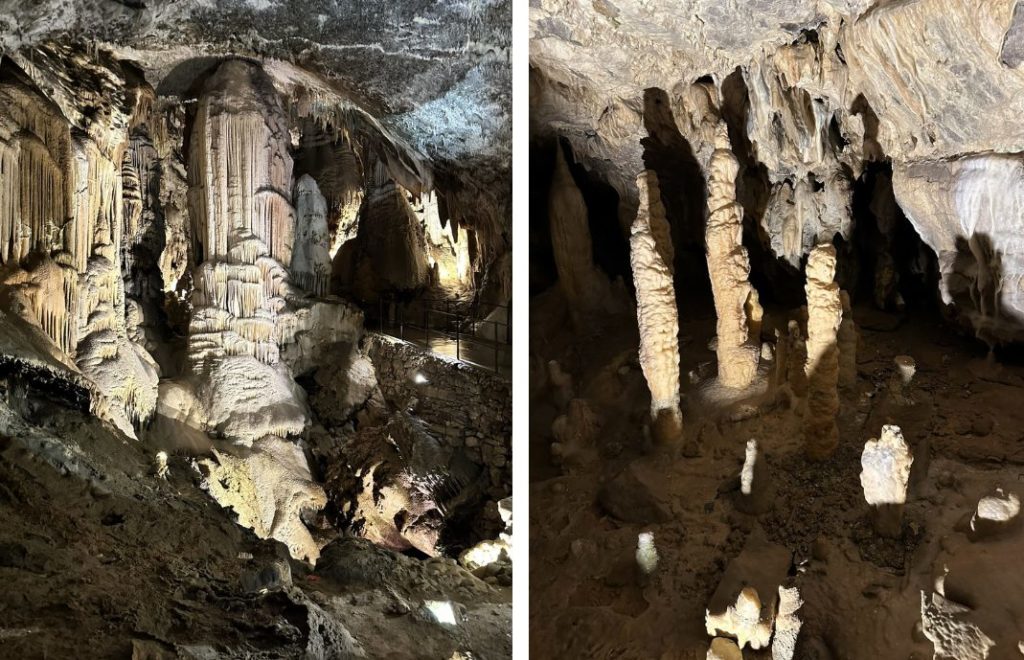
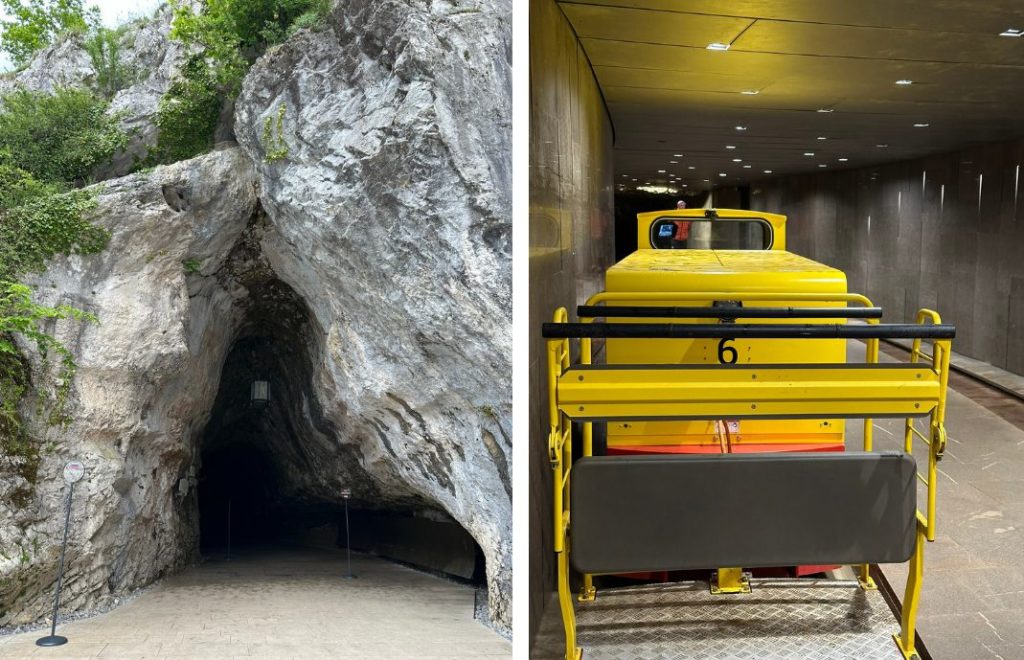
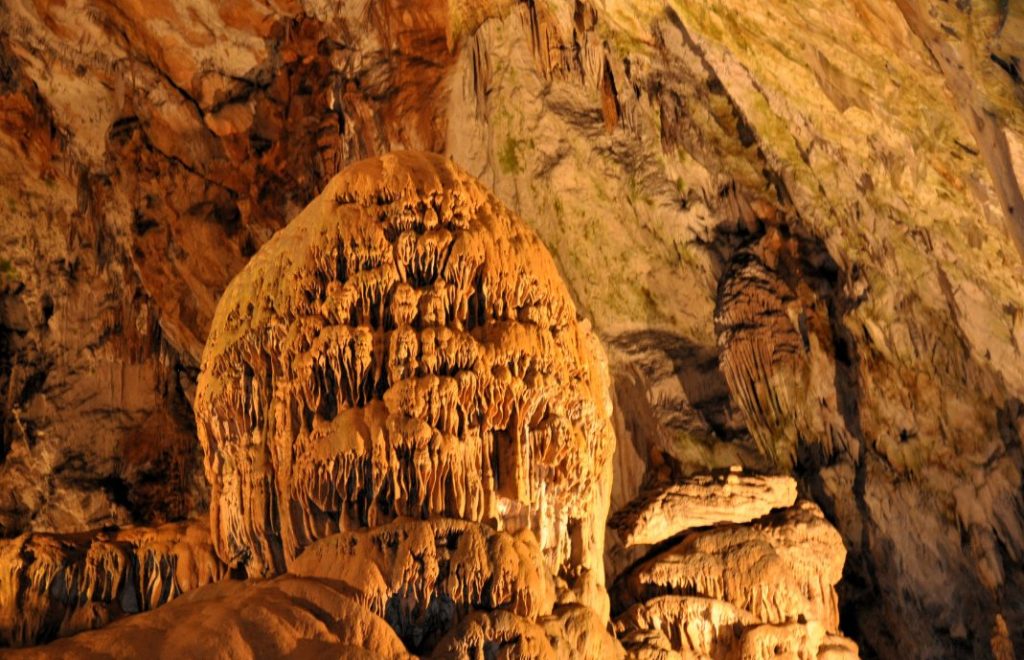
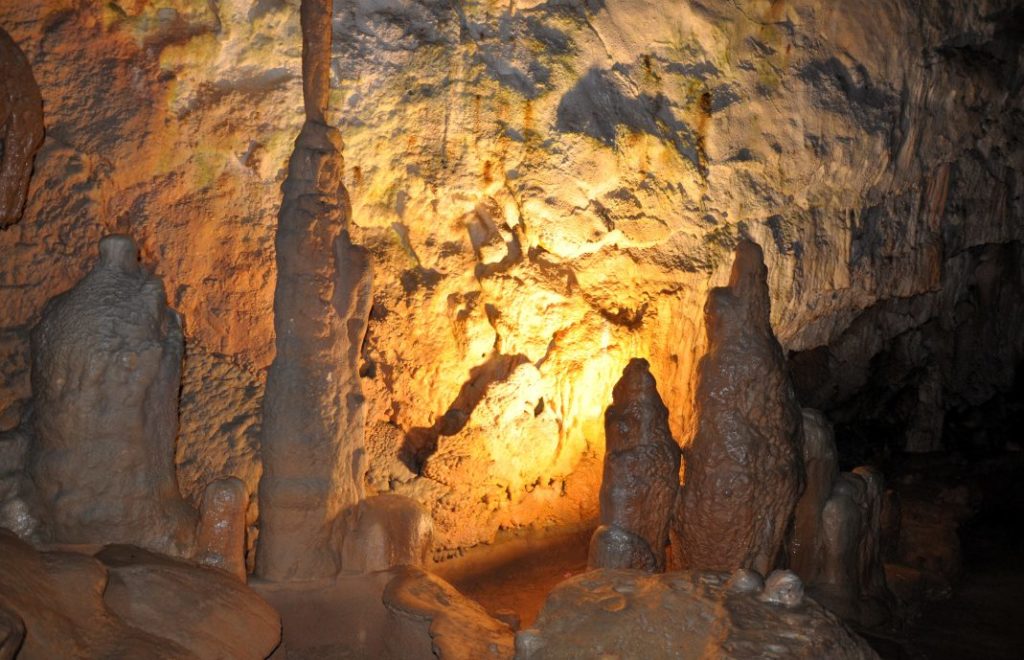
As the mountain parts, your adventure begins aboard a charming miniature train that carries you the first two kilometers deep into the heart of the earth. Then, the spectacle unfolds – an explosion of colors and shapes as chamber after chamber reveals ever-changing formations of stalactites and stalagmites, all beautifully illuminated to enhance their natural grandeur.
This little train has been transporting awe-struck visitors for over 140 years. The first ride into the underground wonderland took place in 1872, and since then, around 40 million people have been whisked through Postojna’s hidden world.
Once the train reaches its station, a knowledgeable guide welcomes you for a walking tour through some of the cave’s most iconic features: the Great Mountain, the Russian Bridge, and the awe-inspiring Beautiful Cave. Here you’ll encounter The Brilliant – the cave’s most famous stalagmite and an enduring symbol of Postojna Cave’s mystique.
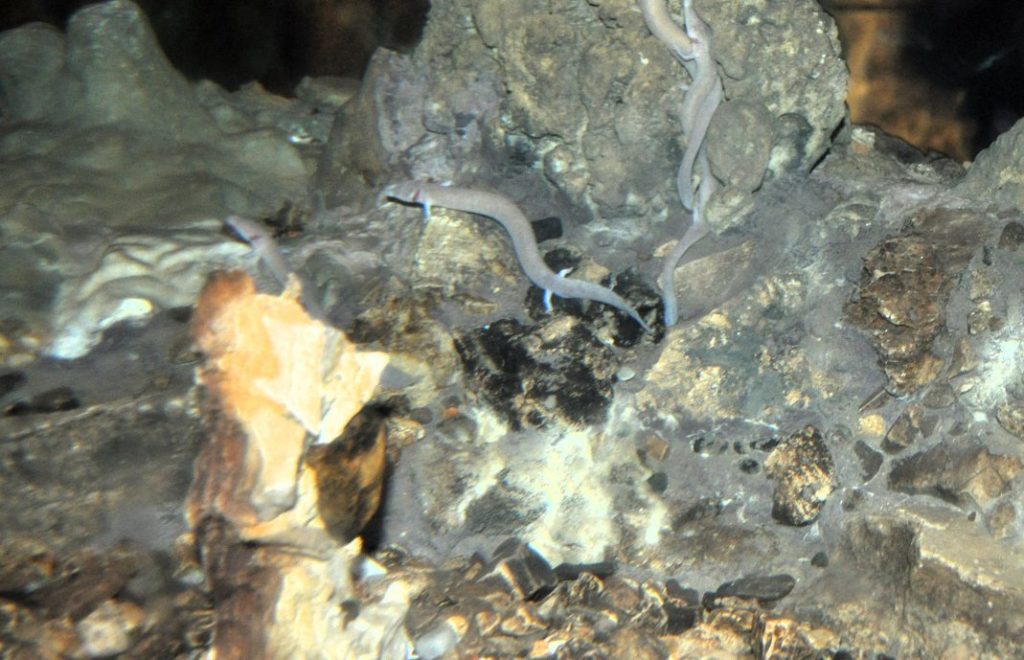
You’ll also meet the cave’s most intriguing residents: the Baby Dragons, also known as olms or “human fish.” These blind, colorless salamanders live their entire lives in complete darkness and underwater. Housed in a specially designed vivarium, these rare creatures are a marvel of adaptation – just remember, flash photography is strictly prohibited.
The visit concludes in the spellbinding Dance Hall, where elegant chandeliers hang from the stone ceiling, casting a magical glow over this natural ballroom.
Then it’s time to hop back on the train for a final ride out – emerging once again into the daylight, with the memory of an extraordinary subterranean journey etched into your imagination.
Good to know before visiting Postojna Cave
To make the most of your journey into this subterranean wonder, here are a few helpful tips:
- Arrive at least 30 minutes early. Getting from the parking area to the cave entrance takes time, especially during busy periods.
- All visitors must join a guided tour. Even those using an audio guide must be part of an official group.
- Dress warmly. The cave maintains a constant temperature of 10°C (50°F), regardless of the season.
- A bit of a climb: After disembarking the train, there’s a steep uphill section with a 20% incline. The rest of the tour is mostly level.
- Accessibility: Postojna Cave is suitable for all ages and most mobility levels. Wheelchair users can enjoy a shorter tour aboard the cave train without disembarking—a wonderful way to experience the magic.
- Look, but don’t touch! Please refrain from touching anything inside the cave except the handrails, to preserve the delicate formations.
- Photography is allowed, but flash and tripods are strictly prohibited.
- Facilities: Outside the cave, you’ll find a restaurant, gift shop, and restrooms.
- No dogs allowed inside the cave, so plan accordingly if you’re traveling with a pet.
- Stay nearby: Hotel Jama, located right next to the cave, is considered one of Slovenia’s top accommodations, offering 156 comfortable rooms.
- Make it a full-day adventure: Combine your cave visit with a trip to the fairytale-like Predjama Castle, just a few kilometers away. Be sure to purchase a combo ticket for both attractions to make the most of your visit.
With a little preparation, your experience at Postojna Cave promises to be smooth, magical, and truly unforgettable.
Best time to visit Postojna Cave
Postojna Cave is open every day, all year round – making it a reliable destination no matter when you travel.
For the most enjoyable experience, late spring and early autumn are ideal. These seasons offer a perfect balance of pleasant weather and fewer crowds. August and December are peak months, often bustling with visitors, so if you prefer a quieter, more intimate atmosphere, it’s best to avoid those periods. Weekends, especially outside summer, also tend to be busier.
Since the cave is completely weather-proof, it’s a brilliant choice for rainy days or when the heat outside becomes overwhelming. Just remember – the temperature underground stays at a constant 10°C (50°F) year-round, so be sure to dress accordingly.
Whether you’re chasing adventure or seeking shelter from the elements, Postojna Cave offers a cool, captivating escape into another world.
Baby Dragons of Postojna
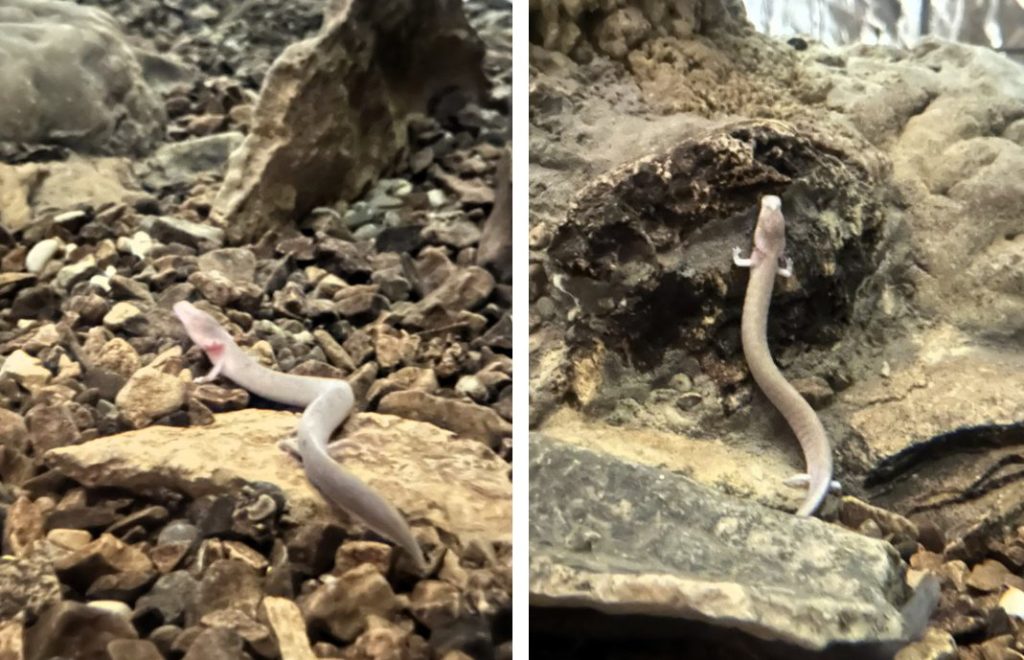
Pale, almost translucent skin. Unusual red fronds. No eyes. Four stubby legs – with three toes on each front foot and two on the back. The olm – also affectionately known as the Baby Dragon or Human Fish – is one of nature’s strangest and most fascinating creatures.
Their eerie appearance has stirred human imagination for centuries. The earliest written records of these elusive amphibians date all the way back to the 1700s.
These tiny salamanders live exclusively in limestone caves, spending their entire lives submerged in water and cloaked in total darkness. As a result, they are completely blind and devoid of color, perfectly adapted to their hidden, underwater world.
Occasionally, during heavy rains or flooding, olms are swept up from their subterranean river habitats and brought to the surface. In centuries past, locals believed that a fearsome dragon lived deep within Postojna Cave – and that the creatures they discovered washed ashore were its offspring.
And who could blame them? With snow-white skin, long slender bodies, tails, four limbs, and tiny frilled spines along their backs, these bizarre beings looked like something plucked from legend.
Thus, the nickname Baby Dragons was born – an enchanting moniker for one of Slovenia’s most otherworldly inhabitants.
The Baby Dragons: Nature’s mysterious survivors
It didn’t take long for scientists to become captivated by these bizarre and enigmatic creatures. Soon, biologists were racing to be the first to formally identify a new species from Postojna Cave. In 1768, the honor went to Giovanni Antonio Scopoli, who introduced the world to a living specimen. He gave it the name Proteus anguinus, though it quickly earned its legendary nickname: the Baby Dragon.
Even Charles Darwin took an interest – mentioning these fascinating cave dwellers in his groundbreaking work on the Origin of Species (1859), recognizing them as extraordinary examples of evolutionary adaptation.
These animals are true masters of survival. Perfectly evolved for a life of darkness and water, olms grow to lengths of 25 to 30 centimeters, making them some of the largest predators in the cave ecosystem. Their movement through the water is serpentine, aided by their short, stubby legs. Weighing just around 20 grams, they breathe through external gills as well as rudimentary lungs. Despite being completely blind, they excel at detecting prey through sensitive vibrations and light-reactive skin.
Astonishingly, Baby Dragons can survive for up to seven years without food – a remarkable feat in the often resource-scarce underground world. And their lifespans? They can live up to a hundred years, making them not only rare but incredibly resilient.
For thousands of years, these elusive creatures lived in peaceful obscurity. But in recent decades, scientific interest has surged. In 2016, the world watched in awe as, for the first time ever, a female olm laid eggs in captivity and 21 baby dragons were born – a breakthrough that drew international attention and sparked new conservation efforts.
Today, Proteus anguinus is listed as Vulnerable, a stark reminder that even mythical creatures of the deep need our protection.
Want more inspiration to Slovenia?
Truffle hunting in Istria
Ljubljana’s highlights
A guide to Predjama Castle
Horses, caves, and castles in Slovenia
