
Everyone’s heard of Yellowstone National Park – the world’s first national park and one of America’s most celebrated natural wonders. But beyond the famous geysers, bison herds, and steaming hot springs lies a world of secrets that most travelers never discover.
Stretching across nearly 9,000 square kilometers of volcanic wonderland, Yellowstone is a living, breathing planet within a planet – a place where fire meets ice, and time seems to bend around nature’s power. It’s home to over 10,000 hydrothermal features, a vast underground supervolcano, and ecosystems so ancient they’ve shaped life across the entire continent.
Yet even the most seasoned travelers are often surprised by what lies beneath the surface – both literally and metaphorically. From hidden lakes that never freeze to petrified forests and the park’s own microclimate, Yellowstone is full of extraordinary details waiting to be uncovered.
So, before you lace up your hiking boots or aim your camera at Old Faithful, here are 11 fascinating things you probably didn’t know about Yellowstone National Park – stories and secrets that make this legendary landscape even more remarkable.
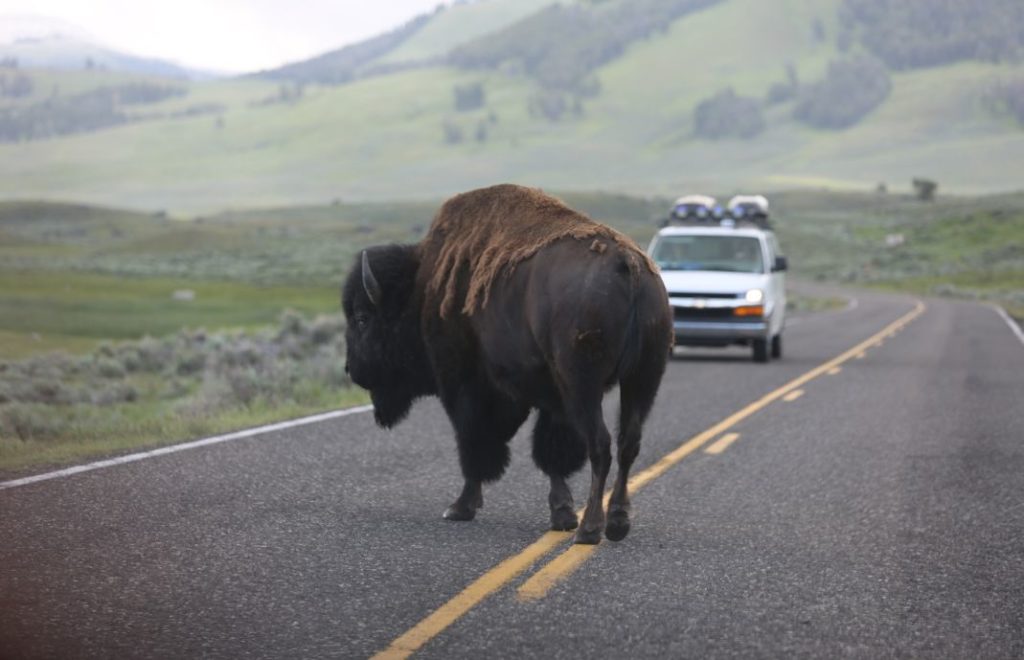
1. Yellowstone is the world’s first national park
In 1872, long before conservation became a global movement, the United States took an unprecedented step: it set aside a vast, untamed wilderness “for the benefit and enjoyment of the people.” That wilderness was Yellowstone, making it the world’s first national park – and the model for every park that followed.
At the time, the idea was revolutionary. The notion that land should be preserved not for profit, but for beauty, science, and the spirit of future generations, was almost unheard of. Yet the explorers and visionaries who first mapped Yellowstone knew they were witnessing something extraordinary – a place too wild, too magnificent, to ever belong to one person alone.
Today, that decision feels prophetic. Yellowstone’s creation sparked a movement that spread across continents, inspiring more than 100 countries to protect their own natural treasures. When you walk its trails or watch Old Faithful erupt, you’re standing in the birthplace of the entire national park idea – a concept that changed how humanity relates to nature forever.
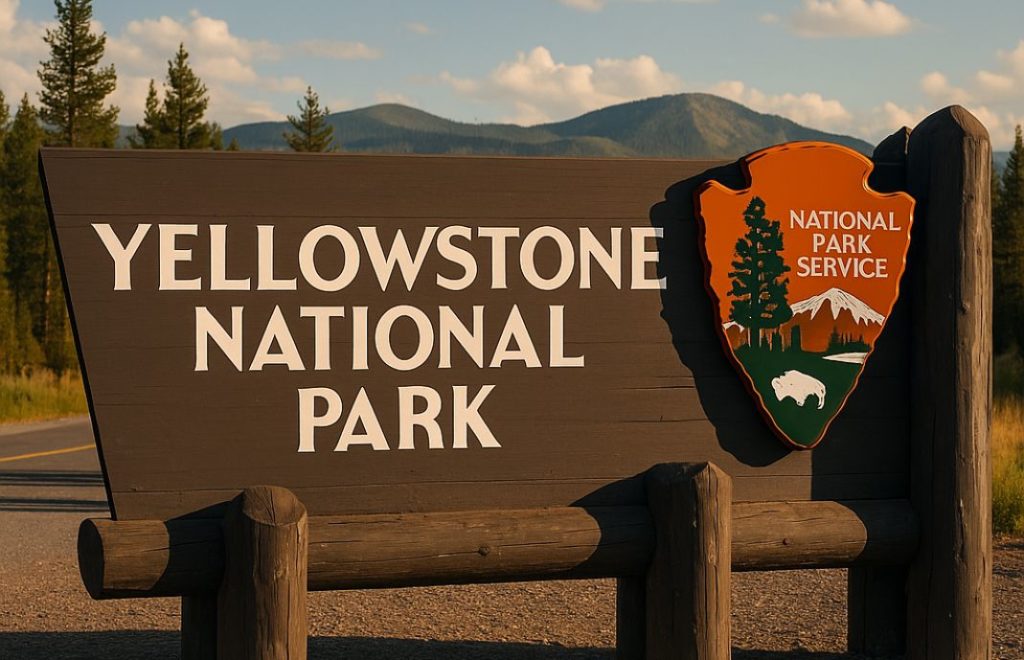
2. Yellowstone is bigger than two states combined
It’s hard to grasp the true size of Yellowstone National Park until you’re standing in the middle of it – surrounded by mountains, valleys, and open sky that seem to stretch forever. Covering nearly 9,000 square kilometers (over 3,400 square miles), Yellowstone is larger than the states of Delaware and Rhode Island combined.
This immense scale means Yellowstone isn’t just one destination – it’s a world of its own. Within its borders, you’ll find mountain ranges, deep canyons, vast plateaus, forests, waterfalls, lakes, and geothermal basins – each with its own unique ecosystem. Driving from one end of the park to the other can take hours, and every curve in the road reveals a new landscape that feels untouched by time.
To explore Yellowstone properly, you need days – maybe weeks. And even then, you’ll only scratch the surface. Its vastness is part of what makes it so enchanting: a reminder that some places are still too big, too wild, and too beautiful to ever be fully known.
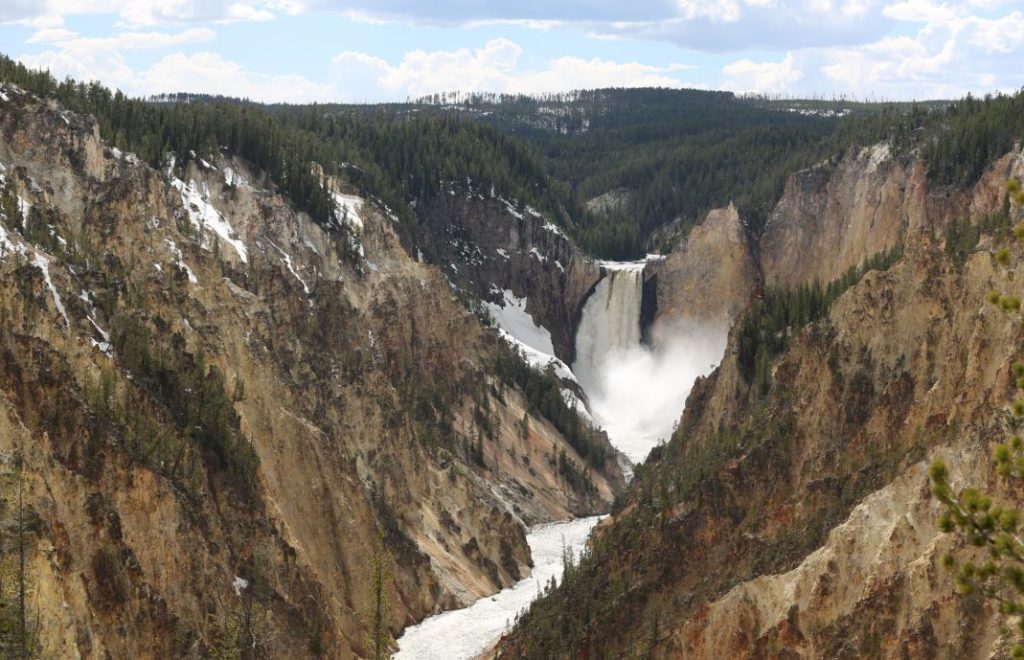
3. Yellowstone sits on top of a supervolcano
Beneath Yellowstone’s stunning landscape lies something far more powerful than most visitors realize – a supervolcano so vast it could change the planet’s climate if it ever erupted. This colossal volcanic system is one of only a handful on Earth, and it’s the fiery heart that gives Yellowstone its otherworldly character.
The park’s bubbling mud pots, steaming geysers, and vibrant hot springs all owe their existence to this immense underground force. The Yellowstone Caldera, as it’s known, last erupted about 640,000 years ago, leaving behind a crater roughly 70 kilometers wide. Since then, the ground has been rising and falling, breathing slowly like a living organism – a reminder that the Earth here is very much alive.
Don’t worry, though: scientists constantly monitor the volcano, and there’s no sign of an eruption anytime soon. But knowing that you’re walking atop one of the planet’s most dynamic geological hotspots makes every geyser eruption and sulfur-scented breeze feel just a little more magical – and a little more humbling.
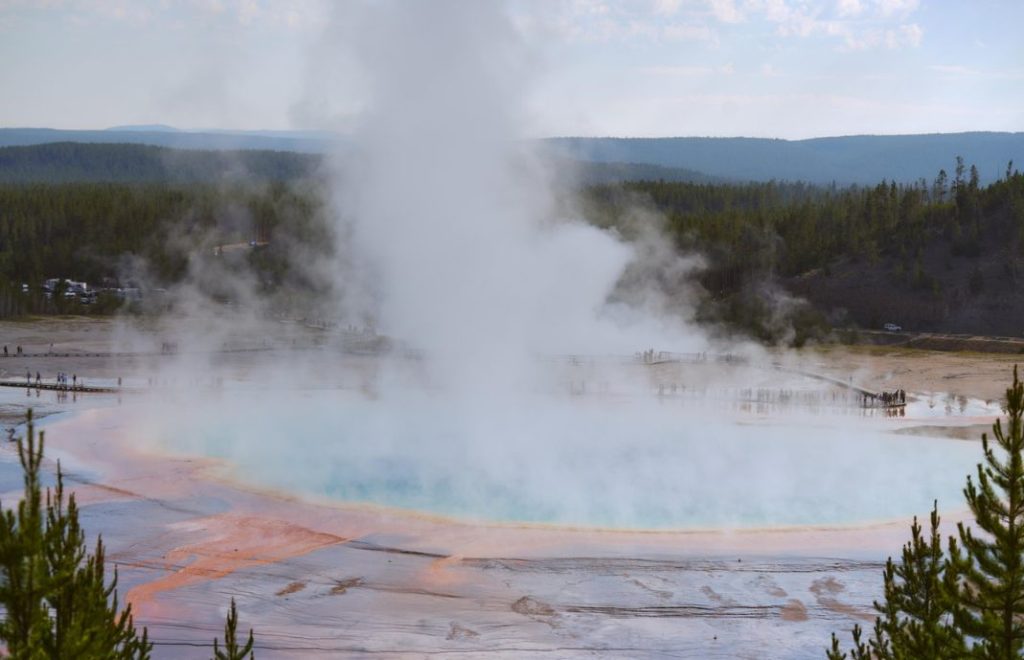
4. Yellowstone wasn’t its original name
Long before it became known as Yellowstone, this astonishing land went by many names – each revealing how people tried to describe the indescribable. For thousands of years, Indigenous nations such as the Kiowa, Crow, and Lakota Sioux lived among its mountains and valleys, naming rivers, geysers, and sacred sites in their own languages.
The Mandan people were among the first to use a name resembling “Yellowstone,” calling the river Mi tsi a-da-zi, meaning “Yellow Rock River.” French trappers later translated that to Roche Jaune, or “Yellow Stone,” a name that eventually evolved into the one we know today.
But when early explorers and writers tried to introduce this extraordinary place to the wider world, they proposed another name entirely – “Wonderland.” Inspired by the surreal landscapes of geysers, rainbow-colored springs, and steaming earth, the name captured the pure sense of awe the region inspired. Travel posters and guidebooks in the late 19th century even promoted Yellowstone as “America’s Wonderland.”
While “Wonderland” never became the park’s official name, it perfectly described what visitors still feel today: that sense of stepping into another world – a place so surreal and alive, it seems to exist halfway between dream and reality.
5. Yellowstone holds over half of the world’s geothermal features
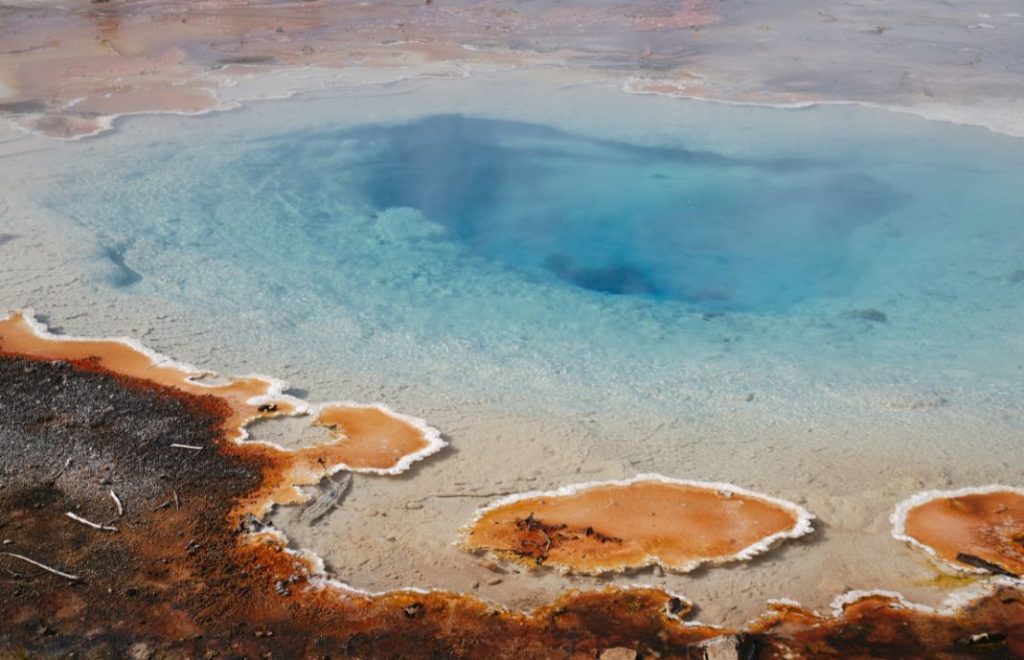
It’s hard to believe, but more than half of all the geothermal features on Earth are found within the boundaries of Yellowstone National Park. That’s right – over 10,000 bubbling hot springs, steaming fumaroles, hissing geysers, and colorful mud pots all concentrated in one extraordinary landscape.
These geothermal wonders are powered by the same supervolcano that simmers beneath the park, creating a dynamic world where fire and water coexist. Each feature has its own personality: from the faithful eruption of Old Faithful Geyser to the kaleidoscopic colors of the Grand Prismatic Spring, where heat-loving microorganisms paint the water in dazzling rings of blue, orange, and gold.
Walking through places like Norris Geyser Basin or Upper Geyser Basin feels like exploring another planet – a steaming, living world where the Earth literally breathes beneath your feet.
What makes Yellowstone so special isn’t just its geothermal abundance, but how it all connects: every pool, geyser, and vent is part of a vast underground system, constantly shifting and evolving. It’s nature’s chemistry lab – raw, unpredictable, and endlessly mesmerizing.
6. The U.S. Army once protected Yellowstone
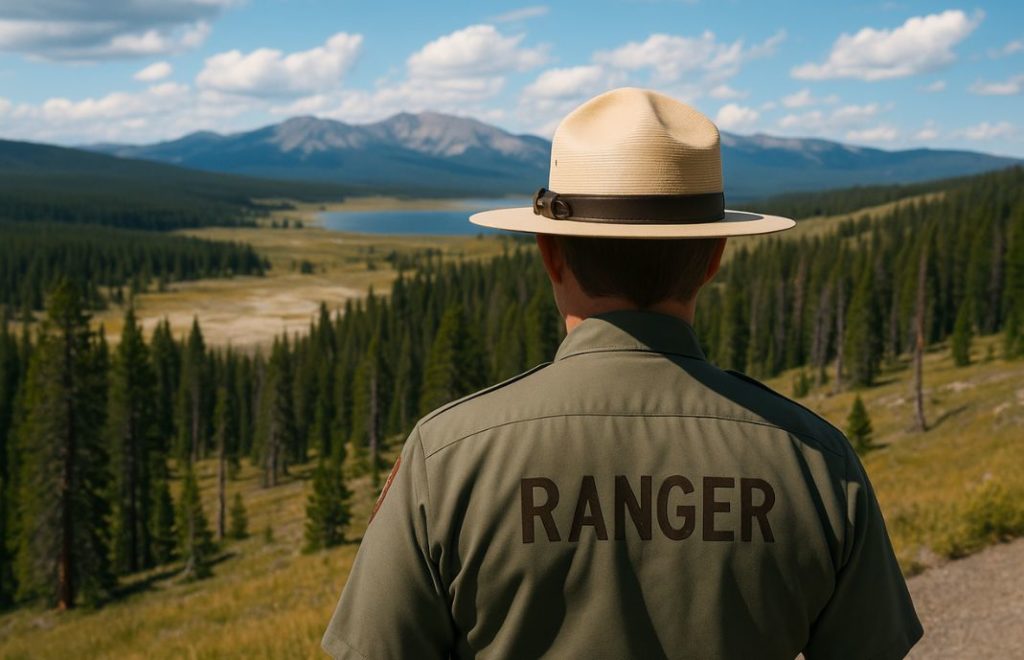
Before park rangers, uniforms, and visitor centers, the U.S. Army was responsible for protecting Yellowstone. In the late 1800s, after the park was established, there was no formal system for managing or enforcing its preservation – and poachers, vandals, and opportunists quickly took advantage.
In 1886, the U.S. Cavalry rode into Yellowstone and set up camp at what would become Fort Yellowstone in Mammoth Hot Springs. For the next 30 years, soldiers patrolled the park on horseback, built roads and outposts, and enforced the new conservation laws that helped preserve its wildlife and landscapes. They cracked down on illegal hunting, fires, and theft, ensuring that Yellowstone remained wild and unspoiled.
Their discipline and sense of duty laid the groundwork for modern park management. When the National Park Service was created in 1916, it inherited much of its structure – and even its ranger uniforms – from the Army’s legacy.
Today, visitors can still see the historic buildings of Fort Yellowstone, a living monument to the men who protected this vast wilderness when no one else could. It’s a reminder that preserving nature often begins with courage – and a deep belief in something greater than oneself.
7. Yellowstone is home to North America’s oldest wild bison herd
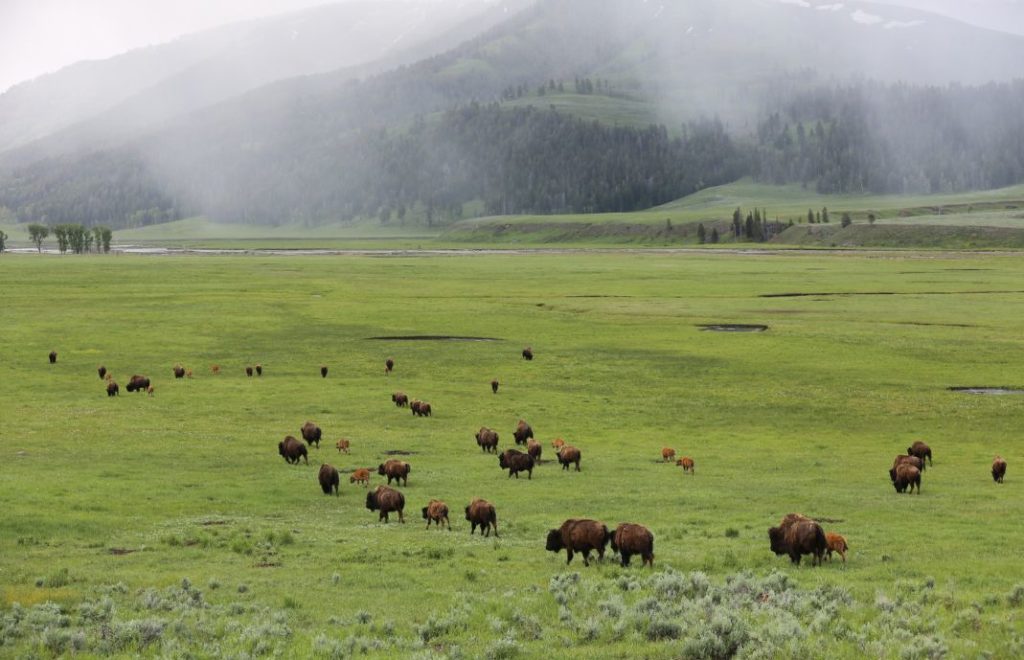
The thunder of hooves echoing across the plains is more than just a sound in Yellowstone – it’s a heartbeat that’s been pulsing here for thousands of years. The park is home to the oldest and most continuous wild bison herd in North America, direct descendants of the massive herds that once roamed the Great Plains in the millions.
By the late 1800s, bison were nearly wiped out – hunted to the brink of extinction. But a small group of survivors found refuge in Yellowstone’s remote valleys. Thanks to early conservation efforts and decades of protection, that tiny remnant population became the foundation for the herds that now roam freely through the park.
Today, more than 5,000 wild bison live within Yellowstone – the only place in the United States where they have existed continuously since prehistoric times. Watching them move through Hayden Valley or graze along the Yellowstone River feels like stepping back in time, witnessing a living link to the ancient American frontier.
The bison’s survival story is also Yellowstone’s – a testament to resilience, respect, and the wild beauty that refuses to fade.
8. One of the largest high-altitude lakes in North America
Spread out like a mirror to the sky, Yellowstone Lake is one of the park’s most breathtaking – and underrated – natural wonders. Sitting at an elevation of 2,357 meters (7,733 feet), it’s not only the largest body of water in the park but also one of the biggest high-altitude lakes in North America. It covers more than 350 square kilometers (136 square miles).
In summer, the lake shimmers under endless blue skies, its shoreline framed by forests and distant snow-capped peaks. In winter, it freezes almost completely, transforming into a white, silent expanse that feels otherworldly. Beneath its surface, though, the landscape is anything but still – geothermal vents bubble on the lake floor, releasing heat and minerals from the volcanic world below.
Scientists have discovered that these underwater geysers are part of the same vast hydrothermal system that fuels Old Faithful, making Yellowstone Lake as dynamic as it is beautiful. It’s a place where fire meets ice, where the calm surface hides unimaginable power beneath.
Whether you’re standing on its rocky shores at dawn or watching the last light fade over its waters, Yellowstone Lake captures the park’s essence: vast, mysterious, and alive.
9. Yellowstone spans three U.S. states
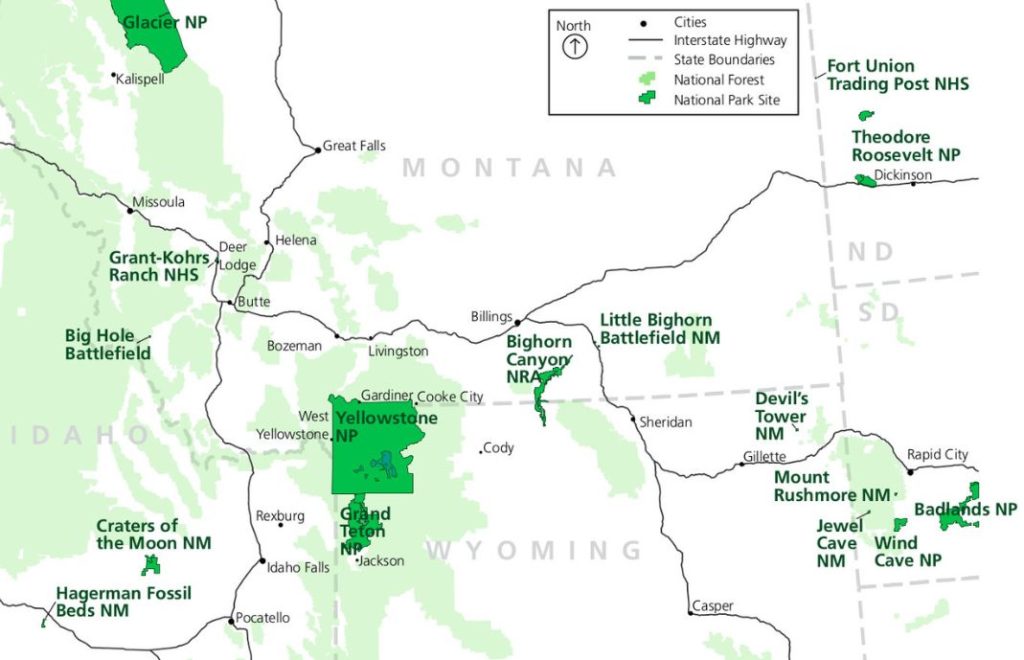
Most people think of Yellowstone as being in Wyoming – and they’re not wrong. But what few realize is that this vast national park actually stretches across three U.S. states: Wyoming, Montana, and Idaho.
Roughly 96% of the park lies within Wyoming, while 3% spills into Montana and 1% extends into Idaho. This tri-state geography gives Yellowstone a unique character – a meeting point of different landscapes, ecosystems, and histories. As you drive through the park, you cross invisible borders without even realizing it, moving seamlessly from one state to another while the scenery transforms around you.
Each region of Yellowstone has its own personality. Wyoming holds the iconic sights – Old Faithful, Yellowstone Lake, and the Grand Canyon of Yellowstone. Montana offers quiet mountain valleys and abundant wildlife, while Idaho shelters the park’s wilder, less-traveled edges.
It’s fitting that a place as vast and untamable as Yellowstone couldn’t be contained by a single state. Its boundaries blur just like its landscapes – flowing freely, as nature always intended.
10. Yellowstone’s biggest star
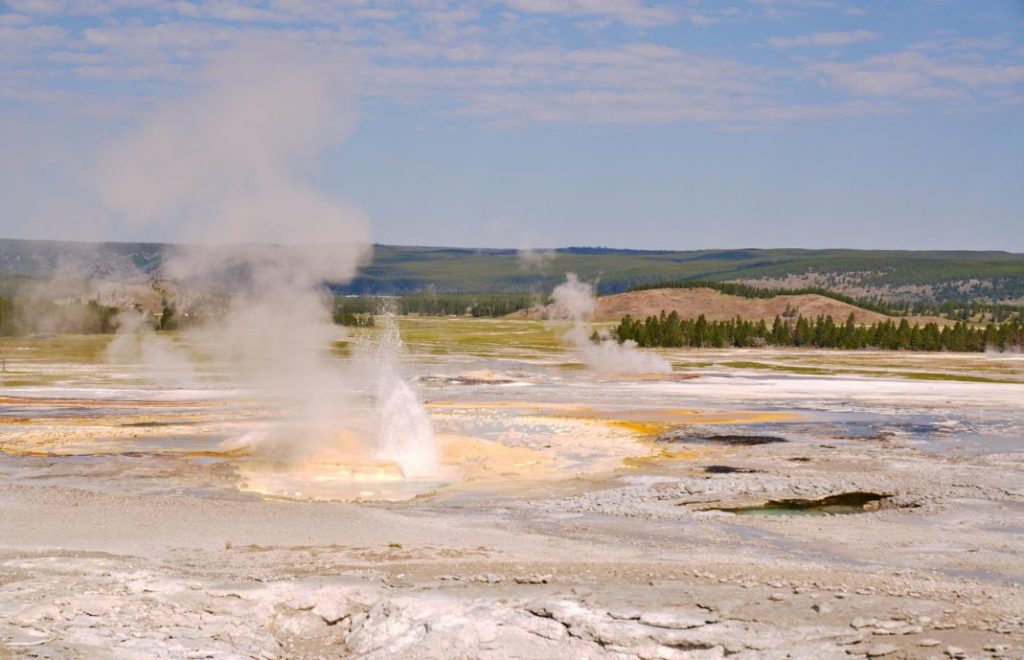
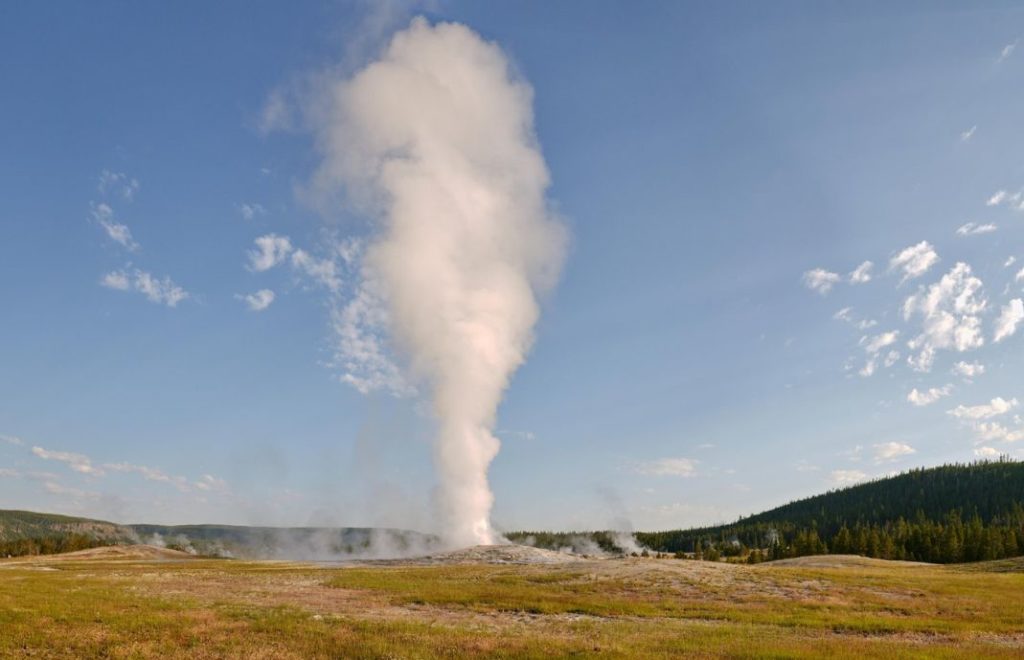
No attraction in Yellowstone is more iconic than Old Faithful. Every 60 to 110 minutes, almost like clockwork, this world-famous geyser sends a jet of boiling water and steam up to 55 meters (180 feet) into the air, drawing crowds from around the globe. But here’s something most visitors don’t know -Old Faithful isn’t the tallest geyser in Yellowstone.
That title belongs to Steamboat Geyser, located in Norris Geyser Basin, which can erupt to staggering heights of over 90 meters (300 feet). What makes Old Faithful special isn’t its size – it’s its consistency. For centuries, this geyser has erupted with near-perfect regularity, earning its fitting name and capturing the imagination of everyone who witnesses it.
Each eruption lasts between 1½ and 5 minutes, sending out thousands of liters of scalding water in a dazzling display of earth’s raw energy. Beneath your feet, an intricate network of superheated water channels and pressure chambers is at work – a glimpse into the restless volcanic heart of Yellowstone.
Standing before Old Faithful, surrounded by the hiss of steam and the scent of sulfur, you feel something timeless – a connection to the living earth itself. It’s more than a spectacle; it’s a ritual of nature, performed faithfully since long before humans arrived to watch.
Old Faithful isn’t the tallest geyser – but It’s the most faithful (and popular)!
11. One of the best places on earth to see wildlife
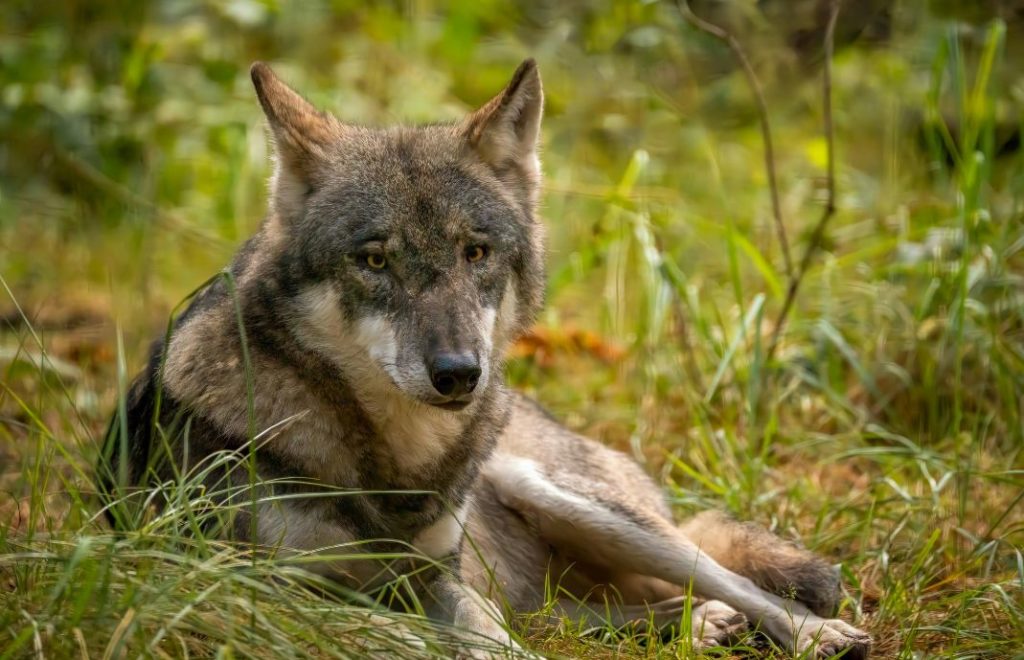
Few places on the planet offer wildlife encounters as raw and breathtaking as Yellowstone National Park. Often called “the American Serengeti,” this vast wilderness is home to an extraordinary range of species – from mighty grizzly bears and wolves to elk, moose, pronghorn, and the park’s legendary bison herds.
The park’s valleys, especially Lamar Valley and Hayden Valley, are world-renowned for wildlife viewing. At dawn and dusk, mist curls above the grasslands as silhouettes move in the distance – a bison herd grazing, a pack of wolves trotting in formation, an elk wandering across the canyon. It feels less like a scene from modern America and more like a glimpse into prehistory.
What makes Yellowstone truly special is that this isn’t a safari park or reserve – it’s a functioning ecosystem, one of the last intact temperate ecosystems on Earth. Here, predators and prey live in balance, the land shapes their rhythm, and visitors are privileged witnesses to nature’s eternal story.
In Yellowstone, wildlife isn’t just something you see – it’s something you feel. It’s in the thunder of hooves, the whisper of wings, and the deep, unshakable sense that you’ve stepped into the wild as it was meant to be.
Main photo: Wyoming Office of Tourism
This post is a collaboration with Wyoming Office of Tourism. I am grateful for their cooperation.
