
You’ve probably heard of the Big Five – and perhaps even the Ugly Five and the Little Five. But have you heard of Samburu’s Special Five?
Samburu National Reserve, famed for its herds of elephants, lions, and leopards, is also home to a unique collection of wildlife known as the Special Five – rare and remarkable animals perfectly adapted to the arid, scrubby landscapes of northeastern Kenya.

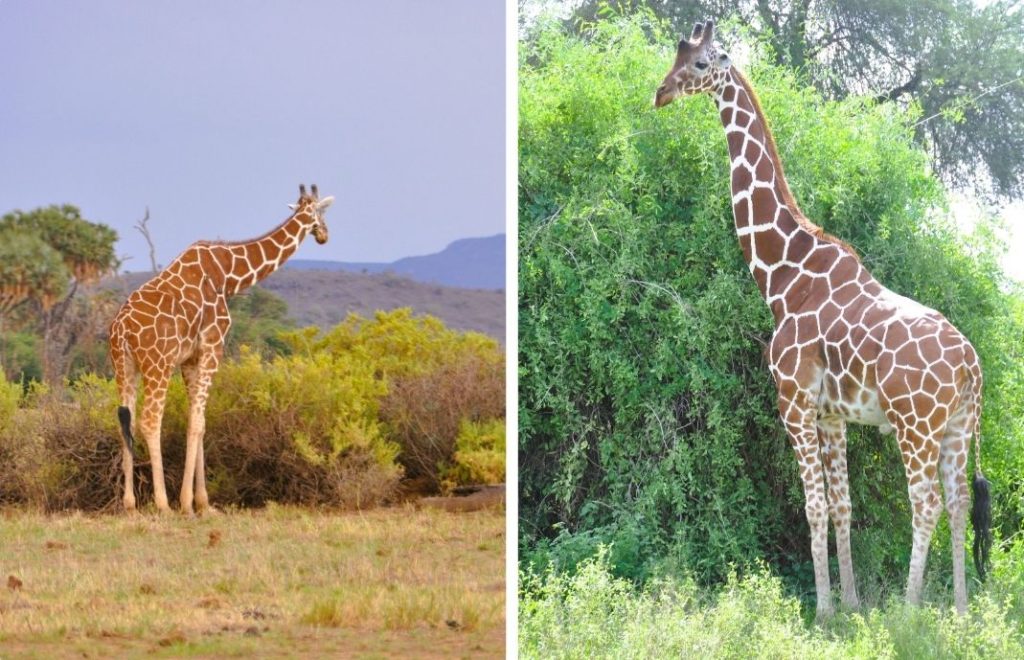
Reticulated Giraffe
The reticulated giraffe, also known as the Somali giraffe, stands out from its cousins across Africa. Its coat features rich, orange-brown patches crisply outlined by bright white lines, covering its entire body – even its legs.
This stunning beauty roams the wilds of Somalia, Ethiopia, and northeastern Kenya, but Samburu National Reserve is the only park where you’re almost guaranteed to see them in the wild.
A spectacular sight on the Samburu plains, these graceful giants are often spotted nibbling from the tops of acacia trees or striding elegantly across the savannah.
Males can grow up to six meters tall, while females reach around 5.7 meters – with their slender necks making up as much as 2.5 meters of their height.
The greatest threats to the reticulated giraffe are habitat loss and human encroachment.
The population has plummeted by over 50% since the 1990s, with an estimated 16,000 individuals remaining.
In 2018, the species was officially listed as Endangered by the IUCN. However, thanks to effective conservation efforts, numbers are slowly increasing in northern Kenya – a hopeful sign for this iconic creature of the drylands.
Grévy’s Zebra
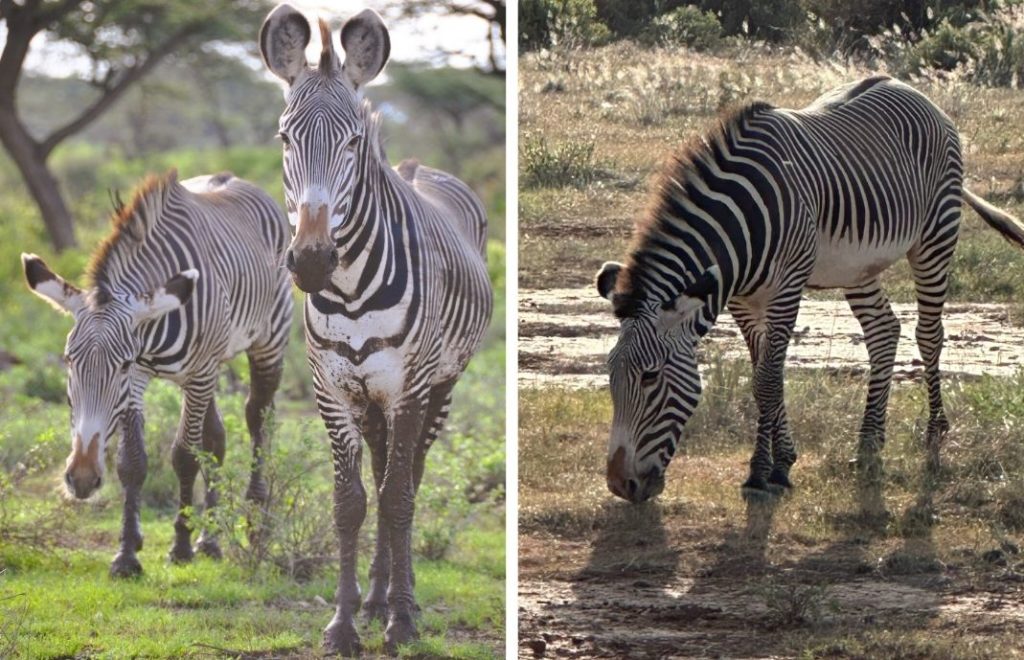
The dashing, stripe-clad Grévy’s zebra – also known as the imperial zebra – is found only in Ethiopia and Kenya.
The largest of all zebra species, Grévy’s zebra is instantly recognizable by its signature black-and-white stripes. Unlike other zebras, however, it sports a snow-white belly, a long and narrow head, and impressively large, rounded ears that give it a unique profile.
Perfectly adapted to life in arid grasslands and scrubby semi-deserts, these sociable grazers are often seen mingling with other herbivores like wildebeest, antelope, and ostriches.
Today, only about 2,500 Grévy’s zebras remain in the wild. Though both Kenya and Ethiopia have implemented protective legislation, less than 0.5% of their natural habitat is under official protection – with Samburu National Reserve being one of the few safe havens.
Still, their regal presence on the open plains remains one of Samburu’s most unforgettable sights.
The species is classified as Endangered on the IUCN Red List, with habitat loss and illegal hunting (driven by demand for their skins and meat) posing the most serious threats.
Somali Ostrich
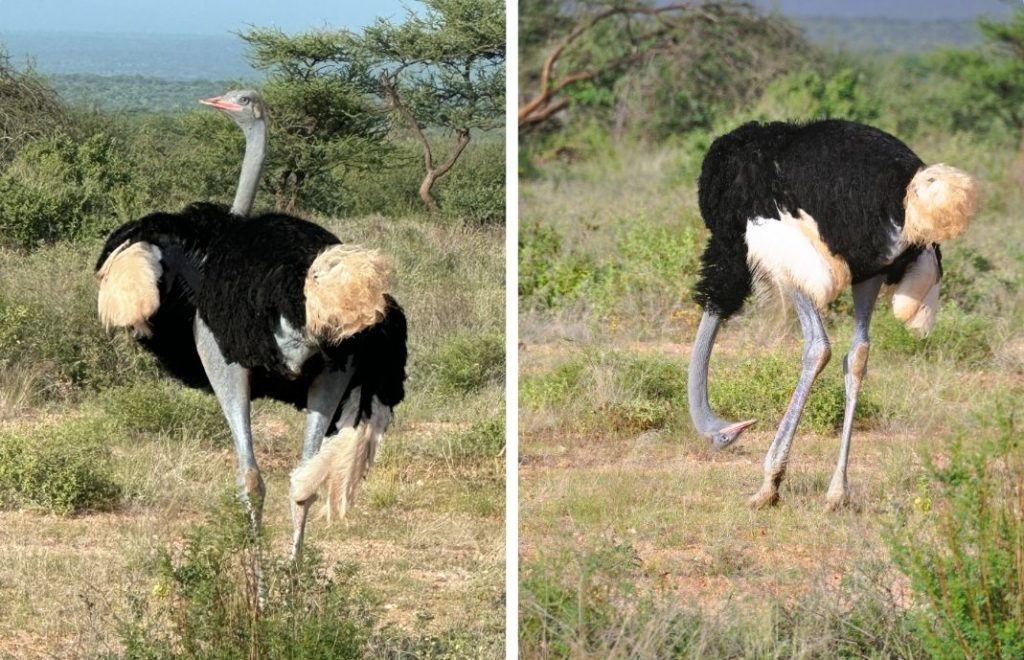
Not only is it the largest bird on Earth, but the ostrich is also one of the most entertaining characters you’ll spot on safari.
The Somali ostrich, endemic to the Horn of Africa and parts of northern Kenya, is distinguished by its bluish-grey bare skin on the neck and legs – a stark contrast to the soft pink tones of its more common cousin, the common ostrich.
During mating season, the male’s neck and legs take on an even deeper, more vibrant blue hue.
This flightless giant is a delightful presence in Samburu National Reserve, strutting across the landscape with surprising grace.
Males sport striking black plumage with white wing and tail feathers, while females and juvenile males wear more subdued shades of greyish-brown and white. Two of their wing “fingers” are even tipped with prominent claws.
Built for speed, the Somali ostrich can sprint at an astonishing 74 km/h (46 mph), using its long, muscular legs to escape predators with ease.
Unlike the common ostrich, which prefers open savannahs, the Somali ostrich favors bushland and denser vegetation – another key trait that sets it apart.
Once widespread across Africa, Asia, and the Arabian Peninsula, Somali ostriches have seen dramatic population declines due to overhunting and habitat loss. Today, they are mostly confined to northern Kenya, with Samburu serving as one of their last strongholds.
On the IUCN Red List, the Somali ostrich is classified as Vulnerable.
Beisa Oryx
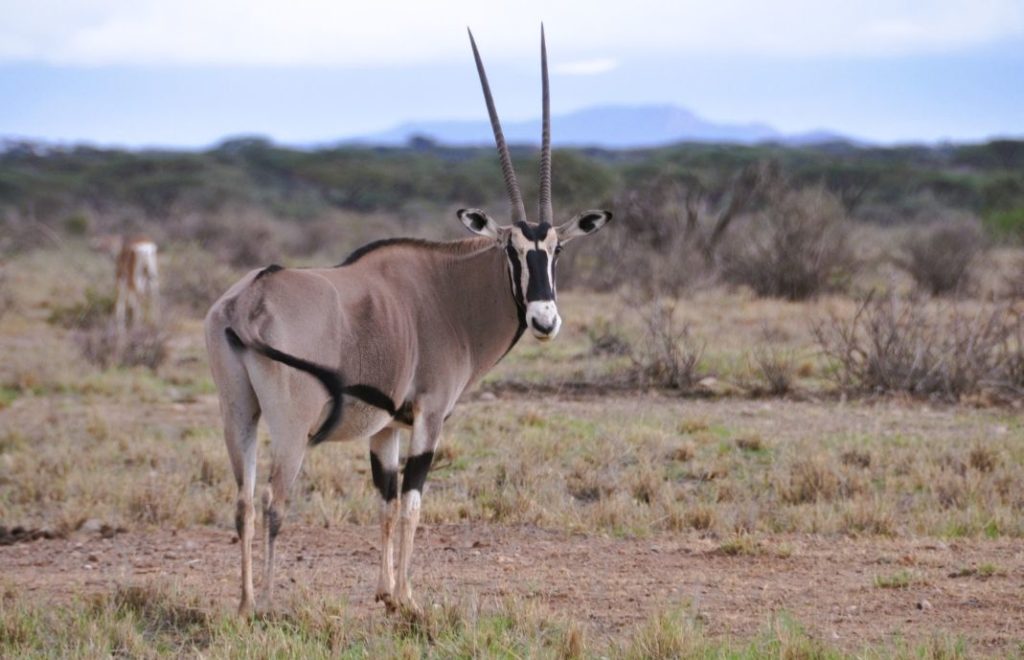
The East African oryx, also known as the beisa oryx, is a graceful antelope with a greyish coat adorned with striking black markings along its sides, loins, and legs. Its long tail ends in a tuft of coarse hair.
Its most defining features are the impressive backward-sweeping horns – often over a meter long – ridged in tight spirals, making it instantly recognizable on the savannah.
Uniquely adapted to arid environments, the beisa oryx can survive for weeks without drinking water. It does so by extracting moisture from the plants it grazes on, thriving where most mammals would struggle.
This elegant creature has evolved a remarkable internal cooling system to endure the brutal desert heat. Unlike many mammals, it can raise its core body temperature to prevent sweating and dehydration. It also possesses a specialized network of nasal capillaries that cool the blood before it reaches the brain, protecting it from overheating – a vital adaptation for life in extreme conditions.
Another astonishing trait? Its sense of smell. Beisa oryx can detect rainfall up to 80 kilometers away. When precipitation is sensed, the entire herd may migrate toward it – a testament to their resilience and instinct for survival.
Sadly, this species faces mounting threats. With only 8,000–9,000 individuals remaining in the wild, their numbers are declining sharply due to poaching and habitat destruction.
On the IUCN Red List, the beisa oryx is classified as Endangered.
Gerenuk
This long-necked and long-legged antelope is also known as the giraffe gazelle – and with good reason. Its reddish-brown coat is beautifully contrasted by white markings on the underbelly and around the eyes, giving it an elegant, almost otherworldly appearance.
Only the males bear horns – thick at the base and dramatically curved forward at the tips – measuring between 32 and 44 centimeters in length.
What truly sets the gerenuk apart is its feeding behavior. It can stand upright on its hind legs to browse leaves high in trees and shrubs, allowing it to access an ecological niche that few others can. Even giraffes, which graze higher still, don’t compete for the same vegetation.
This graceful and uniquely built antelope is usually seen alone or in small groups of up to five individuals, moving with quiet poise through the dry landscapes of northeastern Kenya.
On the IUCN Red List, the gerenuk is currently classified as Near Threatened, primarily due to habitat loss and hunting pressures.
More inspiration to Samburu National Reserve:
A guide to Samburu National Reserve
Check in: Samburu Sopa Lodge
Samburu people: The legend of the elephant
