
Few animals capture the imagination quite like the hippopotamus – one of Africa’s largest vegetarians and most surprisingly dangerous inhabitants. Spending up to 16 hours a day submerged in rivers and lakes, hippos use water as nature’s air conditioning system, keeping their massive bodies cool under the scorching sun.
With their barrel-shaped torsos, stubby legs, and wide heads topped by small ears, hippos may look like plump, gentle giants. But don’t be fooled – the hippopotamus is considered one of the most dangerous animals in Africa. Its powerful jaws and razor-sharp teeth are capable of snapping a three-meter crocodile in half with terrifying ease.

The mighty hippo – Africa’s watery giant
Perfectly adapted for an aquatic lifestyle, hippos have eyes, ears, and nostrils positioned high on their heads, allowing them to breathe and scan their surroundings while the rest of their bodies remain hidden beneath the water. Their nostrils can close completely, and they can hold their breath for up to five minutes underwater.
The name hippopotamus comes from ancient Greek, meaning “river horse” – a fitting title for a creature so intimately tied to water.
Despite their might, hippos are currently listed as Vulnerable on the IUCN Red List, due to habitat loss and illegal hunting.
For those eager to witness these extraordinary animals in their natural element, the best experiences come on a boat safari, or a guided walking safari – always in the company of a trained and armed guide.
Up close, watching these giants glide silently through the water, you’ll gain a deep respect for both their power and their mystery.

Okavango Delta, Botswana: Hippo heaven in Africa’s inland oasis
In the heart of Botswana lies one of the world’s most extraordinary ecosystems – the Okavango Delta, a shimmering expanse of waterways, lagoons, and floodplains that has earned its place on UNESCO’s World Heritage List.
And at the very soul of this aquatic wilderness? The unmistakable presence of the hippopotamus.
These river giants are a true symbol of the delta. Their loud snorts and honking bellows echo across the waters, making them easy to locate – just follow the sound. With their eyes and ears peeking above the surface, hippos patrol the channels like ancient guardians of this waterlogged paradise.
The Okavango Delta – the world’s largest inland delta – provides the perfect environment for hippos to thrive. Thanks to dedicated conservation efforts, the local population has rebounded, and the delta now boasts a healthy and growing number of these incredible animals.
There are few places on Earth where you can observe hippos in such natural abundance. Glide silently past them on a traditional mokoro (dugout canoe), take a guided walking safari for a thrilling ground-level perspective, or drift along on a boat safari as the sun sets behind the reeds.
Best time to see hippos: July to October, during the dry season, when wildlife gathers around the shrinking waterways – though the Okavango Delta offers magical encounters year-round.
This is nature at its wildest and most intimate – and the hippos, with all their might and mystery, are at the heart of it all.

Kruger National Park, South Africa: A hippo’s kingdom in the wild
Welcome to Kruger National Park – South Africa’s undisputed crown jewel of wildlife reserves and one of the most iconic safari destinations on the continent. Sprawling across nearly 20,000 square kilometers, Kruger is a haven for countless species, but few are as unmistakable – or as awe-inspiring – as the hippopotamus.
With a network of rivers, waterholes, and seasonal dams, the park offers prime habitat for these water-loving giants. Whether they’re submerged and snorting beneath the midday sun or emerging at dusk to graze on land, hippos are a constant – and thrilling – presence throughout the reserve.
Best time to see hippos: Thanks to Kruger’s extensive road network, hippo sightings are possible year-round, making it one of the most accessible places in Africa to observe them in their natural environment. That said, the dry season from June to September offers the best opportunities. As water becomes scarcer, hippos gather in greater numbers at permanent water sources, providing unforgettable viewing moments from both vehicles and hides.
Whether it’s your first safari or your tenth, witnessing hippos in Kruger – jaws yawning, eyes watching, and water glistening – is an essential part of the wild African experience.

Queen Elizabeth National Park, Uganda: A hippo haven in the Pearl of Africa
Set against a backdrop of savannas, volcanic craters, and glistening lakes, Queen Elizabeth National Park is one of Uganda’s most captivating wildlife destinations – and an exceptional place to observe hippos, both lounging in the water and basking on the banks.
Begin your day with a classic game drive across the open plains, then shift gears and board a boat for a cruise along the Kazinga Channel – a wide, wildlife-rich waterway that connects Lake Edward and Lake George. This channel is legendary for its hippo population and offers some of the most reliable sightings in all of Africa. You’ll glide past pods of hippos grunting and jostling in the water, often accompanied by elephants, buffaloes, and a vibrant array of birdlife.
Best time to see hippos: Year-round, thanks to the permanent water of the Kazinga Channel. However, if you’re planning to combine your safari with the once-in-a-lifetime experience of gorilla trekking, aim for the dry seasons – June to August and December to February – when conditions are best for both adventures.
In Queen Elizabeth National Park, hippos are not just part of the scenery – they’re part of the soundtrack. Their deep bellows echo across the water, a wild and wonderful reminder that you’re in the very heart of Africa.
More inspiration: A guide to Queen Elizabeth National Park

Liwonde National Park, Malawi: A hidden gem for hippo encounters
While it may be home to Africa’s iconic Big Five, Liwonde National Park remains one of the continent’s most underrated safari destinations – a tranquil escape with rich wildlife and far fewer crowds. Tucked along the lush banks of the Shire River, this Malawian treasure offers a safari experience unlike any other.
The true highlight here? A boat safari on the Shire.
Glide silently across the water as pods of hippos grunt, splash, and jostle for space in the river. With one of the highest densities of hippos in Africa, Liwonde delivers extraordinary photo opportunities and a front-row seat to the daily drama of river life – often accompanied by crocodiles, elephants, and a chorus of bird calls.
Best time to see hippos: July to October, when the dry season draws more wildlife to the riverbanks. That said, hippos are permanent residents of the Shire and can be seen year-round.
Liwonde is a place where nature feels personal, peaceful, and untouched. And with its thriving hippo population and scenic waterways, it’s a must-visit for those seeking an off-the-beaten-path safari with serious photographic magic.

iSimangaliso Wetland Park, South Africa: Where hippos roam the streets and rivers
Stretching along 280 kilometers of pristine coastline, from the Mozambican border southward, iSimangaliso Wetland Park is South Africa’s third-largest and one of its most ecologically diverse protected areas. A UNESCO World Heritage Site, this wild paradise is home to everything from coral reefs and coastal dunes to wetlands and freshwater lakes – and, of course, a thriving population of hippos.
The gateway to this untamed wonderland is the charming town of St. Lucia – uniquely famous as the only town in South Africa where hippos regularly wander down the main street at night. It’s not uncommon for locals to spot these nocturnal giants grazing peacefully on front lawns or strolling past cafés under moonlight.
Even if you miss the hippos’ nighttime parade, you’re still in luck. A boat cruise through the park’s estuaries offers ample opportunities to see hippos wallowing, snorting, and soaking in the water – often just meters from your vessel.
Best time to see hippos: All year round. The hippos are permanent residents, and their presence is as reliable as it is unforgettable.
In iSimangaliso, the line between town and wilderness blurs – making it one of the most magical places in Africa to witness hippos not just in the water, but occasionally, right outside your door.
South Luangwa National Park, Zambia: The hippo capital of Africa
Set along the winding western banks of the Luangwa River, South Luangwa National Park is Zambia’s premier safari destination – and arguably one of the very best places on the continent to witness hippos in their element.
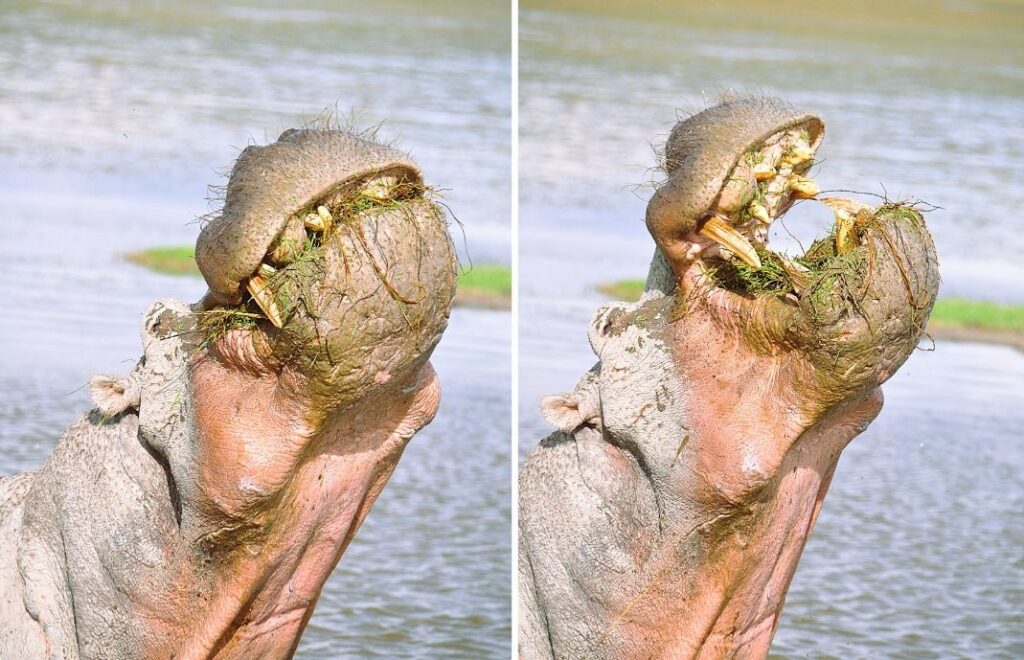
As the dry season reaches its peak and water sources shrink, something remarkable happens: dozens – sometimes hundreds – of hippos converge in the remaining pools and oxbows of the river. The result is an unforgettable spectacle of jostling, snorting, and yawning giants packed tightly into muddy waters – a raw, riveting display of nature at its most intense.
The Luangwa River itself is the lifeblood of the park, not only sustaining its wildlife but also offering exceptional opportunities for up-close hippo sightings from both the riverbanks and guided game drives.
Best time to see hippos: July to October, when water levels are at their lowest and the animals congregate in extraordinary numbers, creating one of Africa’s greatest natural shows.
Whether you’re on a walking safari – a concept pioneered in South Luangwa – or cruising the river at sunset, the hippos here are not just part of the landscape… they dominate it. For lovers of wildlife, photography, and wild encounters, this is hippo country at its absolute finest.

Akagera National Park, Rwanda: Hippos amid hills and wetlands
Tucked in Rwanda’s eastern lowlands, Akagera National Park is a lush mosaic of rolling hills, open savannas, and shimmering wetlands – and the only park in the country home to Africa’s Big Five. Fed by the life-giving waters of the Akagera River, this unique landscape offers some of the most scenic and serene hippo encounters in East Africa.
A boat safari on Lake Ihema is one of the park’s top highlights – and almost guarantees sightings of hippos wallowing in the shallows or bobbing silently just beneath the surface. Another favorite viewing spot is the aptly named Plage des Hippos on the shores of Lake Hago, where these massive creatures bask and grunt under the Rwandan sun.
Best time to see hippos: Year-round, thanks to the park’s permanent waterways. If you’re pairing your Akagera adventure with gorilla trekking in Volcanoes National Park, aim for the dry seasons – June to September and mid-December to mid-February – for the best overall wildlife experience.
Akagera may be Rwanda’s only savanna park, but it delivers big on every level – from its dramatic landscapes to its quietly powerful hippos, always lurking just beneath the waterline, waiting to steal the show.

Murchison Falls National Park, Uganda: Hippos and thundering waterfalls on the Nile
Welcome to Murchison Falls National Park – Uganda’s largest and most dramatic wildlife reserve, where the mighty Nile River thunders through a narrow gorge in the Rift Valley to create one of Africa’s most breathtaking natural wonders: Murchison Falls.
But it’s not just the scenery that steals the show. This park is a haven for wildlife, and a boat safari along the Nile offers unforgettable encounters with hippos, often seen basking along the riverbanks or submerged in the water with only their eyes and ears above the surface.
With its mix of savanna, wetland, and riverine habitats, Murchison Falls is home to a rich array of species – but few are as ever-present or impressive as the hippos that dominate the river. Their grunts echo through the gorge, adding a wild soundtrack to the already spectacular setting.
Best time to see hippos: All year round. The Nile flows steadily, and the hippos never stray far from its waters – making sightings consistently reliable.
A visit to Murchison Falls is more than just a safari – it’s a journey into the raw heart of Africa, where the power of nature and the presence of wildlife collide in thrilling harmony. Don’t miss the chance to witness it.
More inspiration: Why you must visit Murchison Falls National Park

Mana Pools National Park, Zimbabwe: Up close with hippos in the wild
For a raw, immersive safari experience with hippos front and center, Mana Pools National Park is one of Africa’s most thrilling destinations. Nestled along the lower Zambezi River in northern Zimbabwe, this UNESCO World Heritage Site is famed for its dramatic scenery, rich wildlife, and intimate, off-the-grid encounters.
Here, hippos thrive in the park’s floodplains and river channels – and visitors can get remarkably close. One of Mana Pools’ signature experiences is a canoe safari along the Zambezi, where you can paddle silently past pods of hippos while observing them in their natural element. Few things rival the adrenaline rush of drifting quietly beside these massive animals at water level.
For the truly adventurous, walking safaris are the park’s crown jewel. With expert guides, you can approach wildlife – including hippos – on foot, gaining a rare and humbling perspective that traditional game drives simply can’t offer.
Best time to see hippos: June to October, during the dry season when wildlife gathers at the riverbanks and water levels are ideal for canoeing and walking. From December to March, the Zambezi floodplain becomes difficult to navigate due to seasonal rains and high water.
Mana Pools is not just a destination – it’s a deep dive into nature, unfiltered and unforgettable. If you dream of seeing hippos in one of the wildest corners of Africa, this is the place.
Nyerere (Selous) National Park, Tanzania: A wild river safari in hippo country
Sprawling and untamed, Nyerere National Park – formerly known as Selous – is Tanzania’s largest national park, a vast wilderness where rivers, forests, and wildlife converge in spectacular harmony. At the heart of this remote sanctuary flows the mighty Rufiji River, the country’s longest, winding like a serpent through lush landscapes of palm groves and riverine forest.
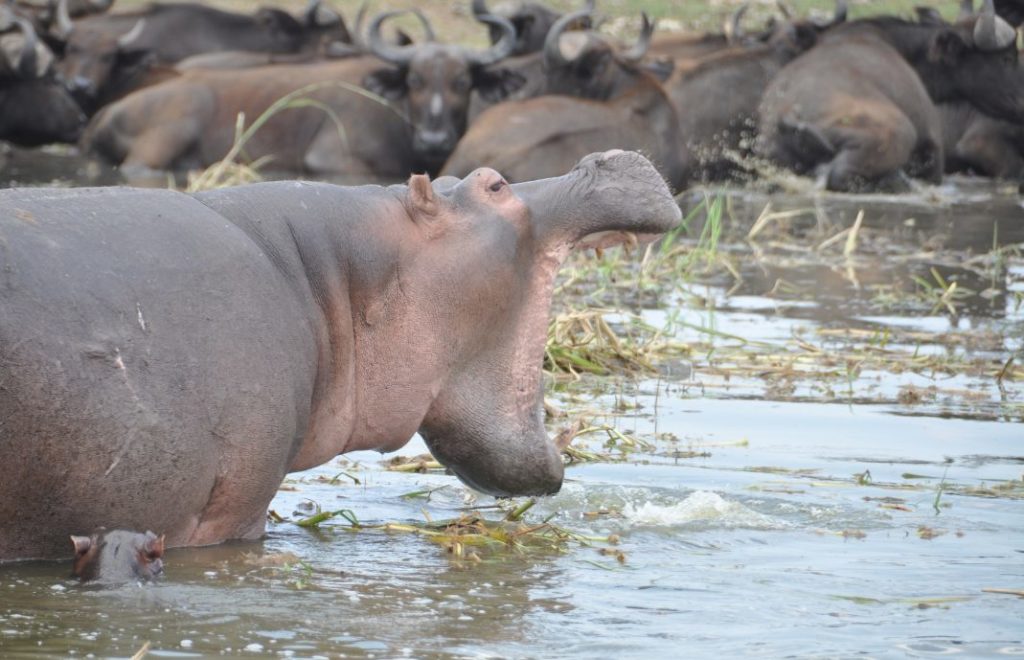
The Rufiji isn’t just scenic – it’s teeming with hippos. This stretch of river is one of the best places in East Africa to see these water-bound giants in great numbers. Hop aboard a boat safari and you’ll glide past hippos wallowing, snorting, and staking out their territory, often just meters away.
What makes Nyerere special is its sense of space and solitude. Unlike more trafficked parks, here you’ll find wild Africa at its most serene – with hippos as some of its most vocal and visible residents.
Best time to see hippos: June to October, during the dry season, when wildlife gathers around shrinking water sources and visibility is at its best.
In Nyerere National Park, the Rufiji River is the lifeblood – and the hippos, ever-present and awe-inspiring, are its living heartbeat. This is a safari experience that flows at nature’s pace, powerful and peaceful all at once.

