
They say the grass is always greener on the other side – and for nearly two million animals, it truly is. Each year, an awe-inspiring tide of life surges between Serengeti National Park in Tanzania and Masai Mara in Kenya, creating the largest overland migration on Earth and one of nature’s most breathtaking spectacles.
This epic journey is an unending cycle – a 3,500-kilometer pilgrimage, dictated by rain and the relentless pursuit of fresh grazing. Herds move as if pulled by an invisible thread, drawn toward the promise of greener pastures and survival.
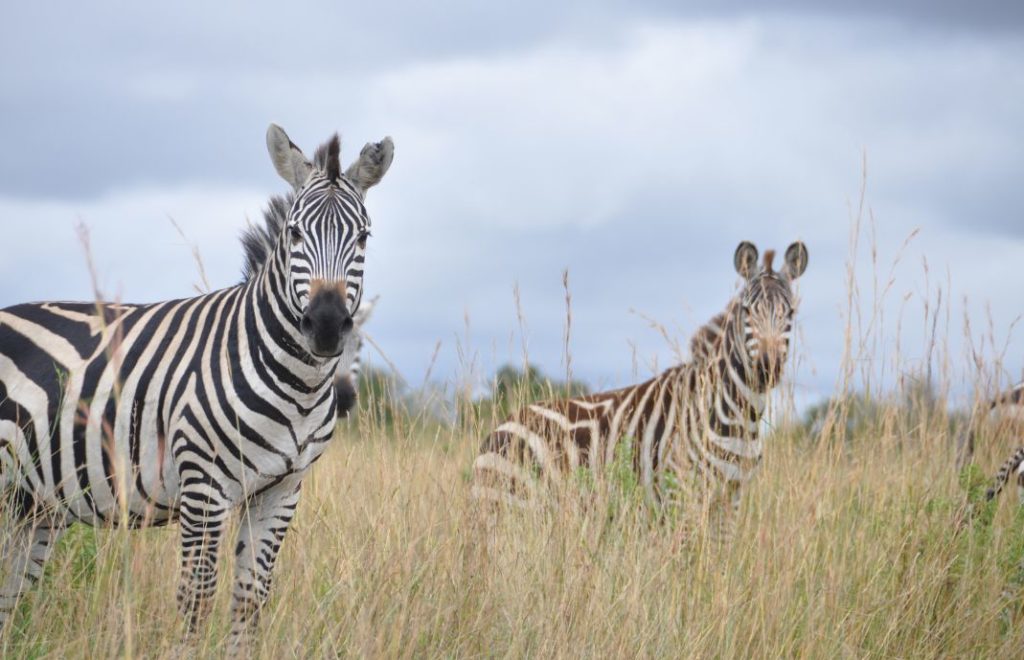
In early June, the drama reaches its crescendo. More than a million white-bearded wildebeest and thousands of zebra – dressed in their “striped pajamas” – gather at the banks of the Mara River, a churning gauntlet of danger. The lush grasses of Kenya’s Masai Mara beckon from beyond, but between them lies a deadly test: raging waters teeming with crocodiles lying in patient, prehistoric wait.
It’s a scene of chaos and courage – dust rising, hooves thundering, the primal gamble of life and death played out against a backdrop of boundless skies. Witnessing it is not just a safari highlight; it’s a front-row seat to one of the planet’s greatest dramas.
Who takes the first leap?
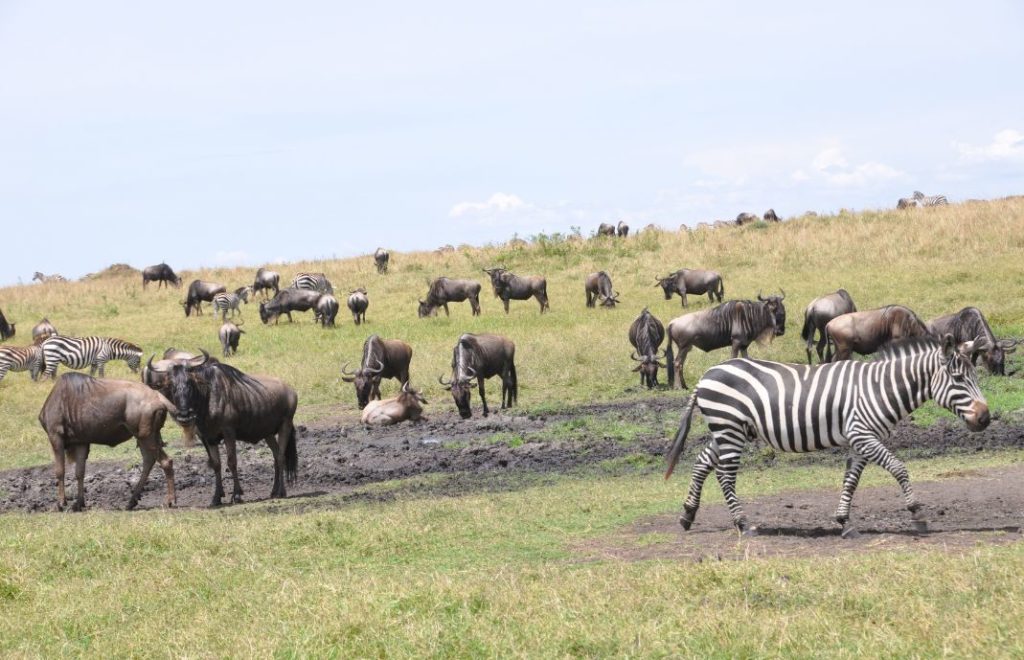
The reports were true: wildebeest and zebras have pushed north from Tanzania’s Serengeti, and now they mass along the edge of Kenya’s Masai Mara, eyes fixed on the lush promise of new grazing lands – and the gauntlet that separates them from survival.
The July sun blazes overhead, beating down on a savanna shimmering with heat. Our safari vehicle sits roofless, the air heavy, the temperature unforgiving. But no one cares. This is the moment we’ve all been waiting for – the climax of the Great Migration. Water bottles drain dry, cameras click relentlessly, and the banks of the Mara River are a theater of anticipation, packed not just with wildlife, but with tourists craning for the first act.
Across the swollen, mud-brown river, thousands of wildebeest and zebras crowd together, restless, as if caught in a silent debate: Is it safe? Where are the crocodiles lurking? Are lions waiting on the other side?
The drama is almost unbearable. And then – it happens.
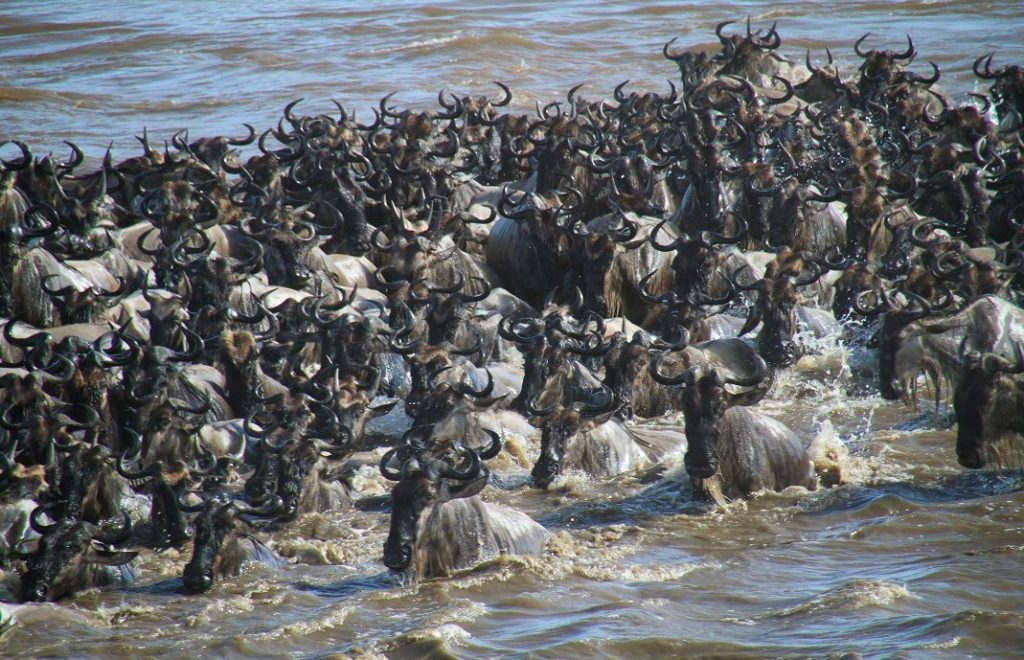
A lone wildebeest lunges forward, his hooves striking the water with a thunderous splash. He plunges into the current, muscles straining, eyes wild, the struggle for life written across every movement. The crowd erupts – tourists gasp, shutters fire like machine guns. The signal has been given. The herd surges in behind him, a living torrent of hooves and horns, churning the river into chaos.
One crossing. Then another. Then hundreds, thousands – an unstoppable tide of two million wildebeest, zebras, and gazelles racing to outwit predators and survive one of nature’s most dangerous migrations. Crocodiles lurk. Lions wait. The stakes are life and death – and the show is utterly mesmerizing.
As I frame the chaos through my lens, I find myself silently crossing fingers – and toes – that every creature makes it to the far bank. But the Mara writes its own story, and it is never without heartbreak.
An eternal dance
The Great Migration is one of nature’s greatest wonders – a living river of life that flows across the vast African plains. Imagine it: a surge of hoofbeats rolling like thunder over the savanna, an endless tide of wildebeest, zebras, and antelopes streaming across the horizon. They come in their thousands – no, millions – until the grasslands are draped in a heaving blanket of brown-gray coats and striped flanks, heads bowed in unison to the promise of green.
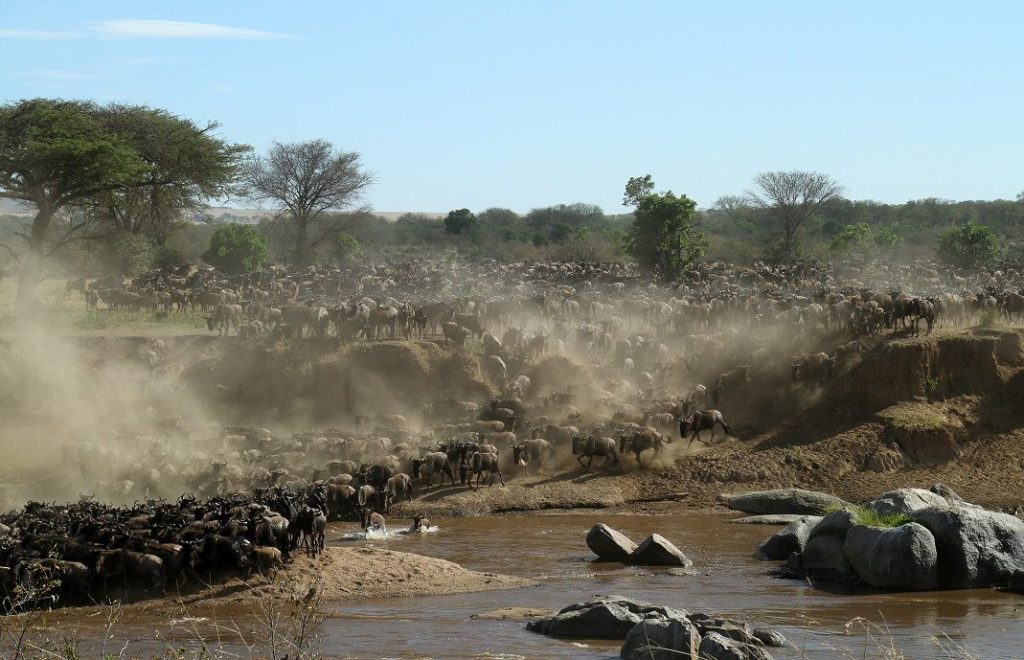
This phenomenon has no true beginning and no end. It is an eternal cycle— – a grand round dance played out across the Serengeti and Masai Mara. In the south, the Serengeti’s plains begin to parch, its banquet table stripped bare, and the herds drift north in pursuit of fresh pastures. Dust swirls in their wake as endless columns of wildebeest, zebras, and gazelles carve their way toward Kenya’s fertile Mara grasslands.
Or perhaps, in truth, there is a beginning – and an end.
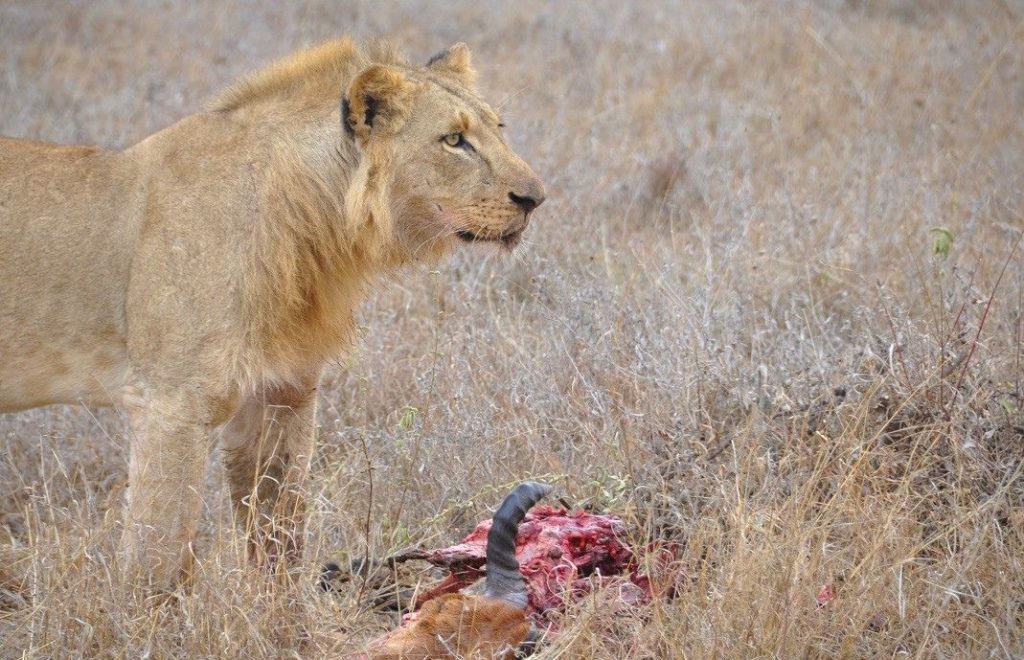
The journey starts in the south, where, between January and March, the plains erupt with new life: half a million wildebeest calves take their first trembling steps on the emerald carpets of the Serengeti. But every beginning writes its own shadows. For countless animals, the journey will not end in triumph. It is a perilous pilgrimage. Serengeti’s 3,000 lions feast on the weak. Cheetahs strike with lightning speed. Hyena clans prowl the edges, grinning with hunger.
More than a million wildebeest march, flanked by hundreds of thousands of zebras, gazelles, and other grazers – over two million animals in all. Their chorus is deafening: zebra brays mingling with the low, guttural snorts of wildebeest; the pounding of hooves drumming across the earth in a rhythm older than time. Dust clouds bloom behind them, veiling the horizon in a shimmering, sepia haze, as if the savanna itself were cloaked in mystery.
The Great Migration does not go unnoticed – by two-legged photographers or four-legged predators. It is a spectacle of life, death, and raw survival, staged against the boundless skies of East Africa. Watching it, you feel small, humbled, and profoundly alive.
The underrated wildebeest
In the safari vehicle next to ours, a French tourist declares loudly – much to everyone’s irritation – that wildebeest are “stupid animals.” If we were ranking intelligence, though, I’d wager the gnu would outscore him by a mile.
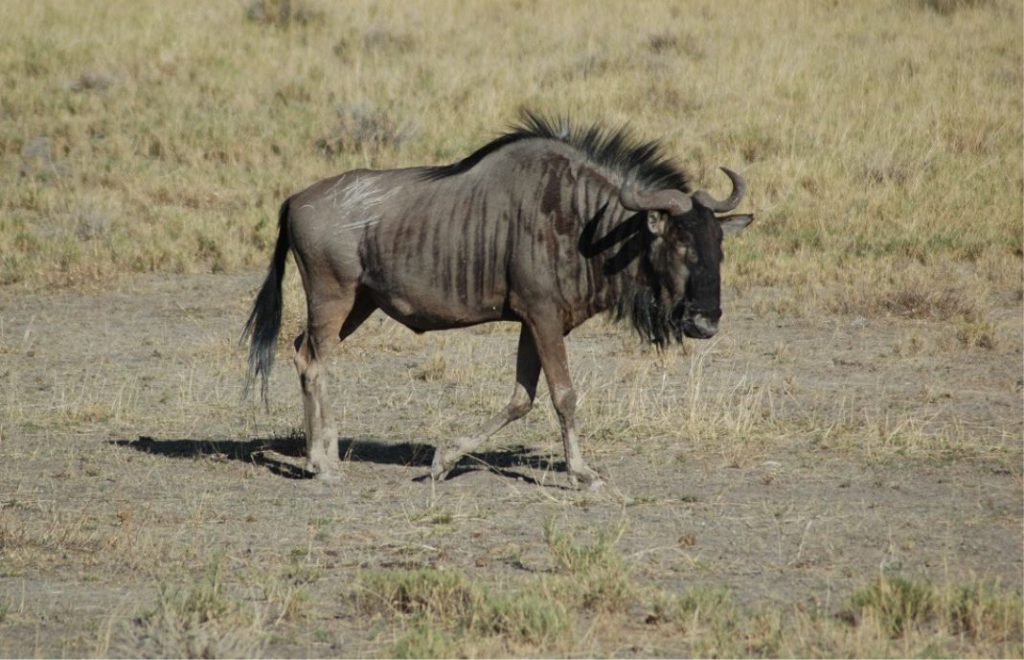
These shaggy, odd-looking antelopes may not win a beauty contest, but underestimate them at your peril. The wildebeest is one of the savanna’s ultimate survivors – resilient, resourceful, and remarkably strategic.
They might appear clumsy, yet when danger strikes, they can clock speeds of up to 80 km/h. But here’s the fascinating part: running isn’t their first line of defense. Instead, they rely on endurance and unity. Herd instinct rules their world – the young stay safe in the center, while the stronger, older animals form a living shield on the flanks.
Their survival tactics don’t stop there. Wildebeest rotate their rest, sleeping in shifts so others can stand guard – a vigilant, communal system that leaves predators guessing. Scientists still debate whether this is pure instinct or learned behavior, but one thing is beyond doubt: these animals are anything but foolish.
So as we watch the herd ripple across the plains in perfect synchrony, I can’t help but smile. Smart, steadfast, and stubbornly alive – the wildebeest deserves far more respect than it gets.
When the predators awaken
The sun slips lower, setting the savanna ablaze in molten hues. Wildebeest blur into dark silhouettes. Giraffes stretch their necks like cranes on a distant skyline. Even the playful chatter of monkeys in the trees falls silent.
This is the witching hour of the wild – the moment when the air hums with tension. Bellies are empty, instincts sharpen, and the predators stir. Lionesses crouch low in the grass, muscles coiled like springs. Monster crocodiles lie in ambush beneath the river’s skin, jaws agape and ancient. Leopards melt into shadow, their rosetted coats flickering like smoke through the thorn scrub.
Dinner is served. Or rather, it soon will be.
Most visitors hold their breath for this – the raw, ruthless theater of the hunt. But as I glance at our driver and politely suggest we return to camp, his puzzled look says it all. Surely I want to stay? Surely I crave the drama that draws so many here?
But I’m not like most safari-goers. The idea of watching a wildebeest, zebra, or gazelle – creatures I’ve admired all day – crumple under the claws of death leaves me hollow. I know this is nature’s way. I know the circle must close. Yet for me, the romance of survival fades at the edge of the kill.
So I confess: I am no wildebeest. My defense is flight, not fight – or endurance. At least in this moment, I’d rather flee into the safety of the lodge than witness the brutal poetry of life and death under the African dusk.
The cycle of the year
The Great Migration is not a single event, but a rhythm – a vast, pulsing cycle that plays out across East Africa’s savannas. The wildebeest and their companions follow the rains, forever chasing the promise of fresh, green grass.
Late July to early October
This is the time for drama in Masai Mara. The herds surge into Kenya, drawn by the lush plains, and the infamous Mara River crossings begin – a gauntlet of crocodile-infested waters and lurking predators. For photographers and thrill-seekers, this is the ultimate safari spectacle.
The rains and the return
Rain usually falls from October to May – starting with the short rains, then swelling into the long rains of April. As the skies clear in May, the wildebeest point their noses north once more, their journey dictated by the earth’s eternal heartbeat.
February – March: The miracle of birth
In the far south of the Serengeti, a new chapter unfolds. Calving season bursts into life as half a million wildebeest calves are born within weeks. The sight is staggering – a sea of mothers and newborns dotting the emerald plains. Within minutes of birth, these calves are on their feet, stumbling into a world of predators and peril.
April – June: The long march
Bellies full, calves growing stronger, the herds drift northwest toward the Grumeti region, lured by permanent water sources and fresh bushland. Here, swollen rivers and sweeping floodplains await – perfect hunting grounds for predators and a goldmine for photographers seeking dramatic shots.
July – October: The great gamble
By mid-year, the herds flood into Kenya’s Masai Mara, their endless columns rippling like a living ribbon across the savanna. Here, the Mara River becomes a crucible of survival. Crocodiles lurk beneath the murky waters, lions prowl the far banks, and every crossing is a life-or-death wager.
October – January: The long retreat
As the grasses wither in the Mara, the migration bows to its final act. Slowly, almost imperceptibly, the herds drift southeast, back toward the Serengeti. Here, the grass – rich in calcium – offers vital nourishment for the calves now growing inside their mothers. And so the circle closes, only to begin anew.
More inspiration to unique wildlife encounters in Africa:
Gorilla trekking in Bwindi National Park
Meet the chimpanzees of Uganda
The Penguins of Boulders Beach
Close encounter with the Great White Shark
