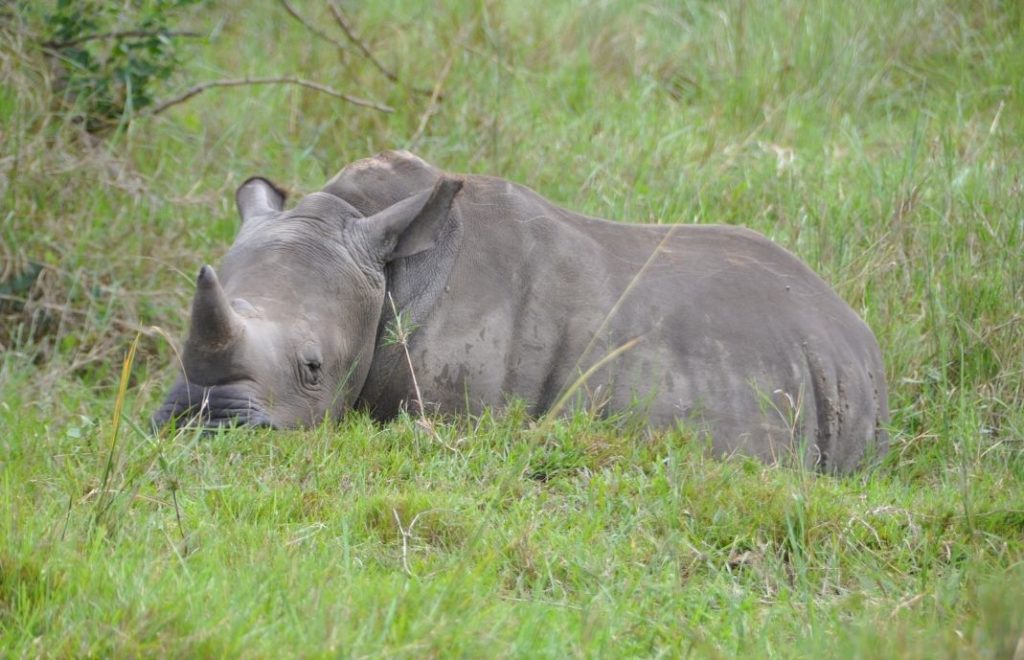
Poaching is a criminal act – and one of the greatest threats to Africa’s iconic wildlife. It’s a global issue that demands our attention, awareness, and collective action.
Among the most vulnerable is the rhino, a magnificent creature clad in armor-like skin, now living under constant threat across the African continent. Tragically, a rhino is killed approximately every 15 hours, hunted solely for its horn.
But there is hope. After years of devastating losses, the numbers are beginning to shift in the right direction. In 2023, 586 rhinos were killed by poachers, a drop from 769 in 2017.
This fight is far from over – but with continued conservation efforts, stronger protection, and global support, we can help ensure a future where rhinos roam wild and free.
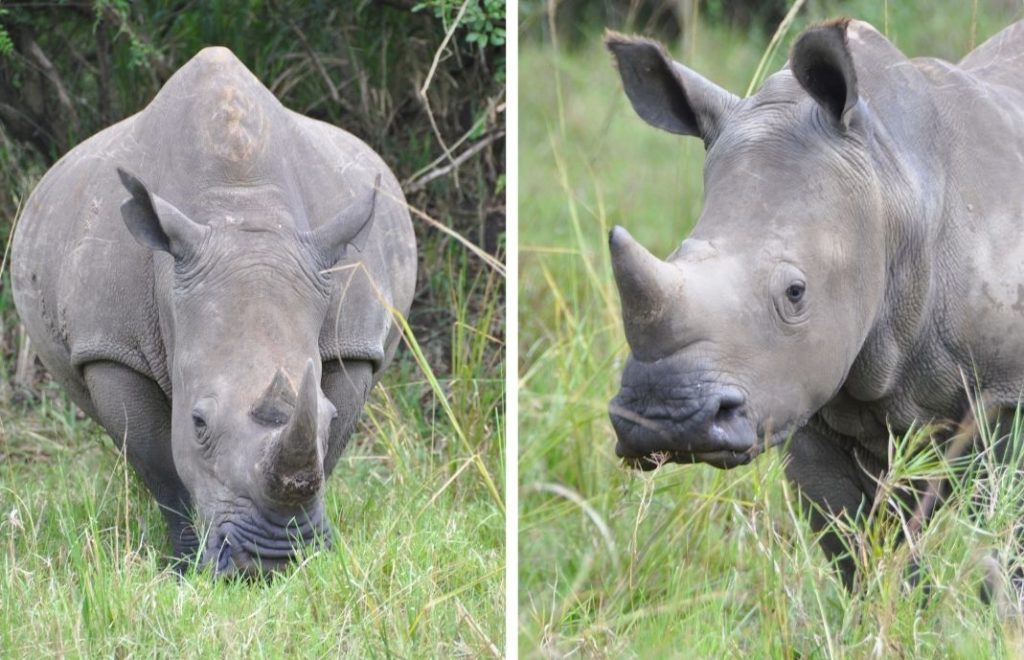
Rhinos in Uganda – a conservation story
For many travelers heading to Africa, spotting The Big Five – rhino, elephant, lion, leopard, and buffalo – is a dream safari goal. We long to see these majestic animals roaming freely across the savannah, right where they belong.
But in Uganda, you’ll only see four of the Big Five in the national parks. The rhino is noticeably absent.
Both black and white rhinos are native to Uganda. Sadly, due to prolonged civil conflict, ethnic persecution, rampant poaching, and a lack of effective wildlife protection, both species were declared extinct in the wild by 1983.
Yet all is not lost.
Today, rhinos are making a slow but hopeful comeback – and you can still encounter these incredible animals in Uganda, albeit in a different setting.
Visiting Uganda’s rhinos isn’t just a unique wildlife experience – it’s a powerful act of support. Like many African nations, Uganda has come to realize the critical importance of conserving its natural heritage. Every visitor helps ensure that this ancient, armor-clad creature has a future on the continent it has called home for millennia.
On the road to recovery
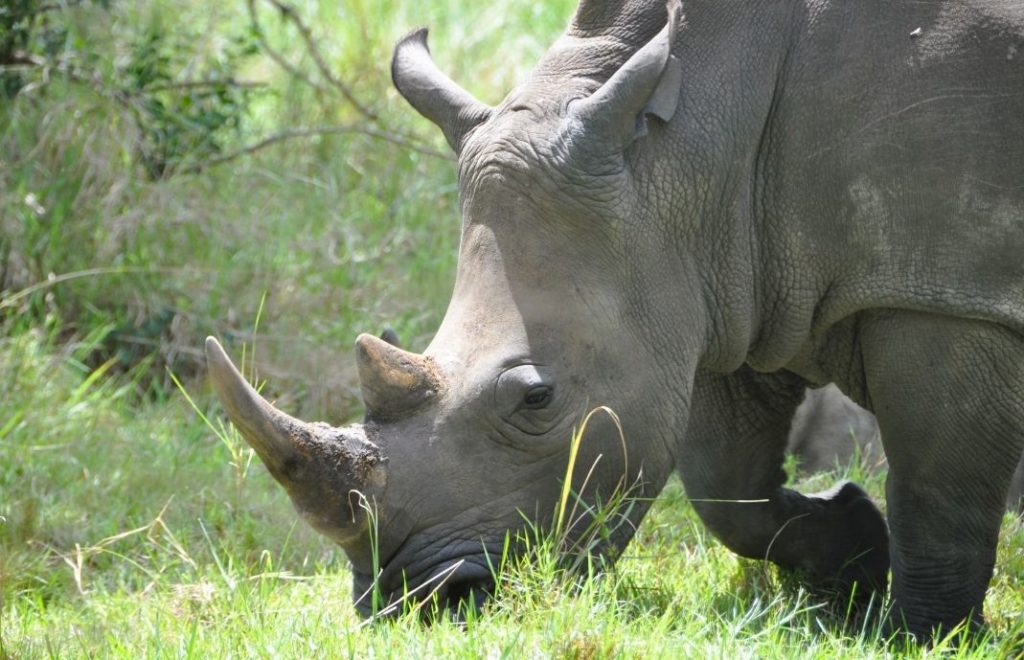
In 2005, the Uganda Wildlife Authority and Rhino Fund Uganda made a bold and hopeful decision: it was time to reintroduce the white rhino to Ugandan soil.
The result was the creation of Ziwa Rhino Sanctuary, a sprawling refuge with one clear mission – to rebuild a healthy rhino population and, eventually, release them into Uganda’s national parks where they once roamed freely.
Visitors to Ziwa needn’t worry about seeing rhinos confined to cages or cramped enclosures. Quite the opposite. These majestic creatures roam 70 square kilometers of open wilderness, protected not only by a towering two-meter electric fence (to keep poachers out and rhinos in) but also by round-the-clock security. A dedicated team of 78 rangers and guards ensures Ziwa is the most heavily protected wildlife reserve in Uganda.
The reintroduction began with four white rhinos from Kenya and two from Disneyland – yes, really. Today, 41 rhinos now roam the sanctuary, thriving under the watchful eyes of conservationists who have dedicated their lives to this cause.
With time, care, and continued support, the goal is clear: to see these rhinos roam free once again, in Uganda’s vast and wild national parks – where they belong.
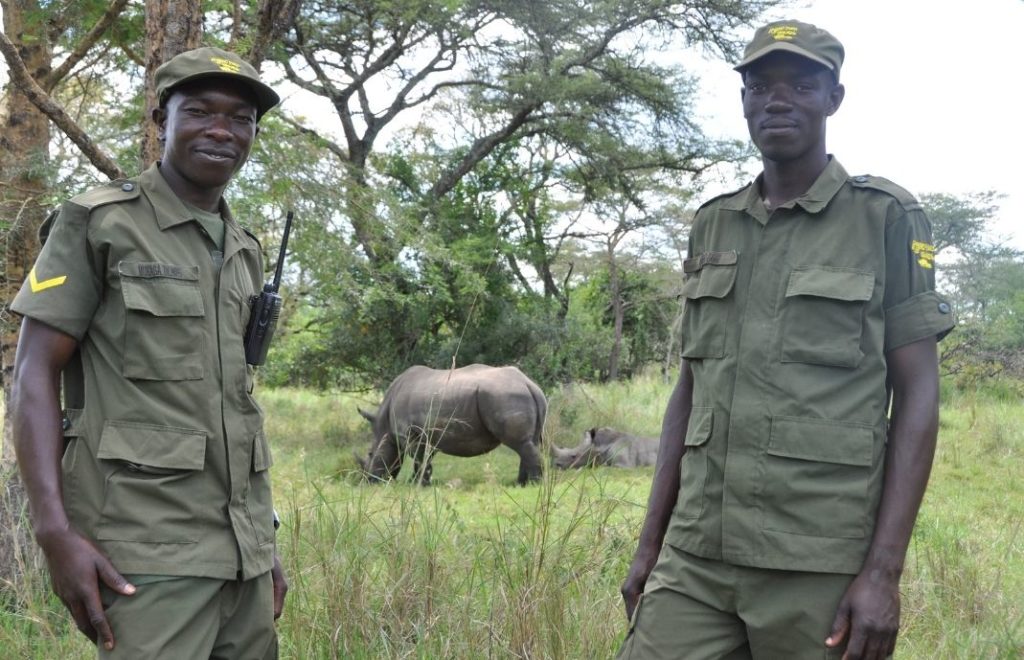
A visit to Ziwa Rhino Sanctuary
Your journey at Ziwa Rhino Sanctuary begins at the visitor center, where you register before heading out on a short drive with your guide. Then, the real adventure begins – on foot, deep into the bush in search of rhinos.
As you set out, it’s easy to be enchanted by the landscape itself. The sanctuary is teeming with life: playful monkeys, graceful antelopes, and an impressive array of bird species. But let’s be honest – we’re all here for one thing: the rhinos.
Your guide shares stories, tracks signs, and points out details as you move through the wilderness. Suddenly, he pauses, kneels, and points to a massive footprint in the sand – far larger than your hand. A rhino passed by not long ago. And considering these animals can weigh between 1,700 and 2,300 kilograms, that track is a powerful clue.
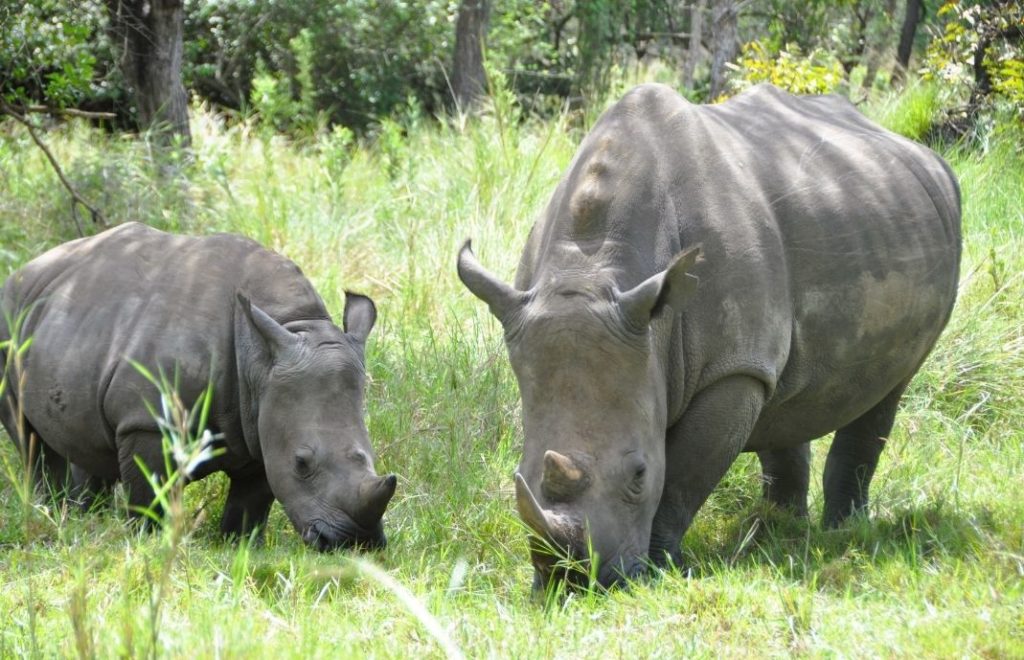
You follow your guide deeper into the bush, eyes scanning left and right, hearts quietly hoping. Ten minutes later, there they are: a mother and her calf, dozing peacefully in the shade of some tall trees.
Rhinos are nocturnal by nature and usually sleep during the day, so spotting them feels like pure luck. They’re partially hidden in the dense underbrush, but still very much there – real, wild, and majestic.
As you watch in silent awe, the mother begins to stir. She slowly rises, yawns, and starts grazing. Her calf follows suit. And just like that, both emerge into the open – fully visible, magnificent, and entirely unforgettable.
In that moment, standing in the quiet wild of Ziwa, you realize: this isn’t just a wildlife sighting. It’s a glimpse of hope for a species fighting its way back.
The fight for survival
Twenty minutes later, our guide gently tells us it’s time to leave. None of us want to go. It’s hard to tear yourself away from a moment like this – watching a rhino mother and her calf in their natural element, alive and unbothered.
But the clock is ticking, and our time with them is limited.
As we walk back through the tall grass, one question lingers: Will the rhino survive the brutal slaughter driven by global demand for its horn?
Thanks to sanctuaries like Ziwa Rhino Sanctuary, there is still hope. Ziwa is one of many crucial havens across Africa fighting tirelessly to ensure that rhinos are not lost forever.
Your visit matters.
Every step you take, every photo you snap, and every story you share helps support the protection of these majestic animals. In Uganda, and beyond.
More inspiration: Why you MUST visit Ziwa Rhino Sanctuary