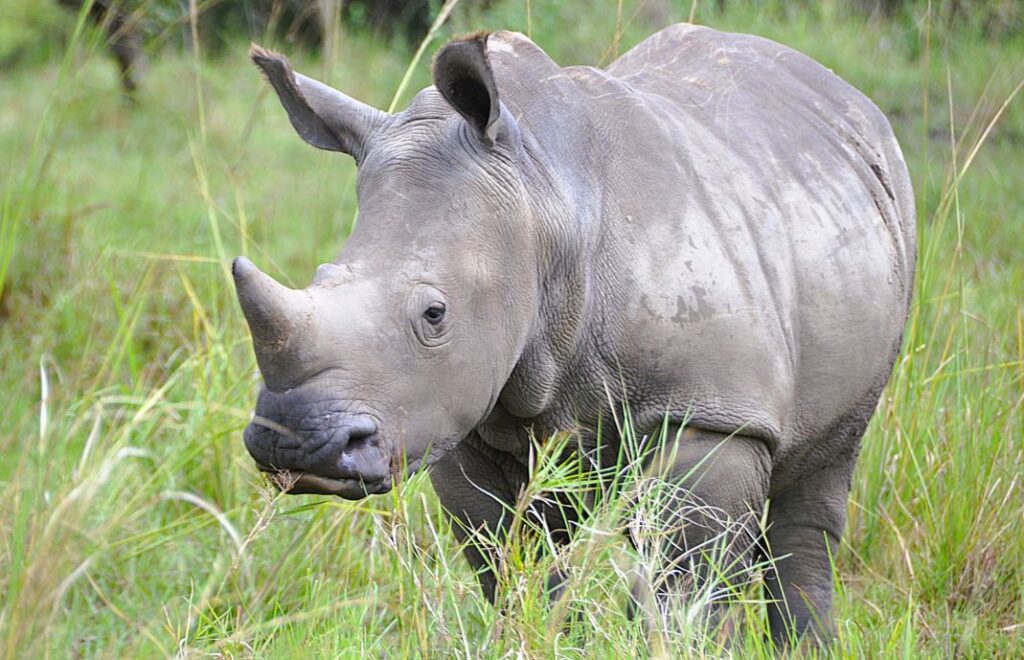
Once found in all the parks, rhinos became extinct in Uganda in 1982 after years of poaching and the internal armed conflict. Both black rhinos and white rhinos are indigenous to the country and had been roaming the land for centuries. Suddenly, they were gone. Wiped out by humans.
But in 2005 this all changed with the establishment of Ziwa Rhino Sanctuary. Their goal: To reintroduce white rhinos to Uganda.
Today, Ziwa Rhino Sanctuary is one of Africa’s most inspiring conservation success stories.
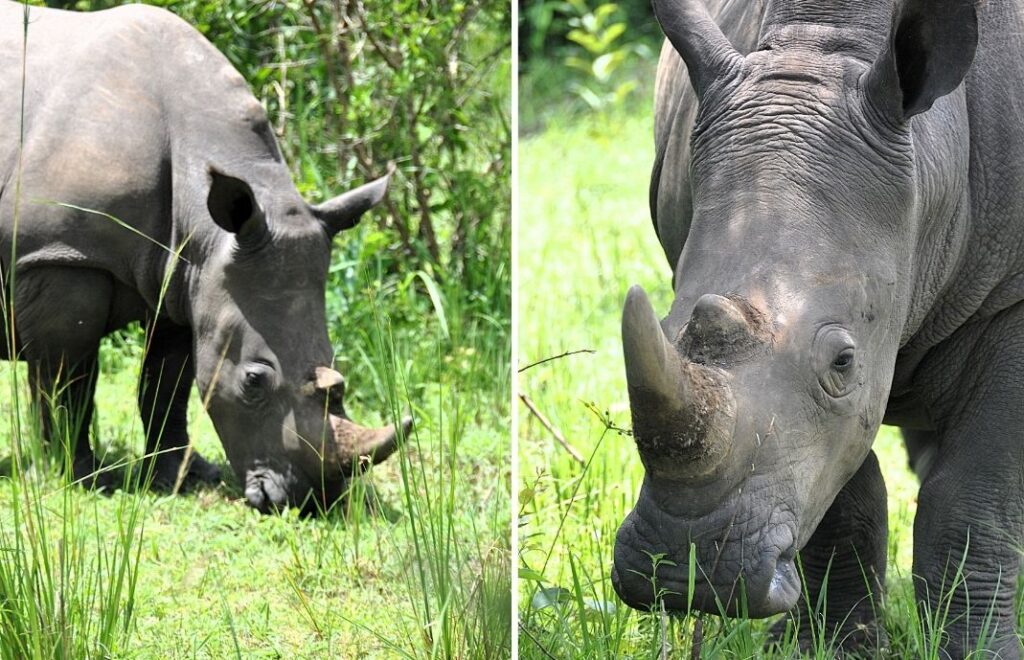
Initially there were six reintroduced white rhinos, four of which were translocated from a reserve in Kenya and two came from Disney’s Animal Kingdom in Florida, US. At the start of 2023, the number had risen to 42 rhinos. Three years later, more than 50 of the majestic creatures roam the sanctuary.
The sanctuary is enclosed by a solar-powered electric fence, designed to keep out human predators and protect the rhinos. All the rhinos are closely guarded by armed rangers 24 hours a day.
Ziwa Rhino Sanctuary has become a safe haven where these powerful, prehistoric-looking animals could return, breed, and slowly rebuild a future.
A visit here is a must for every traveler to Uganda. It offers more than a wildlife sightseeing. You get a chance to witness conservation in action and to stand close to one of Africa’s most iconic animals. That’s when you realize that survival is never guaranteed, but it is possible when people choose to care.
Ziwa’s story is one of protection, recovery, and hope.
Tracking rhinos on foot
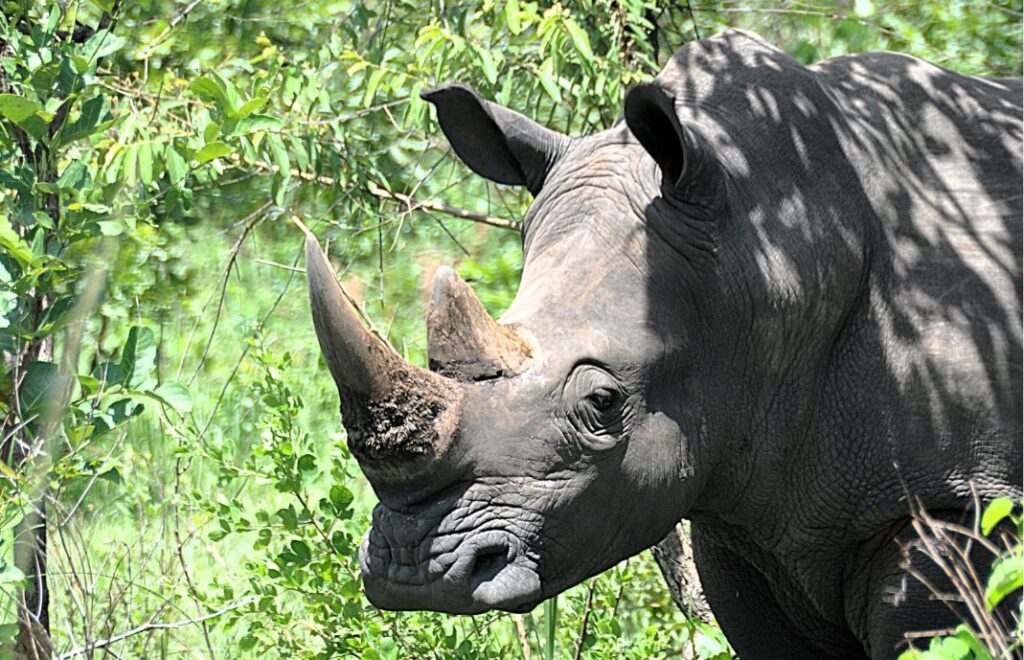
Ziwa Rhino Sanctuary offers a unique and unforgettable experience: Tracking rhinos on foot. It’s a rare and powerful way to encounter rhinos. Not from the safety of a vehicle but by walking quietly through the bush with an experienced guide leading the way.
The adventure begins with a briefing, where guides explain how to behave around the rhinos, what distance to keep, and why silence and respect matter. You will then drive to the starting point, and the walk begins.
Step by step the sanctuary comes alive around you. Dry grass brushing against your legs, birds calling, and the sense that somewhere nearby, one of Africa’s most iconic animals, is moving through the landscape. Your heartbeat increases, and excitement arises.
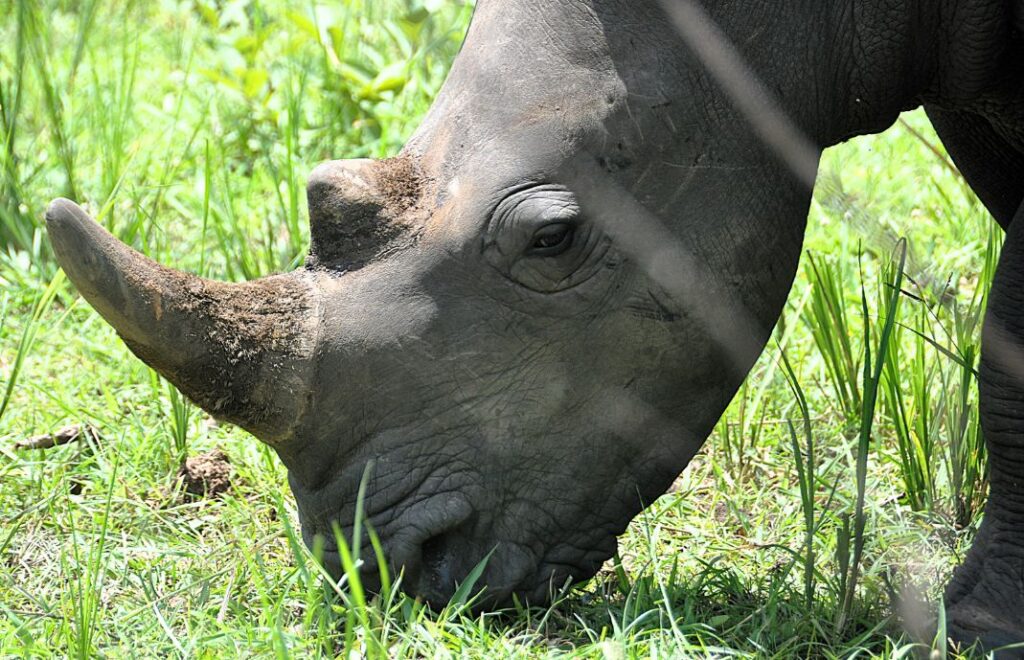
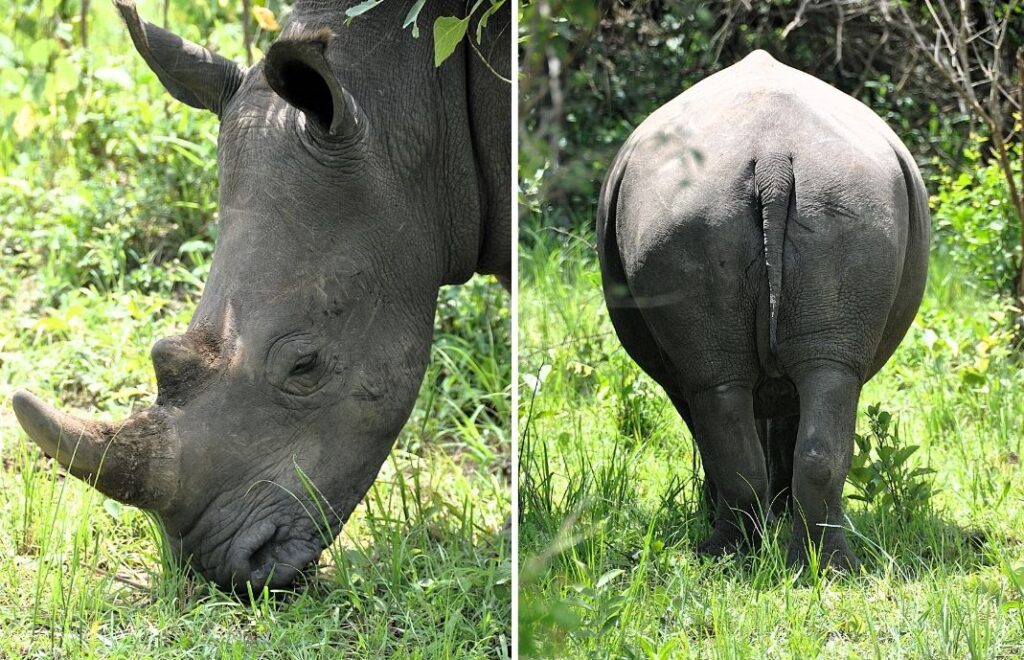
Then a rhino finally comes into view. Their size is breathtaking, but there is also a surprising calmness about them. Watching them graze, rest, or move slowly through the bush gives you time to appreciate their strength, vulnerability, and beauty.
Tracking rhinos on foot is all about slowing down, listening, and understanding what it means to share space with a wild animal. You feel blessed for being able to experience such a rare and unique moment.
What makes the experience especially meaningful is knowing why Ziwa exists. These rhinos are part of Uganda’s conservation comeback. It is living proof that protection, patience, and dedication can help restore what was once lost. A walk here is not only exciting. It is deeply moving.
A tribute to the rhino rangers
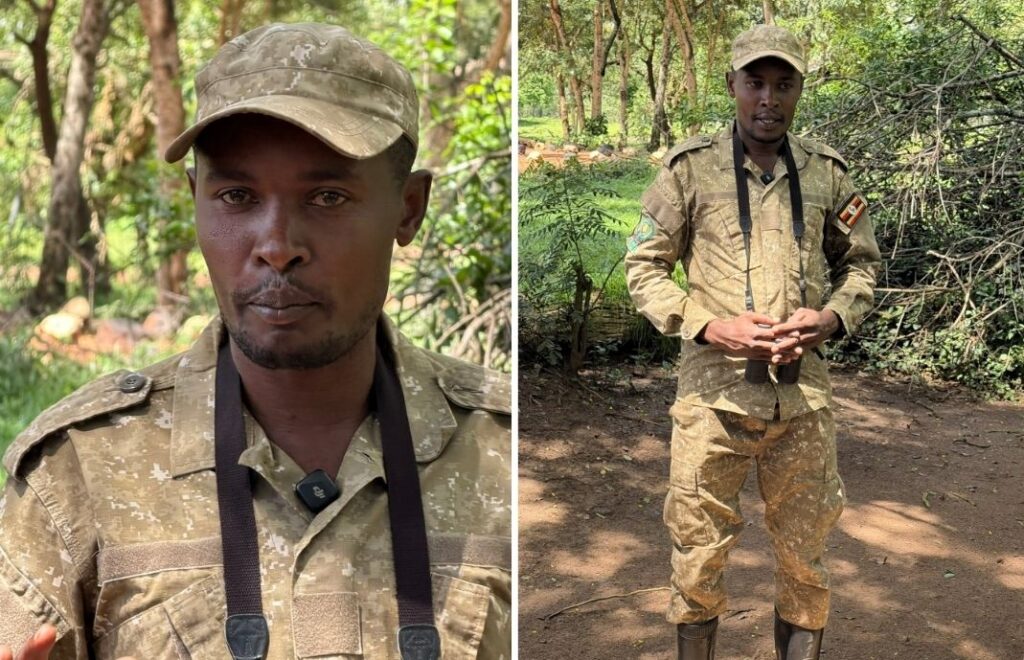
Behind every rhino at Ziwa, there are people who choose dedication over comfort and patience over ease. They are in fact willing to risk their lives to protect the rhinos. The rangers are the quiet heroes of this conservation story. They are walking the land, watching over the rhinos, guiding visitors, and protecting a future that once seemed impossible.
Their work is not only about knowing where the rhinos are. It’s about understanding their behavior, reading the bush, recognizing small changes, and staying alert every day. The rangers move through the reserve with knowledge and respect, helping visitors feel safe and deeply connected to the experience.
What makes the rangers at Ziwa so inspiring is the pride they bring to their work. They are not simply leading a walk through the bush; they are sharing a story of recovery, responsibility, and hope. Through their eyes, visitors begin to understand that conservation is not an abstract idea. It is daily work. It is early mornings, careful tracking, long hours, and a deep commitment to protecting life.
A visit to Ziwa would not be the same without the rangers.
I would like to extend a warm gratitude to our guide, Bitinda Jeremiah, for an amazing encounter. The rhinos were the reason we came, but he was the one who made the encounter meaningful. All the rangers do. They remind us that wildlife conservation depends on people with courage, knowledge, and heart. At Ziwa, that dedication is felt in every step.
Practical guide
Visiting Ziwa Rhino Sanctuary is straightforward, but a little planning will help you make the most of the experience. Whether you visit as a day trip, a stop on the way to Murchison Falls, or as part of a longer Uganda itinerary, it is worth knowing what to expect before you arrive.
Where is Ziwa Rhino Sanctuary?
It is located in Nakasongola District, north of Kampala. It sits along the route toward Murchison Falls National Park, which makes it a popular stop for travelers heading into northern Uganda.
The drive from Kampala usually takes around 3 to 4 hours, depending on traffic and road conditions. Because of its location, Ziwa works well as both a dedicated wildlife visit and as part of a larger Uganda itinerary.
Rhino tracking at Ziwa
The main experience at Ziwa is rhino tracking, guided by trained rangers who know the sanctuary and the animals well. The activity usually begins with a safety briefing before heading out to find the rhinos.
Depending on where the rhinos are, the experience may involve driving part of the way and then continuing on foot.
You will need 1,5 to 2,5 hours (depending on the location of the rhinos).
The experience is available from 07:00 until 17:00.
Safety and rules
Although the rhinos at Ziwa may appear calm, they are still powerful wild animals. Visitors must always stay with their guide, keep a safe distance, speak quietly, and always follow instructions.
The rules are to protect both people and rhinos. By respecting them, you help keep the experience safe, responsible, and meaningful.
Fees and booking
Entry and activity fees can change, so it is best to check the latest prices before visiting. In many cases, rhino tracking is included with the sanctuary entrance, but travelers should always confirm this when planning their trip.
If you are travelling as part of a safari itinerary, your tour operator may arrange the visit for you. Independent travelers should plan ahead, especially if visiting during busier travel periods.
What to bring
For a comfortable visit, bring closed walking shoes, sun protection, insect repellent, drinking water, and a camera. Neutral-colored clothing is a good idea, especially since you will be walking in the bush.
Since the activity takes place outdoors, be prepared for heat, dust, or rain depending on the season.
Can you stay overnight?
Ziwa can be visited as a day trip, but there are also accommodation options in and around the sanctuary for those who want to spend more time in the area. Staying overnight can make the visit feel more relaxed, especially if you are combining Ziwa with Murchison Falls National Park.
The chalets offer a chance to experience the sanctuary in a more personal way. There is also a restaurant and a pool.
Who knows? Maybe you wake up and see a rhino sleeping outside your chalet.
Why visit Ziwa?
A visit to Ziwa Rhino Sanctuary is more than a wildlife stop. It is a chance to see rhinos in Uganda and support one of the country’s most important conservation stories.
Whether you visit for a few hours or stay longer, Ziwa offers a rare and moving experience. One that brings you close to an animal that once disappeared from Uganda’s wild landscapes and is now part of a hopeful comeback.
More inspiration: The rhino’s fight for survival
Fun fact
White rhinos are the largest of the fives species of rhino and can wright up to three tons. They may not have great eyesight, and you may think you can outrun them. But rhinos can reach charging speeds of 48 to 64 km/h (30 to 40 mph). Despite their bulky build, they can accelerate from zero to top speed in just a few strides.
In comparison, the fastest human sprint ever recorded is 44.72 km/h (27.78 mph), set by Usain Bolt in 2009 during his 100 meters world record race. An average, untrained person sprints at roughly 19 to 24 km/h (12 to 15 mph).