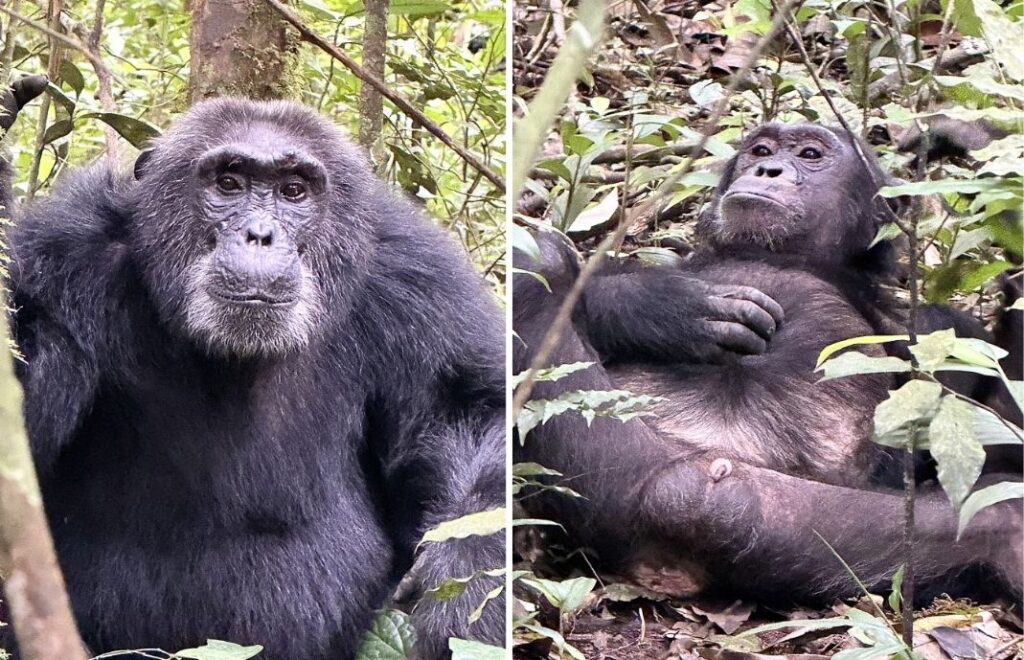
You have just left the Kanyanchu Visitor Centre and entered the forest. At first, it feels like a wall of green – thick, humid, and alive in every direction. As you make your way through the dense forest with tangled trees and dangling vines, the ranger leads you to the section where the chimps were last spotted.
You will hear them before you see them. Their deafening calls echo around the treetops for miles. Part blood-curding scream, part whoop. It’s an exhilarating indicator that the chimpanzees are somewhere close by. This is the moment chimpanzee trekking becomes more than just a wildlife activity. It becomes an experience you feel in your whole body.
Walking through the forest in search of chimpanzees is unlike any ordinary safari. There are no open plains, no long views across the savannah, no vehicle between you and the wild. Instead, there is mud under your boots, vines brushing against your arms, and the constant feeling that something is moving just out of sight. Every sound matters. Every broken branch feels like a clue.
And then, suddenly, they are there.
Chimpanzee trekking is exciting, unpredictable, and deeply moving. It offers a rare chance to step into the world of one of our closest relatives and witness them in their natural habitat. But it is also an activity that requires patience, respect, and a little preparation.
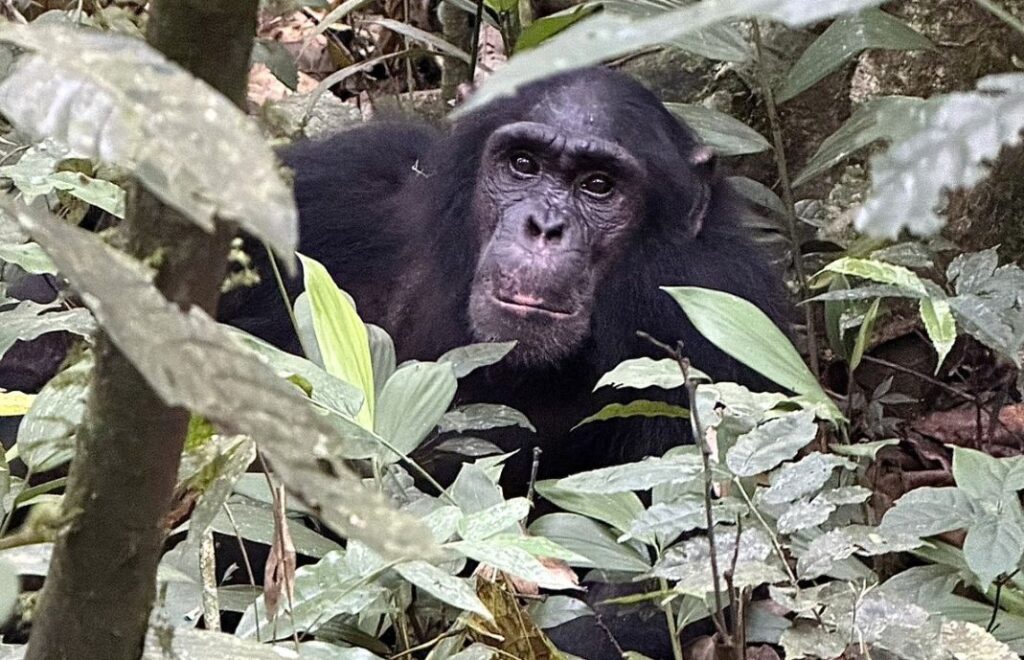
This isn’t just a hike. It’s an extraordinary opportunity – and if you’re lucky, lock eyes with a wild chimpanzee deep in the heart of the Ugandan rainforest.
Kibale National Park
This biodiverse jewel lies in western Uganda and is one of the most remarkable places on Earth to see chimpanzees in their natural habitat. Kibale National Park protects a beautiful stretch of tropical rainforest, woodland, wetlands, and grassland. The combination makes it one of the richest natural areas in the country.
The park covers around 766 square kilometers (295 square miles) and is best known for its extraordinary primate diversity. Kibale is home to 13 primate species, including chimpanzees, red colobus monkeys, black-and-white colobus monkeys, and olive baboons. This impressive concentration of primates is the reason Kibale is called the “Primate Capital of the World.”
Although chimpanzees are the main reason many travelers come here, Kibale is much more than one wildlife experience. The forest is also home to colorful birds, butterflies, forest elephants, and countless smaller creatures that make the jungle feel alive.
What makes Kibale so special is its atmosphere. It feels dense, green, and ancient. It’s the kind of forest where every sound makes you pause and listen. Before even seeing a chimpanzee, the park already gives you the feeling of having stepped into one of Uganda’s most remarkable wild places.
How to do chimpanzee trekking in Kibale
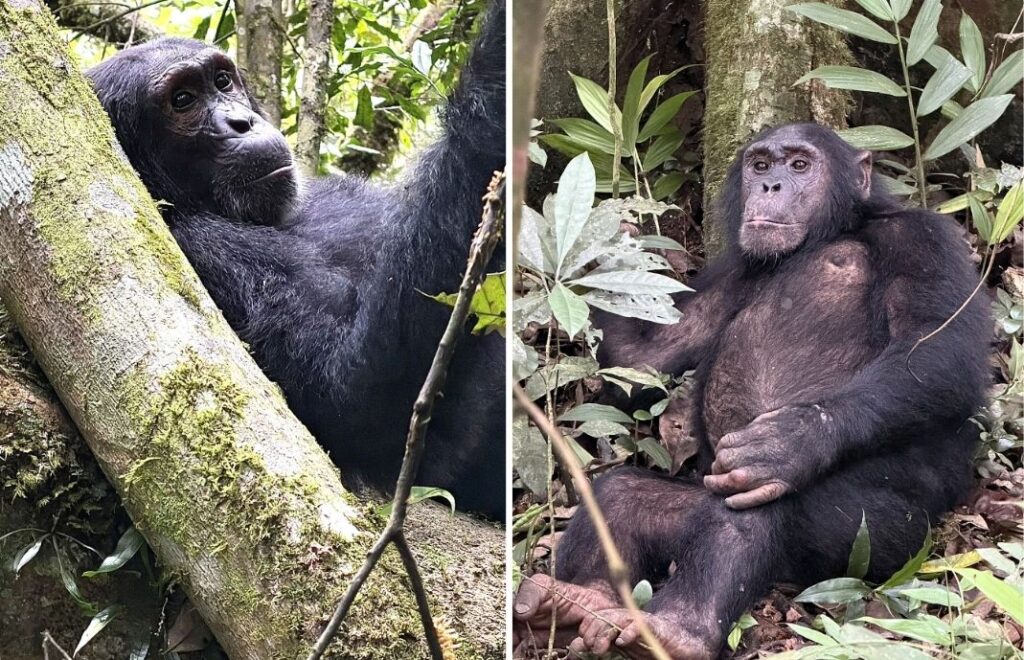
Chimpanzee trekking in Kibale National Park is a guided activity, and the adventure begins at the Kanyanchu Visitor Centre. A ranger from Uganda Wildlife Authority will provide essential guidelines and safety protocols. It is also a good moment to ask questions and use the bathroom.
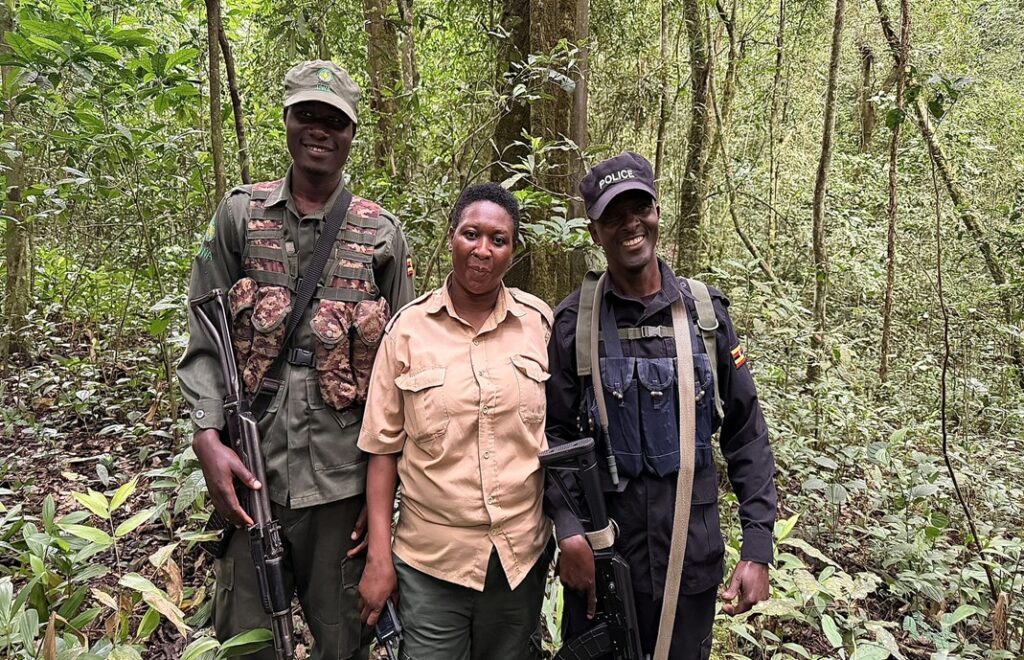
Each tracking group is limited to six participants, and visitors must be at least 12 years old. Each group is led by a certified guide and two armed rangers. Chimpanzee trekking is kept controlled, so the experience feels intimate and does not put too much pressure on the primates.
Guided chimpanzee tracking walks are conducted daily at 08:00 am, 11:00 am, and 02:00 pm. The treks typically last between two to four hours, depending on the chimpanzees’ movement and other factors such as weather and terrain.
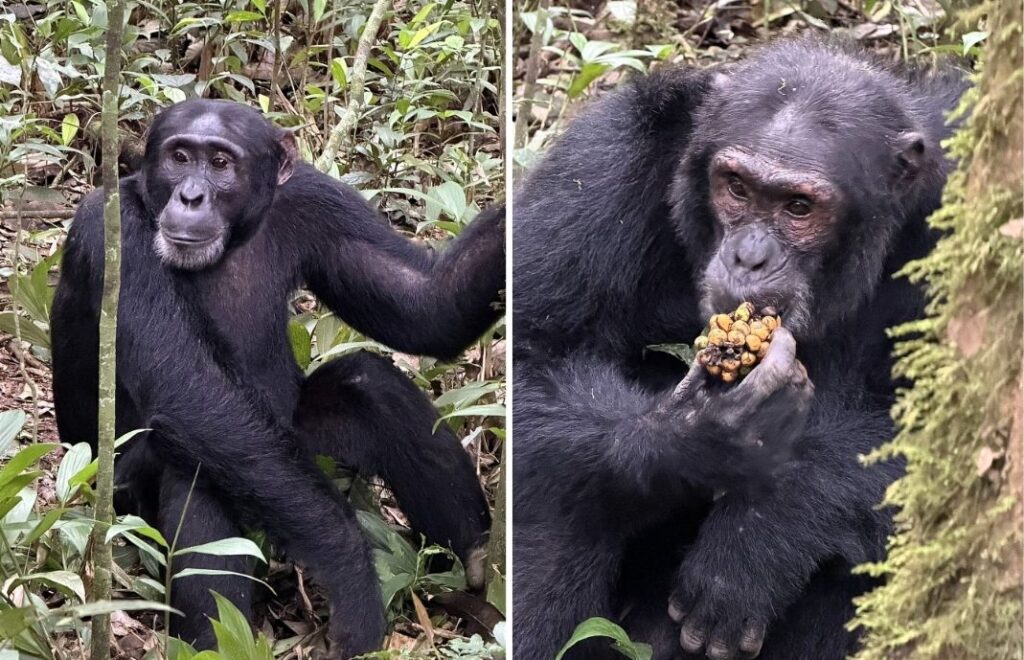
Once the chimpanzees are located, visitors are allowed one hour in their presence. This allows you to observe their social interactions, playfulness, and feeding habits. It offers you an unparalleled window into their fascinating lives.
Advanced booking is mandatory. It is recommended to book early to secure a slot for this highly sought-after experience.
It is an expensive experience (but well worth it). Permits costs USD 250 per person (non-residents) in high season and USD 200 per person in low season (April, May and November). Fees can change, so you are advised to check the latest price when booking.
Note that there is no guarantee you will see the chimps, but Kibale has a 90 precent success rate.
There are also important rules to follow:
- Keep a respectful distance to the chimpanzees – at least 10 meters.
- Stay with your guide and follow their instructions. They know the behavior of the chimps and will instruct you accordingly.
- Keep your voice low and don’t make sudden movements.
- NEVER try to touch or feed the chimps.
- Flash photography is forbidden.
- You must wear a face mask when you are around the chimps.
- If you are sick, you will not be allowed to participate. Chimpanzees are very vulnerable to human illnesses.
- The rules are there to protect both wildlife and visitors so make sure you obey and listen to the guide.
When is the best time for chimpanzee trekking?
Chimpanzee trekking can be done throughout the year, but the experience changes with the seasons. The best time is usually during the drier months from June to September and December to February, when forest trails are generally easier to walk and rain is less likely to interrupt the trek.
Do note that these months are the peak travel times, so don’t expect an hour alone with the chimps. Many other people are likely to be observing them.
That said, chimpanzee trekking is not only a dry-season activity. The wetter months (April, May and November) can also be rewarding, as the forest becomes lush, green, and full of life. There may be fewer travelers, and the atmosphere can feel even more wild and dramatic. Rain is always possible in a tropical forest, so even in the dry season, it is wise to come prepared. The permits also cost less during these months.
The best time of day is often in the morning, when chimpanzees tend to be active and the forest is cooler. Morning treks also give you the rest of the day to relax, visit nearby places, or enjoy other activities around the park.
For most first-time visitors, the dry seasons offer the easiest and most comfortable conditions. But whenever you go, chimpanzee trekking has a sense of unpredictability – and that is part of what makes the experience so exciting.
What to wear for chimpanzee trekking
Choosing the right clothes can make chimpanzee trekking much more comfortable. The forest can be humid, muddy, slippery, and full of branches, insects, and thick vegetation, so it is best to dress for the jungle rather than for a casual walk.
Wear lightweight long trousers and a long-sleeved shirt to protect your skin from scratches, insect bites, and stinging plants. Neutral colors such as green, brown, grey, or beige are ideal, as they blend better with the forest.
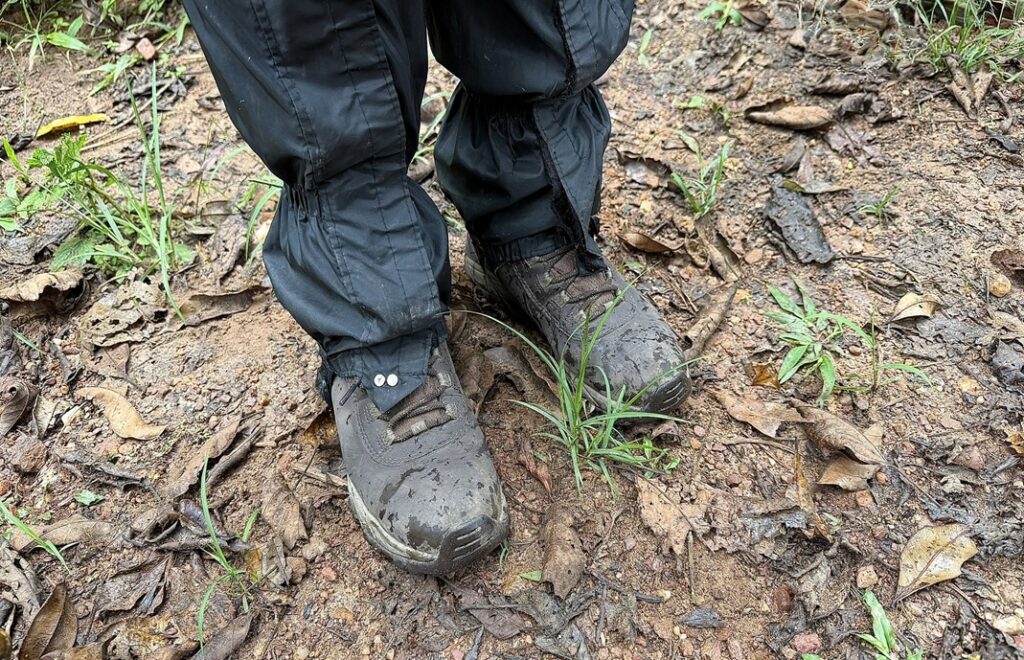
Good footwear is essential. Choose sturdy hiking shoes or trekking boots with a proper grip, especially if you are visiting during or after rain. Trails can become muddy very quickly, and sandals or smooth-soled shoes are not suitable.
A light rain jacket is also useful, even in the dry season. Kibale is a tropical forest, which means rain can arrive unexpectedly.
A hat or cap can help with sun and light rain, while thin gardening gloves can be helpful if you need to hold onto branches or vines along the trail.
It is also smart to tuck your trousers into your socks or wear gaiters if you have them. This may not look stylish, but it can help protect against ants and insects on the forest floor.
The best outfit for chimpanzee trekking is simple: comfortable, protective, and practical. You do not need anything fancy – just clothes and shoes that let you move easily and stay dry. Then you can focus on the incredible experience of walking through the forest in search of chimpanzees.
Kibale’s thriving chimpanzee population
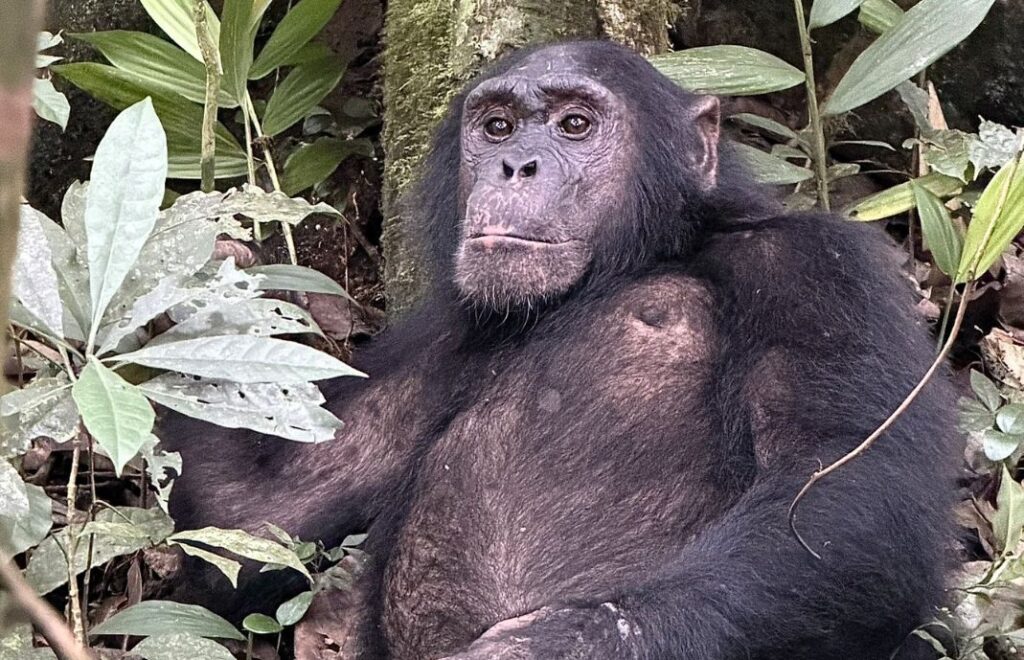
Kibale National Park supports one of the largest populations of wild chimpanzees in Uganda, estimated at over 1,500 individuals. The chimps are distributed across at least 12 distinct communities. Four of these communities have been habituated for tourism and research, with the Kanyantale chimpanzee community being the most prominent for visitor tracking. This group has been open to tourists since 1993, making it one of the longest-running chimpanzee trekking programs in the world.
For those seeking an even deeper experience, Kibale also offers the Chimpanzee Habituation Experience, which allows visitors to spend an extended period following a semi-habituated chimpanzee group as they go about their day.
Why you should go chimpanzee trekking
Chimpanzee trekking in Kibale is one of the most memorable wildlife experiences you can have in Uganda. It is exciting, intimate, and completely different from a traditional safari. Instead of watching animals from a vehicle, you step into the forest and follow the sounds, tracks, and movements of one of our closest relatives.
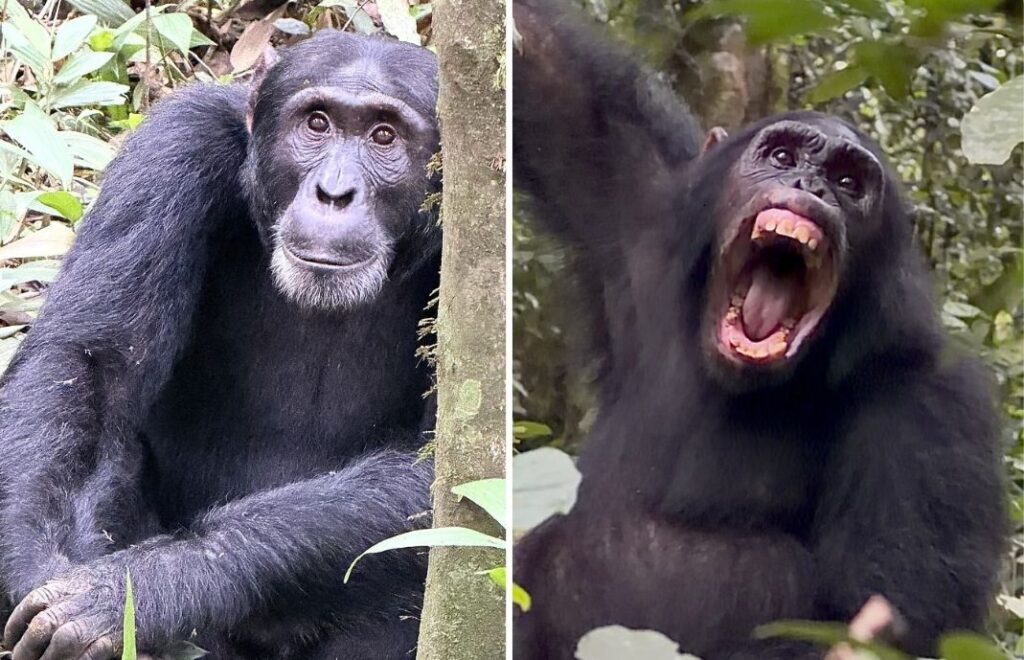
What makes the experience so powerful is how familiar chimpanzees can feel. Their expressions, gestures, curiosity, and social behavior are fascinating to watch up close. One moment they may be feeding quietly in the trees, and the next the forest erupts with calls, movement, and energy. It is wild, unpredictable, and unforgettable.
Chimpanzee trekking also gives you a deeper appreciation for Uganda’s forests. Walking beneath the canopy, listening to birds, insects, and distant primate calls, you begin to understand that the experience is about more than one animal. It is about entering a living ecosystem where everything is connected.
For travelers, it is the kind of adventure that feels both thrilling and meaningful. It supports conservation, brings value to protected forests, and creates a lasting connection with the natural world.
More inspiration: Meet the chimpanzees of Uganda