
It’s celebrated as one of South Africa’s natural wonders. A flat-topped giant rising over 1,000 meters above Cape Town, a majestic landmark by day and a glowing sentinel by night. But sometimes, this icon of the Cape hides behind a veil of mist and cloud. When that happens, locals say, “the tablecloth has been laid.”
The sky is brilliantly blue as we drive toward Table Mountain. But then, almost imperceptibly, the fog begins its slow invasion – curling and creeping across the summit, rolling down the slopes like a living thing. By the time we step into the cable car, the mist has swallowed half the mountain.
The ride to the top takes just two or three minutes, yet as we ascend, the last glimpse of the city below dissolves into white. Soon, we’re cocooned in a dense, cottony fog, peering out at nothing but swirling gray. It feels as if we’ve slipped inside a cloud – like carving through the heart of a snow globe turned upside down.
The dramatic views we’d imagined never materialize. The grand reveal never comes. Our climb to the summit, though thrilling in its own way, feels more like a mystery than a spectacle.
Sometimes, the mountain decides to keep its secrets – and all you can do is wait for the clouds to lift.
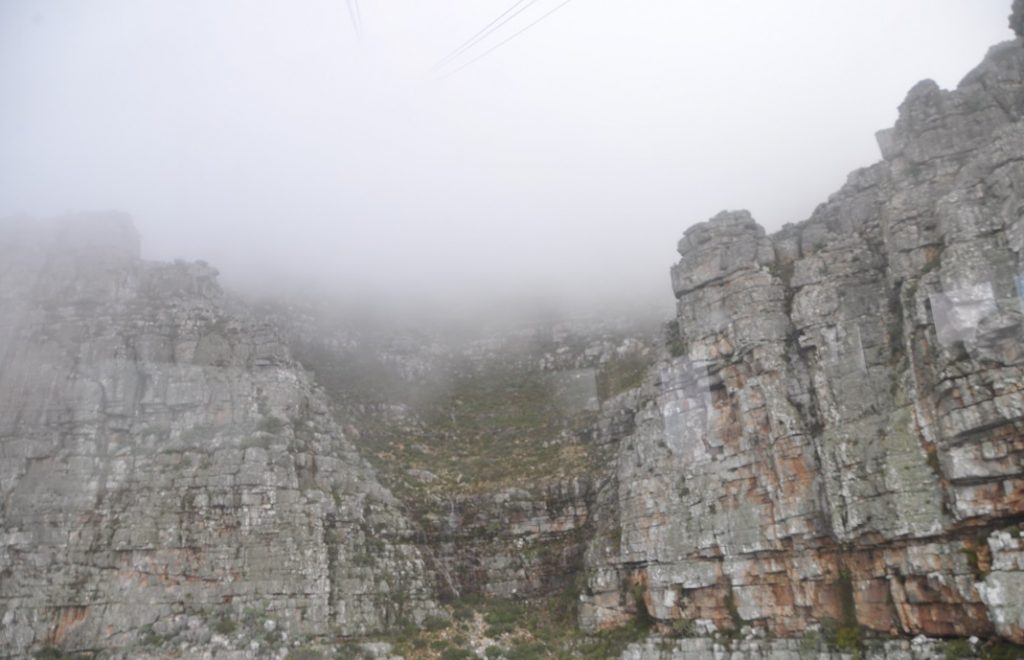
When the tablecloth is spread
Gray, bleak, and biting cold. Heavy raindrops splatter against the rocky ground. The wind cuts through your jacket, and the view? Absolutely nothing.
A stark contrast to the last time I stood here. That was under a brilliant blue sky, the sun painting every curve of the landscape in gold.
But that’s Table Mountain for you: playful one moment, brooding the next, then suddenly soft and welcoming again. The weather gods here play by their own rules – and today, they’re not on our side.
Still, we’ve made it to the top, where the highest point, Maclear’s Beacon, rises 1,086 meters above the sea.
The summit is a vast, three-kilometer plateau, aptly resembling an enormous table. Scattered across its rocky surface are boulders and bursts of wildflowers, while small, furry creatures scurry about – rock hyraxes, endearing little animals that look like a curious mix between rabbits and guinea pigs.
This mountain is more than a viewpoint. It’s a treasure trove of biodiversity. As part of the Cape Peninsula National Park, Table Mountain is a UNESCO World Heritage site and home to an astonishing 2,200 plant species, including 1,470 flowering plants, many of which exist nowhere else on Earth.
And when the mist decides to lift its veil?
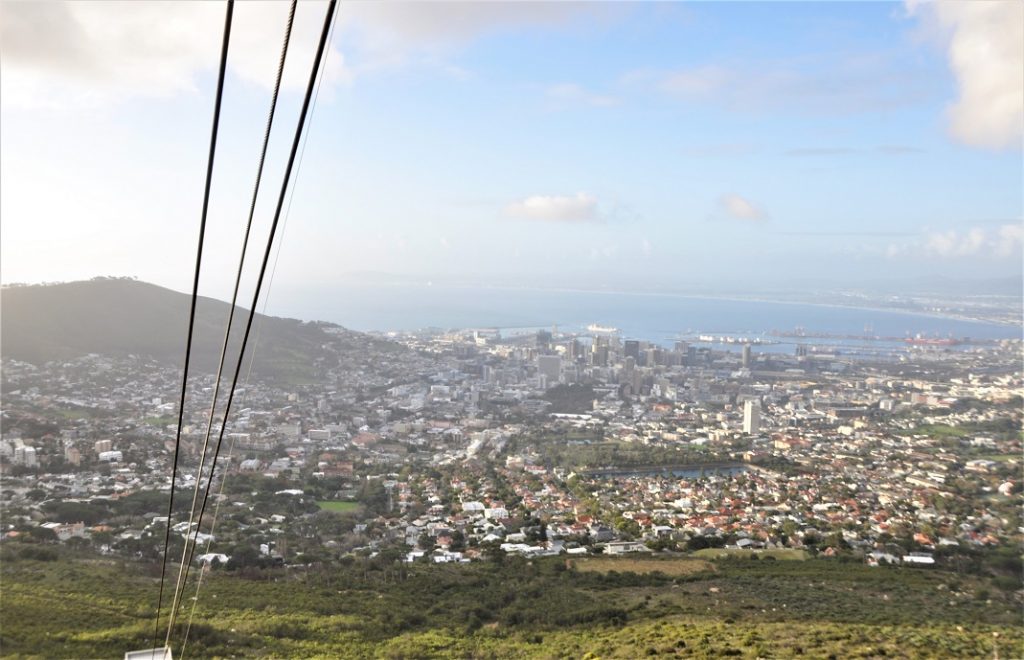
The reward is nothing short of breathtaking. Panoramic views stretching over Cape Town, the rugged peninsula reaching toward the Cape of Good Hope, and far out at sea, the flat silhouette of Robben Island, once the prison of Nelson Mandela.
Table Mountain is moody, majestic, and unforgettable – whether wrapped in clouds or basking in sunlight.
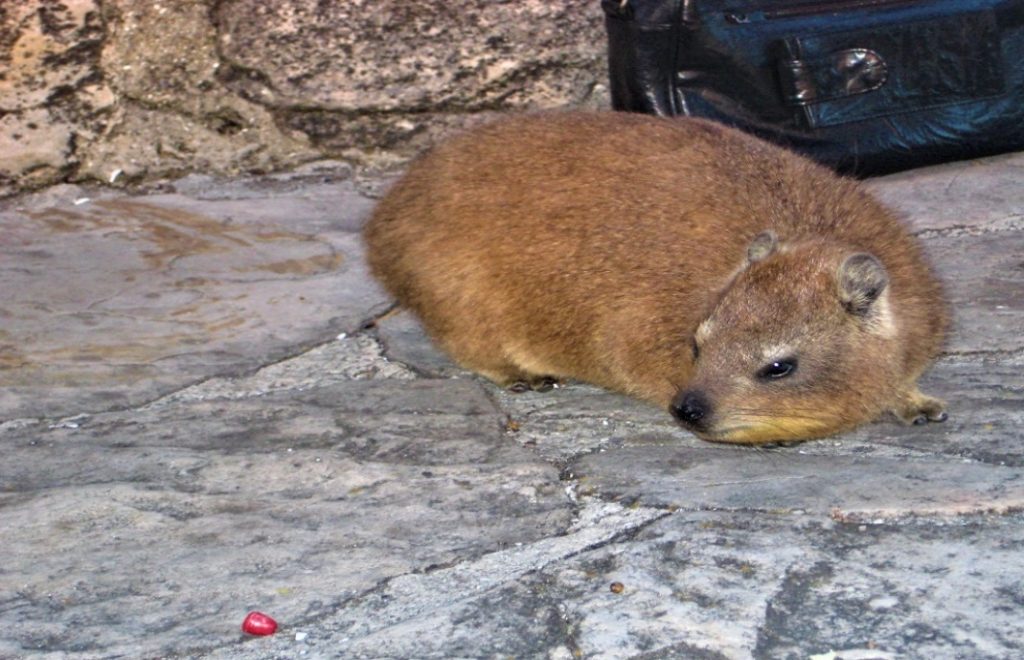
Welcome to Table Mountain
Table Mountain is a mountain like no other – a flat-topped wonder that lures travelers from across the globe.
As the wind howls louder and rain lashes harder, we finally decide we’ve had enough. Judging by the endless queue at the cable car station, it seems every other visitor feels the same way.
The cable cars are marvels in themselves, carrying up to 65 passengers at a time. Their floors rotate, offering a 360-degree view of the breathtaking scenery – at least when the weather plays along.
At last, it’s our turn. Cold, wet, and a little defeated, we step into the gondola. Within minutes, we glide down through the mist and emerge into a world transformed. Down here, there’s no fog, no rain – just clear skies and calm air. It’s hard to believe that only moments ago we were atop the mountain, swallowed by clouds and dancing on the world’s most famous “table.”
We didn’t get the sweeping vistas this time – but that’s perfectly fine. It leaves us with one more reason to return to Cape Town, often hailed as one of the most beautiful cities on Earth.
After all, Table Mountain will always be here. Waiting, unpredictable, and magnificent.
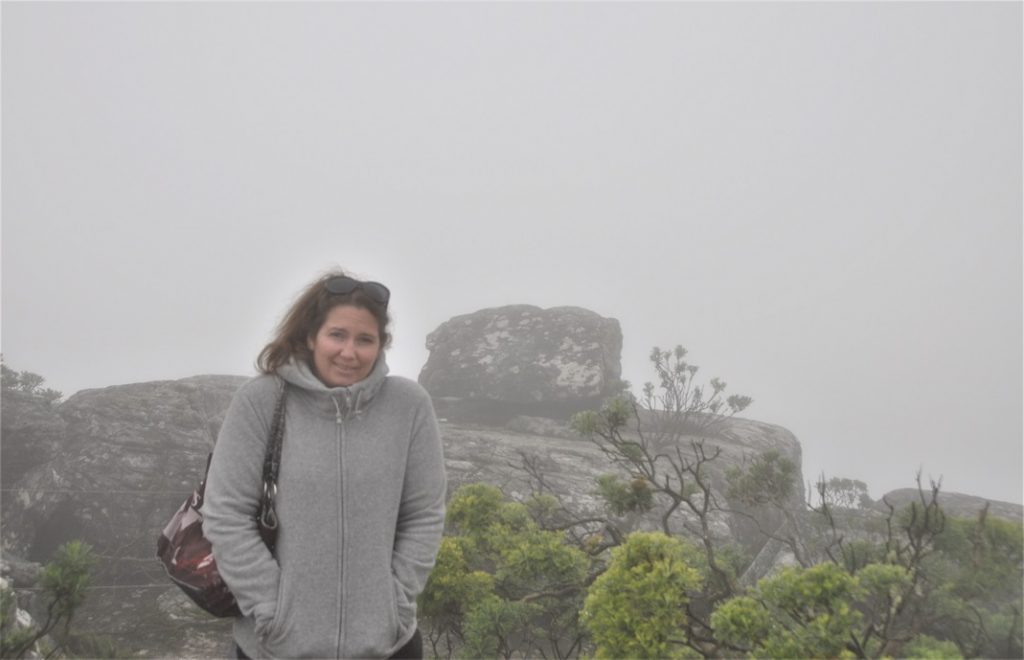
Practical information
- Table Mountain (Taffelberget) is Cape Town’s most iconic landmark.
- You can reach the top either by cable car (round-trip tickets recommended) or on foot if you’re up for a challenging hike.
- Book your tickets online in advance, especially during the high season (November-February).
- Tickets are divided into two slots:
Morning: 08:00-13:00
Afternoon: From 13:00 onward
Even if you choose the morning slot, you can stay on the mountain until the last cable car departs. - Afternoons typically have fewer visitors, making them a great choice if you prefer a quieter experience.
- Best time to visit: November to February (Cape Town’s summer) offers milder, drier weather and extended cable car hours.
- Note: Table Mountain closes for annual maintenance for about 4 weeks, usually from early July to early August. Always check the official website for the latest updates.
- For a magical experience, pack a picnic and watch the sunset from the summit.
- Parking is free, but spaces fill up quickly. Getting there is easy with city buses or a free shuttle service from nearby lots.
- If you plan to explore Cape Town without a rental car, consider a Hop-On, Hop-Off bus pass – a convenient way to reach Table Mountain and other top attractions.
Pro tip: The weather on Table Mountain changes rapidly, so bring a jacket – even on sunny days!
More inspiration to Cape Town and Western Cape:
Check-In: The Grand Daddy
A seal-icious adventure in Hout Bay
The Penguins of Boulders Beach
Cape of Good Hope
