
When the new E6 through Midt-Gudbrandsdalen opened in 2017, it carved a sleek, time-saving path along the eastern side of the valley – shaving about 15 minutes off the drive for those in a hurry.
But if you take that straight-shot route, you’re making a big mistake. Because sometimes, the fastest way isn’t the most rewarding.
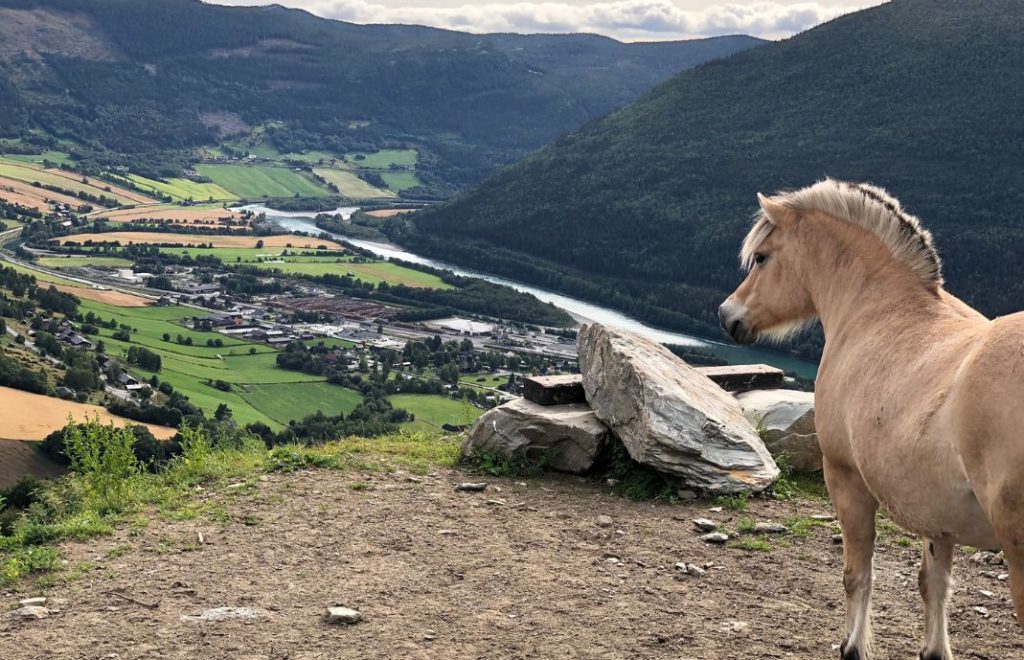
Slow down, veer off the main road, and you’ll discover a journey worth savoring. Welcome to Gudbrandsdalsvegen – a charming, soulful stretch of road that locals call kælltåkå luggum (delightfully cozy). It’s not just a detour – it’s an experience, a scenic embrace of history, culture, and Norwegian heartland beauty.
This is one road trip you absolutely must take.
The road to authentic experiences
Travel along Gudbrandsdalsvegen, and you’ll find yourself immersed in the essence of Norway – where tradition and modern comfort blend seamlessly, and art meets nature in perfect harmony.
Here, steep hillsides cradle centuries-old farms still run by the fourth or fifth generation. The local dialect, rich and rolling, might challenge your textbook Norwegian, but that’s part of the charm.
Expect traffic jams of a different kind: flocks of sheep and herds of cows meandering lazily across the road -a mild irritation for locals, but a source of delight for visitors. The food here comes straight from the earth (or the barn), transformed into mouthwatering dishes lovingly prepared from grandmother’s time-honored recipes.
Tradition runs deep in Gudbrandsdalen. The people are warm, grounded, and endlessly hospitable. They are ready to share stories, a smile, and always a steaming cup of coffee.
The route winds from Fåvang, through Ringebu, Hundorp, Harpefoss, Vinstra, and Kvam – each village with its own unique character and hidden gems. There’s always something happening in the valley, and it’s entirely up to you how much you want to join in.
Gudbrandsdalsvegen isn’t just a road. It’s a journey into the heart of Norwegian heritage, where every stop offers a taste of authentic rural life and unforgettable moments.
There’s a legendary baker in Gammelbua
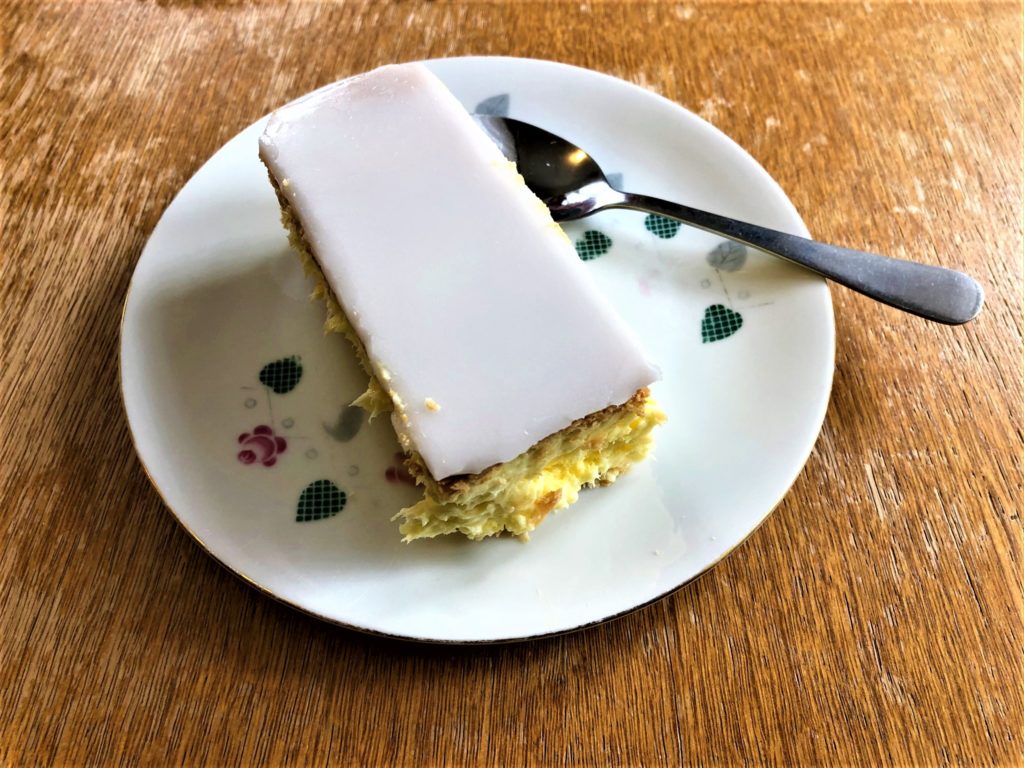
I don’t usually start my day with a slice of Napoleon cake. But the moment you step into Gammelbua, resistance is futile. After all, life’s too short not to indulge – and nothing compares to the scent of fresh, hand-crafted pastries.
As we push open the door to Gudbrandsdalen’s oldest country store, we’re greeted by an irresistible symphony of aromas – freshly brewed coffee mingling with the warm sweetness of baked goods. On display in the old wooden counter: soft white loaves, rustic “eventyrbrød,” golden school buns, crisp waffles, and, of course, the storied Napoleon cake. The hardest part? Deciding what to pile onto your plate.
Legend has it this Napoleon cake isn’t just good – it’s the best in the world. Fit for a king, celebrated by food critics, and whispered about in reverent tones. One bite, and I can confirm: the rumors are true. It’s sheer perfection – the best I’ve ever tasted.
Gammelbua is part of Ødegaarden Bakeri & Konditori, a beloved institution that has been delighting locals and travelers alike since 1898. The artisans here are masters of their craft, and it shows in every flaky, buttery layer.
This isn’t just a bakery – it’s a piece of living history. And it’s a tasteful stop you absolutely cannot miss.
At Gro’s place, everything’s in bloom
With the taste of that heavenly Napoleon cake still lingering and a dangerous craving for another slice, we continue our journey to Hageland Bjørke.
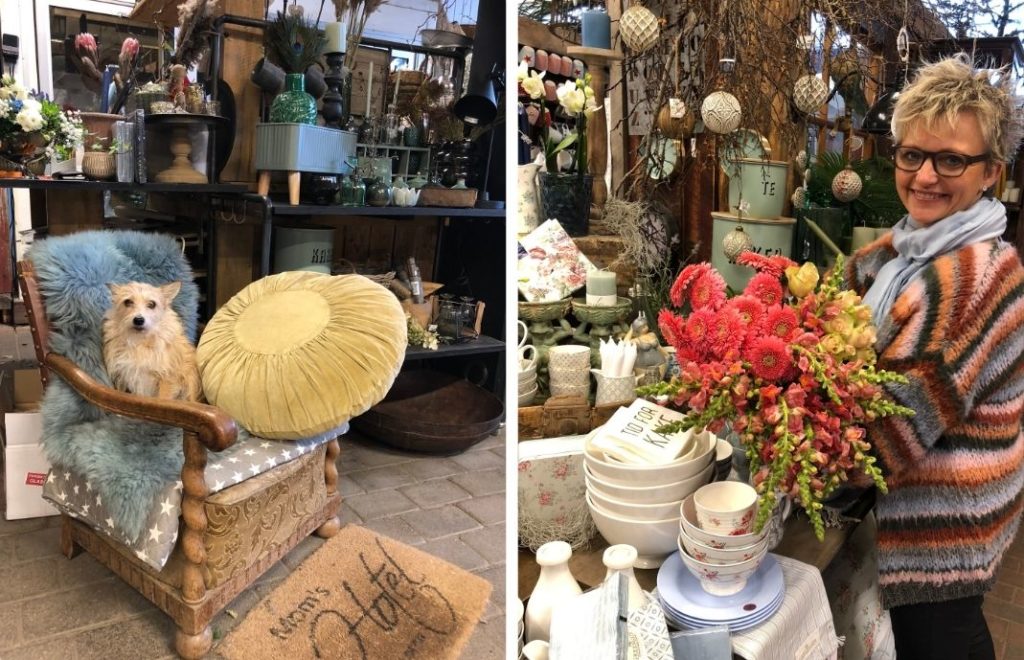
Here, we’re greeted by Gro – a woman with enough energy to power an entire hydroelectric plant. Her smile radiates warmth as she passionately shares the story of the oasis she and her family have built. Because this is no ordinary garden center – it’s a living, breathing celebration of creativity, tradition, and heart.
The dedicated team here offers far more than flowers, plants, home décor, and tools. What truly sets them apart is their personal touch – the kind of service and attention that makes you feel like a welcome guest rather than a customer.
If luck is on your side, you’ll also meet Gina, the center’s beloved four-legged mascot. This little charmer insists on accompanying every tour, padding gracefully from the stylish interiors – where she perches proudly on “her” chair for a photo op – to the sun-dappled greenhouse outside.
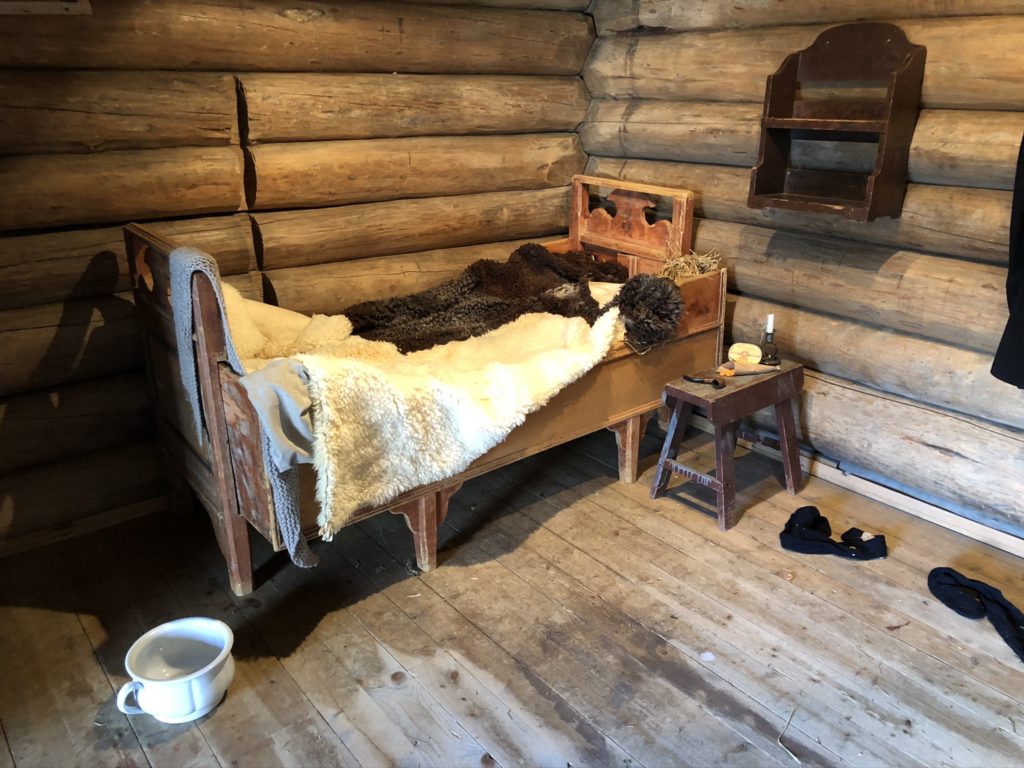
And of course, Gina joins us as we step into Raustuggu, the charming timber house on the property dating back to 1929. This is where the family’s floral adventure first took root. Gro has lovingly transformed the old home into a vibrant showcase of history and heritage. Every room – the living area, kitchen, and bedroom – is brimming with treasures, each object telling its own unique story.
At Hageland Bjørke, flowers bloom year-round – but so do warmth, tradition, and inspiration. This is a stop that will make your heart, as well as your senses, blossom.
A magical place for the holidays
When Gro offers a glass of refreshing rose cordial in the cozy old stuggu, it’s impossible to say no. After all, this is the home of Norway’s toughest roses – or so they say. If your own rose garden is more thorn than bloom, Gro will happily share her expert tips to help you create a show-stopping display that will be the envy of the entire neighborhood.
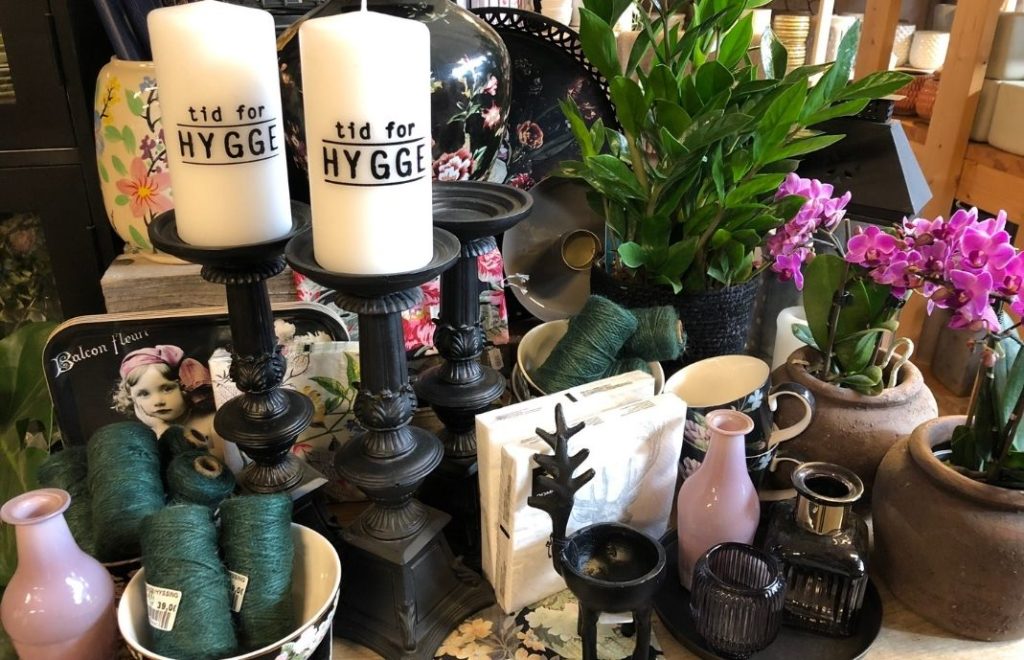
But Hageland Bjørke is so much more than a garden center – it’s a wellspring of creativity and inspiration. And nowhere is this more evident than during the holidays.
Gro has a true passion for seasonal celebrations, and when Christmas or Easter approaches, the entire place transforms into a wonderland of colors, textures, and ideas. Need a spark of inspiration for your own holiday décor? A visit here will leave you brimming with it – and I can promise, you’ve never seen anything quite like this.
At Hageland Bjørke, every season blossoms into magic – and every holiday feels like stepping into a dream.
The coolest diner in Norway
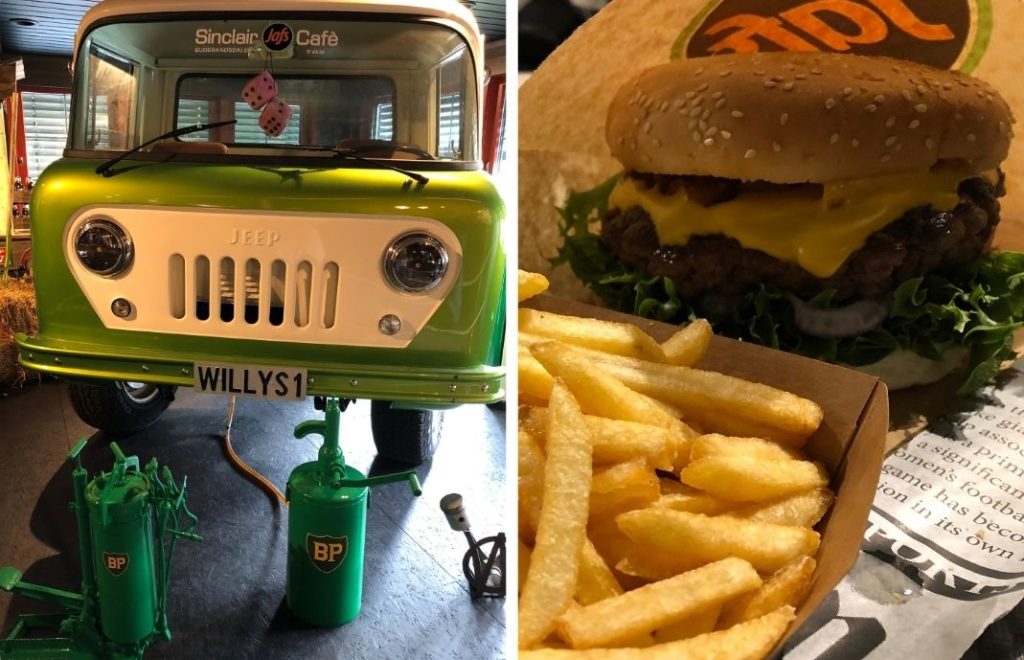
Believe it or not, hunger strikes again – and this time, lunch is served at Sinclair Jafs Café, an authentic Døla-diner that takes roadside dining to an entirely new level. If you’re craving seriously good fast food with a heavy dose of nostalgia, this is the place.
And let me just say it: this is hands-down the coolest diner in Norway.
The moment we step inside, we almost forget to order – because the décor steals the show. Every corner is a love letter to vintage Americana and Norwegian charm: old license plates, gleaming fuel pumps, oil cans, motorcycles, and quirky curiosities. A classic Gråtass tractor has been transformed into seating, while a bright green World War II jeep proudly occupies one corner. Nothing here is random. Every detail is meticulously curated for maximum wow-factor.
Owner Fredrik greets us warmly, eager to share recommendations from the menu. Sinclair Jafs Café is the proud descendant of Vertshuset Sinclair, once a legendary stop along the old E6 through Gudbrandsdalen. When the road shifted, Fredrik reinvented tradition – and the result is a retro-inspired diner that blends incredible design with equally incredible food.
Here, you’ll find mouthwatering fast food, creamy milkshakes in ten flavors, and soft-serve ice cream topped with your choice of ten different sprinkles.
I go for the vegetarian burger, and after the very first bite, I’m stunned. Perfectly grilled, layered with melted cheese and smoky barbecue sauce, it’s easily the best veggie burger I’ve ever tasted.
Sinclair Jafs Café isn’t just a meal – it’s a full-throttle experience. A roadside gem that roars with personality, flavor, and pure diner magic.
Lefse, flatbrød, and stomp – A taste of tradition
Stuffed from lunch and vowing we couldn’t possibly eat another bite, we arrive at our next stop – only to have the warm, buttery aroma of fresh, hand-rolled baked goods completely undo our resolve.
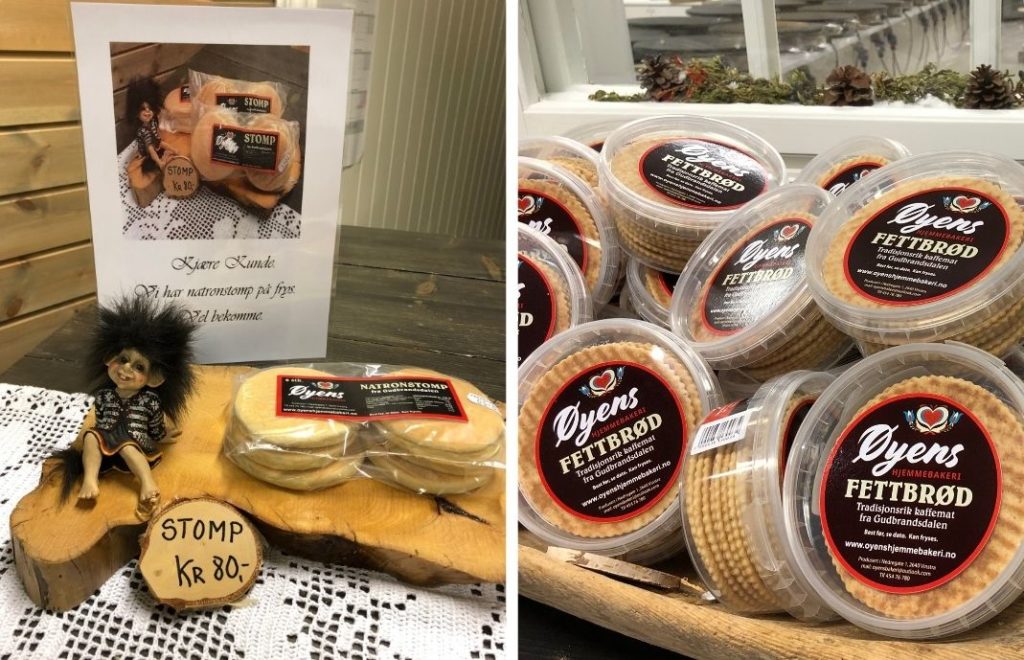
What’s the secret behind perfect flatbrød, lefse, stomp, fettbrød, or ertebrød?
Start with two determined sisters, add their grandmother’s treasured recipes, mix in two supportive husbands and a daughter, then fold in 46 sizzling griddles and a deep pride in preserving local traditions. Finish with beautiful packaging and a generous helping of heartfelt service – and you have Øyens Hjemmebakeri, a place where history is baked into every bite.
For hundreds of years, the women of Gudbrandsdalen perfected the art of baking on open hearths, crafting the delicate, crispy flatbreads that remain a cornerstone of Norwegian cuisine. Today, this heritage lives on – just in slightly more modern surroundings.
At Øyens, you’ll find a tempting array of traditional treats: flatbrød for your dinner table, sweet fettbrød for coffee, or soft stomp to enjoy on the road.
I had never heard of fettbrød before, but one bite and I was hooked. Rich with butter, lard, and sugar, the dough is prepared a day in advance, and each piece is stretched by hand before hitting the griddle. The result? Pure heaven.
Don’t just take my word for it – try it yourself!
Drop by their shop at Sørdorptunet Shopping Center in Vinstra, and I promise, your taste buds will thank you.
This is tradition at its most delicious – baked with love, served with pride, and impossible to resist.
Try your fishing-luck with Værfast
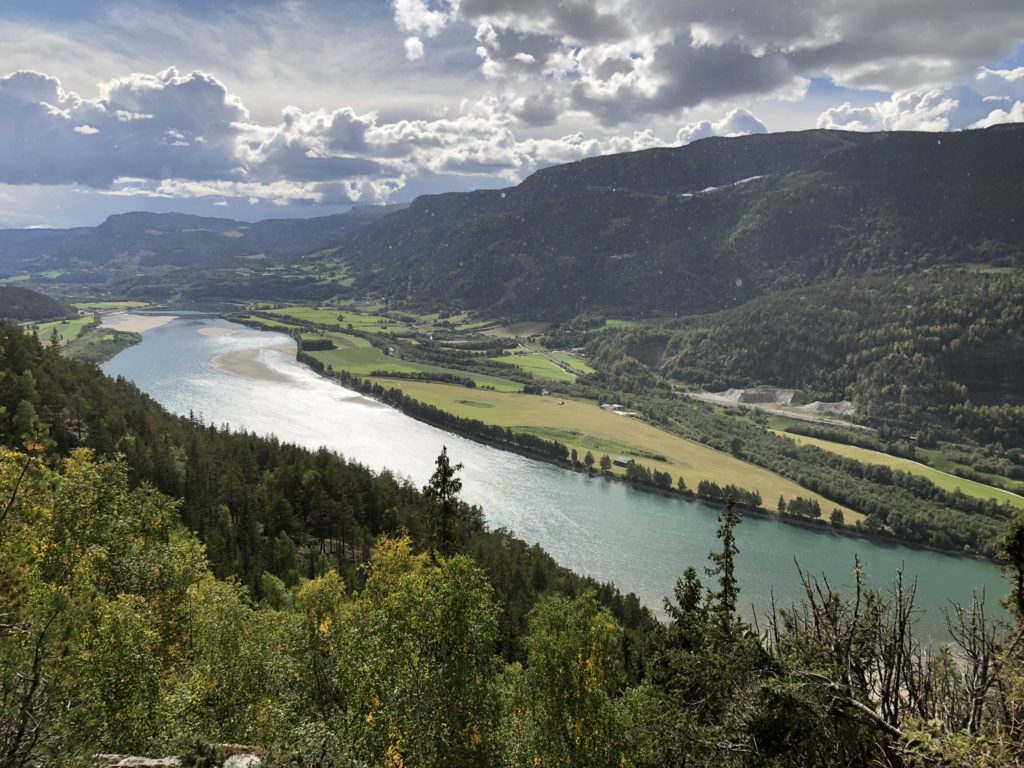
It’s time to cast a line and test your fishing skills in the Gudbrandsdalslågen – a majestic river winding 204 kilometers through eight municipalities. Surprisingly, despite its beauty, it remains a hidden gem among anglers. The river is home to 20 species of fish, including grayling, perch, trout, pike, and bullhead.
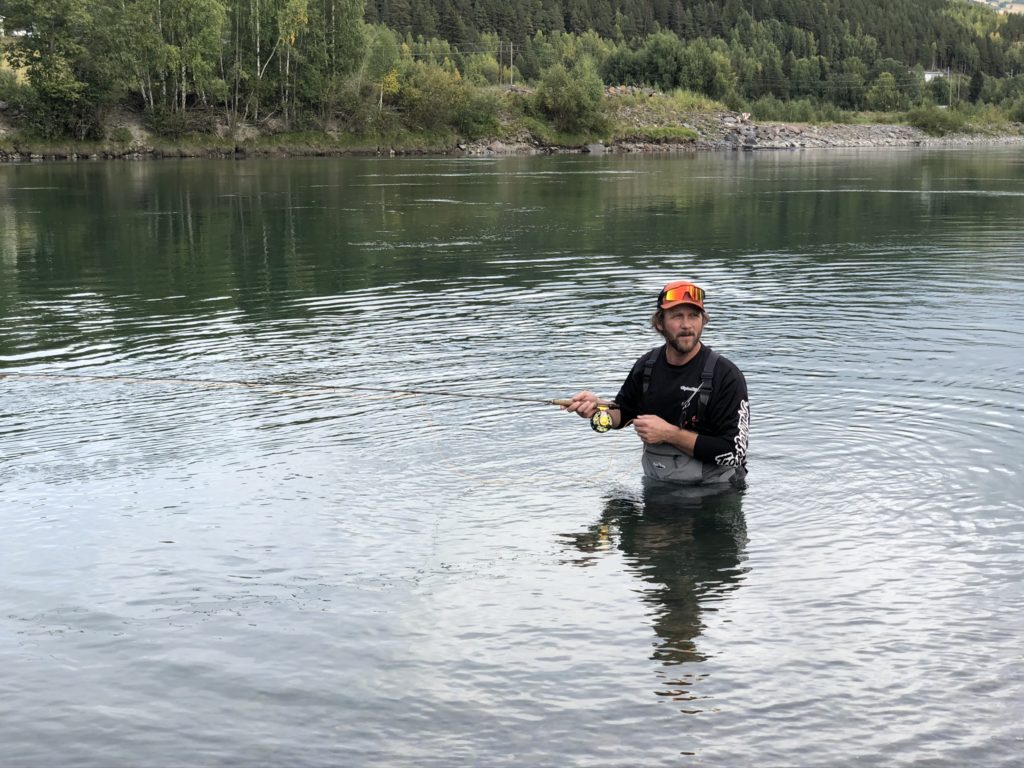
At the parking lot, we’re greeted by Hans from Værfast, our guide and self-proclaimed fishing evangelist. A short stroll brings us to the water’s edge, where fish leap playfully in the shimmering green current – a hue born from Jotunheimen’s glacier meltwater.
Hans dives into the details with enthusiasm, explaining rods, lines, and the delicate art of fly-casting. This isn’t just a job for him. It’s pure passion, and you can feel it in every word, every demonstration.
The story of Værfast is as charming as the river itself. Born in 2017 over a casual dinner among four friends, each pitched an idea for a new venture. Instead of choosing one, they combined them all – creating a unique hub that’s part store, café, bar, and adventure guide service. Today, the team offers fishing trips, cycling adventures, and ski and board excursions.
We give fly-fishing our best shot, trying to mimic Hans’s graceful casts. The fish, however, seem unimpressed – leaping in front of us as if mocking our efforts. My own attempt ends in comedy: no fish, but I do manage to hook my own shirt (twice).
Did we catch anything? Not a chance.
Was it fun? Absolutely.
Because with views like these, laughter echoing across the water, and a river alive with promise, the real catch is the experience itself.
A Danish sausage maker in Ringebu
Our next stop takes us to Ringebu, a charming little village in the heart of Gudbrandsdalen, where time moves slowly and flavors speak volumes.
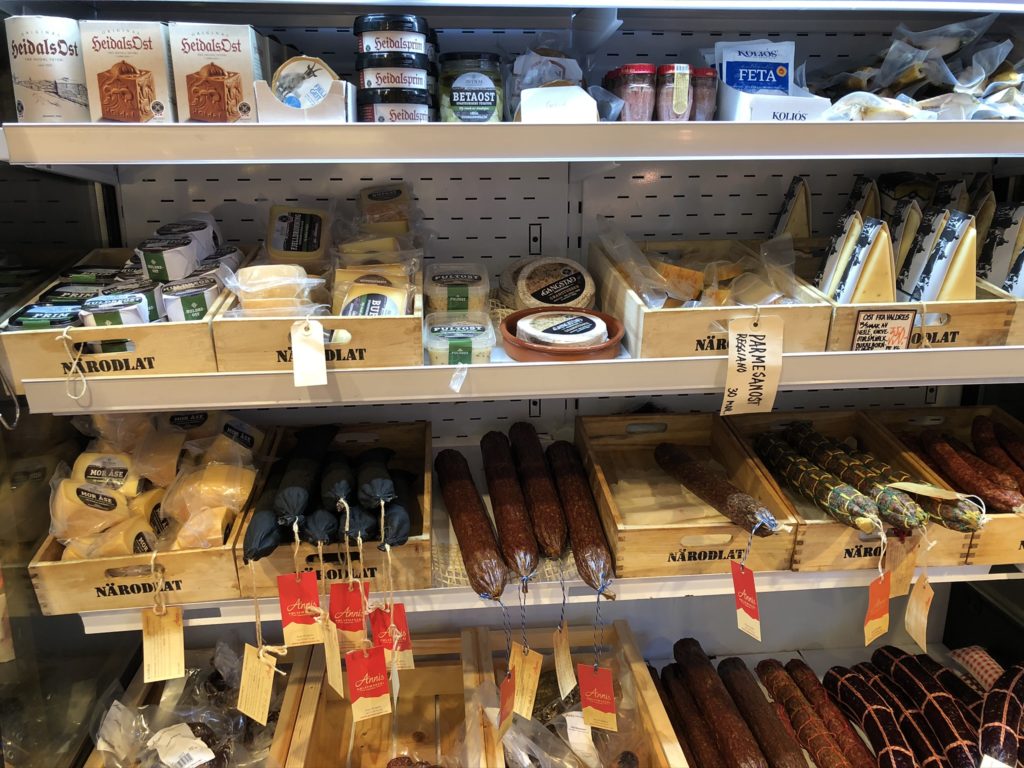
The Norwegian actor and comedian, Leif Juster, once wondered, “Where has the sausage maker gone?” Well, we’ve found the answer: Annis Pølsemakeri, a gourmet haven where craftsmanship meets passion. Today, we’re getting a behind-the-scenes look – stepping into the production rooms where the magic truly happens.
Here, Anni Byskov, a former Nordic champion in meat cutting, works her artistry to create award-winning sausages and premium meat products that have earned her a loyal following across Norway.
The shop itself is a feast for the senses. Shelves overflow with temptations: wild garlic sausage, rustic grovpølse, Tuscan-inspired sausage with veal, and air-dried ham infused with fennel. And it doesn’t stop there – local cheeses, decadent chocolates, jars of pesto, and craft beer round out the irresistible lineup.
It’s no wonder people travel from far and wide to stock up here. This isn’t just a butcher shop – it’s a celebration of flavor, tradition, and culinary innovation.
At Annis Pølsemakeri, every bite tells a story – one that begins in the heart of Ringebu and lingers long after the last taste.
Savor the flavors at Annis Spisested
Believe it or not, hunger strikes again – perhaps thanks to the fresh mountain air and the cozy, laid-back vibe of Gudbrandsdalen. Luckily, dinner is just steps away at Annis Spisested, a charming restaurant nestled right next to the famed sausage maker.
Inside, the atmosphere is warm and inviting, with friendly staff ready to guide you through the day’s offerings. The menu, neatly displayed on the wall, hints at indulgence – but also at balance. With a butcher shop next door, you’d expect a meat-heavy lineup, and yes, the carnivores are well taken care of. But to my delight, there are also tempting vegetarian options.
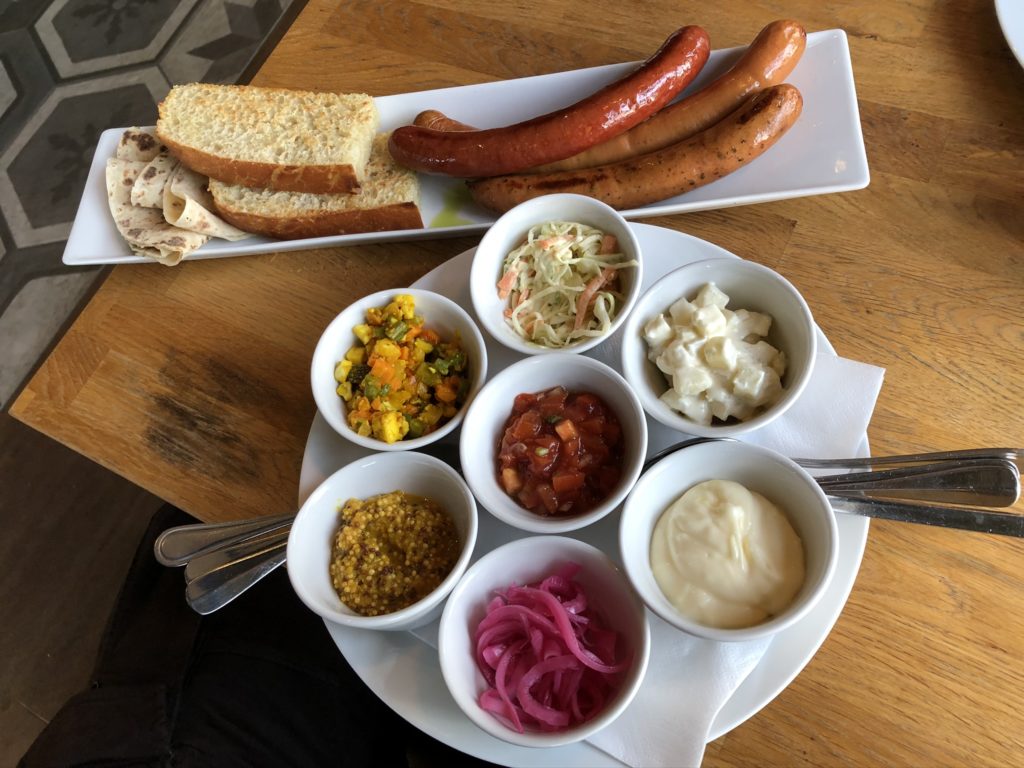
I settle on crispy roasted sweet potatoes with a medley of accompaniments, while my partner, true to form, orders the Pølsefest (sausage party) – a glorious celebration of sausages served with an array of garnishes. After all, when dining at a master sausage maker’s table, resistance is futile.
The flavors are bold, hearty, and deeply satisfying – yet there’s still room for dessert (isn’t there always?). We go for the rhubarb ice cream, which they assure us is great for digestion. And really, who are we to argue?
Annis Spisested is more than a meal – it’s the perfect finale to a day of authentic flavors, local pride, and that unmistakable Gudbrandsdal hospitality.
When war came to the valley
Morning greets us gently, with the distant bleating of sheep echoing from the hillside across the way – a soft reminder that we’re deep in the heart of Norway.
Our first stop today: the Gudbrandsdal War Memorial Collection, which includes a small but poignant war museum and a peaceful memorial park. While the museum is only open from May to August, the park itself is accessible year-round.
It was here, in April 1940, that Norwegian and British forces fought valiantly against advancing German troops in the narrow confines of Gudbrandsdalen.
The silence here is heavy, yet it speaks of sacrifice – and the unbreakable will to protect freedom.
Today, a solemn monument stands among the trees – a tribute to the civilians and soldiers who lost their lives during those dark days.
Carved into stone are the words:
A people at war. A village in flames.
The years our youth lay bleeding.
They gave their lives for folk and land.
But from the blood that ran,
Our freedom was reborn.
Elongated figures and glassy eyes
Heading south, we make a stop at the medieval farm Sygard Grytting in Sør-Fron – a place steeped in history and wrapped in quiet charm.
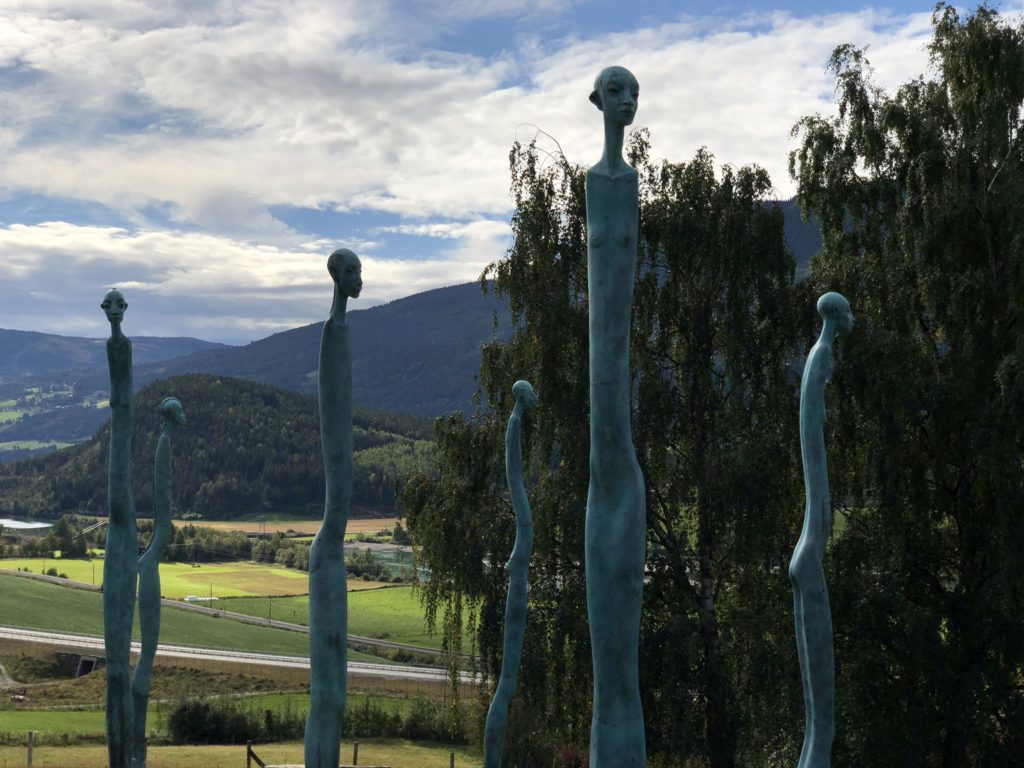
Just a few hundred meters from the road, something remarkable emerges against the landscape: 21 bronze figures, tall and slender, standing in silent formation as they gaze over the valley.
This striking installation, titled Flokk (The Flock), is the work of artist Gitte Dæhlin, who spent much of her life in Mexico. The statues draw inspiration from indigenous cultures, their forms echoing both strength and fragility.
At first glance, they seem identical – elongated bodies, glassy eyes, a uniform sense of mystery. But step closer, and individuality begins to surface. Subtle differences in posture, expression, and detail reveal that each figure carries its own silent story.
Haunting, evocative, and deeply symbolic, Flokk feels like a gathering of ancient spirits – guardians of a landscape where past and present intertwine.
Back to the Viking Age
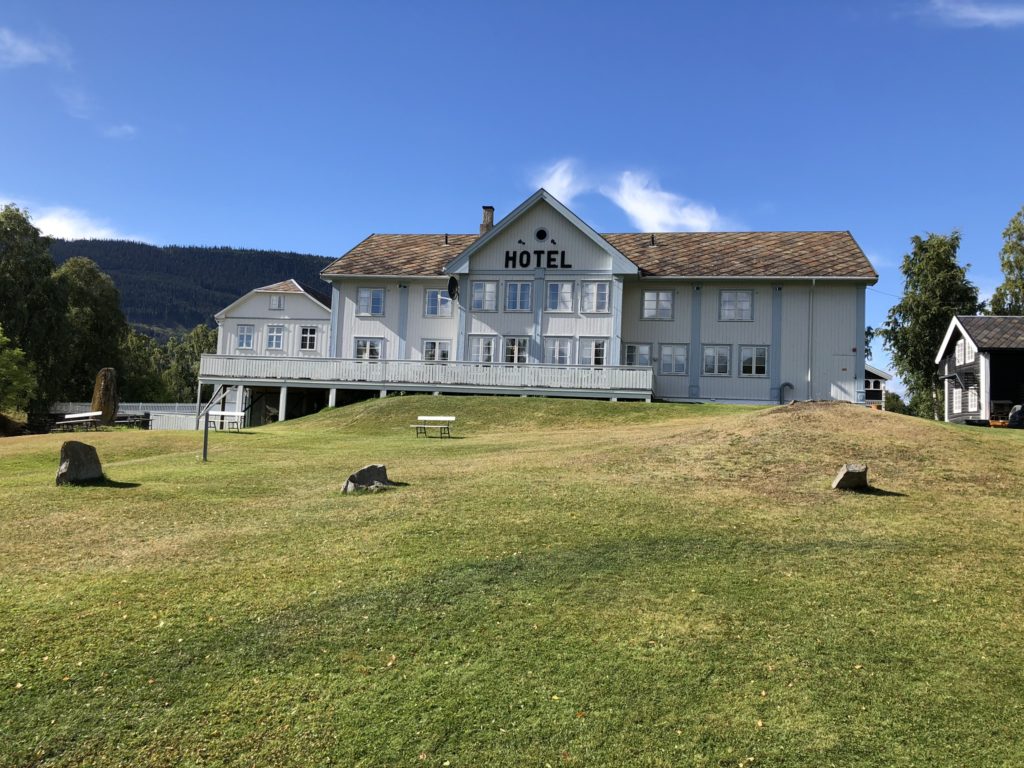
Few places in Norway can boast a cultural lineage as deep as Dale-Gudbrands Gard in Hundorp – a site where history has echoed for more than a millennium.
Today, the estate hosts conferences, weddings, and festive gatherings, but in the days of the Vikings, it was a meeting ground of power and faith.
According to Olav the Holy’s saga in Snorri’s Heimskringla, this is where a fateful meeting took place between King Olav Haraldsson (later Saint Olav) and Dale-Gudbrand, one of Gudbrandsdalen’s most influential chieftains. The year was 1021, and this encounter marked the dawn of Christianity in the valley.
The story is as dramatic as the setting:
King Olav convened the farmers early one morning, requesting that the statue of the god Thor be brought to the gathering.
When the meeting began, Dale-Gudbrand challenged Olav, asking, “Where is your God?”
Just then, the sun crested the horizon. Olav gestured to the blazing light and said, “There comes my God with great splendor.”
As the farmers turned to gaze at the sunrise, Olav’s companion Kolbein struck the idol of Thor with his club, shattering it. From the hollow statue spilled mice, lizards, and worms. Horrified, Dale-Gudbrand and his men abandoned their pagan faith and accepted Christianity.
When we arrive, there are no Vikings in sight – but the landscape is still alive with their memory. Grassy burial mounds dot the grounds, silent witnesses to an era of chieftains, gods, and warriors. In 2021, this historic site marked the 1,000-year anniversary of the dramatic “club strike” at Hundorp.
Since that day when Thor and Odin were toppled and Dale-Gudbrand embraced a new faith, the estate has served many roles – from a district court seat to a folk high school. Today, the grand property welcomes guests as a stunning hotel, offering a rare chance to sleep where history was made.
At Dale-Gudbrands Gard, the Viking Age isn’t just remembered – it lingers in the earth, in the stories, and in the very air you breathe.
Art in nature
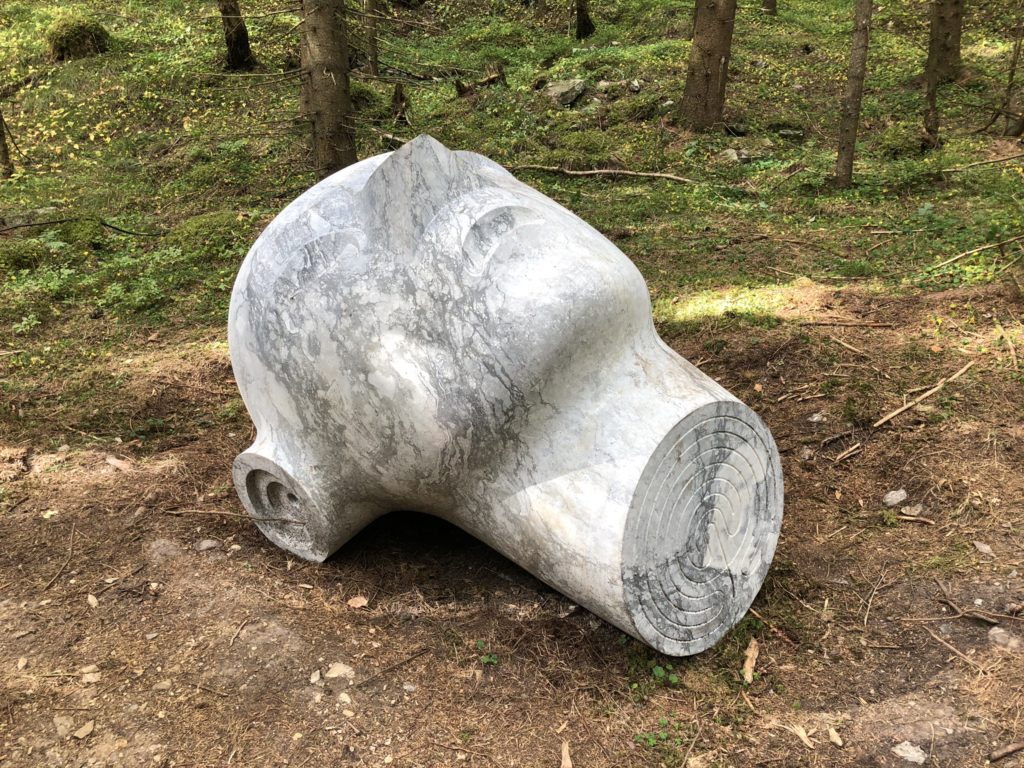
The journey continues to Ringebu, where we take part in the opening of Tankeplass at Høgkleiva – a remarkable project born from the idea of creating natural resting points along the Pilgrim’s Route. But these aren’t ordinary stops; they are living intersections of art, architecture, and landscape.
Here, the wild beauty of Gudbrandsdalen becomes an open-air gallery, home to three thought-provoking installations: Hovudet, Klokkeporten, and Falkesteinen. Each piece is the work of artist Ånond Versto, who greets visitors warmly and invites them into this dialogue between nature and imagination.
The sculptures draw on local legends and tales from Ringebu, weaving their mystery into the pilgrim’s path. At first glance, they appear enigmatic, almost otherworldly, but their forms speak to deeper themes: reflection, passage, and the eternal human quest for meaning.
Tankeplass is more than an art project – it’s an invitation to pause, breathe, and let the stories of the land merge with your own. Here, nature is the canvas, myth is the ink, and every step feels like part of a greater pilgrimage.
Gallery and exhibitions at Ringebu Prestegard
Our journey through Gudbrandsdalen ends on a cultural high note at Ringebu Prestegard, nestled in breathtaking surroundings that seem to whisper stories of centuries past.
This beautifully preserved and restored parsonage, now a protected heritage site, operates as an art gallery and seasonal café during the summer months. The main building, dating back to 1793, served as a residence for clergy until as recently as 1991.
Today, its historic rooms host a vibrant program of exhibitions. In addition to permanent displays, the gallery showcases the works of new and exciting artists every year, making each visit a unique experience.
One highlight is the Veslestabburet, a small storehouse transformed into an exhibition dedicated to Lars Mytting’s literary triumph, Søsterklokkene (The Bell in the Lake). This evocative novel, set in a remote valley and centered around a stave church in the fictional village of Butangen, transports readers to the late 19th century – blending history, myth, and the stark beauty of Norwegian life.
Ringebu Prestegard is more than a gallery; it’s a cultural sanctuary where art, literature, and history converge – inviting visitors to linger, reflect, and be inspired.
Norway’s pride: The stave churches
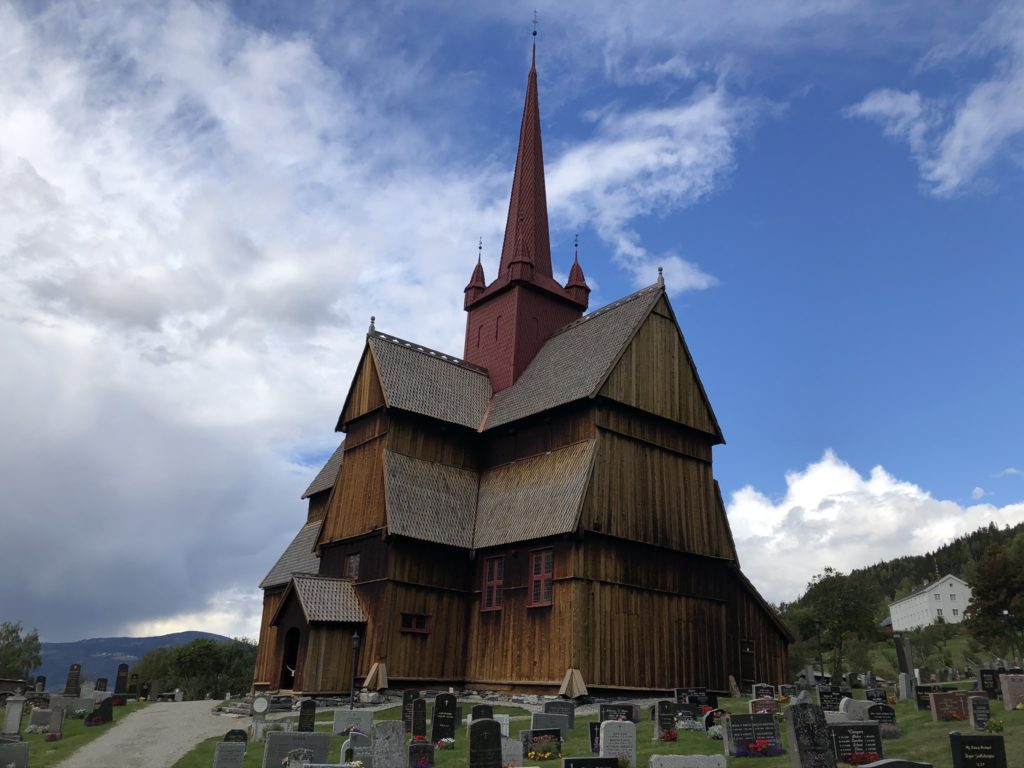
Before us rises one of Norway’s most magnificent treasures – Ringebu Stave Church.
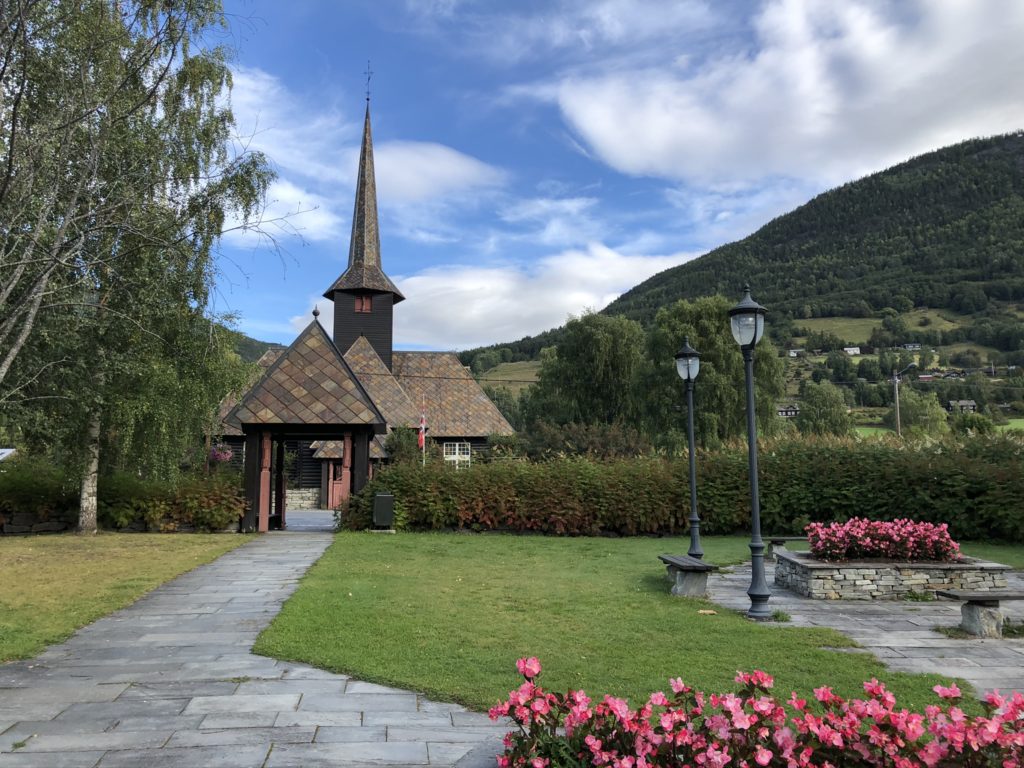
Dating back to around 1220, this architectural masterpiece is among the largest of Norway’s remaining stave churches – and one of just 28 that still stand today. Remarkably, it rests on its original site, its dragon-style portal a proud nod to the artistry of the Middle Ages.
Two days in Gudbrandsdalen are far from enough. With hearts full, bellies satisfied, and minds brimming with impressions, we begin the journey home – carrying memories of passionate souls who keep traditions alive and welcome visitors with warmth and pride.
Gudbrandsdalsvegen truly lives up to its name: the road to great experiences and lasting memories.
Practical information
Gudbrandsdalsvegen stretches from Fåvang in the south, passing through the charming villages of Ringebu, Hundorp, Harpefoss, and Vinstra, before reaching Kvam in the north.
Here are some of the highlights from this unforgettable journey:
- Gammelbua – The oldest country store in Gudbrandsdalen, brimming with history and irresistible baked goods.
- Hageland Bjørke – A lush oasis of flowers, design, and tradition, attracting visitors from across the country.
- Øyens Hjemmebakeri – A taste of Gudbrandsdalen’s baking heritage and (possibly) Norway’s best flatbrød.
- Sinclair Jafs Café – A true døla-diner with outstanding fast food and retro charm.
- Værfast – More than a shop: an experience combining café, gear, and guided adventures.
- Ringebu Village – A lively hub of shopping, culture, and local life.
- Annis Pølsemakeri – Where passion meets perfection in artisanal sausages and gourmet meats.
- Gudbrandsdal War Memorial Collection – A tribute to the valley’s heroes of World War II.
- Dale-Gudbrands Gard – Historic Viking meeting ground turned elegant venue for modern events.
- Ringebu Prestegard – A captivating blend of art, culture, and history in a heritage setting.
- Ringebu Stave Church – One of the largest and most iconic stave churches in the world.
- Sinclair Bobilpark – A well-equipped motorhome park for a comfortable stay.
Gudbrandsdalsvegen isn’t just a road – it’s the gateway to authentic Norwegian culture, flavors, and stories you’ll never forget.
My visit to Gudbrandsdalen was part of an individual press trip. Accommodation, activities, food, and drinks were provided, but there were no obligations from any suppliers regarding blog posts or social media promotion. As always, all opinions and photos are entirely my own.
