
South Africa is a land of staggering beauty, home to some of the world’s most iconic wildlife. On land, you can encounter the famed Big Five – elephant, rhino, buffalo, lion, and leopard – while its oceans are playgrounds for dolphins, seals, and whales.
Yet, tragically, there are still countless attractions that promote unnatural, exploitative interactions with wild animals. Elephant-back rides, lion cub petting, cheetah walks, feeding monkeys, posing with a snake draped around your neck – these activities remain disturbingly popular.
But what most visitors don’t see is the cruelty behind the photo op. To make that selfie possible – whether it’s a lion cub in your arms or a cheetah on a leash – animals are beaten, starved, and broken, both physically and psychologically. They suffer for our entertainment and for profit.
Thankfully, there are those who refuse to accept this. People who raise their voices for the voiceless. People who create alternatives – where wild animals live on their own terms and visitors can experience their magic without causing harm.
One such haven lies in Plettenberg Bay: Monkeyland, a sanctuary where primates once exploited in captivity are given a second chance at life. Here, the forest belongs to them – and we are merely guests.
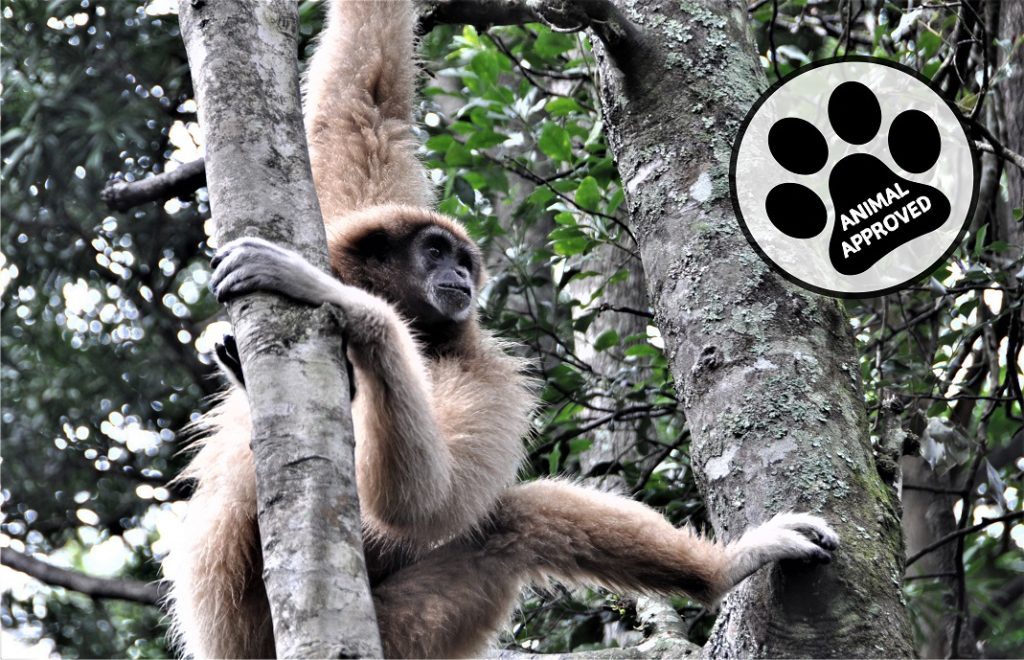
A paradise for primates
Monkeyland isn’t just a sanctuary. It’s a paradise for primates who’ve endured years of confinement, exploitation, and abuse in the name of entertainment. Many were props in tourist attractions, circus performers, or kept as exotic pets. Here, they’ve regained the life they were born for: freedom in a vast, natural forest.
At the heart of this mission is Lara Mostert, a passionate advocate for animal rights since 1996 and one of Monkeyland’s founders. Her dedication is unwavering, her resolve fierce.
She laughs as she recounts the battles she’s fought:
“I’ve been sued so many times my lawyer is ready to quit! But honestly, I don’t care – I’ve never lost a case. What matters most is protecting the animals.”
Lara’s crusade hasn’t been without risk. Threats are common, lawsuits routine. The opposition? Owners of businesses that profit from exploitative animal encounters – elephant rides, lion cub petting, cheetah walks. They fight to keep their cash cows alive. Lara fights for the animals. And she wins.
One of her proudest victories? Shutting down a neighboring farm that offered elephant-back rides.
“It’s simple,” she says firmly. “If you love animals, you don’t exploit them.”
Today, Monkeyland stands as a shining example of what ethical tourism can look like. A place where animals roam free, and humans learn to respect, not dominate.
More inspiration: Lara Mostert – A fierce advocate for the voiceless
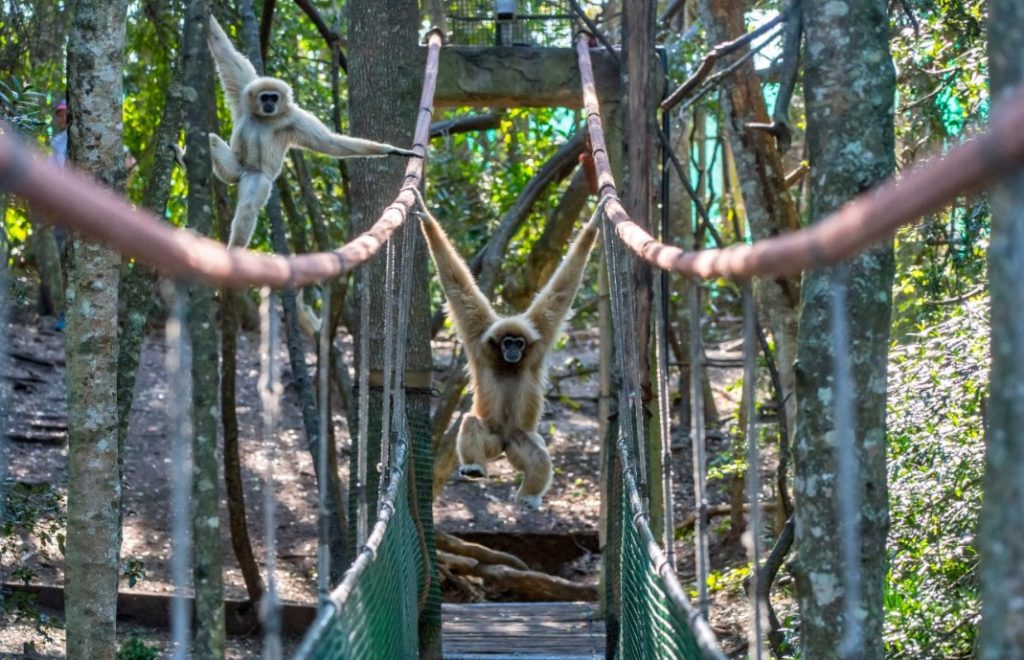
The monkeys are in charge
As our guide Greg lays out the rules for visiting, laughter erupts when a cheeky gibbon swings above his head, performing an aerial show as if on cue. With an easy grin, Greg adds a friendly warning:
“Best to look up – and don’t stand directly under them unless you want an unexpected shower!”
We follow him into the dense forest, a sprawling sanctuary that nearly 550 primates now call home – a permanent refuge where they can live the rest of their lives in peace.
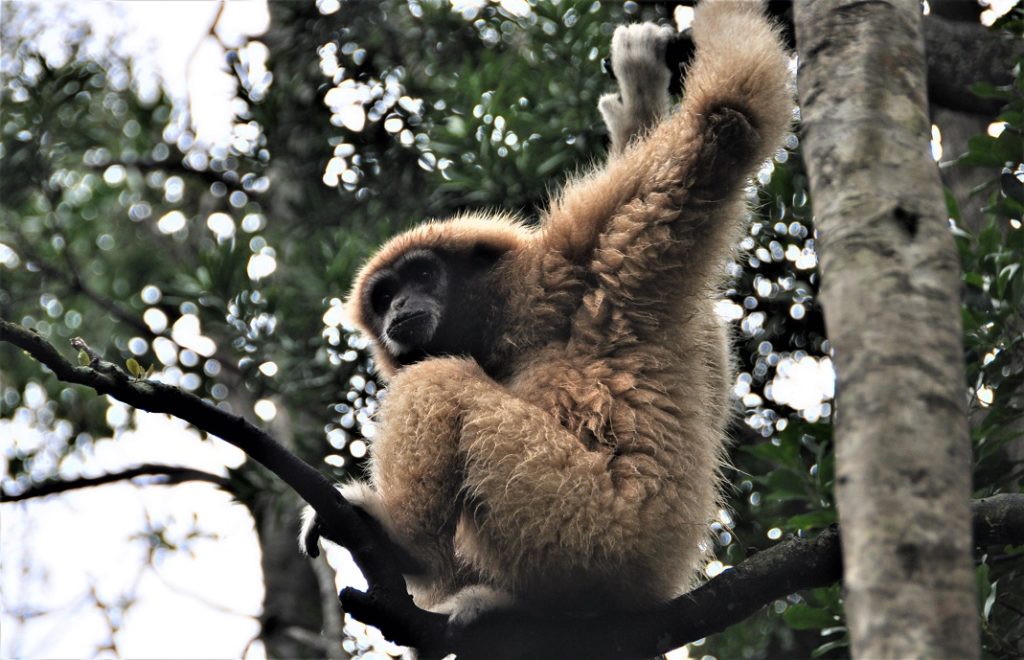
Along the way, we meet a lively cast of characters: ring-tailed lemurs, elegant gibbons, playful vervet monkeys, the mischievous lue capuchins, and even howler monkeys, their guttural calls echoing through the trees. They eat, swing, leap, and tussle in a joyous choreography of freedom – wild, unchained, and utterly captivating.
Greg, just 24, grew up nearby and has been guiding here for two years. He couldn’t imagine doing anything else. His passion for the animals radiates in every word, and his quick wit makes the experience as entertaining as it is educational.
“They’re the stars,” he says with a laugh, gesturing to a troop of lemurs scampering along a rope bridge.
And he’s right – this is their world. We’re merely guests.
Monkeyland isn’t a petting zoo. There are no leashes, no cages – just animals living as close to wild as possible. On their terms. And that makes every moment here feel like a privilege.
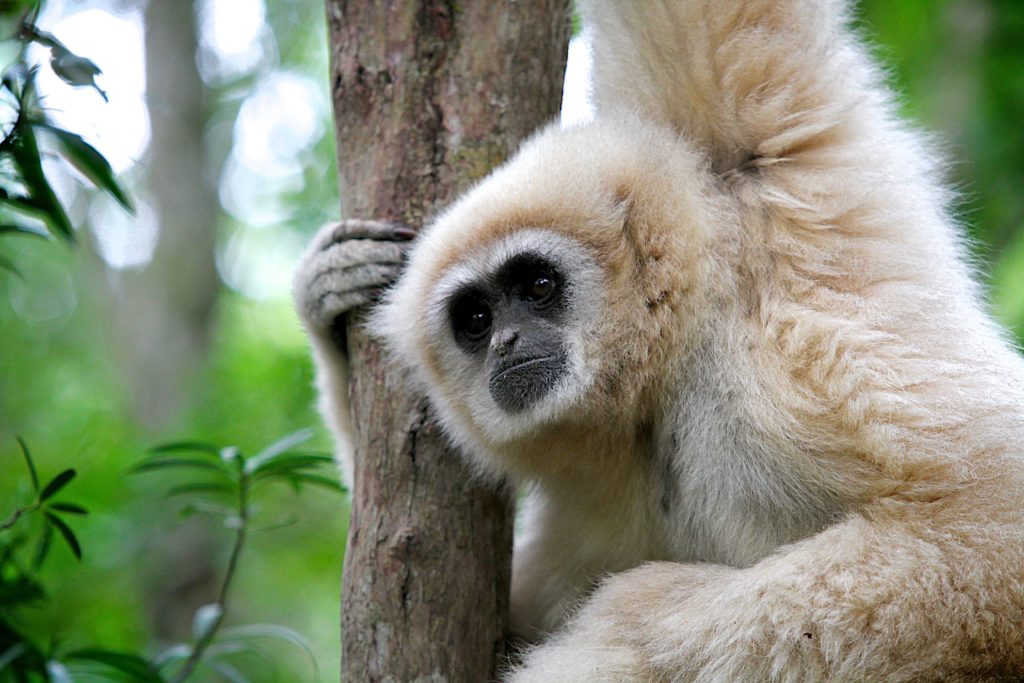
Tourists are finally getting it
After a morning filled with monkey mischief, we settle into the sanctuary’s open-air restaurant for a late breakfast with Lara. Over steaming mugs of coffee, she shares the shift that gives her the greatest hope: tourist attitudes are changing.
“Just a few years ago,” she recalls, “people would call and ask if we offered cuddling with monkeys or petting lion cubs. When I said no, they’d hang up immediately.”
She pauses, her smile widening.
“Now, the response is completely different. When I tell them no, they say, ‘That’s fantastic – please book me five tickets!’”
It’s a quiet victory, but a profound one. More and more travelers are recognizing the cruelty behind “hands-on” wildlife encounters – and choosing ethical alternatives instead. For Lara and her team, that shift is everything. For the animals, it’s life-changing.
At Monkeyland, the message is clear: true wildlife experiences happen on the animals’ terms – never ours.
If we look straight and deep into a primate’s eyes, an intelligent self-assured personality looks back at us. If they are animals, what must we be?
– Frans de Waal, Dutch primatologist
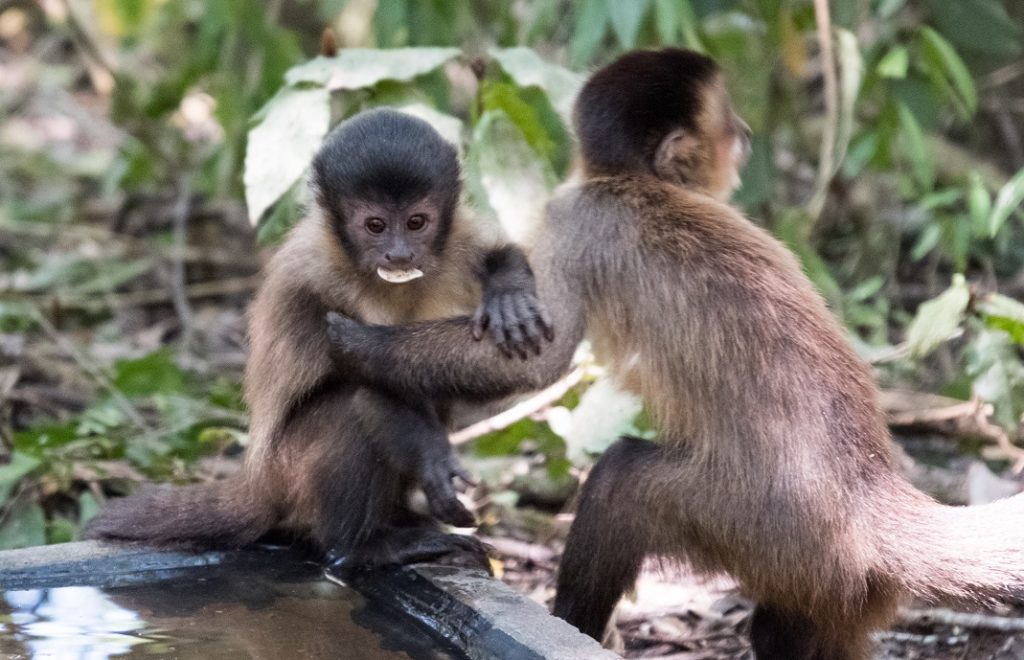
8 great reasons to visit Monkeyland
- Meet a world of primates
Stroll through the forest and watch lemurs, gibbons, vervet monkeys, capuchins, and more thrive in their natural environment. - Nature at its best
Your walk isn’t just about the animals – you’ll enjoy the sights, sounds, and scents of a lush, free-roaming sanctuary. - Fun for all ages
Guided tours are educational and engaging, making this an unforgettable experience for both kids and adults. - Support a cause that matters
Your ticket helps protect rescued primates and fund future rescues. Always choose ethical experiences—never support places that offer animal petting or force animals to perform tricks. - Because wild animals are #NotEntertainers
Here, animals live on their terms, with no chains, cages, or exploitation – just freedom. - Your visit makes a difference
Every ticket sold helps feed, care for, and give primates a second chance at life. - Family-friendly all year round
Monkeyland is open year-round and designed for all ages, with facilities that make your visit comfortable and fun. - Amenities for a perfect day out
Enjoy a restaurant with hearty meals, restrooms, a gift shop for eco-friendly souvenirs, and a playground for little explorers.
Practical information
Location
Monkeyland is in Plettenberg Bay, about a 2-hour drive from Port Elizabeth.
What is is
The world’s first free-roaming primate sanctuary, home to around 550 monkeys.
Part of SAASA
Monkeyland is one of three sanctuaries under the South African Animal Sanctuary Alliance (SAASA). The other two are Birds of Eden and Jukani Wildlife Sanctuary.
Tickets
No advance booking required. Combo tickets available for all three parks – highly recommended for a full day of ethical wildlife experiences.
Tours
Only guided walks, lasting about 1 hour, to ensure both visitor safety and animal welfare.
Awards
Monkeyland has received multiple international honors, including Best Animal Welfare Initiative and the World Responsible Tourism Award.
Family-friendly
Facilities include a restaurant, gift shop, and playground.
A warm thank you to Monkeyland for hosting me. There were no requirements for posts or promotion on social media. As always, all opinions and photos (unless stated) are entirely my own.
More inspiration to South Africa’s amazing wildlife:
A guide to Addo Elephant National Park
A sanctuary in the sky
Where Big Cats are safe
Safari in Kruger National Park
The Penguins of Boulders Beach
Don’t miss the Goat Tower in Paarl
Whale safari from Port Elizabeth
Close encounter with the Great White Shark
Ele-phantastic in Addo
