
The second highest floor of Tallinn’s Hotel Viru did not exist. At least not officially. Yet it was from here that the KGB directed its agents until the collapse of the Soviet Union.
On paper, the hotel had 23 floors. Guests had no idea that a hidden level lay above them, a floor shrouded in secrecy where shadowy operations unfolded. Today, this “nonexistent” floor is as a chilling reminder of Soviet paranoia during the Cold War, when every foreigner was regarded as a potential enemy.
Now, the KGB Museum inside Hotel Viru is one of Tallinn’s most unique and fascinating attractions.
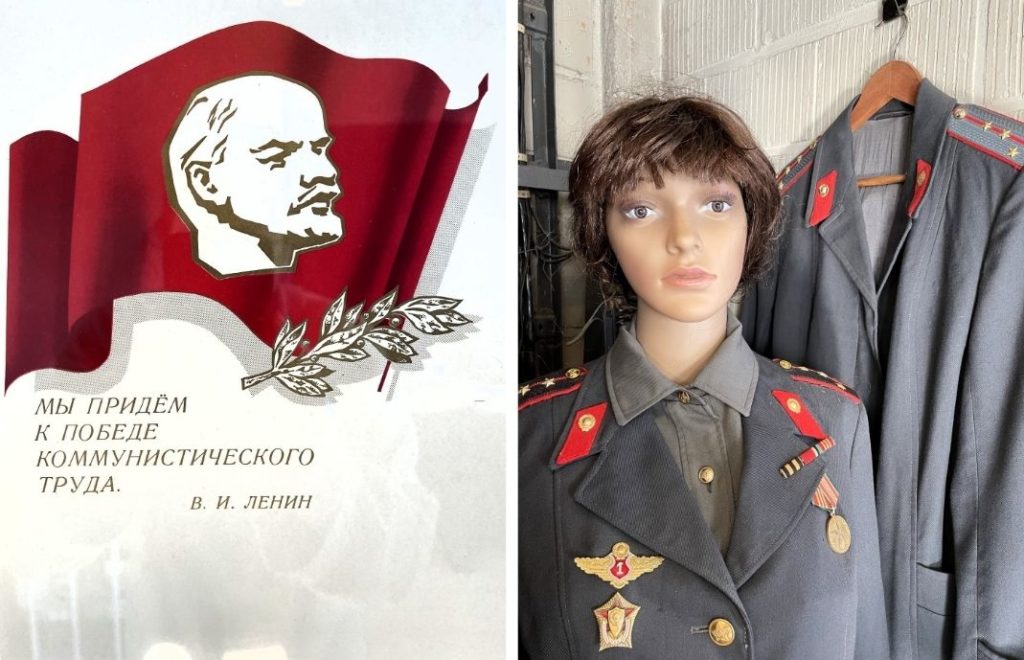
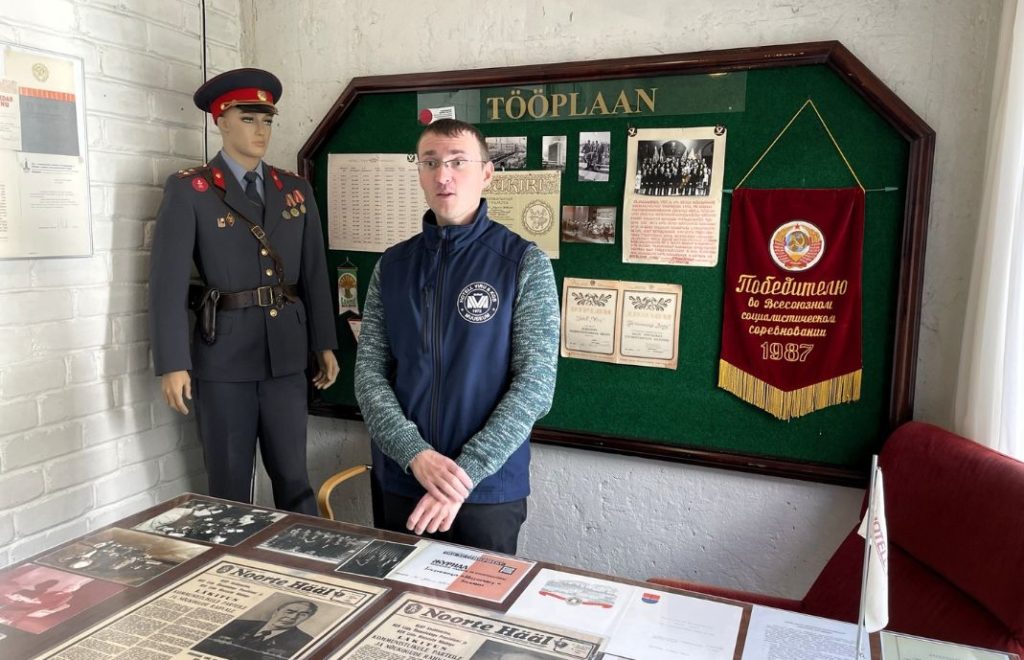
A visit feels like stepping back in time – into a world that is surreal and unsettling. Worn linoleum floors, smashed telephones, surveillance equipment, radios, and tape recorders still chained to the concrete walls. Russian cigarette butts rest in the ashtrays, while two gas masks lie carelessly abandoned on a desk. Even the KGB uniforms remain. They were certainly not items the Soviets wanted to be seen with when they fled Tallinn a night in August 1991.
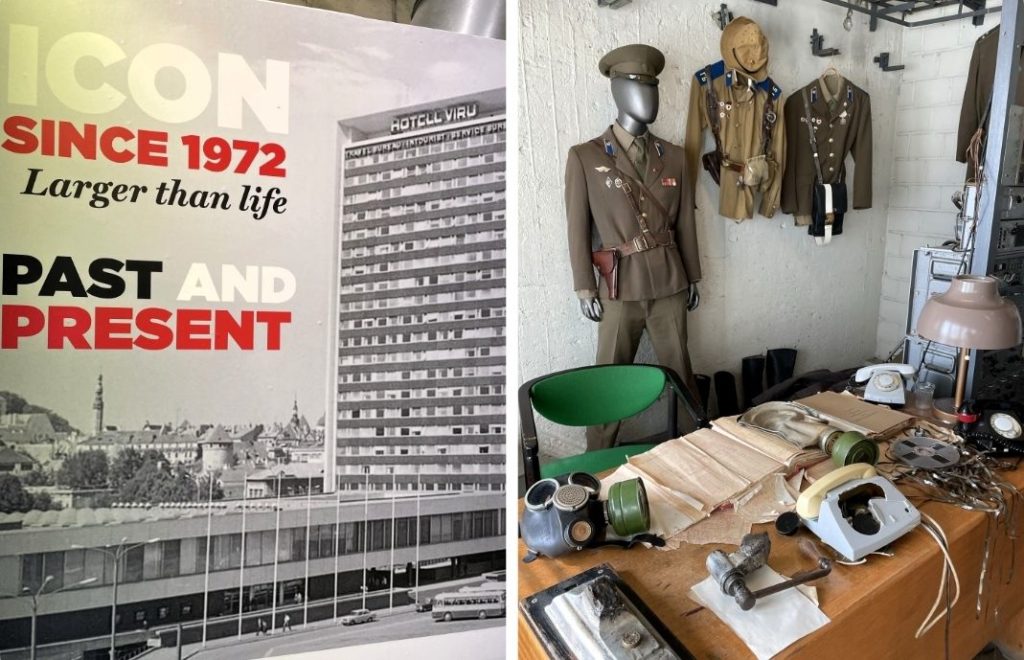
The story of Hotel Viru
Completed in 1972, Hotel Viru stood as a proud symbol of Soviet engineering and its ambition to showcase modern architectural might. In reality, it was Finnish expertise that made the construction possible. This was something the Russians brushed aside by claiming they were simply providing work for their “poorer brothers.”
Hotel Viru quickly became a gathering place for the elite, a world far away from ordinary Estonians who were forbidden to enter. Here, Soviet party officials mingled with international stars such as Elizabeth Taylor and Neil Armstrong.
The restaurants served the finest ingredients, the bars brimmed with top-quality vodka, and the theatre hosted legendary performances. To those allowed inside, Hotel Viru was nothing less than a paradise in Tallinn.
When the Soviet Union collapsed in 1991, the KGB’s grip on Tallinn finally ended. Their retreat from Hotel Viru was hasty, leaving behind surveillance equipment, uniforms, and technical gear in the “nonexistent” floor. They left enough evidence to erase all doubt about what had been happening there between 1972 and 1991.
Today, Hotel Viru still stands, its façade preserved as a site of historical significance. The guest rooms have been fully renovated to meet modern standards, but the new owners had the foresight to seal off the secret floor.
For over two decades it remained untouched.
In the early 1990s, Estonians wanted nothing more than to forget the Soviet era and its oppressive systems. Yet the hotel’s owners also recognized its historical value. Now, the KGB’s former headquarters in Tallinn has been preserved and opened to visitors – a chilling window into a past that once thrived behind closed doors.
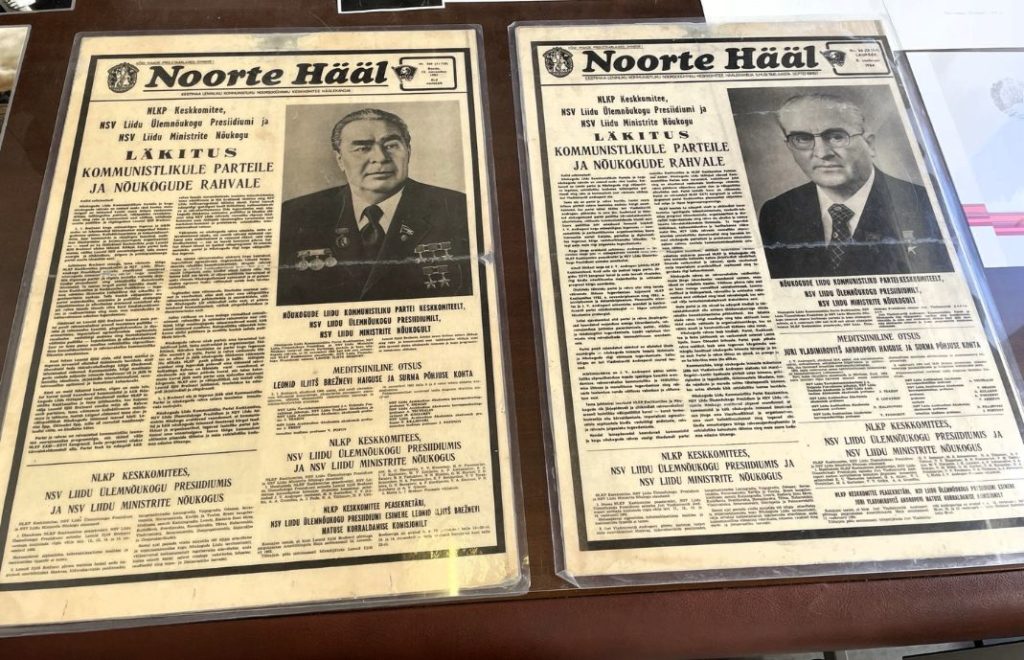
The floor that never existed
The doormen’s job at Hotel Viru’s was far more complex than simply welcoming guests and keeping ordinary Estonians out. Exceptions, of course, were made for the trusted local elite.
Their most crucial task was to report everything they saw and heard from each foreign guest. These reports where sent up the chain of command – ultimately ending up on the floor that officially did not exist. The 23rd floor, the hotel’s second highest level, was occupied by the KGB.
As our guide explains, this was the KGB’s most sacred domain, staffed by ten agents. From here, the KGB directed their network of operatives across the Nordic countries while eavesdropping on nearly everything that happened inside the hotel.
Between 1972 and the Soviet collapse, it is said that only one Estonian ever caught a glimpse of the KGB’s control room. A cleaning woman accidentally wandered through a door labeled in Russian “Zdes’ Nichevo Nyet” – “There is nothing here.” The warning was even translated into Estonian.
The poor woman was swiftly escorted out of the hotel and threatened with severe consequences if she spoke a word about what she had seen. Later, she described a room bristling with technical equipment, and four uniformed men wearing headphones – watching, listening, and recording every whisper that passed through the walls of Hotel Viru.
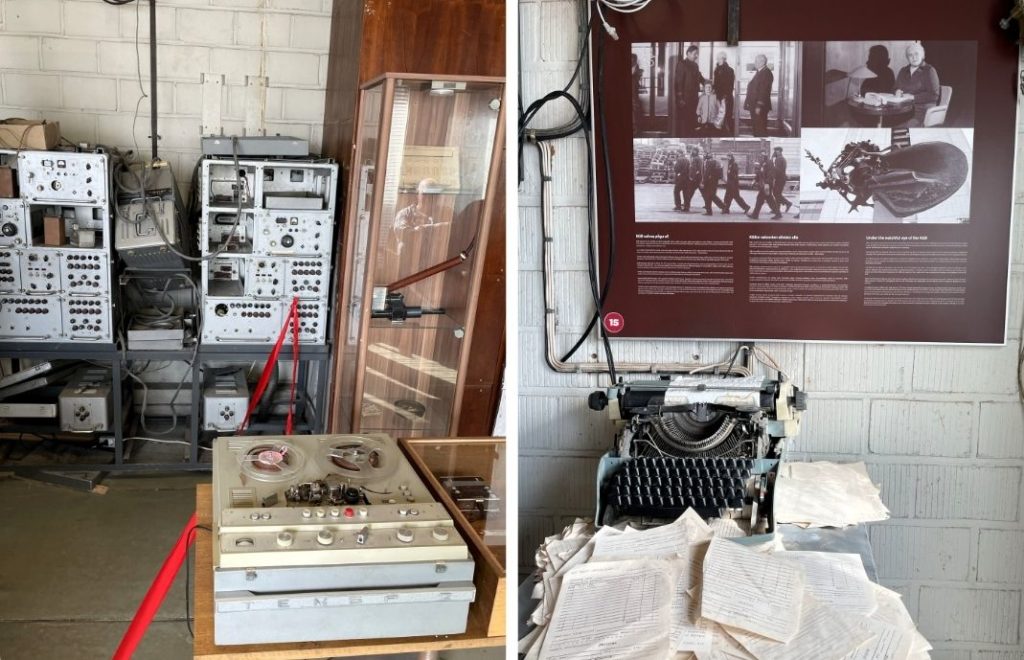
How the KGB operated at Hotel Viru
Hotel Viru had 423 rooms, and in 60 of them the KGB installed advanced listening devices. Some even contained hidden rooms and openings for cameras. Photography, too, was a constant presence within the hotel’s walls.
And if guests thought they were safe outside their rooms, they were mistaken. Surveillance extended everywhere: microphones hidden in unbreakable dinner plates in the restaurants, in the sauna, bars, toilets, flowerpots – even in the hotel’s hair salon.
On every floor, four so-called “corridor guards” were stationed. Their mission: to monitor what guests brought with them, how they behaved, what they said, and who accompanied them.
It was strictly forbidden for male guests to bring women back to their rooms. But, in classic Soviet style, there were exceptions. These involved women handpicked by the KGB – prostitutes recruited for so-called “honey traps”. Their affairs, secretly filmed by hidden cameras, became powerful tools for blackmail. The unsuspecting man – often married – would now find himself forced to provide information in exchange for silence.
At Hotel Viru, no word was private, no act unseen. It was a place where luxury masked relentless surveillance, and every guest played their part in the KGB’s theater of control.
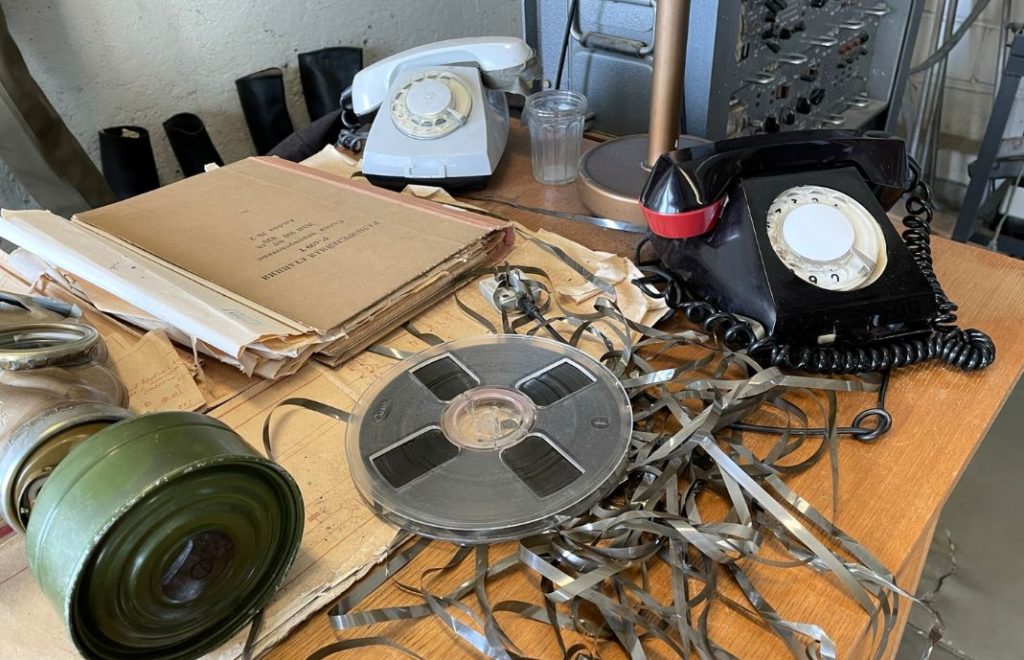
An extremely strict workplace
More than a thousand people worked at Hotel Viru between 1972 and 1991, all under a regime of harsh restrictions and zero tolerance. Every action was tightly controlled – staff had to apply for permission to send a fax or make a phone call. They were forbidden to mingle with foreign guests or exchange money into foreign currency.
Even the smallest infraction branded an employee persona non grata (unwanted person), costing them their job. After the KGB fled, records revealed that it was exclusively women who had suffered this fate.
The KGB, of course, also set traps for the staff. One of the most notorious was leaving a wallet where it could be easily found. If an employee dared to open it, a dye pack would explode, spraying red ink onto their face. The stain could not be washed away – an indelible mark that exposed them as guilty and sealed their dismissal.
Hotel Viru was not just a workplace, but a theater of fear, where trust was weaponized and loyalty tested in the most ruthless of ways.
Your visit to the KGB Museum at Hotel Viru
When the Soviet Union collapsed, the KGB made a hasty retreat from Tallinn. Any documents that could confirm their presence were, of course, destroyed. Yet the hotel’s secret floor remains untouched – frozen exactly as the KGB left it in 1991.
For visitors, this offers a rare and fascinating window into history. Today, Hotel Viru presents the KGB’s former headquarters in Tallinn just as it once was, a chillingly authentic time capsule from the Cold War.
The museum can only be visited on a guided tour at set times, either by joining a scheduled group or by booking a private one. The guides are superb, leading tours with the same stern composure as the KGB agents themselves – an approach that only deepens the authenticity of the experience.
A visit to the KGB Museum is more than a tour; it’s a step behind the Iron Curtain, into a world of secrets, surveillance, and shadows that once defined this era.
Practical information – KGB Museum at Hotel Viru
- Address: Hotel Viru, Viru Väljak 4, Tallinn, Estonia
- Opening hours: Guided tours run daily, but only at set times. Schedules may vary, so it’s best to check the hotel’s website or book in advance.
- Tickets: Available at the Hotel Viru reception. Spaces are limited, so advance reservations are highly recommended.
- Duration: Tours last around 1 hour.
- Languages: Guided tours are offered in several languages, including English.
- Accessibility: Parts of the tour involve narrow staircases and corridors, which may be less suitable for visitors with reduced mobility.
More inspiration to Tallinn:
Why you should visit Tallinn
Winter adventures in and around Tallinn
